Faulkner County Agriculture Update

November 6, 2026


General Conditions

Weather


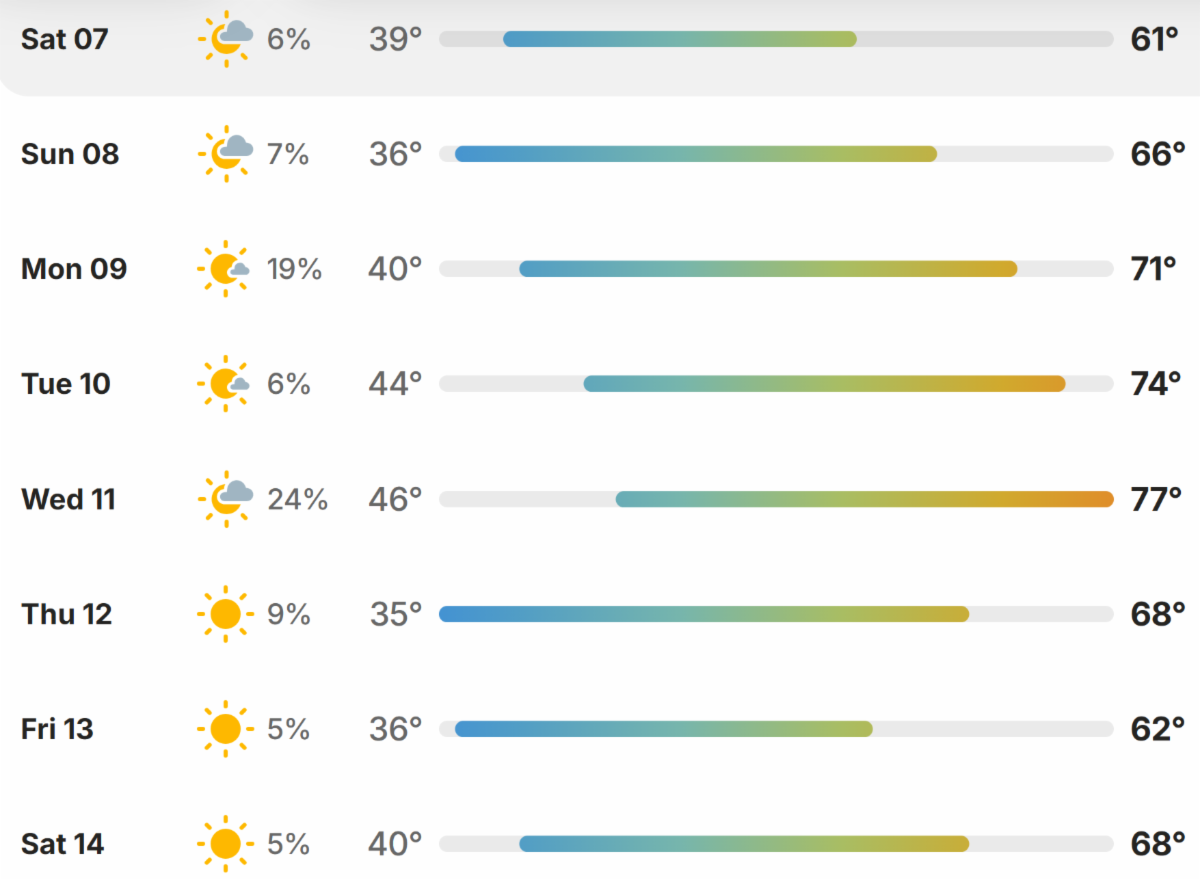
We finally got a little bit of rain in Faulkner County this week. It looks like total from the Halloween rain and what came through on Tuesday we had about 0.75 to 1.00 inch across the county. This was not near enough and for some reason we didn't get near as much as other parts of the state received. There is a small chance of rain on Wednesday, but for the most part we are still looking at a dry and cool next week.

Arkansas and Mississippi River

Drought Monitor

Row Crop

Wheat

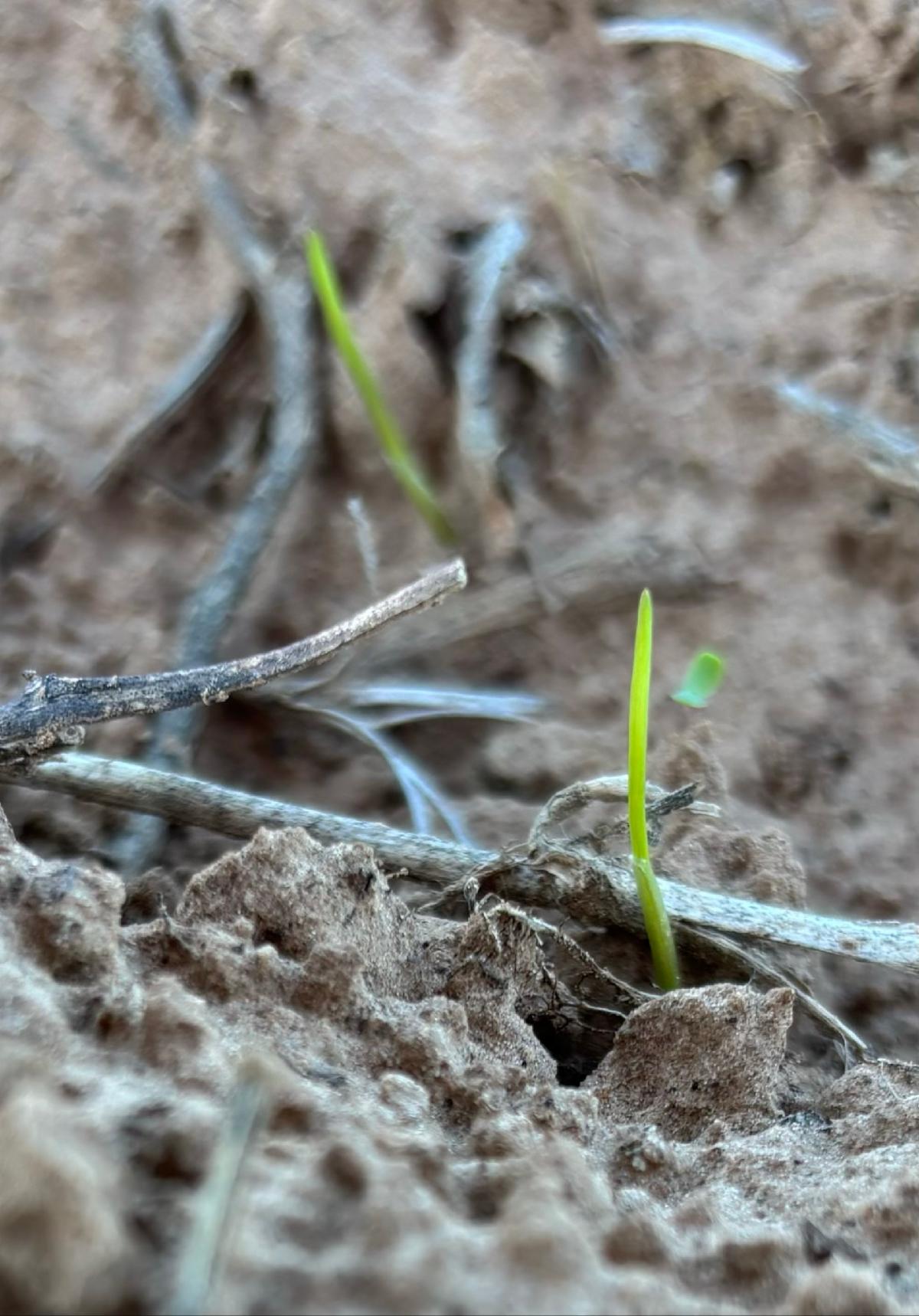
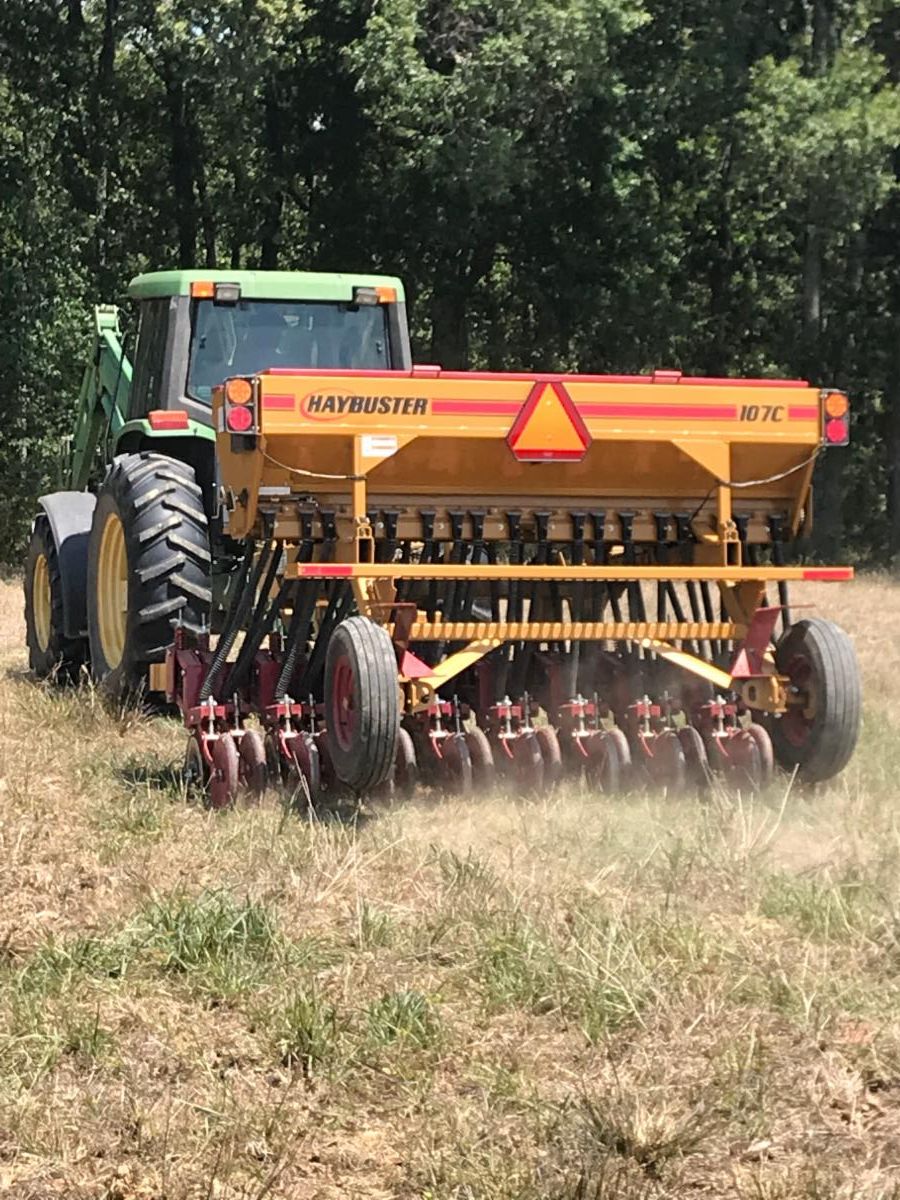
Wheat planting has started in Faulkner County. There were a few fields that were planted ahead of the rain on Saturday and they are starting to emerge. The majority of the planting started yesterday as fields have dried out enough to get equipment back on them.


There are a couple of issues that have me concerned right now and they both are because of the small chances of rain in the next 10 days. These newly planted fields should come up no problem, but with small root systems I hope they can hold out until the next rain. The second concern is when to apply a delayed pre application of herbicide. Do we go ahead and apply now and hope for rain, or wait until a bigger chance of rain and get it out ahead of that. I am afraid if we wait too long, ryegrass will germinate and we will miss it, but on the other hand if it doesn't rain within 10 to 14 days we wasted a herbicide application. These are issues I have never had to deal with in wheat and if you planted under a pivot you are probably in a better situation than fields planted outside of pivots. We shall see how it goes.

Wheat Weed Control Starts Early

Bob Scott Extension Weed Specialist


I am hearing rumors that a few growers are planting a little wheat this year. Acres have been quite down in the mid-south for the past several years compared to how they once were. In terms of weed control for wheat, there have been only a few changes recently to be aware of.


Ryegrass continues to be one of the most problematic weeds in wheat production. There is a lot of resistance to most of our post herbicide options for ryegrass control in wheat, these include: PowerFlex, Osprey and Axial Bold, among others. Of all these, I probably still have the most luck with Axial Bold, however, these populations of ryegrass vary greatly from location to location. This is a good place as any to stick in a reminder that ryegrass seed is not long lived in the soil seedbank. So, if you make efforts this fall to control ryegrass around the edges of your fields and not let ryegrass go to seed, it will pay immediate benefits the following fall with reduced populations and spread of this weed.


The best option we have now for ryegrass control in wheat is a delayed pre application of Zidua or Anthem Flex. Delayed pre’s are applied after planting, but not until the wheat has received rain, irrigation or imbibed water for germination (planted into moisture). Unfortunately, this waiting process can also allow some ryegrass to germinate and be “missed” depending on weather and timing. This is a good time to mention that there are no ryegrass control options labeled for oats. I mention this only because this is an annual call that I get.


Numerous broadleaf weeds can inhibit wheat early and cause delayed stand establishment and if thick enough hurt wheat yields. A few broadleaves can interfere with harvest and cause significant loss. There are numerous control options available for most of these weeds. I will not get into all those here, but if you would like a run down of them the wheat section of the Arkansas Wheat Production Handbook has been updated and can be found here: MP404 page.


One broadleaf weed to watch out for is mayweed. There have now been numerous populations identified around Arkansas that are resistant to the ALS or Group 2 herbicide options like Harmony Extra. In these cases, Quelex is our best option for equivalent control. You can also find weed control information for wheat and fall wildlife food plots in the MP44 at this link: Recommended Chemicals for Weed and Brush Control - MP44.


Our research program this year focuses on finding new herbicides and expanding the use patterns of some existing herbicides for wheat using seed safeners. My wheat research is funded in part by the Arkansas Wheat Promotion Board and that support is greatly appreciated.

Nematode and Soil Sample Timing


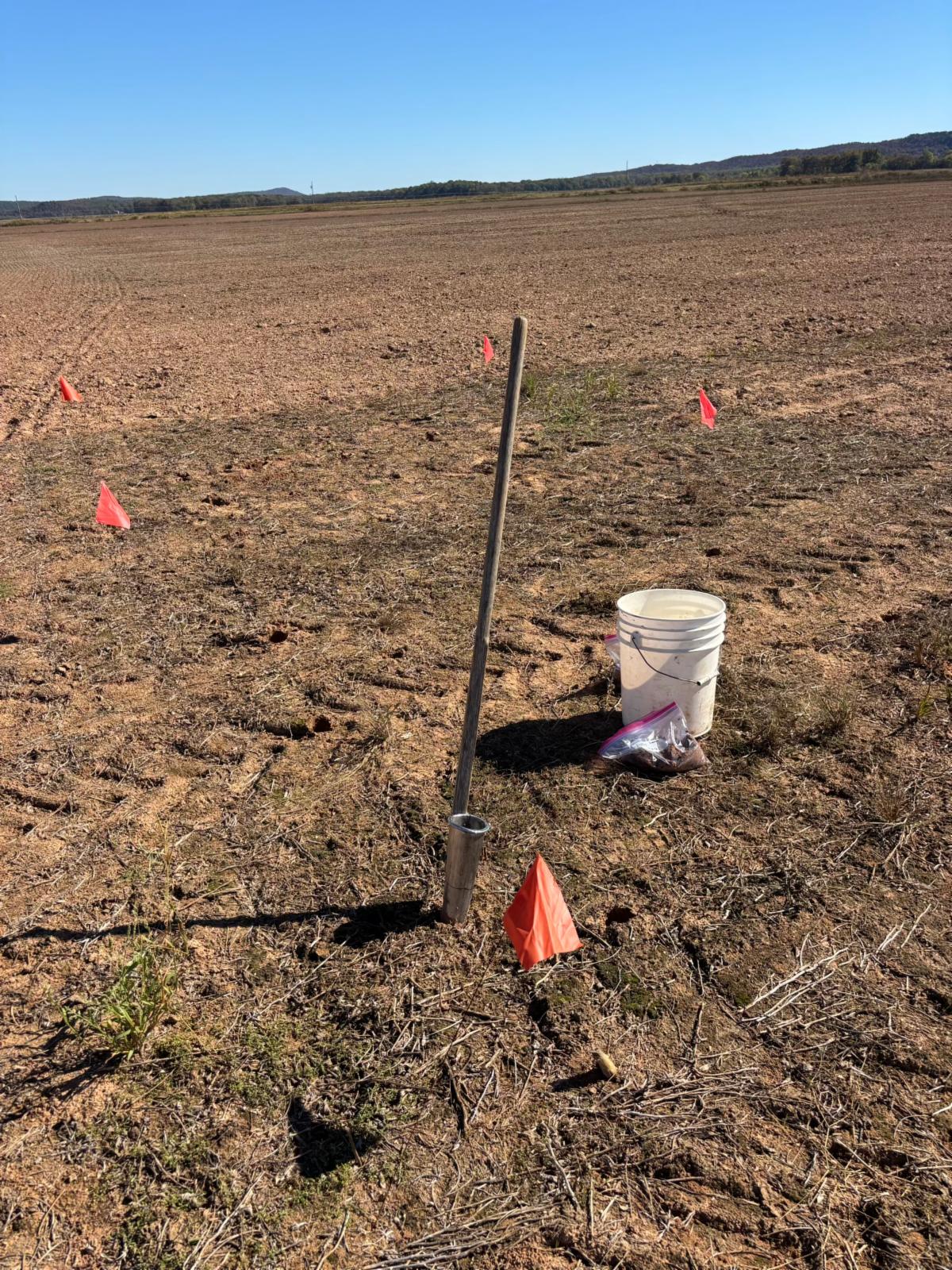
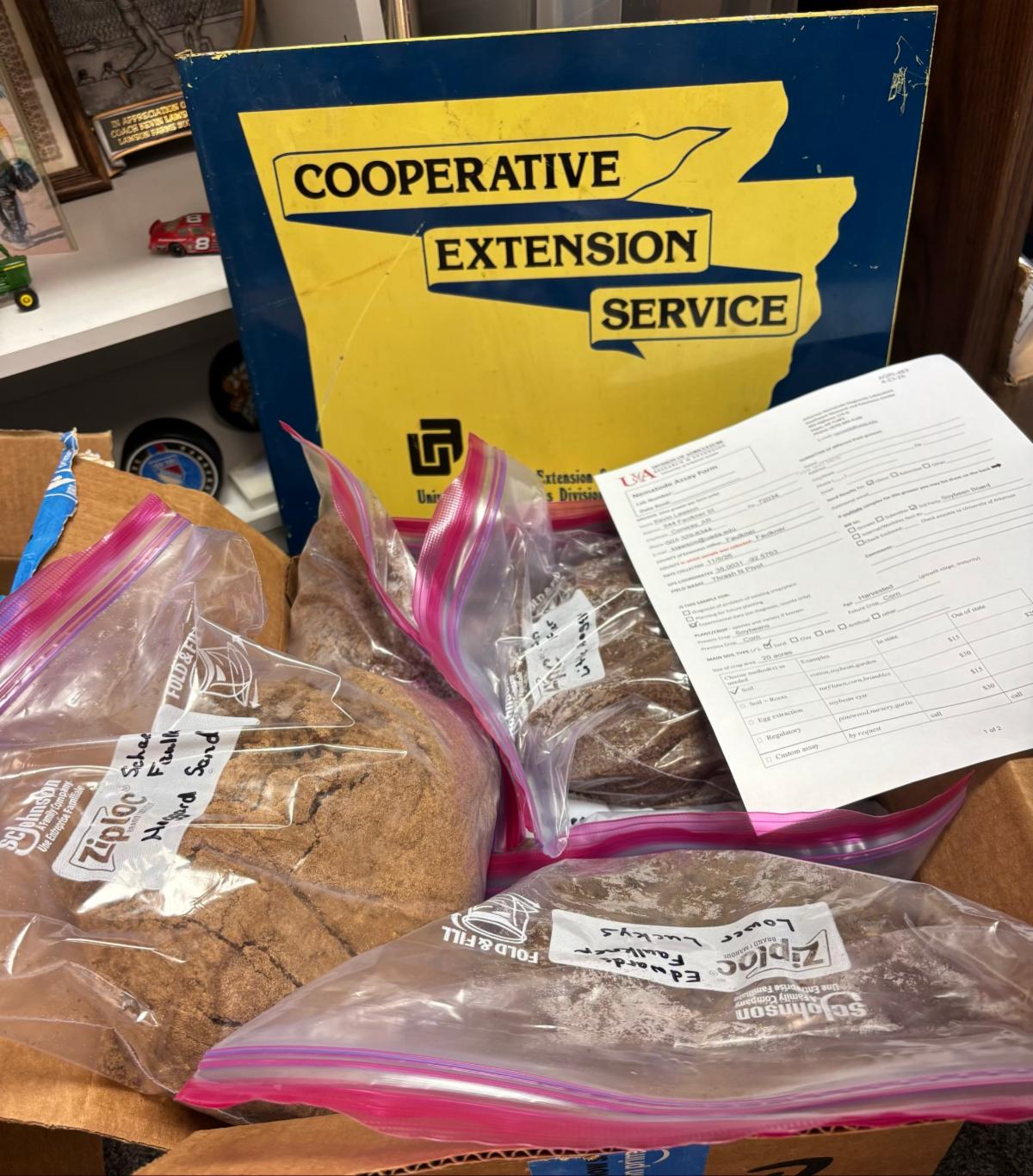
I took some nematode samples in several areas around Lollie this week and will be sending them off for root knot numbers. The Arkansas Soybean Board is supporting these samples so I try to send off a few every year to keep an eye on root knot in our area.


I also took the second sample on our soil sample timing research trial in Lollie. I have a couple of areas in a field where I am taking samples at four differnent timings through out the fall and winter to compare the differences. This is just one site in the state for this research that is being done by our soil fertility specialist Dr. Ana Morales-Ona Smith.

Variety Trial Information


All of the Faulkner County variety trial results can be found on our website listed below.

Winter Production Meetings


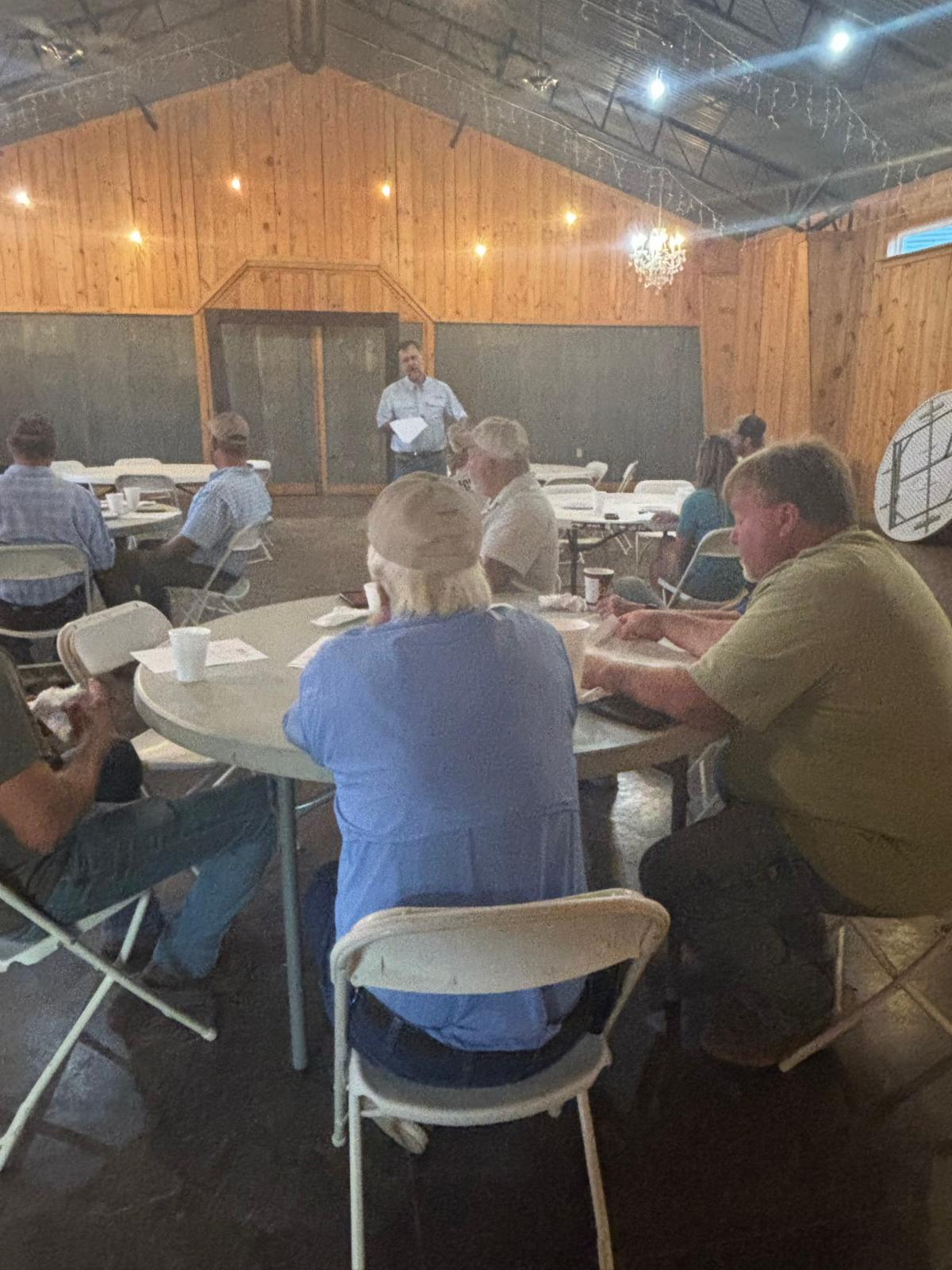
Save the dates for our upcoming Winter Production Meetings.


Soybean & Corn - January 29 will be at the Conway County Extension Office

Rice - March 4 - Place TBD

Reading the Tea Leaves on the

Harvest Fuel Relief Program

Matthew Gammans, Assistant Professor in Ag Policy, North Dakota State University


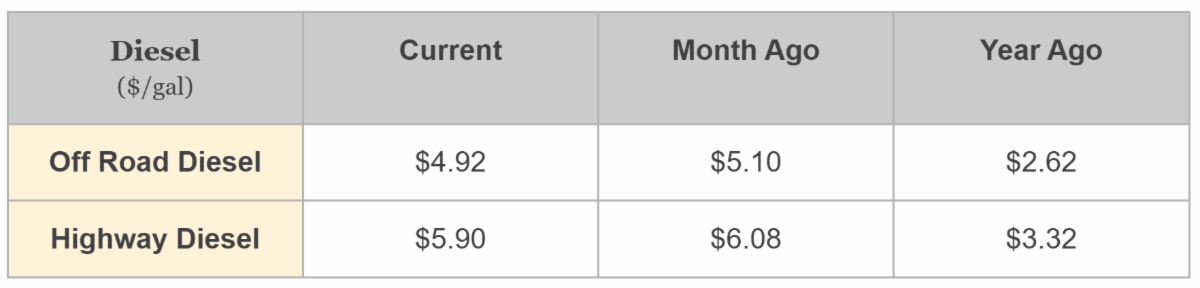
President Trump announced $8 billion in funds would be distributed to farmers as one-time payments. The program is titled the Harvest Fuel Relief program and is motivated by record-high diesel prices.


Who will get a piece of this $8 billion?


Which farmers will receive how much has not been disclosed. The USDA states the following:


Similar to the Farmer Bridge Assistance (FBA) program, the Harvest Fuel Relief (HFR) program will provide simple, proportional support to producers using a uniform formula to cover a portion of modeled losses during the 2026 crop year. This national loss average will be based on FSA reported planted acres, Economic Research Service cost of production estimates, and World Agricultural Supply and Demand Estimates yields and prices.

— USDA, Harvest Fuel Relief program announcement, October 19, 2026


USDA Under Secretary for Farm Production and Conservation Richard Fordyce described the program to Agweek:


So this program is going to cover, really, the additional cost of fuel related to farming operations in the field, by crop.

— Richard Fordyce, quoted in Jenny Schlecht, Agweek, October 23, 2026


Based on the above descriptions of what the formulas may potentially take into consideration, I calculate potential Harvest Fuel Relief program payments under three hypothetical formula scenarios:


1. Identical formula to last year’s Farmer Bridge payments. This formula contains no fuel input, but since USDA explicitly describes the intended calculation as “similar to the Farmer Bridge Assistance program,” it is a plausible outcome.

2. Proportional to projected 2026 per-acre fuel expenditure for a crop, calculated nationally. This is the simplest way to connect per-acre payments to diesel price exposure while retaining a single nationwide payment rate for each crop.

3. Proportional to projected 2026 per-acre fuel expenditure for a crop in a given state. This approach would allow for regional variation in the intensity of per-acre diesel use to affect payments.


Assumptions:

• All of the $8 billion is transferred to farmers, ignoring any transaction costs or program overhead.

• I assume that ~90% of the funds go to row crops for which there is a USDA ERS regional crop budget, ~1% go to other row crops, and ~8% goes to specialty crops, roughly the same proportions as last winter’s Farmer Bridge payments. Here I only consider $7.2 billion distributed to the crops that have an ERS budget.

• I assume the disbursements are distributed on a per-acre basis, similar to the Bridge payments.


Data:

• USDA ERS regional crop budgets to obtain per-acre fuel costs.

• ERS’s projected 2026 increase in fuel costs to estimate 2026 fuel spending.

• FSA 2026 planted acres data.

• October 2026 WASDE yields and prices.


Hypothetical payment rates


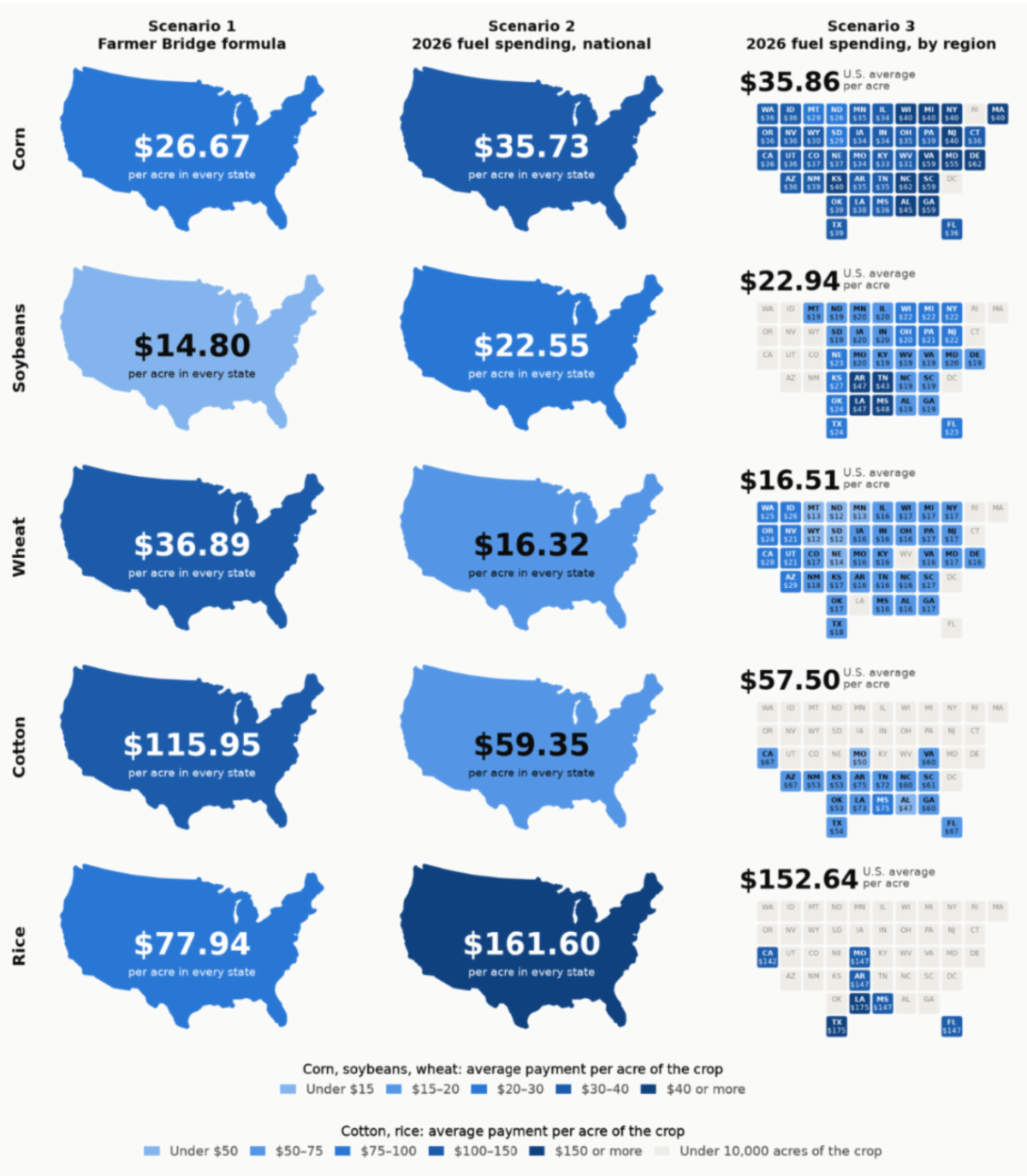
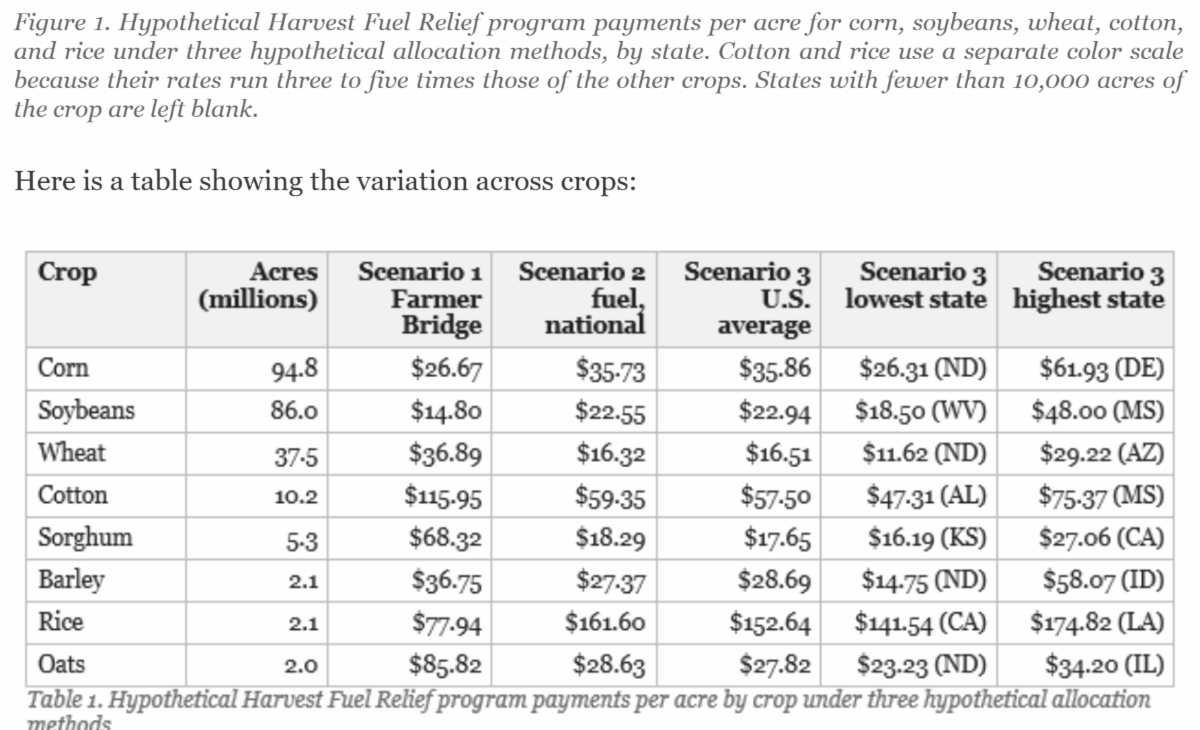
The figure below shows the average per-acre payment for corn, soybeans, wheat, cotton, and rice under each scenario, by state.

Tying payments to fuel spending (scenarios 2 and 3) moves money toward rice, corn, and soybeans and away from wheat and cotton relative to the Farmer Bridge formula (scenario 1). Rice goes from $78 per acre under scenario 1 to $162 under scenario 2; wheat goes the other way, from $37 to $16. Across the five major crops, the rates range from $16 to $162 per acre.


Would this cover the increase in costs?


Would the above payments be enough to offset farmers’ increase in diesel costs? Yes, by a wide margin. Under scenario 2, every crop’s payment is roughly 4.8 times its ERS fuel cost increase, which is about equal to its entire projected 2026 fuel, lube, and electricity cost. In fact, for many farmers the payments would be similar in magnitude to total diesel expenditures, let alone the 2026 increase.


Would these payments be enough to offset farmers’ increase in diesel and fertilizer costs? That is less clear. The American Farm Bureau, citing USDA ERS, projects fertilizer, lime and soil conditioner expenses to be up $5.3 billion from 2025 and fuel and oil costs to be up $4.8 billion. This is a total of $10.1 billion, suggesting that relief of $8 billion could not cover it in full, though the relief may outpace the increased costs for some farmers, crops, or regions. 


Other Useful Links:

USDA program announcement


Undersecretary Fordyce’s comments to Agweek: , “USDA wants specialty crop data for Harvest Fuel Relief program,”


Original source for analysis

Beef, Small Ruminants, & Forages

Using Pelvic Area Measurements to Select Heifers Can Minimize Calving Difficulty

Paul Beck, Oklahoma State University Extension Beef Cattle Specialist


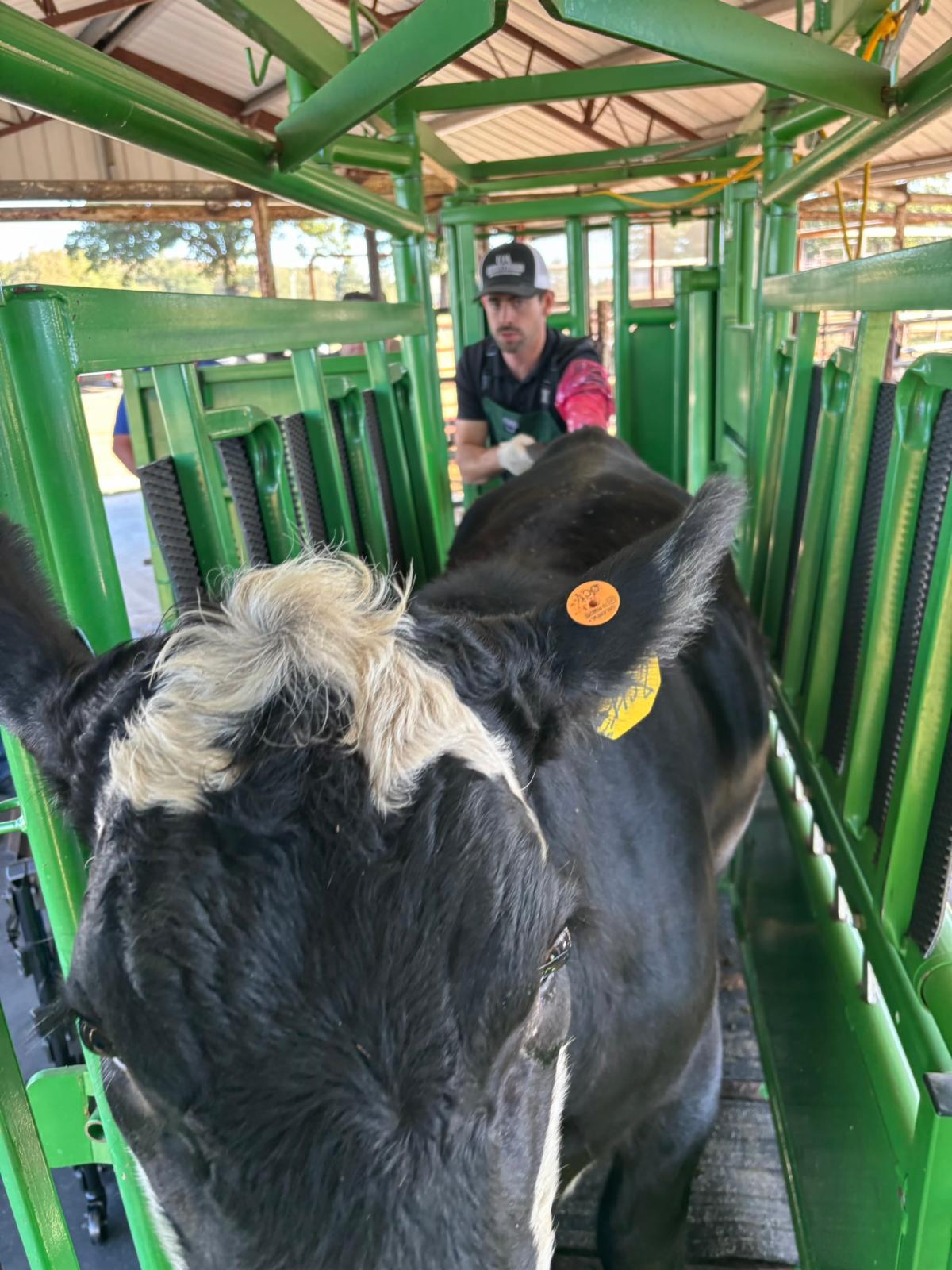
Calving difficulty is a major issue for beef producers and is a primary problem that comes to mind when we are calving out first calf heifers. Difficulty during calving reduces calf vigor and sucking behavior. This in turn reduces colostrum intake and passive immune transfer resulting in increased calf death loss of 4 to 8-times greater than in uncomplicated births. Calving difficulty also has large impacts on the cow, reducing the cow’s milk production and subsequent reproduction performance and increases the potential of losing the cow.


The factors that affect calving difficulty include:

  • Calf birth weight – which is related to the length of gestation and the sex of the calf.
  • Body condition of the cow at calving – cows can be too thin or too fat.
  • Inadequacies in heifer development that leads to calving heifers that are too small.
  • Pelvic area of the cow – the size of the birth canal limits the size of the calf that can be delivered.
  • Abnormal presentation of the calf at birth.


The biggest cause of calving difficulty is a large calf at birth combined with cows with small birth canals. Pelvic area affects calving difficulty, independent of cow weight. Heifer weight and age and external dimensions of width of hooks and length of rump are not always good indicators of pelvic area or predictors of calving difficulty, so pelvic measurements are a good tool to cull heifer with a higher potential for calving difficulty.


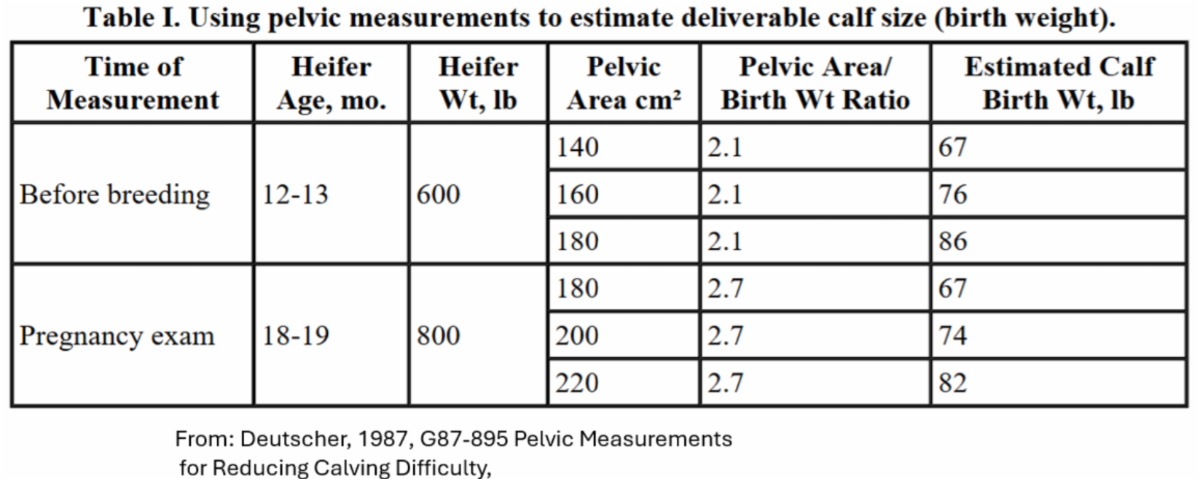
Based on research from the University of Nebraska, pelvic measurements obtained before breeding of a heifer at 12 months of age can be divided by a factor of 2.1 to estimate the calf birth weight the heifer can deliver as a 2-year old at calving without substantial difficulty (Table1). For instance, a 600-pound heifer with a 160 cm2 pelvic area is expected to be able to deliver a 76-pound calf when she calves as a 2-year-old (160/2.1 = 76-pound calf). Pelvic area increases with the growth of the heifer.


Pelvic area can also be measured during pregnancy checks, for an 18-month old heifers we use a factor of 2.7. So, an 800-pound heifer with a pelvic area of 205 cm2 at 18 months of age would be expected to deliver the 76 pound calf as a 2-year old (205/2.7 = 76 pound calf). The following table from Deutscher’s 1987 University of Nebraska factsheet shows the pelvic area/birth weight ratios for differing heifer weights and ages to determine the calf birth weight she should be able to deliver.

Pelvic area is only part of the equation, to reduce calving difficulty in heifers we need to:

  1. Use proven calving ease bulls to breed heifers.
  2. Grow and develop heifers to targeted weights before calving.
  3. Calve heifers at a minimum body condition score of 5.
  4. Measure pelvic area and cull heifers with abnormally small pelvic areas.

Mineral Supplementation in Cow-Calf Operations

Mark Z. Johnson, Oklahoma State University Extension Beef Cattle Breeding Specialist


Proper mineral and vitamin nutrition contributes to strong immune systems, improved reproductive performance, and calf weight gain. A properly balanced mineral program requires consideration of previous cow and calf mineral nutrition and current diet. Diets with mineral imbalances may cause poor animal performance, resulting in reduced profitability. Much like other nutritional requirements, mineral needs are dependent on forage mineral content, animal age, and stage of production. 


Best Management Practices


When feeding free-choice mineral supplement, keep mineral available year-around. Over time, this tends to reduce variation in daily intake. Typical loose, free-choice mineral mixes are designed for a 3-ounce to 4-ounce daily consumption per head. Consumption rates naturally fluctuate with the season (e.g., dropping from ~4.5 oz/day in April down to ~2 oz/day by June). Mineral feeder placement is important.


Place mineral feeders near water sources, shaded areas, or loafing spots to encourage consistent daily intake. Keep white salt separated from free-choice mineral blends. Anaplasmosis control can be administered through free-choice mineral containing Chlortetracycline (CTC). This requires a valid Veterinary Feed Directive (VFD) from your veterinarian. Fly control can also be administered using a feed-through Insect Growth Regulator (IGR) incorporated into the mineral mix, which passes through the digestive tract into fresh manure to disrupt the horn fly life cycle. It is possible to use CTC and IGR in the same mineral formulation. 

Winter Annuals


Well we finally got a little bit of rain, so there is a small window to get some winter annuals in. I talked to a few producers who get some planted before the rain, and they should be in good shape IF we can get another rain soon. We are getting down to the end of the fall planting window.

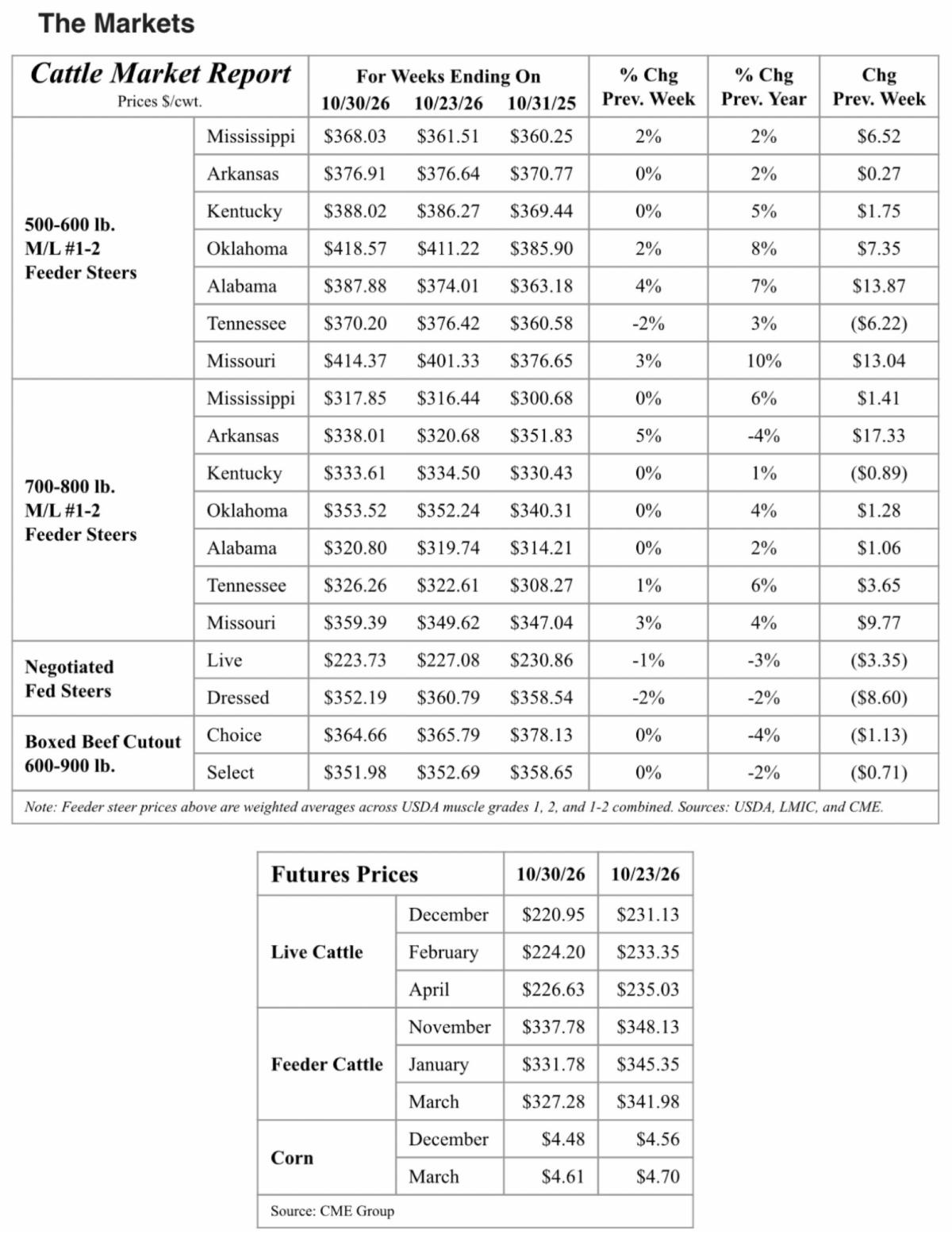
Here is this weeks Cattle Market Notes Weekly

Pesticide Applicator Trainings


There will be no more in person Pesticide Applicator Trainings until this winter. If you need a license you can still do the training online. There is a link below for the online training and a link to check your license status.

Livestock Market Report


The following links are for the weekly livestock market report from the Arkansas Department of Agriculture website and the Livestock Auction Dashboard from USDA. Both sites have marketing data for all livestock sold at Arkansas Sale Barns.

2025 Faulkner County Agriculture Demonstration Summary


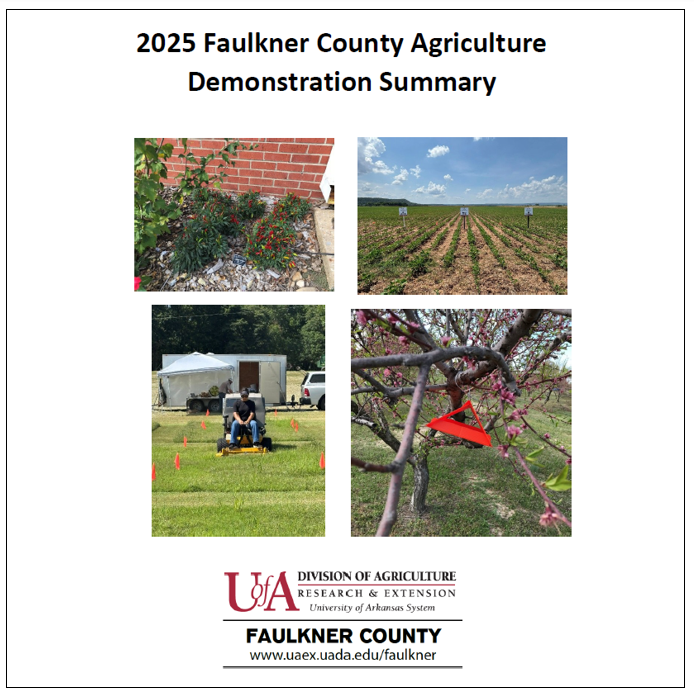
The 2025 Faulkner County Agriculture Demonstration Summary is now available at the link below.


The 2025 Faulkner County Demonstration Summary is a collection of on-site demonstration results conducted in Faulkner County by local County Agents. Demonstrations are the cornerstone of the University of Arkansas System Division of Agriculture Cooperative Extension Service’s mission which is:


“We strengthen agriculture, communities, and families by connecting trusted research to the adoption of best practices.”


On-site demonstrations allow producers and homeowners to see firsthand how Extension recommended varieties and best management practices work in their counties and surrounding area.

Sign up for Text Alerts


You can now sign up for text alerts from me throughout the year. I have two areas you can sign up for which includes Faulkner Livestock or Faulkner Ag (Row Crop Updates). To sign up you can follow one of these links or use the QR Codes below.

Faulkner Livestock


Use either the QR Code or this link:

https://slktxt.io/10lLe

Faulkner Ag (Faulkner Row Crops)


Use either the QR Code or this link:

https://slktxt.io/10lLc

Pursuant to 7 CFR § 15.3, the University of Arkansas System Division of Agriculture offers all its Extension and Research programs and services (including employment) without regard to race, color, sex, national origin, religion, age, disability, marital or veteran status, genetic information, sexual preference, pregnancy or any other legally protected status, and is an equal opportunity institution.

Contact Kevin Lawson, County Extension Agent–Agriculture, Faulkner County | Kevin Lawson