Weekly Digest Number 11 - March 16th, 2021 |
|
WITH PASSAGE OF COVID BILL, AMTRAK RESTORES DAILY SERVICE ON ALL LONG DISTANCE TRAINS |
|
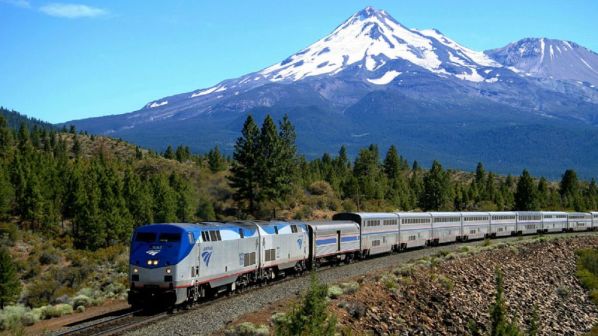
Hours after the House of Representatives sent a $1.9 trillion COVID-19 relief package with emergency funds for intercity rail and transit to the president’s desk, Amtrak announced that it will restore 12 long-distance routes to daily service between May 24th and June 7. The bill includes $1.7 billion in emergency funding for Amtrak, paired with congressional mandates that Amtrak return daily service to long-distance routes within 90 days of passage and bring back railroad workers furloughed due to the pandemic. Rail Passengers Association (RPA) - including staff, our council, and our members - fought hard for these inclusions. Not just the emergency funding, needed to stabilize service on the National Network and the Northeast Corridor, but also the requirements to restore service and workers as soon as possible.
|
|
Analysis: Canceled Keystone XL Pipeline is Driving Major Safety Changes in Canadian Oil-by-Rail |
|
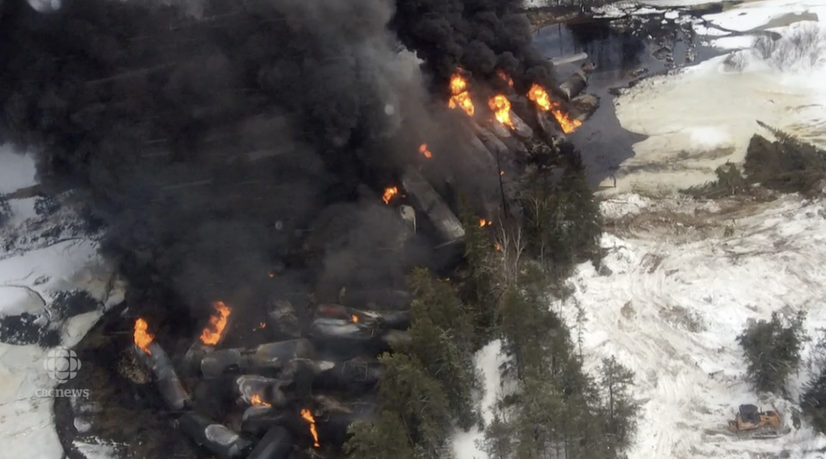
The Biden administration’s cancelation of the Keystone XL (KXL) pipeline in January appears to be driving a revolutionary improvement in Canadian oil-by-rail safety that could protect the public from what have become known as “bomb trains.” Without the KXL pipeline to help transport tar sands bitumen from Alberta to refineries in the United States, Canadian oil producers are turning to trains. And using a new technology to help make it more affordable — and less flammable. To do this, they’re investing in new technology that removes the flammable component of the diluted bitumen mixture before putting it into rail tank cars. The process is expected to make rail transport as affordable as sending bitumen via pipeline.
|
|
Canada's Alghabra Orders Measures to Reduce Risk of Rail Accidents |
|
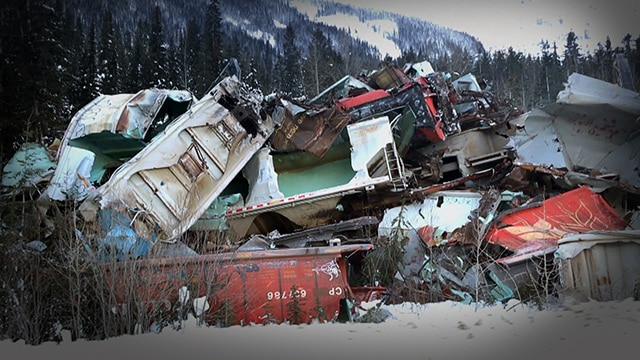
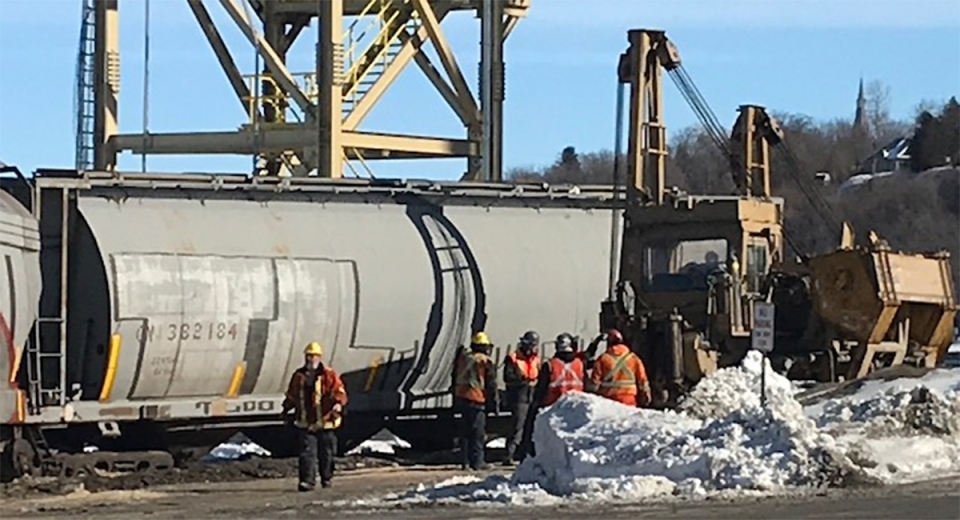
Canandian Minister of Transport Omar Alghabra yesterday issued orders under the Railway Safety Act to further reduce the risk of uncontrolled movements of rail equipment. The orders were prompted by the uncontrolled movement of a Goderich-Exeter Railway train, which led to a Feb. 1 derailment in Goderich, Ontario, Transport Canada officials said in a press release. The first order requires railroads to implement specific procedures that locomotive engineers must follow to prevent the uncontrolled movements of railway equipment due to an unintended release of a train’s air brakes. The second order requires that the rail industry to add a layer of defense to prevent the uncontrolled movements of railway equipment by proposing amendments to the Railway Locomotive Inspection and Safety Rules and the Canadian Rail Operating Rules (CROR) for the minister’s approval.
|
|
New Air Brake Rules Ordered by Transport Canada After Ontario Train Derailment |
|
The Minister of Transportation is implementing two new directives to Canada's railway industry following a derailment in Goderich, Ont. that preliminary reports show are similar to another crash in Saskatchewan. Transport Minister Omar Alghabra said in a statement Wednesday night that the Railway Safety Act will be updated to include measures aimed at reducing the risk of uncontrolled movement of rail equipment specific to securing air brakes. The orders come after a Goderich-Exeter Railway train derailed on Feb. 1 near the town's harbour sending several cars off the rails and destroying a transport truck and a shed. No one was injured but police said the damage was significant.
|
|
Kansas DOT's Win-Win Support of Short Line Railroads |
|
John Maddox has been working for over two decades to help short line railroads continue to provide competitive transportation options to farmers in Kansas. Meanwhile, the Kansas DOT program saves taxpayer dollars from unnecessary road wear and tear, improving road safety and reducing diesel emissions. This is a win-win program with strong bi-partisan support!
Hear from John about how this work has been accomplished, the benefit cost analysis Kansas does, and how other state and short line railroads might learn from their effort. He presented on AASHTO and TRB webinars in the past year, and we were so impressed that we invited him to share the story Kansas has to tell, for the benefit of us all.
|
|
Residents Fed Up with Trains Blocking Their Path for Extended Periods |
|
(Editor's Note: This perennial problem of long freight trains blocking highway crossing appears to be getting worse as Precision Scheduled Railroading (PSR) advances. Note the NS spokesperson states that this increase in crossings being blocked is systemwide).
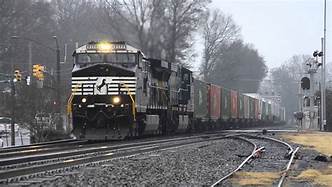
NEW HAVEN, Ind. (WANE) – Drivers in the city of New Haven are getting fed up with trains blocking their path for extended periods of time. City Mayor Steven McMichael and representatives with railway company Norfolk Southern are seeking a solution for the network operation issues. Drivers are complaining that for the past couple months they have experienced an increase or railway crossings being blocked by a stopped train and that the wait for the train to move on can take even upwards of an hour. The drivers say they either wait it out or turn around since the city has a lack of overpasses or underpasses for them to use to ease this issue. The mayor’s office said they are working with Norfolk Southern on finding a possible solution and will continue to have open dialogue addressing the concerns of the City of New Haven and its residents. The City of New Haven has engaged local, county, state, and federal partners in this effort. Norfolk Southern said the increase in crossings being blocked is systemwide, including within the city of New Haven.
|
|
Canadian Grain Shippers Call for Rail Capacity Increase |
|
(Editor's Note: CP and CN in Canada have recently bragged of the record tonnage hauled in the past year's grain harvest. In fact, the record movement of grain had nothing to do with the railroad. Most farmers have no alternative but to ship their grain by rail, whatever volume is produced).
The Western Grain Elevator Association (WGEA) of Canada is calling on railroads to expand capacity and service offerings to the grain sector to ensure the sector's increasing business needs are consistently met. Although increased volumes of grain in Canada have been moved by rail, service levels "fall far short" of demand, WGEA officials said in a press release. "According to the recent media reports, it may seem that we have turned the page on challenging and inconsistent rail service levels of the past," association officials said. "However, the WGEA is very concerned that without an increased rate of rail capacity growth and better supply chain execution, we are headed toward greater disparity between service, and demand for service, over the coming years."
|
|
Gen Z’s High-Speed Rail Meme Dream, Explained
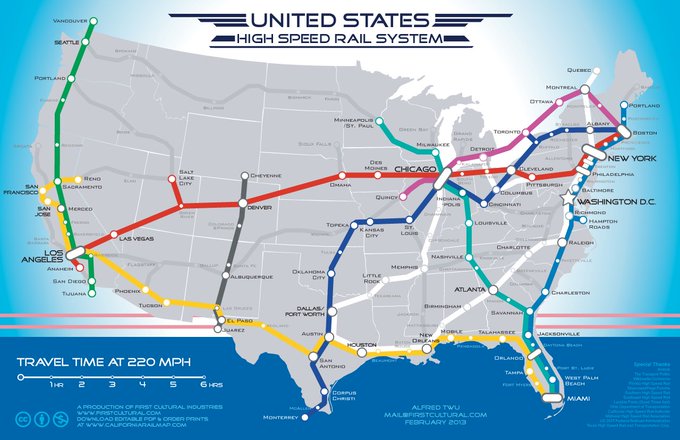
Have you seen that high-speed rail map on Twitter? Gen Z is hoping President Biden has.
|
|
High speed rail infrastructure exists across Europe and Asia, where publicly owned and maintained tracks can connect passengers from Beijing to Hong Kong in nine hours, or Madrid to Barcelona in under three hours. In the United States, there is currently one high-speed rail line — arguably. Amtrak’s Acela Express, which runs through the Northeast Corridor from Boston to Washington, DC, can reach speeds of 165 miles per hour, but frequently runs at an average of 70 miles per hour between those cities.
Even with America’s resident Amtrak champion, Joe Biden, now in the White House, and the administration preparing a $2 trillion green infrastructure proposal, a network like the one in Twu’s map is at best decades away. To get there, the US would have to overcome a number of obstacles, from Republican and corporate opposition to a dearth of expertise. Perhaps most importantly, it would require a level of federal commitment — both budgetary and planning-wise — the likes of which have not been seen in generations.
|
|
Myanmar Security Forces Target Striking Railroad Workers' Neighborhood |
|
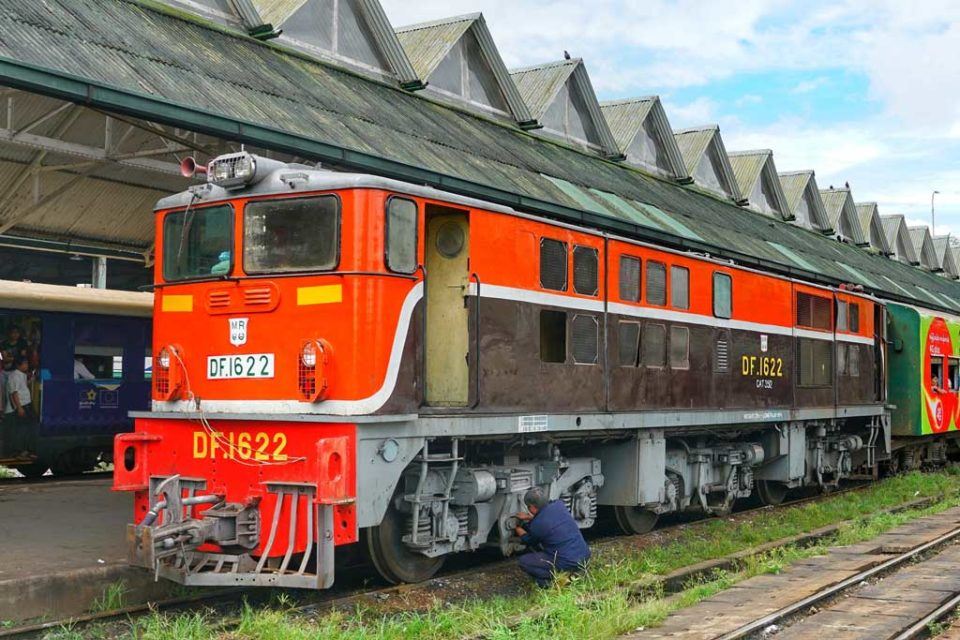
Myanmar security forces raided a Yangon neighborhood Wednesday where striking railway workers have been demonstrating as the protests against the country’s military regime entered its 36th consecutive day. The striking workers have led a campaign of civil disobedience with other civil servants against the junta, which took power on February 1 after overthrowing the civilian government and detaining de facto leader Aung San Suu Kyi and other high-ranking officials. The railway workers joined an alliance of nine trade unions in Myanmar in a general strike Monday to back the anti-coup movement and pressure the junta. Military officials have claimed widespread fraud in last November’s general election, which the NLD won in a landslide, as justification for the takeover. The allegations of fraud have been denied by Myanmar’s electoral commission.
|
|
CP to Employ Ballard Fuel Cells in Hydrogen Locomotive Project |
|
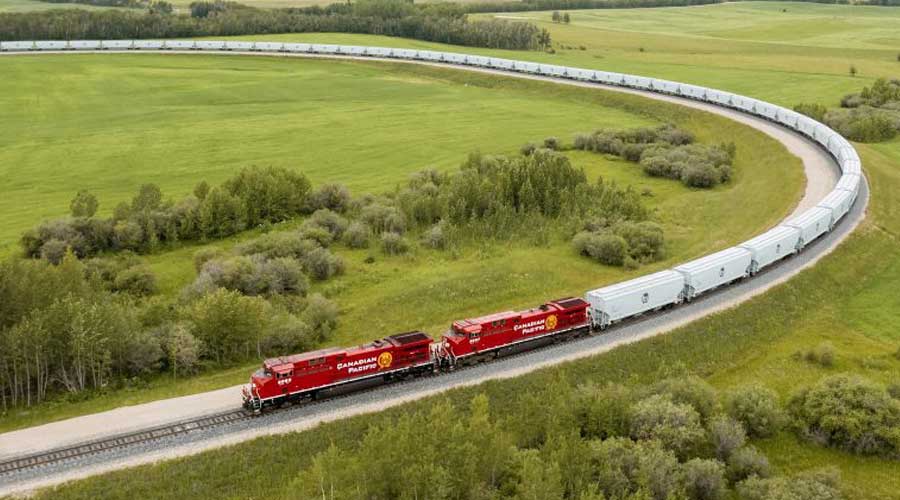
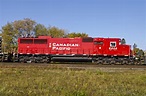
Canadian Pacific announced yesterday that it will use Ballard Power Systems' fuel-cell modules as part of the railroad's hydrogen locomotive program. CP announced late last year that it would develop what would become North America's first line-haul hydrogen-powered locomotive by retrofitting a former diesel-powered locomotive. The Ballard fuel-cell modules will provide a total of 1.2 megawatts of electricity to power the retrofitted unit. The fuel cells will work with battery technology to power the locomotive's electric traction motors. Once operational, CP will conduct rail-service trials and qualification testing to evaluate the technology's readiness for the freight-rail sector, CP officials said in a press release.
|
|
International Day Against Amazon Union Busting - Saturday March 20th |
|
With just one week to go until the next coordinated day of solidarity actions with Bessemer Amazon workers, demonstrations are set from coast to coast. Amazon is pulling out all the stops to try to prevent this historic campaign led by Black workers from succeeding, spending tens of millions of dollars to wage an aggressive union-busting campaign. March 20 will send a message loud and clear to denounce Amazon's union busting, and to let the workers in Bessemer know (and Amazon and workers everywhere!) that there is a movement behind them. The weekend of March 20 is also the U.N. Anti-Racism Day, and the actions will further draw the connection between the fight against racism and for worker power.
Join this growing day of action by planning an event in your area. In different cities, workers and community activists are planning rallies, pickets, gathering neighbors and coworkers to hold signs in front of Whole Foods or Amazon warehouses, distributing leaflets, and more. Each action is significant, regardless of how large it may be.
|
|
|
|
|
|
|