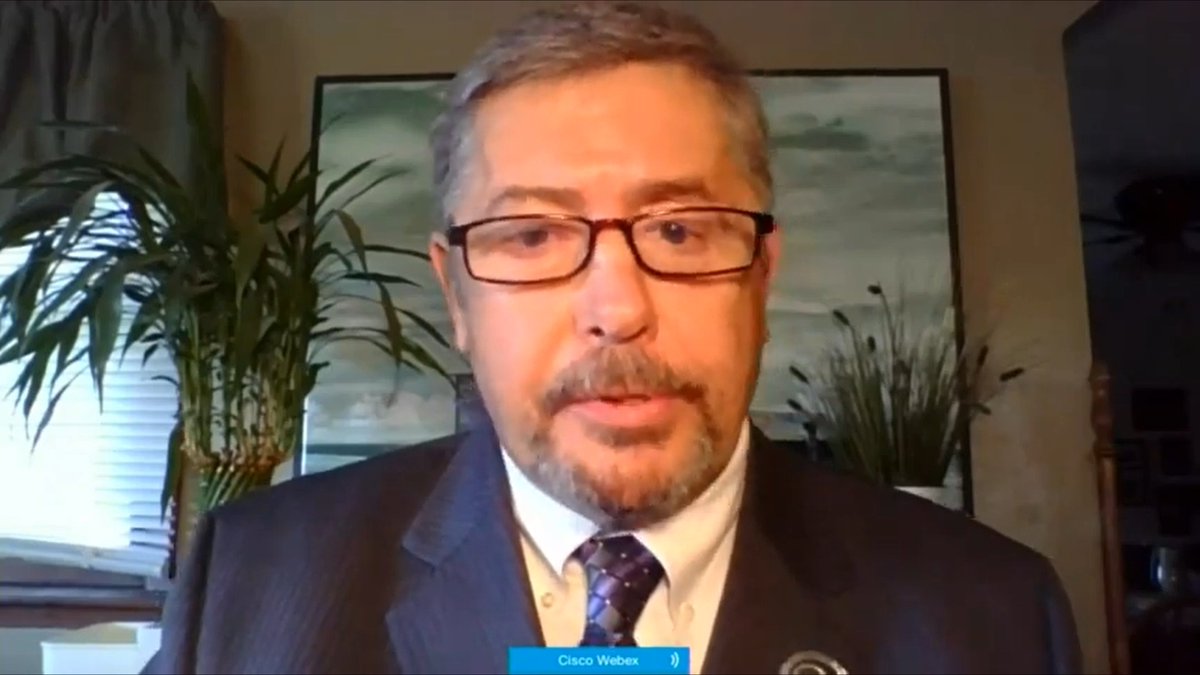
Last Thursday, NACD President Tim Palmer testified before the U.S. House Committee on Agriculture Subcommittee on Conservation and Forestry about the challenges and successes of conservation programs in 2020, including during the COVID-19 (coronavirus) pandemic.
Palmer owns and operates a farm near Truro, Iowa, where he and his family produce corn, soy, oats, hay and beef cattle.
“It is important for the Committee to understand how important Conservation Technical Assistance is to the successful implementation of conservation planning and farm bill conservation programs,” Palmer said in his written testimony. He described the success of NACD’s Technical Assistance Grants Program, funded in partnership with the Natural Resources Conservation Service (NRCS), in helping to boost technical capacity in conservation districts across the country.
Palmer emphasized the role conservation districts play in coordinating locally-led conservation delivery with NRCS, and that the agency needs greater federal hiring authority to address their staff shortages.
|
“The conservation delivery partnership between conservation districts, state conservation agencies and NRCS, which has existed for decades and is trusted by landowners across the country, is the gold standard,” Palmer said.
In his testimony, he highlighted to Congress the impact of state and local budget cuts caused by the pandemic on conservation districts. Revenue shortfalls or associated budget cuts often trickle down, causing conservation districts to furlough staff members who often are responsible for customer service.
“Cuts to district funding at the state and local level hit at the heart of district operations and may impact capacity for federal conservation delivery as well,” he said.
Palmer also addressed the opportunities for improving soil health through conservation programs, describing NACD’s soil health economics case studies and the way soil health conservation practices improve not only the local landscape, but local infrastructure and the local economy as well.
“It is clear to me that conservation has a crucial role to play, not only for benefits to the environment, but as an engine as we look to recover and rebuild our economy,” he said.
|
NCF LAUNCHES
FALL CAMPAIGN, UNVEILS NEW LOGO
|
On Oct. 1, the National Conservation Foundation (NCF) launched the 2020 #FutureFocused campaign to support NCF in the development of the next generation of conservation leaders.
In recent years, NCF has strengthened its organizational identity and purpose by increasing program support, refocusing its mission and vision statements, developing a strategic plan, and introducing a new cornerstone program with the Next Generation Leadership Institute (NGLI).
With past support, NCF was able to create and implement the NGLI, welcoming its seven inaugural cohort members in February 2020 at NACD’s Annual Meeting for their first in-person work group.
Due to COVID-19 (coronavirus), NCF programs have adapted to virtual meeting sessions, gathering online from across the nation as they navigate conservation topics. Other programs like the NCF-Envirothon were postponed to ensure the safety of its participants. As NCF prepares for a new 2021 NGLI cohort and the rescheduled 2021 NCF-Envirothon competition in Lincoln, Neb., set to be held in July 2021, your financial support is needed to help keep these programs moving forward.
This year, NCF is setting a goal of raising $120,000 by the end of 2020. Every contribution matters, and your support will be matched dollar for dollar throughout the campaign.
|
NCF is also excited to announce the launch of its new logo (pictured right)!
This new logo represents NCF's progress as an organization and will help carry the foundation into the future.
The logo reflects NCF's focus on conservation and improving the capacity and skillset of our nation’s current and emerging conservation leaders. It embodies the renewed vitality and reinvigorated commitment NCF has to deliver conservation solutions on America’s landscapes.
Support us in our endeavor to champion locally-led conservation through our fall 2020 #FutureFocused campaign by learning more online.
|
SHOW US HOW #DISTRICTSSUPPORTFORESTHEALTH
THIS OCTOBER
|
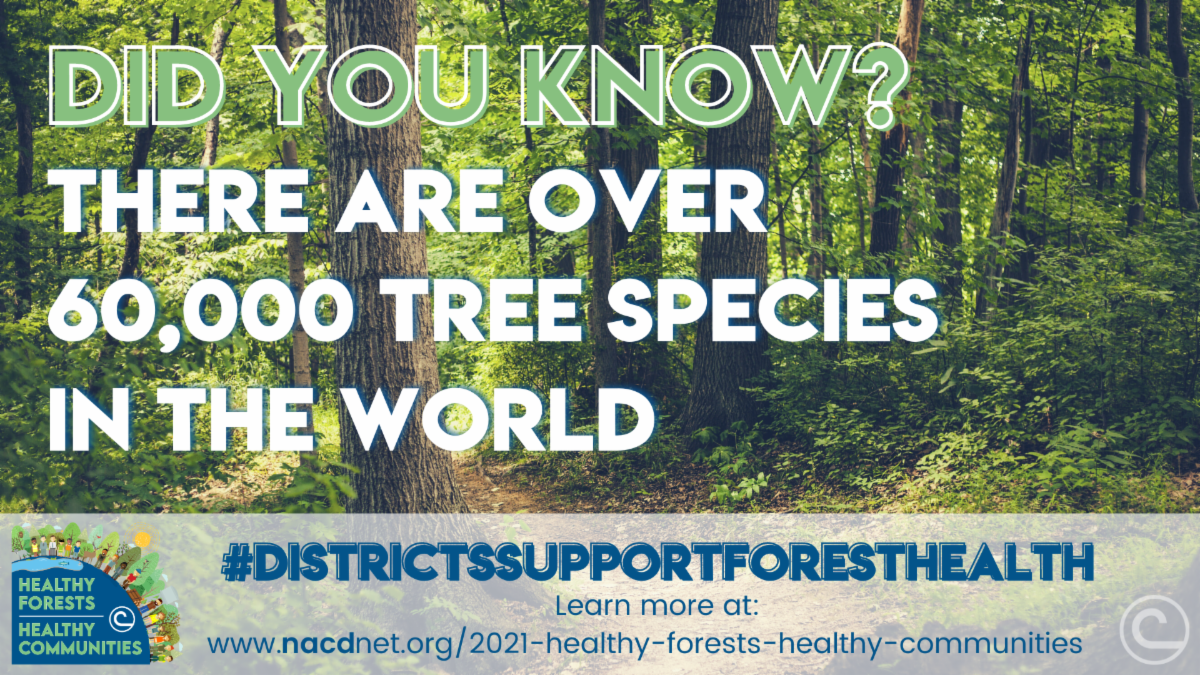
Trees and forests are something that we all share, so it is important that everyone does their part to help take care of and protect them. NACD’s 2021 Stewardship and Education (S&E) theme is Healthy Forests, Healthy Communities, and we encourage conservation districts to help spread the word about the importance of forest conservation by sharing stories on social media using the hashtag #DistrictsSupportForestHealth this month.
October is also National Fire Prevention Month, which recognizes the importance of taking steps toward fire safety, including preventing forest fires and planning an escape route during a blaze. Ninety percent of wildland fires in the U.S. result from campfires left unattended, the burning of debris, downed power lines, discarded cigarettes and intentional acts of arson. Since January of this year, there were 41,051 wildfires in U.S. alone, leading to 4.7 million burned acres, a ccording to the National Interagency Fire Center.
Teaching students and community members how to prevent forest fire and forests helps them advocate for the environment and educate others toward building a healthier community for all.
This month, we want you to share your stories on Facebook, Instagram and Twitter, highlighting your conservation district's forestry conservation activities and programs. Each conservation district that uses #DistrictsSupportForestHealth will be automatically granted one entry into a raffle to win two multitools and a pack of NACD face masks for their office from NACD's Marketplace. The winning district will be announced on social media and in the Oct. 27 edition of eResource.
|
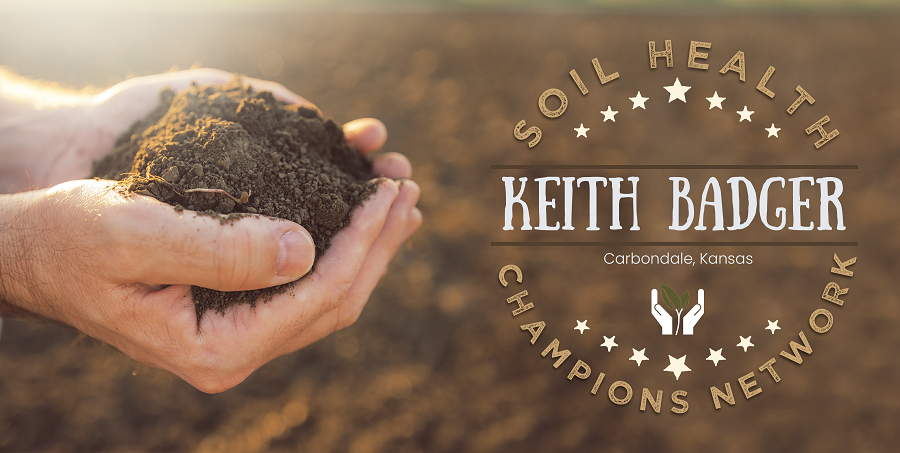
Keith and Martha Badger farm along with Keith’s brother David and his wife Karen in east-central Kansas on 2,400 acres. Their operation consists of a corn and soybean rotation with a cow/calf operation of 110 adults.
Badger finds that the key to managing his operation is to change along with the ag industry and to challenge the way things have always been done. As he manages his soil health, he puts profitability and sustainability at the forefront.
Badger has always tried to minimize tillage, but when he compared the tilled fields to the no-till fields, he noticed that the no-till fields held and retained water better. It was at that point that he decided to switch completely to no-till soybeans and strip-till corn for his moisture management.
Badger also noticed how well the soil holds nutrients, which translates into lower input costs. With the additional benefit of decreased or eliminated soil erosion, Badger sees less of his profits getting washed into nearby streams. He also understands that in some cases, the public perception is that the agriculture industry can be insensitive to water quality issues.
“By being proactive toward water quality issues and by being responsible with our management practices, we get to start the conversation, not defend ourselves,” Badger said. He has also gradually introduced cover crops, which have further boosted his soils’ water-holding capacity and reduced soil erosion.
Badger also integrates different technology to help keep his operation profitable and sustainable. By using variable rate technology, he applies nutrients at specific quantities in the specific areas of need on each field. Through a partnership with the Ottawa Cooperative Association and the Land O’Lakes SUSTAIN program, Badger has been able to also utilize the Truterra Insights Engine tool. This tool helps him establish his stewardship baseline and evaluate how different conservation practices can boost profitability and sustainability in each field.
To learn more about Badger’s operation, visit Badger's NACD profile online. If you or someone you know would like to become a member of the NACD Soil Health Champions Network, please visit the NACD website for more information or contact NACD North Central Region Representative Beth Mason at |
|
During NACD’s 2020 Summer Board Meeting, the NACD Board of Directors took up, voted on and approved a formal statement on diversity, equity and inclusion (DEI). The statement included creation of a task force to provide recommendations back to the board on DEI issues for NACD and our 3,000 conservation districts.
NACD’s DEI Task Force began work earlier this fall and needs feedback from conservation districts. The following survey will take approximately five minutes to complete. This survey will remain open until Oct. 23.
|
Support NACD on Amazon Prime Day |
Amazon Prime Day is a two-day, online shopping holiday full of deals from Oct. 13 at 12:01 a.m. Pacific through Oct. 14 at 11:59 p.m. Pacific.
|
NACD Government Affairs Update |
Congress recently passed and President Trump signed a Continuing Resolution that will fund the federal government at fiscal year 2020 (FY20) levels through Dec. 11, 2020.
Funding would have otherwise expired at the end of FY20 this past Wednesday, September 30, which would have led to a government shutdown. While NACD is pleased that a government shutdown was avoided, there are programs that we feel should receive additional funding over FY20 figures, and we will continue working with Congress to ensure these programs are robustly funded.
Contact NACD Director of Government Affairs Coleman Garrison for more information. |
USDA Seeks New Partnerships to Safeguard, Restore Wetland Ecosystems |
On Oct. 5, the U.S. Department of Agriculture (USDA) announced up to $30 million available in technical and financial assistance through the Wetland Reserve Enhancement Partnership (WREP) to help conservation partners protect and restore critical wetlands on agricultural lands. Restored wetlands help improve water quality downstream, enhance wildlife habitat, reduce impacts from flooding, and provide recreational benefits.
WREP enables effective integration of wetland restoration on working agricultural landscapes, providing meaningful benefits to farmers and ranchers who enroll in the program and to the communities where the wetlands exist.
NRCS will review partners’ project proposals and evaluate priority resource concerns, objectives, costs and expected outcomes for each project and rank proposals based on criteria set forth in the requirements listed on each state’s NRCS website.
Proposals should be emailed to the NRCS state contact listed in the local announcement by Nov. 30, 2020. To learn more, click here.
|
Fond du Lac LWCD, LWQIA Recognize Dairy Farmer for Water Quality |
In Wisconsin, the Fond du Lac Land and Water Conservation Department (LWCD) and the Lake Winnebago Quality Improvement Association (LWQIA) partnered to recognize a local producer through LWQIA’s Mathias-Lesczynski Water Quality Award. This award recognizes farm management practices that help protect surface water from runoff of sediments, nutrients and chemicals into rivers, streams and especially Lake Winnebago, the largest inland lake in the state.
This year, the award was given to Josh Hiemstra of Brandon, Wis. For decades, Hiemstra has been committed to implementing no-till and cover crops on his farm, helping to conserve the soil, reduce runoff, and ultimately, replenish his soil through biological diversity. Check out this video to learn more.
|
Register Now:
TNC Webinar on AgEvidence
|
On Friday, Oct. 9 at 12:00 p.m. Eastern, The Nature Conservancy (TNC) will host a webinar to introduce the new AgEvidence data visualization platform. AgEvidence shows the impact of regenerative agriculture on the environment and crop health in the U.S. Corn Belt.
The webinar will feature an introduction to the tool by Dr. Stephen Wood, senior scientist, Agriculture and Food Systems at TNC. Dr. Lesley Atwood will give an introduction to the methodology and creation of the tool, and Dr. Emma Fuller, director of sustainability science, granular, will talk about how the tool can be used.
To learn more and register for the free webinar, click here.
|
NACD's Marketplace Offers Membership Deals |
Letting someone know they are appreciated is crucial to building good relationships. Honor and recognize your employees with NACD pins, plaques and ribbons on NACD's Marketplace.
Whether you are celebrating an employee's years of service or exceptional work, you can choose from a wide selection of items and designs.
Platinum, diamond and gold level NACD members making a single purchase of $100 or more from the Marketplace can benefit from 20 percent, 15 percent and 10 percent discounts respectively.
|
Promote your conservation district or state association's tree sale, annual meeting, webinar, field day or more on NACD's Calendar of Events!
|
|