Newsletter — April 16, 2026 | | |
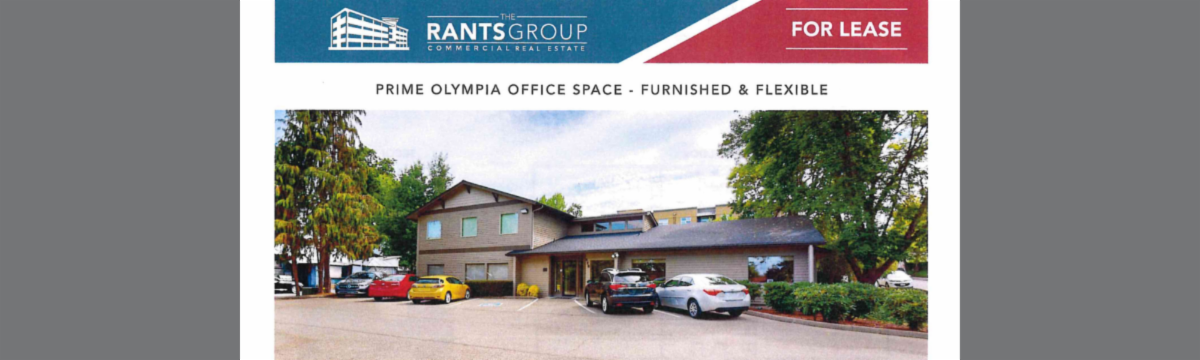
WR office space now available for lease
WR is offering first-level professional office space for lease, creating an opportunity for businesses seeking a well-located and collaborative environment.
The space includes access to shared amenities that support daily operations, along with a central location and convenient access to surrounding businesses and services.
This opportunity is well-suited for organizations looking to establish or expand their presence in a professional setting connected to the retail community.
Businesses interested in details on layout, terms, and availability are encouraged to review the full leasing document.
| | |
POLICY
ECONOMY
ON THE LOCAL FRONT
RETAIL THEFT & PUBLIC SAFETY
IN THE NEWS
| | |
Employment law passed in WA’s 2026 legislative session
Washington’s 2026 legislative session introduced a broad set of employment law changes that will have real, day-to-day implications for employers across the state. These updates reflect an ongoing shift toward increased worker protections, greater transparency, and expanded regulatory oversight. For employers, particularly in industries like retail, where workforce size, turnover, and compliance complexity are high, understanding not just what has changed but how and when to implement those changes will be critical.
The legislation outlined below highlights the most relevant updates for members of WR, with a focus on areas that may require operational adjustments, policy updates, or additional communication with employees.
General Employment Law
-
Eliminate Noncompete Agreements (HB 1155) – This legislation voids all noncompetition covenants prospectively and retroactively. By Oct 1, 2027, employers are required to notify all parties with such agreements that they are now void.
-
Immigrant Worker Protection Act (2SHB 2105) – All employers must notify their workers within five days of an I-9 inspection notice or inspection results. Enforcement is effective Oct 1, 2026, by the Attorney General or via civil action.
-
Expand Attorney General’s Pre-Civil Investigation Authority (ESSB 5925) – Effective Jun 11, 2026, the Attorney General’s pre-civil investigative authority is expanded to cover wages and payments to workers, and the WA Law Against Discrimination.
-
Pregnancy Accommodation Complaints Exempt from Public Records Act (SSB 6014) – Effective Jun 11, 2026, the identity of pregnancy accommodation complainants is exempt from the Public Records Act, and the written certification requirement no longer applies to accommodations related to lifting over 17 pounds.
-
Prohibits Implanting Microchipping Employees (HB 2303) – This legislation prohibits an employer from requesting, requiring, or coercing an employee to have a microchip implanted in the employee for any reason.
-
Establish Labor Standards for Domestic Workers (SHB 2355) – Effective July 1, 2026, employees or independent contractors who work in a private residence for at least four hours a month will be protected under the Minimum Wage Act, other protections that were previously exempt for some of them, and the Washington Law Against Discrimination.
-
Childcare Standards Board (2SHB 1128) – By Sep 1, 2026, the Governor shall appoint a seven-person Childcare Standards Board within Labor & Industries. The Board shall convene to produce a series of reports with recommendations related to childcare worker staffing, recruitment, retention, and staffing ratios.
Paid Leave, Unemployment Insurance, and Workers’ Compensation
-
Paid Leave Premium Contribution Switch (2SHB 2345) – Effective Jun 11, 2026, the premium contribution will switch between employers and workers to minimize the tax liability on employers and workers due to a 2025 IRS Guidance. The share ratio between employers and workers remains the same.
-
Paid Leave Actuarial Rating (2SSB 5292) – Effective Jan 1, 2028, the statutory rate-setting formula is replaced by actuarial rate-setting while keeping the 1.2% statutory rate cap.
-
Paid Leave Solvency & Integrity Evaluation Report (ESSB 5998 – Sec. 232 (27)) – Within the operating budget, the Legislature required the Employment Security Department to gather input from the Paid Leave Advisory Committee and deliver an evaluation report with recommendations related to the program’s solvency and integrity by November 1, 2026.
-
Access UI for Voluntary Layoff (HB 2264) – Effective Jun 11, 2026, a worker who voluntarily participates in an employer-initiated layoff or reduction plan retains the right to access unemployment insurance benefits so long as their termination is the result of the plan.
-
Waiving Minor Error on UI Employer Reports (SSB 5874) – The Employment Security Department Commissioner may waive minor or insignificant reporting errors on reports requiring the standard occupational classification or job title of each worker.
-
Notice to Striking Workers to Repay UI Benefits (SB 6134) - Striking workers who receive unemployment (UI) benefits will be issued a notice that explains their legal obligation to repay UI benefits if backpay wages are later received.
-
Workers’ Comp Out of Network Provider Access & More (E2SSB 5847) – This legislation opens the option to go outside of the medical guideline and the medical providers' network under certain circumstances. It also establishes standards for utilization review and adds penalties to employers who mandate workers to use specific medical providers. Continued treatment is allowed for certain closed claims.
-
Pilot program for posttraumatic stress disorder treatment and research (SHB 2405) – A pilot program is established in the Department of Labor and Industries to allow workers' compensation coverage of post-traumatic stress disorder treatment up to a specified number of sessions before claim adjudication and after claim closure.
-
Workers’ Comp Rate Transparency (SB 6136) – In addition to publishing the annual proposed premium rates, L&I must publish the actuarially indicated rate for each workers' compensation risk classification as part of its proposed premium rates for the upcoming year.
-
Modernize L&I Communication Across Multiple Programs (SSB 6039) - Specified notice and communication provisions may be sent digitally across multiple L&I administered programs, but L&I must provide the affected party the option to receive communications through a nonelectronic method.
| | |
WR needs you: Lawmakers need to hear from retailers
With the legislative session behind us, WR is already focused on the interim and the work ahead. While lawmakers may have left Olympia, advocacy does not end when session adjourns. In many ways, the interim is one of the best opportunities to build relationships, elevate retailer voices, and help shape the policy conversations that will carry into the next legislative session.
That is why now is such an important time for WR members and supporters to get involved in our grassroots efforts.
Retail Voices Belong at The Table
Retailers bring something to the table that no one else can. You understand firsthand how public policy affects businesses, employees, customers, and communities. That practical experience is invaluable, and it is exactly the kind of insight lawmakers need.
When policymakers are weighing issues like public safety, labor, consumer costs, and the local economy, they should be hearing directly from retailers, especially the business owners, operators, and retail professionals in their districts. The strongest policy decisions are grounded in the experiences of those living with the impact every day.
Simply put, WR is strongest when retailer voices help shape the outcome.
Ways to Get Involved
Grassroots advocacy is not one-size-fits-all, and there are many ways members and supporters can participate, including:
- Meeting with lawmakers in your district
- Hosting store tours for elected officials
- Attending legislative and campaign events
- Participating in WR policy workgroups
- Speaking with media and community leaders
- Sharing stories and examples from your business
- Responding to action alerts
- Contacting lawmakers about key policy issues
- Testifying on proposed legislation
- Sending letters or emails to policymakers
- Connecting WR with other retailers and stakeholders
Whether you are comfortable speaking publicly or prefer to engage behind the scenes, there is a role for you.
A Little Time Can Make a Real Difference
Getting involved does not have to be a major time commitment. For many members, participating may only take one to two hours a month, and you can engage as much or as little as your schedule allows.
No level of involvement is too small. Whether you respond to an occasional action alert or take part in a meeting or store tour, your involvement helps strengthen WR’s advocacy and expand the reach of retailer voices.
WR Makes It Easy to Get Involved
You will not be doing this alone. WR will be with you every step of the way. We handle scheduling, coordination, preparation, and organizing so participation is simple, manageable, and worthwhile.
We do the legwork. We just need you, your voice, and your experience.
Help WR Advocate as Effectively As Possible
Whether you are a business owner, operator, manager, team member, or industry partner, there is a place for you in WR’s grassroots work. Your involvement helps us advocate more effectively, respond more quickly, and better reflect the full range of experiences across Washington’s retail community.
Retail is too important to be left out of the conversation. If lawmakers are making decisions that affect retailers, they should be hearing directly from retailers.
Interested In Getting Involved?
To learn more about WR’s grassroots efforts and how to participate, please contact WR Director of Policy & Government Affairs Crystal Leatherman at cleatherman@washingtonretail.org or 360-884-0771, or click here to fill out a few details and inquire directly.
| | |
Worker access to personnel files expands under updated L&I rule
The Washington State Department of Labor & Industries has adopted updates to its personnel file rules to align with recent changes in state law under Substitute HB 1308. The revised rule, WAC 296-126-050, will take effect May 1, 2026.
The update requires employers to provide current or former employees access to their personnel files within 21 calendar days of a request. It also clarifies what materials may be considered part of a personnel file, offering additional guidance for both employers and workers.
Another key change allows employees and former employees to pursue legal action if employers do not comply with access requirements. This adds a new level of accountability tied to the handling and timely release of personnel records.
For WR members, the rule change underscores the importance of reviewing internal policies and procedures related to employee records. Ensuring compliance with the updated timeline and maintaining clear documentation practices may help reduce potential legal risk.
WR encourages employers to familiarize themselves with the new requirements ahead of the May 1 implementation date to ensure a smooth transition and continued compliance with state regulations.
CR-103 Adoption
Adoption Language
| | |
IRS provides tax relief for Washington storm impacts
The Internal Revenue Service has announced tax relief for individuals and businesses in Washington affected by severe storms and related disasters that began on December 9, 2025. Following a federal disaster declaration from the Federal Emergency Management Agency, eligible taxpayers now have until May 1, 2026, to file federal tax returns and make payments.
The relief applies to residents and businesses in multiple counties, including King, Pierce, Snohomish, Thurston, and Yakima. Deadlines for individual and business tax filings, estimated tax payments, and certain payroll and excise tax returns that fell between December 9, 2025, and May 1, 2026, are automatically extended.
Penalties for certain payroll and excise tax deposits may be waived if deposits were made by December 29, 2025. The IRS also noted that affected taxpayers may qualify for additional relief, including the ability to claim disaster-related losses on either their 2024 or 2025 tax returns.
Most eligible taxpayers will receive relief automatically. Those outside the designated disaster area but impacted may request assistance directly from the IRS.
WR encourages members to review eligibility and consult a tax professional to understand how this relief may apply to their business operations.
| | |
Washington ranks among least affordable states
A new report from the Washington Roundtable and Kinetic West finds that Washington is now among the five least affordable states in the nation, with costs rising faster than anywhere else over the past decade. Using regional price data from the Bureau of Economic Analysis, the study ranked the Seattle-Tacoma-Bellevue region as the fifth most expensive metropolitan area in the country and the highest outside of California.
Researchers found that Washington’s overall cost of living is now comparable to traditionally high-cost areas such as California, Hawaii, Washington, D.C., and New Jersey. Food prices are a significant factor. The state ranks first in the nation for restaurant costs and seventh for grocery expenses, placing added pressure on household budgets.
The report also highlights a growing affordability gap that may impact economic competitiveness. While Washington’s costs continue to climb, other states such as Arizona, Idaho, and Texas have become relatively more affordable, drawing residents and businesses away.
For retailers and employers, the findings underscore ongoing challenges tied to consumer spending, workforce retention, and operating costs. The report suggests that without changes, Washington may continue to face increased economic pressure compared to other states.
Watch Now
| | |
Seattle’s economy and city budget holding steady despite challenges
A new analysis by Seattle’s Office of Economic and Revenue Forecast provided city officials with a pleasant surprise when it projected that the city’s economy and budget will hold steady through 2027.
Members of the city’s Economic and Revenue Forecast Council, comprised of Councilmembers and staff from the Mayor’s office, expected inflation, tech layoffs, higher oil prices, and international turbulence to slow the economy and drive up the city’s projected budget shortfall. However, the analysis found that those negative factors are being counterbalanced by growth in health care and education.
On the budget front, the impacts of inflation and a sluggish economy are being offset by higher revenue generation by the JumpStart payroll tax, a new $.01 sales tax for public safety, and voter-approved changes to the city’s business and occupancy (“B&O) tax. The revised B&O tax shifts the burden from small and medium-sized businesses to large ones.
Councilmember Dan Strauss, chair of both the Council’s Select Budget Committee and the Economic and Revenue Forecast Council, reacted cautiously to the neutral budget forecast.
“I’m glad that the forecast is a wash because it’s better than a negative. . . . I also think we as a city need to be acting as if this is a negative revenue forecast.”
The city is expected to face a budget shortfall of about $150 million in 2027, so Mayor Katie Wilson has asked city departments to prepare for 5% - 10% cuts.
One area where international turmoil is expected to impact Seattle is FIFA World Cup tourism. While Visit Seattle anticipates that the games will bring about $846 million to the area, the tourism projections are down about 10% from earlier estimates.
| | |
Barnes and Noble returns to downtown Seattle
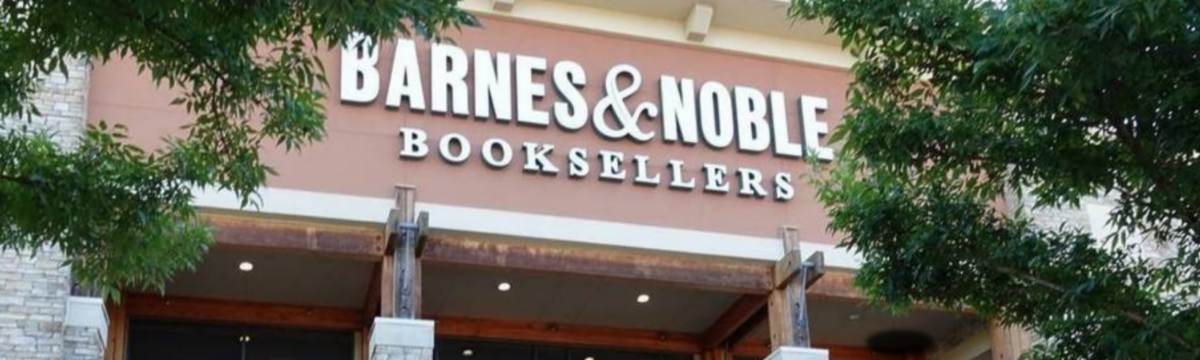
Barnes & Noble is set to reopen in downtown Seattle on May 6, marking a notable return for the national retailer after several years. The new two-level store will occupy more than 17,000 square feet at 520 Pike Street, with a community ribbon-cutting event planned ahead of opening.
The return follows the company’s departure from downtown in 2020 and comes after several prominent retail closures in recent years. Local leaders, including the Downtown Seattle Association, view the reopening as a positive indicator for the city’s retail core and broader economic recovery.
According to the association, downtown Seattle is showing signs of renewed momentum. Residential population levels have reached record highs; visitor activity has surpassed pre-pandemic levels, and foot traffic continues to increase. These trends are helping to attract both returning and new businesses to the area.
The new location replaces a previously vacated retail space and adds to the company’s existing presence in Seattle. The reopening reflects ongoing shifts in urban retail environments and signals growing confidence in downtown markets as consumer activity continues to rebound.
| | |
Washington Governor vetoes $500K to combat ORC
Loss Prevention Magazine
By: Courtney Wolfe
April 6, 2026
Washington Governor Bob Ferguson is facing criticism after vetoing $500,000 in funding meant to combat organized retail crime.
Washington state is number one in the nation for retail crime, according to Forbes, contributing to a nearly $3 billion impact on the economy and safety concerns for employees and customers.
“I am deeply disappointed and puzzled by the governor’s decision to veto a budget measure that focuses on combatting organized retail crime,” Rep. Mari Leavitt (D-University Place) said in a statement.
Leavitt was a champion of the funding after deciding to take a hands-on approach to learning about the real-world impacts of ORC, attending the NRF State Legislative Leadership Experience and an ORC conference, convening a public safety roundtable discussion in the interim, and participating in a ride-along during a fence operation bust, according the Washington Retail Association.
This veto comes after the governor supported a pilot program last year that provided $1 million to combat the issue of retail crime. From January through June of 2025, the King County Prosecuting Attorney’s Office filed 142 retail theft cases, 2.5 times more than the average across the past four years. King County Prosecutor Leesa Manion said the success was a direct result of the funding allocated by the legislature, which allowed the office to temporarily hire an additional prosecutor.
According to the Washington Retail Association, in the first five months of 2025, the pilot generated 402 program-driven law enforcement responses, identified 1,194 people eligible for diversion, offered diversion to 343 individuals, initiated 154 diversions, and generated 5,868 ORC reports.
“While we face this challenging situation, consequently, we have limited ability to absorb additional work or expenses that are not funded in the budget,” Ferguson said. “That is why I vetoed a few programs. It’s also consistent with how I approach budgeting. We have a proposal to do something in our budget. We’ve got to have the funding to do it.”
| | |
The Center Square
By Carleen Johnson
April 14, 2026
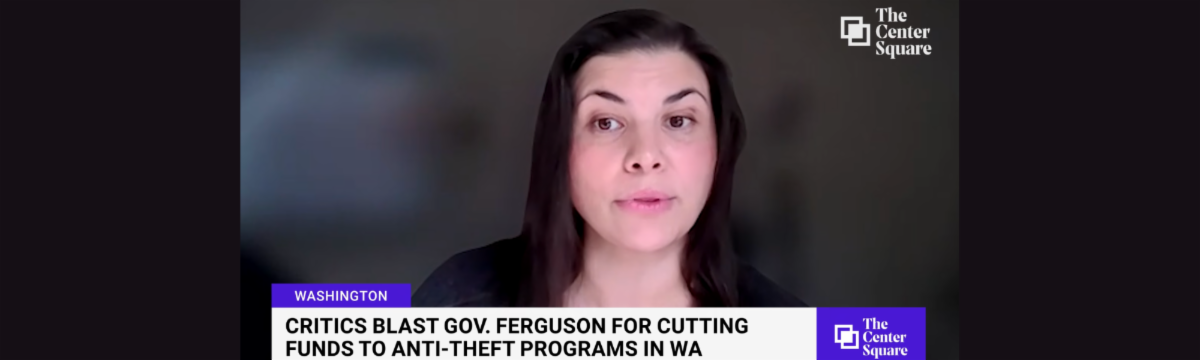
Two weeks after Governor Bob Ferguson signed the supplemental operating budget, questions remain as to why he vetoed funding in the spending package to combat organized retail theft.
Organized retail theft involves coordinated, often violent, theft for resale and not just petty shoplifting.
The veto amounted to axing $500,000 in a funding request brought by state Rep. Mari Leavitt, D-University Place, to address costly and dangerous retail crime across the state.
The half a million was intended to piggyback on a $1 million investment in 2024 to help law enforcement, prosecutors and businesses to combat organized retail crime in King, Snohomish and Spokane counties.
More cases were prosecuted and eligible offenders were steered to diversion programs until the funding ran out in June of 2025.
A January report issued by the state Department of Commerce indicated the program “was highly effective in strengthening the overall response” to organized retail crime.
Leavitt said she was shocked to find out the new funding to continue the program was being cut, via a phone call from the governor’s office the night before the budget was to be signed.
“When I got off the phone, I quickly called the retail association and those who matter and said the governor's going to veto it tomorrow, we need to galvanize an effort to stop it,” Leavitt said.
The Washington Retail Association, the King County prosecutor and others responded, urging Ferguson not to veto what amounted to a tiny fraction of the budget. But their pleas didn't stop Ferguson from vetoing the budget line.
Pressed by reporters about the veto, Ferguson said that as attorney general he created a task force to tackle the issue of retail theft, but added, “at the same time, we’ve got a budget to balance.”
During Ferguson’s time as AG, the office did create a special unit that targets high-dollar organized crime.
Leavitt said she has not had a personal conversation with the governor since the veto, but she’s not giving up the battle.
“It’s very clear that many people are unsatisfied with the decision that the governor made, and the governor made it anyway,” Leavitt said. “This is a bipartisan concern across our state. It has nothing to do with politics but has everything to do with keeping our communities safe.”
Leavitt said she is considering an effort to convince other lawmakers to override the veto come next legislative session, but regrets there is nothing more that will be done for the remainder of this year.
Crystal Leatherman, director of policy and government affairs for the Washington Retail Association told The Center Square retailers are extremely frustrated by the revolving door of repeat offenders.
“We unfortunately have an environment that feels very permissive with individuals offered diversion in lieu of jail time, but then they are not required to go and there’s no enforcement mechanism for them to finish these programs." Leatherman said. "So, they’re getting a free ride."
She noted that their members and employees are put at risk every day because of organized retail theft operators.
“Unfortunately, Washington is one of the leading, if not the leading state for businesses being impacted by retail theft,” she said. “The National Retail Federation’s most recent report had Seattle in the top ten for cities with violence increasing with retail theft, so this is impacting workers too.”
According to the NRF’s 2025 Impact of Retail Theft & Violence report, retailers nationwide lost more than $112 billion to theft and organized retail crime last year, and saw a sharp increase in repeat-offenders and violence during thefts.
The US Chamber of Commerce estimates that in 2021, Washington experienced an estimated $2.7 billion in stolen goods and as a result, lost out on $603 million in state and local tax revenue.
The Center Square reached out to the office of Gov. Ferguson for comment on his veto decision but did not receive a response.
Watch Now
| | Image: Thurston County Sheriff’s Office | |
Suspected retail theft spree leads to arrest in Thurston County
A suspected organized retail theft case in Thurston and Lewis counties recently resulted in two arrests following a multi-city vehicle pursuit, according to the Thurston County Sheriff’s Office.
Authorities reported that the suspects were linked to multiple retail theft incidents, including a prior case in Lacey. The individuals allegedly used stolen bags from one retailer to take merchandise from other businesses, a tactic commonly associated with organized retail crime.
Deputies identified the vehicle traveling north on Interstate 5 and attempted a stop, but the driver fled, leading to two pursuits that were ultimately discontinued due to public safety concerns. The vehicle was later found abandoned in Lacey, and both suspects were located nearby and taken into custody.
A search of the vehicle uncovered thousands of dollars in suspected stolen goods from multiple retailers, along with illegal drugs. The driver, who has an extensive criminal history, faces multiple charges, including DUI, attempting to elude law enforcement, and possession of narcotics. Additional organized retail theft charges are expected.
This incident highlights ongoing challenges for retailers and law enforcement as organized retail crime continues to impact businesses across Washington.
| | |
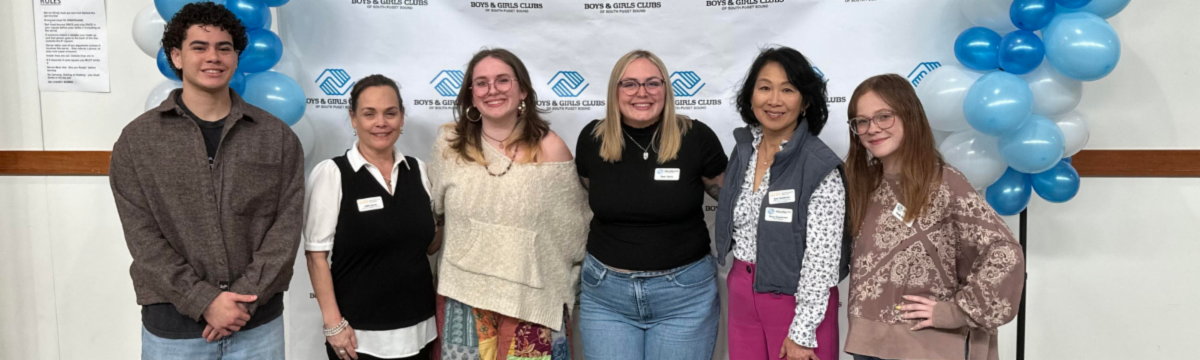
WR promotes SAFEME at Boys & Girls Club of WA staff conference
Last Friday, WR presented SAFEME Essentials and SAFEME Automotive, two free workplace safety online training that prepares entry-level workers, at the Boys and Girls Club of Washington (BGCWA) staff conference in Tacoma.
The opportunity to engage BGCWA across their 20 regions statewide is significant because the youth they serve usually need additional career connect support structures. Expanding SAFEME awareness through this network helps introduce workplace safety fundamentals to students that may not be reached through typical K12 Careers and Technical Education in schools.
Since 2016, WR has led the development of SAFEME Essentials and SAFEME Automotive in both English and Spanish through a safety grant from Labor & Industries, which is available at wrasafeme.org. These free programs provide practical, real-world safety training that prepares entry-level workers for a variety of industries.
A strong workplace safety mindset is one of the most valuable soft skills an entry-level employee can bring. Workers who understand safety fundamentals contribute to stronger teams, fewer incidents, and more consistent business operations.
We encourage employers to recognize SAFEME certifications during hiring. Candidates who complete these courses demonstrate initiative and a proactive approach to workplace safety—qualities that benefit any organization.
| |
WR diversity statement
WR is committed to the principles of justice, equity, diversity, and inclusion. We strive to create a safe, welcoming environment in which these principles can thrive.
We value all people regardless of race, ethnicity, gender, religion, age, identity, sexual orientation, nationality, or disability, and that is the foundation of our commitment to those we serve.
| | |
Alesha Shemwell, Interim CEO — 360.200.6450 — Email
Crystal Leatherman, Dir of Policy & Government Affairs — 360.200-6453 — Email
Rose Gundersen, State and Local Gov't Affairs Associate — 360.200.6452 — Email
| | | | |