|
FRONT RANGE REPORT
August 2021 Edition
| |
The Wild Ones Front Range chapter inspires and empowers people and municipalities to transform private and public landscapes into more native plant habitat to support all people and a healthy planet. | |
|
BECOME A MEMBER
Enjoy all of the great benefits of a membership with the Front Range Chapter of Wild Ones!!!
| |
|
For upcoming events, please scroll down! | |
Native Plants in the Shade
By Deb Lebow Aal
| |
|
I think most people believe that shade gardening with native plants requires quite a bit of creativity, especially on the Front Range of Colorado. We do not have many native trees, so there is not much shade. It’s a given that most plants require light and water to do their thing, and both are often lacking in shaded areas. But, it is possible. Embracing shade, rather than fearing it, can help.
We know the benefits of planting trees for the environment. The benefits are almost incalculable, and the subject of a different article. So, as we are planting more trees, preferably native and near-native tree species, we will have more shade to deal with in our gardens.
Partial shade and full shade are very different. Partial shade will allow more native species to do well. In fact, with our intense Colorado sun, many plant species with labels indicating they need full sun may do just fine in partial shade. Full shade will be more difficult. A really densely shaded area will probably support little, and what it does support will be mostly foliage. Four or more hours of sunshine a day will allow a much bigger palette of plants. So, assess the amount of shade under your tree before planting.
We do need to remember that a large portion of a tree’s biota is underground. We need to be cognizant of the density of the root structure, to know what can happily survive under a tree canopy. If plants are competing with a dense root structure, they obviously will have a more difficult time. And, you will have to water occasionally, as plants under a tree canopy get less rain water than those out in the open. Obviously, not much will survive with no water.
One or two more considerations. If your shade is facing north, the plants that will survive are different than if facing south. And, consider the edge, or transition zone from shade to sun, differently than the area completely under a tree. You will have to experiment with these plants, and, as with all plantings, there are no guarantees. Below are a few suggestions, first from my experience, and then from Jan Midgley’s.
Deb's Suggestions
Aquilegia caerulea (Colorado Blue Columbine): Columbine seems to do better in mountain settings, but many people are successful with it on the Front Range. Because of how hot it is now in Denver, columbines appreciate some shade, and water.
| |
|
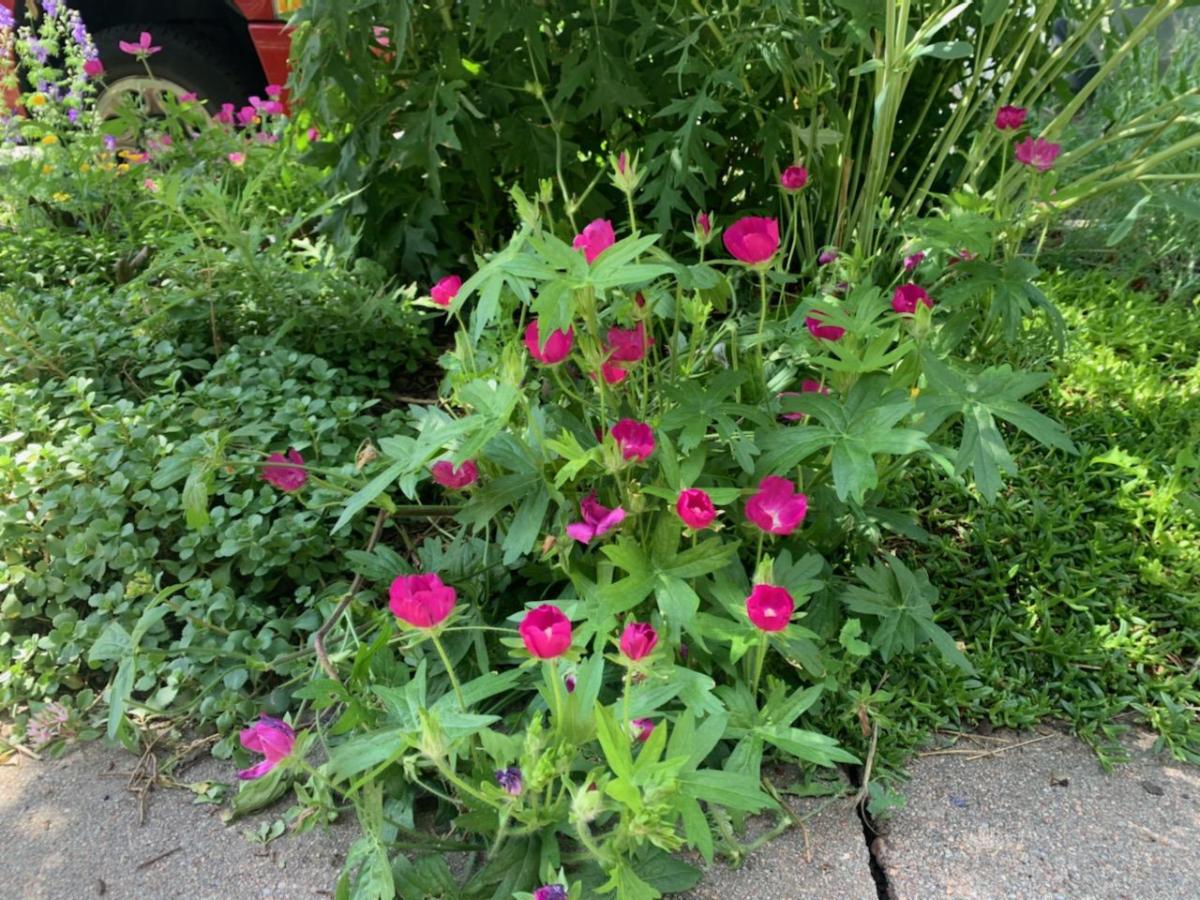
Callirhoe involucrata (Prairie Winecups): These do very well in sun and are incredibly xeric, but if you plant them on the edge of a tree canopy, in dappled sunlight, they will do just fine. They may not have as many blooms as in full sun, but mine look happier and greener in partial shade.
Prairie Winecup in the shade
Photo by Deb Lebow Aal
| |
|
|
Fragaria virginia (Wild Strawberry): While everything you read says strawberries need sun, I find that with our intense Colorado sun, my strawberry plants do best in partial shade, especially if planted on a south or west facing area. These produce tiny but very sweet strawberries, and are a nice ground cover in partial shade. If the shade is too deep, they will not fruit, but still a nice ground cover.
Juniperus communis (Common Juniper): I know, many people don’t like juniper, but it is an important plant for the ecosystem, hosting many caterpillar species. I happen to like them just fine. Generally, the ground cover varieties of juniper tolerate shade better. They will have a different growth – more of an open growth in shade, and will do better with some morning sun. Hiking in Colorado, I see many varieties of juniper growing well in partial shade. They prefer dry conditions, which is another good reason to try them in partial shade.
Kinnikinnick (Bearberry): A thick, evergreen ground cover. I find it very happy in shade, but it does not flower there. It probably will not do well on the Front Range in any amount of sun other than just a bit of morning sun.
| |
|
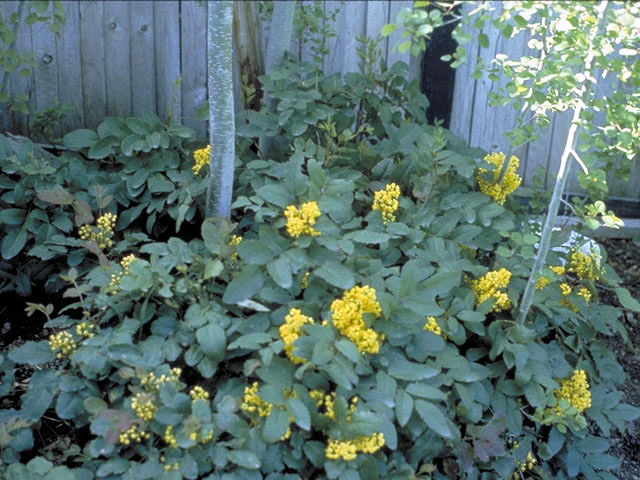
Mahonia repens (Oregon Grape): this plant does well almost anywhere - sun, partial shade, deep shade - and with its three-season interest, is a favorite of mine, even though years ago it was overused in the nursery trade. The reason it was overused is a good one – it’s very easy to grow and not fussy at all.
Mahonia repens
Photo by Michael G. Alder
Courtesy of Ladybird Johnson Wildlife Center
| |
|
|
Prunus virginiana (Chokecherry): This is a large bush or small understory tree, with white flowers in the spring followed by red berries. Chokecherry can grow in sun, partial shade or pretty dense shade.
Pulsatilla vulgaris (Pasque Flower): An early spring bloomer, this does well under deciduous trees that leaf out late, as it flowers in early spring. A good candidate for edge planting too.
| |
|
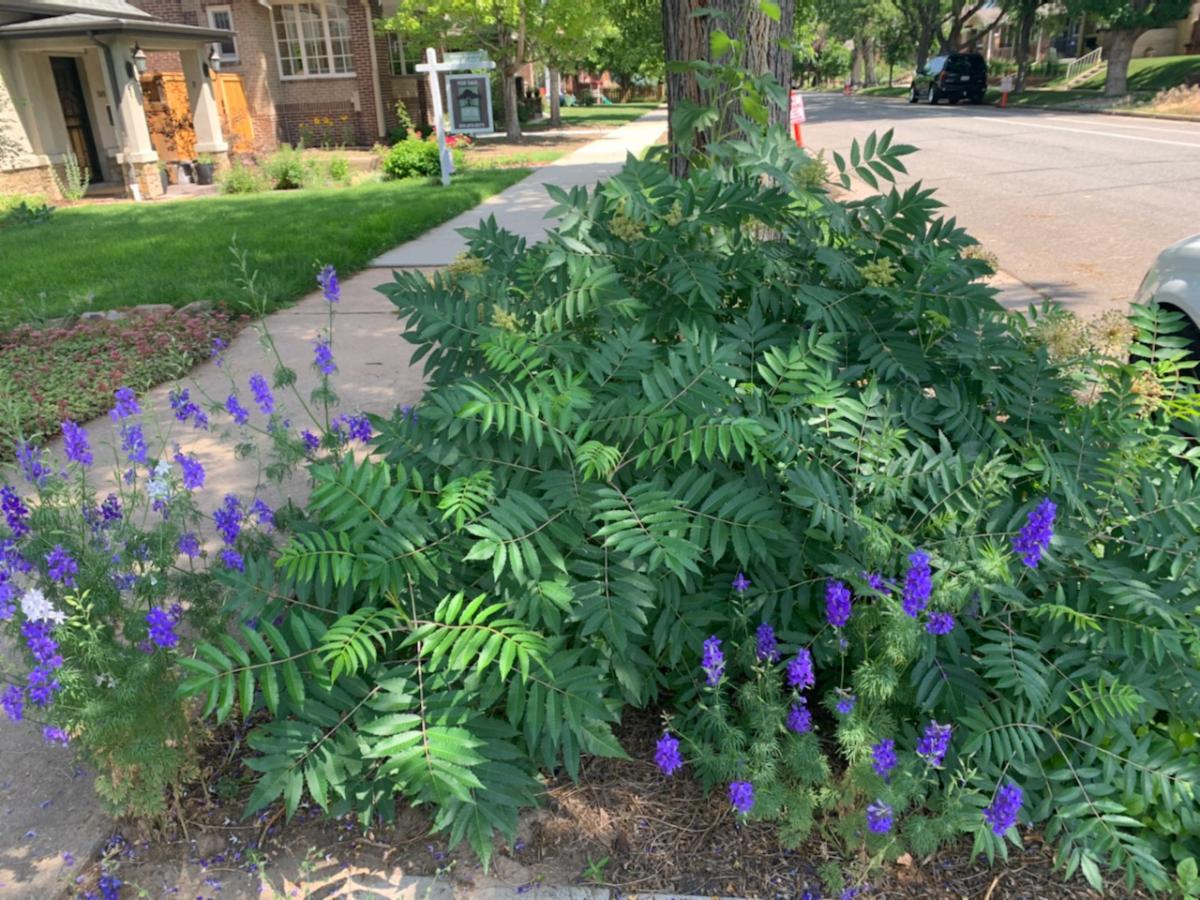
Rhus glabra or Rhus trilobata (smooth or fragrant sumac): I love the habit of sumacs, and the fact that you can prune them to look like anything you want. One good point about all Rhus is that they bloom on new growth so you can prune them hard at the end of winter (not too late or you cut off new bloom buds).
Rhus trilobata in the transition zone
Photo by Deb Lebow Aal
| |
|
|
Rosa woodsii (Woods Rose, our native rose, or Rosa blanda): These plants sucker, so you want to plant them somewhere where they have room to provide a thicket, which is wonderful for birds. They flower less in the shade than in sun, but are perfectly happy in dappled sun (like under a honey locust tree) or partial shade.
Jan's suggestions
This list includes some grasses and forbs that will tolerate 4-6 hours of sun. They are all cool season grasses, meaning grasses that thrive in areas with cold winters and hot summers. However, these grasses grow most actively in spring and fall, when temperatures are more temperate.
Campanula rotundifolia (Bluebell bellflower): This very common wildflower will pretty much grow anywhere if it gets about 6 hours of sun. It’s little blue flower is lovely.
Delphinium ramosum (Mountain Larkspur): This gorgeous flower takes over in Deb’s yard, where it gets full sun. Much better in partial shade, where it is better behaved.
Elymus canadensis (Canada Wild Rye): This grass is a medium-size clumping grass with gracefully bending inflorescences.
Elymus elymoides (Squirreltail, also a wild rye): This grass grows to about 20 inches in height and can spread over time. The foliage will look a healthier green where it’s getting only 5-6 hours of sun, rather than full sun. Remember, these are cool season grasses.
Elymus glaucus (Blue Wildrye): This grass tolerates almost full shade. Everything you read about this lovely grass says it needs full sun, but it does quite well in shade.
Festuca saximontana (Rocky Mountain Fescue): This is a short clumping grass with narrow leaves that probably needs 4-6 hours of daily sun.
Holodiscus dumosus (Bush or Rock Spirea): In the rose family, this plant looks nothing like a rose, but has tiny white to pink flowers, and can grow to six feet wide. When you look this plant up, it actually says to plant in partial shade!
Mirabilis multiflora (Desert 4 o’clock): This lovely meandering plant will be happy with six hours of sun. Deb has it planted on the edge of dappled shade.
Oreocarya virgata (Miner’s Candle): Needs 6 hours of sun. Deb has only seen these on hikes, in the wild. But Jan is having luck in her garden with them.
Ribes aureum var. vilosum (Clove Current): Morning sun is enough for foliage. It may not flower much in the shade, but it will do fine. Same with Ribes cereum (Wax Currant).
Rudbeckia laciniata var. ampla (Cutleaf Coneflower): Four hours of sun is enough, although it needs more water than other prairie plants listed here.
Thelosperma filifoluium ( Stiff Greenthread): Little yellow flowers on thread-like foliage (hence the name). Needs 6 hours of sun.
As with all our articles, this list of plants is partial. There are many more native plants that will do well in shade. The best way to find those plants is to hike around the foothills to see what grows where, and with what, and copy nature.
And, again, this list is from our experience. Remember that Wild Ones is a neighbor-to-neighbor helping organization, and we need to hear from more of you. We are not the scientists (although we have many in our midst). So, as always, let us know your experience of which native plants do well in shade. We will publish an addendum if we get enough responses. Please respond here. And, thanks!
| |
Chapter Transitions
Farewell and best wishes to Lisa Olsen!
| |
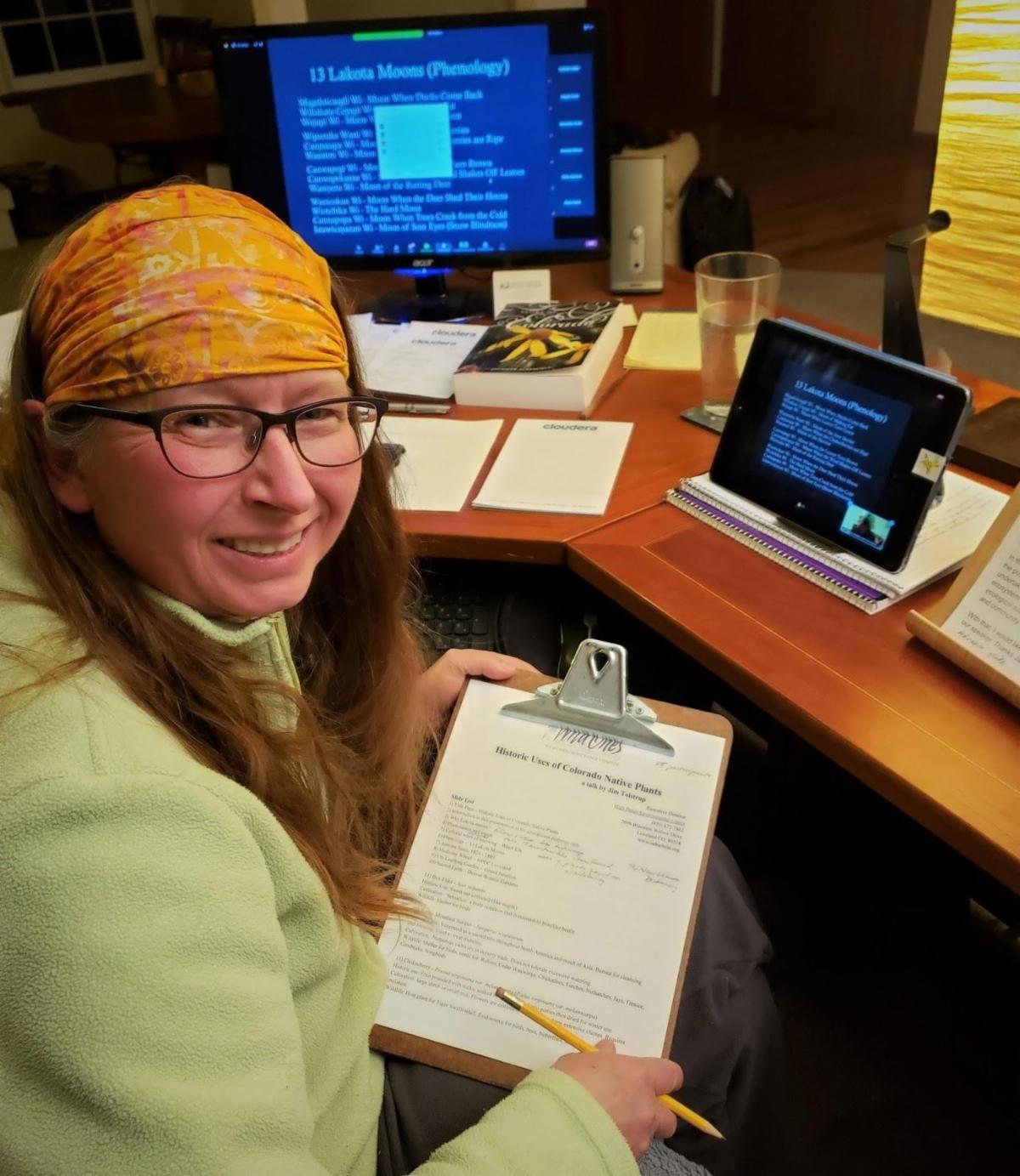
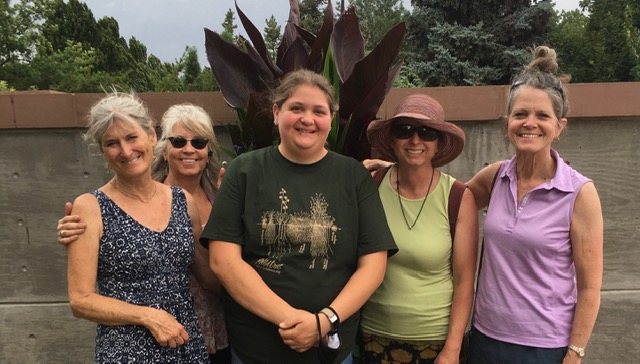
Above: Lisa hosting a Wild Ones program on Zoom in February 2021 (Photo: Michael Judd); Below: Several of our chapter board members met Jen Ainsworth, Wild Ones' Executive Director at Denver Botanic Gardens, for an informal get together. | |
|
In early July, our Front Range Chapter president, Lisa Olsen, joined the Wild Ones National staff as the Chapter Liaison. Her duties will include connecting and supporting growing chapters across the country as they work to promote landscaping with native plants in their communities. To make this transition, Lisa has had to step down from the Front Range Board, where she has served as Chapter President and Programs Co-Chair over the last eighteen months. We congratulate Lisa on this opportunity, and we applaud national in their excellent choice. We know she will do a superb job, and we wish Lisa well.
Lisa will continue to have a hand in many local programs and events, but her absence opens new opportunities for members to engage. Our chapter needs volunteers: at the board level, on the website, on social media and in the growing number of gardens we are supporting. Please consider your passion and your skill set and jump in where you feel you could contribute the most. Connect with us at frontrangewildones.gmail.com.
| |
Wild Seed Collecting & Cleaning a talk by Penn Parmenter
When: Wednesday, August 4; 6:30 - 8:30 pm
Where: This is a virtual Zoom event.
*Check our events page for registration updates
| |
|
|
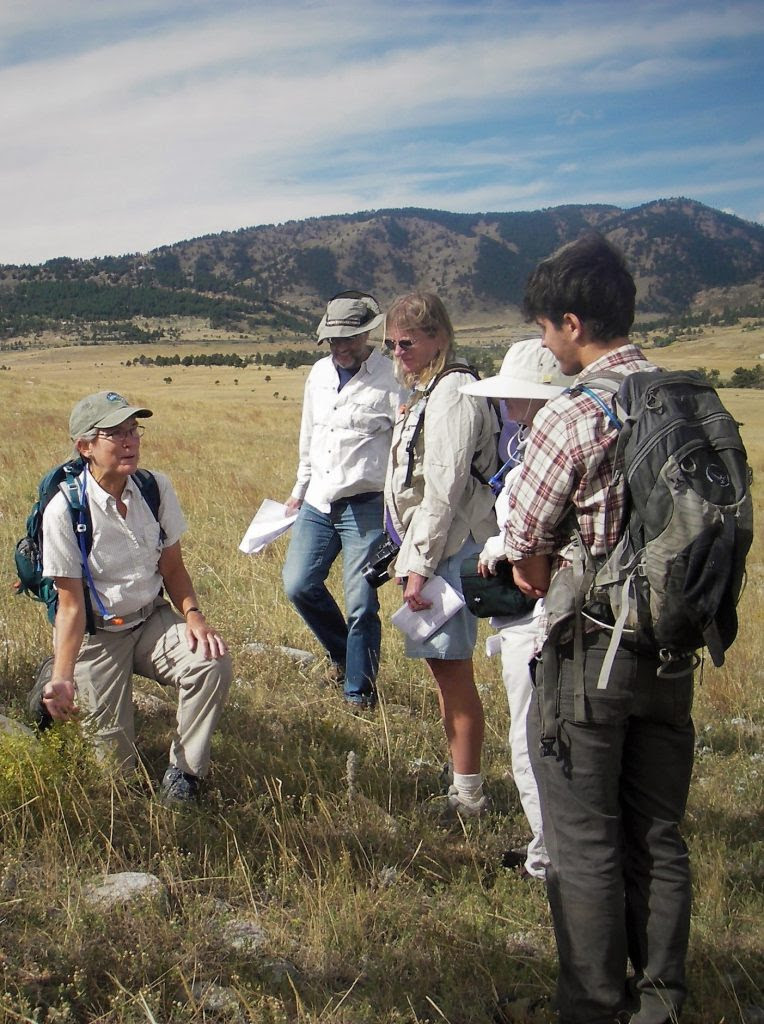
Xeric Tallgrass Prairie Hike with Lynn Riedel, Plant Ecologist, City of Boulder Open Space and Mountain Parks
When: Friday, August 20; 8:00 - 11:00 am
Where: TBD (City of Boulder Open Space property; exact location will be shared with registrants via email prior to the event)
*Check our events page for registration links
| |
|
Tour the High Plains Environmental Center and the Chapungu Sculpture Park Native Gardens with Jim Tolstrup, HPEC Executive Director and Sabrina Kershman, Horticulture Manager
When: Saturday, September 4; 9:00 am - 3:00 pm (includes a 1 hour break for lunch)
Where: High Plains Environmental Center, 2698 Bluestem Willow Drive, Loveland, CO 80538; Chapungu Sculpture Park, Sky Pond Drive, Loveland, CO 80538
*Check our events page for registration links
| |
|
Please see our chapter event page for more details on upcoming events. | |
Ekar Farm,ready to be transformed by our awesome volunteers! If interested in this project, please email Deb at drlebow@gmail.com. | |
|
Ekar Farm, A Wild Ones Front Range Native Plant Demonstration Garden
6825 E. Alameda Ave., Denver
We recently added another demo garden (this will be our third). Ekar Farms aims to cultivate healthy communities by growing sustainably produced fruits and vegetables. They set aside an area to grow native plants as an educational opportunity, and have asked Wild Ones to help design and plant this area. It is currently full of weeds, but we are slowly clearing it, and will be ready to plant in the fall. We will have signs explaining the benefits of the plants.When the heat abates, we will begin this volunteer opportunity.
| |
|
Depot Prairie Park, Englewood
A Wild Ones Front Range Chapter Demonstration Garden
W. Dartmouth Ave and S. Galapago St
Volunteers are needed to maintain Englewood's new native-habitat community park. The turf at Depot Prairie Park is being replaced with low-water shrubs, grasses, and perennials in stages to provide wildlife habitat and demonstrate restorative landscaping. To get involved or learn about upcoming family programs, please contact: Danna.liebert@icloud.com
| |
|
Northeast Denver Native Plant Gardens
Wild Ones Front Range Chapter is teaming up with Denver Parks and Rec to help weed and plant native plant beds in Northeast Denver. City and County of Denver Park horticulturists Rahman Minhas and Carol Weiss manage natural areas planted with native and pollinator-friendly plants. If you would like to volunteer, please email us and we will get back to you with details on where to meet and what to bring.
When: Wednesdays, 9:30 - 11:30 am
Where:
-
Westerley Creek Park, Montview Blvd
-
Greenway Park, Central Park Blvd
- Beds at 788-798 Uinta Way to 11th Ave
| |
|
General volunteer needs
(in no particular order):
- Social media coordinator/Facebook group moderator
- Event registrar
- Program/event organizers/leads
- Program/event team members
- Videographer
- Volunteer coordinator
- Demonstration garden designers/leads
- Garden Tour organizer/Hosts
- Garden Consult Team Lead and members
- Seed Library stewards
- Plant propagation team members
- Newsletter article writers
| |
|
Wild Ones Front Range Chapter is run by volunteers. If you are interested in being more active with our chapter, please contact us via email.
| |
Wild Ones, Front Range Chapter Board | |
|
Wild Ones, Front Range Chapter 2021 Board of Directors
If you want to know more about what is going on with Wild Ones Front Range Chapter, and would like to join us for a Board of Directors meeting (online), we meet every third Wednesday of the month at 6pm. Upcoming meeting dates are August 18, 2021 and September 15, 2021. Please email us of your interest and we will send you the zoom link to join. Thank you!
| | | | |