|
Application for Future Summit Host is due!
Next year the Coalition will be in Charlotte for our annual Summit, but we are looking for host cities for 2025 and 2026. If your city is interested, please let us know by completing the application (must have a streetcar to be considered). Applications were due May 1, but we are extending the deadline one more month. Please have your application in no later than May 31, 2023.
Host City Application
| |
|
APTA Rail Reception in Pittsburgh
If you'll be attending the APTA Rail Conference in Pittsburgh, June 11-14, please make plans to join us for a reception after the APTA Streetcar Subcommittee Meeting (Sunday, June 11, 12-2PM Eastern). We'll be at Olive or Twist, 140 6th Street, Pittsburg, PA 15222 from 2:30-4:30 PM, Sunday June 11, then we'll walk back to the Convention Center for the APTA Opening Reception.
| |
Continuing Education Credits
Sessions from the CSC Oklahoma City Summit have been registered as Continuing Education Credits/Units (CEUs) with the American Planning Association (planning.org). You can find them by searching "streetcar" under "Live Events." If you need additional information to register for your continuing education program, please email Christy Willhite, christy@streetcarcoalition.org.
| |
FTA Announcements
Transit Worker Safety Webinar
To protect transit workers and riders, FTA is proposing new safety requirements authorized under President Biden’s Bipartisan Infrastructure Law. In a proposed update to the Public Transportation Agency Safety Plans (PTASP) rule, FTA will codify communication between frontline transit workers and management, an important measure to address worker assaults. FTA is seeking public comment on the requirements, which strengthen safety policies, procedures and practices in the transit industry.
FTA will host a webinar on Wednesday, May 10 from 2pm-3pm ET to discuss the proposed new requirements and how to submit comments on the proposed changes. Registration for the webinar is now open and will be recorded and online for future reference.
New Webinar Series on Value Capture
The Federal Highway Administration (FHWA) has launched a new webinar series about value capture strategies for infrastructure projects, including transit stations and corridor improvements.
- May 17 @ 1:00 p.m. ET: Value Capture Incremental Growth Strategies: Tax Increment Finance, Tax Allocation Districts, and Tax Increment Reinvestment Zones
- June 7 @ 1:00 p.m. ET: Capital Improvement Plans/Programs: Using Value Capture to Fund Transportation Improvements — The Primer
- June 28 @ 1:00 p.m. ET: Value Capture Strategies: Special Assessment Districts — The Primer
- July 19 @ 1:00 p.m. ET: Value Capture Strategies: Joint Development and Right-of-Way Use Agreements
Funding Available
The Federal Highway Administration (FHWA) recently announced the availability of $848 million in competitive grant funding for local governments and organizations, including transit agencies, to undertake projects to address the climate crisis. Fiscal Year 2022-23 funding is now available through the Promoting Resilient Operations for Transformative, Efficient, and Cost-Saving Transportation (PROTECT) Program. The competitive grant support projects that improve the resilience of surface transportation systems, including highways, public transportation, pedestrian facilities, ports, and intercity passenger rail.
| |
|
June Virtual Summit - E-TOD
What's an E-TOD? As one definition put it: Equitable Transit Oriented Development is development that enables all people regardless of income, race, ethnicity, age, gender, or ability to experience the benefits of dense, mixed-use, pedestrian-oriented development near transit hubs. In the past, the modern streetcar has been seen as a tool for economic development. As we look to the future, can the modern streetcar be a connection to equitable development? We'll be asking our panelists this question on Wednesday, June 28 at 1:00 PM Central Standard Time
RSVP HERE!
| |
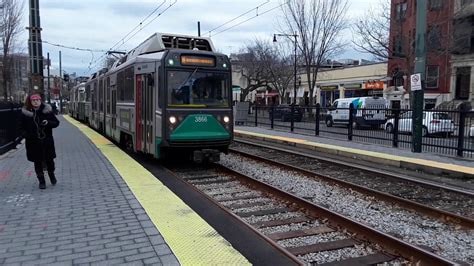 | |
Connecting Communities: Arup and Boston's Green Line Extension
civil + structural engineering magazine
During the 1980s and 90s, Massachusetts and the federal government joined together on an unprecedented investment. A major part of this investment was the elimination of an Urban-Renewal era elevated highway–known locally as “Big Dig”–that ran directly through the center of Boston for decades. Along with the removal of the elevated highway, this investment was coupled with the construction and restoration of numerous transit and heavy rail projects as well as the opening of numerous new urban parks.
...
In the past, the residents in these areas relied heavily on streetcars to connect to employment opportunities, education, healthcare, and recreation. Over the years, these streetcar lines were eliminated or replaced by bus routes. Despite the short distance to Boston, Somerville and Medford lacked easy access by transit into the core of the city, and residents had to rely on arduous, multi-seat bus and rail trips to reach destinations previously serviced by streetcars. The Green Line Extension project (GLX) was conceived as a way to meet the clear demand for a higher level of transit service.
READ MORE
| |  |
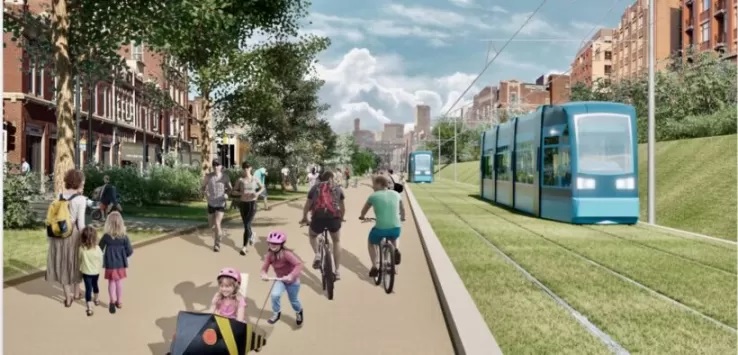 | |
Atlanta Streetcar Expansion Still Moving Forward
Planetizen
The Board of Directors for the Metropolitan Atlanta Rapid Transit Authority (MARTA) voted to advance the eastern extension of the Atlanta Streetcar to Ponce City Market—a decision all the more notable at a time when MARTA is cutting back on rail expansion plans enabled by More MARTA in favor of bus rapid transit.
Maria Saporta reports on the board’s April 13 decision to move forward with the Atlanta Streetcar extension, noting that political support from Mayor Andre Dickens and Atlanta BeltLine Inc. (ABI) leaders helped ensure the streetcar extension wasn’t replaced with a bus route.
“City of Atlanta voters overwhelmingly passed the More MARTA half-penny in 2016. It is estimated that it will cost $230 million to extend the Atlanta Streetcar to Irwin Street where it will travel along the BeltLine north to Ponce de Leon Avenue. Because city taxpayers are paying for the 2.25-mile extension, the MARTA board rightfully followed the desire of Atlanta leaders,” writes Saporta.
The streetcar expansion is not without its opponents, however. “Both Central Atlanta Progress, Atlanta city councilmember and the Atlanta Downtown Neighborhood Association oppose the project as currently designed,” reports Saporta.
READ MORE
| | | | | |