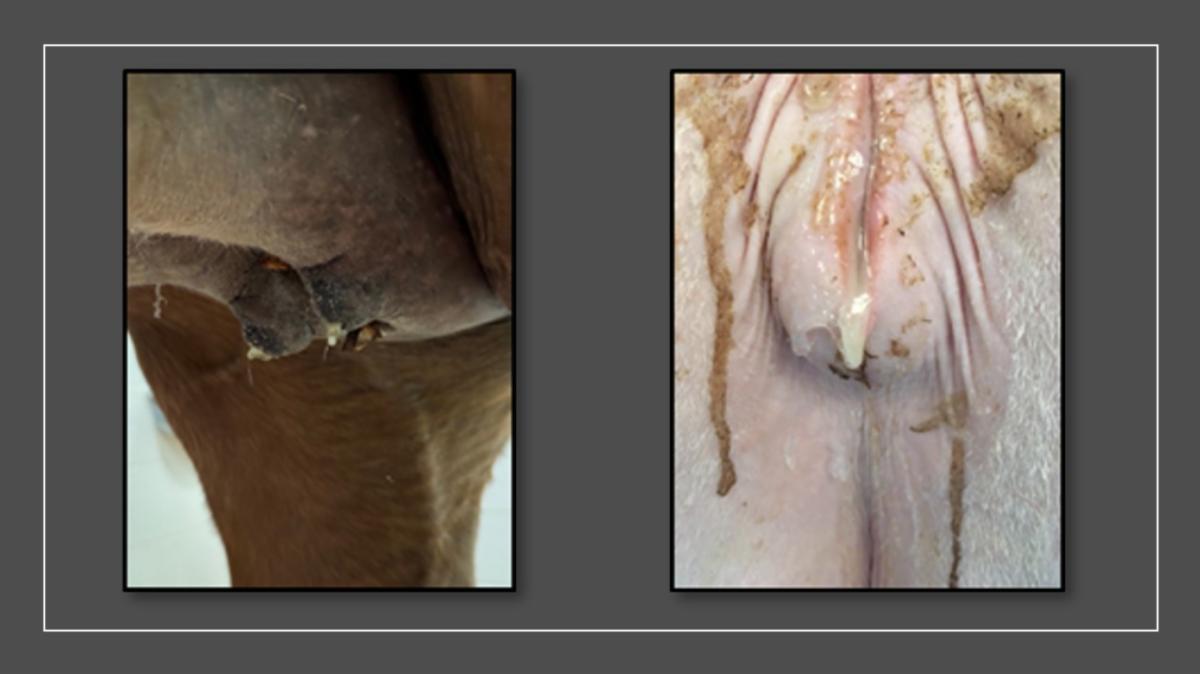
LEFT – Premature mammary development
RIGHT – Purulent discharge from the vulva
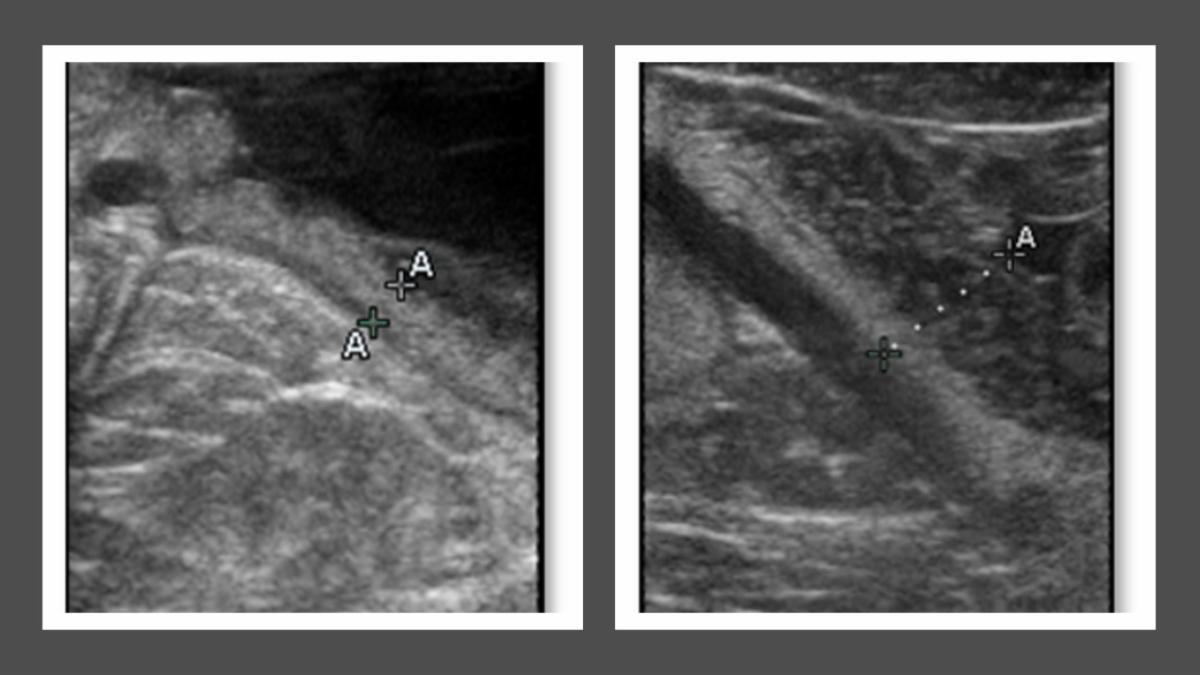
The use of non-invasive ultrasonography in late gestation can help identify the early signs of placentitis before clinical signs occur.
Ultrasound images of the placenta in front of the cervix
LEFT – Normal, thin placenta
RIGHT – Abnormal thick placenta (placentitis)
We recommend starting placentitis screening at 7 months of gestation and repeating examinations once a month until parturition.
If you have any questions or would like to schedule an appointment, please contact us:
Large Animal Clinic: 530-752-0290
Equine Reproduction Service: 530-979-6015
reproduction@ucdavis.edu
You are receiving this email because you previously supplied us with your email address to contact you.
If you no longer wish to receive informational emails about the UC Davis veterinary hospital, please unsubscribe at the link below.
UC Davis Veterinary Medicine | One Shields Avenue | Davis, CA 95616 US
Unsubscribe | Update Profile | Our Privacy Policy | Constant Contact Data Notice