Volume 21, Issue 12

March 22, 2024

In This Issue:

  • Market Update: U.S. Rice Market: Expect the Unexpected
  • Washington, D.C. Update
  • RMTC: Featured Speaker, Dr. María Fernanda Elias
  • Photo from Rice Country

Market Update: U.S. Rice Market: Expect the Unexpected

The focus for farmers is planting. Texas and Louisiana are underway, but fields in Arkansas, Mississippi, and Missouri are being prepped. California is still waiting out the spring weather with another storm expected through the weekend. Texas has passed 30% planted. Prices for paddy have remained firm, even as the milling activity has quieted down a bit. Domestic business remains, but trouble in Haiti has the potential to snarl up the flow of exports in the coming weeks.


A recent GAIN report for Mexico offers hope for a return to historical norms in the Mexico-U.S. rice relationship. Mexico’s imports of U.S. rice increased from Oct-Dec 2023 by 406% compared to the previous year! Recall that a significant market share was lost to Brazil post-COVID, where Oct-Dec 2022 recorded only 47,554 MT, compared to the new 240,576 MT. In the same period, imports of Brazilian rice decreased from 174,534 MT to 32,109 MT, or an 82% reduction. This is great news for the U.S. rice industry as we look down the barrel of the largest crop in years. Post forecasts total rice production in Mexico for MY2024/25 at 233,000 MT, an increase of 7% from last year. Post’s milled production estimate for MY2023/24 is 150,000 MT, a 5% increase over the previous year. Imports are anticipated to increase by 2%, up to 840,000 MT, where the U.S. is expected to be the largest supplier. 80% of Mexico’s imports are paddy, and most of that comes from the U.S. Of the remaining 20% of milled rice, Uruguay is the largest supplier.


We should point out that the Mercosur harvest is struggling to get into full swing, hampered by excessive rains and flooding in some key areas. Reports of lodging in Brazil have been frequent. Export prices in Brazil hover around $420/ton FOB Rio Grande do Sul. Numerous buyers in Mexico and Central America have been “waiting on lower prices due to the Brazilian harvest.” However, as of this writing, there is no clear path forward. At the same time, several vessels have been recently booked destined for Mexico and Central America. The general feeling is that field yields will be off. As in recent years, the weather is driving the market in many corners of the hemisphere with its effect on milling yields, grain quality in addition to field yields. No two years are alike…


The resurgence of Mexican demand is welcomed news in the face of emerging problems in trade with Iraq. In Q4 2023, an announcement said that Iraq was to end all trade based on the USD on Jan 1, 2024, to curb ties with Iran. When this happened, the rice industry wasn’t quite sure what to expect. The MOU and business relationship has been a saving grace for the U.S. rice industry in recent years, and losing that outlet as a result of a geopolitical dispute would be the most recent of a long list of problems. What is now coming to light is that Iraq not being able to trade via the U.S. Dollar essentially halts (ie: prohibits) their ability to purchase U.S. rice, therefore rendering their MOU DOA unless some form of diplomacy can find a solution. This means that the business already on the books is safe, but any future tender will have to deal with this additional complication. Never a dull moment…


In Asia, the market seems to be “resting” with Thai prices hovering around $600 pmt and Viet prices just below $595 pmt. India’s export ban is still in place, but steady shipments to W. Africa remain via G2G deals. We mentioned last week and will continue to say that these “exception exports” are good for market stabilization. When India does officially open back up after their elections, the shock to the market will be muted because of the steady stream of exports that have been making it out the door as G2G exceptions.


The weekly USDA Export Sales report shows net sales of 142,100 MT this week, up noticeably from the previous week and the prior 4-week average. Increases were primarily for Colombia (44,000 MT), Mexico (31,100 MT), Japan (26,000 MT), Honduras (13,200 MT), and Haiti (7,100 MT). Exports of 106,400 MT were up 19% from the previous week and 12% from the prior 4-week average. 

Washington, D.C. Update

House Agriculture Committee Holds a Hearing on Chinese Influence in Agriculture


On Wednesday, the House Committee on Agriculture held a hearing titled “The Danger China Poses to American Agriculture.” During the hearing, there was bipartisan concern over the impacts of Chinese influence on U.S. agriculture and national security. Members of both parties agreed on the importance of remaining competitive in the global agricultural market. Republicans focused on the variety of threats China poses to the U.S., including intellectual property theft, cybersecurity attacks, and acquisition of farmland by foreign interests. Democrats warned that policy decisions may inadvertently impact the Asian American community and that aggressive tariffs could have negative impacts on the U.S. and its trading allies. Other topics discussed include trade promotion programs within the Department of Agriculture (USDA), the farm and potential improvements to the tracking and reporting system for land purchases. A recording of the hearing can be found here.


Secretary Vilsack Testifies on the FY2025 Budget


On Thursday, Secretary of Agriculture Tom Vilsack testified before the House Agriculture Appropriations Subcommittee on the USDA budget request for fiscal year (FY) 2025. During the hearing, Republicans expressed concerned over the total spending level requested, which is roughly $3 billion over the FY2024 enacted level. They were also concerned about the Secretary’s use of the Commodity Credit Corporation and the use of SNAP benefits to purchase unhealthy foods. Democrats were dissatisfied at the lack of Democratic input in the FY2024 process and were supportive that the request included a funding increase for the WIC program. There was agreement in the hearing among the parties on the importance of USDA’s role in protecting food security and supporting rural development. A recording of the hearing can be found here.

RMTC: Featured Speaker, Dr. María Fernanda Elias

Rice is a delicious food, consumed in many low-income countries where nutritional insecurity is known to be high. Thus, guaranteeing a sustainable production of nutrient-dense rice kernels is seen as a pivotal solution that will contribute to ensuring food and nutrition security for a global growing population. This session will present a new landscape of dietary intake in 8 Latin American countries, discuss the established and emerging nutritional deficiencies in the region, and highlight the advancements in cost-effective nutritional solutions within the rice industry.


About the Speaker

María Fernanda, a Brazilian Nutritionist, holds a master's degree in public health and a PhD in Nutrition Science from the University of Sao Paulo. She mentors the Sustentarea project at the same university and is a member of the Sustainability Committee of the Brazilian Food and Nutrition Society. María works as the Lead Scientist and Sustainability Champion at DSM Health, Nutrition & Care in Latin America. With over 20 years of experience in the nutrition and health market, she also has certifications in Marketing, Lifestyle Medicine, and Business Improvement through a Culture of Health.

Register Today 
Book Your Hotel Room

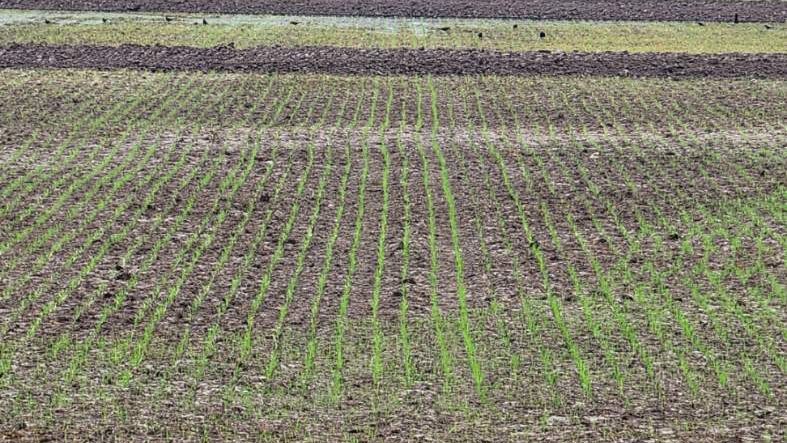
Photo from Rice Country

It's a beautiful sight in Raywood, TX. Photo shared by Neal Stoesser.


Send us your Rice Country photos or videos on Facebook, Instagram, or via email!


Trade Update


March 15, 2024

Food & Agriculture

Regulatory & Policy Roundup

March 18, 2024


Grain: World Markets & Trade

February 2024


World Agricultural Production


February 2024

Mexico: Grain & Feed Update

The outlook for Mexican grain production in marketing year (MY) 2024/2025 is higher year-on-year for corn, wheat, rice, and sorghum based on farmer planting decisions on more average weather conditions and a gradual recovery from exceptional drought conditions. Mexico’s corn and rice imports are forecast higher to meet increasing demand. 

Read the Report


Inter-Rice

World Market

Report

no.240

Read the Report


 FAO

Rice Price

Update


March 2024
CropSurvey_Title image
TexasRiceAreas image
Latest Report
 

Upcoming Events

June 4 - 6, 2024

Rice Market & Technology Convention

Cancun, Mexico

Registration

logo-sombra-negra-01-01.png

25722 Kingsland Blvd., Suite 102

Katy, TX 77494

p. (713) 974-7423

e. info@usriceproducers.com

usriceproducers.com


We Value Your Input!


Send us updates, photos, questions, or comments!

Contact Us!
Facebook  Instagram
 

USRPA does not discriminate in its programs on the basis of race, color, national origin, gender identity, sexual orientation, religion, age, disability, political beliefs, or marital/family status. Persons who require alternative means for communication of information (such as Braille, large print, sign language interpreter or translation) should contact USRPA at 713-974-7423.