Weekly Digest Number 48 - November 30th, 2021 |
|
(Editor's Note: American workers - many of them essential front line workers hit hard by the pandemic - continue to fight back. Rails need to get out there and show them our support. We could be next!) |
|
Strike Wave Continues in November - Find a Picket Line Near You! |
|
You thought Striketober was over? Not at all. Our worker uprising has more momentum than ever - we’re now in the middle of Strikesgiving. So find a strike near you to support!
Mine workers in Alabama. Student workers at Columbia University. Cereal workers at Kellogg’s factories across the country. Those are just a few of the strikes happening right now. We’re in the middle of a historic worker uprising, with thousands of people demanding the higher wages and better benefits they deserve. This year, we’re giving thanks to every person holding strong on the picket line, fighting for workers’ rights and making jobs better. Let’s do everything we can to keep the fight on!
We’ll see you out there.
|
|
(Editor's Note: While the Class One carriers may point the finger at others for their staffing woes, the chickens have come home to roost. Years of arbitrary discipline and harassment, draconian attendance/availability policies, wholesale union contract violations, a general poor quality of work life and mass furloughs and layoffs the last few years have all combined to cause the Class One freight carriers to be woefully understaffed and incapable of hiring - let along keeping - employees. How would they like it if we decided to strike right now? Great opportunity, fellow workers! ) |
|
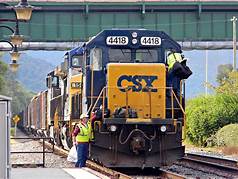
CSX, Norfolk Southern Say Labor Constraints are Affecting Service |
|
Labor constraints and rising attrition are impacting network performance on East Coast railroads, executives said on Q3 earnings calls last month.
-
Norfolk Southern saw attrition rates accelerate over the past two quarters, and the railroad has had trouble onboarding conductors and other workers despite company efforts to ramp up hiring. Hiring and retention have become "increasingly challenging, especially in some of our more critical locations," said COO Cindy Sanborn, adding the tight labor supply has had "an impact on our network."
-
At CSX, fluidity and on-time performance declined as "a result of our having an extremely difficult time getting people to come work for us," said CEO James Foote.
Railroads are struggling to replenish their workforces after cutting thousands of positions at the start of the pandemic. Despite hiring efforts, employment numbers in 2021 remain below what they were last year — when many of the furloughs and layoffs took place.
Now that intermodal demand has rebounded to a record high, the lack of labor is affecting capacity and service. Train speed and terminal dwell at Norfolk Southern remained flat in Q3 in part due to hiring challenges, according to Sanborn. The numbers "do not reflect performance at desired levels," she said, noting the company had 7% fewer workers this quarter compared to a year ago.
The Surface Transportation Board sent CSX a letter in mid-October noting federal regulators have received a steady stream of complaints from shippers about "substandard performance," including instances of missed switches, unfilled car orders and extended transit times.
|
|
(Editor's Note: While Bose is far better than the previous FRA administrator under Trump - rail CEO Ron Batory - rail workers should not get their hopes up. He is harking back to FRA administrator Szabo's proposed rulemaking on the crew size issue, that - while superior to Batory's position - was ridden with loopholes for the rail carriers. Railroaders, stay vigilant and be ready to comment. Prepare now!) |
|
FRA’s Bose Tells Short Lines to Make Case on Crew Size |
|
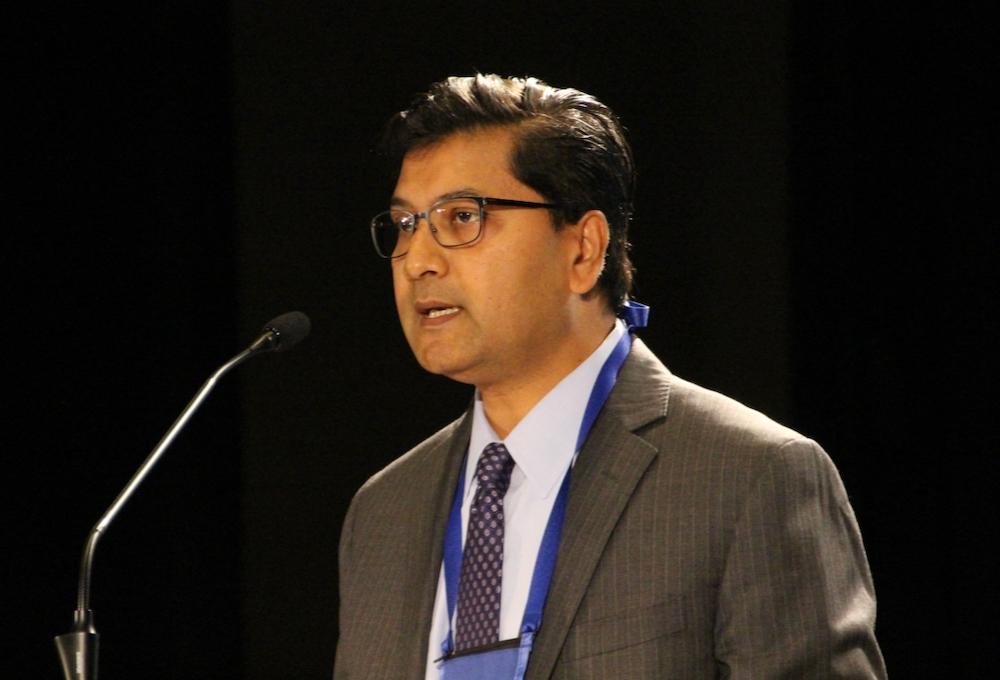
Amit Bose, the Federal Railroad Administration’s Deputy Administrator, covered a great deal of ground in his keynote address Thursday to the American Short Line and Regional Railroad Association.
Only once, however, did he display a degree of agitation about his subject matter: when discussing a forthcoming rule proposal on train crew size.
The rule, he said, will propose minimum requirements for the size of train crews — but will have room for exceptions to go below that size.
“I want to emphasize that,” said Bose, President Joe Biden’s nominee to be FRA Administrator. “If you make a safety case, you will be able to go below the crew size that is minimum.” That was part of rule proposals in 2015 and 2016 that were halted under the prior administration, he said.
“I don’t want misinformation to be out there about that rulemaking,” he said. “I’ve heard it already, over and over again, and I’ve heard it misreported in the media. I want to be clear on that. And if you need examples, go back to the [Notice of Proposed Rulemaking] in 2015 and 2016, which was consensus-based. It was not something the FRA did in some room at headquarters on its own. …
“I know it’s going to have an impact on the industry. I know some of the short line railroads operate below minimum crew size. If you have a safety case, make it. FRA will listen to it. Misinformation is not helpful in this situation.
“It will take into account historical differences of existing passenger and freight operations, which differ in complexity and crew staffing approaches. This rulemaking will address the potential safety impact of one-person train operations, including appropriate measures to mitigate an accident’s impact and severity, and the patchwork of state laws that currently exist.”
|
|
FRA Announces Rechartering of the Railroad Safety Advisory Committee |
|
The U.S. Department of Transportation’s Federal Railroad Administration (FRA) announced today that the charter of the Railroad Safety Advisory Committee (RSAC) has been renewed for a two-year period. FRA first established RSAC on March 25, 1996, as a Federal Advisory Committee Act forum for collaborative rulemaking and program development. RSAC includes representatives from all the agency’s major stakeholder groups, including railroads, labor organizations, suppliers, and manufacturers.
The renewed recharter will increase the number of represented organizations from 23 to 26 and will increase the number of individual voting members from 34 to 51. The three new represented organizations are the American Association of Private Railroad Car Owners, Association of State Rail Safety Managers, both previous members of RSAC, and the Commuter Rail Coalition (CRC). These changes will increase the diversity of perspectives and organizations represented on RSAC and will improve its ability to provide inclusive and balanced recommendations to FRA on key rail safety matters.
“This Railroad Safety Advisory Committee plays an important role helping the FRA improve the safety of passengers and workers throughout our rail industry,” said Deputy Administrator Amit Bose. “The steps we are taking today to renew the Committee’s charter and expand its membership will help DOT address key railroad safety challenges in the years ahead.
|
|
(Editor's Note: President Biden has pledged to support us on the crew staffing issue. This will be a true test of his pledge to be, "the strongest labor president you've ever had.") |
|
Biden Taking Supply Chain Heat from Freight Railroads Over Labor Rule |
|
Freight railroad companies are pressuring the Biden administration to abandon a proposed rule they say could further complicate the country's supply chain problems.
The Department of Transportation's Federal Railroad Administration currently allows freight railroad companies to set their own crew requirements, but the Biden administration is seeking to implement a regulation first proposed in 2016 by the Obama administration that would permanently require all freight trains to operate with traditional engineer-conductor teams. Former President Barack Obama left office before the rule could be finalized.
President Joe Biden, however, made a 2020 campaign promise to the International Association of Sheet Metal, Air, Rail, and Transportation Workers that he would mandate the "Rule of Two."
"It's about time our government fought for you as hard as you've been fighting for our country," Biden said in a virtual address to the union at the time. "I'm going to keep fighting for those crews, requiring two-person crews on freight trains, protecting transit workers from assault, making sure that everyone has what they need to safely do their job. Period."
The crew mandate was originally included in the $1.2 trillion bipartisan, physical infrastructure proposal, but it was eventually stripped from the bill's text. However, Amit Bose, Biden's nominee to serve as FRA administrator, testified during his October Senate confirmation hearing that the agency is readying a Notice of Proposed Rulemaking that would resurrect the Obama-era rule. He claimed that a new federal regulation is needed to avoid a "patchwork of laws" on the subject because some states across the country have already implemented the measure on their own.
|
|
STB to NS: Address Performance, Shipper Complaints (Updated) |
|
The Surface Transportation Board (STB) is calling on Norfolk Southern (NS) to address the deterioration of “key operating metrics” over the past several weeks and the increasing number of customer complaints to STB about the Class I railroad’s “poor performance.”
In a Nov. 23 letter submitted to NS Chairman, President and CEO James A. Squires (download below), STB Chairman Martin J. Oberman wrote that NS’s recent key operating metrics “are hovering far below 2019 comparables.” For the second reporting week of November 2021 vs. the same period in 2019, he noted a “marked decline” in average train speed for manifest service. This, he wrote, is “particularly troubling given the focus on the manifest network in NSR’s [NS’s] precision scheduled railroading operating model.” He also noted an increase in average system dwell time and in average number of manifest trains holding per day.
“These metrics reflect an unfavorable trend in NSR’s overall performance in 2021,” Oberman wrote. “Yet, NSR’s number of ‘transportation’ employees has continued to decline over the last three months (8,281, 8,269, and 8,207, respectively). …”
At the same time, STB has received an “increasing number” of NS customer complaints, which include “missed switches, cars stranded at intermediate yards, longer transit times, operating plan changes without notice, and a lack of communications from customer service,” according to Oberman. He wrote that the customers—from NS’s Cincinnati to Chattanooga corridor as well as the deep South and mid-Atlantic—represent a “cross-section of key commodity groups.” The rail service disruptions, he added, “have caused customers to incur additional costs, typically without compensation from NSR.”
|
|
Court Consolidates Lawsuits Related to Class I Vaccine Mandates |
|
Last week, the U.S. District Court for the Northern District of Illinois consolidated multiple lawsuits that had been filed in the Illinois federal court, including ones by the Brotherhood of Locomotive Engineers and Trainmen (BLET) and two other rail unions challenging two Class I carriers' implementation of COVID-19 vaccine mandates.
Union Pacific Railroad and Norfolk Southern Railway announced in October that they would issue company-wide mandates that offered incentives for unionized employees who receive the COVID-19 vaccination and potential furlough for those who do not.
The unions argued that the carriers' unilateral implementation of their mandates bypassed the collective-bargaining process and filed separate injunctions seeking that the status quo be maintained until the bargaining process be completed, BLET officials said in a press release.
|
|
WEBINAR: The FRA's New Midwest Regional Rail Plan and CrossRail Chicago
Friday, December 3rd at Noon Central Time
|
|
Please join us as we take a look at the FRA’s new Midwest Regional Rail Plan and discuss the importance of building a high-capacity, dedicated passenger line through Chicago to make the proposed network a reality.
The Federal Railroad Administration’s Midwest Regional Rail Plan, released October 13, lays out a compelling vision for a network of high-speed trains that would transform travel across the Midwest.
The plan envisions a network that consists of four “pillar corridors” radiating out from Chicago, with endpoints in Minneapolis-St. Paul, St. Louis, Indianapolis and Detroit. These high-speed lines form the backbone of the system and would be integrated with transit systems and regional lines. This would make connections much faster and easier between hundreds of cities throughout the Midwest.
In order for this network to work, Chicago needs to be prepared to handle increased rail traffic. That’s why we’ve proposed CrossRail Chicago. CrossRail would create a north-south route through Chicago to connect fast regional trains, airport trains, and high-speed trains from around the Midwest to Union Station and O’Hare.
Both of these proposals are inextricably linked in the effort to bring high-speed trains to the Midwest.
|
|
USDOT Awards $1 Billion in RAISE Grants for FY2021 |
|
The funding has been awarded to 90 projects in 47 states, the District of Columbia and Guam.
Fiscal-year 2021 RAISE Transportation discretionary grants are for planning and capital investments in surface transportation infrastructure and were awarded on a competitive basis for projects that will have a significant local or regional impact, U.S. Department of Transportation officials said in a press release.
Rail-related projects, grant recipients and grant amounts include:
- Charlotte Multimodal Transit Hub, Charlotte, North Carolina, $15 million.
- Wasco SR 46 Improvement Project, Wasco, California, $24 million.
- Southwest Chief La Junta Route Restoration Program, Colorado, $2.8 million.
- Derby-Shelton Multimodal Transportation Center, Connecticut Department of Transportation, $12.6 million.
- Benning Road Bridges and Transportation Improvements, District of Columbia Department of Transportation, $15 million.
- A. Philip Randolph Regional Multimodal Transportation Hub and Complete Streets Connectivity, Palatka, Florida, $8.2 million.
- Springfield Rail Improvements Project, Springfield, Illinois, $13.5 million.
- Fare Modernization, Neighborhood Transfer Points, Regional Transfer Hubs and Operator Comfort Stations, New Orleans Regional Transit Authority, $18.5 million.
|
|
(Editor's Note: The finding of the STB is in direct contradiction to Union Pacific's claim a few days earlier that the merger application was in fact "incomplete.") |
|
STB Accepts CP-KCS Merger Application as 'Complete' |
|
The STB determined the application is complete as it contains all information required by the board's regulations, according to an STB press release.
In its decision, following public comment, the STB has adopted a procedural schedule that sets deadlines for comments, responsive applications, final briefs and other filings, the release stated.
Notices of intent to participate are due Dec. 13. Subsequent deadlines are contained in the decision. The procedural schedule provides that any necessary public hearing will be take place after the filing of final briefs, which are due on July 1, 2022.
|
|
(Editor's Note: Everything is relative. Given their criticism of the European railway scene, one cannot help but wonder what the authors would make of the dismal North American rail situation.) |
|
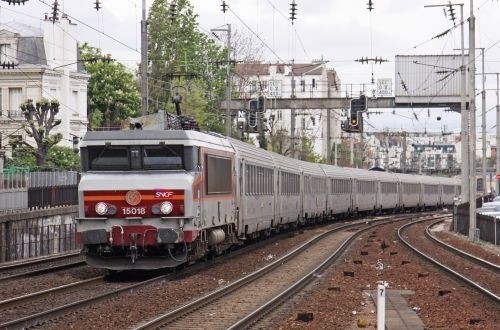
Derailed - The Desolate State of European Railways |
|
2021 is the official “Year of Rail” in the EU, and the “Connecting Europe Express” train recently finished its tour of Europe to promote the great advantages and decisive importance of railways in the green transition. But what was meant as a PR coup revealed the weaknesses of the system, which is more a patchwork than a network: almost all 26 national borders saw a complete halt of the Express. Altogether, 55 locomotives were involved in pulling three different sets of trains, because nothing fits together in the European railways
“From road to rail” has been the mantra of authorities across Europe for decades. The EU’s railway packages since 2001 were designed to open the railways to competition; to connect national railways to make them a coherent whole, and to bring much more freight and many more passengers onto the tracks.
This has not happened. Less than 20% of freight is transported via rail. A fraction of international travel happens by train. It is more difficult to travel by railways through Europe today than it was before all these reforms. And the urgency for real change grows by the day: transportation is one of the major contributors of greenhouse gases. Climate neutrality — which the Eu aims to achieve by 2050 — is impossible without a major shift.
Investigate Europe has checked the status of European railways and searched for the reasons that plans and announcements have not come to life. Who blocks the most sustainable and environmentally-friendly means of transport for passengers and goods? Where has the money gone if not to the railways? Who profits from the situation? What is being done to shunt trains onto a better track?
|
|
|
|
|
|
|