Greetings!,


Happy August, 


Read on to explore how the Southwestern Medical District Transformation team is shaping a greener, healthier future as we highlight recent progress, ways to get involved, and share the things we are learning and applying.

This summer has been full of focused design work and deep coordination with our collaborators.

As you may recall, the 30% design milestone laid the critical foundation for how the transformed Green Spine and future Green Park will look and feel. It also introduced key design elements, amenities, and technical concepts such as cost and associated operations and maintenance. Now, our current phase of work has focused on 60% design for the Green Spine. The work progressed through this stage included detailed design refinement and working drawings taking shape: Site layout plans reflect the breakdown of hardscape and softscape, include site furnishings and lighting, and recommend planting and paving materials – the details that will work together to bring the Green Spine to life and create a cooler, cleaner, and greener environment for the 5 million annual Medical District users.


We are thrilled to share exciting progress: the Texas Trees Foundation landscape design team has completed 60% design! 📝🛣️🌳


This work is currently under review by our internal team. We are also revising our cost estimates and Operations & Maintenance plans, with updated details that provide key clarity for project implementation and ongoing care.


The counterpart to the landscape design efforts is the City of Dallas Department of Transportation team and their engineer, Jacobs, who also recently completed a milestone: 30% design for the Phase I roadway engineering work. Over the remainder of the year, our team will work closely with the City and Jacobs to align the landscape and roadway engineering schedules, ensuring both disciplines advance in parallel to the next milestone: the 90% design package.


Other key recent collaborations include providing a project update to the Medical District Board of Trustees as well as a larger Medical District stakeholder meeting with managing representatives from Texas Woman’s University Dallas, The Center for Brain Health, Texas Tech University Health Sciences Center Dallas, and Dallas College, the latter of whom who will be the Medical District’s newest tenant with its planned facility on Butler Street: Health Sciences Center for Excellence. This conversation was a great point of connection among attendees, and we appreciated the opportunity to engage groups who are individually and collectively creating growing impact across functions of innovation, research, and education in the District.


Finally, our team enjoyed participating in a collaborative workshop led by Jacobs, spanning topics of drainage, utilities, signals, and lighting. This was a wonderful opportunity to have many project partners in the same room, including the City of Dallas, Kimley-Horn & Associates, and Field Operations. We’ve also recently entered a more focused period of collaboration with longtime project supporter, DART. We truly appreciate their time to discuss our project amidst coordination for the FIFA World Cup. We learned more about DART's NextGEN shelters and shared our design considerations for the Medical District bus shelters. We look forward to continued work with their agency to build on our shared priorities to create a more seamless, safe, and welcoming transit experience throughout the District.


These ideas and more will be further solidified during Field Operations’ upcoming visit to Dallas early next month, where we’ll participate in several focused, collaborative workshops.

Monthly_Update_EOY_Header_600_x_100_px_p4.png

Thank you to both the UT Southwestern Office of Sustainability and their Learning Garden Lecture Series and to Parkland Health’s Sustainability Employee Resources Group for inviting us to speak at your July meetings. It is incredibly valuable to share the project background and the vision for the Green Spine and Green Park with groups whom the transformed space is intended to serve. We truly appreciate your engagement in solutions that make the District a healthier place across the full spectrum of users.


We also recently had the honor of gathering at the North Dallas Chamber of Commerce to share about the SWMD Transformation with an incredible audience of peers. The Chamber's mission is "to make Dallas a better place to live, work, raise a family, and build a business." We believe that the Medical District plays a critical part in what makes Dallas a great place to be. We were thrilled to shed light on how we're creating an even more vibrant future for the Medical District, and the insights gained from advancing this work. From strong public-private partnerships to innovative design solutions purposed to improve human and environmental health - we explored what’s on the horizon for the Medical District’s future and how the lessons learned from this project are not simply limited to the District’s 1,000 acres. We’ve written up a detailed event recap on our blog & LinkedIn articles – we highly encourage you to check it out!


Finally, we teamed up with the Trust for Public Land for an energetic, forward-looking panel conversation at the Dallas Friday Group: “How Trees, Trails, and Parks Enhance Quality of Life in Dallas.” Our conversation centered on quality of life: how deeply it is felt, yet how difficult it is to define and measure. However, one thing that our speakers confidently agreed on was how essential green infrastructure is for the quality of life of our communities. The tree canopies that keep us cool, shaded, and marveling in awe, and the parks and trails where we get outdoors, exercise, spend quality time with loved ones, and experience our city on foot, are crucial parts of what makes living in North Texas great. This event was a wonderful opportunity to celebrate the progress of our collective work: enhancing green space quality and access in areas of greatest need, while also discussing opportunities for cross-sector collaboration and how to mitigate key challenges to enhance our work.

Biophilic Design through Outdoor Lighting

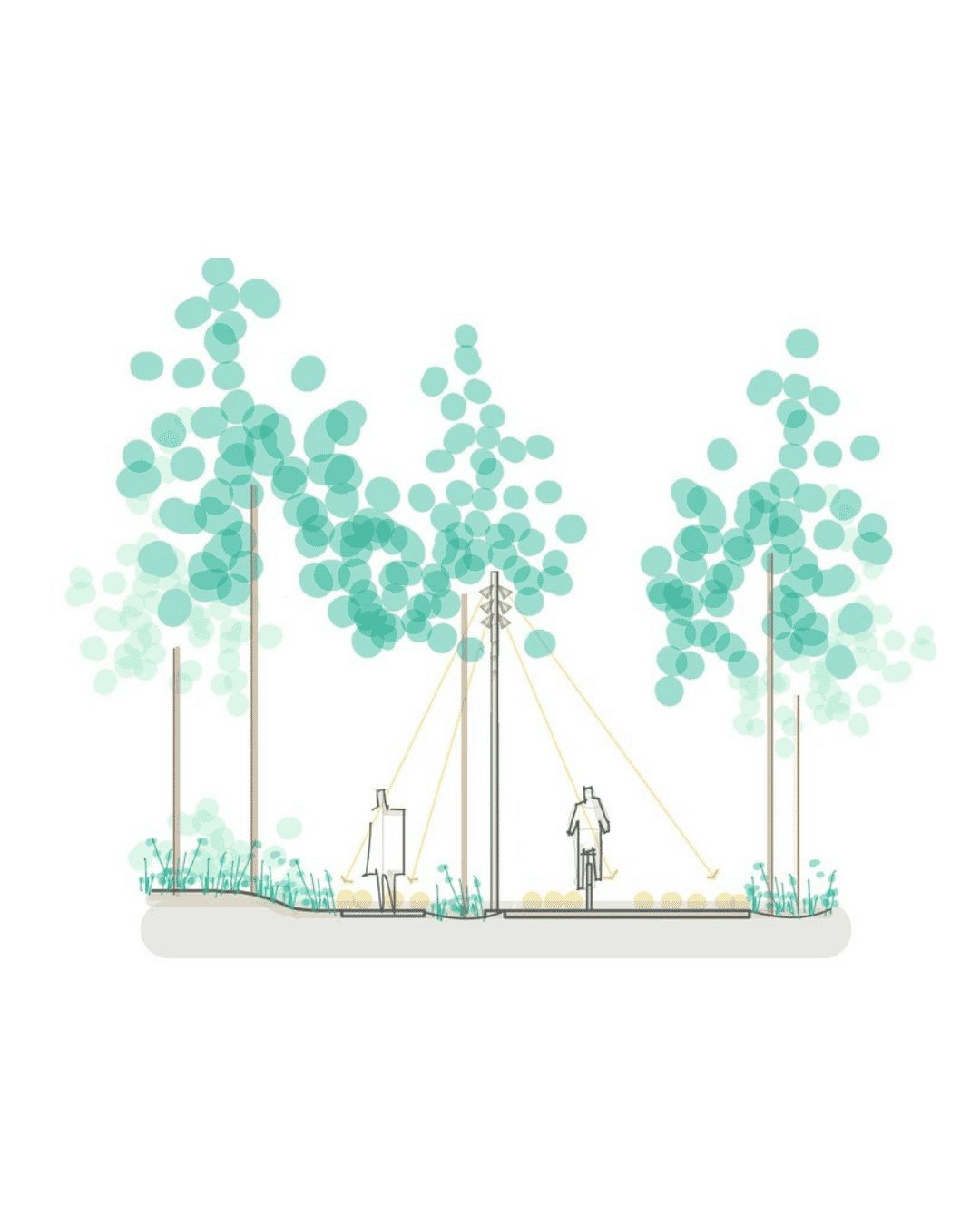
The design team has been exploring how to thoughtfully incorporate lighting into our design for the Green Spine. Our priorities are to create lighting that complements the district’s rhythms of activity, while also cooperating with nature's diurnal (day/night) cycle. Lighting design has been another opportunity to evaluate and strengthen the design from a biophilic lens. 

This working drawing is solely for inspiration purposes. This image depicts a 'dappled moonlight' lighting style, centralizing the role of the Green Spine vegetation in our lighting design strategy. In this scenario, lighting structures would be attached to tree branches so that the lighting creates a "dappled" effect, as it streams through the tree canopy - similar to the naturally occurring phenomenon of dynamic and diffuse light. Lighting sources may also be strategically located and angled to spotlight the varied vegetation throughout the landscape, illuminating the nature all around you. 

“Biophilic Design in Outdoor Lighting refers to using light in ways that strengthen the human connection to nature, ecology, climate, time, and place rather than simply illuminating space for visibility or aesthetics. In practice, it means designing lighting that supports natural rhythms, enhances landscape experience, respects ecosystems, and creates emotional and sensory connections to the environment.”

– Studio DXD


Lighting provides necessary visibility and safety during the nighttime for all users – from vehicles passing through and emergency personnel accessibility to pedestrians who want to linger and enjoy the space. As The Lighting Authority writes in their biophilic design article, “[biophilic lighting design] is about observing growth and experiencing the time of day through light.”


Lighting is certainly not a ‘one-size fits all’ approach, and it must balance several simultaneous, and sometimes seemingly competing, goals. We have an opportunity to create lighting that taps into human and environmental health while also creating a safe and engaging environment. Whether it’s angling the light source so that it spotlights the natural aspects of the design – such as the tree groves or other vegetation – favoring warmer, softer tones over harsh overhead lighting [which disrupt ecosystems and our circadian rhythm], using nature-based, local materials to design the lighting structures, casting fascinating patterns and reflections through light, and more, lighting is a tremendously important part of the design.


We are exploring the potential for our lighting design

Some ideas we've looked at... to convert sunlight into electricity, lighting structures that include educational, interactive, and informational components, and lighting that offers more than functionality and safety, but aesthetics and nature-inspired design, too.


Our lighting design strategy also includes looking at how lighting design in the Green Spine might also be replicated and expanded into the Green Park in the future for continuity across the District. To learn more, read this article.

Materiality and Thermal Comfort

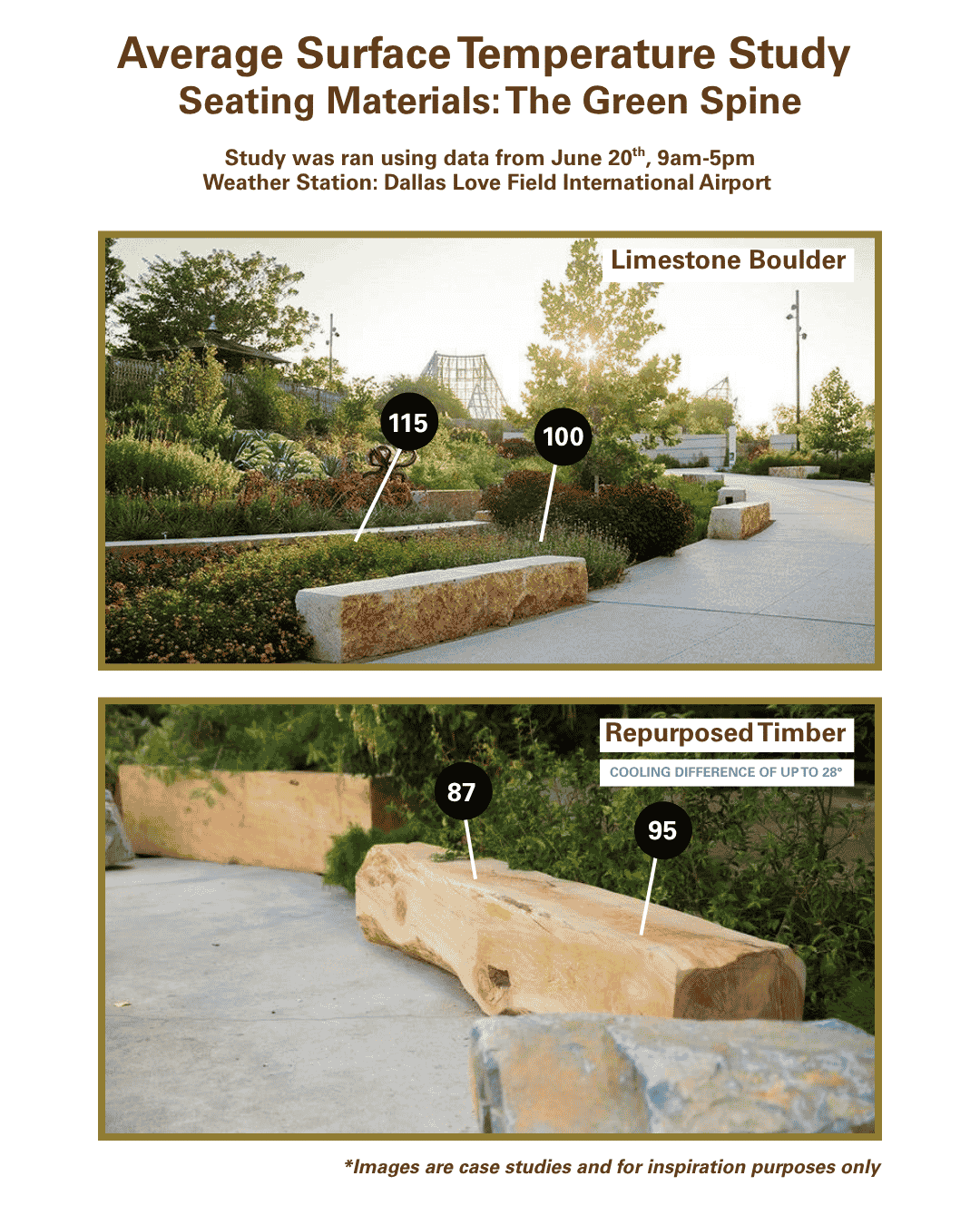
As we explore what site furnishings will look like in the Green Spine, we have an opportunity for seating that is both sustainably sourced and thermally comfortable and safe for those utilizing the space. If there are existing trees in the project area that need to be removed to make way for healthier trees or other project amenities, we can repurpose the wood for seating. There will likely be room for both native Texas limestone and repurposed timber in our design, but knowing that limestone has a hotter surface temperature due to its materiality, we can strategically locate it in areas with more shade. These nature-inspired seating arrangements are beautiful too, adding to the feeling of a natural oasis in the Medical District. 

Multi-Sensory Design through Vibrant Plantings

Bloom_Calendars_p1.png
Bloom_Calendars_p2.png
Bloom_Calendars_p3.png
Bloom_Calendars_p4.png
Bloom_Calendars_p5.png
Bloom_Calendars_p6.png

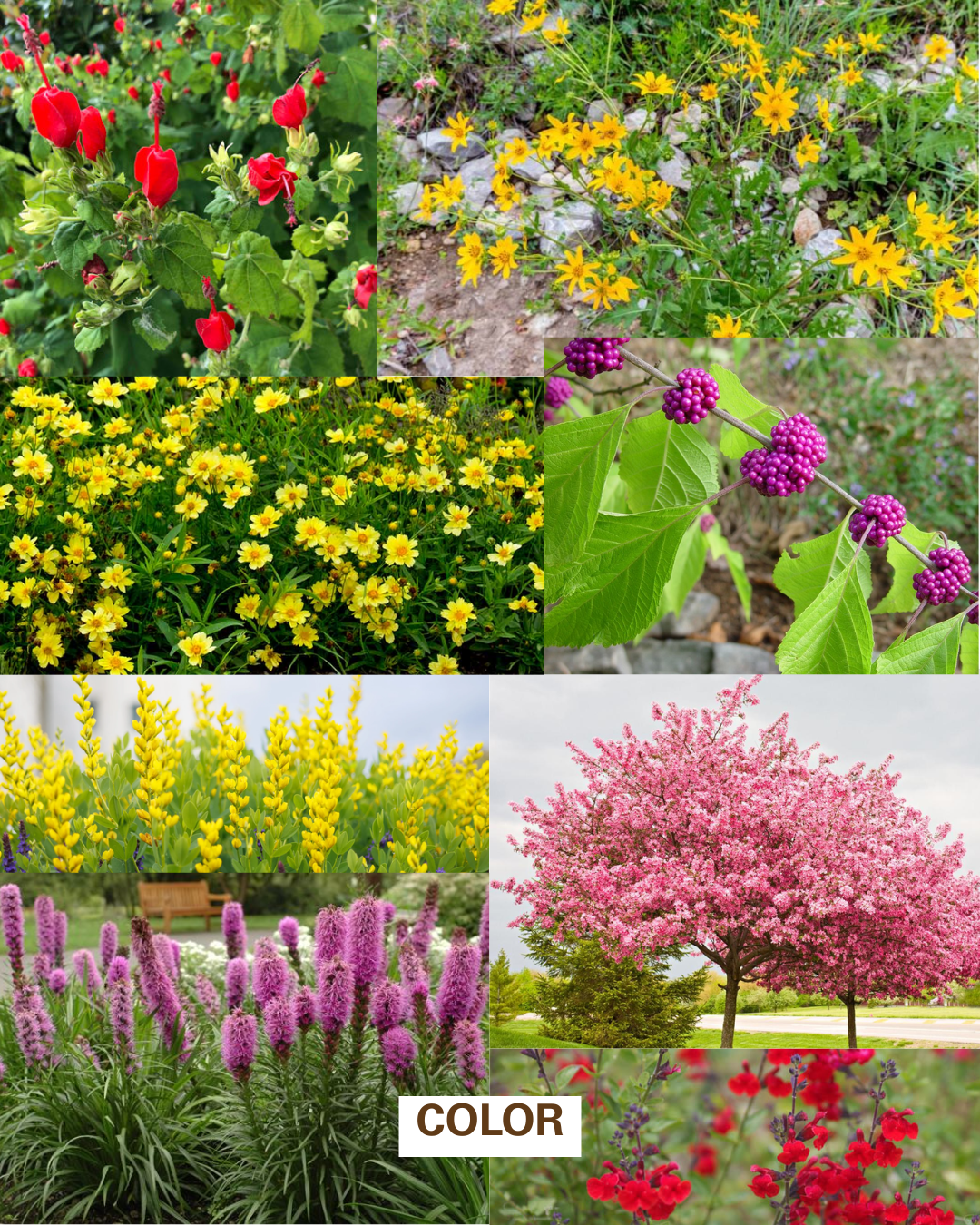
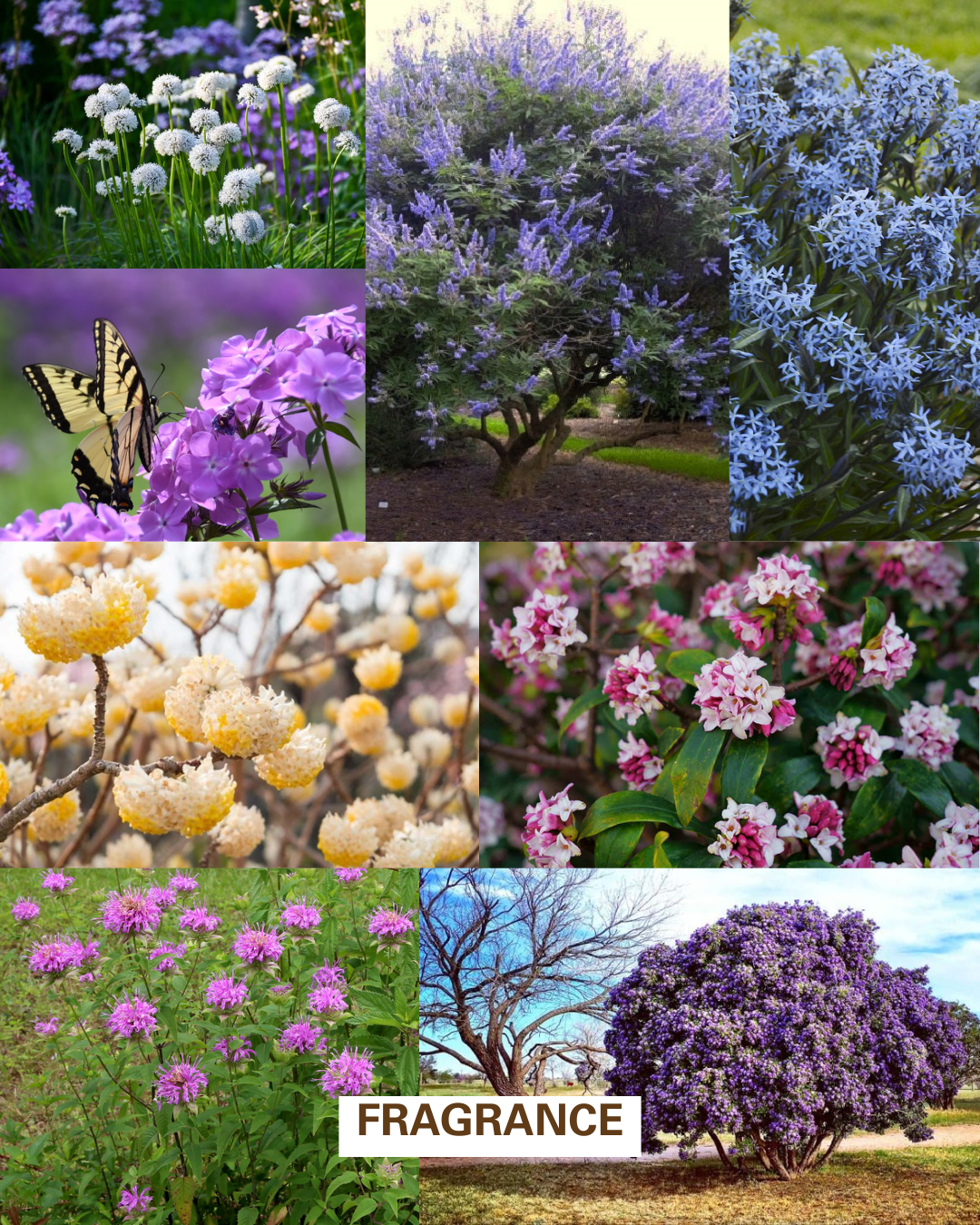
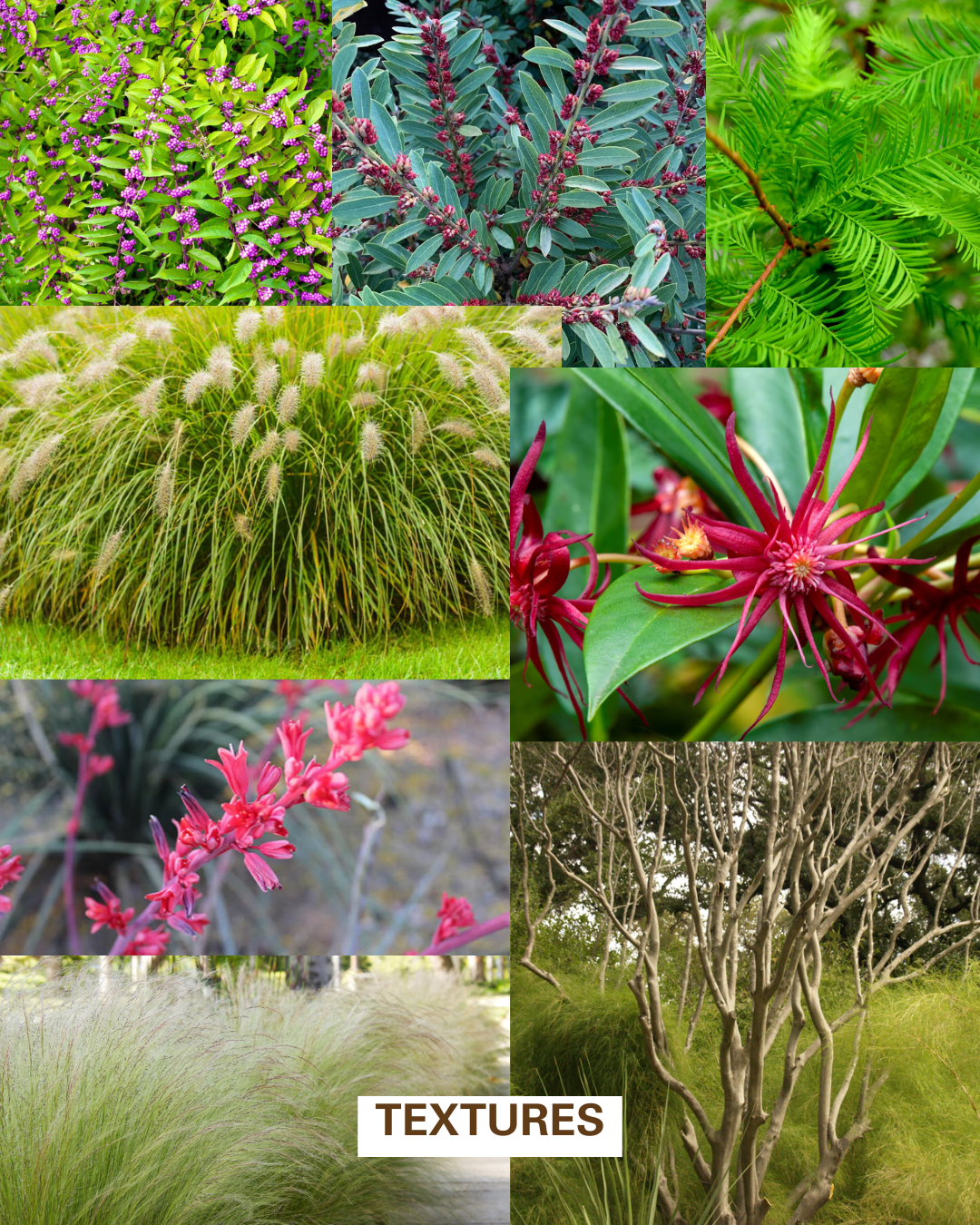
Picture a vibrant future along the Green Spine Streetscape: The colors and textures of trees and plants are cyclically changing, and their fresh fragrances fill the air. Nature is alive, and our curiosity is piqued to explore deeper through sight, smell, or touch.


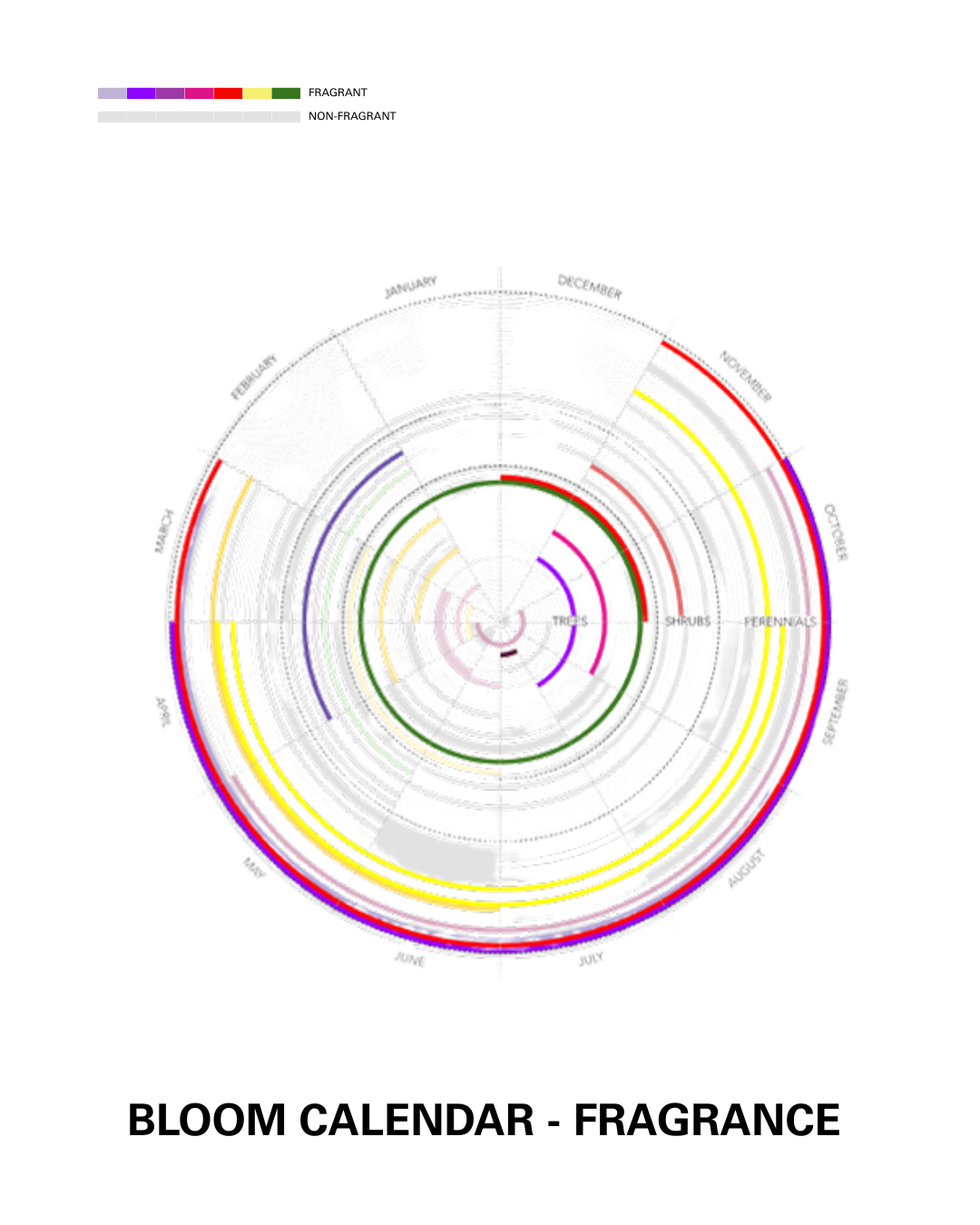
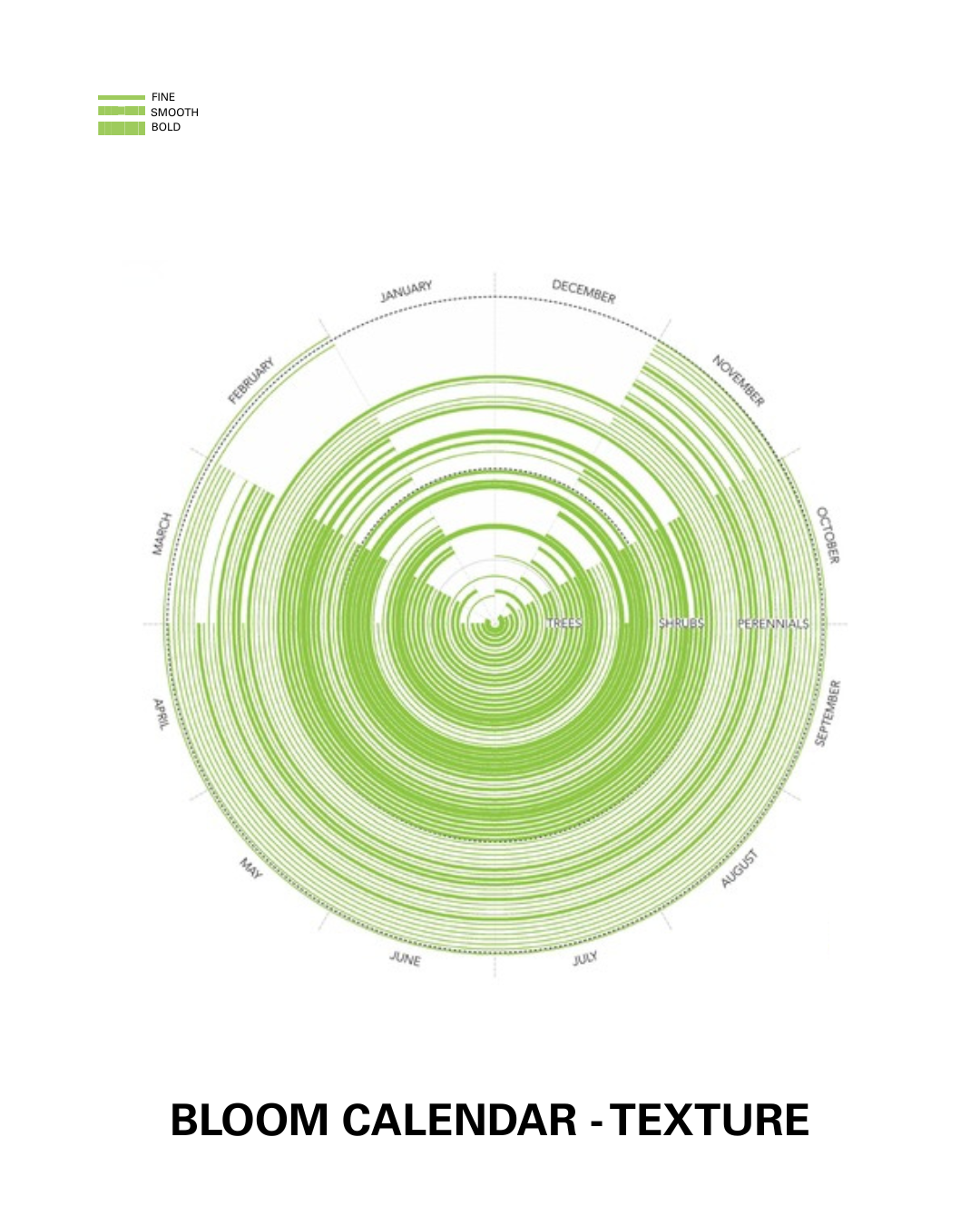
We can thoughtfully design our landscapes so that this multi-sensory experience prompted by nature isn't limited to just a 1x/year bloom, but that it is a constant experience.


The SWMD Transformation is shaping the Medical District's outdoor spaces to engage all five senses, deepening awareness of seasonal change and natural cycles through unique sensory experiences.


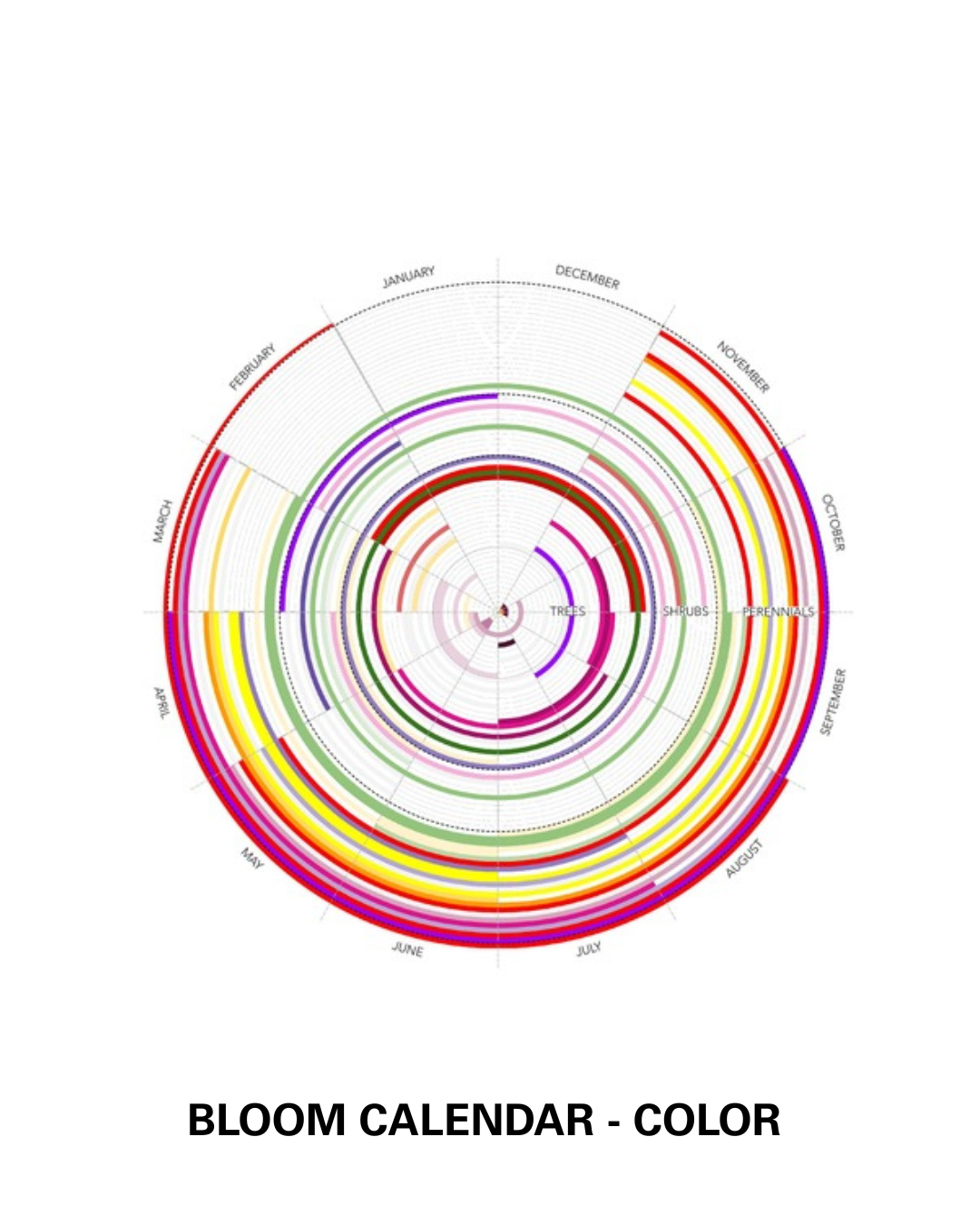
We produced these color, fragrance, and texture bloom calendars based on recommended plant and tree species for the Green Park and the Green Spine.


This tool is guiding a landscape that will embrace nature's constant evolution to create a richer user experience, sparking energy, inspiring calm, and inviting discovery.


What feelings or sensations do these invite?

Shaping the Future of Health in Dallas: Southwestern Medical Transformation Leadership Briefing at The North Dallas Chamber of Commerce

Earlier this summer, we had the honor of gathering at the North Dallas Chamber of Commerce. The Chamber's mission is "to make Dallas a better place to live, work, raise a family, and build a business." We believe that the Medical District plays a critical part in what makes Dallas a great place to be.


We were thrilled to shed light on how we're creating an even more vibrant future for the Medical District, and the insights gained from advancing this work.


Learn more details about the transformation and for insights from two esteemed leaders guiding the project: Janette Monear, President and CEO, Texas Trees Foundation, and David Biegler, Chairman of the Board, Southwestern Medical District.

SWMD_Ladies_Tree_Farm_p1.png

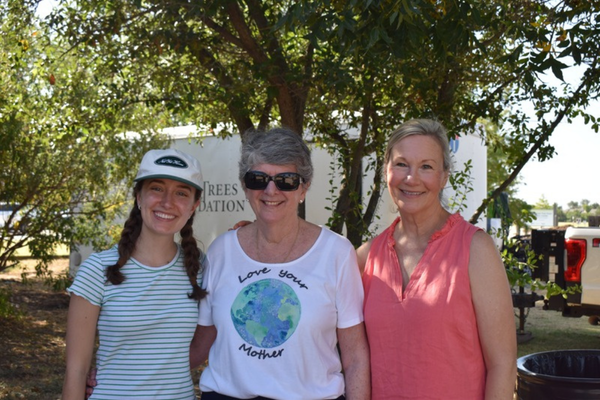
We broke away from our desks to enjoy an organization-wide outing to the Texas Trees Foundation’s TXU Energy Urban Tree Farm and Education Center, a site that supports critical functions across Texas Trees’s work: from demonstrating sustainable landscape management best practices, serving as a holding sites for trees yet to be planted, and being a place for our collaborators to serve, learn, and engage – it’s an awesome place to enjoy team-building and nature. Like Janette's shirt says - Love your Mother🌏.

Thanks so much for reading! Have an idea, question, or want to connect further in the meantime? To reach our team, drop us a line at swmdproject@texastrees.org.