Saguaro Harvesting
Hi friendly plant people,
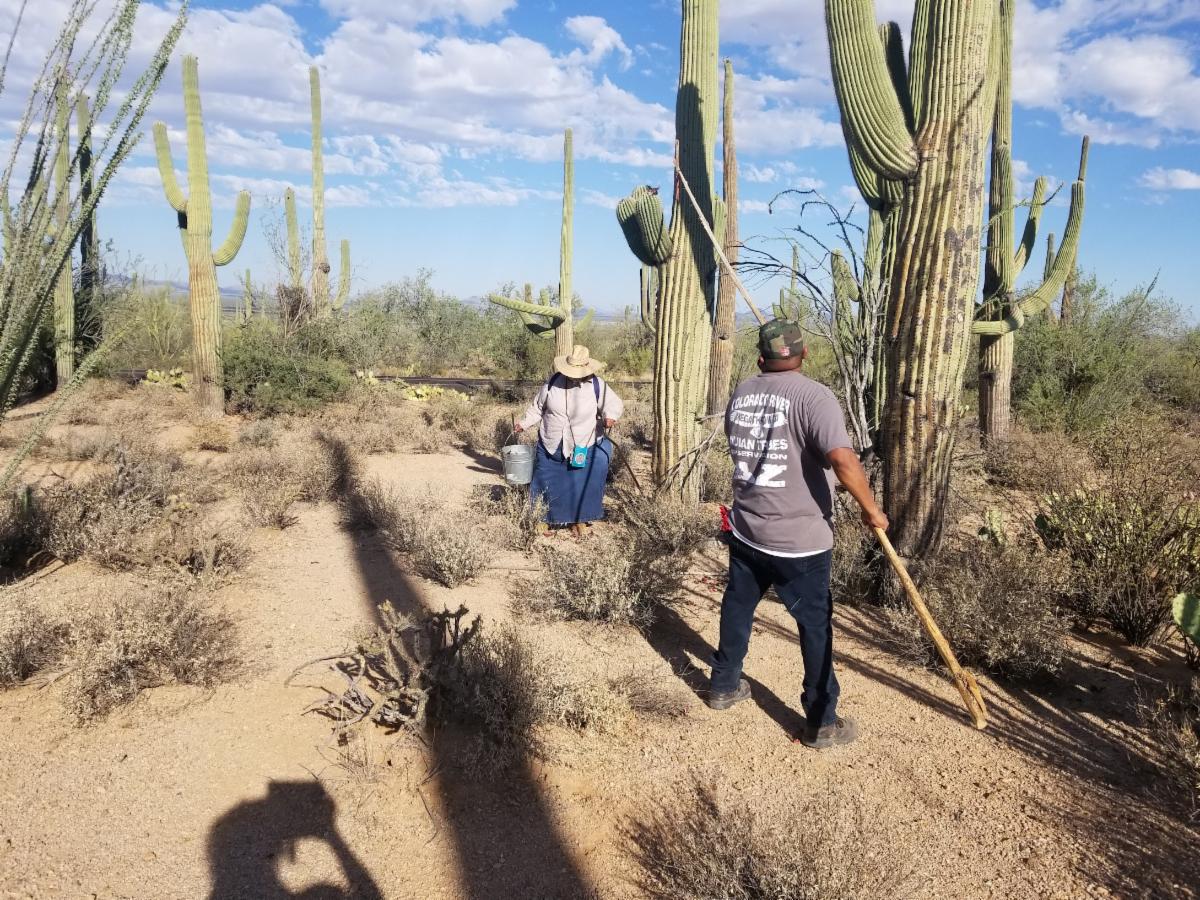
One of the highlights of my life was the day I harvested saguaro fruits with Lynn and Dallas Liston. As members of the Tohono O'odham tribe, they are allowed to harvest at Saguaro National Monument. And bring an interested guest if they would like to.
And that day in July 2020, I was their guest!
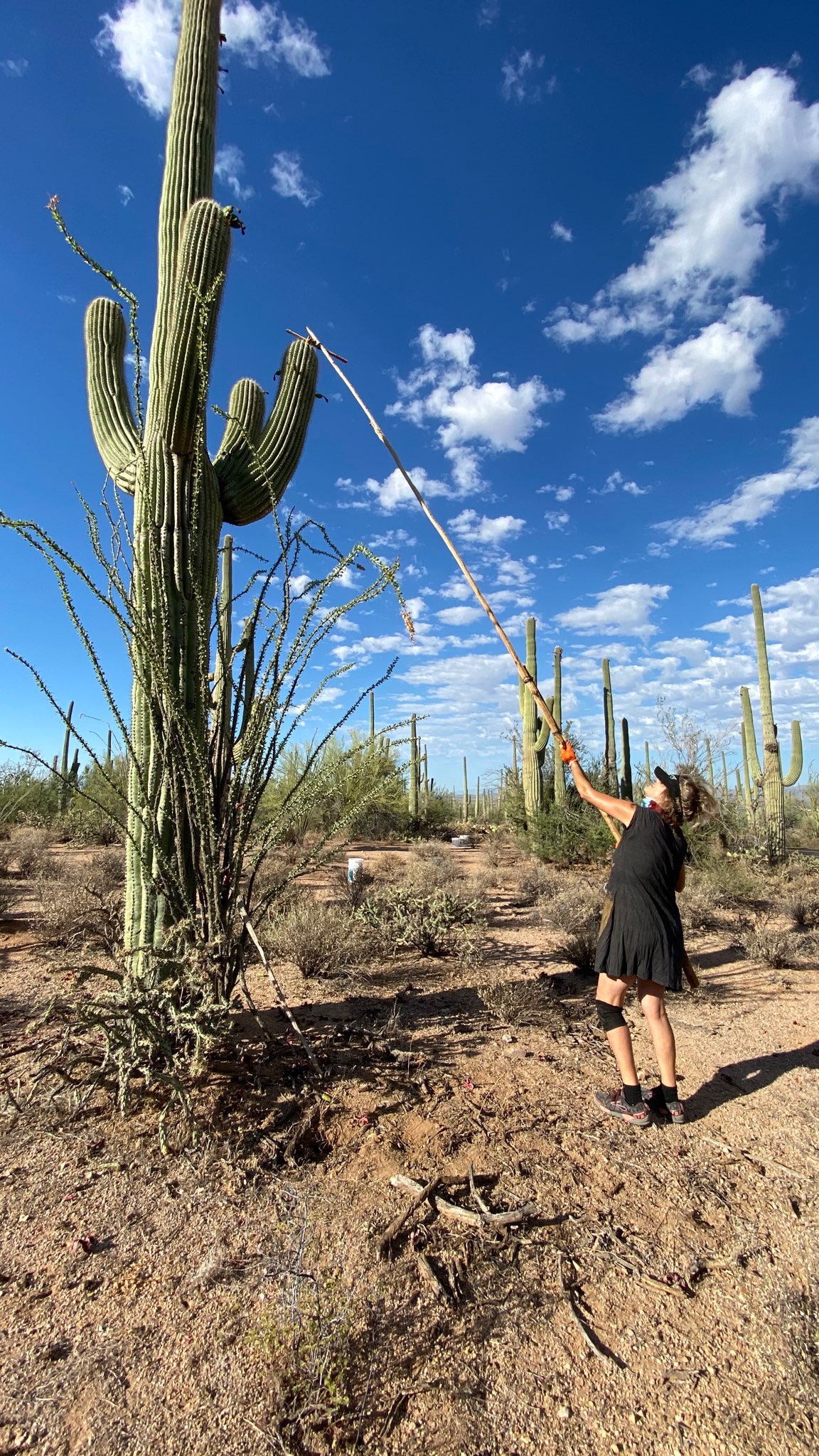
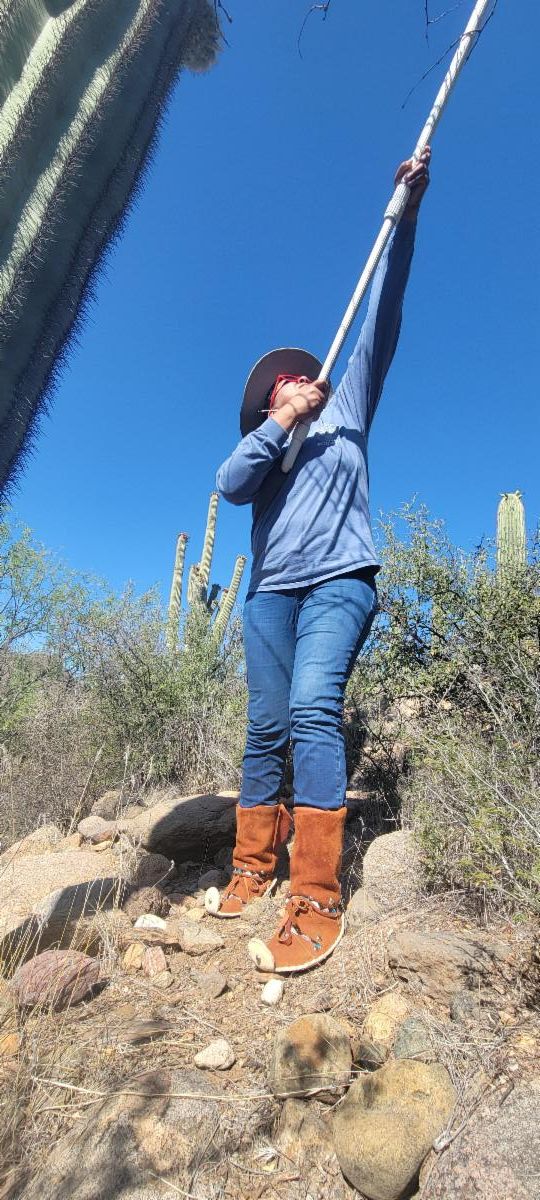
They used the traditional kuipad harvesting pole made from saguaro ribs wired together. And near the top is an 8" x 3/4" creosote stick crossbar lashed at a 35-degree angle to the pole. The creosote ends are whittled to points. This makes it easy to target the ripe fruits and push or pull them down.
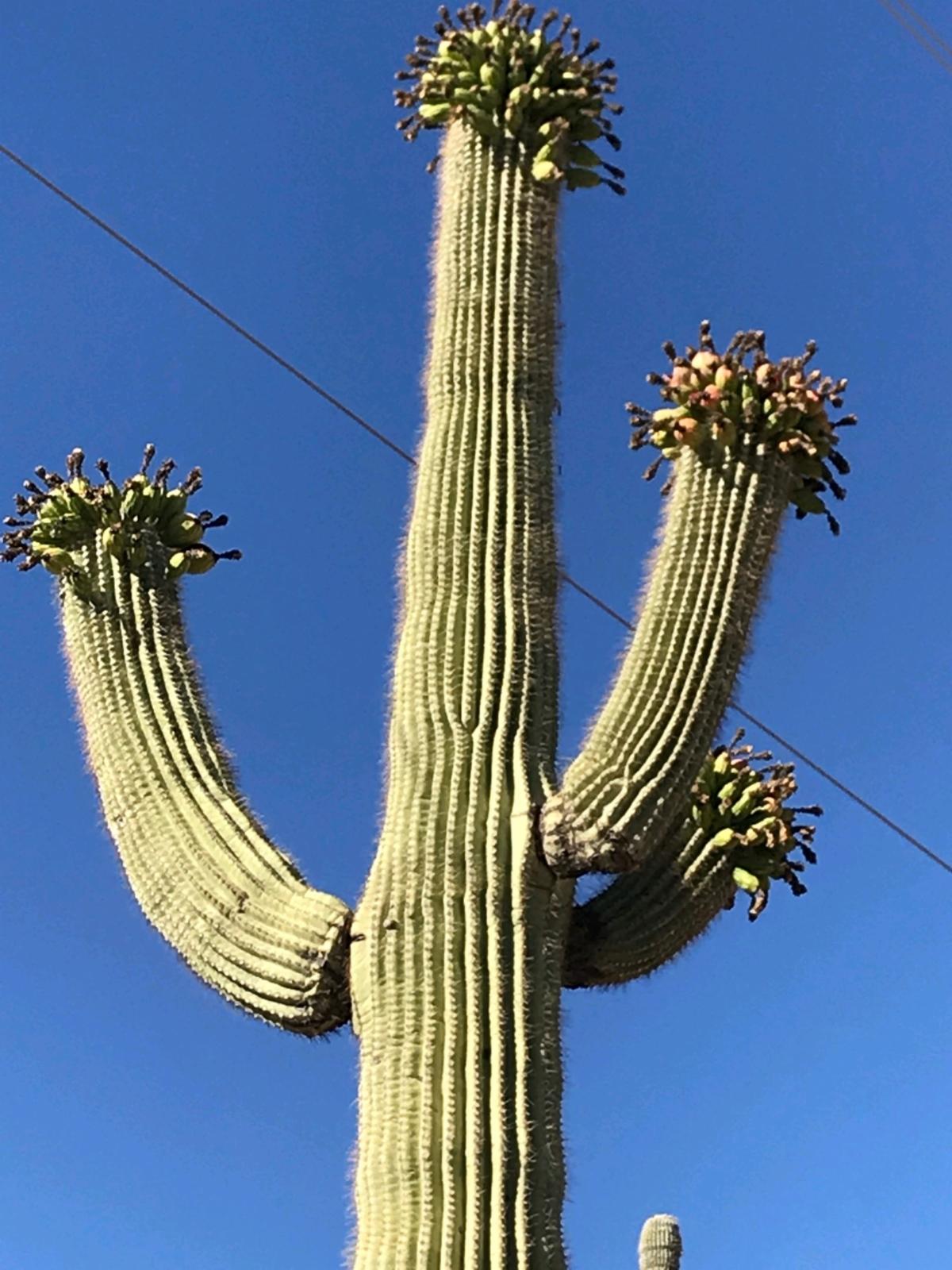
We took turns with the kuipad and the catching bucket. They taught me about juñs, the dried saguaro fruits that taste like true cactus candy. Many had fallen into the bushes and trees around the cactus.
Lynn would excitedly point one out to me, saying, "Juñ, juñ!" and I'd find it and drop it into the bucket if I didn't eat it first.
Lynn sang the cloud song to me when we were done, explaining how the clouds and monsoons come after the saguaros' fruiting season.
The transpiration of the saguaro does contribute to the desert rain cycle.
The fruit means the start of the new year for these desert people. They esteem each saguaro as a human being. Indeed, they are Beings, each with their own unique DNA like other creatures.
I see them as much older and wiser than humans, and I hope to learn from them as I connect with them and facilitate others in making the connection.
Another tribal mentor of mine was Mark Lewis, of Paipai origin in Baja California. He took me saguaro harvesting along Hwy 87 (the Beeline Hwy) north of Phoenix in 2018. The 2020 Bush Fire destroyed approximately 60,000 saguaros in that area, including the one he and I harvested from.
One of the reasons I like to harvest fruits is to be able to provide thousands of seeds to NaturalRestorations.org with their efforts to re-establish saguaros in the Bush Fire area. (One fruit contains 2000-3500 seeds.)
Other reasons: To get a soul cleansing in nature
To bring fruits to tribal elders like Ramona Button of Ramona Farms in Sacaton, Arizona. She lives in the 600-square-mile Gila River Indian Community that begins 2 miles from my home. She has not harvested saguaro since her father took her as a child.
To help care for the Earth by picking up litter.
To learn my place in the web of life.
To honor the O'odham, Yavapai, Apache, and others who have been harvesting these for centuries.
To bring Native people the experience if no one else in their tribe remembers how, like Nita Sayles of the Ft. McDowell Yavapai Nation. She came last month and was so happy to learn!
To bring anyone who respects nature—to show how to forage like I wish I'd been shown as a young person.
|