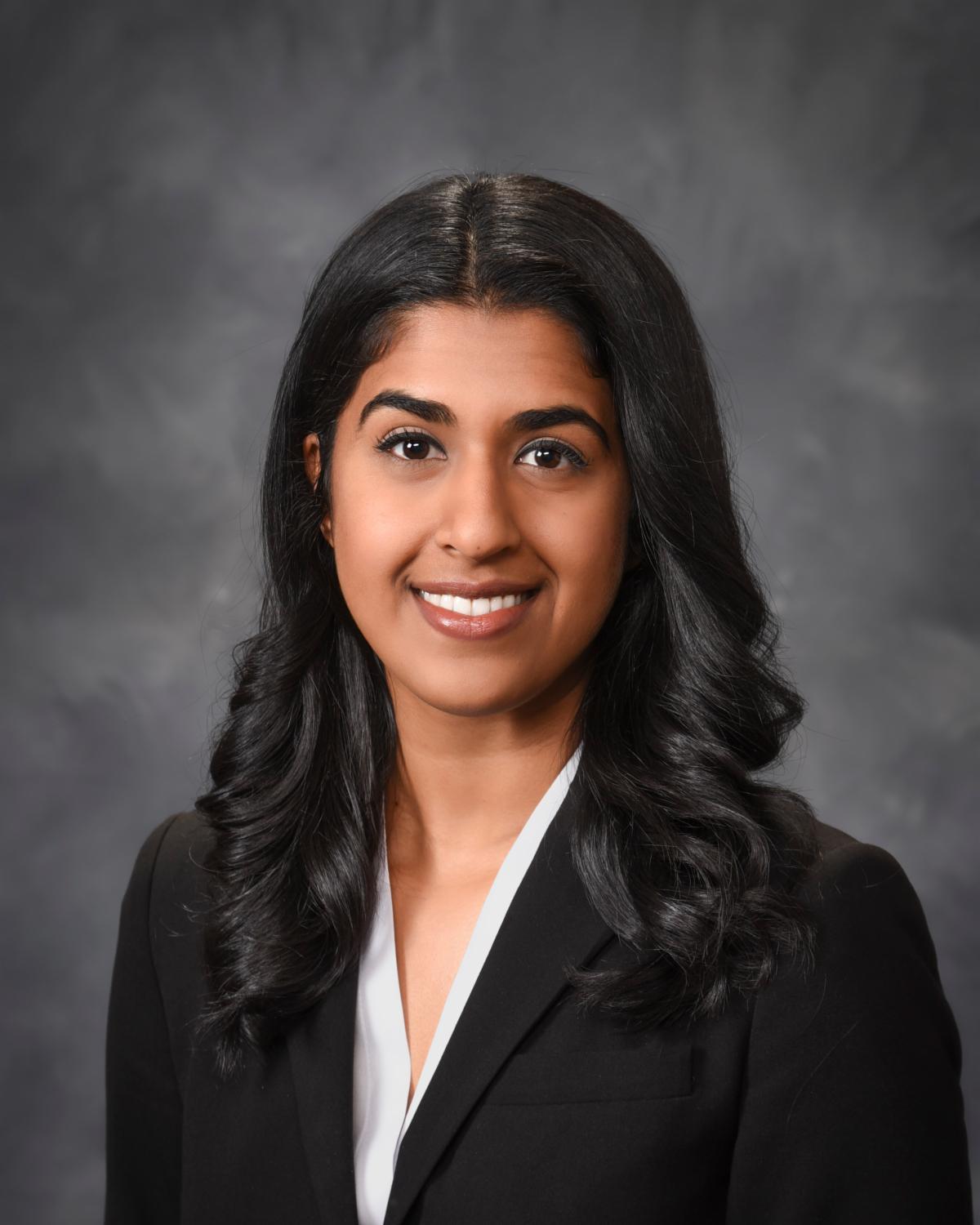
Sumble Manzoor joined our litigation team back in 2016. Ms. Manzoor devotes her practice to representing clients in a variety of general and complex civil litigation matters including mass torts, employment, and trusts and estates litigation.
Most recently, Ms. Manzoor served on the trial team that secured a multi-million-dollar verdict in favor of a class of workers who were misclassified and due wages.
Ms. Manzoor earned her B.A. in Economics and Spanish Translation from Rutgers University, New Brunswick. She graduated from Temple University Beasley School of Law where she served on the editorial board of the Temple Political and Civil Rights Law Review. During law school, Ms. Manzoor worked as a judicial extern for the United States Equal Employment Opportunity Commission and was recognized as a Rubin Public Interest Law Honor Society Fellow for her work with the Volunteer Income Tax Assistance Program. Prior to joining the firm, Ms. Manzoor worked in the United States Bankruptcy Court, Northern District of California.
|
|
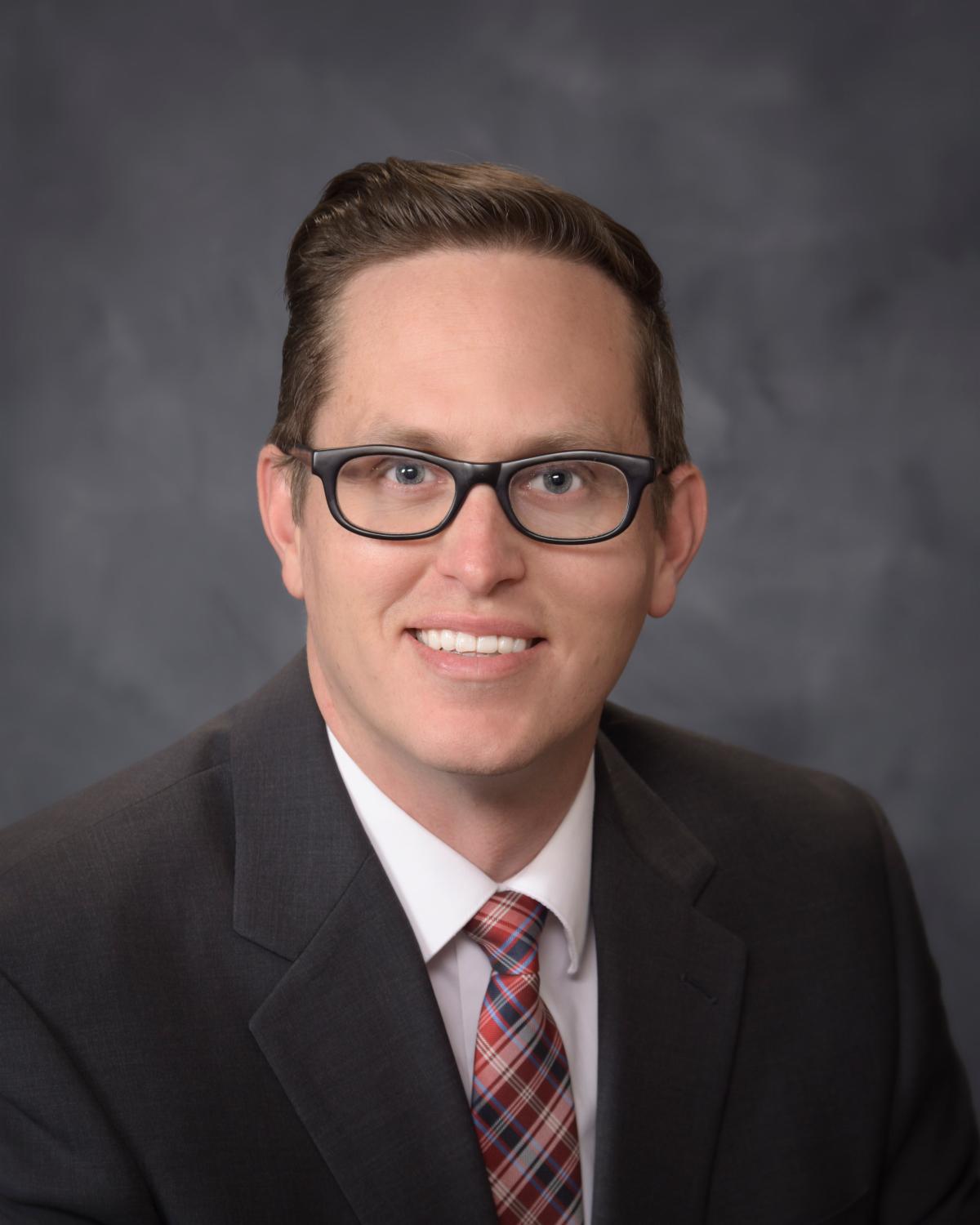
Dallas Dean has been a member of the firm’s transactional team since 2018. His practice includes estate planning, tax planning, probate, trust administration, business law, and real estate transactions.
Mr. Dean earned a B.A. in English Literature from the University of Utah, and a J.D. from Brigham Young University where he focused on tax law. Mr. Dean also earned an L.L.M. in Taxation from the University of San Francisco. His background includes four years at Andersen in San Francisco where he assisted high net worth individuals become compliant with income tax and transfer tax laws. Mr. Dean also gained experience at the United States Tax Court in Washington, D.C. and the Probate Department of the Superior Court of California in San Mateo County.
|
|
The Corey, Luzaich, de Ghetaldi & Riddle
Legacy Scholarship
|
|
We are extremely proud to announce that after almost 60 years of successful practice and knowing that the strength of the legal profession lies in its future members, the firm is launching the Corey, Luzaich, de Ghetaldi & Riddle Legacy Scholarship. Our partners know that engaging with other lawyers who bring varying perspectives benefits the collective pursuit for justice. The goals of this scholarship are to develop excellence and foster the advancement of diversity in the legal profession for generations to come. The firm has partnered with the San Mateo County Bar Foundation in this endeavor. The SMCBF has created a Scholarship Committee to oversee the administration of the Corey, Luzaich, de Ghetaldi & Riddle Legacy Scholarship. The scholarship will be awarded to a law student who has completed at least one year at one of the following accredited Bay Area law schools and is currently enrolled in law school:
- UC Law SF
- University of San Francisco School of Law
- Santa Clara University School of Law
- UC Berkeley School of Law
- Stanford Law School
- Golden Gate University School of Law
Priority for the scholarship will be given to those who are members of a historically underrepresented group in the legal profession, as well as people identifying as a person with disabilities, openly LGBTQ, and/or a military veteran, applicants who exhibit financial need, and those who intend to use their degree to serve the Bay Area community. The total award per recipient is a maximum of $25,000. Up to four scholarships a year will be awarded.
|
|
Labor and Employment Updates
CA Senate Bill 616: Sick Leave
Effective January 1, 2024, California employers are required to provide a minimum of 40 hours or five workdays per year of paid sick leave to each employee. This new law, Senate Bill No. 616 (SB 616), was recently passed by the California State Legislature and signed into law by Governor Gavin Newson. This is an increase from the previous law’s requirement of 24 hours or three workdays per year.
SB 616 allows employers to continue providing paid sick leave at an accrual rate of one hour for every thirty hours worked, as allowed under prior law. Employers may use alternative accrual methods so long as an employee is able to accrue 40 hours by their 200th day of employment and at least 24 hours of paid sick leave by their 120th day of employment. Employers also have the option of frontloading the annual paid sick leave amount with a lump sum amount of 40 hours or five workdays.
SB 616 and its predecessor require that accrued paid sick leave carry over to the following year of employment. SB 616 increases the continuous accrual cap from forty-eight hours/six days to eighty hours/ten days. If the sick leave is frontloaded as discussed above, no carryover is required.
Employers cannot deny employees the right to use accrued sick days. There is a rebuttable presumption of unlawful retaliation if an employer does deny an employee the right to use accrued sick days.
Many major cities in California already provide greater paid sick leave obligations than what is required under the current law. For example, San Francisco allows employees who work for employers with 10 or more employees to accrue up to seventy-two hours or nine workdays of paid sick leave1 and Los Angeles requires a minimum sick leave allotment of 48 hours per year2. For this reason, many employers have struggled to establish policies that would adhere to both state and local laws. SB 616 attempts to alleviate these struggles by preempting local law in certain areas. This includes no obligation to pay sick leave upon termination of employment, allowing employers to lend sick leave in advance of accrual, requiring paystub information about balances pertaining to paid sick leave, establishing calculations for the rate at which sick leave absences must be paid, and limiting requirements for advance notice. Through this process, SB 616 seeks to keep paid sick leave law cohesive and simple. However, the intersection of local, state, and federal law, and how your individual company is impacted by these rules, is still not straightforward and should be examined by an attorney experienced in employment law counseling.
CA Senate Bill 848: Leave for Reproductive Loss
California Senate Bill 848, effective January 1, 2024, adds a new form of leave for many employees. Employers with five (5) or more employees are now required to provide reproductive loss leave to employees who have worked for the employer for at least thirty (30) days.
Senate Bill 848 defines “reproductive loss” to include a miscarriage, failed surrogacy, stillbirth, unsuccessful “assisted reproduction” (such as artificial insemination or embryo transfer), or failed adoption. Employees shall be entitled to five (5) days of reproductive loss leave following a reproductive loss event. Such leave may be taken on a nonconsecutive basis but must be completed within three (3) months of the reproductive loss event. If an employee experiences more than one reproductive loss event within a 12-month period, an employer shall not be obligated to grant more than twenty (20) days of this form of leave within that 12-month period. The bill also prohibits retaliation against an employee who uses this leave or shares information about the leave.
Reproductive loss leave may be unpaid if an employer does not have an existing applicable leave policy. However, employees may use other forms of paid leave available to them including, but not limited to, vacation leave, personal leave, sick leave.
Confidentiality is always a concern when it comes to personal health information. With regard to sick leave, employers are limited in what they can ask when an employee takes time off. Employees are never required to disclose specific medical information about their illness or condition. This poses a dilemma for employers who wish to add additional paid leave for reproductive loss since requesting leave under this category exposes the employee’s personal health information. While the bill requires employers to maintain employee confidentiality relating to reproductive loss leave, there may be creative solutions to avoid employees having to disclose reproductive loss at all. For example, employers who wish to add additional paid reproductive loss leave for employees may simply add it to sick leave. Though disclosure may not be avoided in all situations, employees taking such leave should feel secure in knowing their information must be kept private.
The full text of the new bill can be found here.
|
|
Estate Planning Hot Topic
When asked what she wanted for Christmas, Lucy Van Pelt famously replied “Real Estate,” much to the chagrin of Charlie Brown. While we may never know if her wish was fulfilled, it is fair to say that a gift of real estate would definitely be a gift for the ages. Yet, if Lucy had a trust established at the time and her wish came true, that real estate gift may need to be reviewed by an attorney to make sure it is properly added to her trust.
Having property titled in the name of your trust is key in making sure it is properly disposed of after your death. While it is most efficient to purchase the property in the name of your trust from the get-go, this is not always an option. Going back to Lucy, perhaps Santa forgot about Lucy’s trust when he got her the deed to a nice piece of land and transferred it to her personally. In this case, Lucy should promptly see that the property is deeded to the trustee of her trust. This process is best done with the assistance of an estate planning attorney.
Having assets titled in the name of your trust extends beyond real estate. Bank accounts, stock portfolios, and business interests all can be held by a trust, and in many instances should be, especially if your goal is to avoid the costly process of probate. Understanding how to title assets is vital to ensuring that your trust functions as intended.
Whether you recently bought a second home, have an existing property that was never transferred to your trust, or are unsure what property should be held by the trust in the first place, please do not hesitate to contact a member of our estate planning team, who would be happy to help you make sure that your trust assets are all in line: Stevan N. Luzaich, Edward A. Daniels, Andrea A. Nguyen, Dallas E. Dean, or Alyssa S. Yoshida.
|
Community Spotlight: Unsilenced
The “Troubled Teen Industry” (TTI) is a term for the different facilities for “troubled youth” that represents a multi-billion-dollar industry in the United States. These facilities are sometimes referred to as boot camps, wilderness therapy, secured group homes, teen ranches, reform schools, or behavioral modification schools. These programs market themselves to parents, therapists, state and judicial agencies, and insurance companies as providers of therapeutic treatment for almost every problem.
However, due to the lack of oversight and the financial incentives that result from keeping children in these sites for as long as possible, the focus often quickly shifts from the safe treatment of teens to profits. Instead of delivering evidence-based treatment, many of these programs deliver a mix of maltreatment such as physical, verbal, and sexual abuse, isolation, forced hard labor, chemical sedation, sleep and food deprivation, attack therapy, or aversion therapy. This abuse is further compounded by the program’s function as a “total institution” where the students live under the authority of the program, have contact restricted to the outside world, and are forbidden to freely leave the programs for months to years.
Our firm is committed to aiding families whose teens have been victims of these institutions. To learn more about this industry and the work being done to make it safer for children in the U.S., check out Unsilenced, whose mission is to stop institutional child abuse by empowering self-advocates to promote lasting social change.
|
|
Employment Law Litigation
When issues arise, our attorneys focus on early intervention to resolve problems within the business before the issue escalates ...
|
|
Business & Commercial Transactions
Since 1964, our firm has provided tailored advice to business clients of all sizes. From sole proprietorships to Fortune 500 companies ...
|
|
Probate & Trust Litigation
Along with the provision of estate planning legal services, we have extensive experience litigating matters resulting from estate disputes involving ...
|
|
Millbrae Office
700 El Camino Real
Millbrae, CA 94030
Phone: (650) 871-5666
Email: info@coreylaw.com
|
|
Half Moon Bay Office
625 Miramontes Street, Suite 106
Half Moon Bay, CA 94019
Phone: (650) 726-7578
Email: info@coreylaw.com
|
|
|
|
|
|
|