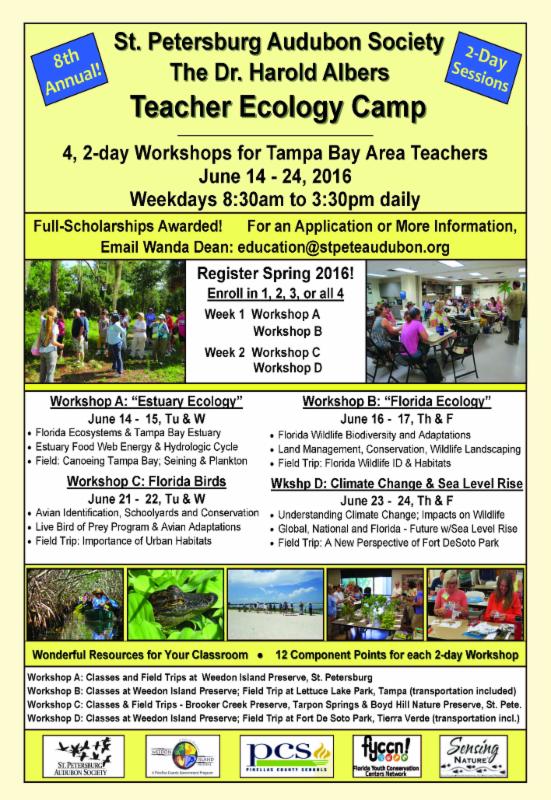
|
|
|
|
 |
Summer Fertilizer Bans in Effect
The partners of the Be Floridian fertilizer education campaign remind residents of Manatee, Sarasota and Pinellas counties and the city of Tampa that they can't apply nitrogen or phosphorous to lawn and landscape plants from
June 1-September 30.
Garden centers throughout these communities offer a variety of "summer-safe" yard products that will help keep your landscape healthy throughout our long, rainy summer. Look for fertilizers with "0" as the first two numbers on the label (as in 0-0-6). These do not contain either nitrogen or phosphorous.
Summer rains
don't
water fertilizer in, they wash it away -- right into our ponds, rivers, Tampa Bay and the Gulf of Mexico. Too much fertilizer can cause algae blooms and fish kills, spoiling the beautiful waterways that are our major source of recreation. Follow these Florida-friendly lawn care practices to "protect our fun" this summer:
-
Pump some iron. An application of iron, readily available at most garden centers, will keep your lawn green without excessive growth. Who wants to mow every week anyway?
-
Micro-size It! Apply micronutrients such as zinc and manganese to keep your grass healthy.
-
Get Better Dirt. Mix in composted cow or chicken manure, or your own home compost, to enrich your soil.
It's
like giving vitamins to your yard.
-
Pick better plants. Buy plants adapted to Florida's hot, humid climate and plant them in the right place according to their sun and water needs.
They'll
need less water, fertilizer and chemicals year-round. Visit
plantrealflorida.com/
or
floridayards.org/
for ideas.
-
Leave grass clippings on lawn!
They are free fertilizer and can supply about 25% of the nitrogen your grass needs throughout the year.
|
|
|
|
Competitive Grants Opportunity:
Tampa Bay Environmental Restoration Fund
Proposals
are now being accepted
for restoration, research and education projects in the Tampa Bay watershed through the Tampa Bay Environmental Restoration Fund (TBERF).
An initial RFP solicited in March 2016 resulted in funding for
five projects
totaling approximately $314,000, and another $338,000 is currently available for project support.
Proposals of at least $25,000 from local governments, non-profits, universities and other groups will be considered, with a dollar-for-dollar (or in-kind) match required.
Proposals must be submitted electronically by 5:00 pm EST, July 6, 2016. Late applications
will not be accepted
. Email completed proposals to Maya Burke, TBEP Technical Projects Coordinator (mburke@tbep.org).
More info and the RFP
is
located at
www.tbeptech.org/
The grant program is a strategic partnership of the Estuary Program and Restore America's Estuaries, who have pledged to work together to recruit financial donors and achieve measurable conservation outcomes from the funded projects.
TBERF funding for 2016 is being provided by
the Southwest Florida Water Management District, Hillsborough County, Florida Department of Transportation, the Mosaic Company Foundation, Pinellas County, the US Fish and Wildlife Service, Tampa Electric Company, and the Hillsborough County Environmental Protection Commission
.
|
 |
|
A Record-Smashing 14,000+ Lionfish Removed
from Florida
Waters in May!
More than 14,000 invasive lionfish were removed from Florida waters during Lionfish Removal events in May!
In Pensacola alone, 8,089 lionfish
were removed
in only two days at the Gulf Coast Lionfish Coalition Tournament. More than 7,000 people attended the Florida Fish and Wildlife Conservation Commission (FWC) Lionfish Awareness Festival, where visitors got to taste lionfish, see filet demonstrations, check out art and conservation booths and much more.
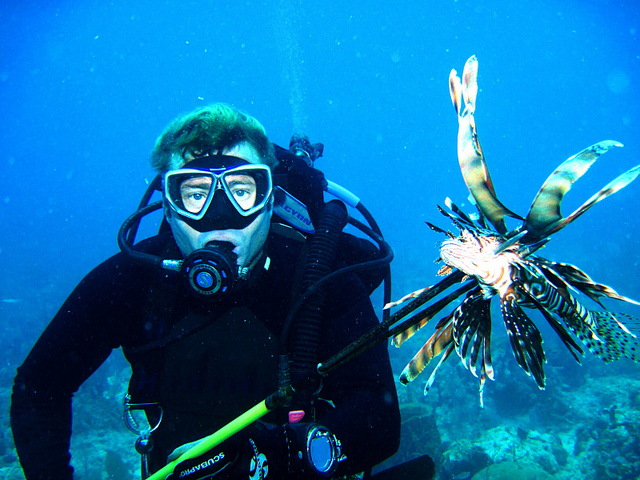
At FWC-supported events statewide that weekend and leading up to that weekend, another 5,978 lionfish were removed - including 655 at the Lionfish Calcutta tournament in St. Petersburg.
Thanks to the growing interest in lionfish as a food fish, many lionfish harvested around the state
will be sold
commercially in places like New Orleans, Atlanta, and in Florida Whole Foods stores. Some lionfish will go to Wharton and Brandon high schools in Hillsborough County, where three students will be studying lionfish diet using DNA
barcoding
for an upcoming STEM fair project.
Lionfish Removal and Awareness Day
was created by FWC Commissioners to raise awareness about lionfish - a nonnative, invasive species that preys on native reef fish.
|
Boating accidents up, fatalities down
Nearly half of boating accidents involve collisions, FWC report shows
With the release of the 2015 Boating Accident Statistical Report, the Florida Fish and Wildlife Conservation Commission (FWC) encourages boaters to focus on simple, effective steps that make boating
safer.
"Many of the accidents in this report could have been prevented if the boat operators had paid attention to everything going on around their vessel, maintained a proper lookout and if everyone had been wearing a life jacket," said Capt. Tom Shipp,
FWC Boating and Waterways Section
.
Nearly half of boating accidents in 2015 involved collisions and 34 percent of all collisions were due to inattention or the operator failing to maintain a proper
look-out
.
Florida had 737 boating accidents in 2015 -- 103 more than in
2014. However, fatalities decreased by25 percent, with
55
people killed in boating accidents. Drowning from falls overboard remains the leading cause of death;
87 percent of these victims were not wearing a life jacket.
For a copy of the
2015 Boating Accident Statistical Report
, visit MyFWC.com/Boating and select "Safety and Education" and "Boating Accidents."
|
|
Draft Cockroach Bay Aquatic Preserve Management Plan Available
Comments due July 5, 2016
A public meeting to discuss current and future management of the Cockroach Bay Aquatic Preserve and to provide comment on the draft management plan is scheduled as follows:
Meeting Date and Location
-
Monday, June 20, 2016, 6:00 p.m. - 7:30 p.m.
South Shore Regional Library, 15816 Beth Shields Way, Ruskin FL 33
Written comments are welcome and can be submitted by mail to 130 Terra Ceia Road, Terra Ceia, FL 34250 or by email to
FloridaCoasts@dep.state.fl.us by Tuesday, July 5, 2016.
|
Summer Is Sizzling at Weedon Island
Saturday, June 11
Intro to Florida-Friendly Landscaping™
2:00-3:30 p.m.
Attendees will receive a copy of The Florida Yards & Neighborhoods Handbook, a 50-page guide providing detailed information about designing and maintaining a Florida-Friendly landscape.
Friday, June 17
"Discover Composting"
10:00 a.m.-11:00 a.m.
Learn how to get starting making your own rich soil amendment with several composting methods.
Saturday, June 18
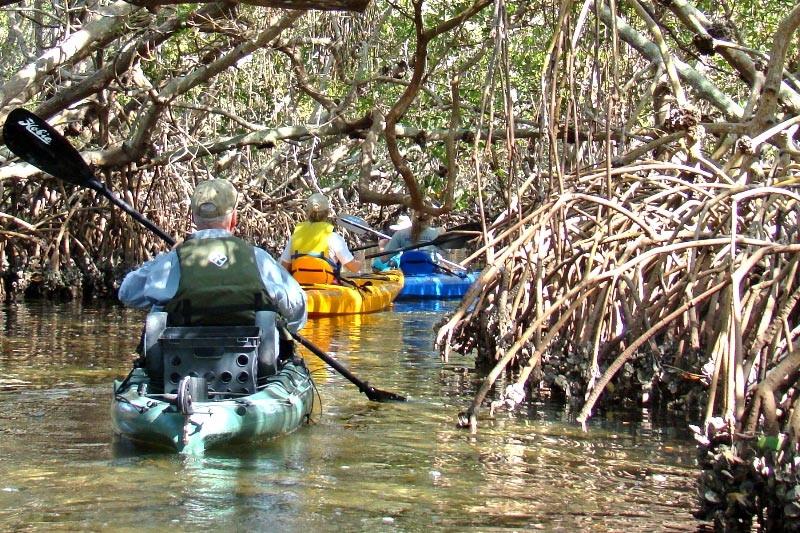
Paddle the Preserve: Seagrass Ecology
9:00 a.m. to 12:00 p.m.
Join us for an exploration of the uniqueness and diversity of Tampa Bay's seagrass flats. Participants will paddle through mangrove tunnels and out in the bay to seagrass flats. We will discuss the ecological benefits of seagrass, types of seagrass found in Tampa Bay, the critters that live there, and the successful management efforts of private and public partners that helped restore our thriving seagrass communities! Adults: $20.00; Youth (10 and up accompanied by an adult): $10.00.
Pre-registration required.
Saturday, June 18
Preserving the Weedon Island Saltwater Dugout Canoe
10:00 a.m.-11:00 a.m.
Robert Austin, Ph.D., and Phyllis Kolianos, M.A. will discuss the trials and tribulations of the preservation of this significant waterlogged wood discovery and the knowledge that has been gained from this effort. Free; preregistration required.
Saturday, June 15
The Life of Lichen
10:00 a.m.-Noon
Explore these unusual organisms during a classroom/outdoor activity. We will study the natural history of lichen, then take a stroll to view them around the Education Center.
Identification tips, interesting facts and more await participants.
|
|
|
|
The mission of the Tampa Bay Estuary Program is to build partnerships to restore and protect Tampa Bay through implementation of a
scientifically sound, community-based management plan. TBEP is a partnership of Hillsborough, Manatee, Pasco and Pinellas counties; the cities of Tampa, St. Petersburg and Clearwater; the Southwest Florida Water Management District; the the U.S. Environmental Protection Agency and the Florida Department of Environmental Protection.
|
|
|
|
|
|