Addressing human-rights issues for
people with disabilities around the world
Good things are going on all over the world!
|
|
Thanks to Rotary clubs dedicated to the human rights of people with disabilities worldwide |
|
As our organization has grown to more than 200 members, this past week has been yet another active one. Lots of really good things happening worldwide.
Our Rotary Club of World Disability Advocacy honors all those Rotary clubs that serve the human rights of people with disabilities. We will be presenting a certificate of application to the Rotary Club of Kericho, Kenya for their caring for a family with three children with cerebral palsy.
|
|
The Kenya club, which is in the formation stage, donated basic needs, and plan on going back to build the family a house. Such dedication to service above self is highly commendable.
If you know of other such Rotary projects for people with disabilities please let us know so that we can also pass on our appreciation to them.
In other news around the world:
-
Ralph Hammond (United States) is working on connecting with Russell-Hampton, the company that sells all the Rotary merchandise. His goal is to see if they can make a special T-shirt for us that we could use as a fundraiser.
-
Our Club is considering sponsoring a leadership conference similar to Rotary Youth Leadership Awards but also focused on people with disabilities It will take place online. More details will be coming.
|
|
-
The Kenya group has been moving forward in several directions. And they are now meeting with the chairman of the Board of Directors of the National Council of Persons with Disabilities. This is a major connection and meeting.
-
Jeremy Opperman (South Africa) is developing a podcast for our Club and will soon be sending us information for the format.
-
Peter Matwyuk (Canada) is developing a website for our Club that may be the most accessible website in Rotary. Not only will it be a valuable tool for the cause, but it will also serve as a model for Rotary to follow.
-
Our Club has developed a group for athletes with disabilities to support human rights for that community. The group is headed up by Jagwe Muzafaru (Uganda). If anyone is interested in being involved in this group, please let me know.
-
I spoke to the World Kindness Movement last week about the relationship of people with disabilities and kindness.Unfortunately, it was not recorded. However, I did write a piece on LinkedIn, which I will share with the group.
-
Ralph Hammond (United States) and Steve Jones-D'Agostino (U.S.) continue to do an outstanding job on our Club's weekly newsletter. If you would like to contribute, please let Ralph know.
-
Grace Ndegqwa (Kenya) is working on a project for performers with disabilities. More details are coming.
-
Our Club has heard from a Rotary group in Australia that wants to set up a Rotary club for people with disabilities, and is looking to us for advice. Ralph Hammond (U.S.) is working on that project
-
Steven Joseph (India) heads up an organization that trains people with disabilities on technical skills and then job placement. We are exploring the idea of bringing that program to several countries.
-
A Rotary club in Kenya has stepped up to helping a family with three people with disabilities. Ralph Hammond (U.S) is expressing our Club's congratulations on their efforts.
-
Our Club came across a Rotary e-club in Kenya that offers packages of essentials for people in need for a year's supply, for US $2.30. I am getting more details. My hope is that we could offer it to people with disabilities in several countries.
-
Keep in mind that our Club has Facebook and Linkedin pages that anyone is welcome to post on. (See the links at the bottom of this newsletter).
-
The Kenyan group has its own Facebook page. If any other groups would like to do that, I would be glad to help them.
-
Many people want to be members of our cause. There are several ways to do that: 1. Join one of our WhatsApp committees; 2. Become a member. (There will be dues, which have not yet been determined); 3. Be a part of the Friends of the Rotary Club of World Disability Advocacy. (While there are no dues and you will not be a Rotarian, you can take part in Club meetings and events.)
-
Our Club's next monthly meeting is on August 23 at 12:00 noon (Eastern time). I will be sending a Zoom link to you.
|
|
In closing, kindly introduce yourself to me, including but not limited to your
-
Country of residence
-
Role in the society
-
Whether you are a person with a disability, a parent of a child with disability, and/or a diversity- and disability-rights advocate.
|
|
|
We are looking for people who have skills and abilities in the development of web apps. To let us know whether you are interested and, if so, when you would be available, contact Club President Ken Masson via either WhatsApp or at kennethmasson@gmail.com, |
|
We are also seeking a volunteer to maintain our online calendar, on a platform such as Google Calendar, where people and groups may post events related to our Club and its mission. To let us know whether you are interested and, if so, when you would be available, contact Club President Ken Masson via either WhatsApp or at kennethmasson@gmail.com. |
|
Rotary adopts a new diversity, equity, and inclusion statement |
|
Here is RI's statement: "To guide our organization in living up to our values of diversity, equity, and inclusion (DEI), the RI Board of Directors, with guidance from the DEI Task Force, strengthened the DEI statement that we adopted in 2019.
" Read the updated commitment, and learn more about how we’re reinforcing diversity, equity, and inclusion in Rotary’s culture, from club meetings to grant-funded activities."
|
|
Rotary presidential initiatives
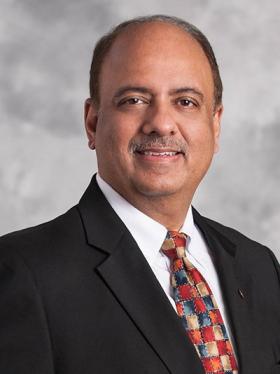
RI President Shekhar Mehta (shown on right) has created three service-oriented initiatives, and is encouraging Rotary and program participants to strengthen communities through them:
-
Empowering girls. Address the inequities that girls worldwide face by using district grant or global grant projects to empower them.
-
Rotary days of service. Organize a day of meaningful, hands-on service to bring Rotary members and friends together to improve your community.
-
Presidential conferences. Attend a conference to celebrate our service accomplishments and get inspired to increase our impact.
|
|
Rotary and Children with Disabilities |
|
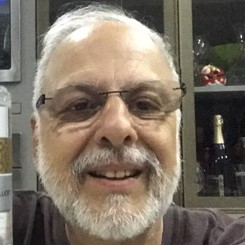
Eduardo Muniz Werneck is a past governor of District 4670 in Brazil, and a past president of its Rotary Club of Sao Leopoldo Leste. He has been a Rotarian for more than 40 years, is a Rotary historian, and an honorary member of The Rotary Club of World Disability Advocacy.
As our Club is focused on human rights for people with disabilities worldwide, it is amazing to discover that more than 100 years ago, Paul Harris, a co-founder of Rotary International, also focused on helping children with disabilities.
|
|
On May 28, 1907, the Chamber of Commerce of the small town of Elyria, Ohio, United States, met to decide on the construction of a larger and more modern hospital to replace the existing one, with few resources and only one nurse, and whose administrator had just resigned. Edgar F. Allen, a successful merchant from the city, was among those present. Two days later, a collision between two crowded trams in the city left dozens of people injured and nine dead, including Edgar's eldest son, aged 18. Doctors later claimed that the deaths were due to delays in care, as the wounded had to be taken to neighboring towns, as the local hospital was unable to treat them.
A little more than a year later, a new, modern hospital with a team of efficient doctors opened its doors in the small community, thanks mainly to the effort and dedication of Edgar Allen, who took over the project, seeking resources among the entrepreneurs of the city.
In 1911, an 11-year-old boy with infantile paralysis (polio), Jimmy Bodak, was brought to the hospital for treatment. Edgar ended up getting attached to Jimmy, who calls him "daddy." Four years later, following a suggestion by Dr. Baldwin, the doctor who had brought Jimmy to the hospital, Edgar opened a new hospital with the sole purpose of treating children with physical disabilities.
Due to the low influx of patients, which Edgar knew existed in the region, he asked for help from civil organizations, and the Rotary Club of Toledo, a city neighboring Elyria, ended up getting involved in the project. A committee was created within the club to deal with the program, and little by little other clubs in the state joined the cause. In 1919, the Ohio Society for Children with Disabilities was founded. When Arch Klumph, of the RC of Cleveland, Ohio, became president of Rotary International, he suggested that all Rotary clubs develop projects around the theme.
Clubs across the country sought Edgar Allen to learn about his work, and eventually, Paul Harris himself became so involved that he ended up as chairman of the Board of Directors of the National Society for Children with Disabilities, created in 1921 by Rotarians from various U.S. states and Canada.
With the end of the emphasis on commercial exchange among Rotarians, the cause came to offer an alternative to clubs that were looking for a new objective to dedicate themselves. This represented perhaps the biggest project of Rotary until the appearance of Polio Plus. And the cause of children with disabilities almost became an official RI program at the 1923 Convention
For more information on the Rotary Club of World Disability Advocacy, e-mail us at RotaryWDA@gmail.com
|
|
Pang group to tackle ‘overwhelming’ challenges faced by people with disabilities |
|
A group in Pangnirtung is rallying to give more support to community members with disabilities, something Rosie Kilabuk says is much needed.
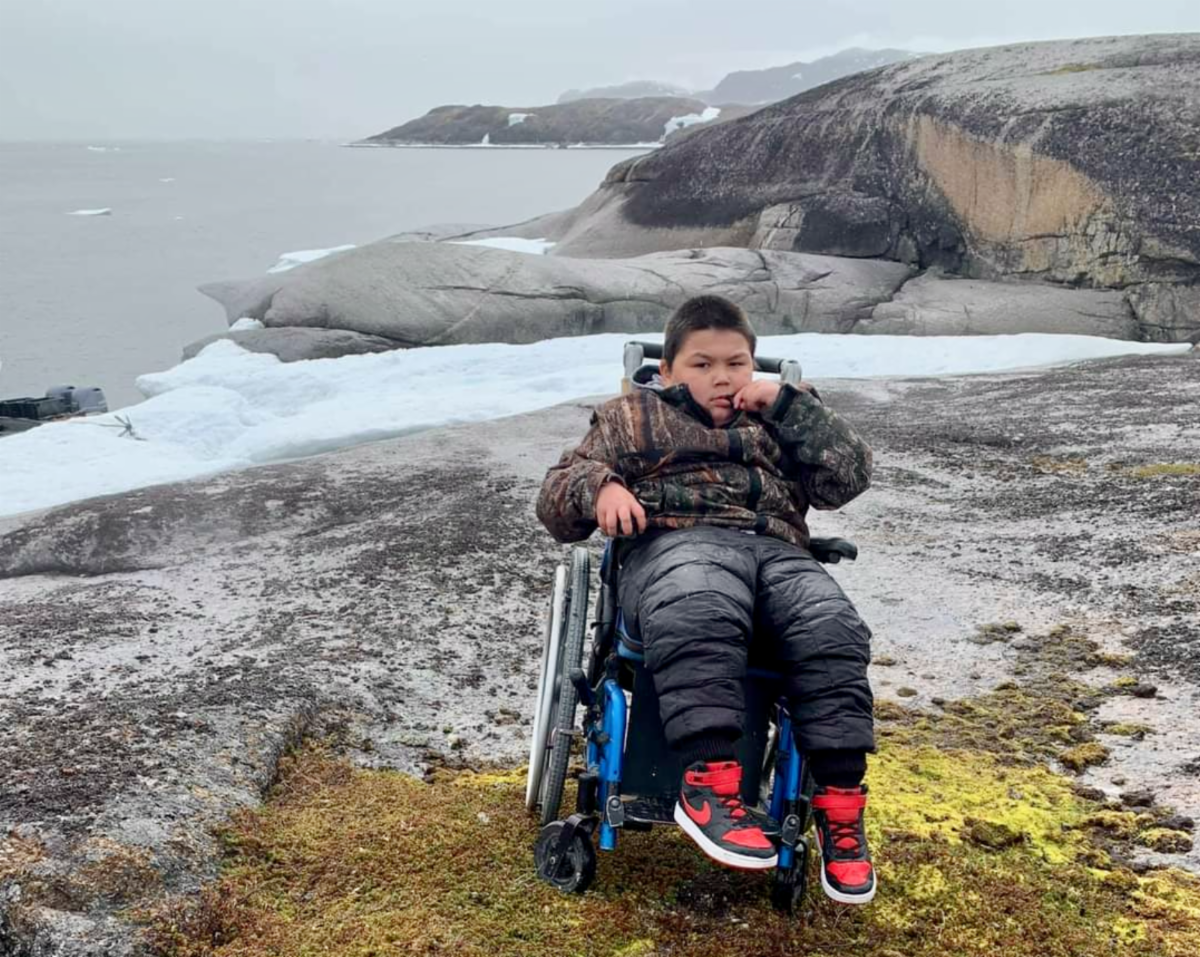
Rosie cares for her grandson, Kenneth Kilabuk (shown on right) who has cerebral palsy, epilepsy and a global developmental delay, which means it takes longer for him to reach milestones than it does for other children his age.
|
|
She adopted seven-year-old Kenneth at birth.
“It’s sometimes overwhelming, what a person with a disability goes through in a small community,” said Rosie.
Kenneth is in a wheelchair, making it difficult for him to get around on the town’s roads, which are full of potholes.
Things get worse in winter when roads aren’t always cleared of snow, said Rosie.
If they’re successful in getting to their destination, getting into buildings without ramps is another barrier.
“I wish my family’s houses had ramps because [without them] it means not visiting, not going to birthday parties, it’s very difficult,” she said.
Photo courtesy of Rosie Kilabuk
|
|
Jahirul Islam, Centre for the Rights and Development of Persons with Disabilities: 'Know thyself'
|
|
My name is Jahirul Islam and my birthplace is Hazaribag (old Dhaka). I now live in Savar. My motto is, "Know thyself."
My physical disability has been a genetic disease since I was a child. It’s called charcot-marie-tooth, and has attacked my upper and lower limb distal muscle. I use assistive device for my foot drop.
I completed graduation at Dhaka College. I’m pursuing a masters of governance and development studies at Jahangirnagar University, Bangladesh. In 2013, I started working with people with disabilities. I begin that giving for most of the day since 2016. I’m still learning and applying it.
I have been working in different renowned non-governmental organizations And I’m working NGOs such ActionAid Bangladesh, Sightsavers Bangladesh, and Oxfam Bangladesh. And I’m a member of both Rotary's World Disability Advocacy Group and Commonwealth Children and Youth Disability Network.
I’m the founder and secretary of Centre for the Rights and Development of Persons with Disabilities, where I spend most of my time working. My organization is a base for people with disabilities in Bangladesh, and works with other community and social organizations.
We are working to an inclusive world where persons with disabilities turn into persons with enormous possibilities. We are providing integrated skills-enhancement training and establishing the rights of equity for persons with disabilities by reconstructing the way of thinking towards inclusive and sustainable development.
In recognition of my work, I won the 2020 Joy Bangla Award.
|
|
How to make your online meetings accessible for people with Disabilities |
By Matt Cherry, Director of Philanthropy, at Ability Centra
One in four American adults has a disability that impacts major life activities. Often these disabilities include communication challenges, like hearing and vision loss, sensory processing disorders, and difficulty speaking clearly. After years of slow steps to include people with communications challenges in workplaces, schools, and services, the COVID pandemic resulted in a giant leap backward.
As a non-profit where communications accessibility is the core of our mission, Ability Central regularly hosts meetings with participants who are deaf, blind, have sensory processing issues, or have difficulties speaking. Our board chairperson communicates by typing on an iPad with his toes. Moving meetings online after COVID hit presented challenges. However, with a few adaptations, our online meetings now go smoothly, and everyone participates fully.
Not every non-profit is working directly with people with disabilities. But every non-profit can take steps to ensure that people with disabilities have a voice in their meetings and decision-making.
|
|
Three other articles worth reading |
|
Building an active online presence |
A warm thank-you to the following people for sharing their work and inspiring us . Thank you for helping make the world a kinder place.
-
Mr. Ken Masson, chairman of Rotary District 7910's Disabilities Advisors Group, Massachusetts, U.S.
-
Ms. Mimi Liana Nasharauddin, Bekind Malaysia, Kuala Lumpur, Malaysia
-
Mr. Enrique Motilla, Mexica, Mexico
As you know, we have a brilliant and active Youth Council, whose members have been volunteering their time, efforts and talent towards helping us build an active presence on social media. Saloni and Neha have also committed to making our website more intuitive, user-friendly, and interactive under the kind guidance of Mr. Stephen McGill (Canada).
They have created a short survey to understand the requirements for World Kindness Movement membership. Your help in completing the form below can help all of us partners in the kindness revolution grow the movement together. Your valuable inputs will help shine the light on you, who are the heart of WKM, and help build a great website experience.
To complete the Member Survey, which will take 10 to 12 minutes, click here:
Just one request: Please visit our current website before taking this survey. Click here, to help check the site.
I am looking forward to responses from all of our Club and Group members. Thanking you in advance, and kind regards,
Nirmala Mehendale
President
|
|
Statements Worthy of Reflection |
|
- In [my] country, only jokes are being made about the disabled.
- There has been no improvement in their quality of life.
- Some people have become self-sufficient by selling these disabilities. But the disabled remained neglected.Nothing happened to them.How ridiculous!
- There is no opportunity for education but it is said that there are quotas for the disabled in job [market].
- By selling [to] these disabled people, many have become home- and car- owners. But not even a wheelchair is in their destiny.
- My sister is 35 years old. She has not been able to walk since she contracted polio. She can do everything. She just can't walk.
- Thousands of people with [disabilities are] doing jobs at different places in [my] country. Many are teachers now and doing government jobs.
- I remember nine jobs to nine persons with disabilities in different department of Onus Garments. We made 41 jobs, including [in] banks, [non-government organizations], and business industries.
|
|
The deadline for stories and photos/images for our August 24 newsletter is on August 19.
Please submit your stories and related photos/images to Newsletter Editor Ralph Hammond (United States) either via WhatsApp or at ralph.hammond@verizon.net.
All stories must be in either e-mail, PDF, WhatsApp, or Word format.
All photos/images must be in either GIF, JPG, or PNG format.
|
|
With international members, the Rotary Club of World Disability Advocacy focuses on coordinating human-rights needs for people with disabilities in countries around the world. Our club has set up international committees in many countries to, identify needs.
Our monthly Club Meeting - for Members, only - is the third Monday at 12:00 p.m. (Eastern time). And our monthly Group Meeting - for both Members and Non-members - is the first Monday at 9:00 a.m. (Eastern time).
To convert Eastern time to your own time, click here.
To obtain the Zoom login for our meetings, contact Ken Masson, our Club's president for Rotary year 2021-2022, via either WhatsApp or at kennethmasson@gmail.com
|
|
Missed Our Latest Club Meeting? |
|
To watch the video of our Club's August 9 Group Meeting, click here. |
|
Our Club is dedicated to the human rights of people with disabilities.
|
|
We Follow Rotary's Four-Way Test |
|
Our Rotary Club follows Rotary International's Four-Way Test, a non-partisan and non-sectarian ethical guide for Rotarians to use for their personal and professional relationships. The Test has been translated into more than 100 languages, and Rotarians recite it at Club meetings:
Of the things we think, say, or do
-
Is it the truth?
-
Is it fair to all concerned?
-
Will it build goodwill and better friendships?
-
Will it be beneficial to all concerned?
To learn more on Rotary's Guiding Principles, click here.
To contact Ken Masson, our Club's 2021-2022 president, click here.
|
|
|
|
|
|
|