|
The 51st anniversary of the Safe Drinking Water Act (SDWA) on December 16, 2025, offers an important moment to reflect on more than five decades of progress in protecting the nation’s drinking water. Since President Gerald Ford signed the landmark legislation into law on December 16, 1974, the SDWA established national standards that have fundamentally improved water quality and strengthened public health across the United States. Its milestone anniversary last year drew widespread recognition from environmental groups, water associations, and agencies such as the EPA, underscoring the SDWA’s lasting significance.
Yet the stakes remain high. More than two million Americans still lack reliable access to safe drinking water, with small, rural, and disadvantaged communities facing the greatest vulnerabilities. Many rely on aging or inadequate systems that expose them to heightened health risks.
Our work continues. From submitting public comments on EPA’s proposed PFAS National Primary Drinking Water Regulation to advancing research, education, and cross-sector collaboration, the Water & Health Advisory Council remains committed to supporting effective, science-based solutions. The nation has taken great strides to ensure safe drinking water for all, but there is more work to be done. The challenges ahead are organizational, financial, and political—but with prudent, visionary leadership, they are surmountable. With appreciation for past accomplishments and confidence in the promise of future achievements, we celebrate this 51st anniversary of the SDWA and dedicate ourselves to ensuring that its 100th anniversary will be a triumph.
| | | |
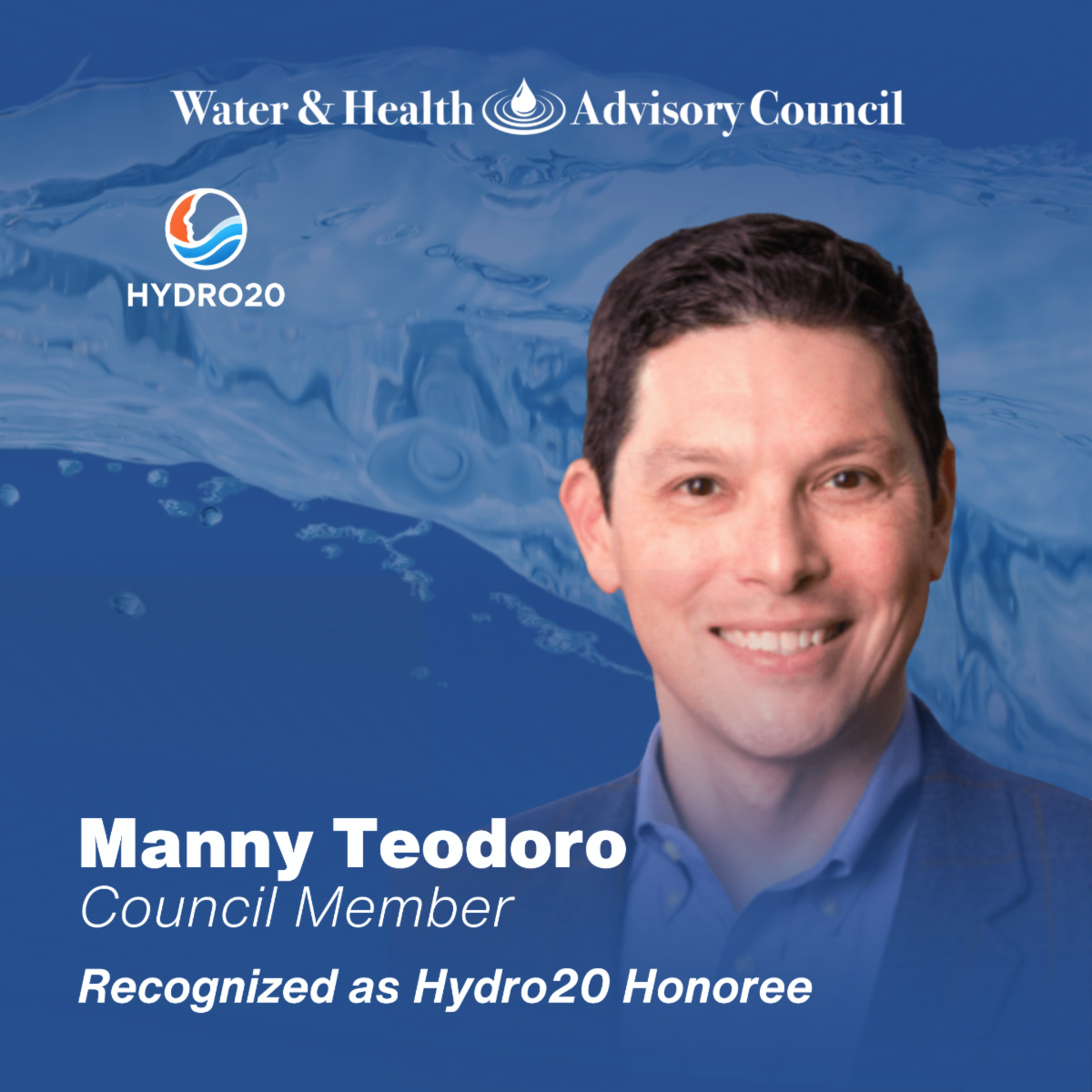
Council Member Manny Teodoro Recognized as Hydro20 Honoree
Council Member Manny Teodoro, Professor at the University of Wisconsin–Madison, has been named a Hydro20 honoree for his impactful work on water affordability and public trust. His research brings critical attention to the growing cost burden on low-income households and the need for sustainable, equitable water systems.
Teodoro is also committed to making complex water data accessible.
| | From an eight-page comic based on his book The Profits of Distrust to the Wisconsin Waterworks Excellence Project, which grades all 572 Wisconsin water systems with easy-to-understand report cards, he helps communities better understand water quality and system performance. | | |
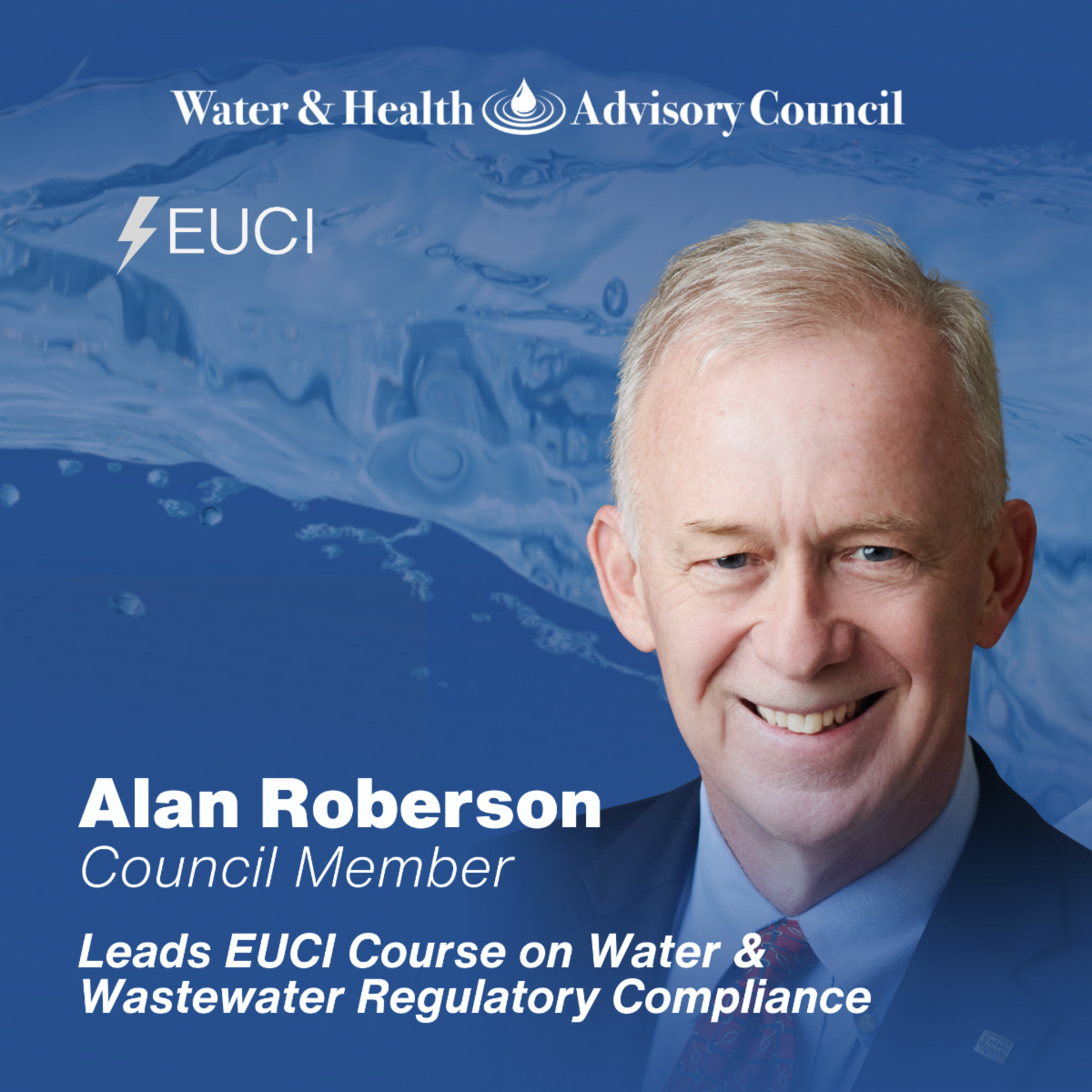
Advancing Regulatory Knowledge: Council Member Alan Roberson Taught EUCI Course
On December 10, 2025, Council Member Alan Roberson led a one-day virtual EUCI course, Regulatory Compliance for Water and Wastewater Systems. The training provided a streamlined walkthrough of the SDWA, the Clean Water Act (CWA), and other essential regulations, serving both as a strong refresher for experienced professionals and an accessible introduction to federal requirements.
| | | Roberson designed the session to blend regulatory history with practical insights, delivering an efficient yet comprehensive deep dive for participants navigating today’s complex compliance landscape. | | | |
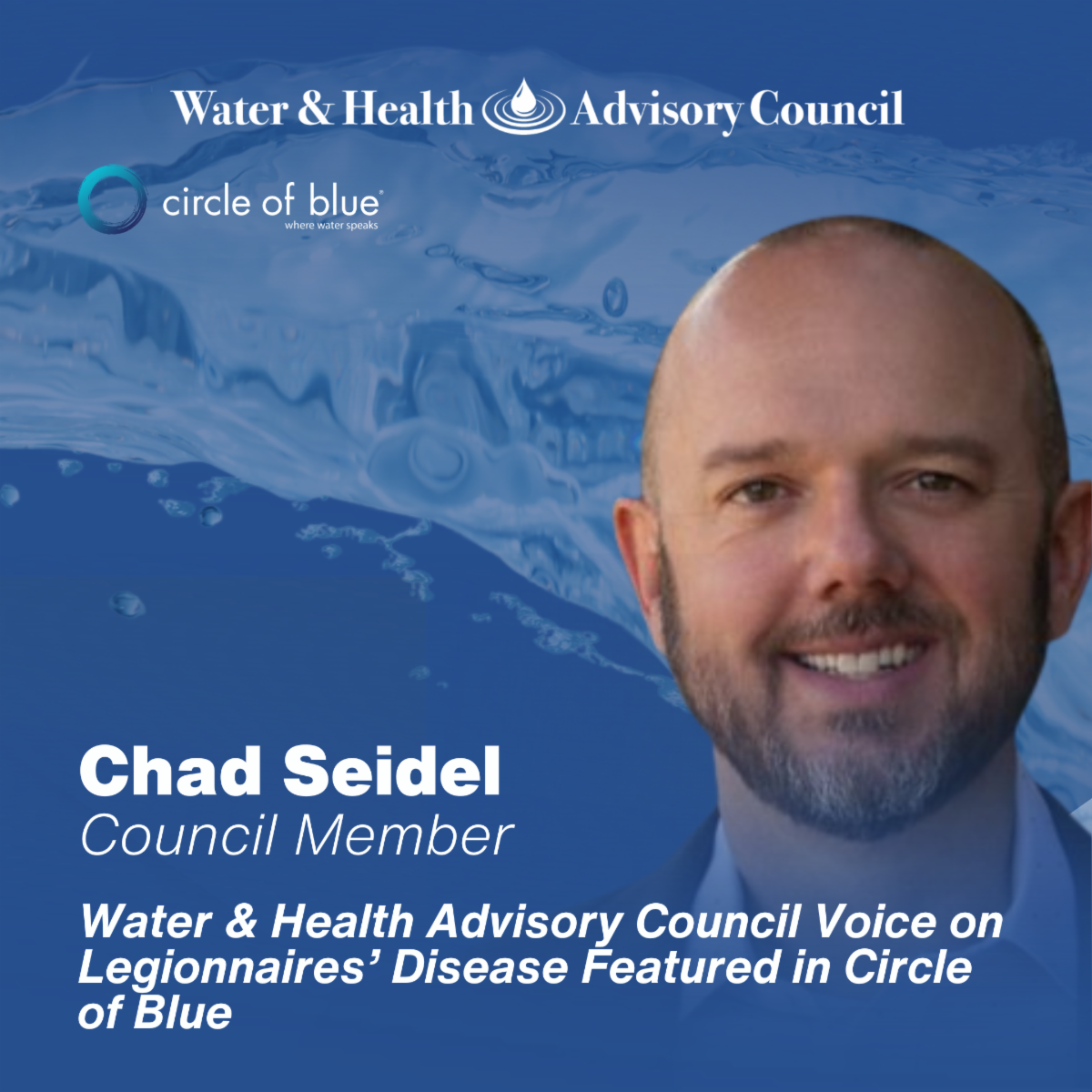
Council Member Chad Seidel Quoted on Legionnaires’ Disease Risks
Water & Health Advisory Council Member Chad Seidel was quoted in a November 11, 2025 Circle of Blue article, “America’s Deadliest Waterborne Disease Is Not Letting Up,” which examines the persistent and deadly threat of Legionnaires’ disease across the United States.
In the article, Seidel emphasized the seriousness of the challenge, noting that Legionella is “the most substantial public health concern we are addressing, and need to better address, related to drinking water.”
| | |
He underscored that managing the bacteria requires shared responsibility among water utilities, building owners, and system designers, particularly as outbreaks continue to occur in complex building plumbing systems.
The piece highlights the growing number of cases nationwide and calls attention to the need for greater awareness, stronger management practices, and coordinated action to reduce public health risks.
| |
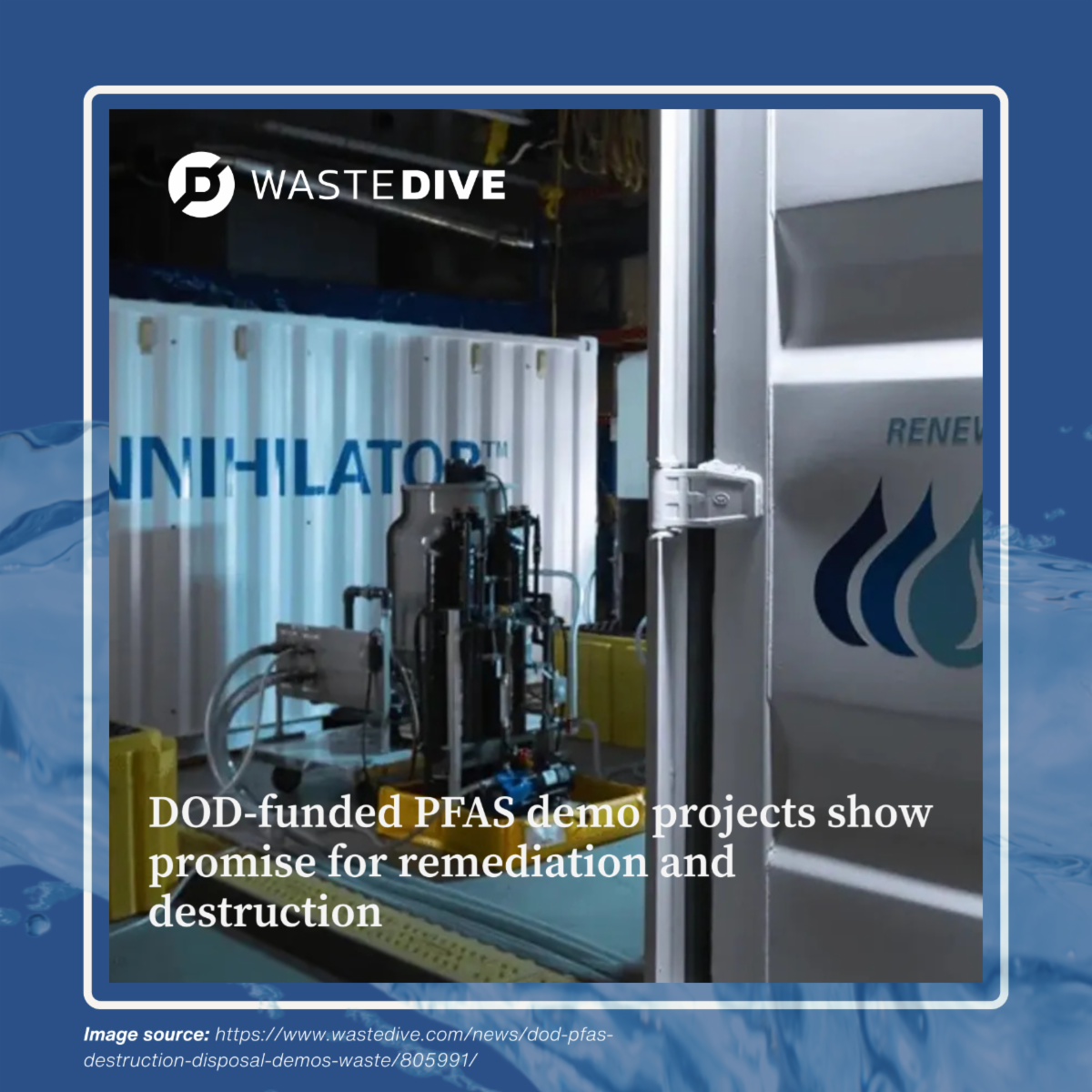
DOD Tests Show Early Promise in PFAS Cleanup Technologies
Early results from new DOD-funded projects show promising progress in destroying PFAS contamination at military sites. Initial testing indicates several emerging technologies can effectively break down or capture these “forever chemicals,” offering a path toward scalable, on-site cleanup.
Participating companies say the demonstrations confirm strong performance and cost benefits as federal pressure grows to remediate PFAS nationwide. More detailed findings will be shared at an upcoming DOD symposium.
| | | | |
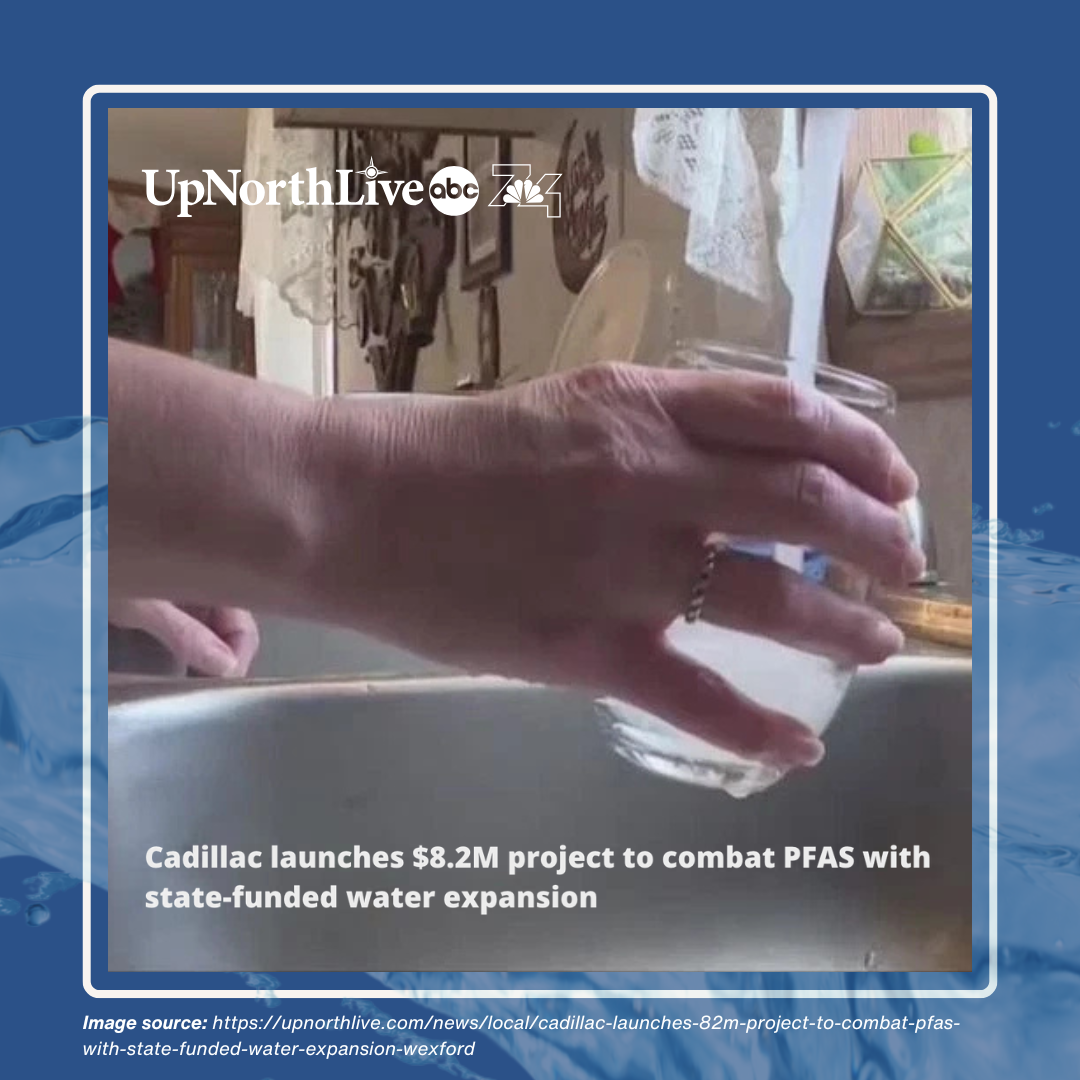
Cadillac launches $8.2M project to combat PFAS with state-funded water expansion
Cadillac is moving forward with an $8.2 million state-funded project to expand municipal water service to neighborhoods affected by PFAS contamination, a move city officials say underscores their commitment to providing clean, safe drinking water. The Michigan Department of Environment, Great Lakes and Energy (EGLE) is supporting the effort, which will extend public water to hundreds of properties currently relying on private wells, including areas with confirmed PFAS impacts. The project will roll out in two phases, with Phase 1 connecting about 170 households and Phase 2 adding service for roughly 70 more homes not currently served by the municipal system.
| |
ABC7: Major Water Line Break Disrupts Service for 165,000 in Puerto Rico, Forcing Schedule Changes at 270+ Schools
More than 270 schools in Puerto Rico were forced to adjust their schedules after the territory’s main water line ruptured, disrupting service for over 165,000 people. The six-foot-diameter pipe failed due to long-standing maintenance and management issues – challenges that mirror those facing water systems across the U.S.
This incident underscores the importance of consistent monitoring and investment to maintain reliable water infrastructure and protect public health.
|
NBC10: Aging Water Main Rupture in Massachusetts Highlights Infrastructure Risks
In Westford, Massachusetts, an aging water main from the 1940s ruptured and unleashed thousands of gallons of water, caused a road to collapse, flooded homes, and shut off service for many residents. The failure of this old infrastructure underscores the hidden risk that aging water systems pose across the country.
We must prioritize upgrading water infrastructure so that every community has access to safe, reliable drinking water.
|
ENR: Federal Loan Programs Can’t Keep Pace with Growing Clean-Water Needs
Federal loan programs for clean water are falling far behind the nation’s infrastructure needs, with a $780 billion funding gap projected by 2026. The latest report shows these programs cover less than 2% of annual clean-water capital demand, leaving utilities and ratepayers to shoulder most of the cost.
Without policy reform and sustained investment, communities across the country risk widespread system failures and an escalating crisis in access to safe, reliable drinking water.
|
Cleveland 19 News: Cleveland water system prepares for winter main breaks across aging infrastructure
For the past four decades, thousands of water main breaks have occurred in Cleveland, Ohio each year. More than one third of all water infrastructure in the United States is already past its intended lifespan, highlighting the seriousness of the national water infrastructure crisis.
Continued investment is necessary, but long-term solutions are essential to ensure every community can trust that they will receive dependable, reliable drinking water in the years ahead.
|
Circle of Blue: America’s Deadliest Waterborne Disease Is Not Letting Up
“Legionella is the most substantial public health concern we are addressing, and we need to better address it, related to drinking water.” Council member Chad Seidel underscores the severity of America’s deadliest waterborne illness, which continues to spread through aging and under-maintained water systems.
Upgrading infrastructure, improving monitoring and oversight, and ensuring that all communities have safe, reliable drinking water is essential.
| |
Forbes: The Water–Energy Nexus: The Hidden Infrastructure Of Resilience
The connection between water and energy is often overlooked, yet energy use accounts for roughly 40% of a water utility’s expenses.
Much of that cost is tied to inefficiency – leaking infrastructure wasted an estimated $7.6 billion worth of treated water in 2019 alone. Investing in modern, efficient water systems is essential to ensure reliable service, reduce energy waste, and strengthen sustainability for every community.
|
The Texas Tribune: Texas set to make $20 billion investment in water after voters approve Proposition 4
Texas voters approved Proposition 4, dedicating up to $20 billion over the next two decades to the Texas Water Fund to strengthen the state’s water infrastructure. This record investment will repair aging systems, develop new water supplies, and support rural communities facing drought to protect access to safe drinking water.
While this marks a major step forward, sustained investment and long-term policy planning remain essential to ensure clean, reliable water for every community.
|
Spectrum News: Ventura proposes higher water and wastewater rates
The City of Ventura, CA, is proposing major water rate increases to fund essential infrastructure upgrades and ensure a more reliable water supply. As council member Chad Seidel notes, failing to invest in basic infrastructure leads to unreliable systems, which ultimately threatens public health.
While Ventura’s proposed rate changes reflect a difficult reality facing communities nationwide, sustained investment remains essential to safeguard water systems and deliver clean, reliable water to every household.
|
CBS News: Pittsburgh Water introduces $193 million in upgrades as part of "The ABC Project"
Pittsburgh, PA, broke ground on a major water infrastructure upgrade that will modernize essential parts of the city’s drinking water system. With portions of the original system dating back to 1913, these improvements are necessary to strengthen the reliable delivery of clean water to residents.
|
LA Times: Iranian capital faces water rationing and evacuations if it doesn’t rain soon, president warns
Tehran, Iran, is facing severe water rationing and potential evacuations after its main reservoirs dropped to historic lows following years of drought and mismanagement. The crisis has been intensified by population growth, aging infrastructure, and ineffective water policies.
Tehran’s situation is a reminder of the importance of responsible water management and sustained investment in resilient systems that protect communities for the future.
| | | | |