| | Over 20 Years of Middle Market Investing | | | | RESHORING'S RETURN: MACRO DRIVERS AND INVESTMENT INSIGHTS | | |
Ironwood Capital maintains strong, long-term conviction in the growth of US-based manufacturing companies, particularly those that have the capabilities to scale as new demand emerges. In 2025, demand is being fueled by several forces: tariffs, continued focus on supply chain resilience, the push to reshore critical intellectual property in sectors such as defense and technology, and the narrowing gap in price differentials between the US and foreign producers.
As reshoring rises, we believe our portfolio companies are ready to lead the next phase of domestic industrial growth. Since 2001, Ironwood has made 49 manufacturing investments, with 19 currently active in the portfolioA, reflecting our ongoing commitment to US-based production. This blog explores the key demand drivers behind US reshoring, along with investment considerations applicable to the sector.
| |
Key Trends Shaping the US Reshoring Movement
The recent surge of news alerts about tariffs and geopolitical conflicts have heightened American’s awareness of reshoring manufacturing in the US. However, this trend has been developing over the past several years following the aftermath of the COVID-19 pandemic. While costs and lead time are primary decision factors in business’ supply chain selection, other factors such as IP protection, quality, and reliability considerations are also at play. These converging priorities are driving a shift in global manufacturing strategies.
| | |
Trade Tensions and Tariffs
Ongoing trade tensions between the US and China have emerged as a central driver of reshoring activity. As geopolitical risk escalates, companies are reevaluating their supply chain strategies to reduce reliance on Chinese manufacturing. Tariffs were once seen as a short-term trade tool; today they are becoming embedded in corporate and investment planning. Tariffs close the cost differential between domestic and imported goods, potentially enabling domestic manufacturers to compete on price where they were uncompetitive in the past.
The Trump administration’s threated or actual imposition of tariffs has forced companies to reconsider their dependence on overseas supply chains. Recent examples include Intel’s $100 billion investment in a semi-conductor mega-site in Ohio and Eli Lilly’s $27 billion expansion of US-based pharmaceutical manufacturing campuses1. With uncertainty growing around US-China relations and the risks of overseas production becoming clearer, firms are seeing the value in moving production and supply chains closer to home.
More recently, trade tensions have expanded beyond China to include the European Union, as the current administration considers levying tariffs on EU goods. The EU exported over $500 billion of goods to the US in 2024, making the US their largest partner for exports. Manufactured goods represent 91% of these exports2. While this dynamic remains unresolved today, continued tensions could drive US importers to shift their strategy towards domestic providers, further supporting reshoring trends.
| | |
Desire for Supply Chain Resiliency
The COVID-19 pandemic exposed the fragility of global supply chains, driving many companies to shift their sourcing strategies closer to home. By reshoring supply chains, businesses reduce their reliance on foreign suppliers, gain greater control over production, and are able to respond faster and more effectively to market demands. The disruptions of 2020-2021 remain fresh in the minds of corporate leadership and continue to influence strategic planning. In 2023, reshoring efforts accelerated, with over 287,000 reshored or nearshored jobs announced, marking one of the strongest years for reshoring-related job growth since the surge in 20211.
| |
Support for Investment (CHIPS, IRA)
Reshoring efforts continue to gain momentum, bolstered by targeted federal initiatives aimed at strengthening domestic industry. Programs include the CHIPS and Science Act, a $280 billion federal initiative designed to reestablish US leadership in semiconductor manufacturing, research, and technology. The Act allocates $53 billion in direct incentives to support the onshoring of chip research and production, reduce dependence on foreign suppliers, and mitigate the risk of future global supply disruptions. Since it was passed, hundreds of companies have submitted statements of interest collectively requesting over $70 billion in subsidies. Notably, while the US produced nearly 40% of the world’s semiconductors in 1990, that figure has declined to 12% in 20243.
Similarly, the Inflation Reduction Act (IRA) continues to drive investment in clean energy and advanced manufacturing, particularly in sectors such as solar, electric vehicles, and batteries. The legislation provides a range of incentives that encourage investment in clean energy and manufacturing projects. According to a study by the BlueGreen Alliance, the combined impact of public and private investment is expected to generate over 900,000 jobs in clean manufacturing4. Public investment in domestic industrial capacity is anticipated to spur additional private-sector participation, supporting broader reshoring trends to reestablish manufacturing capabilities in the US.
| |
National Security and Intellectual Property
Heightened national security concerns have drawn increased attention to the risks associated with sourcing critical defense-related products internationally. Reliance on foreign suppliers can expose sensitive technologies to potential intellectual property (IP) theft or duplication. Companies in industries with valuable IP are reshoring elements of their operations to mitigate these risks. Bringing the production of high-IP goods back to the US helps firms strengthen their supply chains, safeguard proprietary technologies, and minimize exposure to geopolitical and national security risks5.
| |
Narrowing Cost Gaps
The shrinking labor cost gap between domestic and overseas manufacturing is playing an impactful role in the reshoring movement. As labor costs continue to rise in historically low-cost manufacturing regions, the economic rationale for offshoring supply weakens. Simultaneously, advancements in automation, robotics, and digital manufacturing technologies are improving the efficiency, precision, and scalability of domestic production.
US manufacturing wages remain high at ~$29/hour in April 2025 and have increased at a 3.8% CAGR over the past 10 years6. While Chinese labor costs remain relatively low, Chinese labor rates have increased dramatically at a ~9% CAGR from 2013 to 2022, narrowing the overall manufacturing cost gap7.
These shifts in input costs enable US producers to compete on price, which was previously challenging to manage. In addition to input costs, tariffs also narrow the cost gap between domestic and imported goods, further supporting domestic manufacturers. With more competitive pricing and shorter time to market, US manufacturers can rival foreign suppliers, making it more attractive for firms to reshore their supply chains.
| | |
Reshoring Investment Considerations
While many US manufacturing companies are well positioned to take advantage of the reshoring of supply chains, firms with scalable infrastructure, strong labor development programs, established logistics support, and differentiated capabilities will flourish. When considering investments in domestic manufacturing companies, key considerations include the following:
-
Workforce Development: Attracting and retaining skilled labor is a key investment consideration for manufacturing businesses. Finding sufficient qualified employees to fill production roles and meet rising demand may be challenging for many businesses. Firms that are willing to invest in internal training programs, professionalize human resource functions, and develop partnerships with technical colleges and industry associates will be better positioned to succeed as demand increases8.
-
Scalability: A significant challenge to domestic manufacturing businesses will be their ability to scale operations. Firms that are willing to invest in automation and optimize operational flows to maximize capacity will be ready to take on additional demand. Investments in equipment with short payback periods will enable firms to efficiently complete work at short lead times and competitive prices.
-
Logistics Support: While the reshoring of supply chains suggests an influx of demand for domestic manufacturers, it will be essential for these companies to also focus on strengthening their own procurement functions and logistics support9. Manufacturers with diversified supply chains, mitigated commodity exposure, and consistent transportation capabilities will be able to maintain on time delivery to customers and generate consistent margins.
-
Differentiated Capabilities: Adaptable domestic manufacturers that embrace flexibility and innovation are well positioned to win work that is coming back to the US. Manufacturers with the ability to opine on design, improve manufacturability of goods, and save costs for customers will likely be able to land and expand accounts during this reshoring movement.
| | |
Ironwood’s Experience Supporting Domestic Manufacturing Companies
We believe Ironwood’s American-based manufacturing portfolio showcases the strength and versatility of domestic industry. Since 2001, Ironwood has partnered with 49 US-based manufacturers, providing support for their growth and professionalization effortsA. Select examples of active Ironwood investments in domestic manufacturing are described below.
| | |
Caldera Manufacturing Group is a manufacturing partner for its customers operating out of three locations in PA, MD, and OK. The company provides precision machining, fabrication, powder coating, and assembly services. | | | |
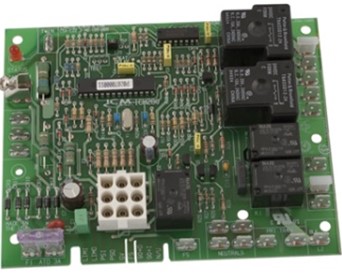
ICM Controls is an ISO-certified developer and manufacturer of high-end, mission critical electronic devices to OEM and aftermarket customers. End markets include HVAC, RV, pool & spa, and marine. |
| | Libra Industries is a provider of complex manufacturing solutions including printed circuit board assemblies, electronic assemblies, automated equipment, assemblies, and robotics. Libra serves customers across a variety of industries including A&D, medical, and industrial. | | | The above selected investments are for illustrative purposes only and are not inclusive of all investments, including manufacturing investments, made by Ironwood. For a complete list of investments made by Ironwood, please visit our website at www.ironwoodcap.com. | |
|
Conclusion
We believe reshoring is gaining steady momentum and is poised to drive sustained demand for domestic manufacturing in the years ahead. A combination of factors ranging from tariff mitigation, efforts to reduce geopolitical risk, and protection of intellectual property are expected to continue to fuel the reshoring momentum that gained traction following the COVID-19 pandemic. Domestic manufacturers with stable workforces, advanced automation, robust internal procurement practices, and strong value-add capabilities are well positioned to capitalize on increased reshoring-driven demand.
With over two decades of experience investing in US manufacturing, Ironwood is deeply aligned with this transformation. As reshoring accelerates, Ironwood remains committed to empowering the next generation of American industrial leaders.
| | We are excited about the opportunities we see in the manufacturing industry and are actively evaluating investments aligned with this thesis. To learn more, please visit our website and reach out to one of our team members. | |
The information contained herein has been obtained from sources believed to be reliable, but the accuracy of such information cannot be guaranteed. Views expressed are as of the date provided. Ironwood is under no obligation to update this information or to advise on further developments relating to the investments discussed herein. References to a particular investment is not a recommendation to buy or sell such investments. The information contained in this document is prepared for general circulation and is circulated for general information only. Past performance is no guarantee of future results. Any investment contains risk including the risk of total loss. There is no assurance that the investment objectives will be achieved or successful. Please refer to the Firm’s Form ADV 2A Brochure for more information about the Firm, services and fees on file with the SEC, www.adviserinfo.sec.gov. Firm CRD #321642. You may also contact us at 860-409-2100 or visit our website for a complete list of investments at www.ironwoodcap.com. | | A - Investment statistics represent portfolio company investments made from 2001 through June 1, 2025 and reflect a subset of investments made by Ironwood. For a complete list of Ironwood portfolio companies please refer to our website at www.ironwoodcap.com. | |
|
Works Cited
1 - Mike. “The Reshoring Movement in American Manufacturing.” AllAmerican.org, April 16, 2025. https://allamerican.org/research/reshoring-movement/.
2 - Eurostat. “USA-EU – International Trade in Goods Statistics.” Statistics Explained, February 2025. https://ec.europa.eu/eurostat/statistics-explained/index.php?title=USA-EU_-_international_trade_in_goods_statistics.
3 - Kurilla, Michael. “What Is the CHIPS Act?” Council on Foreign Relations, April 29, 2024. https://www.cfr.org/in-brief/what-chips-act.
4 - BlueGreen Alliance. 9 Million Jobs from Climate Action: The Inflation Reduction Act. Accessed June 3, 2025. https://www.bluegreenalliance.org/site/9-million-good-jobs-from-climate-action-the-inflation-reduction-act/.
5 - Govshteyn, Misha. “Industry Perspective: The Intersection of X-Shoring, IP and National Security.” National Defense Magazine, February 26, 2024. https://www.nationaldefensemagazine.org/articles/2024/2/26/industry-perspective-the-intersection-of-xshoring-ip-and-national-security.
6 - Trading Economics. “United States Average Hourly Wages in Manufacturing.” Trading Economics, April 2025. Accessed May 8, 2025. https://tradingeconomics.com/united-states/wages-in-manufacturing.
7 - Huld, Alexander. “Average Salaries in China – Trends and Implications for Businesses.” China Briefing, August 15, 2023. https://www.china-briefing.com/news/average-salaries-in-china-trends-and-implications-for-businesses/.
8 - Marshall, Katie. “Why Half of the New US Manufacturing Jobs in the Next Decade Could Go Unfilled.” Investopedia, April 3, 2024. https://www.investopedia.com/why-half-of-the-new-us-manufacturing-jobs-in-the-next-decade-could-go-unfilled-8627559.
9 - DISHER. “The 2025 Reshoring Boom: What You Need to Know.” DISHER, April 8, 2025. https://www.disher.com/blog/reshoring-manufacturing-2025-trends/.
| | | | |