Long Island Swimming Officials Association
Serving Long Island Swimmers for 66 years!
May 2023
|
|
Let's See how this goes...
I love to be awed! Awe can arise from various sources and it has the power to evoke positive emotions such as joy, wonder, inspiration and fascination.
Awe has been associated with an increase the sense of connectedness with others. It can also lead to a state where individuals focus less on themselves and feel a part of something larger. It has also been linked to increased well-being and life satisfaction. It can provide a sense of meaning and purpose, and foster a deeper appreciation for life.
I often find myself awed/wowed by profound ideas, visual wonders, young children's reactions and expressions and by the fascinating people that I encounter. Some things just enhance our capacity to appreciate and connect with each other and the world around us.
Thank you,
George Fleckenstein
president
|
|
Swimming and Diving Rules Changes
2023-24
3-3 Note: Moves the note to the beginning of Section 3 and adds language prohibiting accommodations altering compression, buoyancy, or competitive advantage.
Rationale: The section will make it clear this provision applies to all articles in Section 3.
3-3-2: Removes language which specifies that a competitor shall only be able to compete in a suit that is of decent appearance.
Rationale: Eliminates the subjectivity of “decent appearance” for an official when making an illegal suit determination.
8-1-3d PENALTY 2, 8-1-6 PENALTY: Added the requirement of a written record for dual confirmation of a false start.
Rationale: The change aligns language with the current requirement that when dual confirmation is used, the relay takeoff judges are required to report in writing any violations to the referee.
8-2-1g: Removes the language about some part of the body at or above the surface during a backstroke finish.
Rationale: The change aligns with national trends, allows the official to concentrate on the backstroke finish (wall touch), and may prevent lunging at the wall which reduces risk.
8-2-2d-h: Requires the arms and legs to move simultaneously but does not require the arms and legs to be in the same horizontal plane. Also requires separation of the hands during the touch at turns and finish.
Rationale: Changes provide clarity, consistency, and alignment with national trends and do not provide a competitive advantage.
8-2-3c, e, g: Requires the separation of hands and a simultaneous touch with the hands during the turns and finish.
Rationale: Changes provide clarity, consistency, and alignment with national trends and do not provide a competitive advantage.
9-5 Diving Table: Removes dives 104A, 304A and 402A from the Diving Table.
Rationale: When each dive is performed slightly short of vertical, the diver’s head may be precariously close to the diving board. The risk of hitting the board in these cases is far greater than other dives on the table.
9-7-4c: Adds a penalty for when a diver’s head is too close to the diving board. The diving referee shall make the determination and inform diving judges to score the dive as unsatisfactory.
Rationale: Minimizes the risk factor of the diver performing the dive in a way that brings the diver’s head too close to the board.
2023-24 SWIMMING AND DIVING EDITORIAL CHANGES
2-4-2, Table 2-1, 5-2, 5-3-6, Appendix B
2023-24 SWIMMING AND DIVING POINTS OF EMPHASIS
- Risk Minimization
- National Trends
- Participant and Spectator Unsporting Conduct
- Designated Areas for Photographers
|
Congratulations Laurette!
Laurette Tekverk was elected President of the New York State Certified Swimming Officials Association at their meeting this month. It's an honor to have one of our members as the NY state president!
|
NFHS Annual Swimming & Diving Exam
August 1 - September 17, 2023
|
|
Things Every Diving Judge Should Know...
Consider the following when assessing the flight of the dive:
- The dive should have adequate height to provide enough time in the air to complete the rotation and allow the dive to travel a safe distance from the board.
- Ideally a diver should exhibit strength and power while displaying grace and beauty.
- The overall form of the diver must also be considered, as well as speed of rotation and twist mechanics in twisting dives.
- The dive position, tuck, pike or straight, should be clearly defined. Good form should be displayed by body flexibility, firmness and toe point, which should be maintained throughout the entire flight.
- The arms may be in the position of the diver’s choice prior to water entry. They should be brought together and extended beyond the head in line with the body for a headfirst entry or against the sides of the body with straight elbows for a feet-first entry.
|
Jeff Lewis New LISOA Secretary
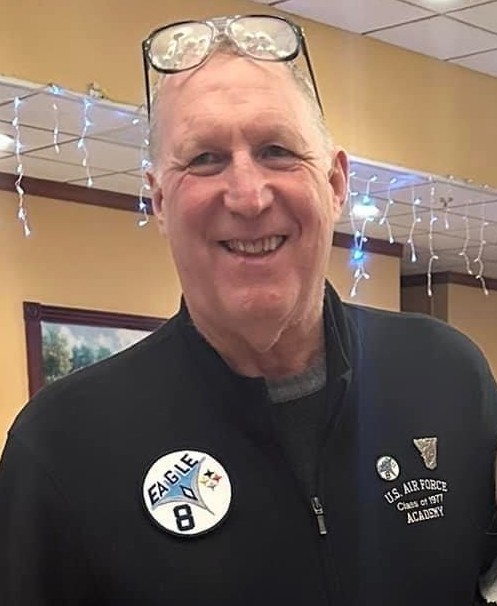
I'm happy to announce that Jeff Lewis has been appointed to the LISOA Board of Directors and will serve as the Secretary of the association. Jeff has been officiating swimming for 32 years as a USA Official and in Section 9 as a High School official. Since moving to Miller Place three years ago, he has been a member of our association.
Jeff is a graduate of the United States Air Force Academy and he served in the Air Force as a Aircraft Commander and Instructor Pilot. He has owned Hudson Glass Company for 40 years.
He is a nationally certified USA official and also a member of NSBWSO.
|
New LISOA Committees
Three new Committees have been added to the Long Island Swimming Swimming Officials Association. These committees will help us continue to best serve our members and carry out our goals and purposes.
LI Swim Meets Committee - will work with the swimming and diving coordinator and the coach's chairmen of both Section VIII and Section XI to try to initiate and coordinate an All-Long Island Swim Meet. Stu Plosky, Chairman with Bob Kersch.
Sunshine Committee - to express congratulations, sympathy, or concern to members of the association in the event of illness, bereavement, or milestone events. Frank Dowd, Committee Chairman with Jeff Chu and Jeff Lewis.
Technology Committee - to evaluate the association's use of social media and other current technologies and recommend and implement the appropriate uses. Cyna Buckley Chairman with Walter Gustafson, Jeff Tripp, Christian Seifert, Jeff Lewis and Jeff Chu.
|
|
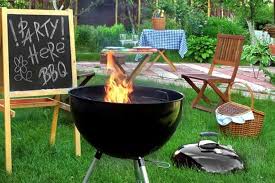
LISOA ANNUAL SUMMER PICNIC
Sunday, July 9, 2023
2:00 p.m. - 6:00 p.m.
23 Westbrook Court, Greenlawn, NY
Hot Dogs Hamburgers Salads Desserts
Beverages Beer Wine
No Charge, Nothing to Bring
Spouses and Children are Welcome!
Lawn Games Swimming Fellowship
Will you be attending?
Please RSVP by June 30!
|
|
Some Don'ts You Shouldn't Do
Referee Magazine
|
|
When discussing how officials should conduct themselves, we sometimes neglect to consider what not to do. Here are some “Don’ts” officials should consider.
Don’t be disdainful. There are no redeeming qualities of arrogance.
Contests involve three human components. Foremost are the athletes, then the coaches and finally the officials. Be respectful when addressing coaches. You’re not above error.
Don’t seek approval. Never glance at coaches when you make a call, checking their reaction. Be assertive when making judgment calls and keep your attention on the participants.
Don’t coach. Your duty is to enforce the rules of the game. Telling players how to execute moves or plays is the coach’s job.
Don’t gossip or ridicule. Never “bad mouth” a fellow official, coach or athlete in public. If you have a problem with another referee, meet with him or her privately to discuss your concerns. If that doesn’t solve the conflict, don’t accept future assignments together.
Don’t use social media to discuss specific plays, coaches or athletes.
Don’t appear doubtful. The tougher the call, the more assertive you should be. If you appear unsure, everyone will question your decision. It is important to exude confidence when making a difficult judgment call.
Don’t act too friendly with coaches. Refrain from longer conversations with one coach than the other. Fans may interpret that as favoritism. Keep discussions brief and formal.
Avoid conflicts of interest. Don’t accept assignments at a school at which you teach, your children are enrolled or you are a recent graduate. Also, if you hold a public position in the town, you should avoid games in that town. One set of fans will think you’re favoring the
opposing team as a means of not showing bias toward the local team, while the opponents will perceive you as being a “homer.”
Don’t linger afterward. Nothing can be gained by waiting around for compliments on your performance. More than likely, spectators of the losing squad will want to express their negative opinions. Become a magician and disappear once the game ends.
Don’t break a contract. If you get a chance for a higher-profile contest when you already have one scheduled, check with your assigner. Most will work with you to release you from the commitment. To lie to get out of a contract or simply not show up for a contracted event is unethical.
Officiating is viewed as an honorable avocation. To earn the respect of the athletes, coaches and fans, officials must demonstrate ethical practices and perform their duties with passion and integrity.
|
|
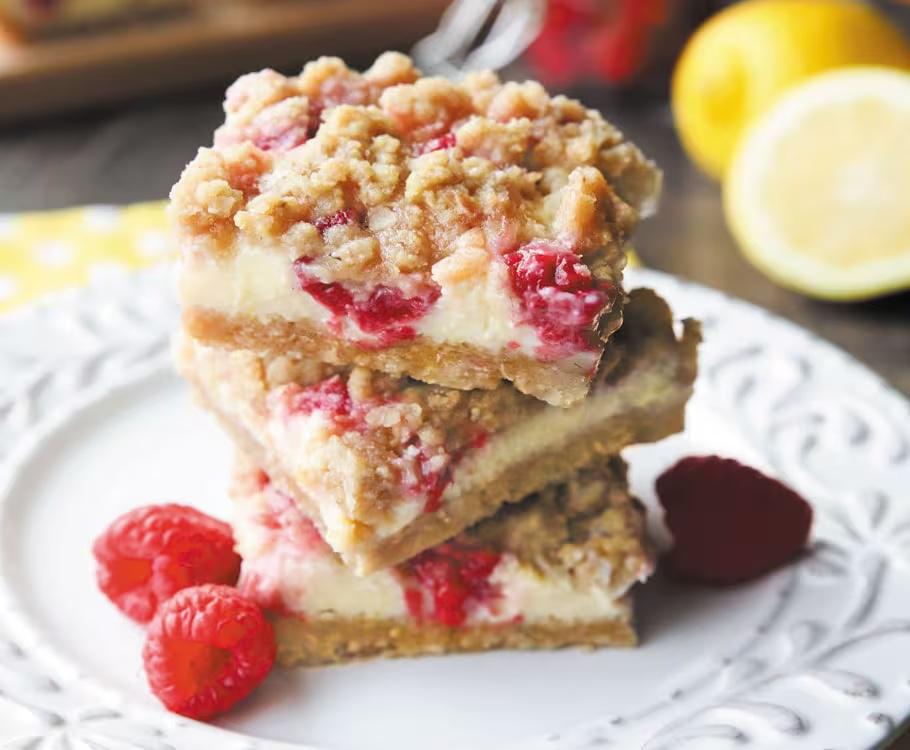
Lemon Raspberry Crumb Bars
From Costco Connection
CRUST/TOPPING
- ¾ cup butter, at room temperature
- 1 cup brown sugar, packed
- 1 cup quick oats
- 1 ⅓ cups flour
- ½ tsp salt
- 1 tsp baking powder
FILLING
- 1 (14-oz) can sweetened condensed milk
- ½ cup lemon juice (about 2 large lemons)
- Zest of 1 lemon
- 1 egg yolk
- 1 cup raspberries
- 1 Tbsp flour
- 2 Tbsp sugar
Preheat oven to 350 F.
Prepare the crust/topping: In a large bowl, mix together the crust/topping ingredients until there are no butter chunks and the mixture begins to clump together. Press three-quarters of the mixture on the bottom of a lightly greased 7 x 11-inch baking pan.
Prepare the filling: In a separate bowl, mix together the sweetened condensed milk, lemon juice, lemon zest and egg yolk. Spread onto the crust. Toss the raspberries with the flour and sugar. Mash lightly with a fork, keeping some fruit intact, then dollop the raspberries onto the lemon filling. Crumble the remaining crust mixture over the top of the raspberries.
Bake 30 to 35 minutes or until the crust browns and the center of the filling is set when tested with a toothpick. Cover with foil if browning occurs before the filling is set.
Chill 1 to 2 hours before cutting and serving. Cover and refrigerate any leftovers.
Makes 12 servings.
Tip: Line the pan with parchment paper hanging over the sides to easily lift the dessert out of the pan.
|
|
The primary role of the official is to ensure fair competition which is conducted in a positive, safe and healthy environment and that actions of the competitors, coaches and other team personnel are in compliance with the rules. |
|
The purpose and goals of the LISOA and its members shall be to:
Officiate all meets in a competent and professional manner.
Have its members actively work to improve interscholastic swimming and diving officiating.
Provide a consistent interpretation and administration of interscholastic swimming and diving rules.
Service and collaborate with the swimming and diving community for the improvement of swimming and diving.
|
|
The official must establish the best possible competitive climate for fair competition with the attention on the athletes, rather than on the official. The conduct of each official affects the public’s attitude toward all officials. Therefore, every official must uphold the honor, integrity and dignity of the profession. |
|
President:
George Fleckenstein
Vice President:
Nelson Gonzalez
Secretary:
Jeff Lewis
Treasurer:
Jeff Chu
|
|
Directors:
Barbara Wendt
Cyna Buckley
|
|
Rules Interpreter:
Bob Kersch
Past President:
Frank Dowd
|
|
OUR CHARTER MEMBERS (1957)
Charlie Schlegal
George Columbo
Jim McAllister
Dick Atwater
Jack Reilly
Frank Krayer
|
|
NYSCSO Distinguished Service Award Members
Frank Dowd (2022)
Laurette Tekverk (2020)
Jim McAllister (2019)
Doug Virkus (2011)
Mush Masters (2008)
Pete Moeschen (2004)
Stan Adler (1993)
Bob Kersch (1990)
|
|
|
|
|
|
|
|