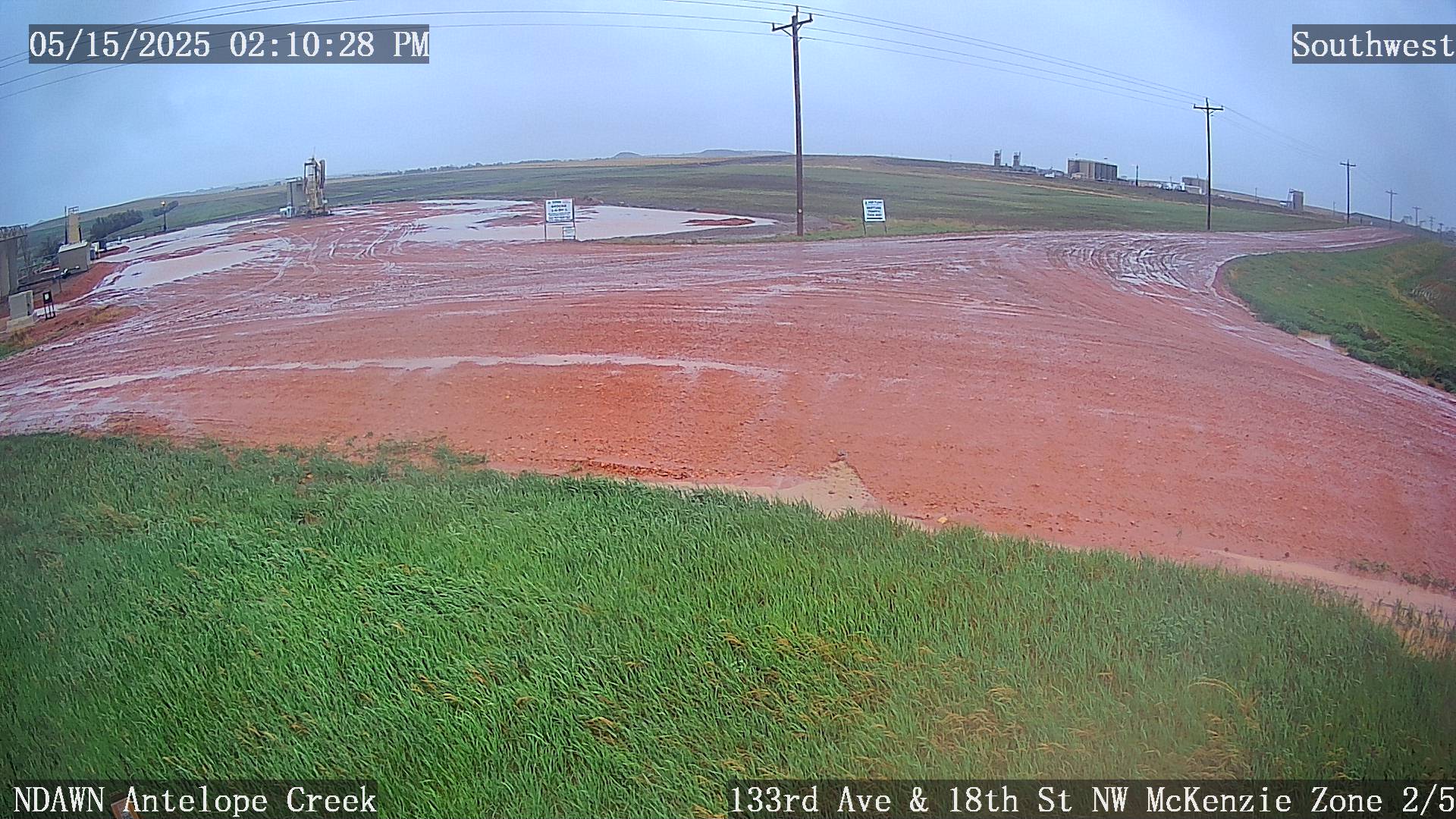
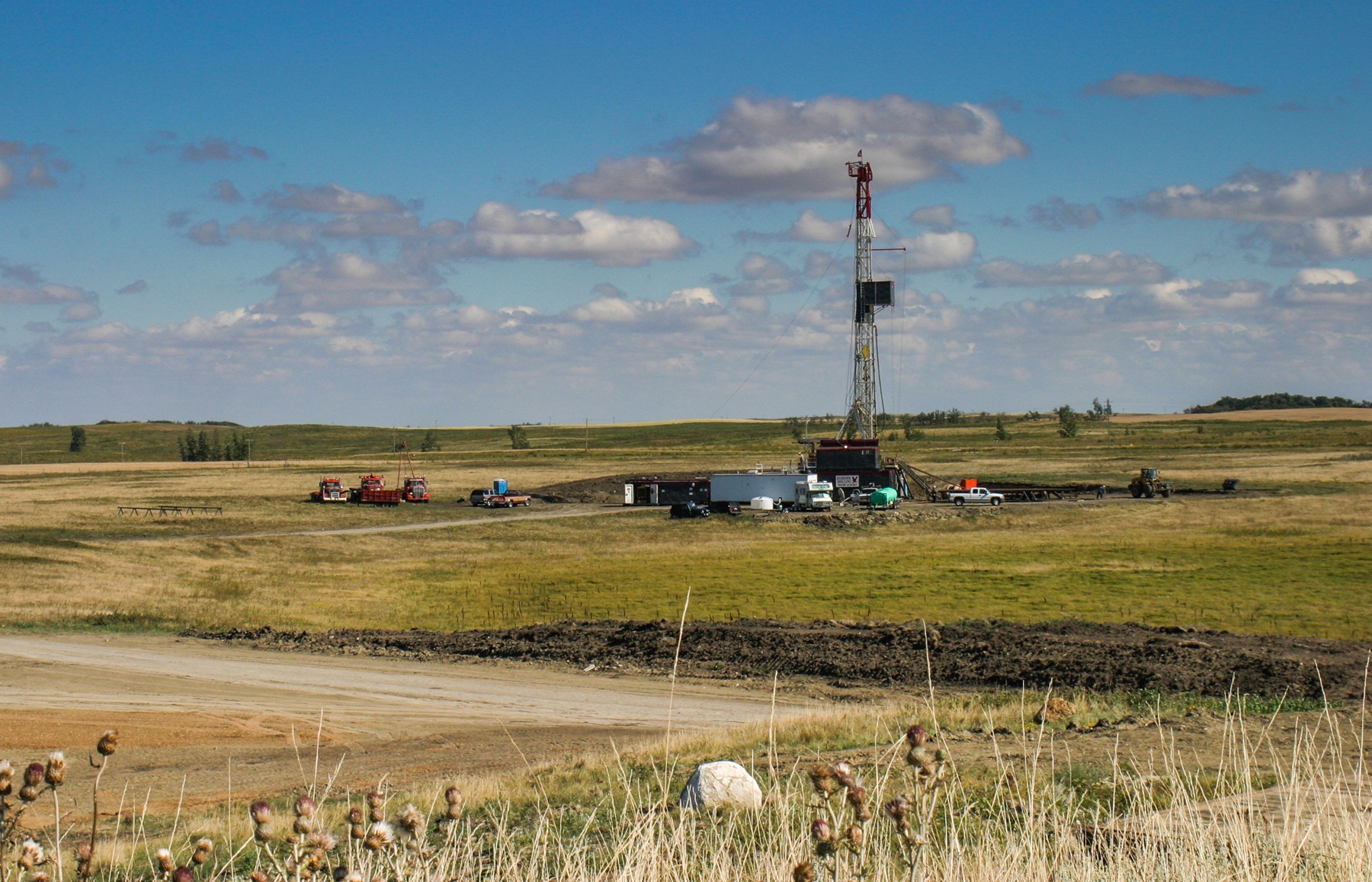
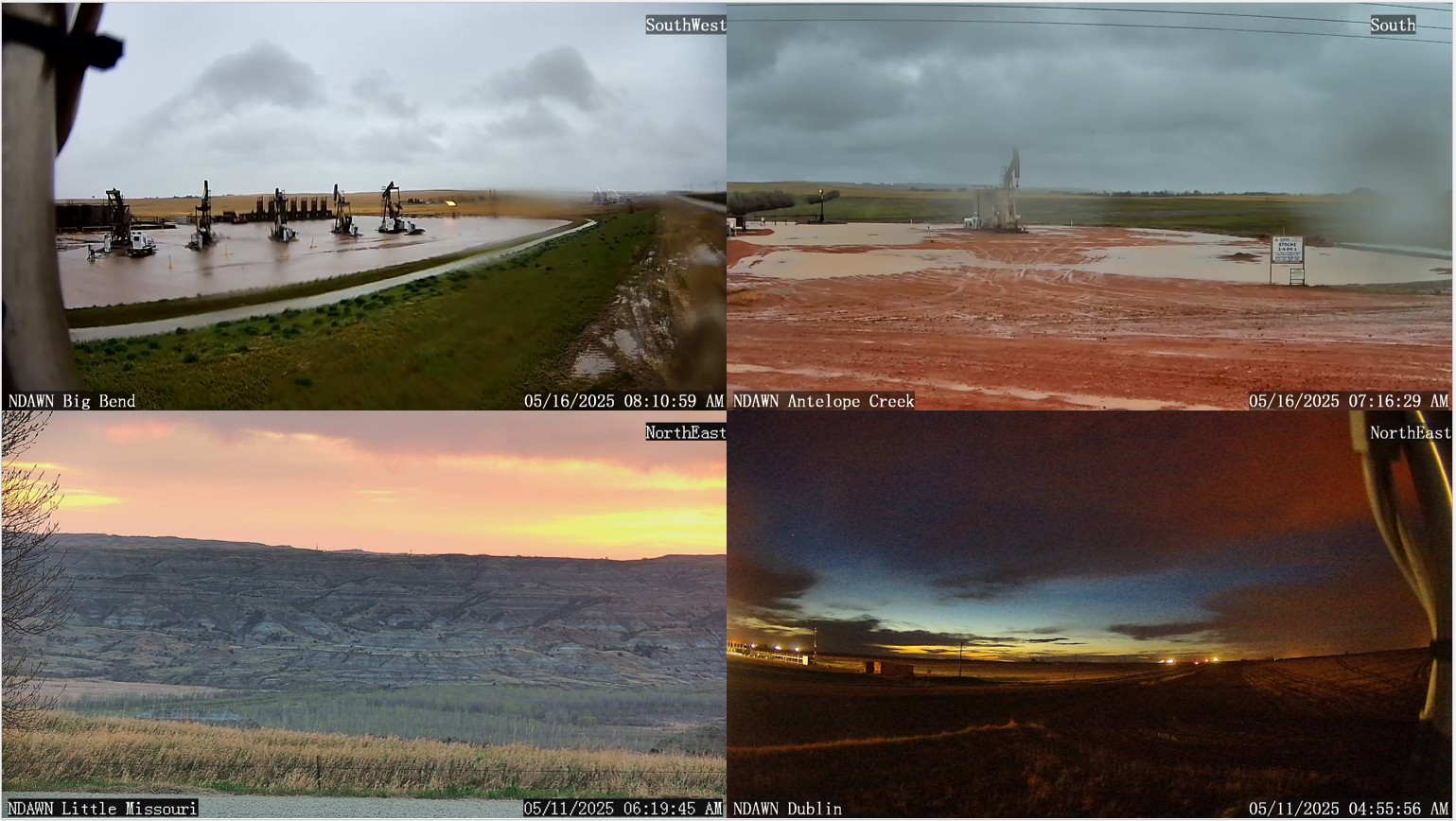
Three straight days of rainy weather turned western North Dakota gravel roads into a soupy mess this week. Widespread weight limits necessitated the shutdown of most oilfield activity. |
|
May Director's Cut: Production Up
Price Pressures Mount; Rig Count Dips
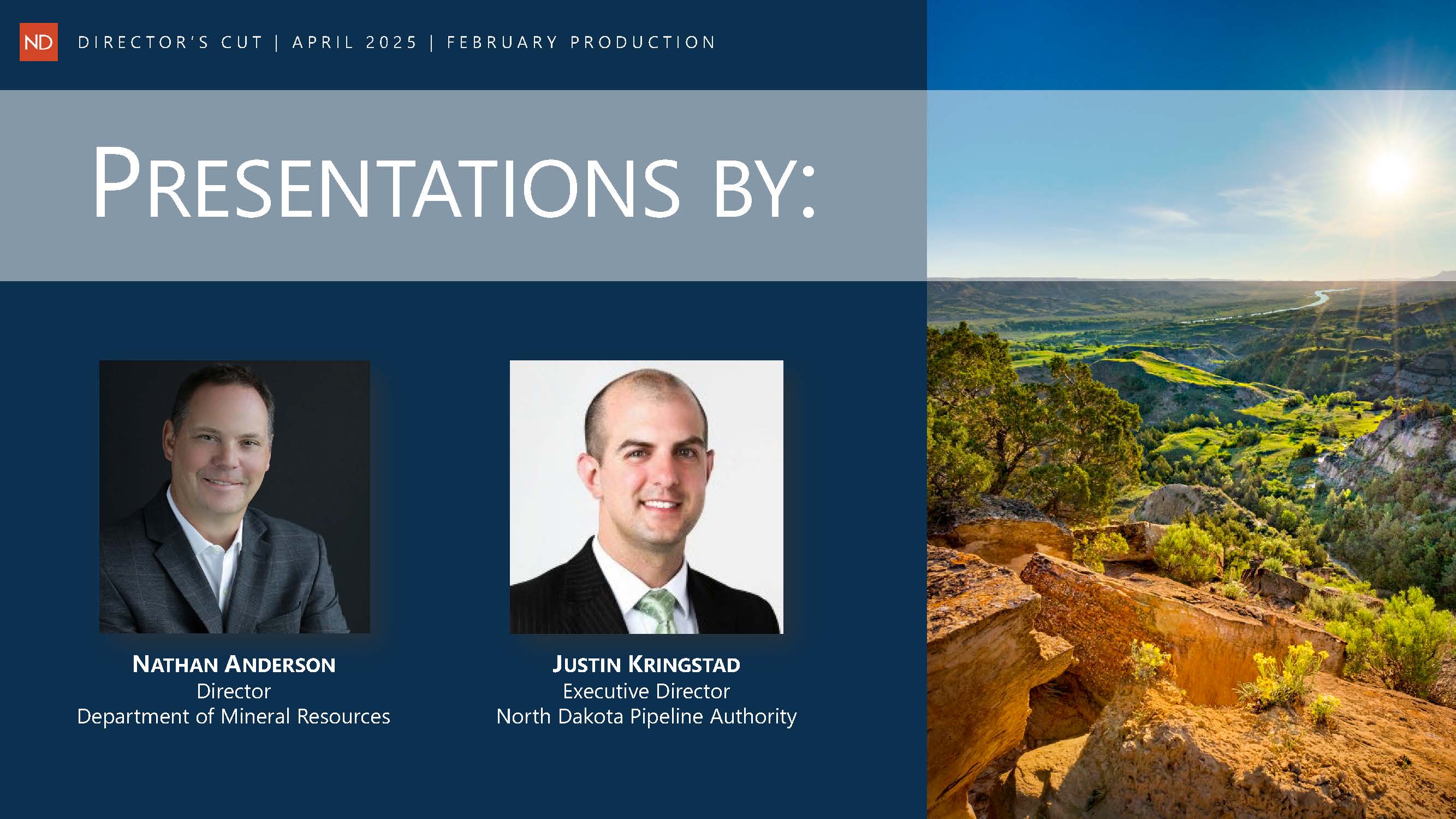
During the May Director’s Cut report, North Dakota’s energy leaders delivered a wide-ranging update on the state’s oil and gas industry that detailed rising production figures to concerns over softening prices. The report paints a picture of cautious optimism and market-driven headwinds. Nathan Anderson, director of the Department of Mineral Resources, shared some good news: March oil production climbed to 1.193 bbls/day, up 2.4% from February and 8.5% above revenue forecasts. Gas production also surged, reaching 3.438 BCF/day, a 5.15% jump as operations recovered from the extreme cold that limited February output. North Dakota’s rig count dipped to 31 in May, down from April, with 33 active rigs in the Williston Basin. Operators in North Dakota are idling rigs due to price pressure. Listen to Anderson’s comments here. Frack crews are holding steady at 14, though declines are expected. Several operators plan to drop rigs, and two frack crews may exit soon. The state is considering options like non-completion waivers to allow companies additional time to complete wells until oil prices can stabilize. Listen to Anderson’s comments here. Permit activity has remained relatively stable, with a notable increase in long-lateral drilling. Operators are continuing to extract value from extended laterals, with 14 “U-shaped” lateral permits issued, two of which are already completed and online. Listen to Anderson’s comments here. Gas capture was another bright spot in the report. The state reached a 95.4% overall gas capture rate, with Bakken fields hitting 95.8%. Flaring volumes fell by 21 million cubic feet per day — an encouraging trend. A new pipeline open season has launched to develop an additional 10 billion cubic feet of natural gas storage in North America’s single largest natural gas storage field. Baker Field straddles the Montana/South Dakota border and has been hampered by pipeline connectivity. Listen to Justin Kringstad of the North Dakota Pipeline Authority here. While March brought strong production numbers, the energy sector is bracing for possible slowdowns. With prices under pressure and capital discipline driving corporate strategy, both large and small operators are adjusting. The state continues to adapt by offering regulatory flexibility and infrastructure support but much depends on market recovery. |
|
Gov. Armstrong to Attend Roads Roundtable
Counties, Oilfield Truckers to Discuss Issues
Organizers of a Western Transportation Roundtable have confirmed that Governor Kelly Armstrong will kick off the meeting on May 27 at the Rough Rider Center in Watford City. County road managers, oil industry trucking interests and others with an interest in western North Dakota transportation issues are invited to attend to discuss common concerns. There is no registration fee for the event, which is co-hosted by the Western Dakota Energy Association and the ND Local Technical Assistance Program. The event will get underway at 10:00 a.m. with Gov. Armstrong's remarks. He will be followed by Ron Henke, director of the ND Department of Transportation, who will provide an overview of road and bridge funding opportunities and seasonal construction plans. Nathan Anderson, director of the Department of Mineral Resources, will also attend the event to share his thoughts on the future of the state's oil industry, as well as a summary of legislative changes affecting the industry. WDEA will also provide a legislative report, covering other issues of importance to western North Dakota communities. Congresswoman Julie Fedorchak is also planning to make an appearance at the event, and is scheduled to speak shortly before the noon break. The agenda also includes a presentation on oversized truck permitting, an oil industry panel and a panel discussing fire prevention strategies in western counties. The event concludes with an open mic discussion of other issues of concern. Registration is free and lunch will be provided. Interested persons are urged to register early so name tags can be prepared and organizers can get an accurate headcount for lunch. Click here to see the agenda. Click here to register. |
|
State-Led Coal Ash Program on Track
Provides Certainty for Coal Producers
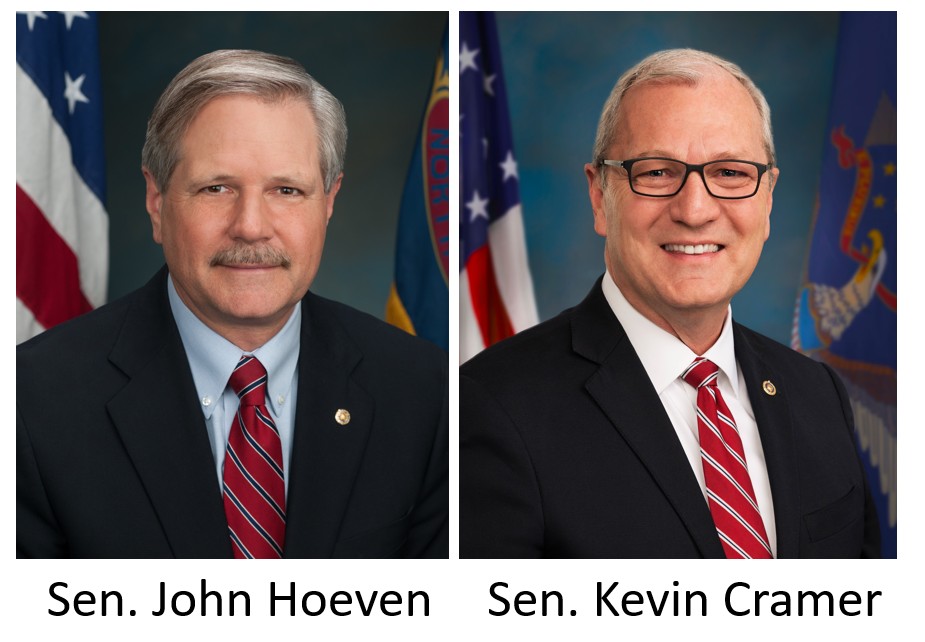
The U.S. Environmental Protection Agency (EPA) has proposed to approve North Dakota’s application to manage its coal combustion residuals (CCR) program, allowing the state to oversee the disposal and recycling of coal ash. This marks a significant step in empowering states to implement coal ash programs tailored to local needs while maintaining strong environmental protections. "This is welcome news for North Dakota. The EPA’s recognition of our CCR program underscores our shared commitment to both environmental protection and U.S. energy independence,” said North Dakota Governor Kelly Armstrong. “By streamlining reporting requirements, this program shows how the state and industry can work together to safeguard our environment while supporting economic growth." Coal ash, a byproduct of coal-fired power plants, can be safely recycled for use in construction materials like cement. Coal ash was used in the construction of the North Dakota Heritage Center and the National Energy Center of Excellence at Bismarck State College. North Dakota’s program was made possible by bipartisan legislation authored by Sen. John Hoeven in 2016. The legislation addressed gaps in a 2014 EPA rule by enabling states to create enforceable permit programs with clear standards, including requirements for protective disposal infrastructure and groundwater monitoring. “North Dakota is leading the way in developing more energy with better environmental stewardship, which is why we authored and passed bipartisan legislation in 2016 to enable this state-led approach for recycling coal ash,” said U.S. Senator John Hoeven. “We appreciate EPA working with our state to advance approval of North Dakota’s coal ash permit program, which will ultimately ensure that coal ash is managed in a way that works for our energy producers and the environment.” In 2023, Sen. Kevin Cramer secured more than $600,000 from the EPA for North Dakota to create its CCR Program and finalize its application, ensuring adherence to federal standards and training for North Dakota program staff. Despite clear statutory language requiring a decision in less than 180 days, the EPA kept the application in limbo for more than two years. Only after direct involvement from President Trump and Administrator Zeldin did the EPA reengage with North Dakota to announce the proposed approval of the application. “President Trump’s approval of North Dakota’s Coal Combustion Residuals (CCR) Permit Program is a crystal-clear example of his commitment to American energy dominance,” said U.S. Senator Kevin Cramer. “Our state produces the nation’s lowest-cost electricity, and this approval will ensure we remain leaders in energy production. Thank you to President Trump and EPA Administrator Zeldin for processing North Dakota’s application and restoring sanity to the permit approval process.” If the proposal is finalized, North Dakota would become the fourth state in the U.S. with an approved CCR program. |
|
SPP Seeks to Expedite New Generation
Process Aimed at Adding Firm Power Supply
The Southwest Power Pool (SPP) Board of Directors has approved the Expedited Resource Adequacy Study (ERAS), a one-time process aimed at accelerating the addition of new generating resources to the regional grid. The study was developed in collaboration with stakeholders to address a growing need for new power generation as electricity demand threatens grid reliability. The initiative will allow entities responsible for meeting consumer electricity demand to bring new resources online more quickly. Pending approval from the Federal Energy Regulatory Commission, ERAS will create an expedited path alongside SPP’s traditional generator interconnection queue. The process will be available only to generation projects nominated by qualified power producers and must meet near-term resource adequacy needs. SPP designed ERAS to mitigate reliability concerns related to increasing demand, a backlog of interconnection requests and the premature retirement of existing generators. “ERAS offers utilities a clearly defined and impactful opportunity to address real and immediate needs,” SPP President and CEO Lanny Nickell said. “It’s not a replacement for broader interconnection reforms, but this complementary effort will ensure reliability isn’t compromised during a transitional period.” Key elements of the ERAS process include:
— Eligibility is limited to new generation nominated by utilities, with capacity limits based on accredited capacity and seasonal reserve requirements.
— Projects must be able to reach commercial operation within five years of signing a generation interconnection agreement.
— Projects submitted in SPP’s most recent batch of interconnection requests may transfer to the ERAS queue. SPP will submit its application to FERC later this month. If approved, utilities could begin submitting projects in August, with rights to interconnect granted as soon as April 2026. |
|
DOE Slashes 47 Burdensome Regulations
Cutting Rules Aimed at Green New Deal Fantasy
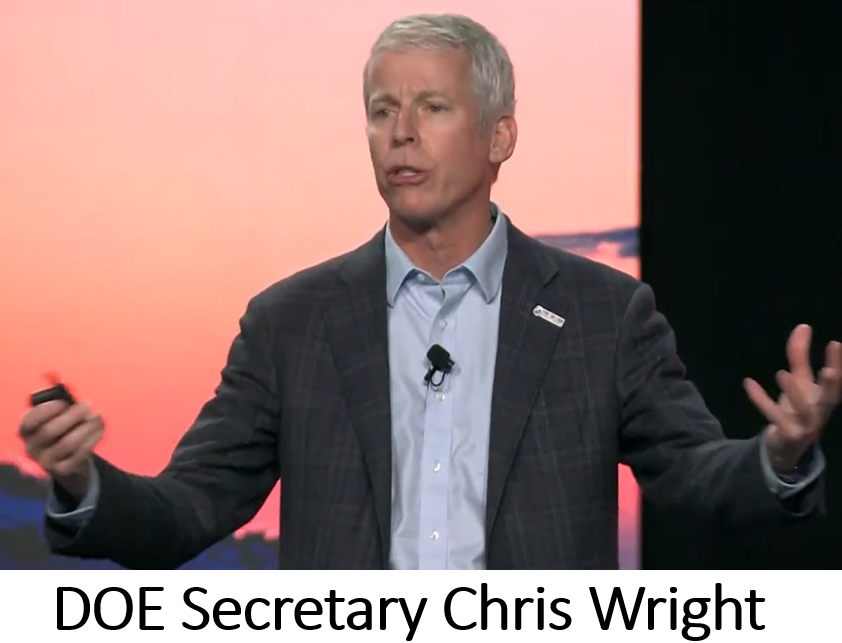
The U.S. Department of Energy announced the first step in the Energy Department’s largest deregulatory effort in history, proposing the elimination or reduction of 47 regulations that are driving up costs and lowering quality of life for the American people. Once finalized, the actions will save the American people an estimated $11 billion and cut more than 125,000 words from the Code of Federal Regulations. These actions, in accordance with President Donald Trump’s Executive Order, “Zero-Based Regulation to Unleash American Energy,” advance President Trump’s promise to restore consumer freedom, lower costs, and unleash American energy dominance. “While it would normally take years for the Department of Energy to remove just a handful of regulations, the Trump Administration assembled a team working around the clock to reduce costs and deliver results for the American people in just over 110 days,” said Energy Secretary Chris Wright. “Thanks to President Trump’s leadership, we are bringing back common sense -- slashing regulations meant to appease Green New Deal fantasies, restrict consumer choice and increase costs for the American people.” The 47 actions include the proposed elimination or modification to dozens of consumer appliance standards, regulations limiting building and energy production and unscientific DEI requirements for grant recipients. Click here to see the full list. |
|
Energy Dept to Review Biden Admin Grants
Looking for Waste in Money Rushed Out the Door
The Department of Energy (DOE) announced new actions this week to increase accountability and promote responsible stewardship of American taxpayer dollars. In a Secretarial Memorandum entitled, “Ensuring Responsibility for Financial Assistance,” Energy Secretary Chris Wright outlined DOE’s policy for evaluating financial assistance on a case-by-case basis to identity waste of taxpayer dollars, protect America’s national security and advance President Trump’s commitment to unleash affordable, reliable and secure energy for the American people. One of the most disturbing initial indicators of financial misconduct was a publicly-circulated video of a former Biden Administration EPA political appointee boasting that officials were “tossing gold bars off the Titanic,” a reference to rushing to distribute billions in taxpayer dollars before the incoming administration could review or halt improper disbursements. Even more troubling, the official implied that political favoritism influenced funding decisions, with expectations of securing employment at grant-recipient organizations. “Over the past 110 days, the Energy Department has been hard at work reviewing the billions of dollars that were rushed out the door, particularly in the final days of the Biden administration, and what we have found is concerning,” Wright said. “With this process, the department will ensure we are doing our due diligence, utilizing taxpayer dollars to generate the largest possible benefit to the American people and safeguarding our national security. Any reputable business would have a process in place for evaluating spending and investments before money goes out the door, and the American people deserve no less from their federal government.” To comply with the Secretary’s memorandum, the DOE has begun requesting additional information needed to evaluate 179 awards. These awards total over $15 billion in financial assistance. DOE is prioritizing large-scale commercial projects that require more detailed information from the awardees for the initial phase of this review, but this process may extend to other DOE program offices as the reviews progress. |
|
Legislature to Pick Study Topics May 28
Several Energy Issues to be Considered
State lawmakers serving on the Legislative Management Committee will return to Bismarck on May 28 to choose from a list of more than 70 possible interim study topics. Some of the studies included in legislation are mandatory, while others "shall consider" studies, meaning the committee may or may not include the proposal for interim work. Advanced nuclear energy, geothermal energy, oil tax exemptions, the impact of large energy users, and opportunities to advance the lignite industry are among the studies to be considered. The advanced nuclear energy study provided in HB 1025 is one of the mandatory studies. The bill requires that the study include evaluation of siting locations, electric grid connectivity, land use considerations, economic impacts including potential tax revenue, and temporary and permanent nuclear waste storage. The feasibility of developing geothermal energy is a "shall consider" study, but given the growing demand for electricity, it's likely the topic will chosen. SB 2360 provides that the proposed study include evaluation of the state's geology and the feasibility of resource exploration and production of geothermal energy in the state. It also requires examination of support for startup geothermal companies, the application of geothermal energy to nonproductive oil and gas wells, and other opportunities that may exist. A $400,000 appropriation for ongoing research into rare earth minerals is provided in SB 2014, the budget of the Industrial Commission. It also includes funding for a marketing feasibility study to explore ideas to protect and promote the state's lignite industry, as well as an economic study to look into development opportunities to sustain the economies of communities in western North Dakota as oil and gas development activities decrease. HB 1579 is another mandatory study to gauge the future impact of large energy consumers, including data centers, or the state electrical grid. The study will examine effects on reliability and cost impacts on other consumers, as well as the potential need for regulations governing large users. The meeting will begin at 9:00 a.m. on May 28 in the Roughrider Room at the Capitol. Click here for more information about the 17-member Legislative Management Committee. |
|
ND Ranked in Top 5 in Economic Strength
Tax Burden, Labor, Regulatory Policy Improving
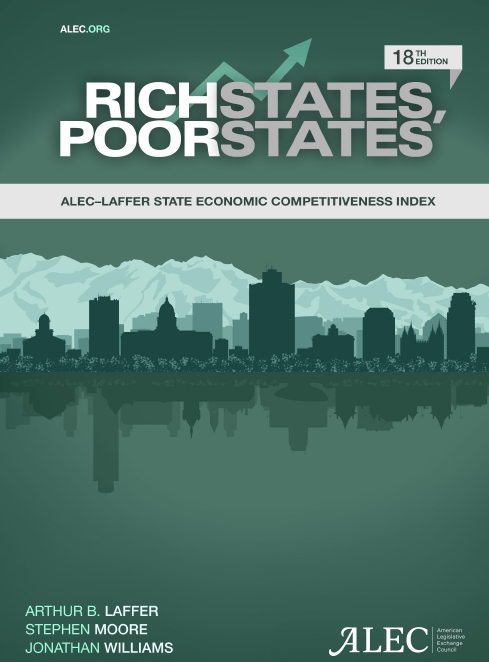
With states competing for jobs, investment and residents, North Dakota is showing that sound policy delivers results. The state earned a top-five ranking in the 18th edition of Rich States, Poor States, driven by pro-growth policies, a competitive tax code and a light regulatory approach. Joshua Meyer, tax and fiscal policy task force director at the American Legislative Exchange Council, discussed the report during a recent interview on The Steve Hallstrom Show. Click here to listen to Meyer's comments. The rankings evaluate 15 equally weighted policy variables, with special attention to tax burden, labor policy and regulatory environment. Click here to listen to Meyer's comments. Utah topped the rankings for the 18th straight year. New York ranked last, weighed down by high property, income and business taxes and what Meyer described as “a regulatory environment that kills small business.” Thanks to its business-friendly tax structure, light regulatory touch and energy assets, North Dakota is well positioned to thrive, Meyer said. “Our report is meant to be somewhat forward-looking,” he said. “Growth is coming North Dakota’s way.” |
|
Interior to Streamline Oil and Gas Leasing
Faster Parcel Reviews, Target 6-Month Approval
The Interior Department announced a policy update this week aimed at accelerating the oil and gas leasing process on federal lands, part of the Trump administration’s broader push for "energy dominance." Under the new guidance issued by the Bureau of Land Management, lease parcel reviews will be completed within six months, a reduction from previous review timelines that ranged between eight and 15 months. Officials say the streamlined approach will make more federal lands available for leasing, reduce bureaucratic delays and enhance public engagement. "Under President Trump’s leadership, we are eliminating unnecessary delays and roadblocks that have hindered American energy production for far too long,” Acting Assistant Secretary for Land and Minerals Management Adam Suess said in a statement. The policy change means the BLM will no longer defer lease parcels before completing National Environmental Policy Act reviews. Instead, reviews will be conducted alongside compliance efforts, with evaluations based on existing land management and resource policies. By law, the BLM is required to hold quarterly lease sales when eligible lands are available. Officials say the updated process will provide greater certainty for energy producers while maintaining environmental protections and public participation requirements. The administration has made increased access to federal lands for energy development a priority, arguing that expanded leasing will boost job creation, lower energy costs and reduce reliance on foreign sources of energy. |
|
BLM Intermittent Reg to be Rescinded
Biden Rule Gave Preference to Wind, Solar
The Department of the Interior announced a proposal this week to rescind a Bureau of Land Management rule governing solar and wind energy development on public lands, marking a shift in federal energy policy. Officials said the move aligns with President Donald Trump's efforts to reduce regulations and promote economic growth by curbing federal oversight. “Eliminating the Biden administration’s preferential treatment of unaffordable, unreliable ‘intermittent’ projects and dismantling excessive, one-sided restrictions on traditional energy sources like oil, gas, and critical minerals will unlock the full potential of America’s natural resources,” Interior Secretary Doug Burgum said. “This step will restore balance, strengthen our energy independence, and ensure taxpayers get the maximum return from the responsible use of our public lands.” The proposed rescission would remove rate reductions that officials say gave renewable energy projects an advantage over traditional sources while still allowing solar and wind power to contribute to the administration’s push for U.S. energy dominance. The plan follows Executive Order 14154 and Secretary’s Order 3418, which aim to boost domestic energy production and job creation on federally managed lands. Interior officials said the proposal is part of a broader effort to ensure a balanced energy policy that fosters economic growth while maintaining environmental stewardship. Supporters say rescinding the rule could spur innovation and new opportunities for the fossil fuel industry. The Office of Information and Regulatory Affairs will review the proposal before it is published in the Federal Register for public comment. |
|
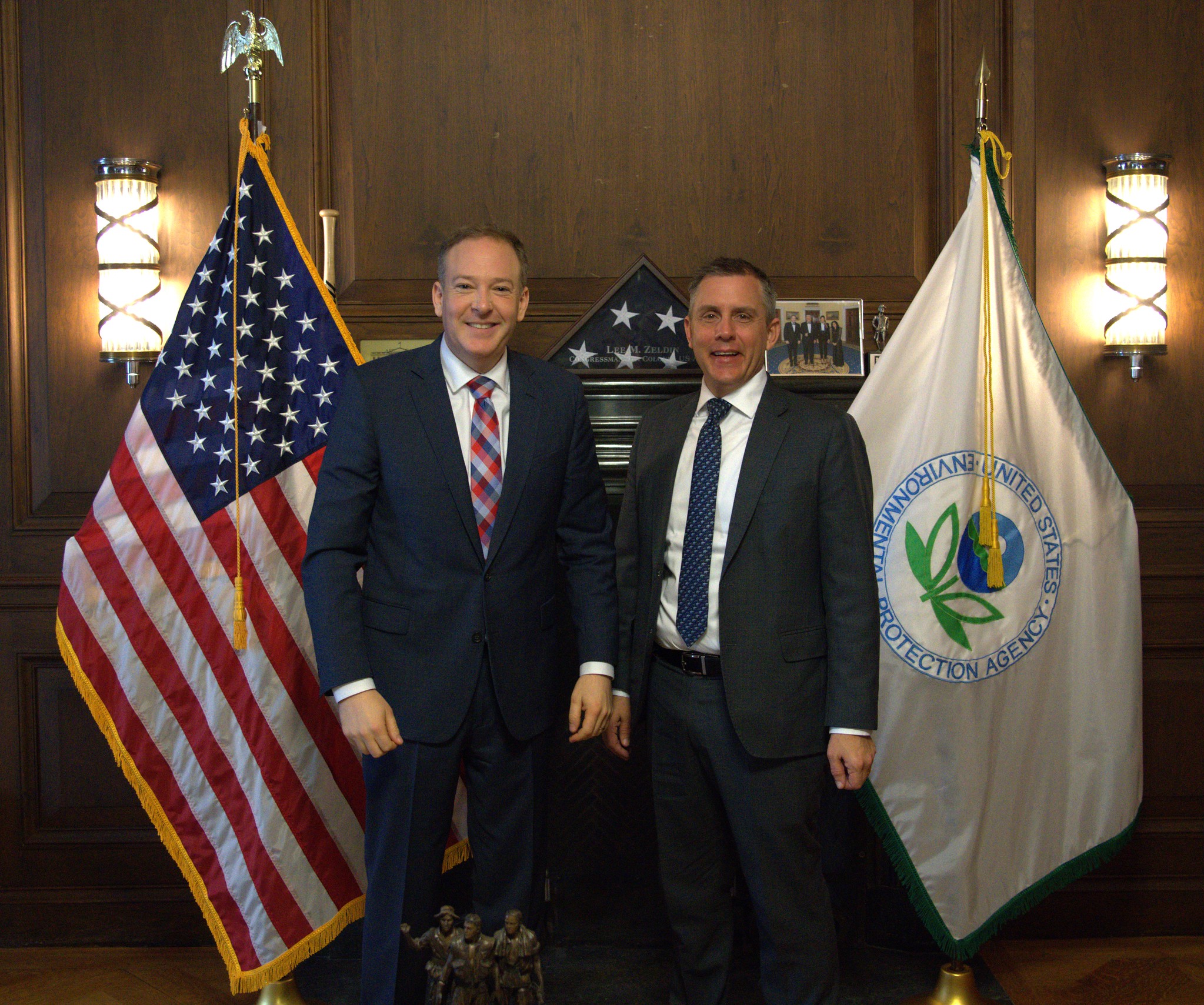
Armstrong Meets with Zeldin at EPA
Discusses Key Issues for Energy, Ag
Gov. Kelly Armstrong met with U.S. Environmental Protection Agency (EPA) Administrator Lee Zeldin last week, discussing how North Dakota is working with the federal government and industry partners to protect the state’s natural resources and support responsible energy development and economic growth.
Armstrong and Zeldin discussed the importance of states partnering with the EPA to advance the Trump administration’s deregulation agenda; the need to repeal the Biden administration’s onerous and overreaching rule on power plants; and ensuring that agricultural producers have access to crop protection tools. Armstrong noted he recently signed a pesticide labeling bill, passed by the North Dakota Legislature and supported by the state’s major farm commodity groups, that ensures North Dakota farmers will continue to have access to these critical tools.
“When it comes to protecting North Dakota’s ability to produce food and energy to feed and fuel the world, we could not have a better friend in the EPA than Lee Zeldin,” Armstrong said. “We look forward to continuing this partnership to roll back regulations, support our farmers and ranchers and unleash U.S. energy production with environmental stewardship.”
Armstrong and Zeldin served together in Congress for four years when Zeldin represented New York’s District 1. Zeldin was sworn in as the 17th administrator of the EPA on Jan. 29 after his nomination by President Trump and confirmation by the U.S. Senate. |
|
Iowa Passes Bill to Restrict CO2 Pipelines
Legislation Will Limit the Use of Eminent Domain
By Cami Koons | Iowa Capital Dispatch Iowa senators voted 27-22 late Monday to pass a bill to limit the ability of carbon sequestration pipelines to use eminent domain, sending it to the governor’s desk after a drawn-out debate. The decision follows four years of Iowans and House lawmakers urging for eminent domain reform in response to the proposed Summit Carbon Solutions pipeline. House File 639 comprised a number of bills passed by the House aimed at eminent domain. Senators tried repeatedly to change the scope of the bill with various amendments, none of which were adopted. Sen. Tim Kraayenbrink, R- Fort Dodge, said amid debates on eminent domain and carbon capture pipelines, that senators were “missing the point” that the bill was poorly written and likely to create problems. “The point is a crappy bill that we’re going to be voting on here in a little bit,” Kraayenbrink said. Landowners opposed to the Summit Carbon Solutions pipeline have traveled to the Capitol countless times over the past four years, urging lawmakers to move on the issue. Many of those opposed to the pipeline own land in its path and fear its impact to their land, property values and safety. The pipeline would transport carbon dioxide, captured from ethanol facilities, across Iowa, Minnesota, Nebraska, the Dakotas and into underground storage in North Dakota. The Iowa Utilities Commission granted the project eminent domain rights in June, though the project cannot begin construction until it has permits in North Dakota, South Dakota and Minnesota. Proponents of the pipeline say it will allow Iowa to enter new, low-carbon ethanol markets, which would in turn help corn and soybean farmers. The company’s permit in South Dakota was recently denied, following the state’s passage of a law preventing hazardous liquid pipelines carrying carbon dioxide from using eminent domain in the state. Summit has said it plans to reapply. HF 639, as written, changed definitions of a common carrier, increased insurance requirements to cover any damages to property and reimburse landowners for increases in premiums due to the pipeline, set requirements for the IUC and expanded who can intervene in IUC proceedings. Click here to read more from Iowa Capital Dispatch. |
|
ND Students Question School Cell Ban
Discussion was Part of Student Cabinet
By: Michael Achterling | North Dakota Monitor North Dakota student leaders say they have a lot of unanswered questions after lawmakers passed a law requiring schools to be cellphone-free.
Members of the Superintendent of Public Instruction’s Student Cabinet met Wednesday in Bismarck to discuss new legislation that will affect students.
Senate Bill 2354, which takes effect Aug. 1, prohibits public school students from having access to cellphones and other electronic devices in school from “bell to bell.” But the students raised a lot of questions lawmakers may not have considered. Some students said laptops provided by schools are “horrible” and wondered if they could continue using personal laptops to do school work. Another student said she views digital versions of her textbooks on a tablet so she doesn’t have to carry heavy textbooks all day. Yet another student said she’ll miss using her phone to access the digital calendar she uses to keep track of homework, after-school practices and appointments.
“I see a lot of uncertainties with a lot of the exceptions the students were bringing up,” said Bridger Rivinius, a junior at Gackle-Streeter Public School. “I feel like it might be a slight overreach for the state government to have to be involved with that.”
Gov. Kelly Armstrong was among the supporters of the bill. He has said it will help the next generation of students emotionally and academically. The law requires cellphones to be silenced and stowed away in an inaccessible location during the school day. It gives school boards flexibility to craft their own policies around school-related noninstructional time, such as dances and sporting events. It also mandates that school districts collect data to measure the impact of the new policy on student behavior, mental health, disciplinary incidents, school attendance and academic performance. Read more at the North Dakota Monitor. |
|
Public Boards Must Offer Public Comment
New Law to Become Mandatory on August 1
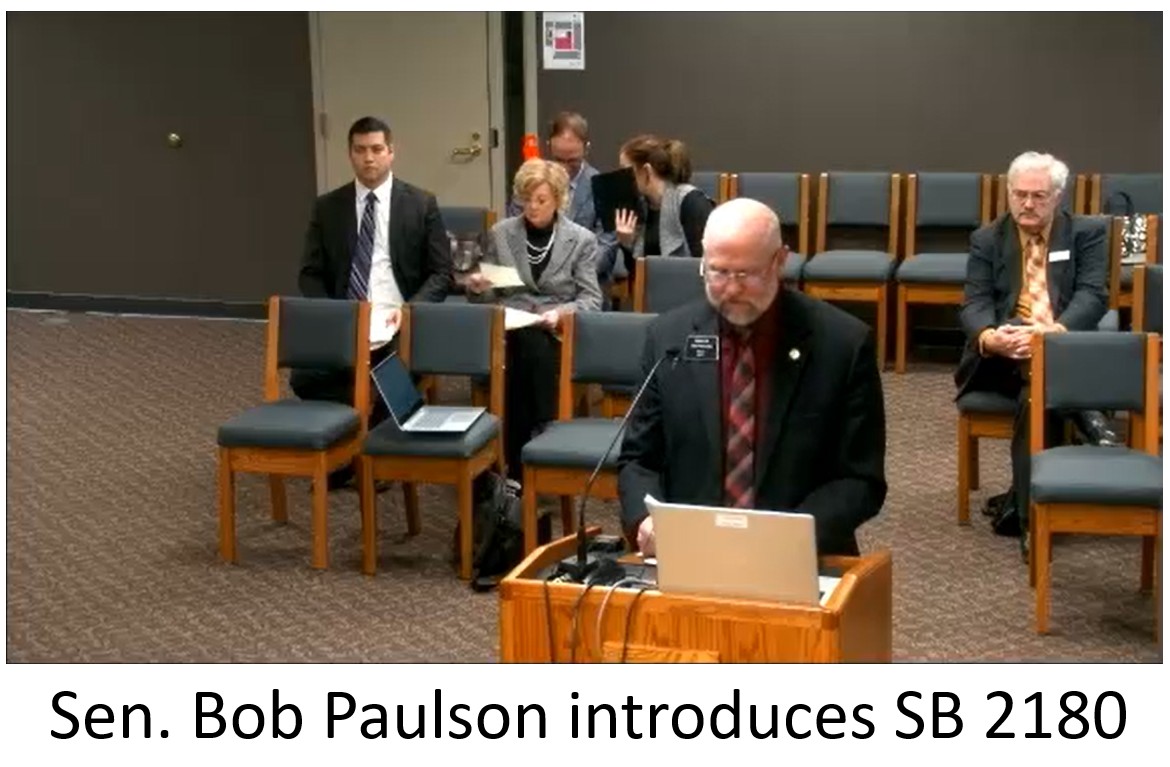
Beginning August 1, all public boards in North Dakota, including city councils, school boards, park districts, and water resource boards must offer a public comment period at every meeting, thanks to the passage of Senate Bill 2180. Signed into law by Gov. Kelly Armstrong on April 30, the bill ensures that residents can directly address their local governing bodies during meetings. While the law sets a baseline requirement, it also gives boards the flexibility to adopt less restrictive comment policies if they choose. Under the new law, public boards can place reasonable limits on comment periods, such as capping the total time allocated or the amount of time each individual is allowed to speak. However, comments must be limited to topics listed on the current or previous meeting’s agenda. Listen to Minot Sen. Jose Castaneda’s comments here. SB 2180 was crafted in response to growing frustration from residents who felt that public input was being stifled. The law also instructs public boards to adopt formal policies outlining the rules for public comment. The policies may require that comments be relevant to the board’s responsibilities and must not disrupt the meeting. The final version of the bill was a compromise, easing earlier proposals that would have limited comment periods to only current agenda items and allowed boards to hold public comment sessions as infrequently as once every three months. Listen to New Town Sen. Chuck Walen’s comments here. SB 2180 represents a step forward for public transparency and civic engagement in North Dakota, aiming to strengthen the dialogue between residents and their local governments.
|
|
NDSU Students Headed for the Bakken
Opportunity to Learn About the Energy Sector
North Dakota State University students are set to participate in the inaugural Bison to the Bakken, a 12-day summer program offering immersive experiences in the state's energy sector. Running May 18-30, the program includes industry tours, networking events and cultural experiences. Highlights include visits to Creedence Energy Services, Hess Corp., Neset Consulting Service, ALLETE Clean Energy, Steffes and Marathon Petroleum Refinery. Students will also engage with companies like Chord Energy, ONEOK, BNI Coal, Xcel Energy and more. Participants earn academic credit while exploring topics such as oil and gas, carbon capture, biofuels and wind energy. Industry leaders will offer insights tailored to students’ fields of study, including supply chain management, environmental policy and sensor development. Beyond professional connections, students will attend a rodeo and a riverboat dinner cruise. The 37 students enrolled in the program will receive a $1,250 scholarship toward the cost of the summer course. Scholarships cover the cost of tuition, while travel and lodging are funded by Economic Diversification Research Funds appropriated by the state legislature. Click here to learn more about the program. |
|
Mattern Named ED of Public Engagement
New Role Within Lignite Energy Council
The Lignite Energy Council today announced that Retha Mattern will serve as the Executive Director of Public Engagement, a new role integrating the LEC's communications, public affairs, education, and membership programming, effective June 2. Mattern joined the council in 2022 as Director of Education & Membership, where she has led programs such as the Lignite Teachers Seminar and organized member events including the annual meeting and CoalPAC tournaments. Now, she will guide the council’s overall public engagement strategy, working to enhance public perception and increase knowledge about the benefits of coal-based electricity. "Retha’s experience in both the energy industry and strategic communications makes her the right person to lead this work,” said Jonathan Fortner, Interim President & CEO of the Lignite Energy Council. “She brings strong communication skills and a deep knowledge about the energy industry that will serve the council well in its commitment to education, advocacy, and outreach on behalf of our members and the industry.” Mattern will continue to work with members and remains the contact for membership events, questions, and other activities. She will also continue to direct the education programming, including the annual Teacher’s Seminar, scheduled this year for June 9-12 in Bismarck. Read more from the Lignite Energy Council. |
|
OMB to Offer Outdoor Tours of ND Capitol
Guided Indoor Tours Are Available Mon. thru Sat.
The Office of Management and Budget (OMB) is inviting the public to view the beauty and unique architecture of the North Dakota State Capitol this summer, as monthly outdoor tours begin and Saturday indoor tours resume. Guided outdoor tours will be offered at 6 p.m. on June 2, July 7 and August 4. The tour will focus on the history of the building and grounds, the Capitol monuments and the nature trail. The tour will be approximately one mile and one hour long. Scooters and wheelchairs are welcome. The public is asked to meet outside the south/visitor entrance to the Capitol. “Summer is a great time to visit the Capitol, and we’re excited to welcome more guests during the warmer months,” said OMB Facility Management Director Brandon Solberg. Beginning the week of May 26, guided indoor tour options will be expanded with the following schedule through Labor Day, Sept. 1: • Monday through Friday: 9 a.m., 10 a.m., 11 a.m., 1 p.m., 2 p.m., 3 p.m.
• Saturdays: Noon, 1 p.m., 2 p.m.
• Holidays (Memorial Day, Independence Day and Labor Day): Noon, 1 p.m., 2 p.m. Special group tours can also be requested by completing the tour request form on OMB’s website. Virtual tours of the Capitol are available year-round on OMB’s website.
|
|
Wise Roads Shots of the Week
Rain Everywhere Makes Muddy Mess
Conditions for the oil industry were just plain miserable this week in western North Dakota, with persistent rain forcing counties to impose weight restrictions on roads throughout the Bakken. Since most Wise Roads stations are situated on gravel roads, their high resolution cameras documented the unpleasant conditions. Photos from Wise Roads cameras are updated continuously throughout the daylight hours on the Wise Roads web page.
The Wise Roads project (Weather Information System to Effectively Reduce Oilfield Delays and Disruptions) was developed by WDEA to increase the efficiency of the movement of oilfield truck traffic. Most weather stations were placed in the core area of Bakken production, focusing on Dunn, McKenzie, Mountrail and Williams Counties. The project provides more accurate weather information to county road managers, especially about rain events, to minimize the need to impose weight restrictions when gravel roads get wet. It was developed in partnership with NDAWN, which maintains the stations for WDEA. The project was also assisted with a $250,000 grant from the Oil & Gas Research Council.
Fifty new stations have been installed, 39 of which are located in the four core oil-producing counties. Prior to the start of the project, Dunn and McKenzie Counties had just one station each, Mountrail County had three and Williams County had four. Weather station data and high-resolution photos can be found at wiseroadsnd.com. There is also an interactive Google Map that users can access to pinpoint the location of Wise Roads and NDAWN weather stations. Additional information is also available from NDAWN. Featured shots this week are clockwise from upper left: Big Bend, with water pooling inside the well pad berm; Antelope Creek, with a well pad turned into one huge puddle; Dublin, with a colorful sunrise before the rains set in; and Little Missouri, with a colorful sunrise over the Badlands. Click on the link for a high-resolution image. |
|
Quick Connect
• Energy companies saw wins at North Dakota Capitol this session -- Bismarck Tribune
• EPA inches toward approval of North Dakota coal ash handling program -- E&E News
• North Dakota landowner challenge to Summit pipeline can go on -- Bismarck Tribune
• The massive 1.8M square foot AI footprint in Ellendale is there to stay -- KFYR - TV
• Greenpeace attorneys are asking for stay of nine-figure judgment in DAPL case -- KFYR - TV
• Pipeline regs could fall to feds in proposal from committee with North Dakota rep -- Bismarck Tribune
• Is Congress trampling on state laws protecting property rights against pipelines? -- Successful Farming
• Legislative Assembly defined by results say Sen. David Hogue and Rep. Mike Lefor -- Bismarck Tribune
• New $100K grant program helps North Dakota's tribes elevate tourism revenue -- Minot Daily News
• Dept of Water Resources receives $769M for major water supply, flood control projects -- KFYR - TV
• Federal appeals court rules against North Dakota tribes in voting rights case -- North Dakota Monitor
• North Dakota adds new tax incentive for businesses to subsidize child care -- North Dakota Monitor
• Longtime lawmaker Rep. Jim Kasper back in Fargo after brain bleed, hospitalization -- Dickinson Press
• State's measles cases rise to 12, Williston Band Day Parade attendees exposed -- Bismarck Tribune
• Lightning storm causes four brief fires in western North Dakota, all have been extinguished -- KX News
• Watford City Commissioners greenlight $24.52 million in project funding -- McKenzie County Farmer
• Williston Area Chamber of Commerce invites locals to attend Legislative Wrap Up May 21 -- KX News
• Williston City Commission vice president Cymbaluk resigns, cites threat to him and family -- KX News
• $81.1M legislative appropriation will 'get a lot done' for flood control construction -- Minot Daily News
• Southwest Water Authority presents $10K to support education, advocacy -- Bowman County Pioneer
• Ray school board incumbents Bingeman, Schmitt to keep seats after being reelected -- The Journal
• Williston Education Association is sponsoring a school board candidate forum -- Williston Herald
• Sweeping private school voucher program tucked inside House GOP tax bill -- North Dakota Monitor
• Student leaders full of questions about cellphone ban in North Dakota schools -- North Dakota Monitor
• Bismarck State College lineworker program students compete in fun rodeo events -- KX News
• Dickinson State University announces 2025 faculty and staff service awards -- DSU News Release
• Williston State College announces public tours of healthcare center beginning May 21 -- Williston Herald
• BPS board, teachers continue contract negotiations; percentage raise yet to be settled -- The Beacon
• States sue over Trump's move to fast-track oil, gas projects via 'energy emergency' order -- KX News
• ConocoPhillips prepared to weather downturn, committed to Lower 48 assets -- Natural Gas Intelligence
• California looks to see a price of $8 a gallon within the next few years predict experts -- KFYR - TV
• The great state of Alberta; US should welcome Canadian province into the union -- Energy Bad Boys
• How this Wyoming coal mine could help break U.S. dependence on China for rare earths -- CNBC
• Brutal heat, AI-fueled demand, aging fleet of power plants tee up grid reliability stress test -- Oil Price
• Trump dismantles Biden's climate legacy while New York doubles down -- Manhattan Contrarian
• Senseless consequences if states punish fossil fuel companies for climate claims -- RealClearEnergy
• New study shows 65% of "runaway global warming" related to urbanization -- Univ Alabama-Huntsville
• Nature paper claims to pin the liability for "climate damages" on Big Oil companies -- Daily Sceptic
|
|
Factoid of the Week
Carbon is not plentiful in its elemental form, but forms more compounds than all other elements combined, most common of which are various types of salt. Carbon compounds also form common minerals such as magnesite, dolomite, marble and limestone. Coal is not pure carbon. It is a sedimentary rock that also contains other elements like hydrogen, sulfur, oxygen and nitrogen.
|
|
May 19 Bismarck and via Teams
May 20 Watford City
May 20 Medora
May 22 Bismarck and via Teams
May 27 Watford City
May 28 Bismarck
May 29 Bismarck and via Teams
June 3 Bismarck and via Teams
June 9 - 12 Bismarck
June 16 - 19 Bismarck State College
June 18 - 19 Dickinson
June 18 - 19 Bismarck
June 30 Williston
|
|
Oil prices and rig count May 16, 2025
WTI Crude: $62.48 Brent Crude: $65.38 Natural Gas: $3.33
North Dakota Active Oil Rigs: 31 (Up 1) May 16, 2024 -- 36 rigs |
|
Geoff Simon Editor/Executive Director
|
|
|
|
|
|
|














.jpg)