|
Islamic State Ambushed Regime Patrol in Idlib
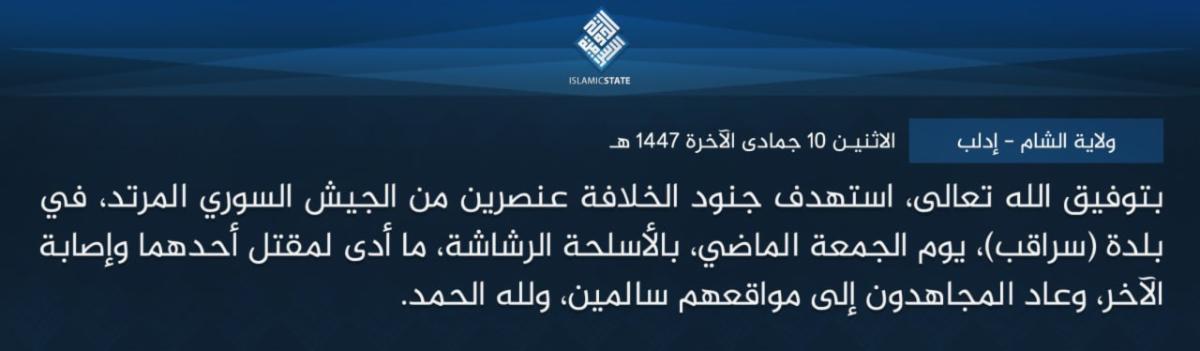
On 02 December 2025, Islamic State militants ambushed a regime patrol in Saraqib, Idlib, killing one and injuring another with machine-gun fire. This marks the second IS-claimed attack in Saraqib within three days, following an assault on two GSS members from the 74th Division. The strike also came on the heels of two other IS-claimed operations in Homs and Hama, both areas generally understood as firmly controlled by Syrian Regime Forces.
This attack pattern indicates that IS is not merely persisting at the margins but intentionally reintroducing itself into core regime / HTS-dominated zones. Saraqib, long perceived as an HTS stronghold and a symbolic strategic waypoint on the M5 highway, has now become a testing ground for resumed insurgent activity. Rather than deploying large vehicle bombs or mass-casualty attacks, IS is opting for precision assassinations and targeted ambushes, demonstrating that it can strike without revealing its wider networks.
Maintaining Presence Under HTS’ Nose
Despite an August 2025 HTS-led CTO in Harem that seized bomb-making material and arrested nine suspects, IS clearly never disappeared from Idlib. The current uptick highlights that IS used its long period of silence not as a retreat but as a repositioning.
Idlib has become a uniquely permissive environment due to years of forced evacuations, allowing diverse jihadist currents to cohabitate. IS sympathisers can move, recruit, and exchange resources within a broader mix of jihadist factions and displaced militants. HTS’s consolidation of authority has not eliminated IS; rather, it has created social camouflage: thousands of militants from various ideological backgrounds in one urban ecosystem where discrete IS cells can blend in.
Repositioning Strategy: From the Badiya to Urban Infiltration
In March 2025, TRAC reported that IS quietly vacated positions in the Syrian Badiya, long the group’s desert stronghold. That shift now appears strategic: IS is trading wide desert sanctuaries for decentralised urban nests, harder to monitor and easier to activate. The current attacks confirm:
- IS is restructuring into micro-cells embedded in cities
- Attacks are designed to avoid immediate attribution
- Violence is calibrated to bleed state forces without escalating into full campaigns
IS appears to know that small, deniable, repeated strikes erode HTS’ image more effectively than major spectacles.
Implications: The End of HTS’ “Stability Narrative”
The implications of this latest wave of IS attacks directly undermine HTS’s one-year claim to stability and governance. By striking immediately after HTS formalised cooperation with the international anti-IS coalition, IS is deliberately puncturing HTS’s narrative of control and exposing its vulnerabilities. HTS now faces a two-front legitimacy challenge, confronting both Assad-aligned remnants and a resurging IS that has proven capable of operating inside urban centres rather than desert sanctuaries. The pattern suggests a likely tit-for-tat cycle of HTS raids followed by IS assassinations, HTS sweeps, and further IS reprisals. Moreover, by successfully targeting regime and security figures in Homs, Hama, and Saraqib, IS demonstrates that even areas perceived as securely held are no longer immune to infiltration, signalling a return of embedded urban jihadism and a renewed contest for dominance in spaces HTS once claimed as firmly under its control.
Strategic Significance
The message IS is sending is clear: “We are not defeated; we are embedded and waiting.”
The shift away from mass-casualty attacks toward persistent, low-visibility attrition reflects IS learning from counter-insurgency pressure. Its calculus is long-term: wear down HTS, undermine state claims of control, and expose every checkpoint, road, and administrative hub as vulnerable. TRAC believes that this surge of claims is not random, but rather that it signals a calculated return to insurgent visibility timed to HTS’s first anniversary and its alignment with anti-IS international forces. As HTS is trying to imitate being a state, IS is working to remind the region, and the world, that Syria remains an arena where no authority truly governs uncontested territory.
| | | TRAC Incident Report: Authorities Dismantle a Neo-Nazi Cell Ready to Carry Out an Attack in the Name of ‘The Base’ Group, Castellón Province, Spain | | |
On 01 December 2025, Spanish authorities disclosed the 25 November arrest of three white supremacists in Castellón Province linked to the transnational neo-Nazi organisation The Base. The counterterrorism investigation, codenamed Operation Cascadia, began early in the year when intelligence services first identified a Spanish national actively coordinating with The Base’s international networks. According to security officials, the cell had reached an advanced stage of ideological radicalisation and operational preparation. It was considered capable of transitioning from training to the execution of violent acts.
The detainees had conducted paramilitary-style training, tested firearms, and consumed and distributed accelerationist propaganda, including operational manuals and content celebrating attacks by other far-right militant groups. They used encrypted social media channels not only to disseminate neo-Nazi messaging but to recruit sympathisers, emphasising targeted violence and the collapse of democratic systems. In searches carried out across multiple locations, investigators seized firearms, nine training weapons, more than twenty knives and bladed weapons, tactical gear, and extensive propaganda, along with documents glorifying extremist actors. Notably, the cell leader maintained direct contact with The Base’s fugitive founder, Reinaldo Nazzaro (aka Norman Spear / Roman Wolf), long known to be operating from Russia, which continues to function as a permissive hub for several exiled Western extremists.
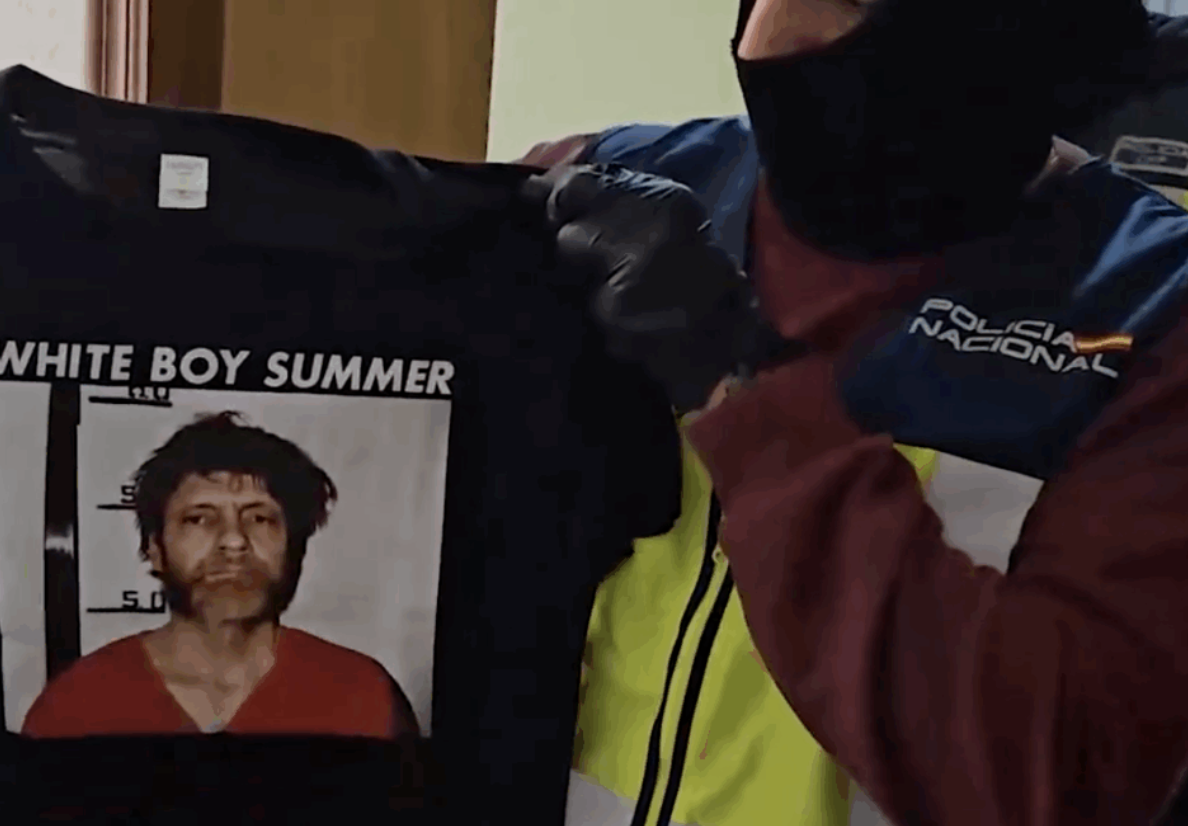
The presence of Unabomber iconography among seized materials highlights the cultural convergence occurring within newer accelerationist milieus, where eco-fascism, anti-system extremism, and white supremacist ideology intersect. While the rugged, survivalist militant model has always been part of The Base’s identity, its appropriation of Ted Kaczynski’s imagery reflects wider cross-pollination in extremist subcultures that adopt anti-modern, anti-industrial collapse rhetoric to broaden appeal beyond traditional neo-Nazi paradigms.
This case represents the first identified Base-linked accelerationist cell in Spain, marking a significant milestone in the group’s efforts to expand beyond North America and Northern Europe. Although The Base appeared dismantled in 2022 following multiple arrests and infiltration operations in the United States, Canada, and the UK, the Castellón arrests demonstrate that the network is reconstituting itself in quieter European theatres, capitalising on encrypted online recruiting, isolated cells, and ideological decentralisation. The reference to “Cascadia” also reveals that the group’s ethnostate fantasy remains central, even as geographic focus shifts, suggesting that The Base is less concerned with fixed territory and more invested in building dispersed micro-cells capable of outlasting law enforcement disruption.
| | (Video) New Armed Organisation ‘New Republican Movement (NRM)’ Surfaced, Claiming Nearby Councillors & Members of the Legislative Assembly (MLAs) as “Legitimate Targets”, Newry, Northern Ireland | | |
A new armed organisation calling itself the “New Republican Movement” (NRM) has emerged in Newry, Northern Ireland, releasing a video in which masked members threaten local councillors and Members of the Legislative Assembly (MLA)s, declaring them “legitimate targets as of today.” The group frames its formation around opposition to mass immigration and what it describes as ideological “indoctrination” in schools, invoking rhetoric that blends traditional Irish republican themes with newer far-right, anti-immigration narratives.
Although the group uses republican branding and symbols, its messaging departs sharply from mainstream Irish republicanism, particularly Sinn Féin, which it criticises for supporting immigration. Instead, the NRM’s language mirrors contemporary far-right talking points, including references to “military-aged migrants” and fears of cultural or religious “destruction.”
At this stage, the group’s size, capability, and authenticity remain unclear, but its public threat against elected representatives represents a serious escalation. If genuine, it signals a troubling hybridisation of dissident republicanism with anti-immigrant extremism, potentially positioning the NRM among the spectrum of small but dangerous splinter groups that have occasionally carried out violence in Northern Ireland.
Their formation comes amid the escalation of violence and arson attacks directed at asylum seekers in Ireland.
| | TRAC Incident Report: Islamic State Mozambique (IS-M/Shabaab Cult/Wilyat Muzinbik) Militants Targeted a Mozambican Armed Forces Naval Patrol, off Ilha Mionge Island, Mocímboa da Praia, Cabo Delgado, Mozambique | | |
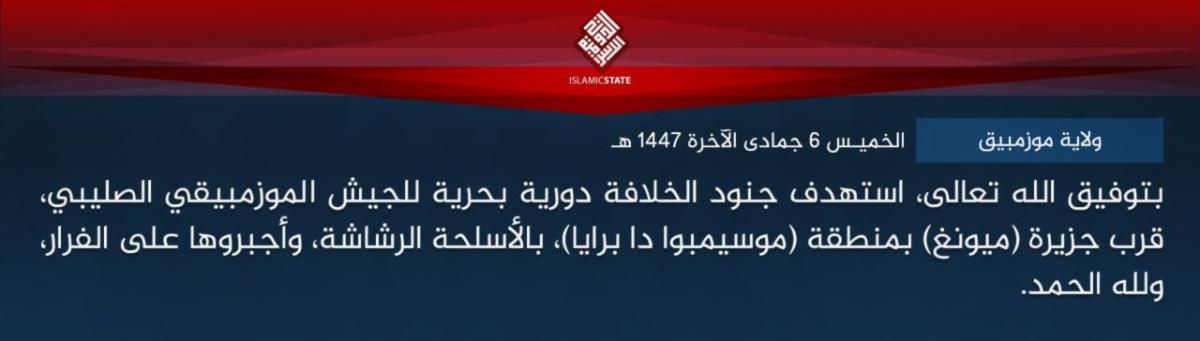
On 27 November 2025, Islamic State Mozambique (IS-M) militants conducted an assault on a Mozambican Armed Forces naval patrol off Ilha Mionge, near Mocímboa da Praia in Cabo Delgado Province. The patrol boat came under heavy machine-gun fire, forcing the crew to retreat.
This incident showcases the Islamic State Mozambique (IS-M/Shabaab Cult/Wilyat Muzinbik) continued operational capability in maritime environments, an area in which they have repeatedly demonstrated significant proficiency. IS-M conducts operations on the islands off the Cabo Delgado coastline a few times per year. At the beginning of 2024, IS-M even held control over one of these islands, using it as a forward staging area, a smuggling point, and a safe haven shielded from ground-force pursuit. Their familiarity with the archipelagos around Mocímboa da Praia has enabled IS-M to develop a niche tactical advantage in amphibious mobility, setting it apart from most other Islamic State affiliates in Africa.
The timing of this attack is especially notable. Just days earlier, the Mozambican government announced a major long-term project, a 30-year agreement, to develop and manage natural gas liquefaction (LNG) infrastructure. The project involves several key components:
- An LNG terminal at the Port of Beira, including a floating storage and regasification unit.
- Expanded energy infrastructure in Inhassoro, Inhambane Province.
- The 865-kilometer ROMPCO pipeline, linking Mozambique to South Africa.
IS-M’s attack near Mocímboa da Praia is almost certainly intended as a signal to both domestic authorities and international investors. Cabo Delgado is the country’s most resource-rich region, home to high-value offshore and onshore gas reserves. Companies like Shell and TotalEnergies already have significant interests in the area. A successful strike against a naval patrol underscores that IS-M can still operate freely in coastal zones critical to the LNG sector, potentially threatening maritime security along supply, crew transfer, and offshore logistical routes.
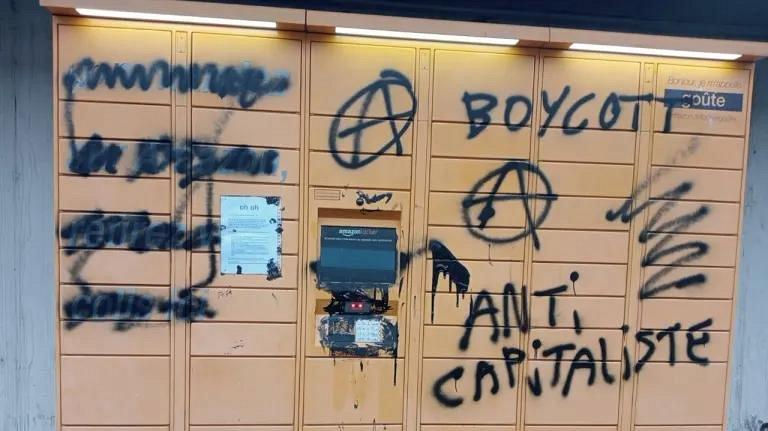
| | TRAC Incident Report: Anarchists Opposed to Overconsumption Sabotage Eight Retail Amazon Parcel Lockers La Gabarre, Lisle, Nouvelle-Aquitaine, France | | TRAC Incident Report: Knife Attack on Police Officers Thwarted at Checkpoint in Derbent, Dagestan, Russia | | (Photos) Jama’at Nusrat al-Islam wa al-Muslimin (JNIM) Circulates Photoset, Featuring Its Militants Engaging in Propaganda Activities (Da’wa) in the Timbuktu Region, Mali | | | | |