 | |
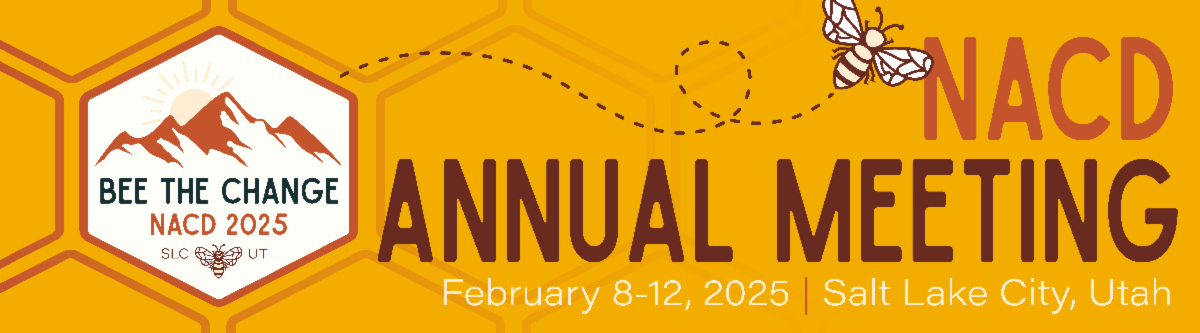
Have you heard the buzz? NACD wants you to join us at the 2025 Annual Meeting! Hosted in partnership with the Utah Association of Conservation Districts, next year's meeting will take place in Salt Lake City, UT, from February 8-12, 2025. Join us in the Beehive State to explore the theme "Bee the Change: Reaching New Summits in Conservation!"
Only one month left to claim the early-bird discount! Register before December 20 to save up to $130 per person. If you have never attended an NACD annual meeting in the past, you may be eligible for a first-timer scholarship!
Enhanced Agenda
You shared, we listened! NACD is excited to rollout some changes to our schedule of events for next year's meeting. Past meeting attendees have said they especially enjoyed networking, so this meeting will have even more opportunities for you to connect with peers!
Join our 90-minute general sessions on Monday and Wednesday morning to hear from speakers who are national conservation leaders, like Pheasants Forever & Quail Forever's President and CEO Marilyn Vetter. Stay through Wednesday to explore and learn more about our “Bee-Utah-ful” host state by joining one of three unique tours in the afternoon!
Ready to book?
All the details on registration and exclusive hotel and travel discounts, including special discounted airfare with Delta Airlines, can be found on NACD's Annual Meeting webpage. If you have any questions or want to be a sponsor for the event, contact events@nacdnet.org. We can't wait to bee in SLC with you!
| LEVERAGING SOCIAL MEDIA AND STORYTELLING TO OVERCOME 'VOLUNTEER DROUGHT' IN TEXAS | |
The annual meeting of the Association of Texas Soil and Water Conservation Districts (ATSWCD) was a hub of fresh ideas, collaboration, and hands-on solutions. This year, two key topics took center stage: amplifying the voice of agriculture through social media and tackling the "volunteer drought" that many conservation districts face. Attendees explored how to engage communities, recruit new volunteers, and harness the power of digital platforms to advocate for sustainable farming and ranching.
This year, Texas welcomed a new kind of guest speakers; social media superstars Cody and Erika Archie, the influential couple behind Bar 7 Ranch, who have shown Texas agriculture the power of social media in capturing public interest. Through Instagram, they share candid glimpses into the often unpredictable world of ranch life, where feeding cattle can turn into a sprint and curious goats love to photobomb. Their humor and transparency offer followers a fresh perspective on agriculture, transforming everyday tasks into engaging stories that resonate with people far removed from ranching. Bar 7 Ranch’s growing online community highlights how storytelling can break down barriers, making agriculture relatable, accessible, and even a bit comedic.
| 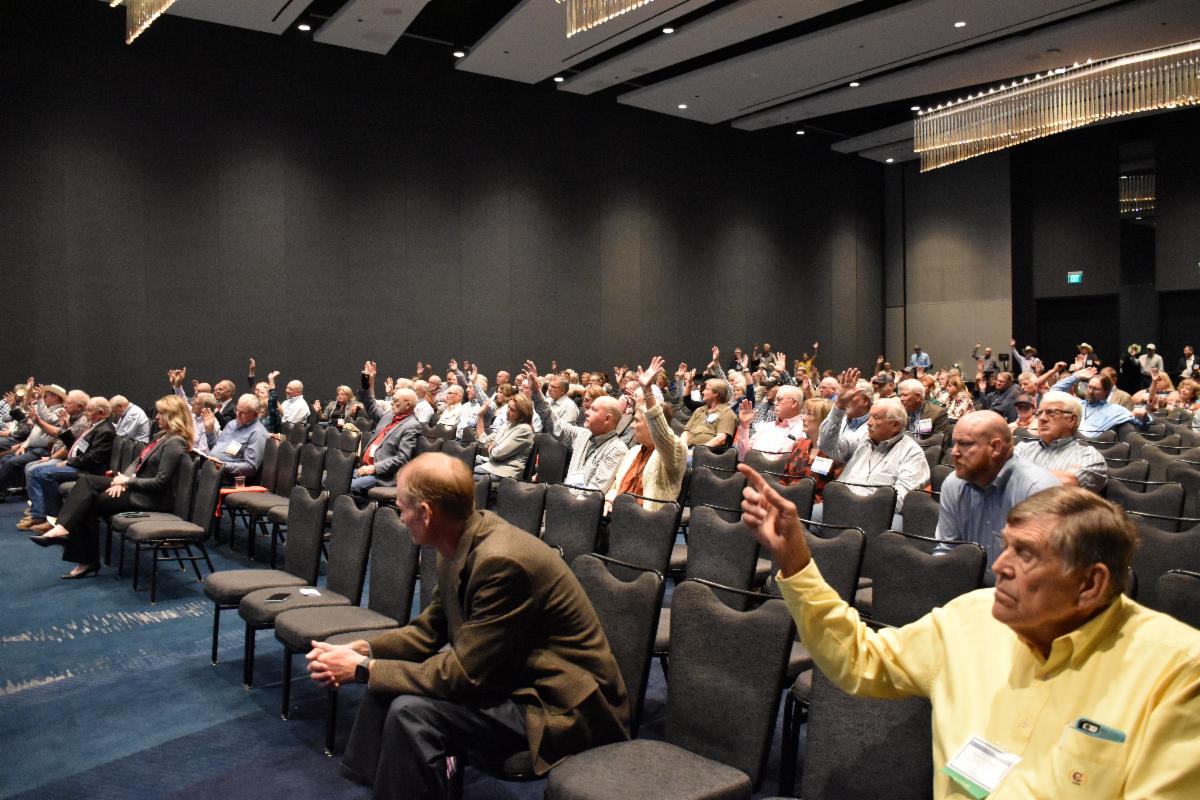 | |
At a breakout session titled the “Volunteer Drought,” conservation districts confronted a pressing issue: recruiting new volunteers to serve on their boards. Recognizing that community needs are evolving, district leaders discussed strategies for inspiring volunteerism and addressing local conservation challenges. The session underscored that in order to recruit and retain dedicated volunteers, districts must engage the public creatively, making environmental stewardship feel accessible, impactful, and deeply connected to urban and rural communities.
The storytelling success of Cody and Erika Archie provides a valuable model for conservation districts hoping to address the “Volunteer Drought.” Just as the Archies connect with a diverse online audience by showcasing authentic, unfiltered moments on the ranch, conservation districts can reach potential volunteers through social media by highlighting the rewarding, real-life experiences of conservation work. By sharing behind-the-scenes content that captures the meaningful impact of conservation efforts, districts can spark interest and enthusiasm among audiences who may not have considered volunteering.
Through this approach, districts could use social media not only to share updates but to build an inspiring narrative around volunteerism, inviting people to be part of a larger mission. Spotlighting volunteers in action, celebrating milestones, and bringing humor and authenticity to conservation work would help people see themselves as active participants in conservation district stewardship. By adopting storytelling strategies similar to the Archies’, conservation districts could transform online engagement into real-world involvement, ensuring that the next generation of volunteers feels both welcomed and essential to the future of resource management.
| APPLY FOR NCF-ENVIROTHON'S DIVERSITY ENHANCEMENT AND UNDERSERVED AUDIENCE GRANTS | |
The National Conservation Foundation (NCF), in collaboration with the USDA Forest Service, is excited to announce the 2025 cycle of the NCF-Envirothon Diversity Enhancement and Underserved Audience Grant (Diversity Grant) program. The Diversity Grants provide mini-grants to: increase the diversity, equity, and inclusion of local, state, and provincial Envirothon programs; improve access to hands-on outdoor natural resource education opportunities; and educate young adults on the importance of conservation.
In 2025, three funding tiers for U.S. states or territories are available depending on the project’s scope and impact.
- Up to $8,500 per project is available for projects with a statewide or large metropolitan city reach or for initiatives to establish new Envirothon programs in those U.S. states or territories without current Envirothon programs.
- Up to $5,200 per project is available for county, district, or regional-based projects.
- Up to $2,500 per project is available for small-scale outreach projects, targeting one school or a small school district, or projects to provide transportation funds for students to attend Envirothon training opportunities or competitions.
Additionally, NCF is offering $2,000 for Canadian-based diversity grant projects.
Grant applications will be accepted until January 10, 2025.
Conservation districts, along with tribal districts, are encouraged to collaborate with their state Envirothon program. In states or territories that do not currently have Envirothon programs, state or territory conservation associations are invited to apply for funding to help establish programs.
NCF encourages all eligible entities to consider how they might use these funds to innovate and enhance their local efforts, provide young people with opportunities in conservation, create inclusive programs that reflect diverse communities, and equip students to tackle current environmental challenges.
Complete details, including the Request for Proposals, can be found on the Envirothon's website. For questions, please contact Jennifer Brooks, NCF-Envirothon Program Manager at jennifer-brooks@nacdnet.org or 1-800-825-5547 x 2.
| |
WHAT'S UP IN WASHINGTON?
GOVERNMENT AFFAIRS UPDATE
| |
Election results now show that Republicans will hold a slim majority in the 2025 House of Representatives. President-elect Trump nominated Doug Burgum to serve as the Secretary of the Interior and Chris Wright to serve as the Secretary of the Department of Energy. As Congress and the new administration work to fill leadership positions, NACD will be focused on connecting with new leaders and their staff.
Yesterday, Senate Agriculture Committee Chairwoman Debbie Stabenow released full text for her version of the farm bill, the Rural Prosperity and Food Security Act. The linked press release includes a summary and full legislative text. The bill reflects a summary of the legislation Senator Stabenow released in May. The bill would integrate all remaining Inflation Reduction Act conservation investments into the conservation title and require varying percentages of NRCS program funding support climate-smart practices. There are many policy differences between the House and Senate farm bills and very little time for Congress to achieve bipartisan agreement on a final bill in the coming weeks. Congress is expected to pass an additional extension of the 2018 Farm Bill before the end of the year.
Yesterday, President Biden sent a letter to Congress requesting $100 billion in emergency funding to respond to damages caused by Hurricanes Helene and Milton and other natural disasters. The request includes $21 billion for USDA to assist producers who have lost crops and livestock to natural disasters over the past two years. Congress is currently working to develop a disaster relief package and an additional extension of Fiscal Year 2024 federal funding bills, which expire on December 20.
Tomorrow, Deputy Agriculture Secretary Xochitl Torres Small is scheduled to testify at a Senate Appropriations Committee hearing on disaster aid. You can tune in using this link.
| DISTRICT'S GRASSROOTS PATHWAY TO CONSERVATION LEADERSHIP | |
By Barbara Bleiweis, Mecklenburg SWCD
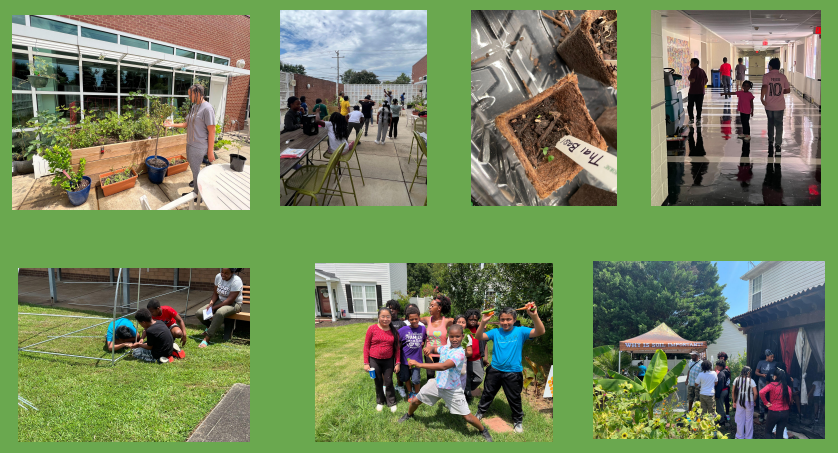
The Mecklenburg Soil and Water Conservation District (SWCD) is sparking a new wave of conservation education in North Carolina’s Charlotte-Mecklenburg region through Pupil to Practitioner, a hands-on pilot program designed to inspire and equip underserved students with the tools to become tomorrow’s environmental leaders. With support from NACD’s 2023 Outreach and Technical Assistance Grants program, the district has joined forces with three influential partners: Harvesting Humanity, LLC; Deep Roots CPS Farm; and Johnson C. Smith University (JCSU). Together, they’re building conservation knowledge, strengthening community connections, and paving students' paths to step into conservation roles within their communities and beyond.
Harvesting Humanity, LLC: Bringing Conservation to Life
Harvesting Humanity, LLC (HH) takes a unique, creative approach to conservation, blending art, multimedia, and environmental education to engage K-12 students in hands-on learning. For Earth Day, HH students dove into soil health with an interactive scavenger hunt and crafted poetry focused on environmental themes. They gained practical insights into soil conservation with the district’s mobile soil classroom kits. By making learning dynamic and multisensory, HH connects students to conservation in memorable ways. Looking ahead, they’re eyeing the Envirothon, exploring how to form a competitive team that could take their conservation knowledge to the next level.
|  | |
Deep Roots Community Planning Solutions Farm: Growing Community, Food Access, and Opportunity
Deep Roots Community Planning Solutions Farm is transforming urban communities' connection with agriculture, food security, and conservation. Through Pupil to Practitioner, they’re rolling out an urban agriculture outreach plan to engage more urban farms and Black, indigenous, and people of color (BIPOC) growers and increase community involvement in state agriculture cost-share programs. Deep Roots doesn’t just talk about community—they live it. Their Grower’s Network brings farmers together monthly to share insights. Grant funding supports their certified farm apprentice program, youth summer programs, and celebrated Farm to Table dinners. These events are an opportunity for local leaders to see conservation and food production firsthand, creating a robust dialogue on the role of conservation in urban communities.
Johnson C. Smith University: Elevating Future Conservation Leaders
At Johnson C. Smith University (JCSU), Charlotte’s historically Black university, senior sustainability students are stepping directly into conservation work through urban agriculture projects, working in Sustainability Village and the Rosa Parks Farmers Market. Through Pupil to Practitioner, these students also team up with Charlotte-Mecklenburg Storm Water Services for watershed testing and community outreach, opening doors to internships and job opportunities in conservation and public service. By immersing students in real-world conservation challenges, JCSU is creating a launchpad for careers in environmental leadership, bridging academic knowledge with practical experience.
Building Lasting Impact
With enthusiasm surging among students, educators, and community leaders, Pupil to Practitioner shows the power of grassroots conservation education. The Mecklenburg SWCD has committed to actively listening and learning from its partners, ensuring the program’s support aligns with community goals. As the grant period wraps up, each partner will deliver an outreach plan with recommendations to keep the momentum going and sustain this wave of community engagement.
Pupil to Practitioner isn’t just about education—it’s about creating pathways, empowering youth, and strengthening communities. This program exemplifies how, with local partnerships and hands-on learning, conservation can be a transformative force, sparking environmental leadership and action where it’s needed most.
| |
NACD Welcomes Northern Plains Region Rep! | |
NACD is excited to welcome Nicole Poitra as Northern Plains Region Representative.
Nicole joins NACD from the Rolette County Soil Conservation District in North Dakota, where she has served as a district technician and project manager. In her role, Nicole provided technical and administrative support to the district’s conservation programs, most recently managing its involvement in the Alliance for Climate Smart Agriculture. As the Northern Plains Region Representative, Nicole looks forward to working with districts across the region to advance conservation efforts.
She holds Associate Degrees in Business and Office Administration from Turtle Mountain Community College and is pursuing a bachelor’s degree from Valley State University.
Nicole is based in North Dakota and can be reached at nicole-poitra@nacdnet.org.
| NRCS's gSSURGO Database Updated | |
The NRCS gridded Soil Survey Geographic Database (gSSURGO), which contains information about soils in all U.S. states and territories collected over a century, has been updated with the most current information.
You can read more about gSSURGO and learn how to work with the databases and its many tools on the gSSURGO web page.
| Applications for NACD + AFA Sustainability Institute Close Soon | |
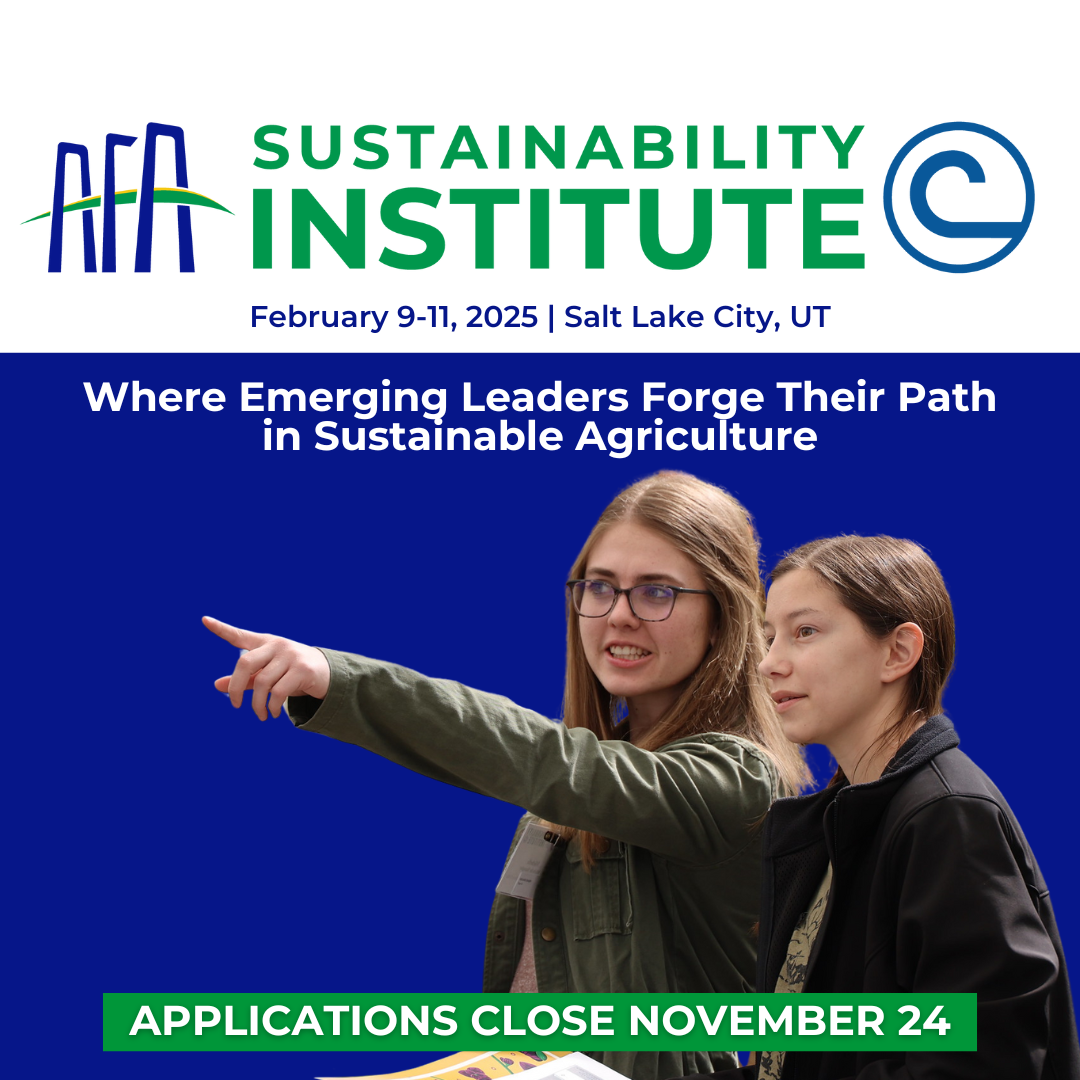
Know any undergraduate students ready to take the next step in their conservation journey? Let them know to apply for NACD and Agriculture Future of America's Sustainability Institute.
The Sustainability Institute provides a deep dive into the world of conservation and natural resources. Students experience firsthand what diverse careers in this field look like, connect with industry leaders and peers, and engage in vital discussions impacting the industry.
The program runs alongside NACD's Annual Meeting. Program applications are only open until this Sunday, November 24.
| NRCS Requests Public Input on Conservation Practice Standards | |
NRCS requests public input for the improvement of the Conservation Practice Standards (CPS) to maximize climate change mitigation and adaptation benefits. This request specifically asks for input on flexibilities, innovation, and appropriate modeling in the various NRCS programs.
Comments can be submitted until December 23, 2024. Learn more and submit comments here.
NACD will be submitting a response and would greatly appreciate any input from members. Please feel free to contact Libby Wawro, at libby-wawro@nacdnet.org, with any thoughts or questions by December 4, 2024.
| Support NCF's Conservation Education Programs | |
NACD's sister organization, the National Conservation Foundation (NCF), has kicked off their fall fundraiser and is asking for your support! NCF manages conservation education programs for students and adults to prepare the next generation of natural resource protectors.
To continue programs like the Next Generation Leadership Institute and Envirothon, NCF relies on conservation champions like you.
Show your support with a one-time or reoccurring donation. Prefer to donate by check? Print and mail in this completed form!
| |
NACD sends condolences to the family, friends, and colleagues of former Soil Conservation Service Chief Bill Richards, who has passed away at the age of 93.
Richards was a soil conservation pioneer who served as Chief of USDA's Soil Conservation Service (SCS), now NRCS, from 1990-1993. During his tenure, Richards spearheaded a formal partnership agreement among SCS, NACD, and the National Association of State Conservation Agencies.
He was an early adopter of no-till farming practices in 1957 and built a successful, diversified farming operation and explored innovative ways to grow crops while protecting the soil. His contributions to soil conservation will continue to live on.
Read more here.
| |
Do you want to get more involved in your national association? Now’s the time to make your voice heard! We’ll be looking for new members for our subcommittees, whose membership may change in February. Both district staff and board members can join! Stay tuned for more information about how to participate.
You can also check in with your NACD Region Representative about ongoing region activities and meetings, join our events, recruit members for or join the Soil Health Champions Network, or come to the annual meeting and we’ll find a way to immerse you in the association!
| Promote your conservation district or state association's tree sale, annual meeting, webinar, field day, or other events on NACD's Calendar of Events! | |