March 2023 Issue:
Letter from the President Program Spotlight: Family Team Meeting (FTM)
I Make a Difference Moment
Celebrating Women
Social Work Month
Upcoming Events
|
|
When a child is placed in foster care, typically that placement is initially meant to be a temporary placement while it is determined whether it is likely to be safe to return that child home. Multiple agencies provide families with different services while their child is in foster care. For example, a family may receive mental health services from one provider, foster care services from a separate provider, and a different service from yet another provider. Family Team Meetings are held as part of the case planning process.
During the FTM, participants work together to develop solutions based on the family/youth’s needs. A Family Team Meeting is an opportunity for our staff to give youth, families, caregivers, informal supports and other team members a voice in charting the path forward for case planning and decision making.
Read the I Make A Difference Moment below, which provides one example of how our FTM staff improve the lives of the children and families we serve.
|
|
After a child is removed from their parent’s care, sometimes that case is referred to our agency to provide Family Team Meeting (FTM) services.
The FTM offers structured meetings led by a trained facilitator that encourages parents and families to engage with community resources to assist with their journey towards reunification.
These meetings offer a space for families to learn more about the family reunification process and steps that will need to be taken to ensure the safety and wellbeing of their children.
For more details about FTM, please click here.
|
|
In the FTM program we meet a family that we have not had a long relationship with and help them address the issues they are facing. I received a referral to facilitate an FTM for a removal for two teens from their father. The nature of the removal placed the teens in the care of their mother and it was ordered that the father was not to be involved in this FTM for safety reasons. When I called the mother to discuss the FTM, I could hear the worry in her voice. After I told her who I was and why I was calling, I asked if she had any questions about the FTM. She asked if the father was going to be in the room with her and their teens. I assured her that he was not going to be there or even in the building while they were there. This answer made her breath a huge sigh of relief and the worry in her voice disappeared. Read more.
|
|
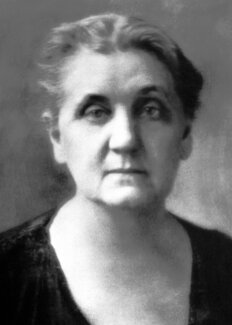
Jane Addams, (born Laura Jane Addams, September 6, 1860-May 21, 1935) won worldwide recognition in the first third of the twentieth century as a pioneer social worker in America, as a feminist, and as an internationalist.
She was born in Cedarville, Illinois, the eighth of nine children. Her father was a prosperous miller and local political leader. Because of a congenital spinal defect, Jane was not physically vigorous when young nor truly robust even later in life, but her spinal difficulty was remedied by surgery.
In 1881, Jane Addams was graduated from the Rockford Female Seminary, the valedictorian of a class of seventeen, but was granted the bachelor’s degree only after the school became accredited the next year as Rockford College for Women. In the course of the next six years, she began the study of medicine but left it because of poor health, was hospitalized intermittently, traveled and studied in Europe for twenty-one months, and then spent almost two years in reading and writing and in considering what her future objectives should be. At the age of twenty-seven, during a second tour to Europe with her friend Ellen G. Starr, she visited a settlement house, Toynbee Hall, in London’s East End.
This visit helped to finalize the idea then current in her mind, that of opening a similar house in an underprivileged area of Chicago. In 1889 she and Miss Starr leased a large home built by Charles Hull at the corner of Halsted and Polk Streets. The two friends moved in, their purpose, as expressed later, being to provide a center for a higher civic and social life; to institute and maintain educational and philanthropic enterprises and to investigate and improve the conditions in the industrial districts of Chicago.
The main legacy left by Jane Addams includes her involvement in the creation of the Hull House, impacting communities and the whole social structure, reaching out to colleges and universities in hopes of bettering the educational system, and passing on her knowledge to others through speeches and books. She paved the way for women by publishing several books and co-winning the Nobel Peace Prize in 1931 with Starr.
Jane Addams was an ardent feminist by philosophy. In those days before women’s suffrage she believed that women should make their voices heard in legislation and therefore should have the right to vote, but more comprehensively, she thought that women should generate aspirations and search out opportunities to realize them.
We remember and celebrate Jane Addams as a pioneer who brazed the trail for many women today. Who in your life will you celebrate this month (and every day)?
|
|
The annual Social Work Month campaign in March is a time to inform public, policymakers, and legislators about how social workers have always broken barriers when it comes to the services they provide in an array of sectors, including hospitals and mental health centers, federal, state, and local government, schools, community centers, and social service agencies.
People become social workers because they have a strong desire to help others and make
society a better place. Social work is one of the fastest growing professions in the United States, according to the Bureau of Labor Statistics (BLS). More than 700,000 professional social workers are hard at work nationwide, but that number is expected to rise to almost 800,000 by 2030, BLS said.
Social work began more than a century ago. The profession can trace a large part of its origins to Jane Addams and Ellen Gates Star, who in 1889 opened Hull House in Chicago to provide social services to the area, which had a large immigrant population. Read more about Jane Addams in our Celebrating Women feature.
Other social work pioneers include anti-lynching advocate and women’s rights activist Ida B. Wells and George Edmund Haynes, a social worker who was co-founder of the National Urban League.
In the 1960s, past NASW President Whitney M. Young Jr., worked in collaboration with
President Johnson and other leaders during the turbulent Civil Rights era to break down the
barrier of employment discrimination so Black people could get access to better paying jobs.
Social workers have helped drive significant, positive changes in our nation. Frances Perkins, the first female Labor Secretary during the Great Depression, and others helped secure benefits we continue to see used today, such as the 40-hour work week, minimum wage, and Social Security benefits.
Here are a couple examples of other social workers who are continuing to break barriers today:
- Social workers such as Suzin Bartley, former executive director at The Children's Trust in Massachusetts, helped strengthen families by helping them break through economic, psychological, and other barriers so they can provide better care for their children.
- And social workers such as Kristina Whiton-O'Brien, director of partnerships at Vot-ER, an organization that helps remove obstacles that prevent people from exercising their right to vote.
“Each day, social workers break barriers in a plethora of innovative ways that help millions of
Americans live their best lives. Social workers also work in politics and in communities to
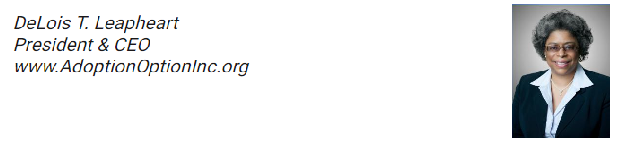
improve living conditions for all. During Social Work Month, we urge you to educate yourselves about our amazing profession, thank the social workers in your lives, and help support the profession.” DeLois Leapheart, Founder and President, Adoption Option, Inc.
|
|
Mark your calendars for May 2. It will be a day for everyone to support our campaign. |
|
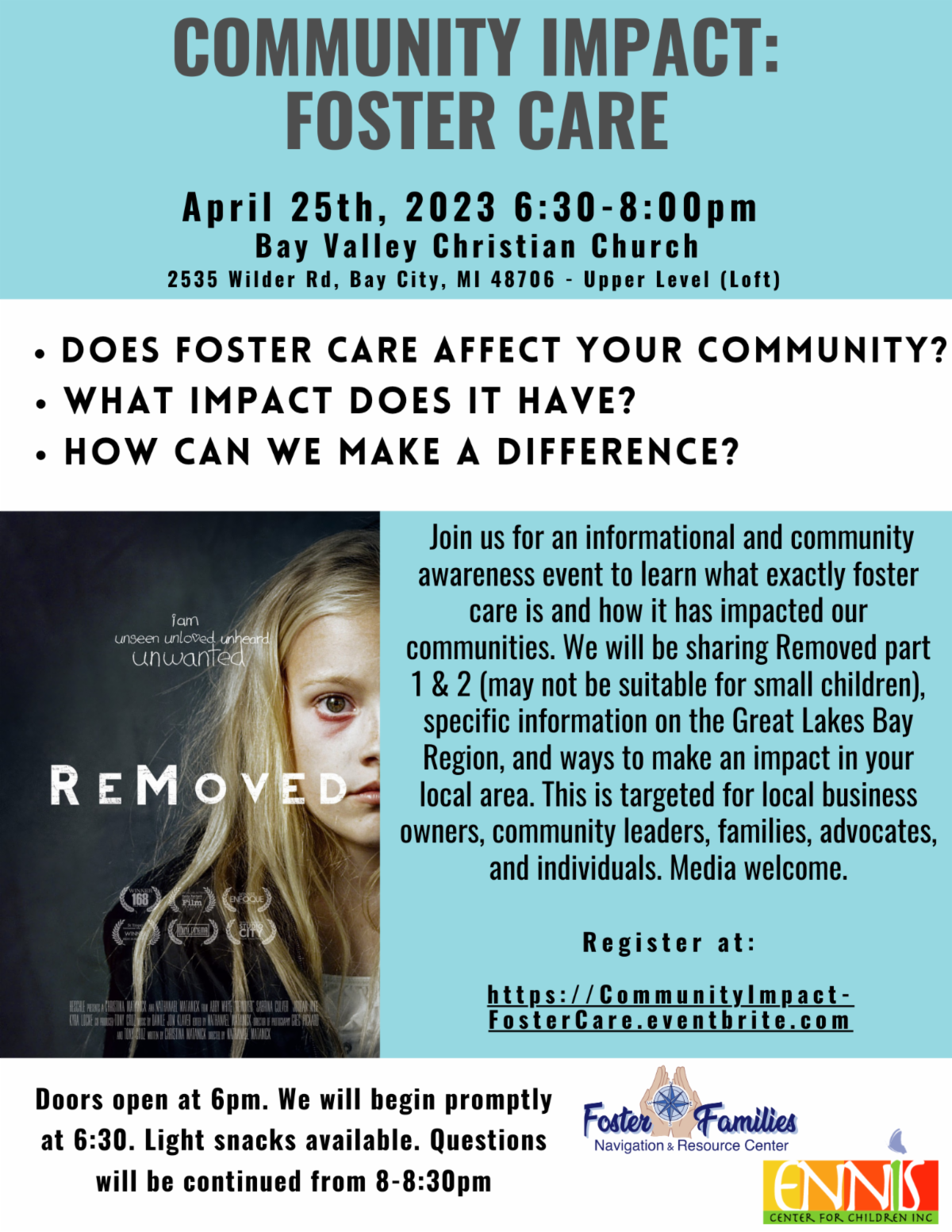
Learn about foster care, impacts on local community, and ways to help and support. Click here for more info.
|
|
|
|
|
|
|