NACD's 2021 Annual Report has arrived! Click here to begin browsing the latest publication from the National Association of Conservation Districts.
This past year, NACD, conservation districts, state + territory associations, and conservation officials across the U.S. continued to deliver natural resource and conservation management for working lands everywhere. In this edition of the Annual Report you'll find updates on NACD as well as read about how conservation districts are continuing to champion locally-led conservation in their communities.
On behalf of all of us at NACD, we are proud to be your national voice and look forward to the great work we will accomplish together in 2022.
|
NACD'S STEWARDSHIP WEEK KICKS OFF SOON |
It's a celebration!
NACD's 67th annual Stewardship Week will take place April 24 - May 1. Join us in celebrating the 2022 theme "Healthy Soil, Healthy Life" by organizing an event in your community celebrating the significance of soil conservation.
Please visit NACD's Stewardship Week webpage for tips, tools, and ideas to assist with making your Stewardship Week celebration successful and the talk of the town.
We want to know how you plan on celebrating Stewardship Week. Please connect with us via email at stewardship@nacdnet.org and utilize our hashtags #NACDStewardshipWeek or #DistrictsSupportSoilHealth to share your districts celebration. |
GACD PARTNERS WITH GEORGIA DOT FOR POLLINATORS |
Agriculture is Georgia’s largest industry, and pollinators play a hugely important role in state and national crop production. It is estimated that one out of every three to four mouthfuls of food we eat and beverages we drink are delivered to us by pollinators. Georgia’s primary pollinators include bees, wasps, birds (especially hummingbirds), butterflies, moths, flies, mosquitoes, beetles, ants, slugs, and snails. Their numbers however are in decline due to the loss, modification, and fragmentation of habitat and the use of pesticides.
|
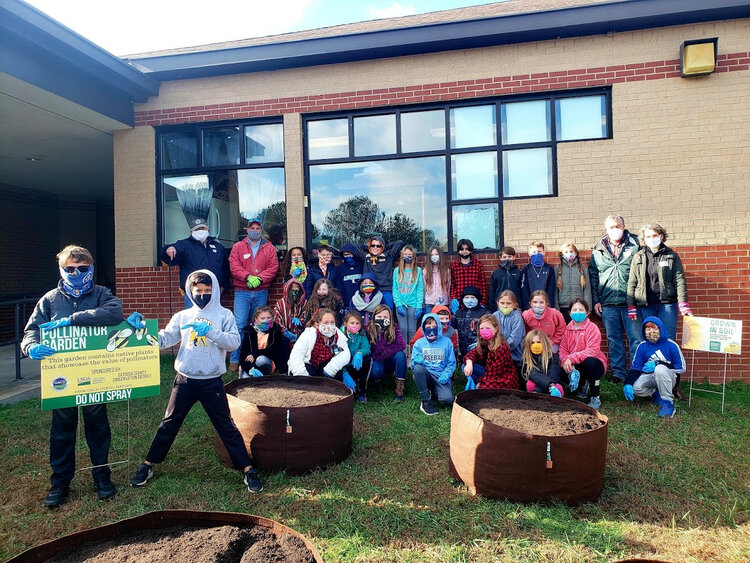
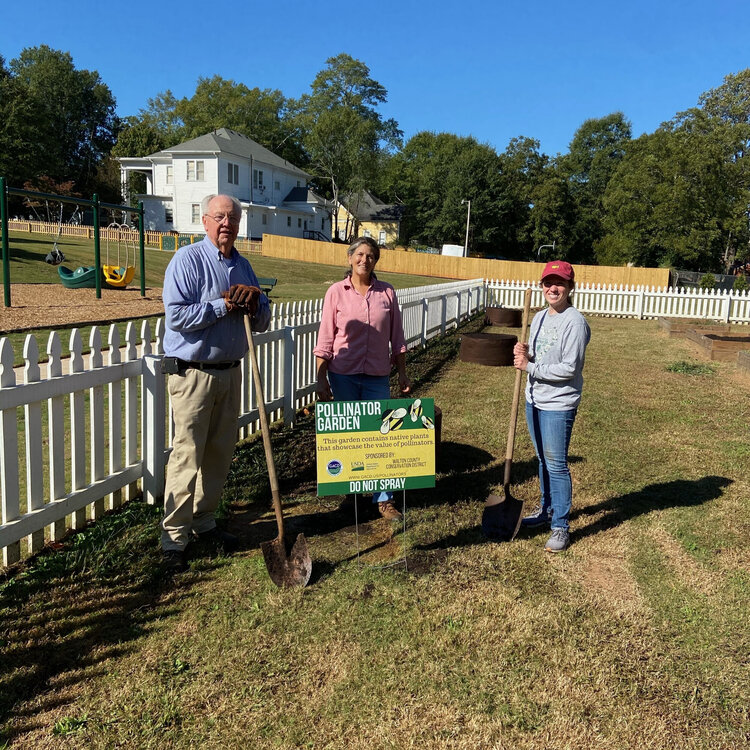
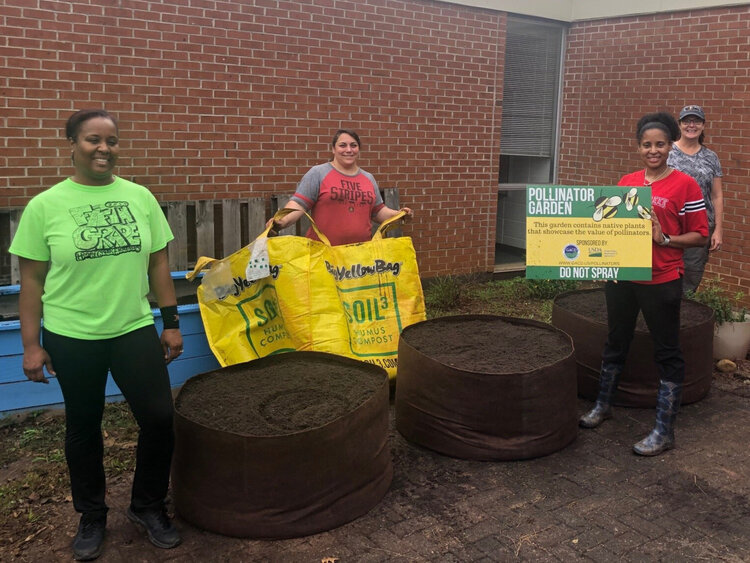
With grant funding from the United States Department of Agriculture’s Natural Resources Conservation Service (USDA-NRCS), GACD and Georgia’s Soil and Water Conservation Districts have installed 52 pollinator demonstration gardens at schools and community spaces using Soil3 Raised Garden Kits.
The grant funding is also helping to install in-ground pollinator habitat sites across the state through GACD’s partnership with the Georgia Department of Transportation (Georgia DOT). GACD has provided Georgia DOT’s Roadside Enhancement and Beautification Fund with funding to install and maintain 15 pollinator habitat sites at rest areas and Welcome Centers across the state. Educational signage at these sites will be provided by GACD.
These sites are currently being prepared and planted with seed mixes developed by GACD and GDOT that are appropriate for each site. Travelers who visit the pollinator habitat sites at the designated rest areas and Welcome Centers will see new varieties of blooms and pollinators each season and learn about the plant species that benefit pollinators, most notably native wildflowers and grasses. “With the specific mix of wildflowers and native grass being planted, the gardens will also provide year-round interest and habitat for insects and small animals,” said GACD President Mark Masters.
|
In addition to spearheading these efforts, GACD’s Pollinator Coordinator Irenee Payne has compiled lesson plans to educate individuals of all ages about the importance of pollinators. The lesson plans include a honey taste test—in partnership with the University of Georgia’s Great Georgia Pollinator Census Coordinator Becky Griffin—a lesson on farming with pollinators for older students, a lesson on “picky pollinators” for younger students, a pollinator tournament activity, and more. Payne has shared all of these educational materials at this Google Drive link for others to use.
|
INFRASTRUCTURE INVESTMENT AND JOBS ACT FUNDING OPPORTUNITIES: WILDFIRE AND FORESTRY |
The Infrastructure Investment and Jobs Act passed both chambers of Congress and was signed into law by President Biden in November 2021. The bill includes billions of dollars to make many of our natural systems more resilient. NACD’s Government Affairs Team has been releasing a series of blog posts to break down funding opportunities for districts through the infrastructure law as federal agencies such as the U.S. Department of Agriculture (USDA), the U.S. Department of the Interior (DOI), and others work to get this funding on the ground.
The Infrastructure Investment and Jobs Act includes $3.3 billion for wildfire risk reduction efforts and $2 billion for the USDA and DOI to carry out ecological restoration projects on public and private lands. The bill enhances funding streams to mitigate wildfire risks.
Conservation districts have long been positioned to support the creation of wildfire plans and have served their communities in pre and post fire work. While the Forest Service has guidelines on how to update and create these plans, it often comes down to local stakeholders like districts to coordinate and implement them.
Funding from the bipartisan infrastructure law also includes $180 million over two years for the Joint Chief’s Landscape Restoration Partnership via the Natural Resource Conservation Service (NRCS) and Forest Service. These funds will assist producers and landowners to improve the health and resilience of forest landscapes across the National Forest System and state, tribal, and private lands. Its objectives are to reduce the risk of wildfires, protect water quality and supply, and improve wildlife habitat for at-risk species.
Conservation districts have received funding for Joint Chiefs’ Landscape Restoration Projects since the initial year of project funding in 2014. Selections for new 2022 projects were made earlier this year, and several include conservation districts as key partners.
NACD continues to work at the federal level to advocate for conservation districts’ perspectives on wildfire and forestry issues. Districts are central to effective planning and implementation of good forest management and wildfire prevention at the local level. To strengthen coordination with partners in this space and provide insight on the role of local conservation delivery in pre and post fire work, NACD serves as part of the Joint Forestry Team with NRCS and the Forest Service.
|
|
NACD Seeks
Staff Accountant
|
NACD is seeking candidates for a full-time Staff Accountant based in the Washington, D.C. office. The position will be responsible for managing general ledger accounting, financial reporting, grants management, and auditing. The Staff Accountant will report to the Chief Operating Officer.
See the full job description on NACD's website. For interested candidates, please send cover letter and resume to the attention of NACD HR with ‘Staff Accountant’ in the subject line to hr@nacdnet.org no later than Friday, April 1, 2022 to receive priority consideration. |
Reminder: Apply for NRCS Watershed Funding Opportunity |
The U.S. Department of Agriculture (USDA) is encouraging local sponsors to submit project requests for funding through the Infrastructure Investment and Jobs Act. USDA’s Natural Resources Conservation Service (NRCS) offers several programs to help communities improve land and water resources within watersheds, as well as relieve imminent hazards to life and property created by a natural disaster.
Funding is available for new projects, as well as those already submitted to NRCS.
On March 31, 2022, NRCS will compile any additional requests received and develop a second list of projects to fund. After March 31, 2022, NRCS will continue to review and fund requests as funds remain available.
|
WOW Shares Resources From Recent Conference |
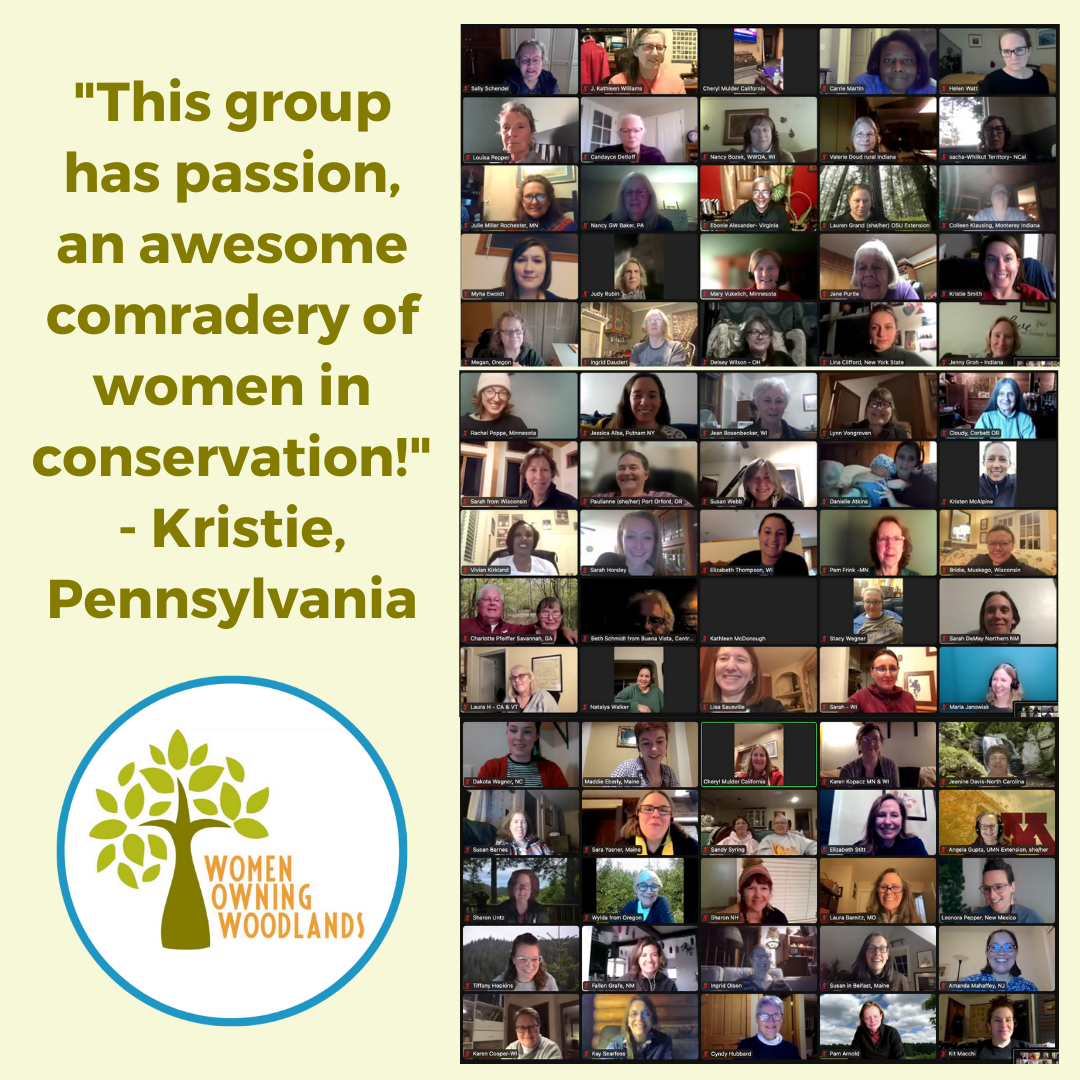
Women Owning Woodlands (WOW) hosted a virtual conference earlier this month with more than 200 women in attendance from 34 states across the country. The conference drew from the expertise of an impressive cohort of female professionals who covered topics including management plans, timber harvesting, wildlife habitat, invasive species management, non-timber forest products, climate resilience, and much more.
If you missed the conference, you can check out this collection of resources contributed by the presenters for a deeper look into any of the topics covered. You’ll find presentation slides, relevant websites, and links for further reading.
|
Last Chance to Apply for NASCA Executive Director Position |
The National Association of State Conservation Agencies (NASCA) seeks an outstanding individual with experience in organizational leadership to serve as Executive Director. They must possess excellent communication skills, with the ability to develop meaningful working relationships with a wide array of partnering organizations and individuals.
Statements of proposal will be received until 4:00 p.m. ET on April 1, 2022. These materials should be sent electronically via e-mail to Bill Smith, NASCA President, at bill.smith@nascanet.org.
More information about the request for proposals can be found here.
|
CDN to Host
Annual Meeting
|
The 2022 Conservation Drainage Network's Annual Meeting is returning to an in-person event this April 6 – 8 at the Grand Wayne Convention Center in Fort Wayne, IN. There will be an online viewing option for those who are unable to attend in-person.
The Conservation Drainage Network (CDN) is an international partnership with the goal of improving drainage practices to meet future demands of crop production while reducing adverse environmental impacts. The CDN meeting brings together a diverse set of stakeholders to learn about the latest in conservation drainage and implementation strategies while providing networking opportunities for future collaborations.
Learn more and register for the meeting here. |
Promote your conservation district or state association's tree sale, annual meeting, webinar, field day, or other events on NACD's Calendar of Events!
|
|