|
Hello Thomas,
In the past week I have talked with two electric vehicle (EV) owners, each of whom have drastically different stories. The first was a BMW owner charging up at our neighborhood Tesla Charging Station who told me that she gets about 600 miles on a full charge and only about 20 minutes to charge up! The second one had several power packs in his hatchback and was sucking power all day long at another charging station that is free outside a My Organic Market. What I learned from the second person and verified with Google, is that EVs get only about 3 miles per kilowatt-hour of electricity, so rooftop/hoodtop solar panels for EVs are like a little icing on a big cake, where the cake is the charging station. Now back to the BMW…she has about twice the range of the average EV and it is a quiet battery breakthrough for BMW announced last year, with their new Gemini Dual-Chemistry Battery. https://one.ai/dual-chemistry-gemini-battery-powers-bmw-ix-608-miles-on-a-single-charge
Our Story #1 features my recent presentation at the Alternative Propulsion Engineering Conference (APEC) https://www.altpropulsion.com/ which is completely free to the public, so get on the Tim Ventura email list to get advance notifications if you like. Since I had several video clips embedded in my slideshow, Tim agreed to show the video of my live audience presentation at the UFO Mega Conference https://www.youtube.com/watch?v=_4Lmz8gxYHM&t=7789s . To me, it is one of the most exciting research projects that I have ever done, since I found answers to questions that always plagued me, such as the age of nearby star systems within only a few light years from earth. The answer from a published journal article astonished me and provided the impetus for this Ufology and Astrosociology Textbook outline. As a retired college teacher, I am familiar with the 13 chapter format for a textbook and the fact that once written, it is up to any professor to consider trying it out on a class of curious students, to see how well the subject can be taught. See what you think!
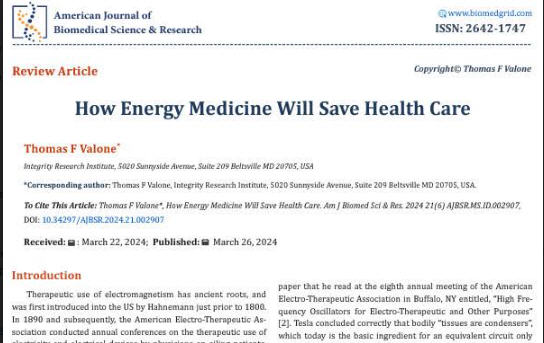
Story #2 shows how busy we have been to educate the public about our mission of pursuing scientific integrity in the areas of energy, propulsion, and bioenergetics. The American Journal of Biomedical Science and Research Is an international journal which accepted our research article on the development of energy medicine over the years How Energy Medicine will Save Healthcare https://biomedgrid.com/pdf/AJBSR.MS.ID.002907.pdf.
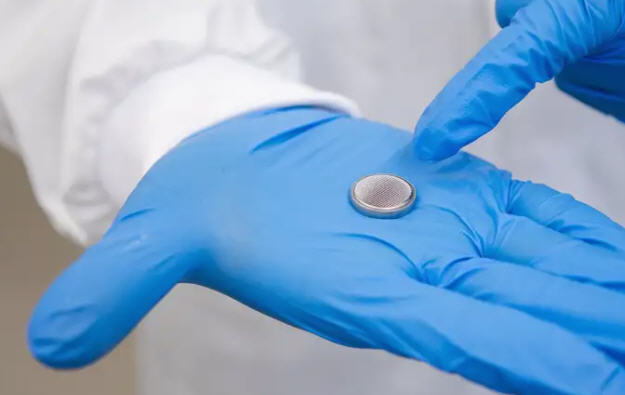
Story #3 is an amazing find which makes me glad I subscribe to New Scientist (www.newscientist.com). A collaboration of six institutions has developed an aqueous solution battery with magnesium and zinc. Water and some magnesium-ions yield 75 watt-hours per kg, which is about 30% of the latest Tesla Li-ion batteries. Published in Advanced Materials, Small Structures, and finally in Energy and Environmental Science, the RMIT team from Australia has accomplished a great deal with what are referred to as “water batteries”. The Energy and Environmental Science article: https://pubs.rsc.org/en/content/articlelanding/2023/ee/d3ee02030, provides a comprehensive review from Ma’s team of the history, challenges and potential of water batteries.
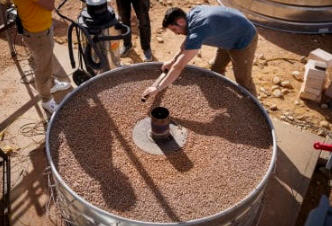
Story #4 revives an old concept of a heat storage basement full of rocks that I taught during Environmental Science class years ago for an hot air solar collection system (IRI sells the plans for a simplified, passive Solar Heat Panel for the interested folk). Now jumping to the present time, Sandia engineers convert excess renewable electricity into heat that gets stored in piles of gravel, which makes use of the same medium. At a much lower cost than Li-ion batteries, the team built a prototype 100-kilowatt-hour test setup and charged the rocks with 500 °C (932 °F) air. During the test, the rocks stayed at temperature for 20 hours.
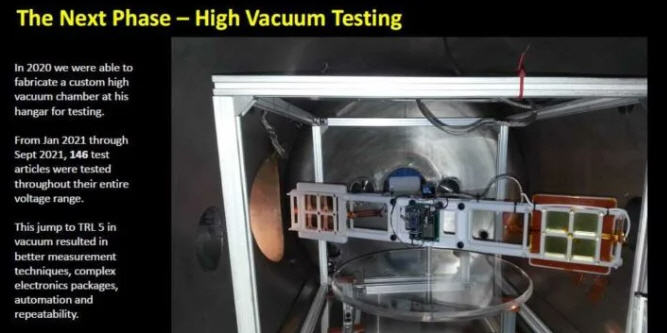
Story #5 may be the most controversial story/report/article that we have ever reprinted, just as a disclaimer. Though the inventor Dr. Buhler seems to have good credentials from NASA, the propulsion drive materials are quite extraordinary. His complete story has been presented on APEC as well and available online for free (www.altpropulsion.com). However, we may have to wait for the vacuum testing to take place in the next phase to really attract investors, which is similar to the work that IRI is doing to propose an Electrogravitics Vacuum Experiment for Jesse Michels’ $50K contest. By the way, Michels’ documentary about T. T. Brown “The CIA Scientist Who Built “UFOs” is wonderful and on YouTube https://www.youtube.com/watch?v=RTEWLSTyUic if you want to see the real inside history of electrogravitics (Yes, we are selling a lot more Electrogravitics Vol. 1 and 2 books these days since its release).
Onward and Upward.
Tom Valone, Editor
|