July 2026

Any comments/suggestions please email the editor at editor@redrockrx.com

Edited by Malcolm Fraser MD, CMD


NH Compare Red Hand Alert

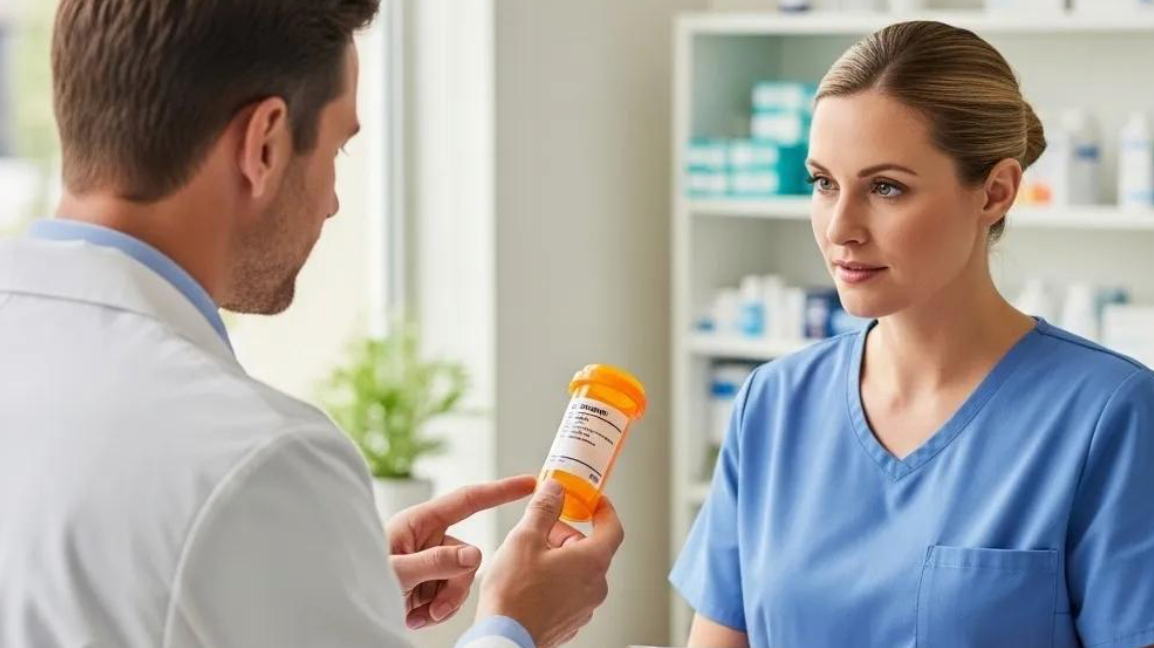
We have recently encountered several situations where residents admitted from the hospital were prescribed Seroquel 50 mg tablets at bedtime (qhs) for Alzheimer's-related agitation (i.e., allegedly not for sleep, so sleep monitoring was not required). At first review, this might appear to be a good thing, as no sleep monitoring means less work for the nursing home staff.


However, this type of order presents multiple problems. Seroquel has a half-life of 6–8 hours, so it would clearly not be effective during most of the day.

From a surveyor's perspective, the facility could potentially be cited under F-Tag 605, since the medication would not be effective during the day. F-Tag 605 is now considered an Abuse/Neglect tag and could result in a Red Hand designation on the NH Compare website.


Here at Red Rock, we believe in being proactive. So, what are the solutions?


First,
change the order to Seroquel 25 mg tablets PO BID for Alzheimer's-related agitation. This provides the same total daily dose but spreads it over two doses, meaning sleep monitoring is clearly not required.


Second, have your Red Rock pharmacist review the resident's medication regimen to determine whether any of the current medications could be contributing to the agitation.


Third, consider discontinuing the Seroquel. Since 50 mg is a relatively low dose, it could be discontinued at once, or the evening dose could be stopped first, followed by discontinuation of the morning dose after one week.


Lastly, if the Alzheimer's-related agitation persists and does not respond to non-pharmacological interventions, consider starting Auvelity (which is not an atypical antipsychotic—the active ingredient is dextromethorphan), which was recently approved for the treatment of Alzheimer's-related agitation.


Your Red Rock pharmacist would be pleased to provide additional information.


Shixian Wang

Director of Operations


COVID-19 Update: 
New Vaccines & Xocova Coming Soon


Next-generation COVID-19 vaccines are anticipated to be available by early September, in time for the fall respiratory virus season. They will include coverage for the new XFG variant. Therefore, we recommend postponing upcoming COVID-19 vaccine clinics, if possible, until the new vaccine becomes available.


Xocova was recently approved as the first oral medication indicated to help prevent COVID-19 during outbreaks. It is expected to be especially useful in communal living settings such as assisted living communities and nursing homes. It should be readily available by August. Ask your Red Rock pharmacist for more information.


Beyond the Prescription: 
The Hidden Value of Your Long-Term Care Pharmacy


When evaluating a long-term care pharmacy, it's easy to focus on medication costs. However, the true value of a pharmacy partner extends far beyond the prescription itself. The right pharmacy becomes an extension of your clinical team, helping improve resident safety, support regulatory compliance, and reduce the daily burden on staff.


Every admission, discharge, medication change, and physician order presents an opportunity for error. Residents in assisted living and skilled nursing often take multiple medications prescribed by several providers, making careful medication management essential. Pharmacists play a critical role in reviewing medication regimens, identifying potential drug interactions, recommending therapy adjustments, and ensuring medications are appropriate for each resident.


Pharmacist involvement during transitions of care has been shown to improve medication safety and reduce preventable medication-related problems.


Operational support is equally important. Reliable delivery schedules, responsive customer service, consultant pharmacist involvement, medication synchronization, and assistance during surveys all contribute to smoother daily operations. These services allow nursing teams to spend more time caring for residents and less time managing pharmacy-related issues.


As resident acuity continues to increase and staffing challenges persist, facilities need partners who provide proactive clinical support rather than simply dispensing medications. Long-term care pharmacies increasingly serve as medication management experts, helping communities navigate complex therapies, improve communication during care transitions, and support quality improvement initiatives.


At Red Rock Pharmacy, we believe the best pharmacy relationship is one that feels like an extension of your own team. Whether it's answering the phone with a live pharmacy professional, providing multiple daily deliveries, participating in QAPI and Psych-Pharm meetings, or offering consultant pharmacist expertise, our goal is simple: to help your staff succeed while improving the care residents receive.


A pharmacy should do more than fill prescriptions—it should help your community deliver exceptional care every day.


At Red Rock Pharmacy, we know what a true partnership looks like. How can we help your community today?


Dave Rimlinger,

Director of Marketing


Dementia Is a Risk Factor for Poor Outcomes 
After Hip Fractures


It is well known that the presence of dementia is associated with poorer outcomes after hip fractures. However, a landmark study of more than 1.7 million Medicare beneficiaries age 65 and older who were hospitalized for a hip fracture between 2012 and 2021 is the largest study ever to quantify this risk.


Study population:

  • Number of patients with hip fracture: 1,756,388
  • Mean age: 82.5 years
  • Female: 70.4%
  • Black: 3.8%
  • Hispanic: 5.3%
    

Key findings:

  • During the year following a hip fracture, older adults with dementia died 
    50.3 days earlier 
    than those without dementia.
  • Among those who survived one year after their fracture, patients with dementia spent 54 fewer days at home than those without dementia. 
    This difference was primarily due to spending more time in 
    skilled nursing facilities (38 vs. 24 days) and long-term care facilities (52 vs. 12.4 days).
  • Similar findings were observed at both 1 month and 6 months after hip fracture.


For More Info: Click Here


Older Adults Who Died from COVID-19 Lost an Average of 4.5 Years of Life

A recently published European study found that older adults who died from COVID-19 between 2020 and 2022 lost an average of 4.5 years of life expectancy.


The study analyzed data from more than 62 million individuals in England. Researchers estimated that women and men who died from COVID-19 would likely have lived an additional 4.8 years and 4.4 years, respectively, had they not contracted the virus.


Interestingly, the researchers also estimated that 24% of adults age 65 and older who died from COVID-19 would not have been expected to survive more than one additional year. However, 28% would have been expected to live five years or longer had they not contracted COVID-19.


These findings highlight that, although many older adults had underlying health conditions, a substantial proportion still had several years of expected life remaining before COVID-19 shortened their lives.

For More Info: Click Here


High Intrinsic Capacity Is Protective Against Developing Disability


According to a recent study published in The Lancet, individuals with higher intrinsic capacity—defined as the combination of a person's physical and mental abilities—had significantly lower odds of developing disability beginning approximately 14 years before death compared with those who had lower intrinsic capacity.


The study followed more than 1,000 individuals over a 25-year period (1998–2024). Using a backward timescale spanning the final 20 years of life, researchers observed a gradual decline in average intrinsic capacity scores from 80 points to 47 points, accompanied by a steady increase in the probability of disability.


Higher intrinsic capacity was consistently associated with significantly lower odds of disability throughout the final 14 years of life. The findings suggest that early identification of declining intrinsic capacity may provide opportunities for targeted preventive interventions, including holistic lifestyle strategies designed to maintain functional ability and promote healthy aging.


For More Info: Click Here


Shingles Vaccine May Significantly Help Protect Nursing Home Residents Against Dementia

A large retrospective study involving more than 
500,000 U.S. nursing home residents found that up to 1 in 17 dementia cases could potentially be prevented through shingles vaccination. The study was published last month in the Annals of Internal Medicine.


Researchers analyzed the health records of more than 509,000 adults age 66 and older who were admitted to U.S. nursing facilities between 2017 and 2022. Residents who had received at least one dose of the shingles vaccine within one year of admission had a 5.8% lower risk of developing dementia during the following four years compared with those who were not vaccinated.


This study adds to the growing body of evidence supporting shingles vaccination and provides another compelling reason to encourage vaccination among eligible older adults.


Editor's Note: It is unusual to see a study focused specifically on nursing home residents. Although the authors do not identify the data source, it is possible the information was obtained from PointClickCare (PCC). The study was funded by GSK, the manufacturer of a shingles vaccine. However, industry funding does not necessarily diminish the validity of the findings, and the results are based on a very large study population.


For More Info: Click Here


If you have any questions, ask your Red Rock Consultant Pharmacist