|
The Foxie G Foundation has long been involved with ground-based equine therapy programs and has provided horses to a Baltimore County-based program for several years now.
As we begin our own equine assisted therapy program, including the major transformation of our main barn into the new Horses Helping People Center, we are beginning to select and train several of our sanctuary horses for the program.
There are over 70 horses in sanctuary at Foxie G. Most of them are former racehorses with compromised physical conditions that usually prevent them from being considered for adoption as a riding horse. Several have been rescued from tragic conditions, such as in neglect situations and kill pens. Ironically, these sanctuary horses that were once in need of help are now going to help others.
So who has what it takes to become an Equine Therapy Horse?
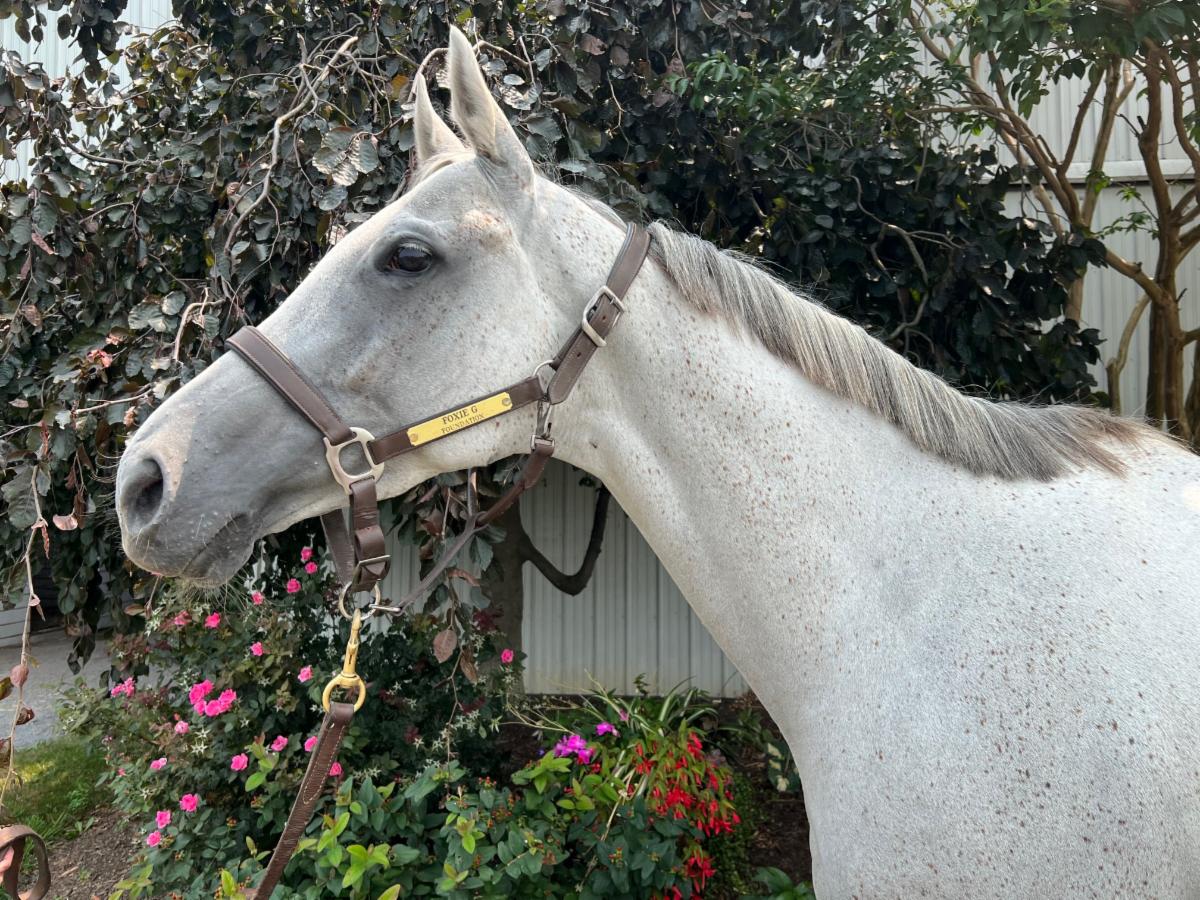
Meet Parched Ghost, a 10-year-old Thoroughbred mare, who started 49 times over her 6 year racing career while earning $116,345. Ghost suffered a severe, career ending racing injury and was facing a very uncertain future before she was rescued by one of her former racing connections. Ghost came to Foxie G to recover from her injury and after over a year of rehabilitation, the injury has healed well. Although she can no longer be ridden, she is pasture sound and can live a long, happy life.
As we worked around Ghost and got to know her, we were impressed with her kind and confident manner. These are important attributes for a therapy horse as participants in the program often have not been around horses and can be unnerved by their sheer size. All horses are intuitive and perceptive, but therapy horses need to possess both to a greater degree. They also should be relatively non-reactive in new situations and calm with people that they have not met before.
For more information on this topic, the Thoroughbred Aftercare Alliance (TAA) - 2025 Magazine has a great article "Why an OTTB Can Make an Excellent Therapy Horse" found on page 13.
|