Audits finding unsubstantiated claims will extrapolate overpayments to insurers' other claims
With a more aggressive rule finalized Monday, the Centers for Medicare & Medicaid Services (CMS) said it expects to recover billions more in overpayments from Medicare Advantage plans that upcoded their enrolled beneficiaries as being sicker or requiring more intense levels of care than their medical records could support.
The agency's revised risk adjustment data validation (RADV) tool will allow the agency to extrapolate the amounts of overpayments found in audited claims that must be repaid to much larger sets of claims submitted by the plan that year. It will "protect the fiscal sustainability" of Medicare, said Health and Human Services Secretary Xavier Becerra during a news conference.
The new extrapolation policy applies to plan years 2018 and later. CMS will not apply the policy to prior years, meaning Medicare Advantage plans will get to keep the money audits determined were wrongfully obtained.
|
|
The important aspects of Omnibus include proposed pay cuts of 2% in 2023 for physicians, a reduction from 4.5%, and in 2024, the cuts will increase to 3.5%.
The Wall Street Journal described this as the ugliest Omnibus bill ever with a 4,155-page bill that most members will never read. This bill includes multiple provisions affecting healthcare providers:
1. Reduce the physician fee schedule cut from 4.5% to 2% for 2023 and 3.5% for 2024
2. Prevents the 4% statutory pay as you go sequester for 2 years
3. Provides extension of telehealth services for 2 years
4. The worst news is that:
- There is no mention of a 2% sequester cut from ACA. Consequently, the 2% sequester cut will continue. Obviously, this will result in a 4% cut for the physician fee schedule from 2022 (2% new cut + 2% sequester cut = 4%).
- For facilities, a sequester cut of 2% will be implemented through 2023.
There are also multiple changes to the Medicaid policy, which will remove ineligible of their Medicaid roles in April, regardless of when the COVID-19 public health emergency ends.
As you well know, the American Society of Interventional Pain Physicians (ASIPP) advanced advocacy to prevent all cuts permanently. Obviously, we are extremely disappointed, along with almost all physician organizations. ASIPP will soon be providing you with appropriate activities for upcoming months and years as the new Congress steps in to remove these cuts permanently.
The new fee schedule, based on 2% and 4% cuts for 2023 for physicians and a 2% cut for facilities, is available at asipp.org. Sample schedules are as follows:
|
|
Reserve your hotel room by
February 22 for the best rate!
|
|
Remembering our roots and revisiting why ASIPP has been The Voice of Pain Management since 1998. |
|
|
|
Authors: Laxmaiah Manchikanti, MD, Alan D. Kaye, MD, PhD, Richard E. Latchaw, MD, Mahendra R. Sanapati, MD, Vidyasagar Pamati, MSc, Christopher G. Gharibo, MD, Sheri L. Albers, DO, and Joshua A. Hirsch, MD |
|
Abstract
Introduction
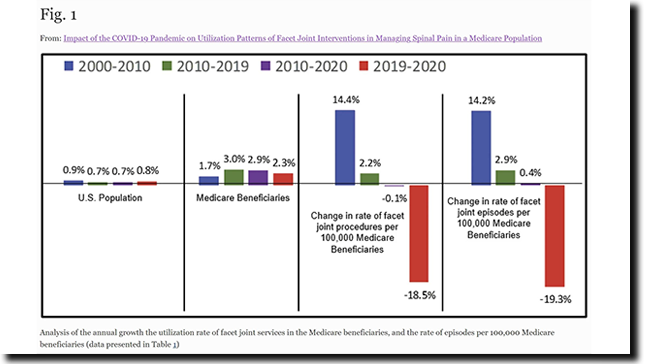
The COVID-19 pandemic resulted in major disruptions in all aspects of human life including a decline of medical services utilized during 2020. An analysis of the impact of COVID-19 pandemic showed an 18.7% reduction in utilization patterns of interventional techniques in managing chronic pain in the Medicare population from 2019 to 2020. However, specific changes in utilization patterns of facet joint interventions have not been studied. Thus, we sought to assess the utilization patterns including an update of facet joint interventions from 2018 to 2020, with analysis of the impact of COVID-19 pandemic in managing chronic spinal pain utilizing facet joint interventions in the fee-for-service Medicare population of the United States.
|
|
Marriage was associated with a lower risk for dementia and mild cognitive impairment in later life, researchers reported in the Journal of Aging and Health.
“Earlier studies suggest that being married in later life protects against dementia, and that being single in old age increases the risk of dementia. We examine midlife marital status trajectories and their association with dementia and mild cognitive impairment,” Vegard Skirbekk, PhD, of the Norwegian Institute of Public Health, and colleagues wrote.
Skirbekk and colleagues evaluated six different marriage trajectories – unmarried, continuously divorced, intermittently divorced, widowed, continuously married and intermittently married – using multinomial logistic regression. They said they looked at marital status in the 4th to 6th decades of life “as opposed to a one-time ‘snapshot’ of marital status” as well as clinical dementia and mild cognitive impairment status after age 70 years.
|
|
ABIPP Part I; ABIPP Path - Combined DCCPM/CSM virtual exam; ABIPP Competency Exam in IPM; ABIPP Competency Exam in Regenerative Medicine
|
|
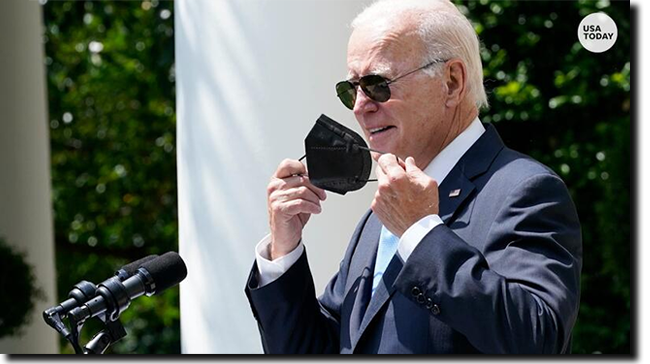
The Biden administration is winding down the treatment of COVID-19 as an emergency, restructuring how the federal government will respond to the pandemic that is entering its fourth year.
The administration plans to end both the national emergency and the public health emergency on May 11. The announcement came in a message to Congress about measures House Republicans are considering this week to end those emergency declarations immediately.
The administration wants to wait until May to end the emergencies because Republicans' "abrupt end" would create "wide-ranging chaos and uncertainty throughout the health care system," the White House said.
|
|
"Sorry, no WiFi 4 U"
Here I am, on vacation at a luxury resort in Hawaii with my wife and two of my four children and their three children. It's 10 p.m. and I'm beginning to write this essay while everyone is snug and tucked away for the night. Earlier in the day, sitting around the swimming pool, I'm glued to my iPhone. My son, who resides in Honolulu, comments, "Dad, you're so wired in. Play with the kids (my grandchildren) in the splash zone. Take them on a ride down the lazy river. Relax with us."
But like many physicians, I've forgotten how to relax. Patient care has been front-and-center since the pandemic started -- in addition to the usual crises and emergencies -- and we're increasingly burned out or using substances to cope. Our clinical performance has diminished, resulting in increased errors and other quality concerns.
The one thing we've been good at, it seems, is neglecting our own health. Researchers found that physicians who were wedded to their jobs experienced lower quality of sleep, greater levels of depression, and lower levels of general well-being. Plus, they exhibited more stress at work.
|
|
Resident/Fellow News and Updates |
|
Deadline to apply is February 20!
A limited number of qualifying residents/fellows will receive a travel scholarship to attend the ASIPP 25th Annual Meeting, March 16-18, 2023 at the Gaylord National Harbor, MD.
Recipients of this scholarship will receive reimbursement for up to three nights' stay at the host hotel at the official ASIPP single-occupancy room block rate. This includes room, tax, and resort fees.
Qualification Requirements:
• Residents and Fellows must register for the meeting to be eligible for reimbursement (The meeting fee is only $25 for Residents and Fellows) Click here to register for the meeting.
• Residents and Fellows must be active participants in their fellowship or residency programs during the meeting dates.
• Residents and Fellows must be active ASIPP members.
• A letter of recommendation from the (non-industry) residency or fellowship program director must include:
- Proof that the resident or fellow is an active participant in the program during the meeting dates.
- A statement verifying that no other travel scholarships for the ASIPP 2023 Annual
- Meeting have been or will be awarded.
• Must be willing to share your email with sponsoring company of the scholarship program.
|
|
|
|
Limited number of scholarships available.
|
|
|
The numbers will depend on how many clinicians start prescribing buprenorphine
The email came as a surprise.
The Drug Enforcement Agency (DEA) message read: "Going forward, all prescriptions for buprenorphine only require a standard DEA registration number" and that "there are no longer any limits or patient caps on the number of patients a prescriber may treat for opioid use disorder with buprenorphine." The DEA further indicated that mandated training requirements for all clinicians holding DEA licenses will begin June 21, 2023.
I had waited years for this news. My colleagues and I had advocated for these reforms, but I was not optimistic that Congress would change the law. Yet, it passed and will undoubtedly save lives by expanding access to buprenorphine (Suboxone) to treat opioid use disorder (OUD). The number of lives saved will depend on how many clinicians start prescribing.
|
|
- ASIPP Members Only Site Information - |
|
-
To log in for the first time you will need to click “forgot password” at the bottom of the login window.
- Check your email and then log in as directed.
-
If you have problems logging into your account, click here.
|
|
Especially true for hyperglycemia-related hospital visits, NIDDK-funded study found
The Food and Drug Administration is considering a major shift in the nation's COVID-19 vaccine strategy.
The goal is to simplify vaccination against COVID and perhaps adopt an approach similar to what is used for the flu vaccine, with annual updates to match whatever strain of the virus is circulating. This is according to a federal official who spoke under the condition of anonymity because they were not authorized to speak publicly.
|
|
Pain Medicine Case Reports (PMCR) and Editor-in-Chief Alaa Abd-Elsayed, MD, PhD would like to invite you to submit case reports and case series to the PMCR journal. Your article will be published free of charge.
Open access journals are freely available online for immediate worldwide open access to the full text of published articles. There is no subscription fee for open access journals. Open access journals are no different from traditional subscription-based journals: they undergo the same peer-review and quality control as any other scholarly journal.
Interested in becoming a member of the PMCR Editorial Board?
Editorial board members are asked to review 2-6 manuscripts per year. Please submit your most up-to-date CV to sgold@asipp.org for consideration.
For more information or to submit your articles, click here.
|
|
| CASE REPORT |
Ornella Bricoune, MD, Martin Myers, MD, James Warren, MD, and Charles Brock, MD
Abstract
BACKGROUND: Subacute combined degeneration (SCD) of the spinal cord with corticospinal tract involvement can impair motor functions below the level of the lesion.
CASE REPORT: A 63-year-old man developed progressive bilateral lower extremity weakness marked by difficulty standing for more than a second and the inability to ambulate, causing him to become wheelchair-bound. He was diagnosed with SCD. His vitamin B12 level was corrected and he underwent physical therapy. Despite these interventions, he experienced an overall deterioration in his strength examination. He later underwent an epidural spinal cord stimulator trial with pulsed electrical stimulation. With this, he experienced improvement in his lower extremity strength and regained the ability to ambulate independently. Permanent leads were placed with the retained faculty to ambulate with the stimulator turned on.
CONCLUSION: Epidural spinal cord stimulation (SCS) has the potential to improve motor function and restore locomotion in individuals with spinal cord injury from SCD.
KEY WORDS: Case report, epidural spinal cord stimulation, spinal cord injury, subacute combined degeneration
|
|
| OBSERVATIONAL STUDY |
Peter S. Staats, MD, Ketan Patel, MD, Emily Meredith Gillen, PhD, Temitope Bello, MPH, Timothy Epple, Scott M. Bilder, PhD, and Douglas Wisor, MD
Abstract
BACKGROUND: Chronic pain is a common and growing problem in the United States with variable strategies for its treatment. Surgical interventions are necessary in some cases but not required for all patients with new-onset pain. For some patients, interventional pain management (IPM) techniques can treat chronic pain without the cost or risk associated with surgical intervention.
OBJECTIVE: The objective of this study was to compare healthcare utilization and costs for new-onset chronic pain treated by IPM specialists to those treated by providers with surgical specialties (i.e., orthopedists and neurosurgeons).
STUDY DESIGN: This was a retrospective observational study of qualifying patients over 36-months (2016-2019).
SETTING: This study was conducted using 100% Medicare FFS Parts A, B, and Prescription Drug Event (PDE) Part D data, including enrollment and claims.
METHODS: Patients with a diagnosis of pain were identified in the claims data. Twelve months of pre-period claims were examined to ensure the incident diagnosis of pain, and 2 additional pain diagnoses were required after initial diagnosis. Patients were assigned either to the IPM cohort or a Surgical cohort based on the specialty of the provider involved in their first pain-related visit after initial diagnosis. Key outcomes, such as the utilization of healthcare services and cost of care, were evaluated for both cohorts over the 24-months following the index diagnosis of pain.
RESULTS: 106,658 beneficiaries were included in the study with roughly 36% in the IPM cohort. Patients in the IPM cohort were less healthy and had lower incomes in the baseline period compared to the Surgical cohort. Fewer members of the IPM cohort had an inpatient stay in the 24-months post index pain diagnosis (40% compared to 43% in the surgery cohort) and the IPM cohort had fewer patients with a post-acute care stay (29% compared to 31% in the inpatient stay cohort). The IPM cohort had lower risk-adjusted total costs of care than the Surgical cohort, driven by lower inpatient, outpatient, and post-acute care costs.
LIMITATIONS: Retrospective claims data may not include some factors important to patients with a pain diagnosis (such as over-the-counter medications, holistic treatments, or pain scores).
CONCLUSION(s): By shifting patients from higher-cost and more invasive surgical procedures, IPM's multidisciplinary approach to pain treatment can reduce surgical utilization and costs for certain chronic pain patients. This shift away from more expensive surgical treatments fits well with Medicare's move toward value-based care, driven by a focus on patient outcomes including health care utilization and costs.
KEY WORDS:: Pain management specialist; interventionalist; healthcare costs; utilization; chronic pain; observational analysis; claims analysis; interventional pain management; Medicare fee-for-service.
|
|
| RETROSPECTIVE STUDY |
Reza Ehsanian, MD, PhD, Jimmy To, BS, Eugene Koshkin, MD, Timothy R. Petersen, PhD, Aldo Berti, MD, W. Evan Rivers, DO, and Danielle Sorte, MD
Abstract
BACKGROUND: Approximately 700,000 individuals experience osteoporotic vertebral compression fractures (OVCF) every year in the United States. Chronic complications from patients and increasing economic burdens continue to be major problems with OVCFs. Multiple treatment options for OVCF are available, including conservative management, surgical intervention, and minimally invasive vertebral augmentation. Prior studies have investigated the utility of vertebral augmentation techniques such as percutaneous vertebroplasty (PVP), balloon vertebroplasty (BVP), and vertebral augmentation with the KivaTM implant on patient mortality with favorable results. The optimal time from OVCF occurrence to vertebral augmentation continues to be a topic of investigation.
OBJECTIVES: To further investigate the effect of the timing of vertebral augmentation on pain outcomes.
STUDY DESIGN: A retrospective cohort chart review study.
SETTING: A single academic center in Albuquerque, New Mexico.
METHODS: One hundred twenty-six consecutive patient encounters with OVCF diagnosed on imaging and treated with PVP, BVP, or vertebral augmentation with a KivaTM implant between 01/01/2004 and 11/28/2016 were analyzed. The time between fracture and intervention was categorized into < 6 weeks, 6-12 weeks, and >= 12 weeks. Pain scores were measured before and after treatment using the numeric pain rating scale. Statistical analysis using Wilcoxon-Mann-Whitney and Kruskal-Wallis tests were used as appropriate, and effect sizes were described with the Hodges-Lehmann estimates of difference.
RESULTS: The 3 vertebral augmentation procedures compared in this study did not demonstrate statistically significant differences in pain score reduction (P = 0.949). The < 12 weeks group had a median and interquartile range (IQR) pain improvement of 3 (IQR 1,6) versus 1 (IQR 0,4) in the >= 12 weeks group (P = 0.018). Further analysis showed that the median and IQR pain improvement for the < 6 weeks group was 3 (IQR 1,7), for the 6-12 weeks group was 3 (IQR 1,4), and for the >= 12 weeks group was 1 (IQR 0,4). The overall effect of the time category on pain improvement was statistically significant for these groups (P = 0.040). Comparisons between groups only showed differences between the < 6 weeks and >= 12 weeks groups (P = 0.013), with an estimated median difference of 2 (95% CI 0,3). There was no statistically significant relationship between fill percentage and pain relief (P = 0.291).
LIMITATIONS: This is a retrospective cohort study from a single academic center with a limited sample size that lacked a control group and procedural blinding. There was also substantial heterogeneity among patients, fractures, operators, and techniques. Pain relief outcomes are subjective and can be biased by patients as well as physician reporting.
CONCLUSIONS: Early intervention (< 12 weeks) with vertebral augmentation in patients with OVCF is associated with improved pain scores when compared to later intervention (> 12 weeks). Very early intervention (< 6 weeks) confers a greater advantage when compared to later intervention (> 12 weeks).
KEY WORDS: Osteoporotic vertebral compression fracture, vertebral augmentation, vertebroplasty, pain outcomes
|
|
ASIPP is now in collaboration with Curi Medical Liability Program
Since this malpractice insurance program officially launched in November 2018, ASIPP has signed up hundreds of providers with an average savings of 30%. This is professional liability insurance tailored to our specialty and will stand up for us and defend our practices.
Curi is a full-service advisory firm that serves physicians and their practices. Their valued advice is grounded in your priorities and elevated in your outcomes. They are driven by a deep understanding of your specific circumstances in medicine, business, and life. To read a few important points to keep in mind about the program, including discounts, administrative defense, cyber coverage, aggressive claims handling, and complimentary risk management CME activities, visit our website.
|
|
ASIPP® has formed a partnership with Henry Schein and PedsPal, a national GPO that has a successful history of negotiating better prices on medical supplies and creating value-added services for independent physicians. Working with MedAssets, PedsPal provides excellent pricing on products like contrast media that alleviate some of the financial pressures you experience today.
|
|
ASIPP® is now offering our members the benefit of a unique revenue cycle management/ billing service.
We have received a tremendous amount of interest in the ASIPP® billing and coding program.
Click here to learn more about the negotiated rate for practices and more!
|
|
|
up-to-date news related to you, your practice, and your patients!
|
|
|
|
|
|
|