|
United States Commission on
Civil Rights
September 2026 Newsletter
| | Bipartisan Federal Report Calls for Stronger, More Transparent Response to Campus Antisemitism | | |
The U.S. Commission on Civil Rights released a unanimously approved, bipartisan report stating that campus antisemitism is a serious civil rights concern and calling attention to inconsistent university responses, limited federal transparency, and reduced enforcement capacity.
The Federal Response to Antisemitism on American College and University Campuses examines how institutions of higher education and the federal government have responded to allegations of antisemitism following the October 7, 2023 Hamas terrorist attack against Israel. The report also considers how universities and federal agencies met their legal obligations under Title VI and the federal Constitution in order to protect Jewish students from discrimination and harassment while respecting free expression, freedom of assembly, and academic freedom.
“This bipartisan, unanimously adopted report sends a clear message that protecting students from antisemitism is a shared civil rights responsibility,” said Rochelle Garza, Chair of the U.S. Commission on Civil Rights. “Students deserve protection from discrimination and harassment while colleges and universities uphold free speech and expression. This report provides a factual foundation to help policymakers and higher education leaders move that work forward.”
The report is the culmination of a rigorous, bipartisan investigation led by Commissioners Peter Kirsanow and Mondaire Jones. It includes testimony from current and former federal officials, college and university students, legal scholars, researchers, Jewish and civil rights organizations, and higher education experts; a public comment session; and responses to Commission discovery requests from nine universities.
Among the report’s key takeaways:
-
Campus antisemitism is a serious and growing civil rights concern. Jewish students reported harassment, vandalism, threats, exclusion, and rhetoric that affected their safety, sense of belonging, and educational experiences, particularly after October 7, 2023.
-
Universities face a difficult legal and operational balance. Institutions must address discrimination and harassment based on Jewish shared ancestry while protecting political speech, peaceful protest activity, academic freedom, and other forms of expression covered by the First Amendment and central to effective higher education.
-
Universities’ responses remain inconsistent. The nine universities examined had complaint procedures and resources for Jewish students, but they varied significantly in how they classified, investigated, and resolved complaints.
-
Limited and inconsistent data collection and analysis of antisemitism in the U.S makes it difficult to accurately assess the true scope of unlawful campus antisemitism. Universities, advocacy organizations, scholars, and the federal government produce inconsistent or unreliable data on antisemitic incidents and frequently fail to distinguish between claims of unlawful antisemitism and claims about controversial expression.
-
Not every offensive or antisemitic incident constitutes a Title VI violation. Title VI protects Jewish students when discrimination is based on race, national origin, or shared ancestry—not religion. Universities rarely determined that reported conduct met the legal threshold for a violation, although they frequently provided supportive or corrective measures. Current Title VI law distinguishes discrimination based on Jewish ancestry or national origin from opposition to Israel or Zionism. The report’s review of First Amendment law also notes substantial protections for peaceful campus protests and other expression.
-
There is a need for increased federal enforcement capacity and transparency. Federal civil rights agency must be adequately staffed and trained to ensure that they can enforce Title VI’s anti-discrimination mandate on campuses.
-
Recent federal enforcement has sometimes represented a departure from established practice. Historically, agencies have emphasized investigation, voluntary resolution, and ongoing compliance monitoring before considering program-specific funding termination. Current federal efforts have shifted toward funding suspensions, settlements sometimes judicially determined to be overbroad and illegal, and monetary payments.
-
Federal actions intended to protect Jewish students may produce unintended harm. Students and experts testified that sweeping funding cuts and institutional penalties did not necessarily make them feel safer and could disrupt research, harm uninvolved students and programs, chill lawful speech, and generate resentment toward Jewish students.
-
Effective responses should center affected students and campus-specific conditions. The report underscores the importance of consulting Jewish students, improving institutional policies, and developing approaches suited to each campus rather than relying solely on broad punitive action from the federal government.
Taken together, the report identifies a need for stronger federal coordination, greater transparency, adequate staffing of civil rights offices, improved data collection, clearer guidance for colleges and universities, and adherence to the federal agencies’ statutory obligation to comply with Commission discovery requests.
The Commission will continue working with report contributors and affected students to elevate the Commission's investigation and inform the public conversation.
| | STATE ADVISORY COMMITTEES | | Guam Advisory Committee Released Report on Examining the Overrepresentation of COFA Migrants within Guam’s Criminal Justice System | | |
On August 21, 2026, the Guam Advisory Committee released a report, Examining the Overrepresentation of COFA Migrants within Guam’s Criminal Justice System, following a series of web briefings. During this study, the Committee received testimony and written statements from various stakeholders including researchers, legal and community advocates, judicial representatives, various government officials and impacted families.
This report begins with a brief background of the issues to be considered by the Committee. It then presents primary findings as they emerged from the testimony, as well as recommendations for addressing areas of civil-rights concerns. This report is intended to focus on civil-rights concerns related to the overrepresentation of COFA Migrants within Guam’s criminal justice system. While additional important topics may have surfaced throughout the Committee’s inquiry, those matters that are outside the scope of this specific civil rights mandate are left for another discussion.
The recommendations in the report are directed to the Commission, requesting specific actions from stakeholders, including the U.S. Congress and President, Guam’s Governor, Legislature, and Judiciary, Guam’s Police Department, Guam’s Attorney General, Guam’s Department of Corrections, Guam’s Board of Education, Guam’s Department of Youth Affairs, Guam’s Behavioral Health and Wellness Center, Guam’s Community College, Guam’s Memorial Hospital Authority and the Department of Public Health and Social Services, Guam’s Mayor’s Council of Guam, and Guam’s Housing Urban Renewal Authority to remedy the above barriers.
The Committee is grateful to those who provided testimony and statements regarding the overrepresentation of COFA Migrants within Guam’s criminal justice system, particularly from impacted individuals and community leaders within the COFA community on Guam. The Committee urges Federal and Guam policymakers and authorities to carefully consider the findings in our report and adopt the recommendations to ensure COFA Migrants are treated equitably in Guam and the criminal justice system.
| | |
UPCOMING COMMISSION MEETINGS
The Commission meets to conduct agency business on civil rights matters. Pursuant to the Sunshine Act, meetings of official business of the U.S. Commission on Civil Rights are open to the public, with the exception of executive sessions, which may be closed pursuant to the exemptions of the Sunshine Act.
Click the link for more information and view documents under heading Commission News:
View Commission Events
| |  | |
UPCOMING STATE ADVISORY COMMITTEE MEETINGS
The Commission establishes Advisory Committees in every state, the District of Columbia, and the five U.S. territories. These committees serve as the Commission’s eyes and ears on the ground and advise the Commission regarding civil rights matters in their locales. All Advisory Committee meetings are open for public attendance.
Interested in attending an Advisory Committee meeting?
View Meeting Notices
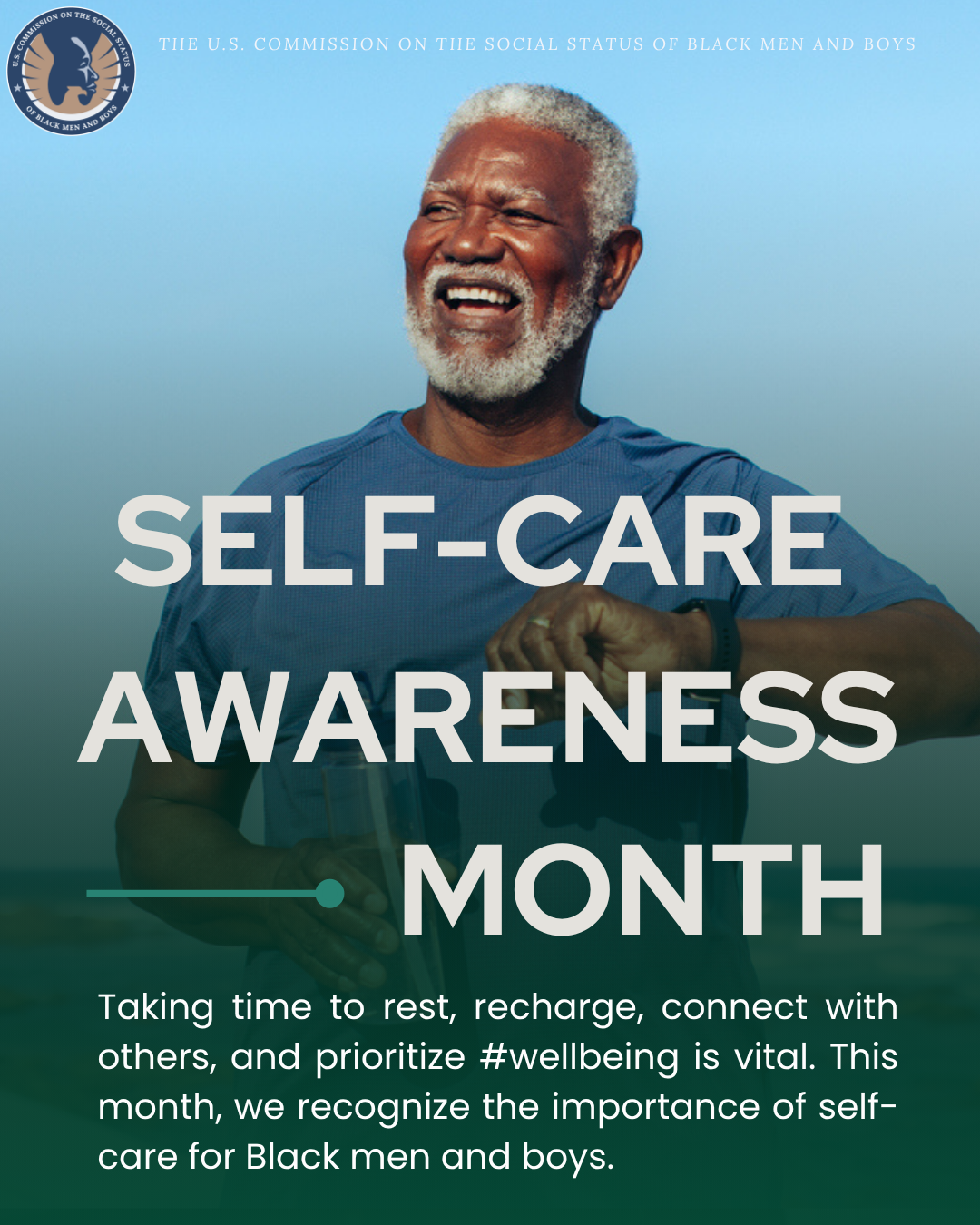
| | U.S. COMMISSION ON THE SOCIAL STATUS OF BLACK MEN AND BOYS | | Self-Care Awareness Month | | September is Self-Care Awareness Month - taking time to rest, recharge, connect with others, and prioritize wellbeing is vital. This month, we recognize the importance of self-care for Black men and boys. | | Recovery is possible, and access to supportive, culturally responsive care can help individuals and families navigate the path to wellness. Explore research and policy recommendations highlighting pathways to improved wellness for Black men and boys in the United States: CSSBMB.gov. | | U.S. Commission on the Social Status of Black Men and Boys (CSSBMB) Links to Know: | | ADVISORY COMMITTEES IN THE NEWS | | |
The Civil Rights Act of 1957 created the U.S. Commission on Civil Rights. Established as an independent, bipartisan, fact-finding federal agency, our mission is to inform the development of national civil rights policy and enhance enforcement of federal civil rights laws. We pursue this mission by studying alleged deprivations of voting rights and alleged discrimination based on race, color, religion, sex, age, disability, or national origin, or in the administration of justice. We play a vital role in advancing civil rights through objective and comprehensive investigation, research, and analysis on issues of fundamental concern to the federal government and the public.
| | | | |