e-Newsletter | February 14, 2025 | |
|
Happy Valentine's Day, y'all!
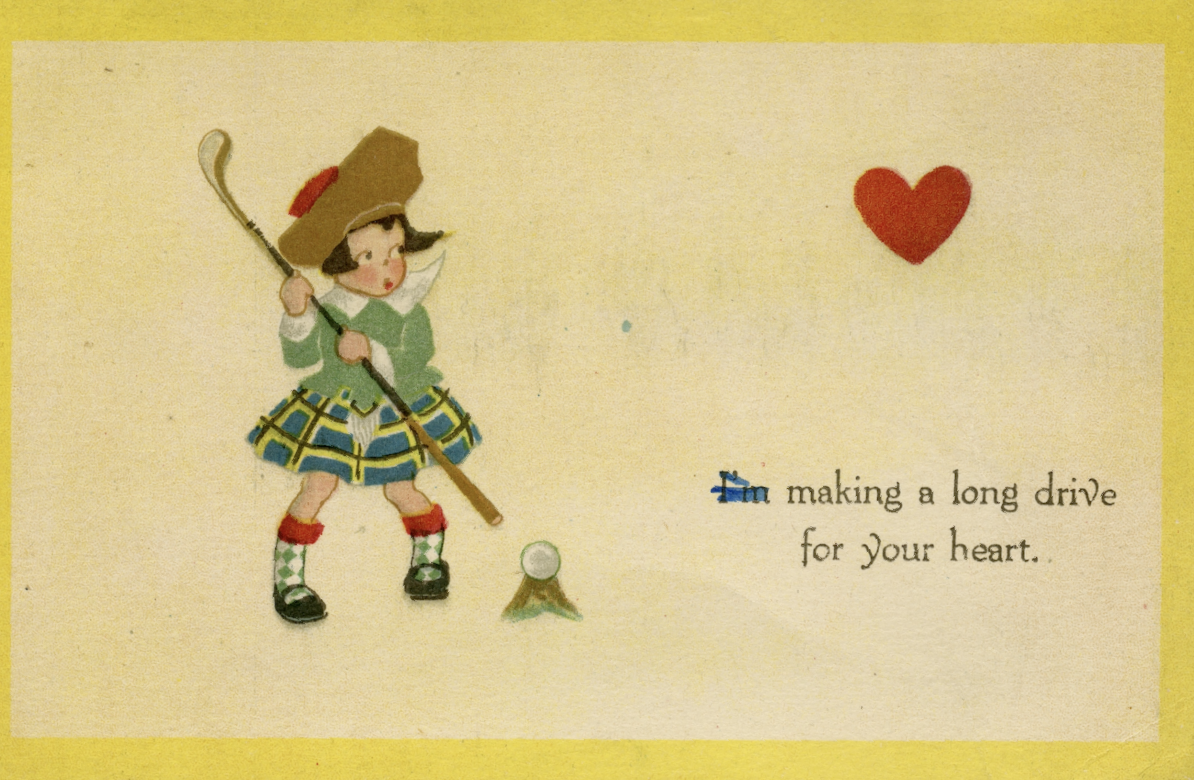
This card, one of many Valentines in the museum's collection, was saved by a member of the Graves family.
Editor's note: The mystery of Captain Thomas Morgan, convicted of transporting enslaved Africans aboard the ship Orion and inmate of Newburyport Jail continues. We are working with the Lincoln Presidential Library and various military and Civil War historians to figure out this puzzling case, but will have more to share in the next newsletter - we promise! But for now, let's all take a break for a love story...
| |
|
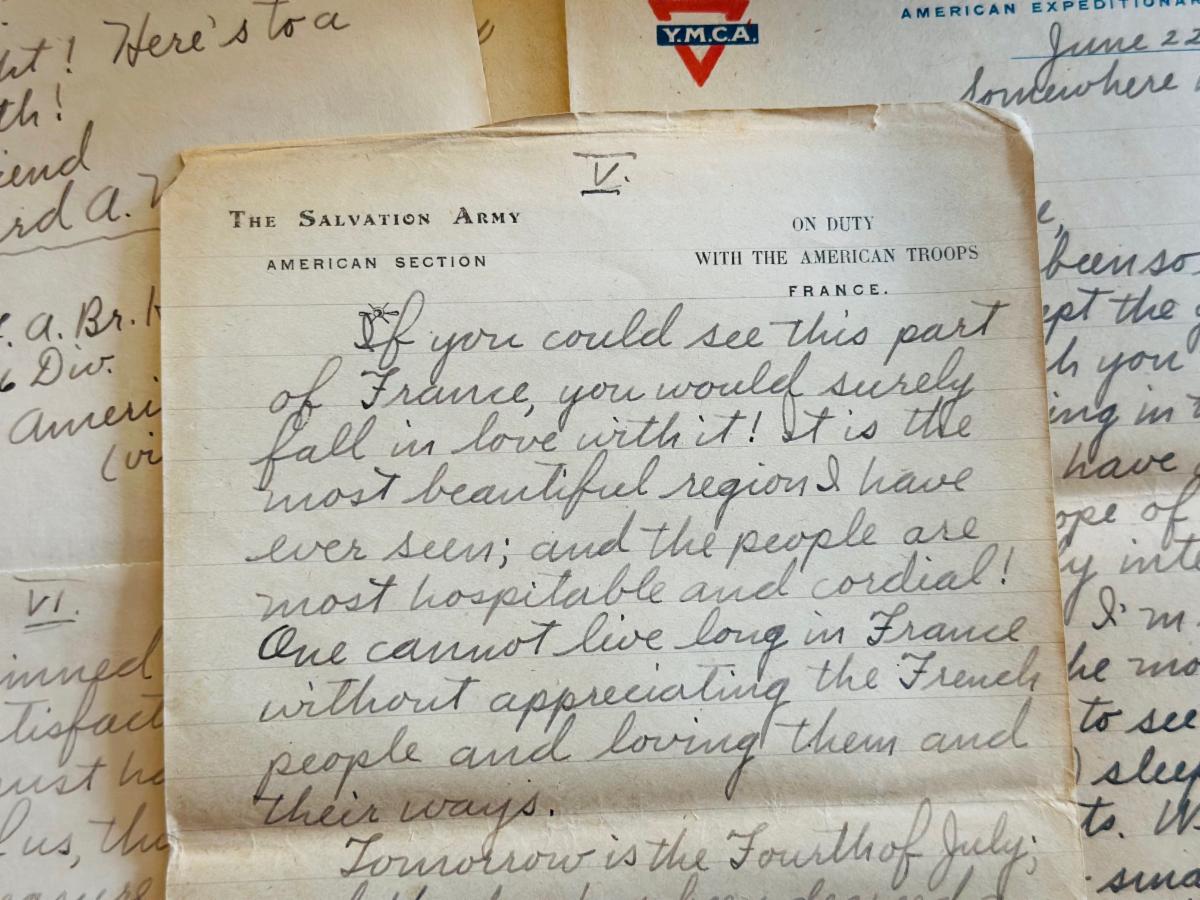
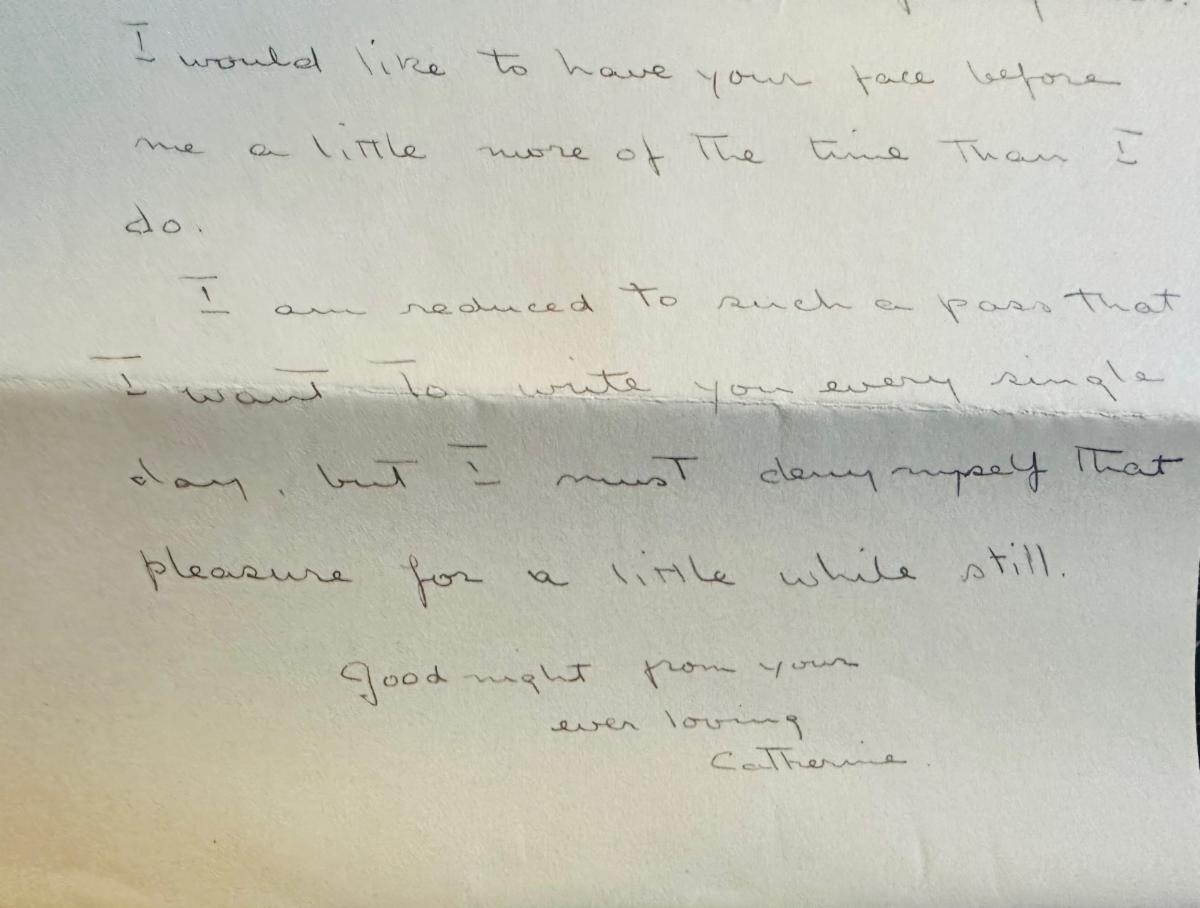
The World War I Letters of Richard Atherton Noyes and Catherine Arms Everett: A Love Story
by Sierra Gitlin
| |
Is there any human emotion more contemplated than love? Universal yet deeply personal; elusive yet omnipresent; hard to find, hard to keep, hard to express, hard to contain, hard to bear, hard to be without. “Love Will Tear Us Apart,” goes one song. “Love Will Keep Us Together” retorts another. A dance of opposites we all experience, exercise for our souls, perhaps…a stretching and contracting like a muscle, a beating heart, as we press along through life, alone, and then together, lost and then found, broken and mended, again and again. A great mystery that’s been the grist of philosophers, poets, and singers for as long as there have been philosophers, poets, and singers. And like love, sometimes they are found in unlikely places. | |
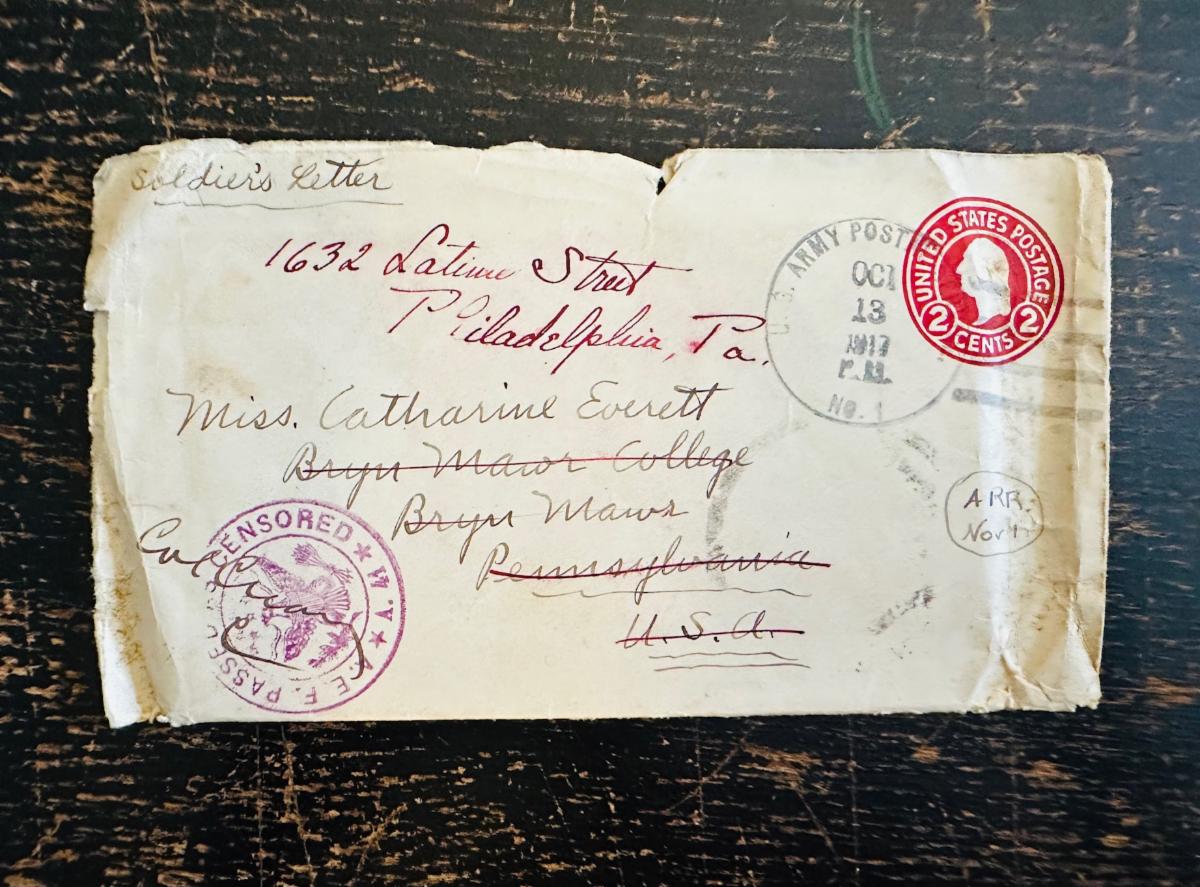
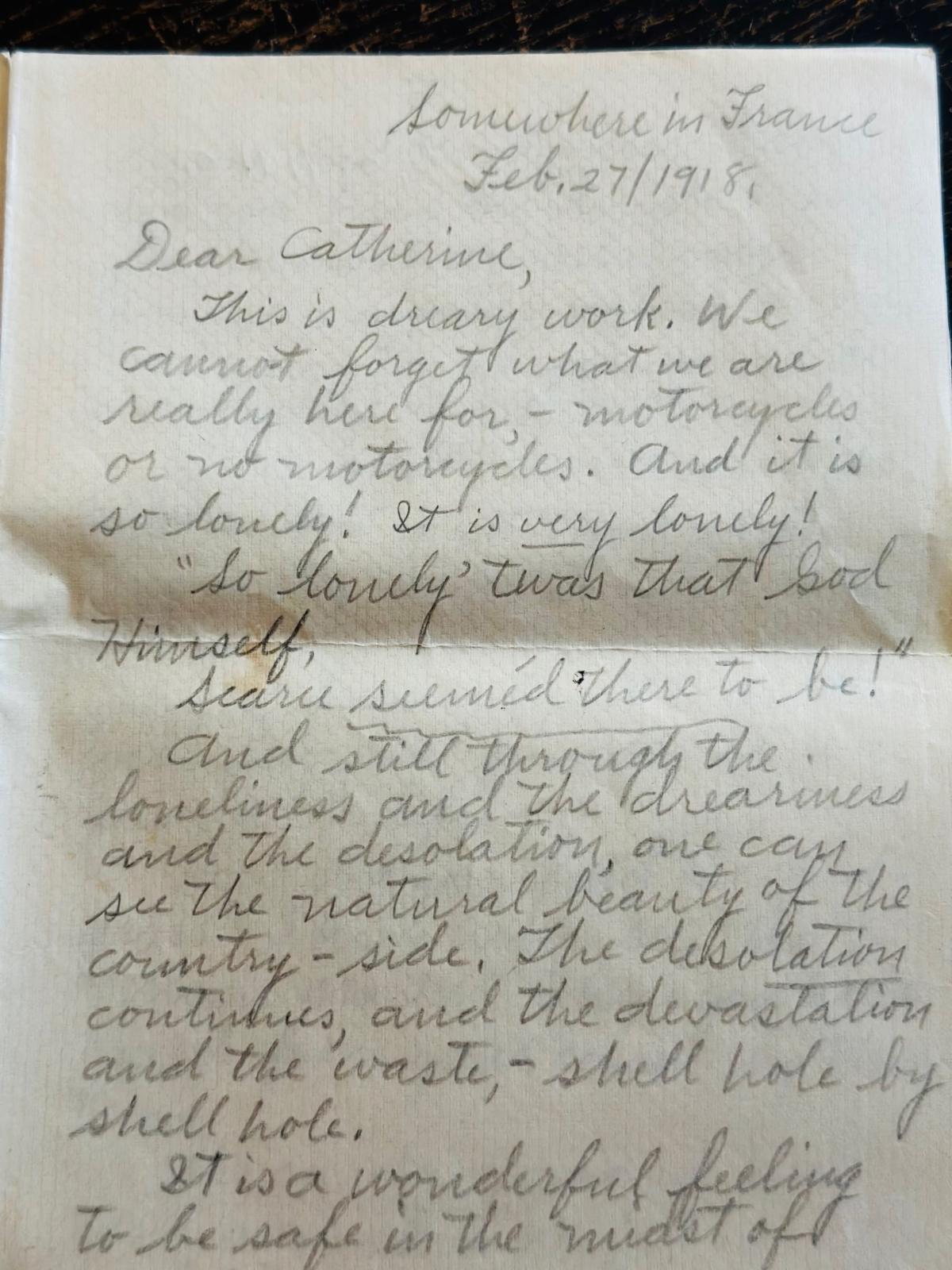
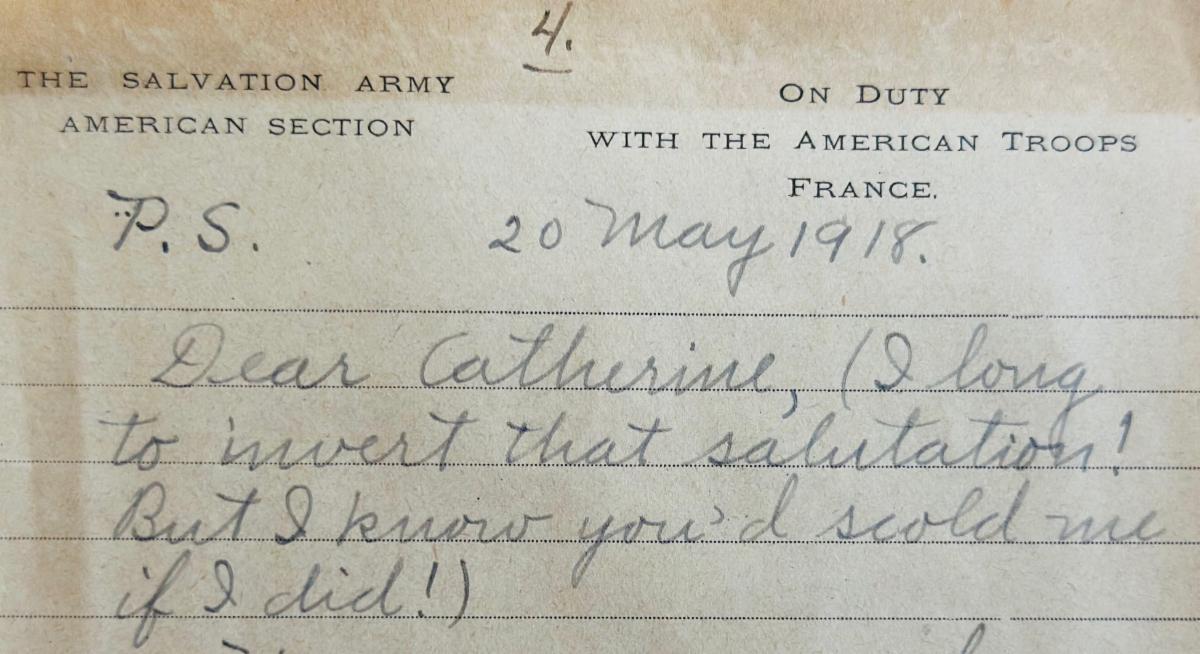
Take the uncatalogued bundle of letters I found in the Museum’s basement last year. In October of 1917, a 23-year-old soldier with family connections to Byfield, Richard Atherton Noyes, was on a ship to France as part of the 26th Infantry Division American Expeditionary Forces. He had said goodbye to his sweetheart, 19-year-old Catherine Everett, daughter of artist Herbert Edward Everett. She was attending Bryn Mawr but grew up spending her summers in West Newbury. Though most of the correspondence is from Richard to Catherine, these 20 letters, written between October of 1917 and January of 1919, offer us an intimate look into the private world of this young couple separated by war. Reading them is moving, informative and slightly voyeuristic. They are so transportive and poetic it’s tempting to transcribe them all right here, right now, word for word, but the format allows for just a taste. In celebration of Valentine’s Day, we will share some of our favorite quotes.
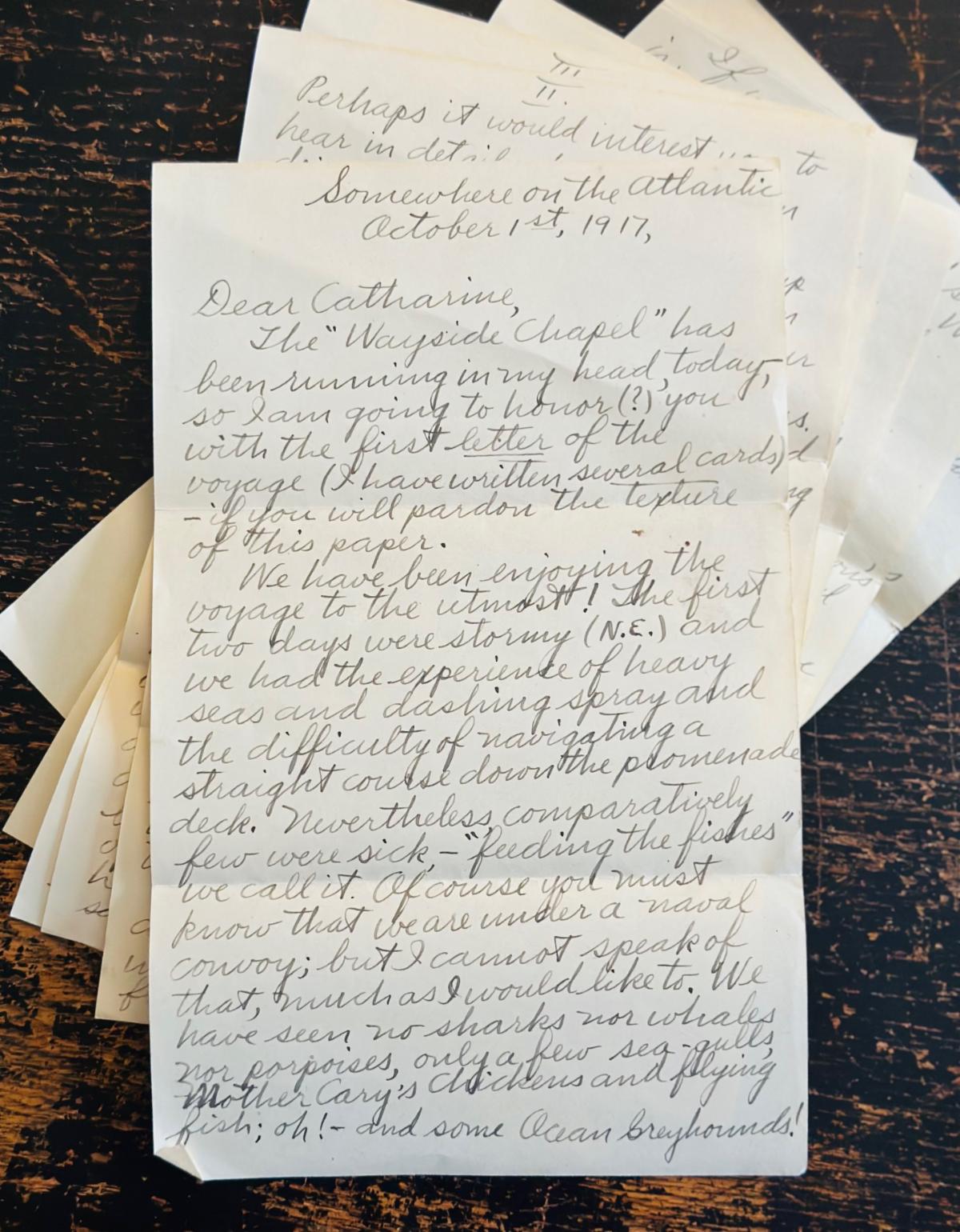
Somewhere in the Atlantic
October 1st, 1917
Dear Catherine,
"The “Wayside Chapel” has been running in my head today, so I am going to honor (?) you with the first letter of the voyage…"
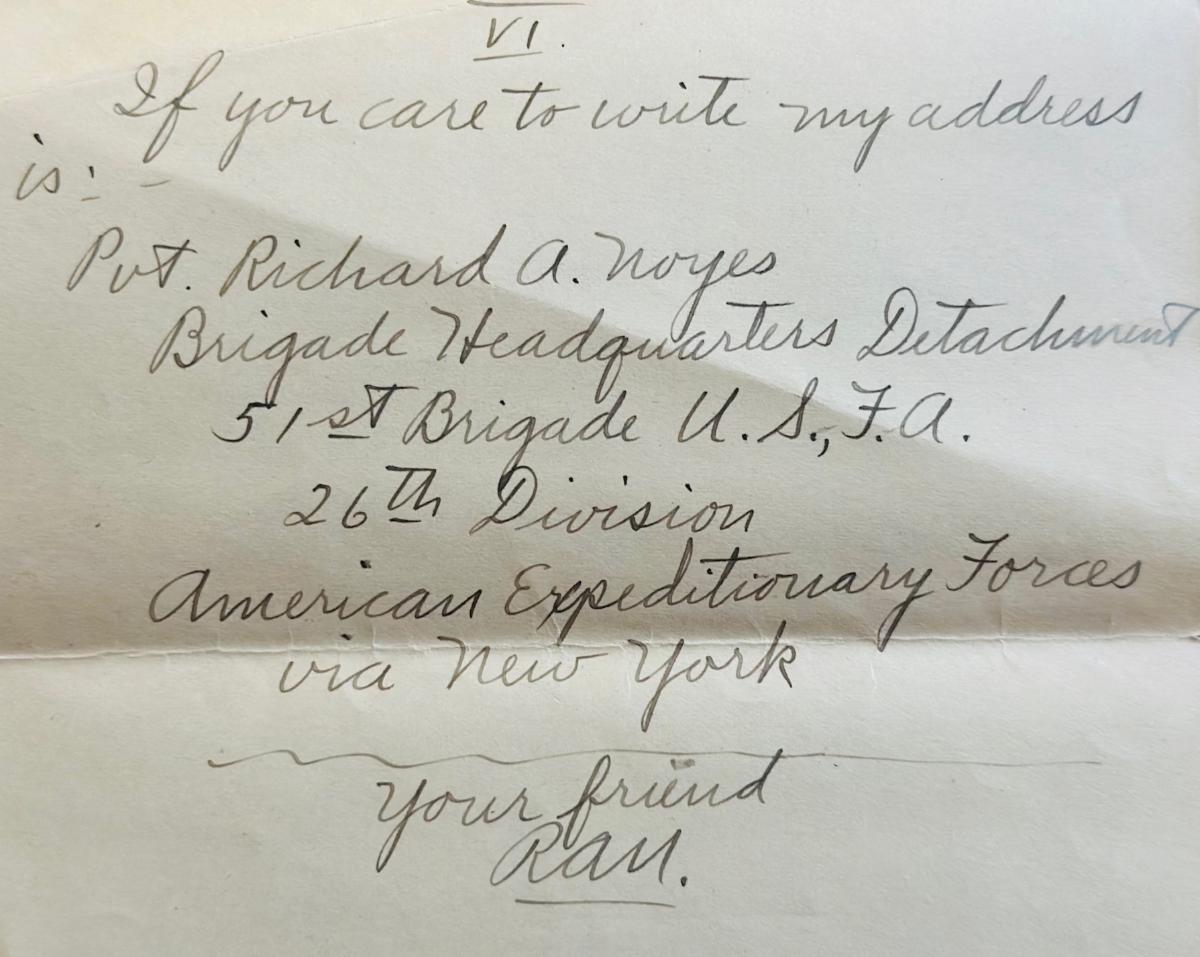
Good-bye & good luck, Sincerely Richard A. Noyes.
| |
Somewhere in France
December 14/17
Dear Catherine,
"Your letter has just arrived. If everyone would only write as promptly as you have done….Was not “The Wayside Chapel” the name of one of Jane’s piano pieces about two vagrants who wander into a church and sleep until they are awakened by the sound of the organ playing? You surely know the tune I mean!”
I remain, sincerely yours,
Pvt. Richard A. Noyes
Somewhere in France
January 27, 1918
"…The days are getting longer, the sky clearer and the days warmer. Good weather to work in! We hope it will be over before very long. We see aeroplanes here. It does not look like very dangerous work. Have you seen any in flight? When you do see one, I know you will be filled with the desire of flying in one, yourself. I want to!….”
Sincerely,
Richard A. Noyes
| |
|
Somewhere in France
January 18, 1918
Dear Catherine,
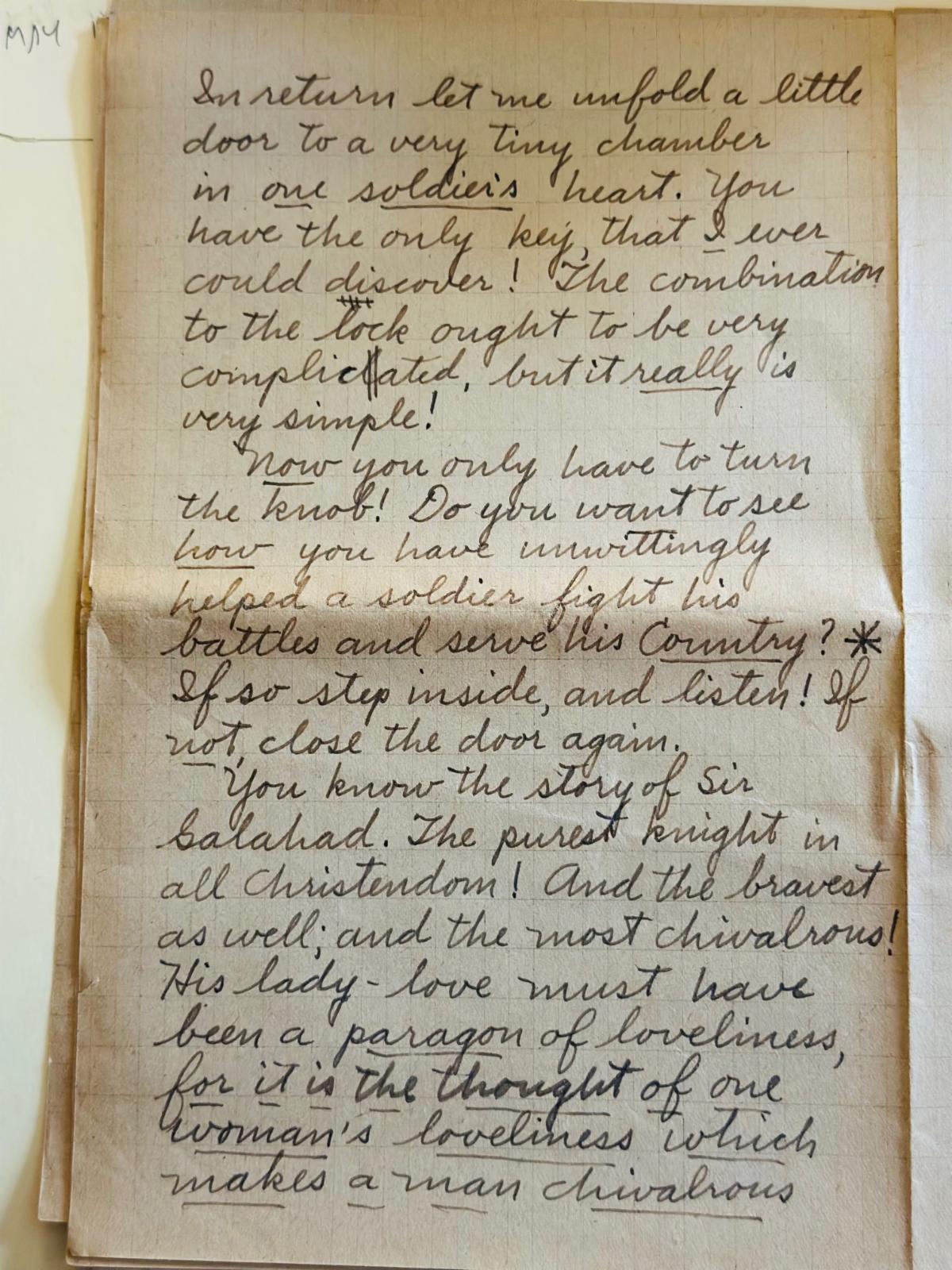
“I hold no claim for your regard. But will it mean nothing to My Lady, that a soldier in the American Expeditionary Forces lays his arms before her and asks her blessing on his enterprise? Do you know what keeps a soldier’s heart true? Can you imagine a soldier’s thoughts when dying? Or what name he whispers in the delirium of the hospital ward? Or can you fear that a soldier, who has cherished one dear face throughout a whole war, under any discipline, will come home only to forget his loyalty, and make a fool of himself?
Listen, do you like poetry?...”
“Were you the earth, dear Love, and I the skies,
My love should shine on you like to the Sun,
And look upon you with ten thousand eyes,
Till heaven wax'd blind, and till the world were done.
Wheresoe'er I am, —below, or else above you—
Wheresoe'er you are, my heart shall truly love you.”
Sincerely Yours,
Richard Atherton Noyes
| |
|
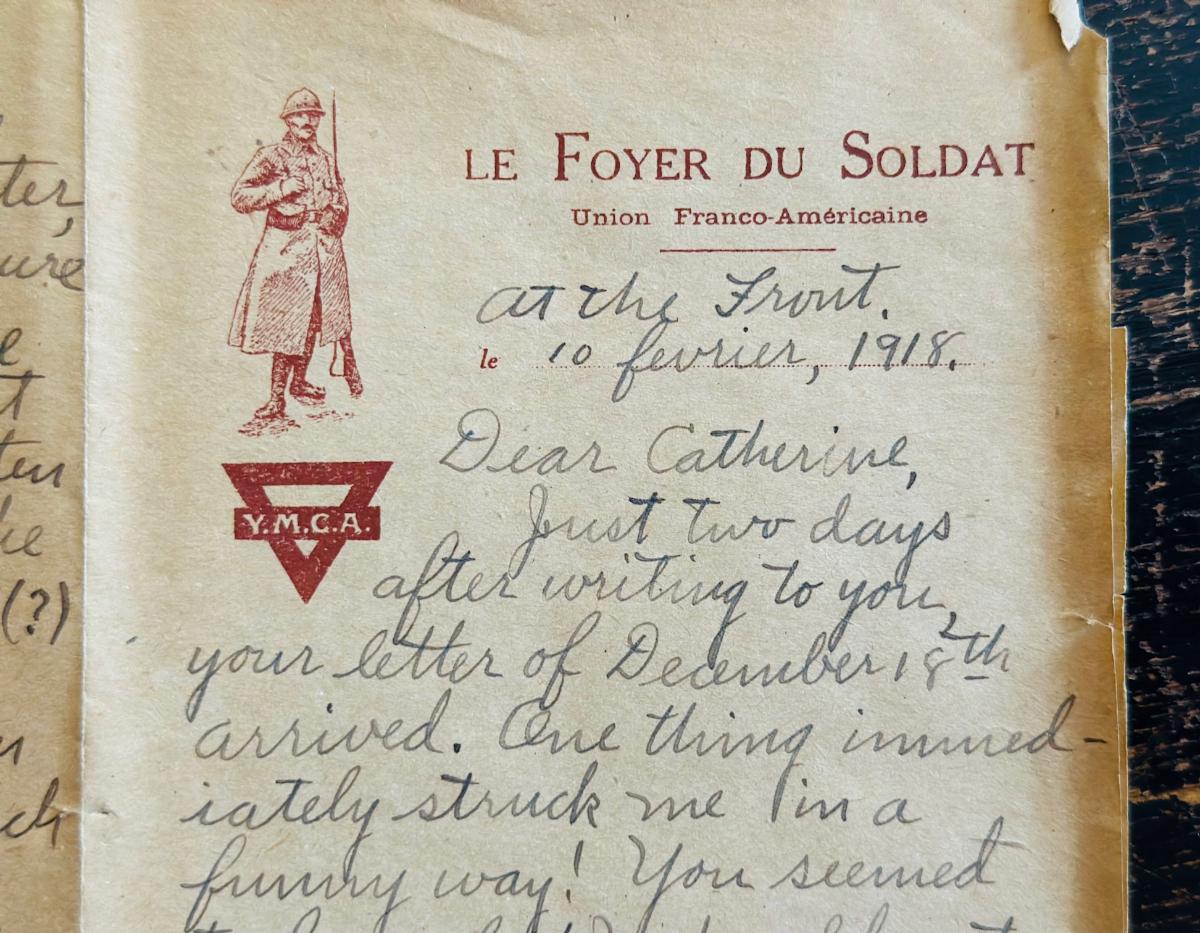
At the Front
February 10, 1918
Dear Catherine,
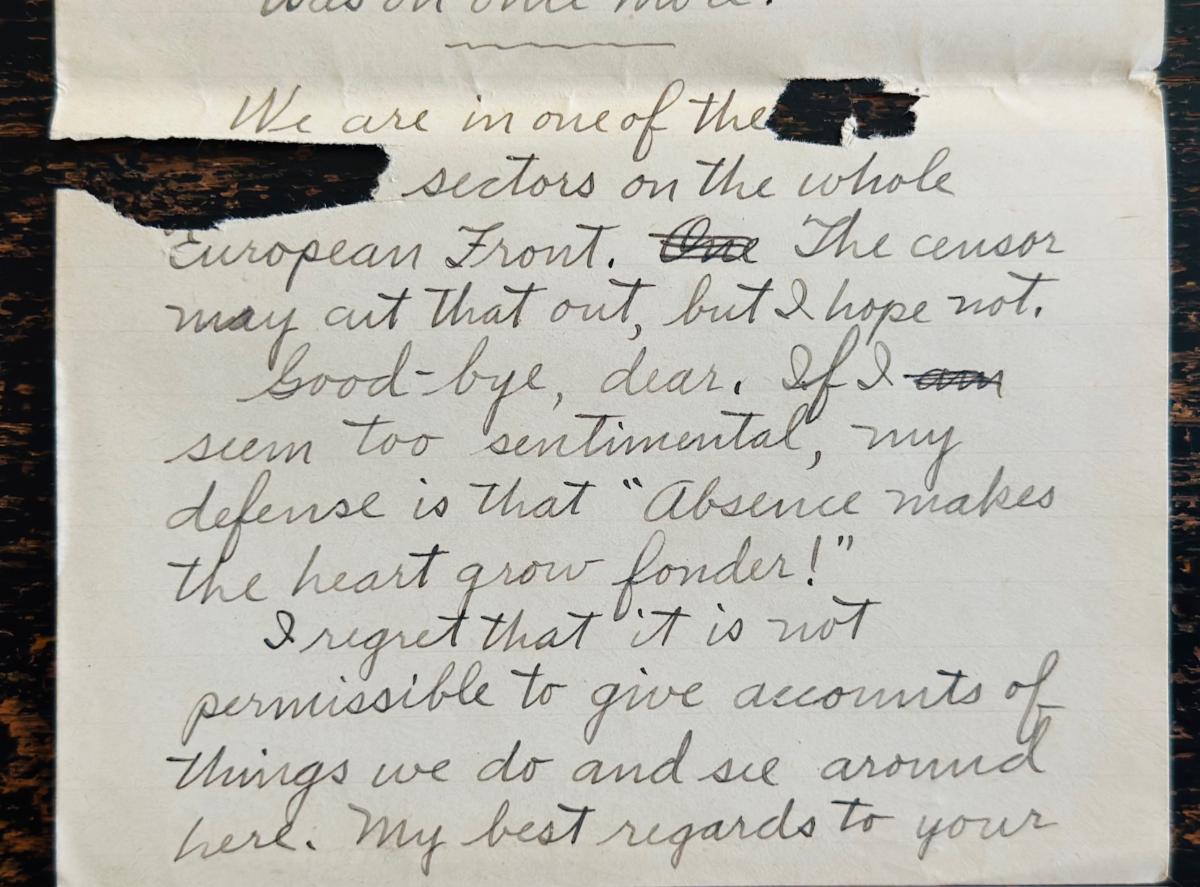
"…Every man, I think, who is honest with himself hates hypocrisy. Is it not hypocrisy to cherish sentiment and hide it, just as much as it is open hypocrisy to make a false declaration of love? What honor is it to a lady to love her and not let her know it?...”
…Do you really love West Newbury more than Philadelphia? So you like the smell of the salt-marshes, the muddy river banks, and the East Wind! So do I! And I am here fighting for the Flag, and the chance to see the Parker River again, and the Merrimac and the hay-stacks at high tide…”
…My dear little girl! I have tried so hard to forget something – thinking that to be the best kind of a soldier I must smother affection and sentiment. But it can’t be done!...”
“Goodbye, dear. If I seem too sentimental, my defense is that “absence makes the heart grow fonder!”
Believe me ever
Your loyal friend,
Richard A. Noyes (Pvt.)
| |
|
Somewhere in France
March, 1918
Dear Little Girl,
“...Now for a little argument! You say, ‘I have often heard that war stirs up people’s emotions to an artificial pitch, and I certainly agreed with them when I read your last letter!’ It is the excitement of battle which causes this ‘artificial stirring up.’ Nevertheless, the hours of quiet are hours of sober thought. We can never know what fortune the future holds for us. Is it ‘artificial emotion,’ then, which a man betrays in writing to a dear friend whom he may never see again? And do you suppose that one is apt to express half the emotion he feels? Letters are very unsatisfactory in many ways! It is hard work trying to transmit ideas and emotions over 5000 miles.”
“…I want you to be afraid to write to me, for fear that I would eat the paper you write on! You see how hungry I am for letters.”
God bless you and all your family!
Sincerely,
Pvt. Richard A Noyes
| |
Somewhere in France
April 30, 1918
Dear Catherine,
“…The longer the war lasts the further away seems the time when it will be brought to an end. How I wish I knew when we will see home again!...”
Sincerely,
Pvt. Richard A. Noyes
| |
Somewhere in France
May 6, 1918
Dear Catherine,
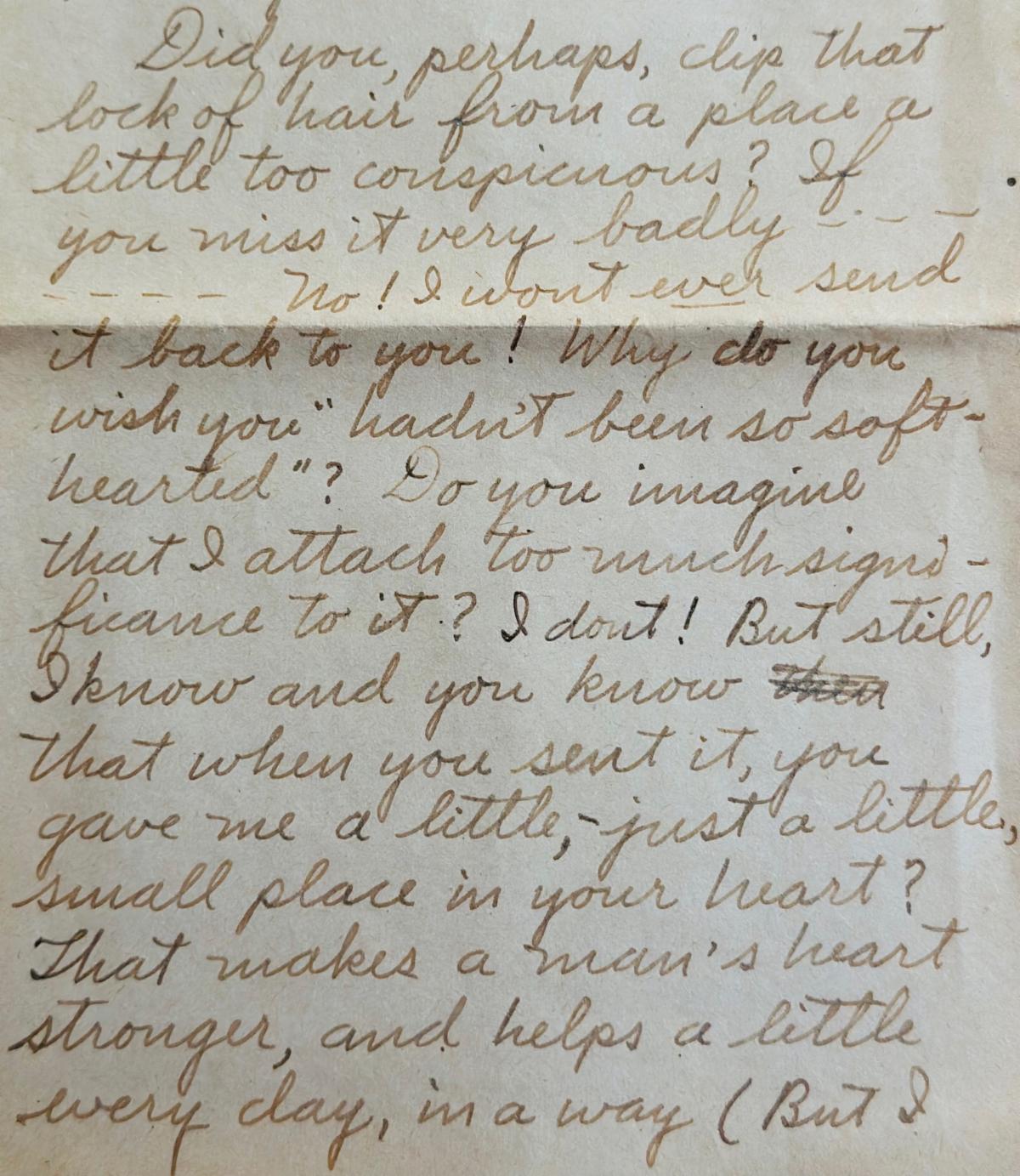
“Yesterday I got three letters, and one of them was from you. I guessed it was “clippings,” – newspaper clippings – that made it so fat! The ‘clippings’ was right, but I can read more, there, than in any other clippings I ever received! Whether it’s loveliest in candlelight, or daylight, it is impossible for me to decide! I have put it away in the envelope and keep it tucked away in my breast pocket. Next time I go to the city I will get a locket to hold it...Tell me! Is that little lock of hair from your “bang,” or did you snip it off from your back hair? I think you must have, because it has such an enchanting curl at the end of it…”
Sincerely Yours,
Pvt. Richard A. Noyes
| |
Somewhere in France
July 12, 1918
Dear Catherine
“...I always open your letters carefully - just why I never stopped to think, until now. It must be so as not to lose any of the sweetness therein contained…”
“...[My blues] are not only routed but they have never returned, and never will as long as you wear my pin (which is a very cheap ornament, by the way) and I have the lock of your lovely hair in my breast pocket. God bless you for your tender sympathy for a boy who was lonely! I wonder if you know how fast you make my heart beat sometimes?”
"…I am thinking of you always, and trusting that some day before long this war will end, and we can go for another long walk together.”
Thank God! I am an American!
R.A.N.
| |
|
Back from the Front
Somewhere in France
August 11, 1918
Dear Catherine,
“...I wonder if you love poetry as much as I do? When you are feeling tired and blue and lonely and sick at heart, a bit of poetry is the only remedy. Some do not think you can be a poetry lover and a good, stout-hearted soldier at the same time; but they have a narrow vision…”
“...My God! How I love you!...”
“…This does not need to be marked “Hot Stuff!” My only fear is that it will get cold in crossing the ocean. What wouldn’t I give right now for –
“A little walk walk walk!
A little talk talk talk?”
You see I am burning by bridges behind me…”
Devotedly,
Richard
| |
|
Somewhere in France
August 19, 1918
Dear Catherine,
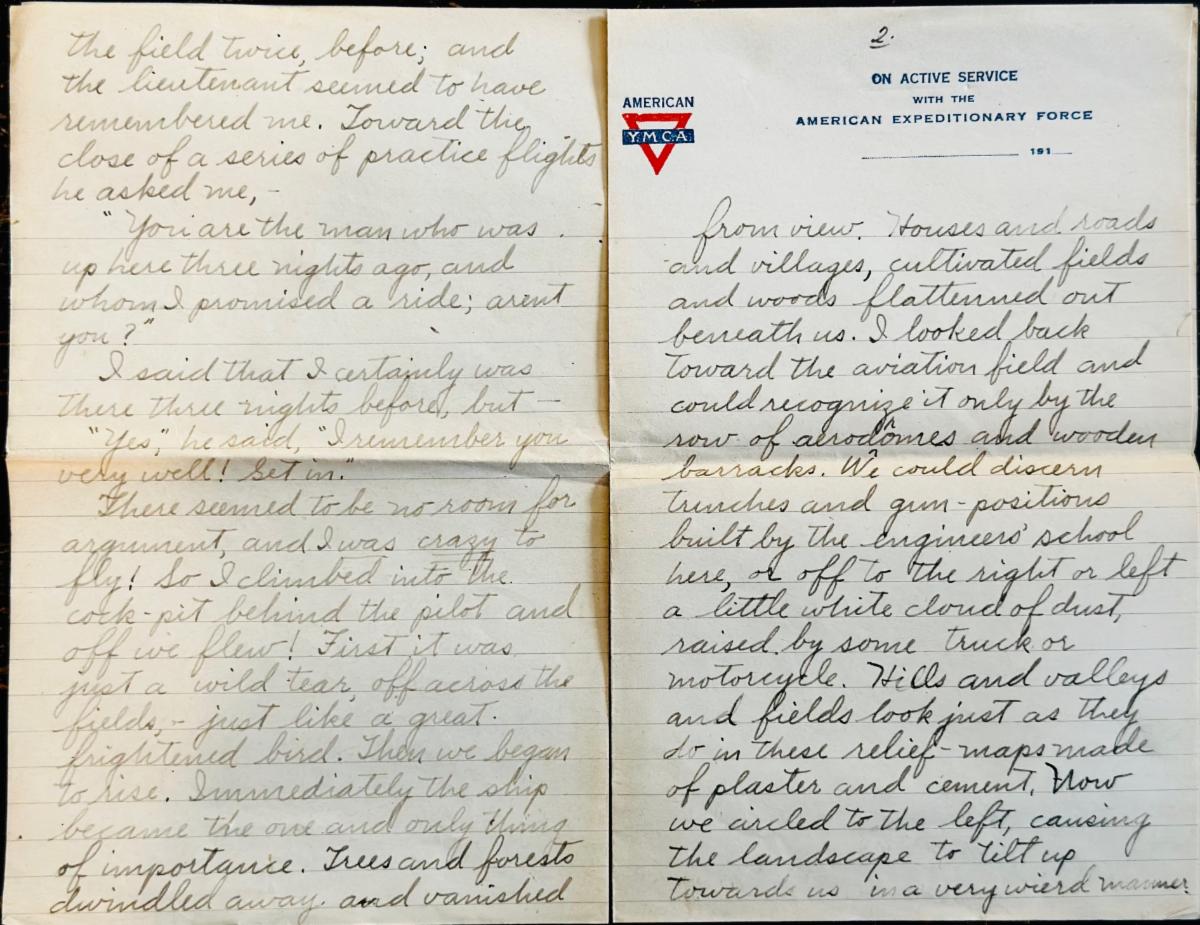
“…Close by, there is a big aviation field. I was up there last evening, and received an invitation to go for a ride. I am going to fly this afternoon…”
More soon,
Yours devotedly,
Richard
P.S. Today is my birthday
| |
|
August 26, 1918
Dear Catherine,
“...I often amuse myself by planning good times when we get home; horseback riding, motoring, sailing, going for walks, or on picnics, or to the theatre, or to a dinner at a swell hotel! Maybe, when you see my moustache, you wont want to have anything more to do with me! But I know, that whereas I went away a boy, I shall come back a man…”
Devotedly,
Richard
September 5 1918
Dear Catherine,
….That is a strange thing: that thirty-five thousand men can be together and still be lonely. But it is true, nevertheless…”
…”Last night your lock of hair saved my life. I had to leave my blanket roll in one of the wagons and come on ahead by motorcycle. As i was without any blankets, I had to sleep with all my clothes on. It grew quite cold toward morning, and if I hadn’t had your lock to help keep me warm, I would probably have frozen to death! That is a little treasure which I would rather suffer a thousand wounds, than lose.”
Yours sincerely,
Richard
| |
|
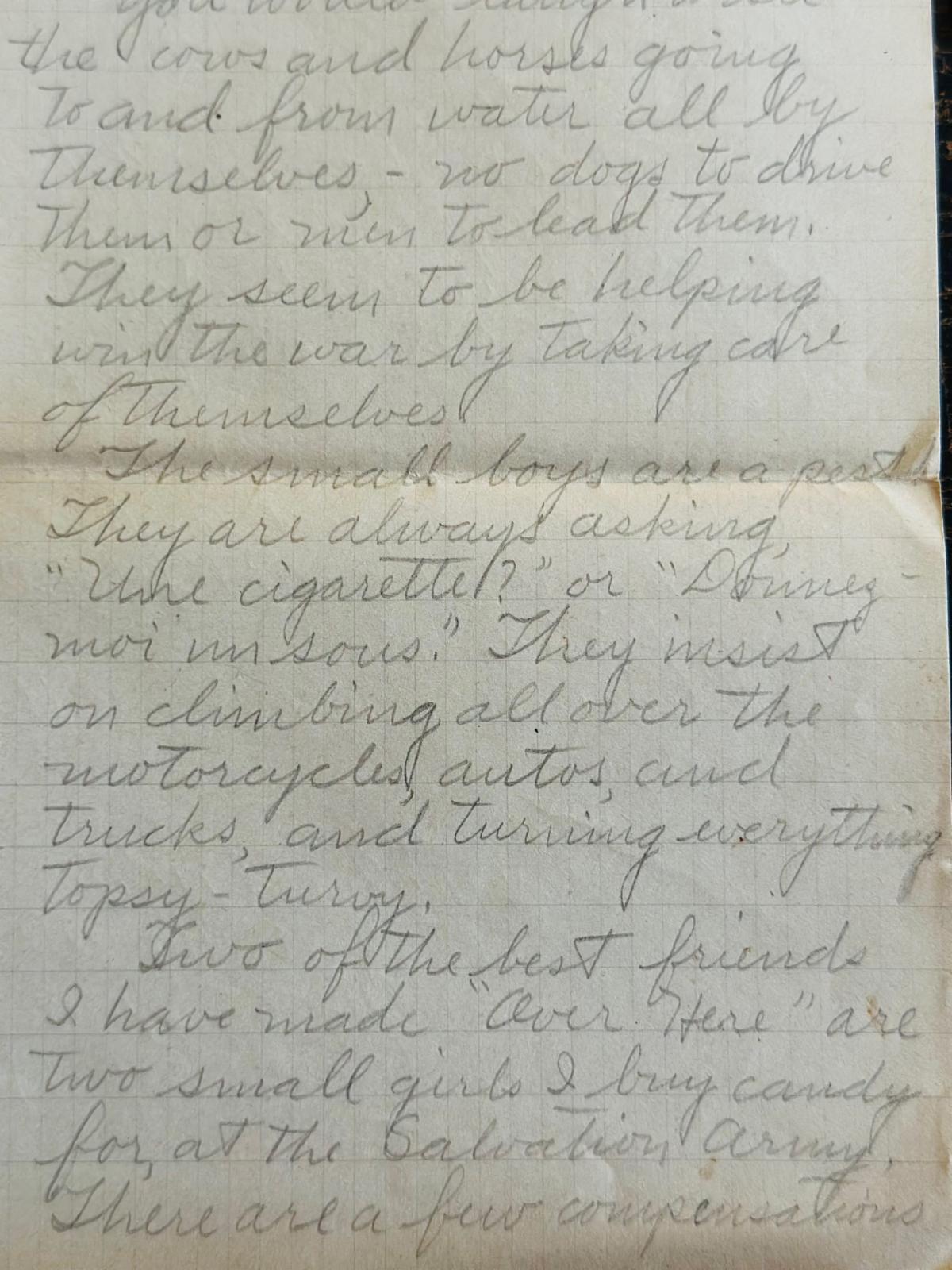
Between these quotes Richard describes the noteworthy stories, sights, and experiences -- from the mundane to the marvelous -- which of course you’d share with your beloved. Richard was a motorcycle dispatch rider and enjoyed the prestige and excitement and even the nighttime missions at top speed (35 mph) through fog and darkness with no headlight, because “showing any light of any kind would mean court-marshall or suicide.” He describes in detail the beauty of the French countryside, recounts using his toothbrush to clean motorcycle parts in a pinch, crawling through muddy pits with German shells whizzing overhead, small French boys always asking for cigarettes, the unhurried gate-tender at the nearby railroad crossing, gathering on a hillside at night to watch the flashing of bombs at the edge of “No-Mans-Land,” and a most wonder-ful account of flying in an airplane for the very first time.
We only have 4 letters from Catherine, but she offers her own perspective on love. Not surprisingly, they reflect her focus on the home, the future, her own longing, and her anxieties about Richard’s safety.
West Newbury
September 8, 1918
“...One of my engaged friends said to me not long ago ‘Oh it is awful to be in love, because you are miserable nine tenths of the time!’ I know what she means now, only I am miserable and anxious far more than nine tenths!...”
December 10, 1918
Philadelphia
“...Until last Sunday I truly hadn't quite decided whether I loved you or no, but once I had the chance to think about it, as I did all that day, I knew without doubt or question what my answer would be when you came home and wanted an answer. So now I am waiting and longing for that day just as hard as you are…”
“...When oh when are you coming home? It seems as though I couldn’t wait until you do…”
“...I will tell you a great and delicious secret. I have already picked out the china that we shall have in our home…”
“...Whenever I have a moment to spare (which is very seldom) I close my eyes and imagine what our first meeting will be like…I love to imagine myself in West Newbury when you return. Then I can see you, so tall and dark and splendid, coming into our little front hallway…”
--
Philadelphia
January 21, 1919
“...Planning! Planning for the time when you come home has become second nature, and everything I do brings some thought of you to me. But particularly is this true when I am listening to music, and when I think how you must be starved for good music. Oh when are you coming back? It seems as though I can hardly wait…”
January 28, 1919
“...There are many million things to tell you. If only I had less deplorably Victorian prudery! I feel that it is hardly “nice” to tell you how I long for the moment when you will take me in your arms and kiss me. Do you remember that you wanted me to be afraid to write to you for fear that you would eat the paper I had written on? Well, that is how I feel; but I am just sufficiently old-fashioned to know that it is very improper for a maiden to express herself in that way. I am afraid I will astonish you by my perfectly capricious mixture of prudery and abandon…”
“...I think of your magnificent dark eyes and of your dear mouth that turns up at the corners naturally – That is a wonderful thing to one whose corners turn down…”
“...Next summer whenever there is a full moon you and I are going to take our supper down to Plum Island going far down the beach where the people are few, and there we will watch the moon rise over the ocean. Won’t that be idyllic?”
| |
The story, at least as contained in this bundle of letters, ends there. Public records tell us that Richard came home after the war and he and Catherine were married in June of 1923. By 1926 they were living in Newburyport. They had three sons, only one of whom survived beyond young adulthood, and it seems their love did not last as long as their early correspondence would lead us to believe it could. Perhaps the brightest flames burn fastest. Perhaps the war laid waste to soldiers’ inner landscapes as much as it did the European continent. Whatever the outcome, it is a gift to have a glimpse of something as hopeful, honest, careful, and patient as Richard and Catherine’s courtship. Happy Valentine’s Day! Now go tell someone that you love them! | |
|
Researching Your Historic House – What the Pros Know!
Thursday, February 20 at 7 p.m.
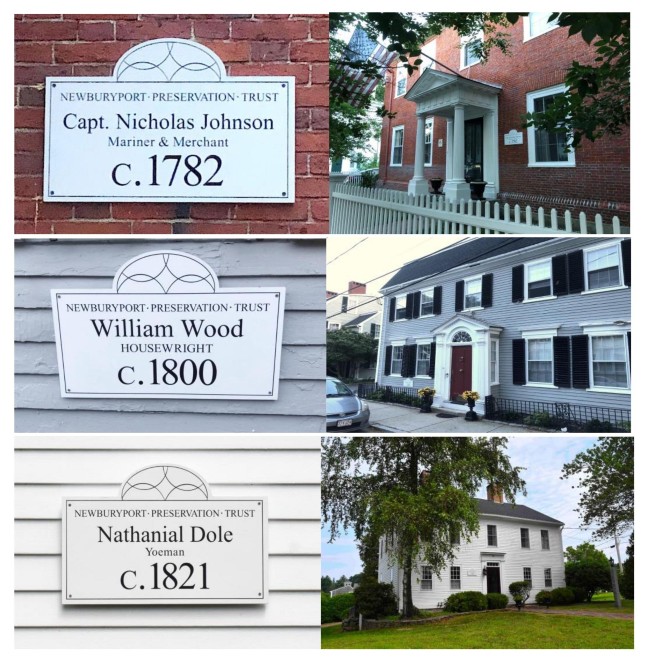
Have you come to a dead end in your online house history research? Museum of Old Newbury director Bethany Groff Dorau will share resources available at the Museum of Old Newbury, while researchers Barb and Ellie Bailey will share some of their tips and tricks of the trade as they research houses for the Newburyport Preservation Trust: Historic House Plaque Program.
Free for Museum of Old Newbury and Newburyport Preservation Trust Members, $10 for all others.
| |
|
Sold Out (click below for wait list)
Newburyport's Road to Revolution Part I: Roots of Rebellion
Thursday, February 27 at 7 p.m.
Firehouse Center for the Arts
Funded, in part, by the Massachusetts Office of Travel & Tourism
| |
|
Sold Out (click below for wait list)
Newburyport’s Road to Revolution Part II: Newburyport Braces from Attack by Sea
Thursday, March 20, 7:00 p.m.
Custom House Maritime Museum
Funded, in part, by the Massachusetts Office of Travel & Tourism
| |
|
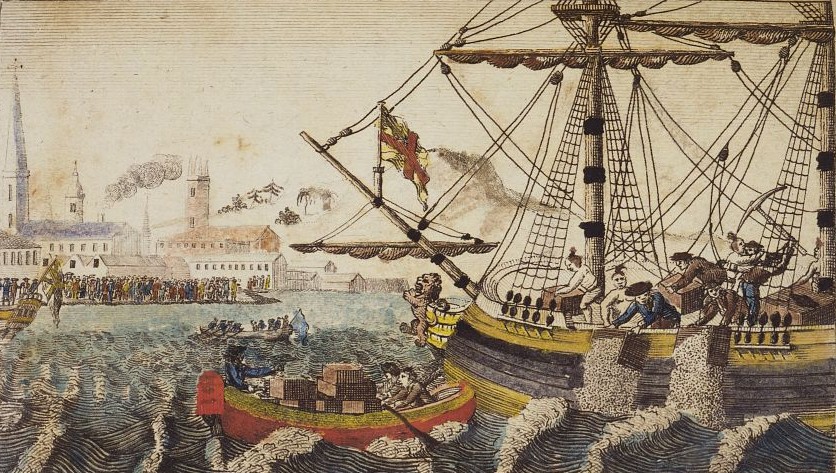
Newburyport’s Road to Revolution Part III: The First Tea Party
Sunday, March 30, 3:00 p.m.
Museum of Old Newbury
Join us for a special Sunday afternoon tea party at the Museum of Old Newbury to explore a tea mystery. For generations, Newburyporters claimed to have been the first to protest onerous British tariffs by destroying tea imported from British India. Before Sam Adams's band dunked that tea in Boston harbor, as the Clipper City's claim goes, a sturdy shipwright sparked the Revolution when he rallied a local band to burn the offending tea in this town's Market Square. Join historian and educator Bill Quigley, who has examined this long-standing narrative, to learn the truth of this history. It's a tale of surprising twists.
Funded, in part, by the Massachusetts Office of Travel & Tourism
| |
|
Save the Date for these Upcoming Events! Tickets available soon!
Newburyport’s Road to Revolution Part IV:
Black Newburyporters
Thursday, May 8, 7:00 p.m.
Museum of Old Newbury - Tickets available March 14
Newburyport’s Road to Revolution Part V:
Powder & Shot
Thursday, May 22, 7:00 p.m.
Museum of Old Newbury - Tickets available March 28
Newburyport’s Road to Revolution Part VI:
Bunker Hill - Heroes & Cowards
Thursday, June 18, 7:00 p.m.
at Firehouse Center for the Arts - Tickets available April 24
| |
Something Is Always Cooking... | |
|
Sweet and Salty Toffee Bark
If you're looking for a sweet treat to share with your Valentine, or eat yourself before anyone else has time, this is an easy, delicious, and easily customizable recipe. The saltines are key here - do not substitute other crackers.
-Bethany Groff Dorau
Ingredients
40 salted saltine crackers (enough to line a cookie sheet)
1 cup unsalted butter (salted if you like a LOT of salt!)
1 cup packed brown sugar
2 cups milk chocolate or semisweet chocolate chips
(optional) 3/4 cup chopped pecans
Directions
- Preheat your oven to 400 and line a cookie sheet with at least a 1/2 inch edge or jelly roll pan with parchment paper. Line saltine crackers in a single layer on the cookie sheet.
- In a small pot combine sugar and butter and boil for 3 minutes. It will be a deep caramel color. Pour the mixture over the saltines and spread to cover completely.
- Bake at 400 for 6 minutes. Remove from the oven and straighten any crackers that have floated under others.
- Sprinkle the chocolate chips over the crackers and spread them once they melt, or melt chips for 1 minute in the microwave.
- Sprinkle crushed nuts and/or candy on the warm chocolate.
- Cool completely, break apart, and gobble up before anyone gets home.
Enjoy!
| |
|
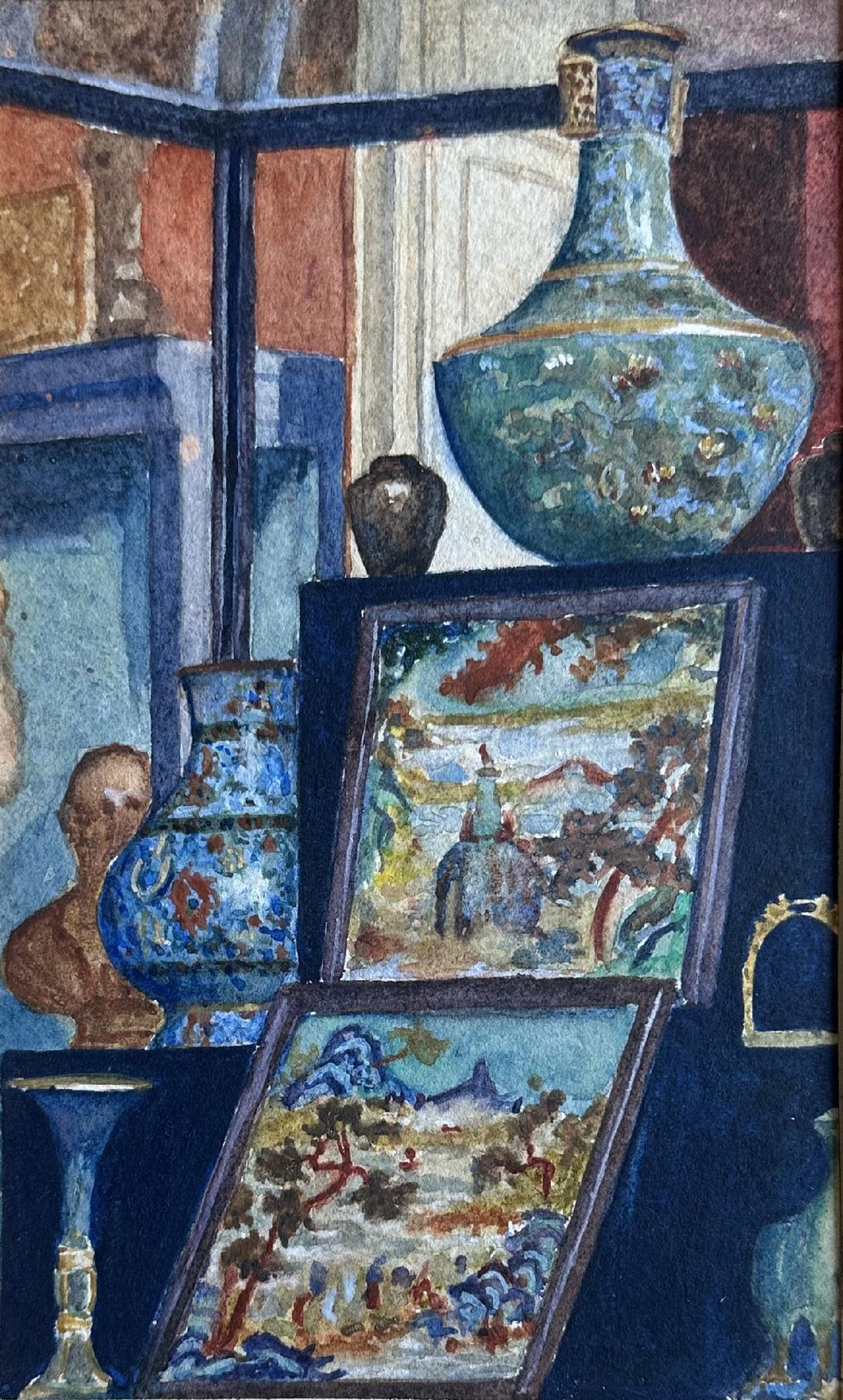
Click the image to do the puzzle
"Old Ahl - Museum Boston" watercolor by Herbert Edward Everett (1863-1932). Born in Worcester MA, Herbert Edward Everett studied at the Boston Museum of Fine Arts, Harvard University, The Julien Academy in Paris, and the Academy of Fine Arts in Philadelphia. In 1905 he was named the first professor of the history of art in at the University of Pennsylvania. He summered with his family in West Newbury.
| | |
Museum e-Newsletter made possible through the
generosity of our sponsors:
| |
| | | |