|
What It Means to Be “Ready”
Being ready to buy a home involves more than scraping together a down payment. Of course, financial readiness matters, and a stable income, healthy savings cushion, and manageable monthly expenses are key indicators. But so is emotional and lifestyle readiness. Ask yourself:
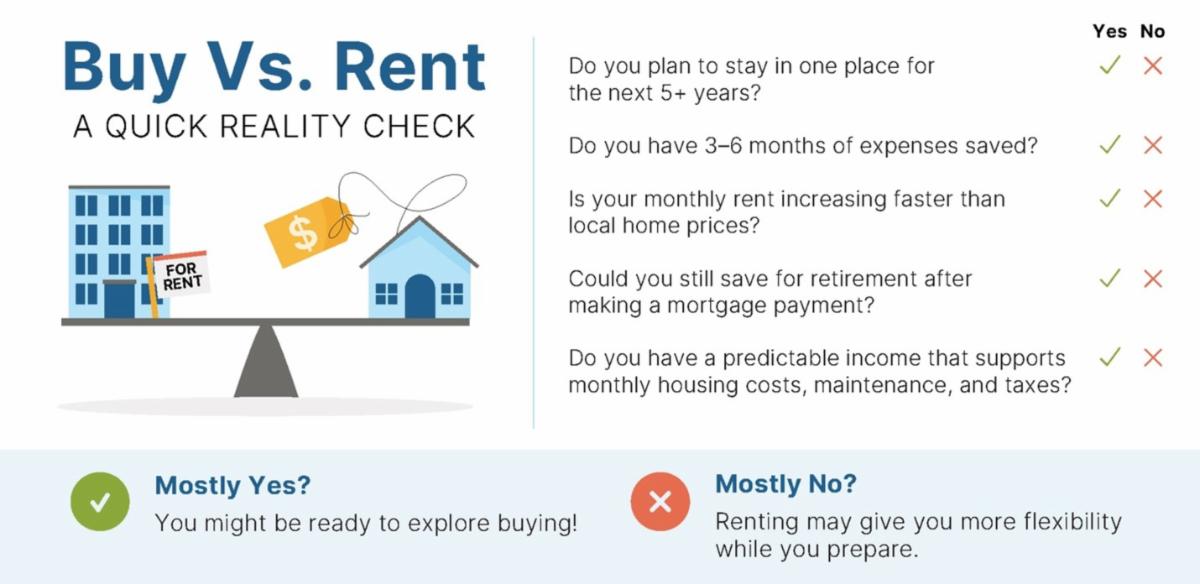
· Do you see yourself staying in one place for at least five years?
· Are you prepared to handle responsibilities like maintenance, repairs, and property taxes?
· Are you buying because it aligns with your values and plans or because it feels like something you should do?
Renting is often viewed as a temporary compromise, but that’s not always the case. In some situations, it can be a smarter, more strategic choice, especially if you expect to move within a few years, need flexibility in your work or lifestyle, or are still building savings. Buying, by contrast, offers stability and the chance to build equity, but it requires a long-term commitment and the ability to absorb the ongoing costs of ownership.
The shift toward remote and hybrid work has added another layer of complexity. With fewer geographic constraints, some buyers are reevaluating where—and even whether—they want to put down roots. That freedom can be empowering, but it also makes timing and location decisions feel more uncertain. Clarity about your lifestyle priorities matters just as much as financial readiness.
When to wait: If you’re planning a major career change, have an unpredictable income, or would need to borrow just to cover closing costs, it may not be the time to buy. And that’s okay. Renting a little longer can be a smart, strategic move—not a sign you’re falling behind. In fact, continuing to rent while strengthening your financial foundation can give you more leverage when you’re truly ready.
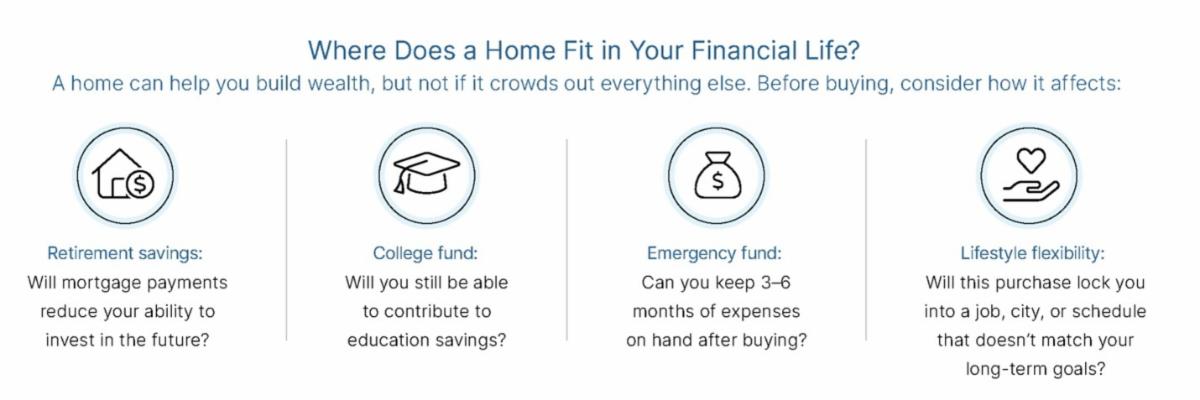
When you may be ready to buy: On the other hand, if homeownership won’t hold back your other priorities and you expect to stay put for five to seven years (the typical breakeven point when factoring in buying and selling costs), you’re likely in a good position to explore your options. A strong financial foundation, long-term location stability, and the desire to put down roots are all signs that buying could support your bigger picture.
New Paths to Ownership
The traditional path, saving 20 percent and securing a mortgage, still works for many buyers. But it's no longer the only option. Increasingly, people are turning to creative approaches that better match their financial realities.
Some explore rent-to-own arrangements that allow them to build equity while they live in the home. Others co-buy a property with a sibling or friend, splitting the cost and responsibility. And in many places, local or state programs offer down payment support in exchange for sharing a portion of the profit when the home is eventually sold.
These alternatives can make homeownership more accessible, but they’re not shortcuts. Each comes with trade-offs and legal complexities that deserve a closer look. This is where guidance from a financial advisor can be especially valuable. They can help you understand whether a less conventional path really moves you forward or just adds new risks.
How to Prepare Financially (Even if You’re Not Buying Yet)
Not buying right now doesn’t mean standing still. In fact, some of the most important steps toward successful homeownership happen before you ever tour a house. Building an emergency fund, improving your credit, paying down high-interest debt, and understanding what you can afford are all key to positioning yourself for the right purchase at the right time.
This is also a great opportunity to learn more about your local market. Consider the following:
· Are prices rising or stabilizing?
· What types of properties tend to hold value in your area?
· How much do you really need for a down payment, including closing costs and other expenses?
A financial advisor can help you answer those questions and build a customized plan so that when the time is right, you’re not just ready—you’re confident.
We Can Help
Whether you’re seriously thinking about buying or just starting to consider your options, you don’t have to navigate this alone. A financial advisor can help you move from “What if?” to “What’s right for me?” by clarifying your numbers, exploring real-world scenarios, and showing how homeownership—traditional or alternative—fits into your long-term strategy.
|