This week's edition is all about getting ready for winter! While it may seem like nature is starting to pause as the temperatures start to drop, some animals are hard at work preparing for the upcoming winter. As the cold sets in, the muskrats are on the move searching for unoccupied marshland. They start building dome-shaped lodges in and around the mud of shallow lakes and dig dens deep into the banks of ponds and slow-moving rivers.


Animals like chipmunks retreat below ground to store their food and spend the bulk of their winter. Other animals like raccoons and skunks don't store nearly as much food, but rather rely on their body fat to keep warm during their extended periods of sleep. On the other side of nature, just as you begin to think all the flowers have disappeared, we see plants like the Witch Hazels start to bloom.


As you can see, there's quite a lot going on during this time of the year! Be sure to visit our November Step Outside Guides and try out some of the activities below to help take your learning outdoors and learn about some other happenings in nature this November!


Grades K-4

Winter is Coming

This resource teaches students about the seasonal adaptations of local wildlife through diverse activities that incorporate games, displays and habitat investigations. Students examine the changes in appearance and behaviour that occur in animals as they prepare for winter. They also learn that many Canadian animals need unique wintering habitats to survive the cold weather.  


Activities

Grades 3-5

Movers, Sleepers, and Tough Guys: Wildlife in Winter

As Canadians, we know winter is harsh, but imagine what our native wildlife must go through! This lesson uses appealing activities to develop an understanding of winter survival mechanisms in animals. An active outdoor component also engages students in exploring the dynamic natural world that surrounds us in winter.


Activities

  • To make it through to the next spring, animals have developed three different coping strategies: move out, sleep through, or tough it out. Read about the Movers, Sleepers and Tough Guys to learn who migrates, hibernates or adapts
  • Get outside and participate in Keep Your Creature Warm, an activity that looks at the importance of good insulation for hibernating species
  • Be a nature detective and look for signs of animal tracks and other natural treasures. Challenge older students with this Habitat Hunt

Grades 6-9

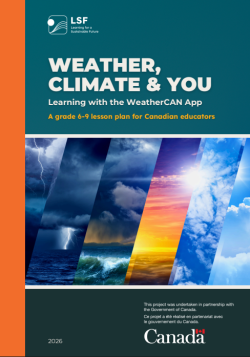
Weather, Climate & You

This resource uses the WeatherCAN app to help students explore the relationship between weather, climate, and daily decision-making. Students learn to interpret real-time weather data and forecasts while developing an understanding of how weather differs from long-term climate patterns. Through hands-on activities such as tracking weather over time, identifying patterns, and reflecting on personal experiences, students deepen their understanding of how weather affects their daily lives. The lesson also builds awareness of climate change and extreme weather, emphasizing the importance of reliable information for safety and planning.


Activities

  • Identify weather conditions in different provinces and territories using the WeatherCan app
  • Explore Canadian Weather patterns and impacts using real-time weather data and Indigenous perspectives on environmental monitoring. See Lesson 1
  • Get outside for an Experiential Observation Walk. See Activity 2
  • Build a winter bird-feeding station in your schoolyard. In winter, when food is scarce, birds need more energy than usual to keep warm. Learn how to make a variety of simple feeders or build a winter bird warmer


Grades 7-12

Wildlife Burrows

Wildlife use dens or burrows for many different reasons and purposes, such as shelter, protection, reproduction, etc. Some of the dens are temporary, and others are more permanent. In this resource, students will gather information about an animal and their burrow. After completing the research, they will develop a scale model including different chambers and their purposes of the burrow or den and present it to the class.


Activities

  • Get outside and participate in the Winter Wildlife Game, a predator-prey game in which adaptations to the cold and snow conditions are highlighted. Both predators and prey must endure a series of winter conditions, which may result in their gaining or losing food cards 
  • Arctic animals live in very cold environments. What adaptations help them stay warm? Test the insulating properties of different materials in this activity: How do animals stay warm in winter?
  • Students can investigate why underground homes are green and how they would help a homeowner with cost savings and other benefits. Students can also compare what they have learned from wildlife to how underground homes or hillside homes use similar design. Students can also design their own underground or hillside home
  • In this outdoor inquiry students investigate how the depth and composition of snow can determine its insulating effects


About Learning Inside Out


Above you will find a selection of activities, broken down by various grade levels. These guides will be released biweekly and archived on our Learning Inside Out page, so you can always access the full catalogue.


Some of the activities have been modified from resources on our R4R database, simplified and adapted for both outdoor learning in the school yard or at-home as needed. The activity descriptions above should contain all the information and links that you need!


We want this guide to work for you, so your feedback is invaluable to us.

Please complete the feedback form below, or email us at info@LSF-LST.ca.


Follow us on social media for continued weekly highlights & other exciting opportunities through the school year!

Facebook  Twitter  Instagram  Linkedin  

Please share widely with any parents and teachers in your life!

Learning for a Sustainable Future (LSF) is a Canadian charity with over 25 years of experience working within the education system. Our Resources for Rethinking (R4R) database is an award-winning collection of resources that are peer-reviewed by certified teachers and connected to curriculum in all provinces and territories. R4R is recommended on many Ministry of Education websites.