|
The first half of 2025 was a whirlwind of activity. Funding sources for affordable housing and community development have been under threat, especially at the federal level. At the same time, we've also seen some progress, including the enactment of additional Low-Income Housing Tax Credit (LIHTC) resources and permanence of the New Markets Tax Credit (NMTC) program, as we reported in July. Despite this progress, real threats and challenges remain for affordable housing and community development programs. This quarter’s Policy Pulse gives the lay of the land on what will be a busy few months ahead.
In this edition:
- Status of federal appropriations
- CDFI Fund award delays
- Federal housing policy reforms gain traction
- Potential Trump Administration actions
- State snapshot
- Cinnaire Advocacy in Action
| | Status of Federal Appropriations | | |
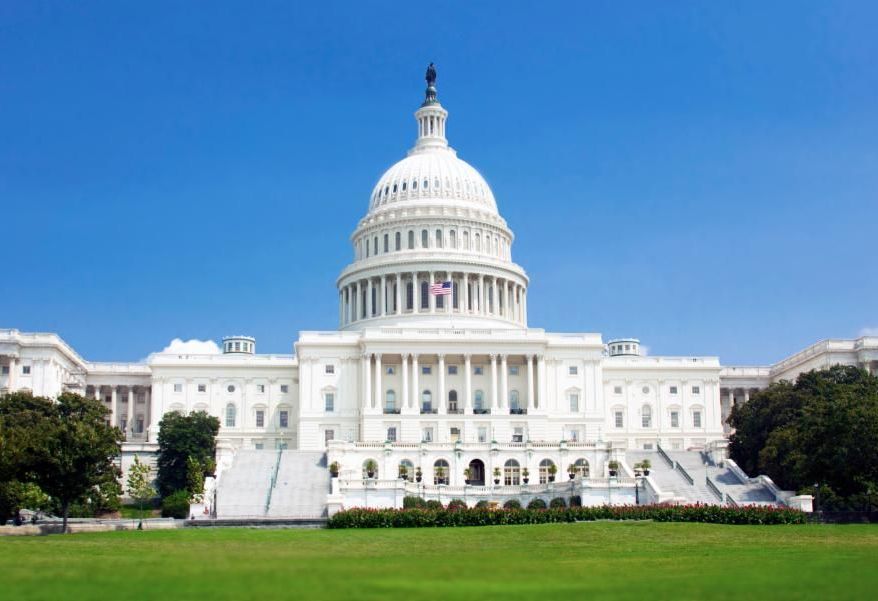
Federal funding for federal agencies expires on September 30. It remains to be seen how Congress will handle this. Congressional leaders are sparring over how to avert a federal government shutdown. Since 60 votes are needed in the Senate, Congressional Republicans will need some Democratic votes to enact any legislation to keep the government open. With no agreement forthcoming on federal spending for the year ahead, a short-term stopgap will be needed to kick the can down the road again. However, it's not clear how long that would be and whether Democrats will provide the votes needed.
Although Congressional leaders remain far apart, the Appropriations Committees have been working to put together individual funding bills, including funding for HUD, USDA, and the CDFI Fund. Earlier this year, the President’s budget submission to Congress kicked off the process and included proposals to dramatically cut core housing and community development program funding.
Congressional Appropriations Committees have largely rejected these cuts. While the House’s bill would zero out the HOME program, the Senate’s maintains level funding. The Community Development Block Grant (CDBG) would likely see level funding as well. The ultimate funding totals have not been determined yet. For the latest on latest on HUD and USDA funding levels, NCSHA has put together a helpful chart on where each program stands.
On the CDFI Fund front, only the House has taken action thus far. The House's bill would provide a 7.9% cut to current spending levels. Although disappointing, it is significantly more than the President’s budget request and level with the House’s proposed level from last year. The Senate Appropriations Committee has not yet released its version of its bill funding the CDFI Fund.
Despite the survival of these programs, it is worth noting that state funding sources will be strained, especially with American Rescue Plan Act (ARPA) resources winding down and pressure for states to make up for gaps caused by the One Big Beautiful Bill Act.
| | Senators Warner (D-VA) & Crapo (R-ID) lead the Senate Community Development Finance Caucus. | | |
The CDFI Fund has withstood multiple challenges this year and has emerged with strong bipartisan support. The most recent challenge has been the delay in awards funded by last year’s appropriations law due to objections from the Office of Management and Budget (OMB).
There has been strong bipartisan support and pressure on OMB to release the funding, and national CDFI trade associations are keeping the pressure up.
| | It is possible this funding could be released soon with supplemental applications required. We are also on the lookout for a potential Capital Magnet Fund (CMF) award application Notice of Funding Availability (NOFA) round and New Markets Tax Credit (NMTC) award announcements this fall. | | Federal Housing Policy Reforms Gain Traction | | |
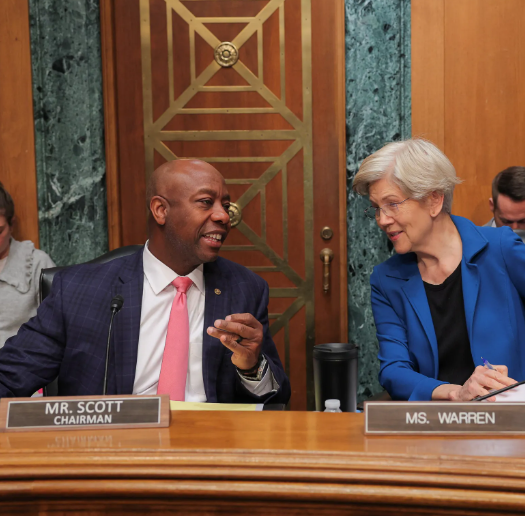
While much of the attention this year has been on the budget and tax front, we have also seen an uptick in activity by the committees charged with oversight and authorization of federal housing policy. In late July, the Senate Banking, Housing and Urban Affairs Committee unanimously passed out of committee its Renewing Opportunity in the American Dream (ROAD) to Housing Act of 2025 (ROAD to Housing Act). Co-led by Senator Tim Scott (R-SC) and Elizabeth Warren (D-MA), the bill consolidates almost 30 stand-alone measures aimed at increasing housing supply, reducing regulatory barriers, improving local zoning, and improving federal housing programs.
For the affordable housing and community development community, the bill would take several steps of note:
- Authorizes the decoupling of the Section 521 Rental Assistance (RA) program from the Section 515 program when the mortgage on a property matures
- Permanently authorizes the HOME Investment Partnerships program while adding flexibility for localities and streamlining inspections
- Streamlines National Environmental Policy Act (NEPA) reviews for small and infill housing projects
- Directs HUD to develop best practice frameworks for zoning and land-use policies, so that communities will be better equipped to identify and dismantle local obstacles to housing production.
It is not clear what the path forward for this legislation is. The House Financial Services Committee has indicated that it will consider housing legislation in October, including a potential HOME bill, but it will likely want to make its own mark.
Either way, it is positive to see so much interest in advancing housing policy, including bipartisan support for maintaining and improving the HOME program.
| | Potenial Trump Administration Actions | | |
Treasury Secretary Scott Bessent has said that the Trump Administration may declare a national housing emergency this fall. It is not clear what actions the Trump Administration may take or what authorities a national emergency would give the Administration, but Secretary Bessent pointed to the need to standardize building and zoning codes and decrease costs.
In addition, the President has indicated his desire to privatize Fannie Mae and Freddie Mac. There are many unanswered questions about how this would occur, especially since changes to the Government-Sponsored Enterprises (GSEs) can have wide-ranging impacts on the housing market.
| | |
State budgets continue to face significant pressure. Some of this pressure was anticipated by the winding down of the American Rescue Plan Act which provided significant federal resources to state and local governments. In addition, states are now grappling with implementation of the One Big Beautiful Bill Act. Many provisions of the federal law directly and indirectly impact state spending.
Many states are facing difficult decisions around how to respond to cuts to Medicaid and SNAP benefits. Additionally, as tariffs are implemented, some state corporate tax collections have dropped below estimates which makes the budget environment more challenging. With less tax revenue, and less federal support for safety net programs, state budgets must carefully assess priorities. According to the National Council of State Legislatures, states are projected to spend .6% less on average than they did in the previous fiscal year.
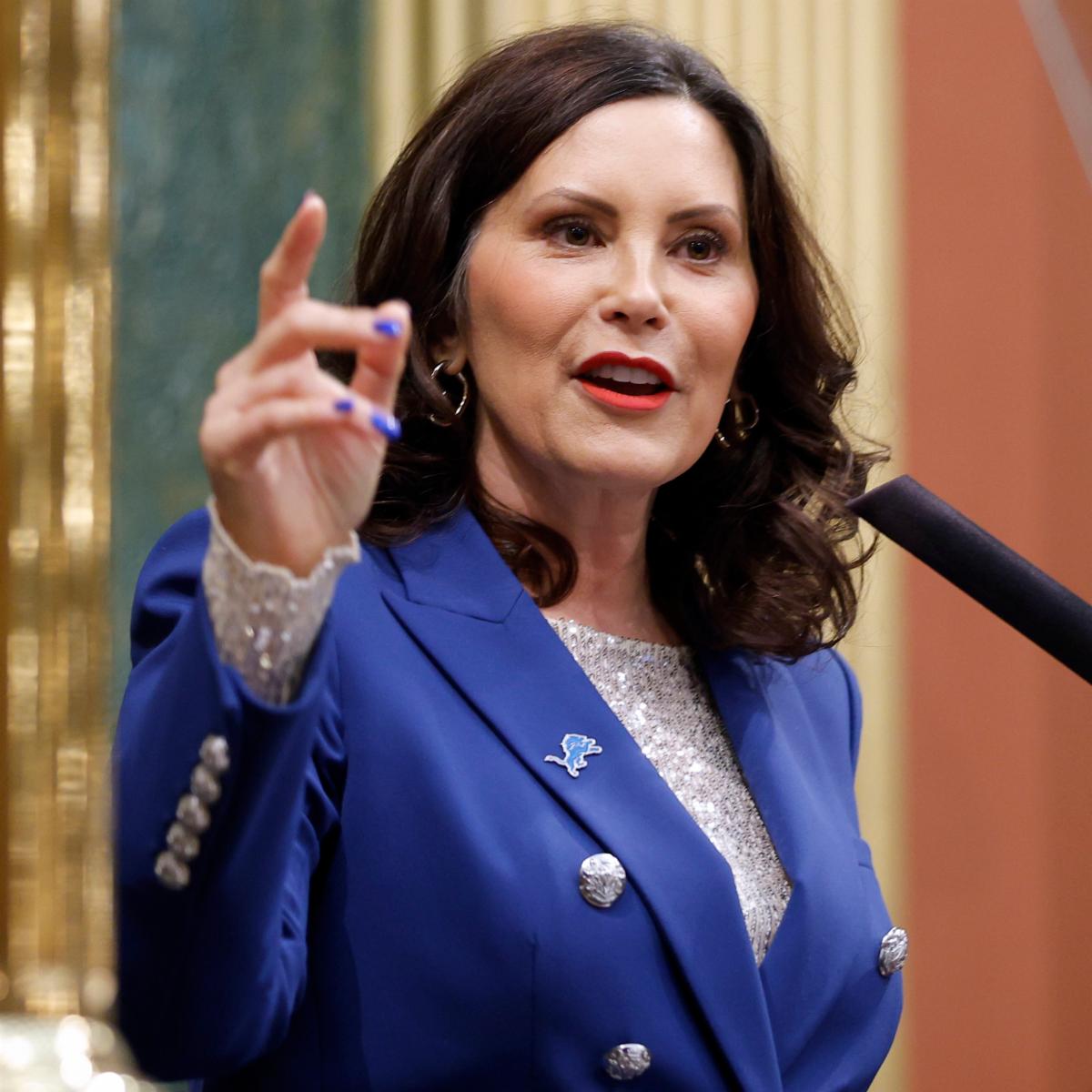
For example, Michigan Governor Whitmer and the state legislature continue to negotiate over the FY 26 state budget. They have until October 1 to reach an agreement. The new Republican Majority in the House is seeking to invest $3 billion in infrastructure without raising revenue. Negotiations are reportedly moving forward but the House, Senate and Governor are approximately $5 billion apart on their proposals.
| | Cinnaire Advocacy in Action | | Over the past few months, Cinnaire has been actively working to educate lawmakers on the impact of our work and the value of affordable housing and community development programs in addressing our communities’ needs. Here’s a snapshot of our advocacy in action. | | |
| |
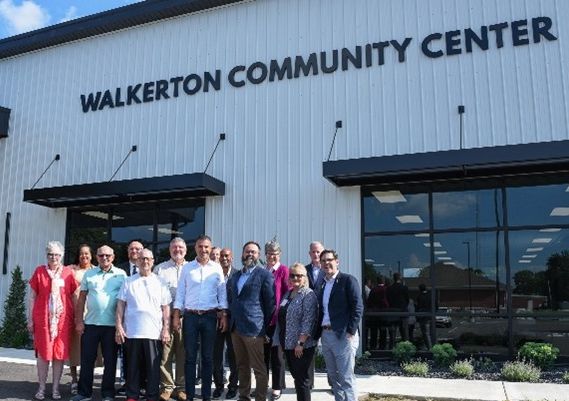
Site Visit with Rep. Rudy Yakym (R-IN)
U.S. Congressman Rudy Yakym (R-IN 2nd) visited Dogwood Estates, a community in rural Walkerton, Indiana, that has been transformed by the Low-Income Housing Tax Credit. Dogwood Estates stands as a model for rural redevelopment, proving that strategic investment and public-private collaboration can restore blighted areas and uplift entire communities.
A member of the House Ways & Means Committee, Congressman Yakym discussed his strong support for the Housing Credit and highlighted the recent historic expansion of the program enacted by Congress. Those provisions are expected to create or preserve 1.22 million homes nationwide and 28,000 in Indiana. The LIHTC program continues to enjoy broad, bipartisan support in Congress thanks to its proven track record of delivering high-quality, affordable homes and empowering local communities to meet their needs.
| | |
Senator Lisa Blunt Rochester (D-DE) Unveils
New Way Home Agenda
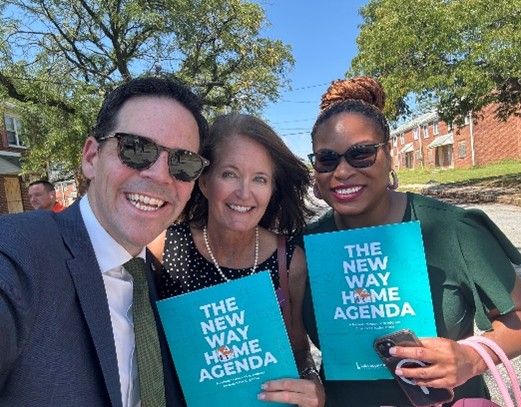
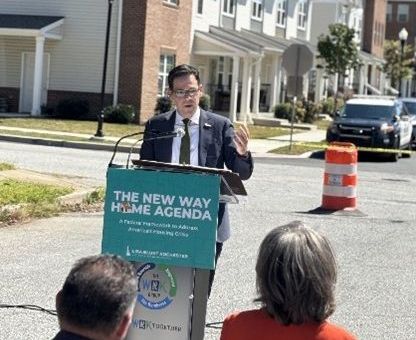
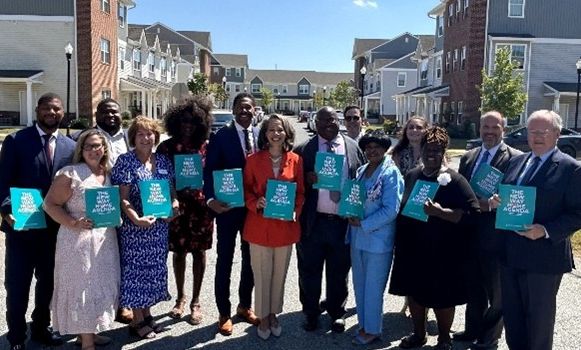
Cinnaire was honored to join U.S. Senator Lisa Blunt Rochester for the unveiling of her new legislative agenda to combat the housing crisis: "A New Way Home: A Federal Framework to Address America's Housing Crisis."
The framework lays out five pillars covering Senator Blunt Rochester's vision on how to get it done. Chris Neary was invited to speak to the fifth pillar of the agenda focused on opening new doors through smart tax policy.
“Smart tax policy like the Housing Credit is helping create much needed affordable housing across our footprint, from Wilmington to small rural towns in the Midwest. These communities are united by the urgent need for solutions to address the housing crisis. At Cinnaire, we see that housing is a national problem that needs urgent attention – and we need the federal government to actively support this work. We are grateful to Senator Blunt Rochester for putting forward a bold, comprehensive plan to ensure that everyone has access to an affordable place to call home.” - Chris Neary, SVP, Policy, Research & Advocacy
| | | |
Highlighting Successful Advocacy at the
State Level
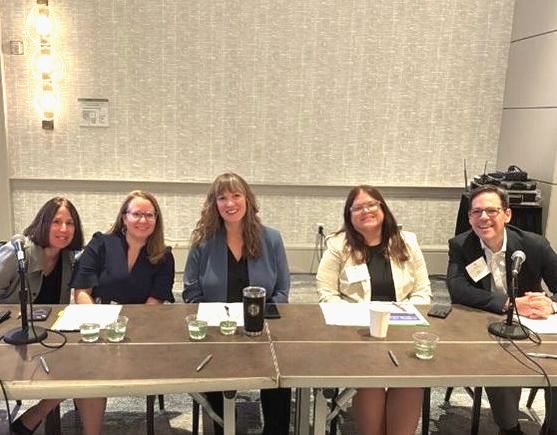
At this year’s National Association of State and Local Equity Funds (NASLEF) conference in Detroit, Cinnaire was fortunate to be joined by members of the Michigan and Detroit CDFI Coalitions to tell the story of the successful adoption of the Michigan CDFI Fund.
Moderated by Chris Neary, the panel included Jennifer Hayes, Invest Detroit; Stacy Esbrook, Michigan Community Capital; Elissa Sangalli, Northern Initiatives; and Katey Forth,Cinnaire.
| |
|
Cinnaire on the Hill
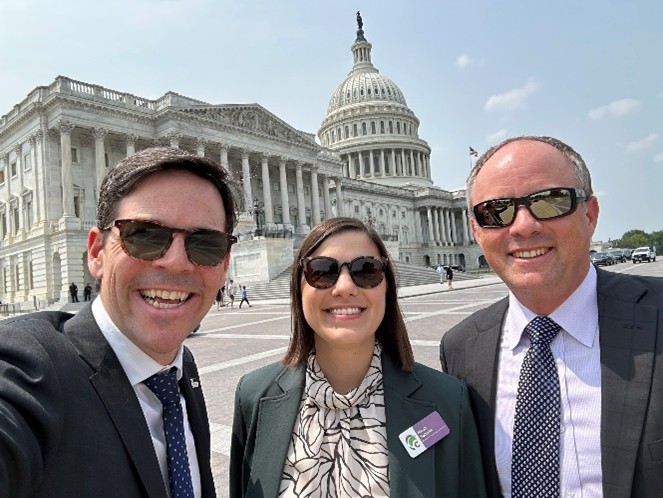
This summer, Cinnaire team members visited Congressional delegations representing Indiana, Illinois, Wisconsin, Delaware, and Maryland. Chris Neary was joined by Keith Broadnax, Nicole Solheim, Chris Jillings, Dionna Sargent, and Jake Stern. They shared the impact of Cinnaire’s work and the role of Low-Income Housing Tax Credit, the New Markets Tax Credit, HOME, rental assistance, USDA housing programs, and the CDFI Fund in supporting our communities.
Senator Todd Young (pictured below) was the lead Republican working to include LIHTC resources in the reconciliation bill.
| | Chris Neary, Nicole Solheim and Chris Jillings met with the majority of the WI Congressional delegation. | | Keith Broadnax and Chris Neary meeting with Senator Todd Young (R-IN) and his staff. | | Chris Neary, Dionna Sargent, and Jake Stern meeting with Sen. Lisa Blunt Rochester (D-DE) | | Want to Stay Up-To-Date? Subscribe Here | |
Are you interested in regularly receiving policy updates? Click here to subscribe to stay up-to-date on the latest policy discussions in Washington.
Share Policy Pulse on social media
| | | | |