|
Meet SC's Incredible Teacher of the Year!
Randi Glaser
| |
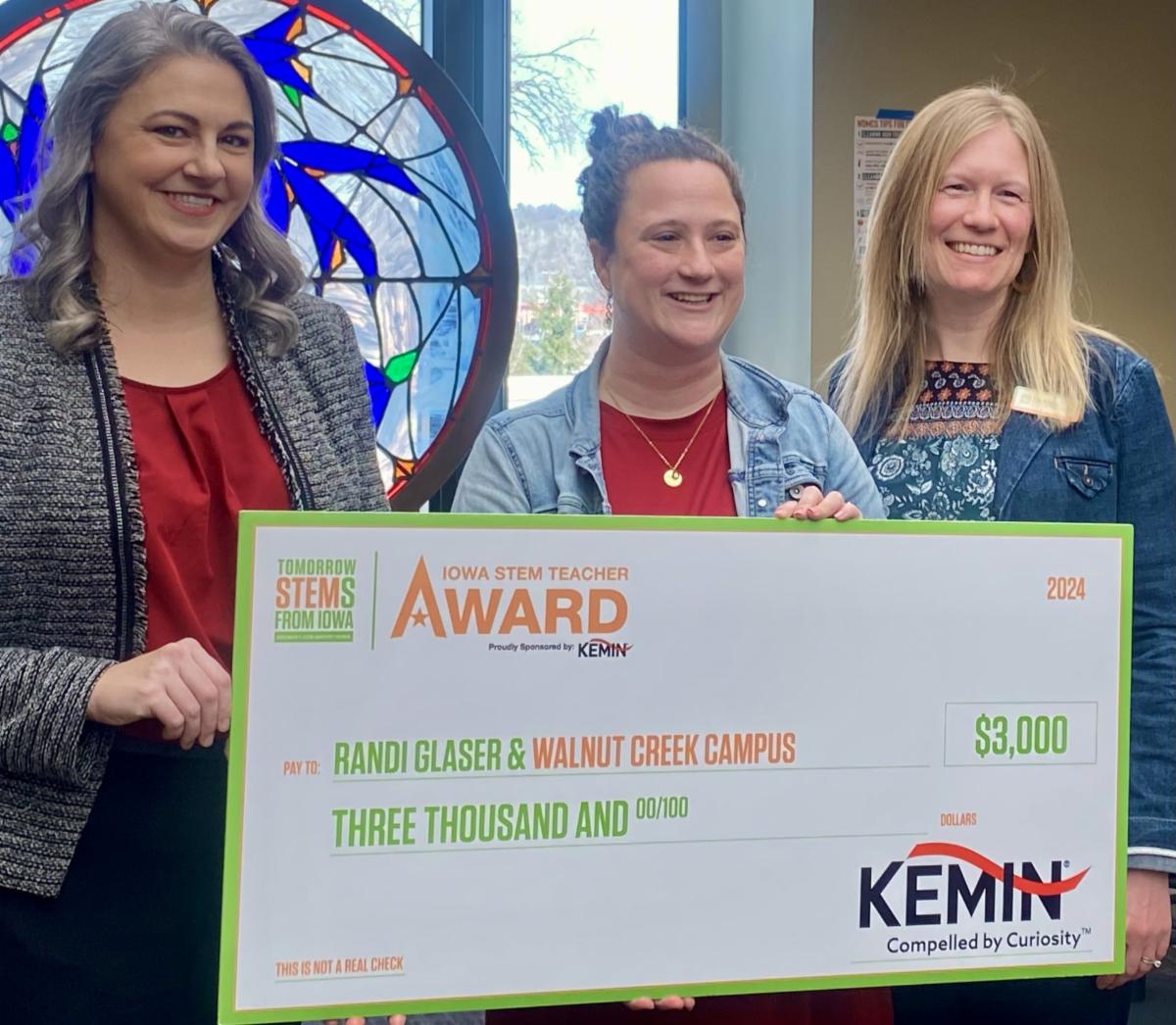
Kemin Industries' Megan Boettcher presented the award to Walnut Creek Science teacher, Randi Glaser, center, in the South Central Region. Sarah Derry, right, manages the SC STEM Hub. | |
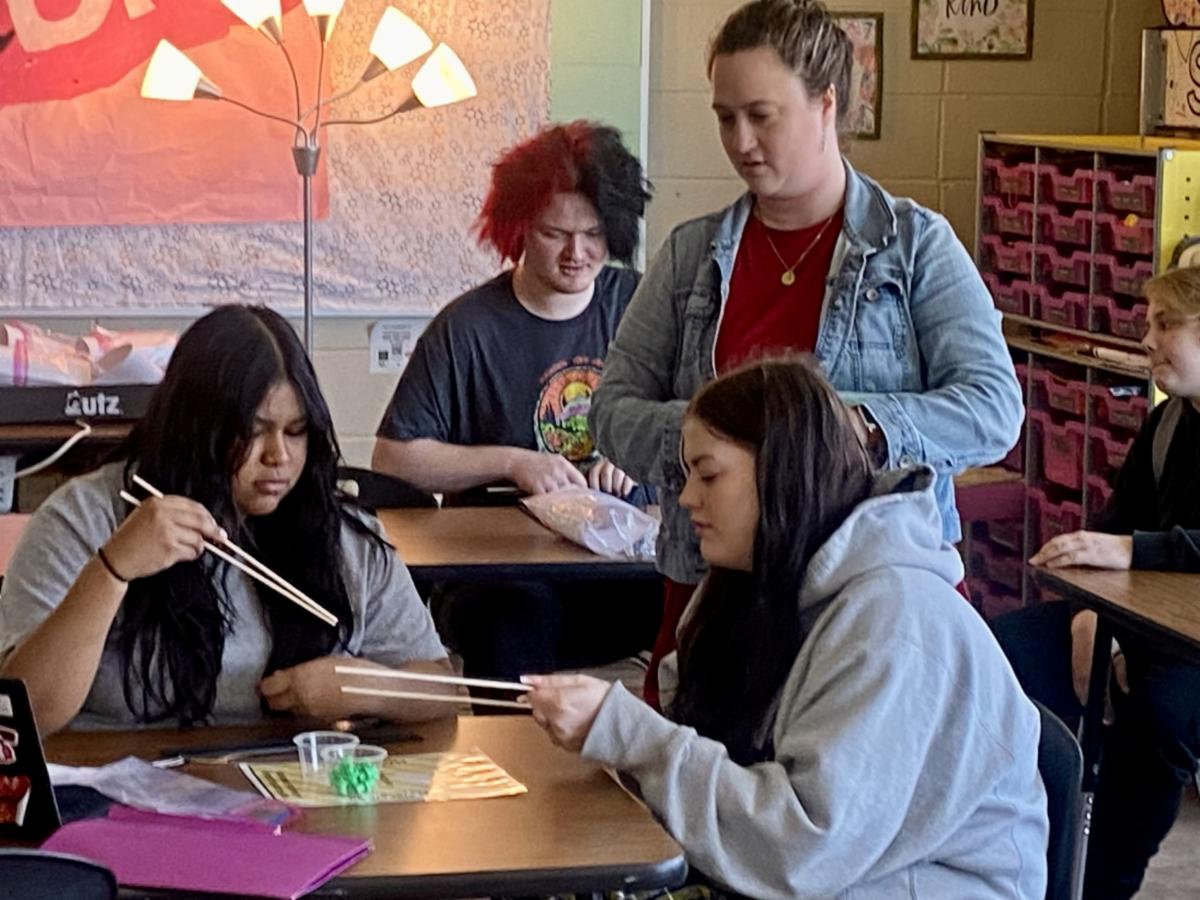
Randi Glaser, at right, works with students on a STEM cart challenge. | |
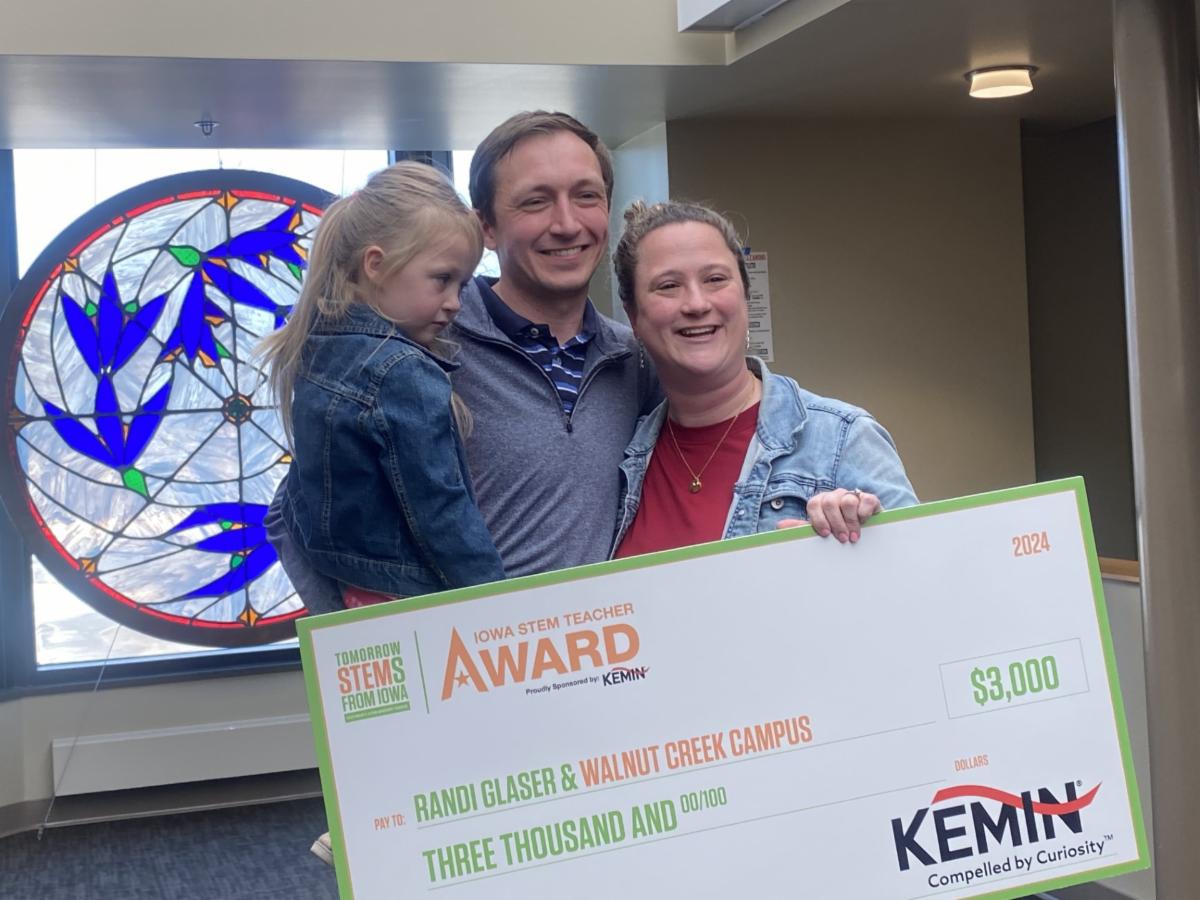
Randi Glaser, right, with her family. | |
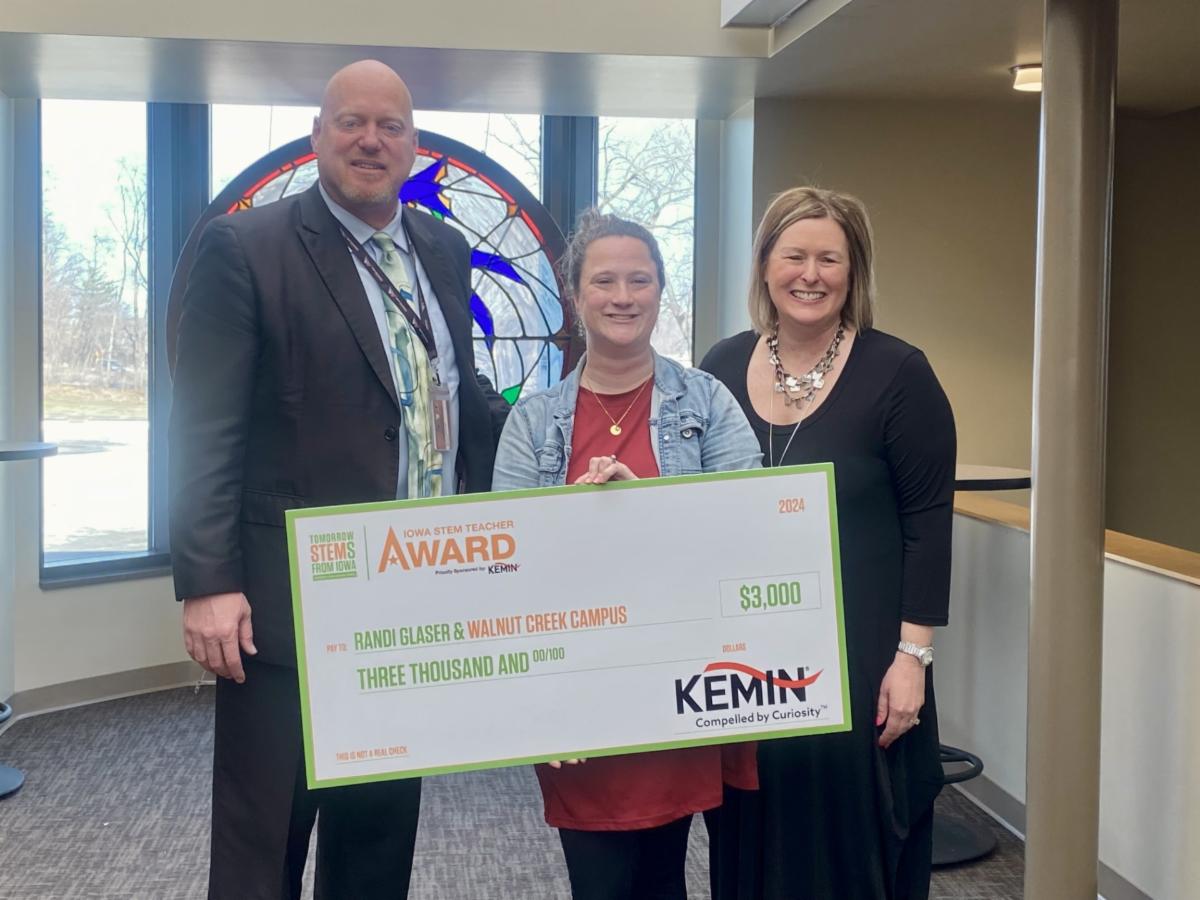
Superintendent Matt Adams, Glaser, and Kim Davis, principal. | |
|
* * *
The key to classroom success lies in having an incredible teacher like Randi Glaser (pictured in the top photo center with ) who can motivate curious students, balance a supportive family, and collaborate with other teachers and school leadership. For these reasons and more, she's been awarded the South Central Region's Kemin STEM Teacher of the Year!
Nomination
The award is given to one educator in each of the six Iowa STEM Hub regions. Nominated by fellow educator Alex Hammer, he noted that she's not only an outstanding STEM educator, but she's also a great example of hands-on, collaborative coursework that engages students in relevant curriculum across disciplines. Hammer and Glaser created a project that bridges econ + bio, looking at science from an economic lens.
"A great teacher's classroom is an extension of themselves," said Hammer, "and Randi is a special person. If she can bring a smile to someone's face, they might give science a second look...All students wonder where they fit in the world, and Randi helps with that."
Motivation
It wasn't until college that Glaser found her calling as a teacher: "I went to school to be a pharmacist." But she left the field after her first job shadow, when she realized she wanted something more. "I liked studying biology and anatomy, and I'm good at math," she added.
Glaser found her niche in science education. She enjoys the creative elements of piecing together curriculum. In fact, she still integrates the Scale-Ups she's been awarded since 2014-15 into her classroom.
Senior Kaden Lorch, who plans to be a future engineer, noted, "Randi is high energy. She's a great communicator and makes learning fun."
Inspiration
Perhaps Glaser's greatest asset is that she has a big heart.
"Her class is really interactive," said senior Norah Wanke, who plans to study nursing after graduation. "She makes learning fun. Most importantly, she cares for all of her students.
The Kemin STEM Teacher Award comes with $1500 for school use and $1500 for personal use. Glaser hopes to build a greenhouse on campus. With a room full of happy plants and happy students, we have no doubt she'll be successful in growing her program.
"I try to inspire curiosity," said Glaser. "I want to leave students with the ability to question and keep learning. My greatest hope is that they continue to create and grow."
| |
Van Meter Elem Shares Spot-On STEM Strategy | |
|
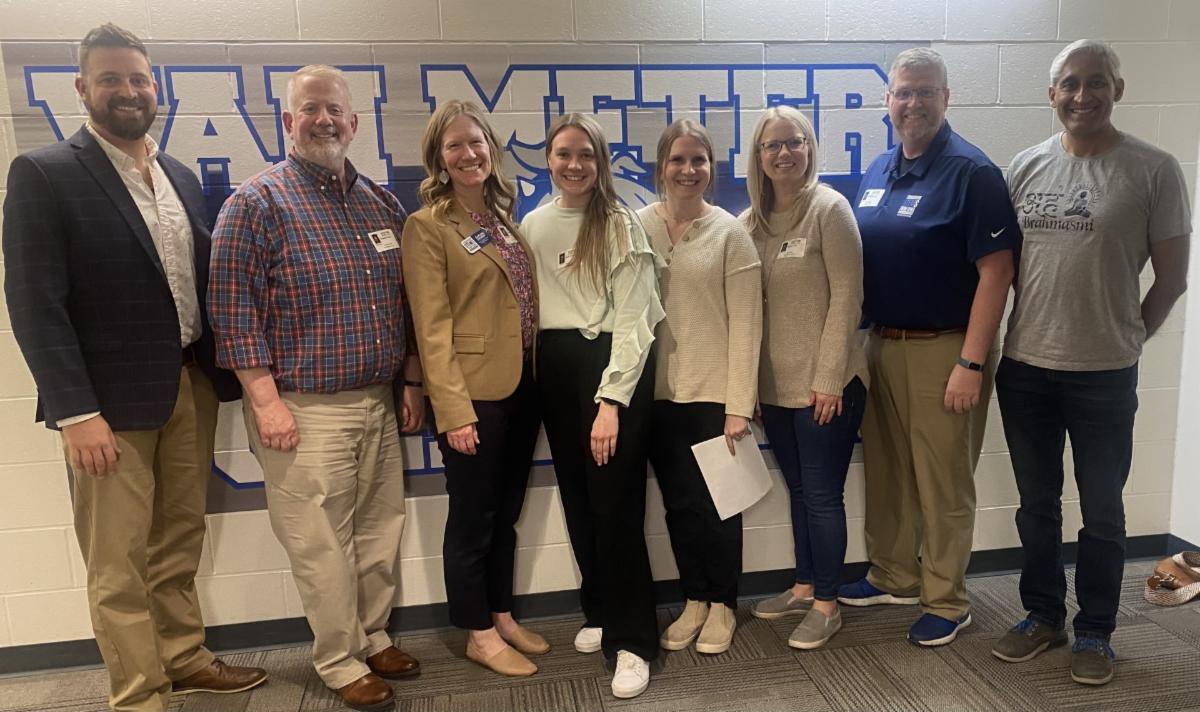
Left to right: Justin Lewis, Ken Bozer, Sarah Derry, Alexis Cordts, Alison Moore, Ashley Cook, Creighton Cox, and Mahesh Mathrubutham attended the March meeting.
The SC STEM Advisory Board held its March meeting at Van Meter Elementary (VME), spending much of the time visiting three inspiring classrooms and seeing 10 elements of various Scale-Ups in action. VME's STEM strategy is three-fold: make it hands-on, encourage collaboration, and integrate materials into existing curriculum.
|  | |
STOP 1: Ferguson on Collaboration
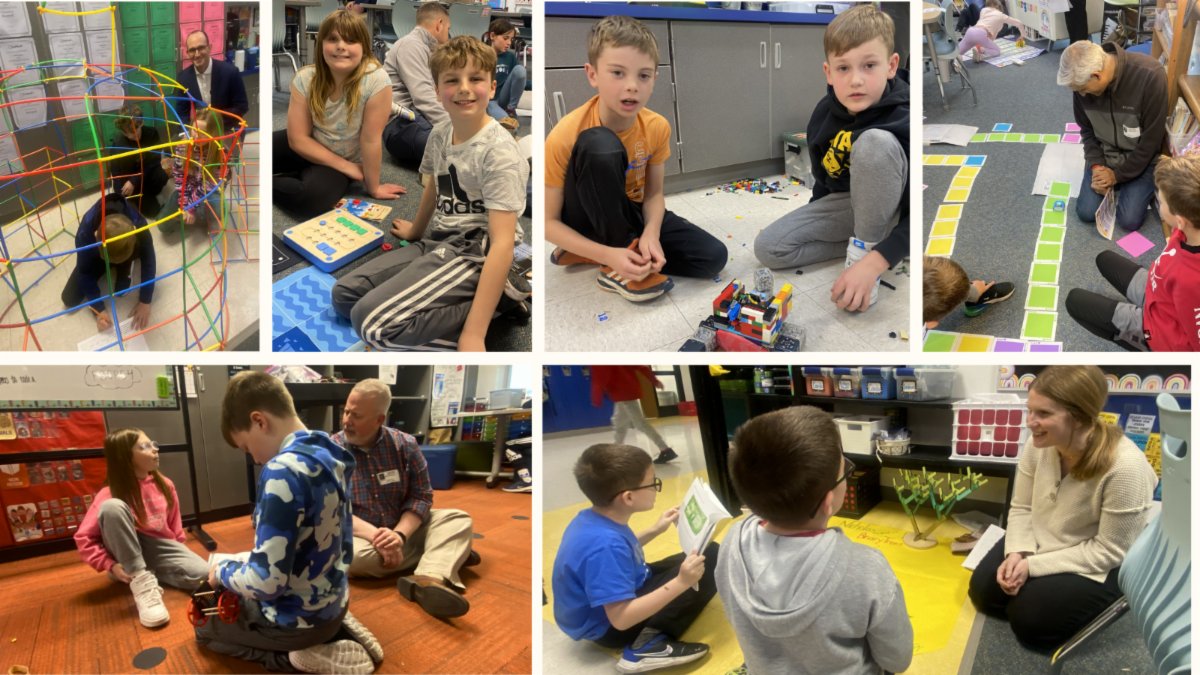
Tracy Ferguson is the ultimate STEM education advocate. For the past 12 years, she's been awarded Scale-Ups, using them in her own classroom and sharing them with other teachers. We saw students rotate through six hands-on STEM centers, most of which were Scale-Ups.
Ferguson said the most important elements students take away from every Scale-Up are the 21st Century Work Skills. "We can't assume kids can collaborate, communicate, and actively listen. We have to teach them." She sets aside time many days to use the vocabulary and provide practice, teaching students they're better together.
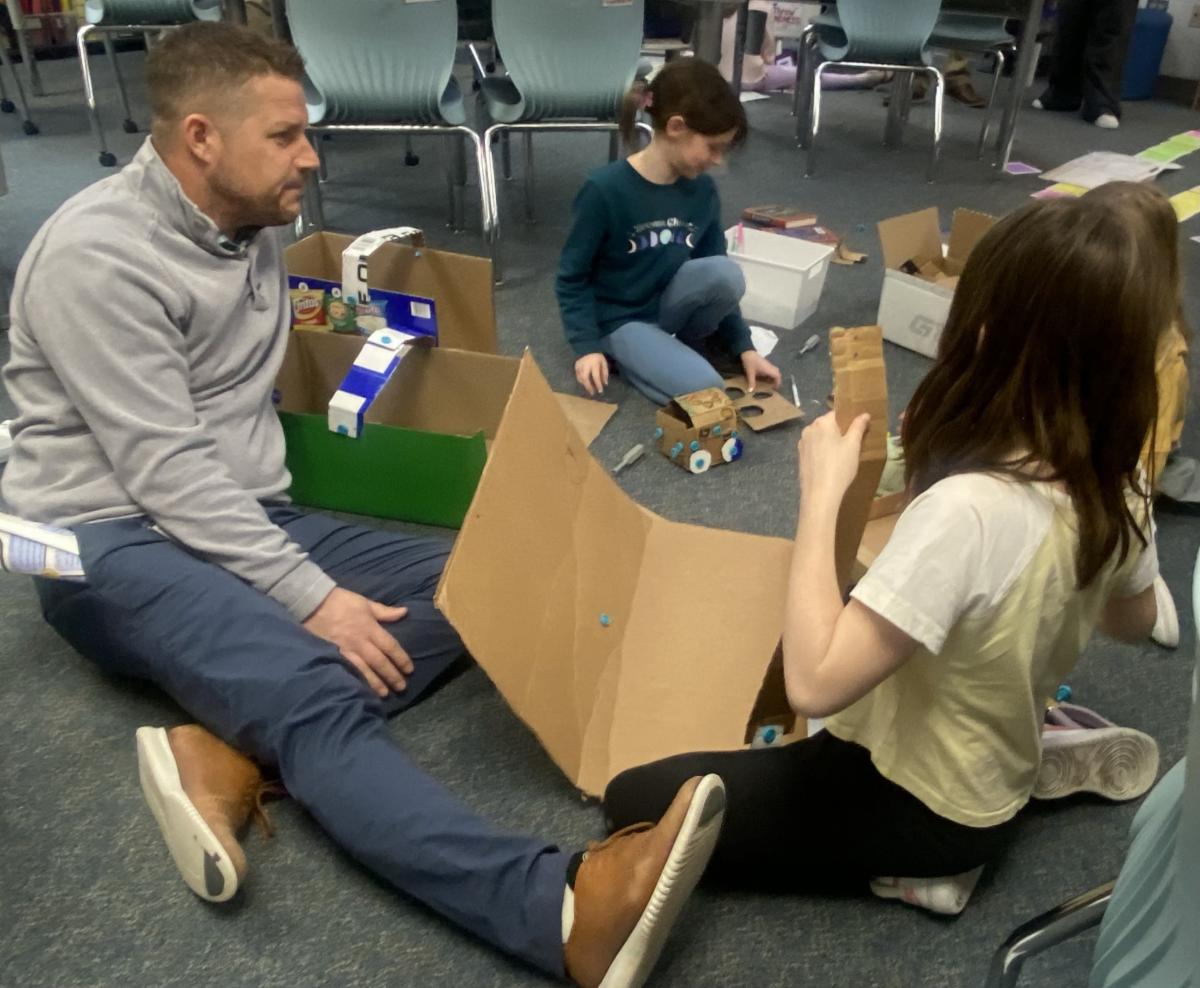
From Storytime STEM to STEM Cart, students said the one thing that made their projects quickly improve was collaboration. "If you collaborate, you can accomplish anything," said Levi, third grader. "If we had to do this alone," Brogan, third graded, added, "it would take forever, and it wouldn't be as good."
| 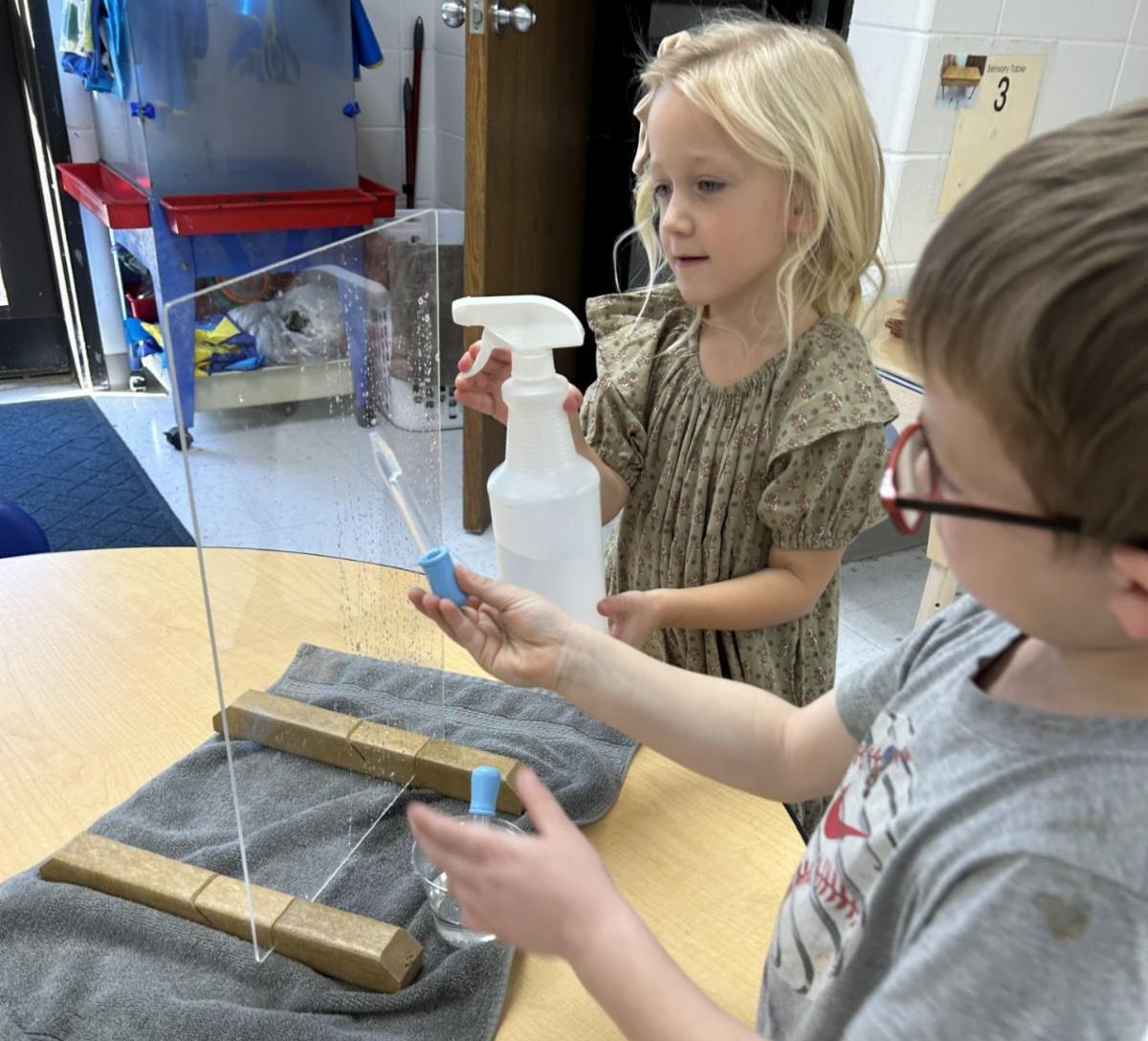 | Rebecca Wilson's preschoolers observe properties of water using Waterworks Scale Up Materials during a project on pipes and water. | |
STOP 2: Wilson on Observation
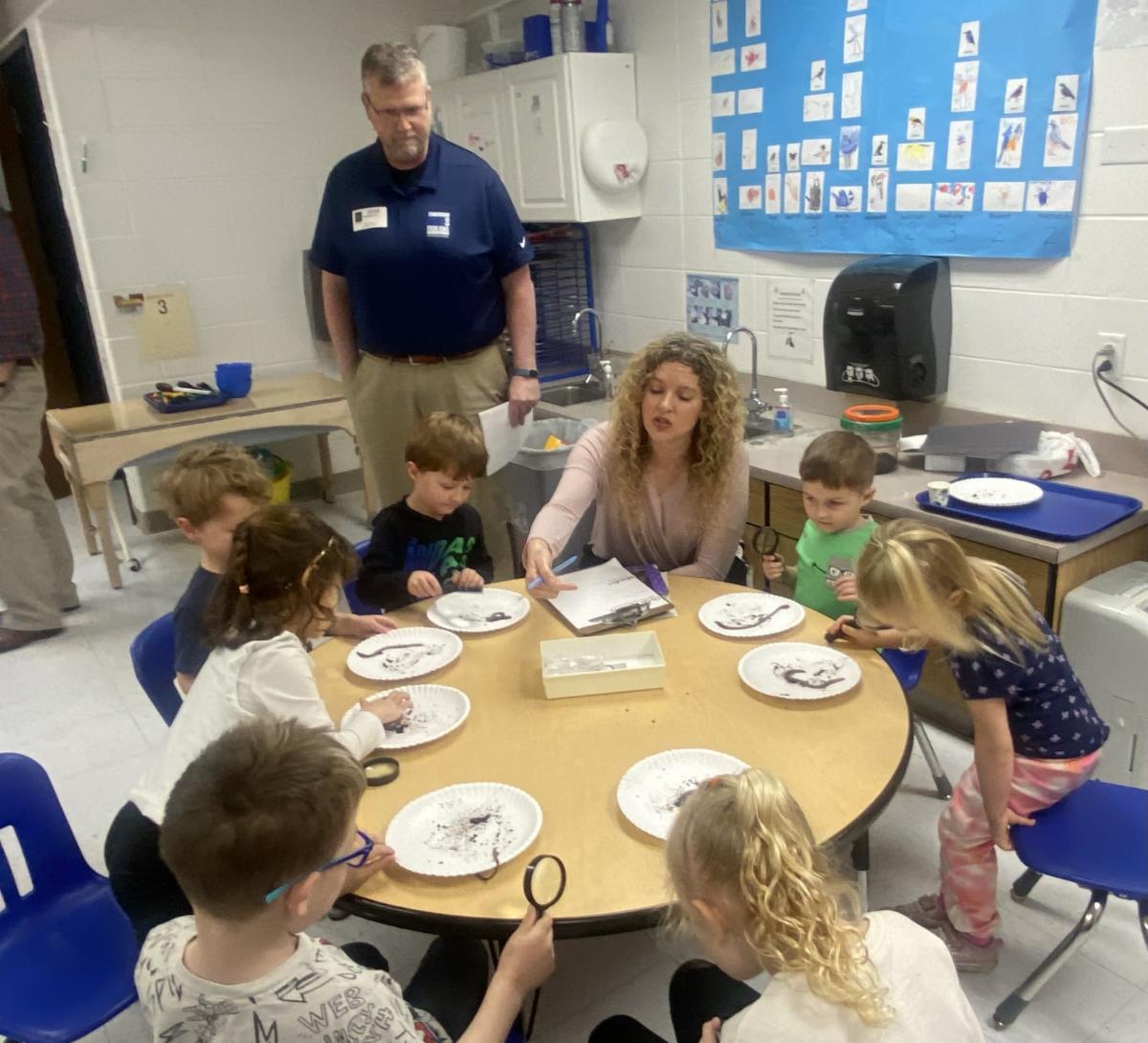
Watching Rebecca Wilson, SC's 2021 STEM Teacher of the Year, is a master class in teaching the skills of observation and hands-on learning. Her four-year-olds were in awe of their timely spring topic: earthworms! And every one of them got a plate with one perfectly wiggly subject of study.
Instead of being squeamish, students embraced the learning experience. "I love earthworms," declared Safira.
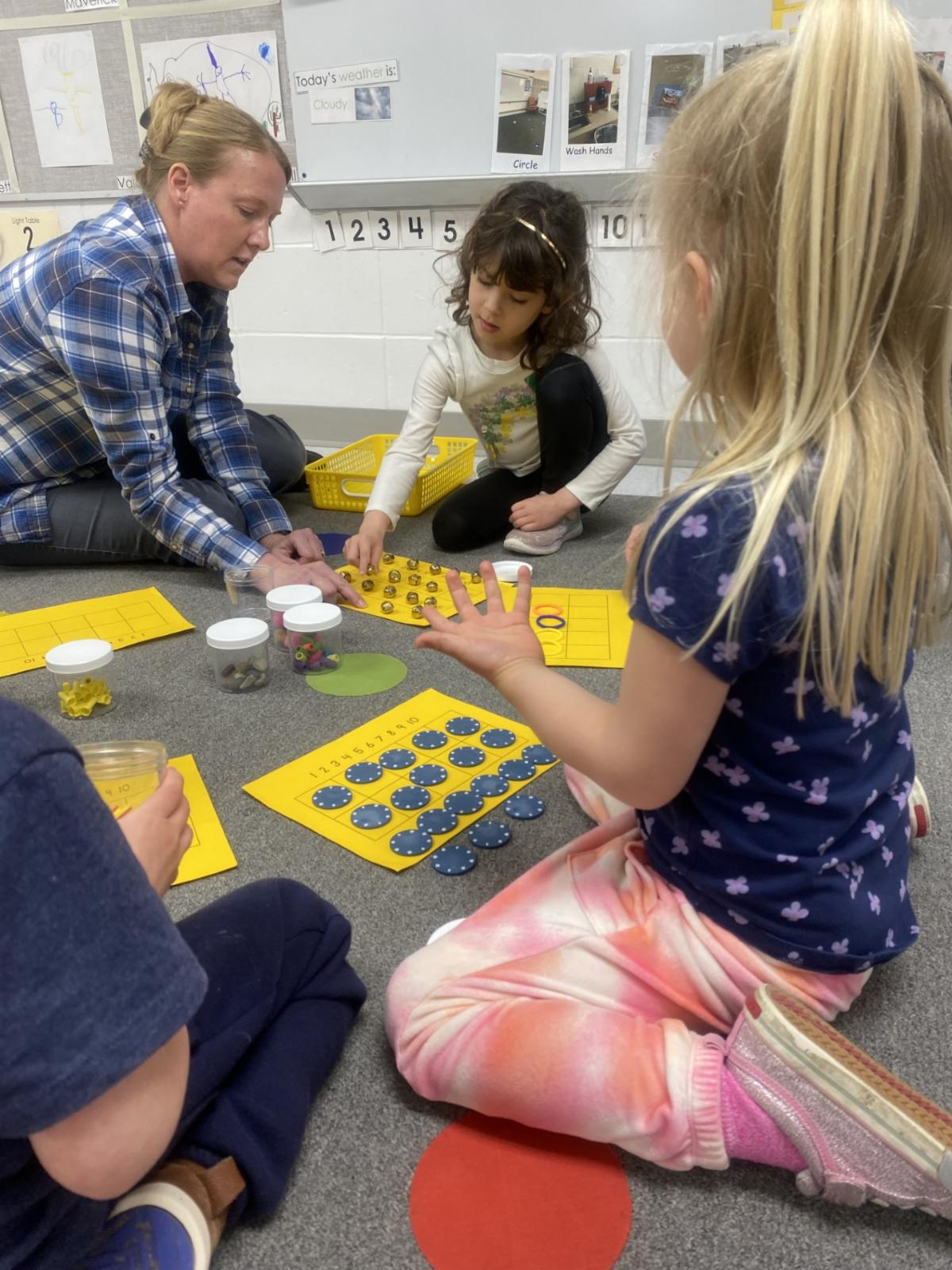
On the other side of the room, Rachael Guerttman (right insert) was teaching how to count higher numbers with 10 frames and manipulatives. Students were as engaged in numbers as they were with worms.
Wilson allows student curiosity to inform the next steps of instruction. Often that leads to a community expert. If that's the case, please consider this an all-call to Iowa earthworm experts.
| |
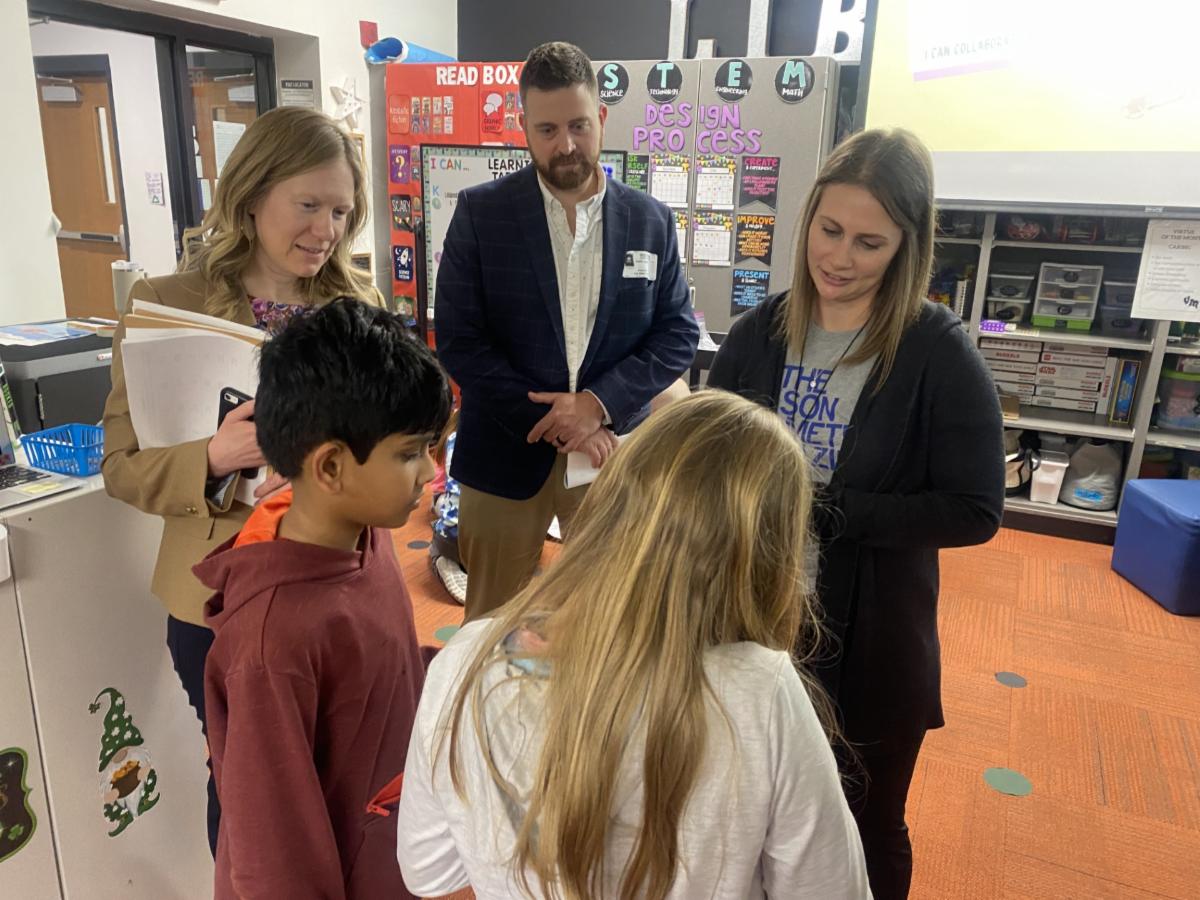
Students talk about their racer design with STEM teacher Megan Muyskens, Justin Lewis, and Sarah Derry (listed right to left). | |
|
STOP 3: Muysken's STEM Schedule
Elementary students rotate into the STEM room, also known as the library, for 35 minutes everyday for one week, making it one of four Specials that every student experiences. (As opposed to a schedule where students meet once a week over the course of a quarter or semester.) "Teachers and students prefer this schedule," said Principal Cody Tibbets (pictured right), "as it builds relationships, helps students retain information, and means fewer project-storage issues."
On the day we visited, students worked on rubber band racers, in which the rubber band stores potential energy by being wound around the axle. Releasing the rubber band spins the axle and converts potential energy into kinetic energy, propelling the car forward. Students worked with partners and discovered the perfect number of rubber bands is...
A secret! You'll have visit Van Meter (or one of the 51 school or community buildings that recieved a STEM Cart award this year) or build your own.
| |
Teacher-to-Teacher:
Tracy's Tips to Integrate STEM | |
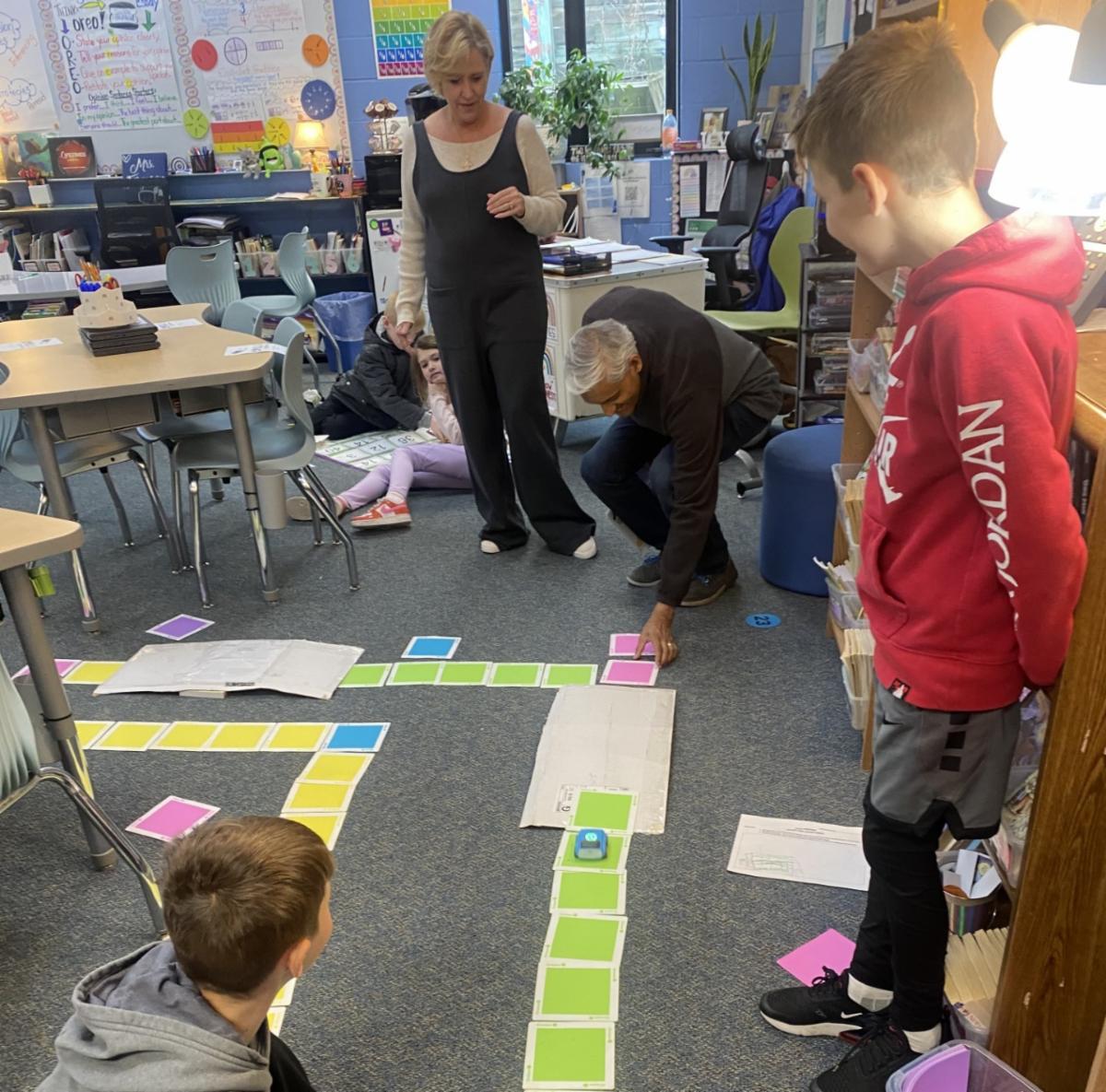
Tracy Ferguson, (above center), and her students, talk robotics with Advisory Board Co-Chair Mahesh Mathrubutham (at right). | |
|
Van Meter Elementary School's Tracy Ferguson has been awarded several Scale-Ups over the past 12 years, all of which she keeps alive and in rotation within her second-to-third grade looping classroom. She also shares kits with other teachers.
We asked her for some pointers for those seeking to incorporate STEM into existing curriculum.
| |
Tip #1
If you have 20 minutes of LITERACY CENTERS, consider using it to launch a hands-on STEM challenge. Here's a weekly plan to get you started.
STEM Literacy Station (This is an 85 page document of STEM lessons that I have created for my class during literacy stations).
- M = Read a book
- T= Read a problem the relates to the book
- W=Design a solution
- Th=Build your design
- F=Discuss and redesign
| | | |
Tip #2
Do your students arrive BEFORE SCHOOL?
My students can arrive in the classroom at 7:50. School begins at 8:15. To build a teamwork environment, I have small STEM Stations set up around the classroom. They are in totes and easy to takeout and put away each day. Ideas for totes include:
- Legos,
- Straws/connectors,
- Keva Planks,
- STEM related picture books for partner reading,
- and pipe cleaners.
There are several ideas online with pictures for the students to build.
| | | |
Tip #3
Do you ever have lunch with small groups of students?
I have found that it’s the perfect time to have lunch together and introduce new STEM tools to a few students at a time.
How it works: Once a week, I invite 3 students to have lunch with me and introduce STEM tools or activities. We call this STEM SNACKS. My students have recess right after lunch. These groups have always wanted to stay in from recess on their STEM Snack Day.
| | | |
Tip #4
Do you have ENRICHMENT TIME built into your schedule?
We have what’s called “Bulldog Time” which is 30 minutes each day where students are pulled from my class for TAG, SE, or Title Reading. I use this time for STEM activities. What better enrichment is there than having your students learning to communicate, collaborate, and problem solving? :)
I use Storytime STEM Packs from Iowa STEM Scale-Up! If you do not have these (YET), you could use any of the STEM Literacy Station lessons mentioned above. These are all made from easy to find/popular books in any of our libraries.
| | | |
Tip #5
I have also taught an after school SCIENCE CLUB for many years. My students are dismissed each day at 3:30. From 3:30-4:15, I have offered an After School Science Club for the past 21 years. It is twice a week for 8 weeks each year. This would be a GREAT way to extend STEM tools/activities to students outside of your classroom. I was also given a stipend for this time.
| | | |
The Big Picture
I understand how busy everyone is and how hard it is to implement STEM with such a heavy curriculum load. Just finding 10-15 minutes each day could improve your student’s communication, collaboration, problem solving skills, and teamwork strategies! There is always such an improvement with my students’ behavior once we are in the swing of our STEM activities and expectations.
| | | |
2021 SC Regional STEM Teacher Awardee: Rebecca Wilson | |
|
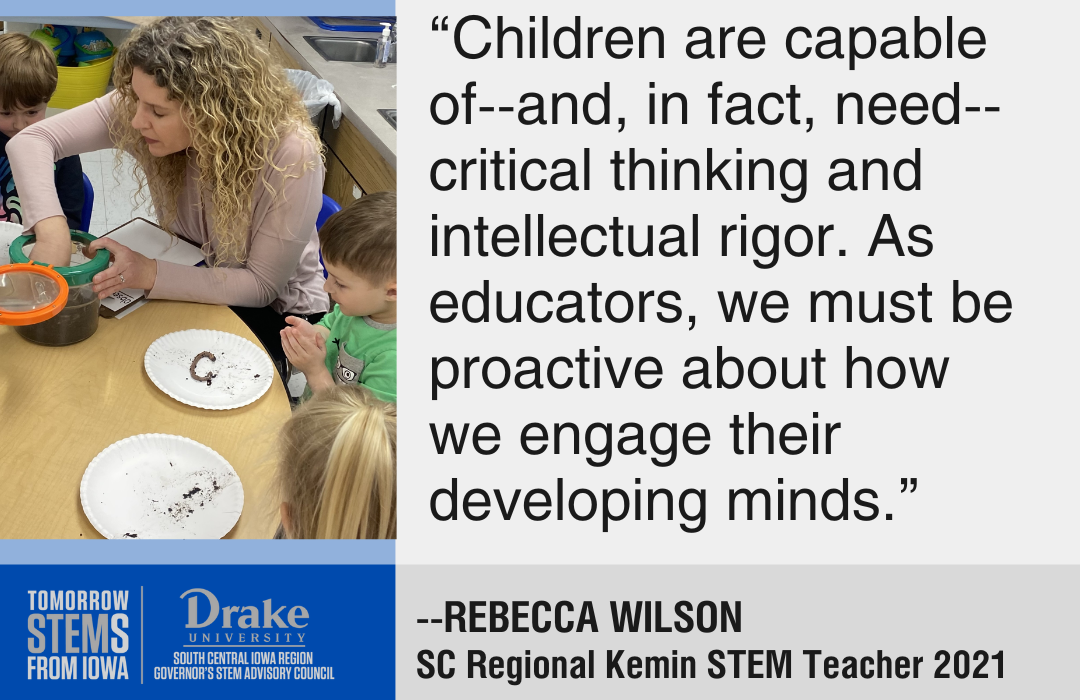
2021 Kemin + Iowa STEM chose Rebecca Wilson (pictured above) as SC STEM Teacher of the Year. In March, she hosted SC's Regional Advisory Board in a classroom visit. Wilson is an advocate for the life-long academic value of providing STEM resources and education to our littlest learners.
The featured quote is from an academic paper she wrote with fellow educator Judy Harris Helm. Its entirety can be found in ASCD's website and details how project-based instruction is crucial for preK students. Click HERE to read more.
| |
Inspiring Speakers, Timely Topics--All We Need is You! | |
|
Wednesday, April 10, 2024
Community Choice Credit Union Convention Center, DSM
"Whether your work involves preparing Iowa youth for careers or hiring people for careers in Iowa, the Summit is great context setting for our work together," said Sarah Derry about the annual STEM Summit.
If you're seeking ideas, inspiration. resources, and community contacts, this event is for you! The purpose is to amplify public conversation, set the stage for inspiring networks, and create learning environments that link classroom curriculum to real-world career opportunities. This day brings together Iowans from business and industry, education, nonprofits, trade organizations, professional societies, governmental agencies, elected officials, and students.
The Agenda
- Keynotes
- Breakouts
- Panels
- STEM Teacher Awards
- Build Networks
- Get Ideas
- Click for details: https://tinyurl.com/y2v8pr99
Have questions? Email the Hub!
| |
|
Find Your Spot!
Extern Applications
| |
|
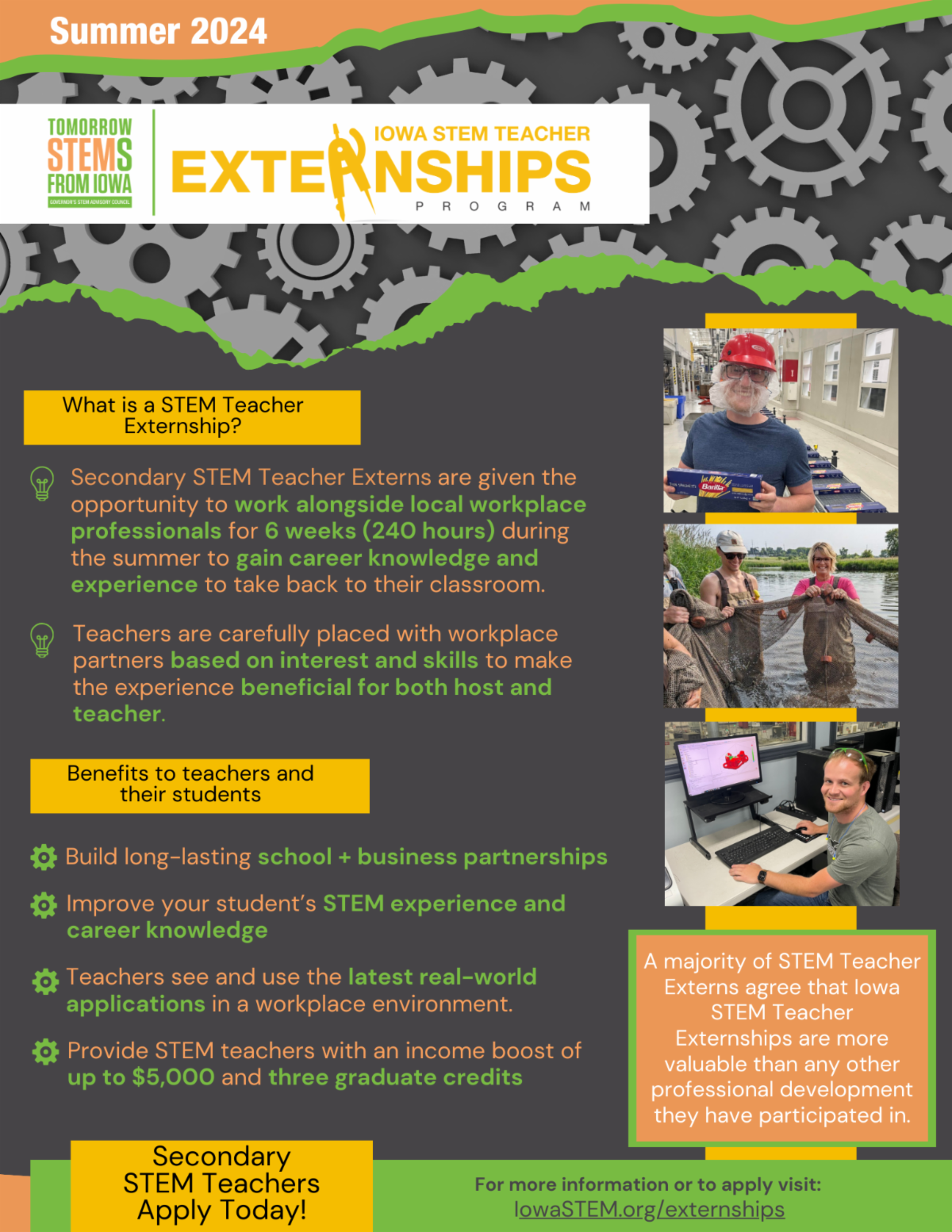
Externship Program Manager Ann Gritzner has many of the Summer 2024 positions filled, but there are a few sweet spots left! While the location is within the SC Region, any Iowa educator in any of the six regions is invited to apply and drive to the host city.
Below, you'll see the host, city, and type of teacher that might best fit.
- John Deere Des Moines Works / Ankeny / Business, Engineer, Industrial Technology
- Pella Corporation / Pella / Engineering, Industrial Technology
- Polk County Conservation / Maxwell / Business, Computer Science, Environmental Science, Life Science
- Poweshiek County Conservation / Montezuma / Environmental Science, Life Science
- Principal Financial Group / Des Moines / Computer Science, Engineering
- RCS Millwork, Ankeny / Industrial Technology / Mathematics
| |
If you're interested in a position, but not the perfect content fit, please reach out to Gritzner (gritzner@iowastem.org) to see if your skills and/or curriculum trajectory match. | |
Comp Sci Classes Designed for Elementary Teachers | |
|
* Meet statewide Computer Science guidelines. *
* Enrich existing curriculum. *
*Gain confidence in your own technology skills. *
Drake University's Continuing Education Department developed two online summer courses specific to the elementary classroom. Click the class name below for a link with course and registration information.
Computer Science in the Elementary Classroom (EDMA 269)
It's never too early to introduce the fundamentals of computer science to elementary school students—and this course will help you do just that.
- Learn strategies for preparing children to meet the future, starting with the basics of computational thinking in lower elementary and moving into beginning programming in upper elementary.
- Review a variety of resources and choose those that will work best in your classroom setting given your access to technology.
- Enhance the long-term benefits of teaching student’s computer science skills and how to be good digital citizens.
Creative Coding (EDMA 283) – Self-Paced
Computer science is all around us and can be used to elevate learning across multiple disciplines.
- Build a prototyping mindset as it introduces ways to integrate programming into various content areas, which include but are not limited to: math, reading, writing, science, and social studies.
- Design lessons and complete activities using a block based visual coding language that can be intertwined into all learning experiences within the elementary classroom.
If you have questions, please email Dr. Chuck Sengstock.
| |
Our Advisory Board Rocks! | | | | |