|
Dear Health Gap Community:
October is Breast Cancer Awareness Month. Though Black women have a slightly lower incidence of breast cancer, they face a mortality rate that is 38% higher than that of white women.
We must advocate for ourselves. It is not enough to simply get a mammogram; the vital next step is following up with your doctor about the results. We know that earlier detection is key to saving lives. I encourage you to watch my brief video message below.
Let's prioritize our health together. We Must Save Us! Blessings to all of you for a safe and healthy week ahead.
Renee Mahaffey Harris, MPH
President & CEO
| | |
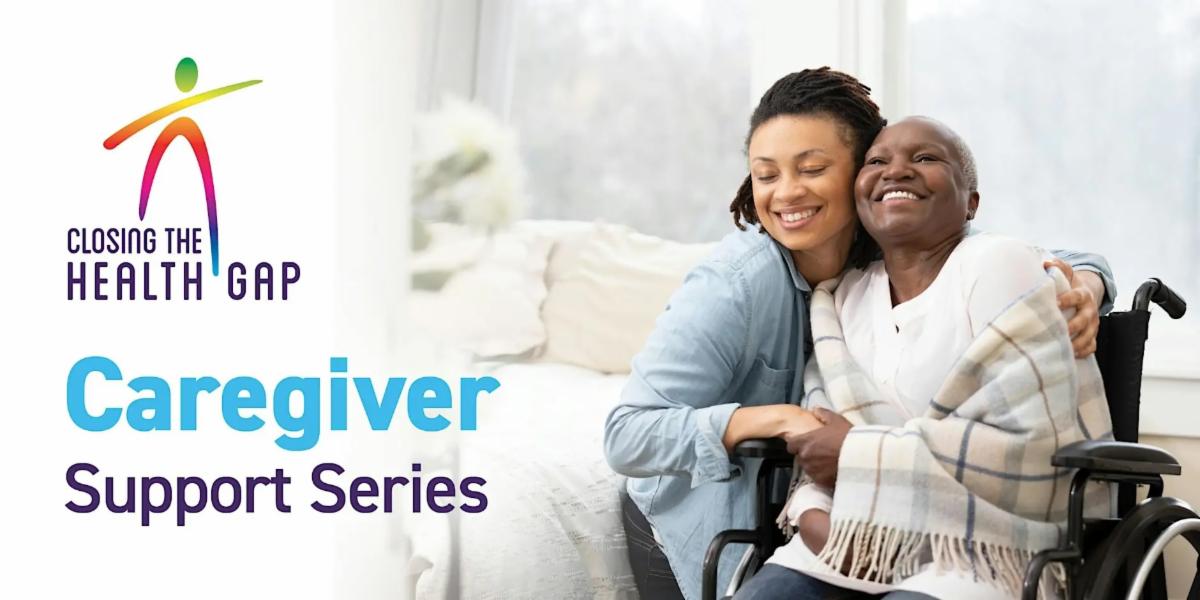
Join Us October 10 for Our Next Caregivers Support Series Session
Saturday, October 10 • 10 AM - 2 PM
Forest Park Senior Center
11555 Winton Road
Cincinnati, OH 45240
Click Here to Register
As the Caregiver of a Loved One Who is 60+, You Deserve Help Too
You love the person in your care. You want to be there for them, but caregiving takes a toll. It increases the risk of depression and illness. That's where we come in. Our series gives you a space to share what you're going through, gain coping tools, and practice self-care. Even better? You'll be surrounded by others like you in similar situations.
| | |
Breast Cancer Awareness Month Begins
Racial disparities in breast cancer have persisted for years. Though Black women have a slightly lower incidence of breast cancer, they face a mortality rate that is 38% higher than that of white women. As Breast Cancer Awareness Month begins, Health Gap CEO Renee Mahaffey Harris, MPH discusses its impact on Black women and the Black community. Click below to watch.
| |
Breast cancer and Black women: Investigating the disparities
Racial disparities in breast cancer have persisted for years. Though Black women have a slightly lower incidence of breast cancer, they face a mortality rate that is 38% higher than that of white women. One researcher in Georgia is focused on addressing those inequities in her community.
Lauren McCullough, Ph.D., an epidemiology researcher, is running several studies investigating disparities across breast and gynecologic cancers. She also founded a peer support community to elevate the voices of marginalized patients going through cancer treatment. Senior Writer Anastassia Gliadkovskaya talks with McCullough about these efforts and what they could mean at scale.
| |
Closing the gaps: Why dental professionals must lead the charge in women’s health equity
Too often, women's health issues are only addressed after the damage is done. We wait for a crisis, a severe bone density drop, advanced periodontal breakdown, or a systemic flare-up before taking action. Fortunately, as oral-systemic specialists, dental professionals are uniquely positioned to bridge these gaps. By focusing on three critical areas—early screening, targeted education, and proactive treatment—we can change this trajectory. We cannot afford to treat the mouth in isolation from the rest of the body.
|
Closing Geographic Health Gaps Will Take a Local and Systemic Response
The U.S. has some of the world’s most advanced medical research institutions, spends more on healthcare than any other country, and routinely delivers remarkable cures. However, where an individual lives can still profoundly influence their risk of disease, access to effective care, and likelihood of surviving an illness.
That contradiction was at the center of a special lecture delivered yesterday by Monica M. Bertagnolli, MD, FACS, president of the National Academy of Medicine (NAM).
“We map the human genome, engineer vaccines in record time, and routinely perform surgical miracles that would have seemed like science fiction a generation ago,” Dr. Bertagnolli said. “And yet, for all of that, our health system fails us—repeatedly and predictably—in ways that should not be acceptable to any of us.”
|
Chronic stress linked to differences in cognitive decline across certain demographic groups, study finds
Chronic stress and perceived social support may play a role in how memory and thinking abilities change with age, according to a new study led by researchers at Wake Forest University School of Medicine. The study, published recently in Alzheimer’s & Dementia, followed 3,873 adults age 50 and older enrolled in the Health and Aging Brain Study-Health Disparities, or HABS-HD. Researchers examined whether participants’ reported levels of ongoing stress and social support systems at the beginning of the study were associated with changes over time in attention, memory, language and executive function, which includes skills used to plan, organize and solve problems.
While previous studies have examined stress and social support as they relate to cognitive decline, this study looked at both, along with how different demographic groups compare to one another.
| |
Beyond poverty and education: measuring structural racism in neighborhoods to understand racialized birth outcome disparities
Neighborhood context is a root cause of poor health and racial health disparities, including disparities in adverse birth outcomes. In a recent article, XXXX et al. leveraged a multi-generationally linked dataset of South Carolina birth certificates to construct life course trajectories of census tract-level neighborhood affluence and disadvantage (Am J Epidemiol 2025;XXX(XX):XXX–XXX). This innovative study contributes to the literature on neighborhood context and perinatal health by highlighting the relevance of a life course approach, interrogating the role of neighborhood affluence and disadvantage on racial disparities, and extending this research to the U.S. South. In this commentary, we reiterate and expand on these points.
First, we argue for the importance of explicitly integrating life course theory into neighborhoods and reproductive health research and assessing neighborhood context at several time points. Second, we encourage future studies to develop exposure measures that have a clear point of intervention and address the complex process of structural racism, rather than focusing on neighborhood composition. Finally, we emphasize the importance of considering the life course of neighborhoods themselves. Future research should interrogate historical and contemporary practices of neighborhood-level marginalization to create clear calls to action on how we can intervene to improve perinatal outcomes.
| | |
More Articles of Interest
Hypertension Research, September 28, 2026
Cureus, September 19, 2026
| | | | |