|
Yesterday, December 12, U.S. Department of Agriculture Secretary Tom Vilsack announced an additional $325 Million for 71 projects funded through the Partnerships for Climate Smart Commodities program. This second pool of funding was focused on innovative projects that develop and expand market opportunities for small and historically underserved producers. USDA’s total investment in the Climate Smart Commodities program is over $3.1 billion for 141 selected projects.
The Michigan Association of Conservation Districts, the Arizona Association of Conservation Districts, and the Oklahoma Association of Conservation Districts were named as lead partners. The California Association of Resource Conservation Districts, the Southern California Resource Conservation District, Washtenaw County Conservation District, Monroe Conservation District, Lenawee Conservation District, Muscogee Creek Nation Conservation District, Choctaw Nation Conservation District, Prince George’s County Soil Conservation District, and Van Buren County Conservation District were included as major partners in other pilot projects.
“NACD, conservation districts, and their associations are thrilled to support USDA’s goals of advancing equity, inclusion, and access to growing climate-smart markets,” said NACD CEO Jeremy Peters. “We are pleased that the Climate Smart Commodities partnerships support local leadership, partnerships, and collaborations. This is a key strategy for empowering producers and developing innovative long-term climate solutions that work for the community.”
USDA’s latest investment will facilitate creation of meaningful market opportunities for small and underserved producers and play a significant role in bolstering local communities and economies. NACD applauds USDA for its historic investments in climate-smart agriculture, forestry, and ranching.
Read the full press release on NACD's website.
| |
DEADLINE FOR
CONGRESSIONAL APPROPRIATIONS
| This Friday, December 16, the continuing resolution that is currently funding the government at Fiscal Year (FY) 2022 levels will expire. To avoid a government shutdown, Congress must either pass appropriations bills to fund the government in FY 2023, or pass another continuing resolution. NACD strongly supports the appropriations bills that have been passed by the House of Representatives, which include strong funding for many conservation priorities, including $883 million for Conservation Technical Assistance and no cuts in mandatory spending for Farm Bill conservation programs. We urge Congress to pass an agreement that includes House-passed funding levels to avoid a government shutdown or the passage of an additional continuing resolution. | |
NACD EXECUTIVE
BOARD MEETS IN DC
| On December 5-6, NACD’s Executive Board convened in Washington, DC and met with Congressional representatives and USDA leaders to discuss current conservation efforts and share priorities for the upcoming 2023 Farm Bill. Board members sat down in person with staff from Rep. Glenn “GT” Thompson’s office, who will serve as the Chair of the House Agriculture Committee; Senate Agriculture Committee Ranking Member Boozman’s staff; Dr. Homer Wilkes, USDA Under Secretary for Natural Resources and Environment; and NRCS Associate Chief Louis Aspey, among others. NACD appreciated the time spent with our partners in both branches of government and will continue working closely with them to advance conservation efforts across the country. | NACD ATTENDS RAE COASTAL AND ESTUARINE SUMMIT | 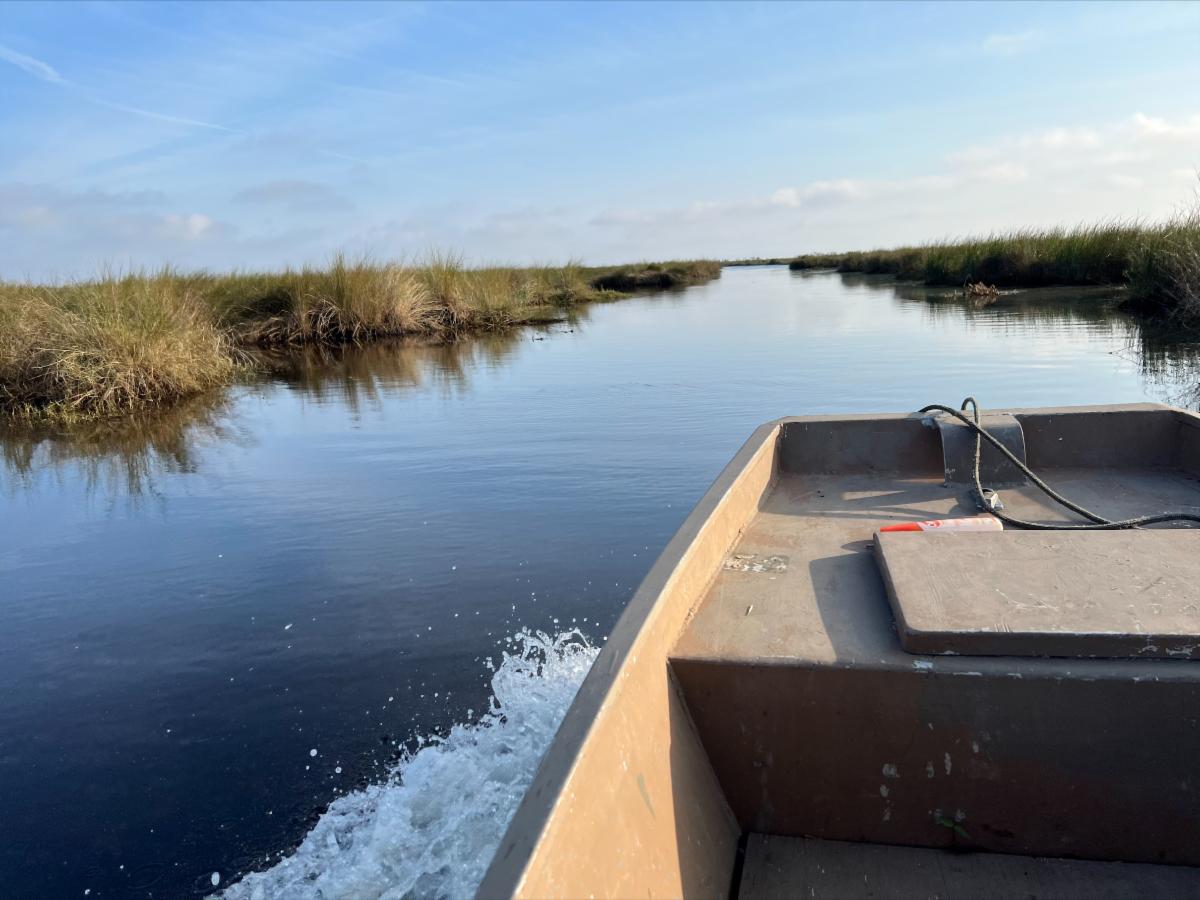 | |
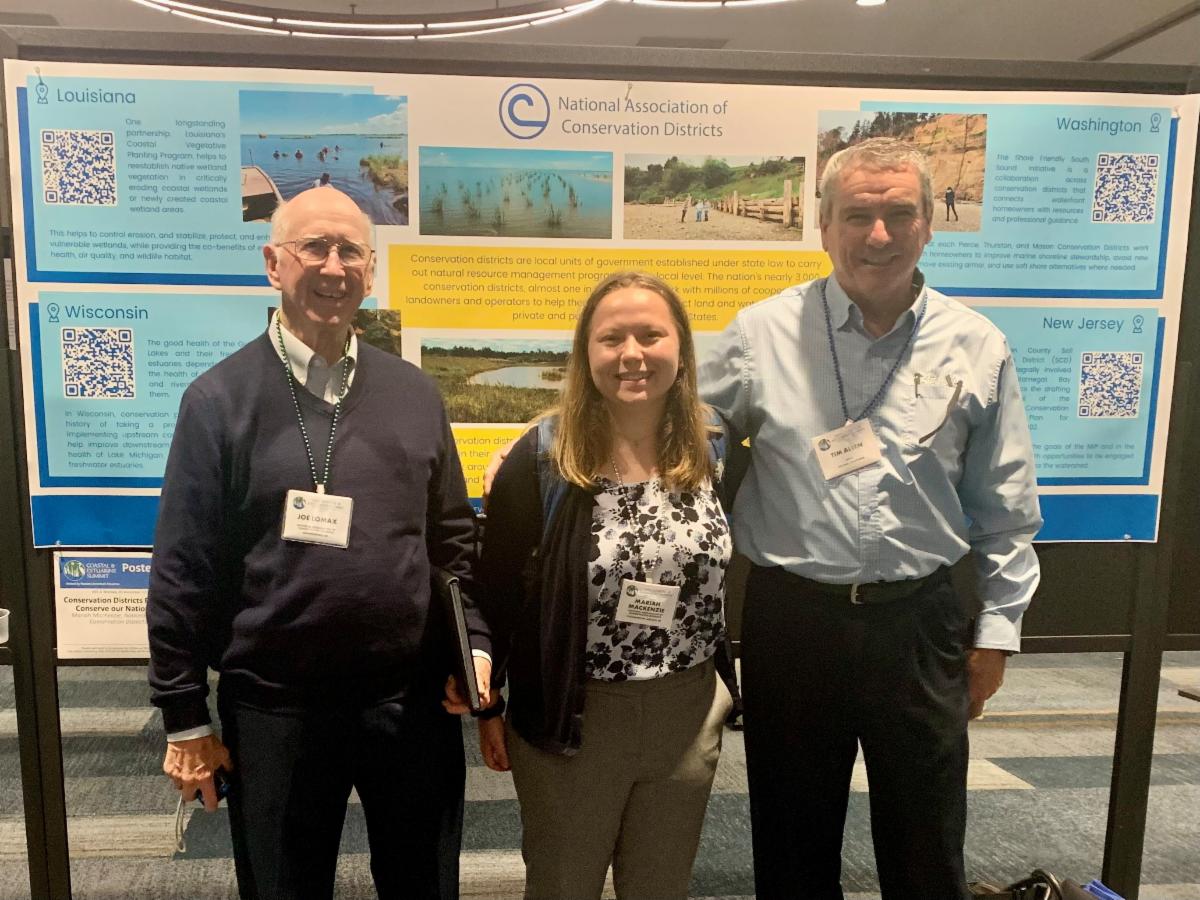
Last week, Coastal Resource Policy Group (RPG) Chair Joe Lomax, Coastal RPG member Timothy Allen, and NACD Communications Specialist Mariah MacKenzie attended the Restore America’s Estuaries (RAE) 2022 Coastal and Estuarine Summit. The summit was held in New Orleans, Louisiana, where over 1,200 attendees, including agency staff from NOAA, EPA, USFWS and NRCS, as well as representatives from non-profits and private businesses convened to explore issues, solutions, lessons learned, and innovative projects in coastal conservation and management.
While in Louisiana, members of the NACD delegation were able to tour several coastal management sites. Learning about local natural resource concerns and needs showcased the importance of local input when making management decisions, as every area faces a unique set of challenges and opportunities to implementing coastal conservation. Specifically, Southeastern Louisiana faces saltwater intrusion, high rates of subsidence, as well as storm surges and flooding. The region is also home to remarkable wetlands, forests of Cypress trees, and agricultural land.
The agenda for the summit was packed with informative concurrent sessions that showcased ongoing projects in coastal revegetation, habitat reestablishment, stream restoration, flood mitigation, and more. Many speakers also discussed innovative approaches to marketing their conservation work and connecting with the communities they serve. The experience was a great opportunity to learn from other organizations and partnerships that have been successful in implementing conservation and natural resource management in coastal areas.
| |
NACD presented a poster at the summit, which focused on four exemplary success stories of conservation districts across the country working on coastal natural resource conservation and management. It was a great opportunity to educate other summit attendees on the work that conservation districts are already doing in this space, and on their potential as local partners in the future. NACD looks forward to continuing the work of advocating for conservation districts and educating others on their expertise in voluntary technical assistance, outreach, education and beyond.
Learn more about NACD's coastal conservation efforts here and about our partner RAE here.
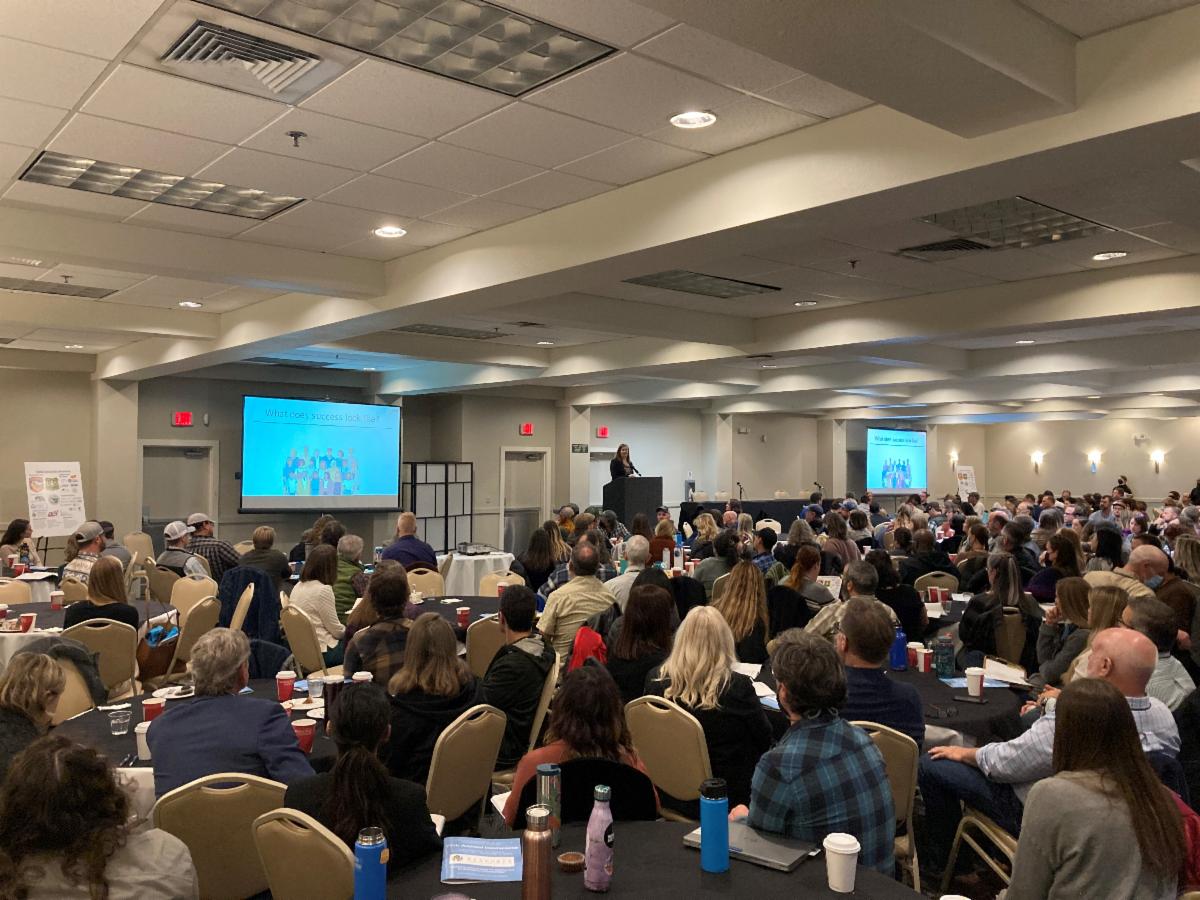
| CARCD HOSTS 77TH ANNUAL CONFERENCE IN FOLSOM, CA | From November 30 - December 2, over 300 conservation district board officials, partners, district employees and others gathered in Folsom, CA for the California Association of Resource Conservation Districts’ (CARCD) annual conference. | |
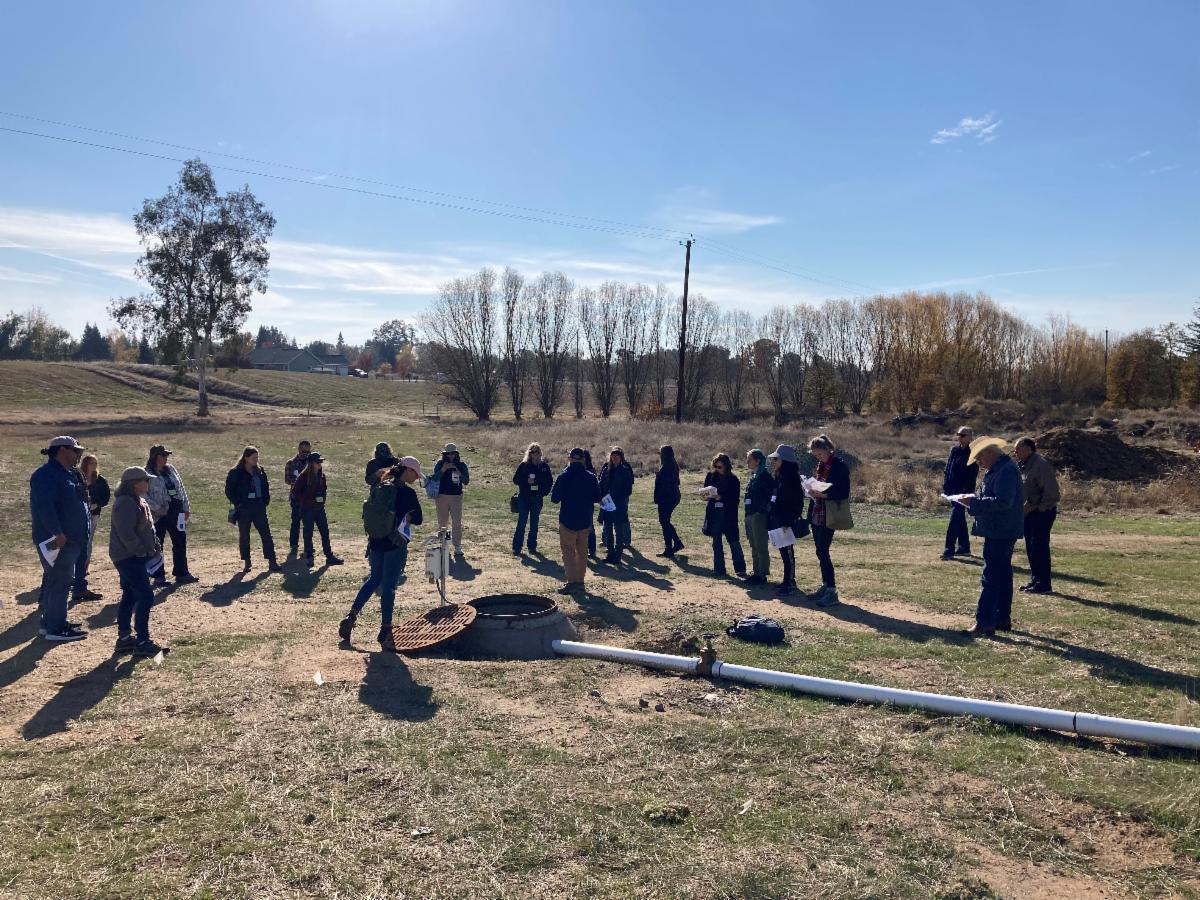
The conference began on Wednesday with regional and committee meetings occurring while the “Spotlight on Sac. Valley Agriculture” and “Wildfire Resilience and the Caldor Fire” tours took place. On the Sacramento Valley tour, attendees had the opportunity to hear from Stephen Julian, the partnerships Watershed Coordinator for the Cosumnes Groundwater Authority managing a dry well groundwater recharge monitoring project. The group also visited with the father-daughter operators of Dry Creek Ranch, Dale and Oriana Bleecher, to hear about ongoing plans regarding vernal pool conservation, floodplain restoration, and grazing management. Following a lunch sponsored by the Sacramento County Farm Bureau, the tour finished with a visit to Westervelt’s Cosumnes Floodplain Mitigation Bank to hear from representative Lisa Williams on the company’s habitat and groundwater recharge goals achieved through mitigation banking.
After a land acknowledgement led by Albert Titman (Niseon/Miwok/Maidu/Pit River/Mexica), Thursday’s opening sessions were kicked off with a California Natural Resources Agency (CNRA)-led plenary session hosted by Secretary Wade Crowfoot, followed by a keynote speech from Madeline Drake, CNRA’s Assistant Secretary for Biodiversity and Habitat, on California conservation partnerships. A panel discussion was led by Intertribal Agriculture Council’s Technical Assistance Specialist (CA Region), Natalie Solares on district-tribe relationships, featuring conservation district success stories and lessons learned. Another partnership panel focused on technical assistance resource sharing between California Department of Food and Agriculture’s (CDFA) Karen Ross, Natural Resources Conservation Service’s (NRCS) Carlos Suarez, and University of California Cooperative Extension’s (UCCE) Glenda Humiston, was hosted by CARCD before participants jumped into the wide variety of breakout sessions.
| |
Breakout sessions on district management, partnerships, diversity/equity/inclusion, grants, permitting, and a slew of other technical topics filled the conference center through the end of the event, featuring numerous districts from around the state as well as partners including CAL FIRE, US Forest Service, CA Dept. of Fish & Wildlife, The Xerces Society, Audubon California, Center for Ecosystem Climate Solutions, to name just a few. Other highlights included conservation planning awards, a speak-off contest, Friday’s keynote speech on regional planning from David Shabazian, CA Department of Conservation’s Director, and an overview of conservation funding opportunities accessible through the Wildlife Conservation Board, hosted by Senior Environmental Scientist Scott McFarlin and staff. The conference ended on Friday December 2nd, with a virtual business session scheduled the following week and an extended virtual conference to occur in spring of 2023.
More can be found on this event as well as the virtual conference scheduled for March of 2023 at CARCD’s website.
|  | |
EXTENDING LONGEVITY IN URBAN AG EDUCATION:
COMMUNITY DRIVEN URBAN AGRICULTURE AND POLLINATOR GARDENS TO ADDRESS LOCAL FOOD INSECURITY
| |
Hubbard County, Minnesota is a rural area dominated by glacial lakes, streams and sandy soils where forestland and big potato agriculture lands intersect. Our communities are mostly rural and centered in this place with incredible natural resources and yet a large percentage of our local youth take backpacks of food home from school on the weekend to try to ensure that they have something to eat; in this way, many of the rural community members within the boundaries of Hubbard County Soil and Water Conservation District (HCSWCD) face similar issues of food insecurity expected in urban landscapes.
The district thus applied for a 2021 grant through the joint NACD and NRCS urban agriculture conservation (UAC) grant initiative to address these food security issues while also creating habitat for pollinators, improving soils, and managing the flow of stormwater into the many streams and lakes. HCSWCD also sought to build community networks around gardening that would serve to make people safer, happier and more connected with each other.
| 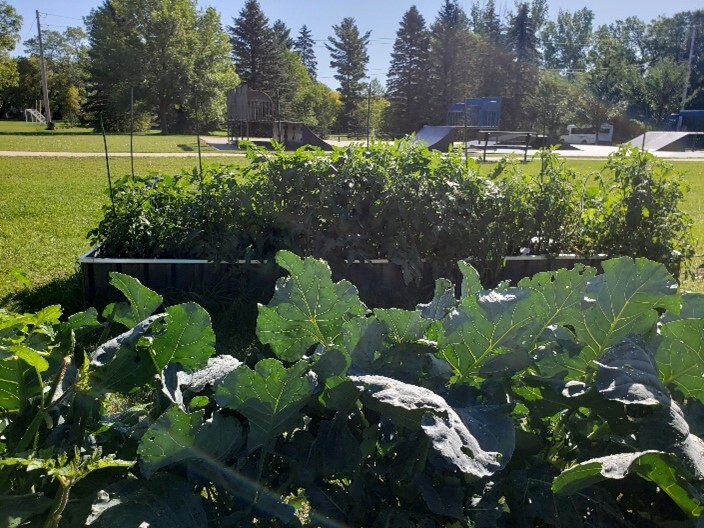 | |
Throughout the course of the project, HCSWCD created 5 different types of community demonstration gardens spread across 4 locations and 2 school gardens. These gardens include mixed flower, herb and food plots, rain gardens, native fruiting shrub gardens and native dry soils pollinator gardens. All total, they worked with 28+ volunteers including adult and youth, 474 students at local public and charter schools, 133 adults who were interested in starting home or community gardens of their own, reached the readership of Hubbard County COLA, the HCSWCD Newsletter and 3 local papers (1,000’s of readers), and received 400 unique hits on their virtual lab online resource pages.
The district’s next steps are to work with our volunteers and school classrooms to get the community and school gardens growing for additional summer seasons. They have several requests to work on planning additional gardens and existing partnerships to pursue resources, funding and support for those projects. HCSWCD will continue to support the outreach and maintenance efforts with local capacity funds while we work with partners on pending proposals.
Learn more about all grantees through the UAC program online.
| |
|
Open Career Opportunities
with NACD
| |
Stewardship and Education Coordinator: NACD is seeking a Stewardship and Education Coordinator that will be responsible for the coordination of a national conservation education program and materials, as well as the NACD Online Marketplace. This role will work to develop a growing portfolio of conservation education resources and materials and assists in the support of NACD’s national conservation education objectives. Apply by Wednesday, December 14, for priority consideration.
Director of Conservation Programs:
NACD is seeking a Director of Conservation Programs that will be responsible for providing strategic oversight of the organization’s portfolio of grants, agreements, and contracts. This position will develop funding opportunities, manage our subgrant programs, and work closely with our funding and implementation partners. They will also provide leadership to achieve all stated outcomes and ensure overall compliance. Apply by Friday, December 30, for priority consideration.
Grants Specialist:
NACD is seeking a Grants Specialist that will be is responsible for administering the organization’s portfolio of grants, agreements, and contracts. This position will manage our subgrant programs and work closely with our funding partners to define requirements and outcomes, draft applications, support monitoring and reporting, and ensure overall compliance. Apply by Friday, December 30, for priority consideration.
Equity and Outreach Program Analyst:
NACD is seeking a Equity and Outreach Program Analyst that will be is responsible for overseeing program development and project implementation, with the goals of improving equity, access, and inclusivity. They are also responsible for ensuring that NACD’s programs and activities achieve their intended goals and meet established milestones. Apply by Friday, December 30, for priority consideration.
These positions can be remote or based out of the NACD’s headquarters office in Washington, D.C.
Learn more about all open positions with NACD on our website.
| 2023 One Water Curriculum Guide Now Available | NACD's 2023 Curriculum Guide on One Water is now available on the Conservation Education Hub! This year, the guide is adaptable to any grade level. There may also be other Next Generation Science Standards which can correlate to these activities and the suggested Enrichment and Assessment Opportunities. Students will observe how gravity affects water as it runs downhill. Students will also discover the effects of pollutants in a watershed. | Support NCF's Fall Fundraiser | |
NACD's sister organization, the National Conservation Foundation (NCF) is asking for your support in the development of the next generation of conservation leaders. This fall they aim to raise $75,000 by the end of 2022! NCF programs and partnerships advance locally-led conservation and work to develop the next generation of conservation leaders. Their two flagship programs, the NCF-Envirothon and Next Generation Leadership Institute (NGLI) help deliver those results.
NCF needs your help to continue to expand its influential and crucial programming! Tackling conservation and natural resource management must begin with education and training of the next generation.
| Help USDA by Answering Survey | |
The USDA’s Farm Production and Conservation (FPAC) is a vital partner of NACD and works to support agriculture by helping farmers, ranchers, and forest managers leverage natural resources and mitigate the significant risks of farming through crop insurance, conservation programs, farm safety net programs, lending and disaster programs.
USDA are asking all farmers, ranchers and forest managers to take their survey. Survey feedback will assist USDA in learning about ways to enhance support and improve programs and services, increase access and advance equity for new and existing customers.
| Donate to NACD's Pack-A-Book | |
The 2023 Annual Meeting will mark the 14th year for NACD’s community outreach program, “Pack-A-Book.” Through the generosity of annual meeting attendees, NACD has donated more than 1,300 books to elementary schools located within our annual meetings’ host cities.
This year’s Pack-A-Book donations will be received by the Capital Soil and Water Conservation District, who will share donations with schools around the New Orleans area.
Be a part of this project by packing one or more natural resource, environmental, or conservation-related books for your trip to New Orleans. Simply drop them off at Registration during the meeting or contact wesley-gibson@nacdnet.org for shipping instructions. A label with your name and conservation district affiliation will be placed in the inside cover of each book you donate.
For a wide selection of books with conservation themes, consult this list of suggested titles or visit Amazon or your favorite book retailer. If you have questions, contact stewardship@nacdnet.org.
|  |
Promote your conservation district or state association's tree sale, annual meeting, webinar, field day, or other events on NACD's Calendar of Events!
| |