NASA Harvest extends a hearty congratulations to 2020 Nobel Peace Prize winner, the United Nations' World Food Programme (WFP). WFP is one of the world’s largest nonprofit humanitarian organizations dedicated to feeding the most vulnerable populations in the face of emergency, natural disasters, and conflict. The institution works tirelessly to promote policies and programs supporting sustainable global food security and ensuring that no person goes hungry.
NASA Harvest is proud to work with our partners of WFP’s Vulnerability Analysis and Mapping (VAM) team. VAM provides geospatial and economic analysis, food security monitoring and assessments, post-shock assessments and thematic analysis allowing WFP to perform effective targeting, determine the most appropriate type and scale of intervention (e.g. food distributions, school feeding, cash or voucher programs), and ensure the most efficient use of humanitarian resources by allocating funding according to needs.
|
|
|
|
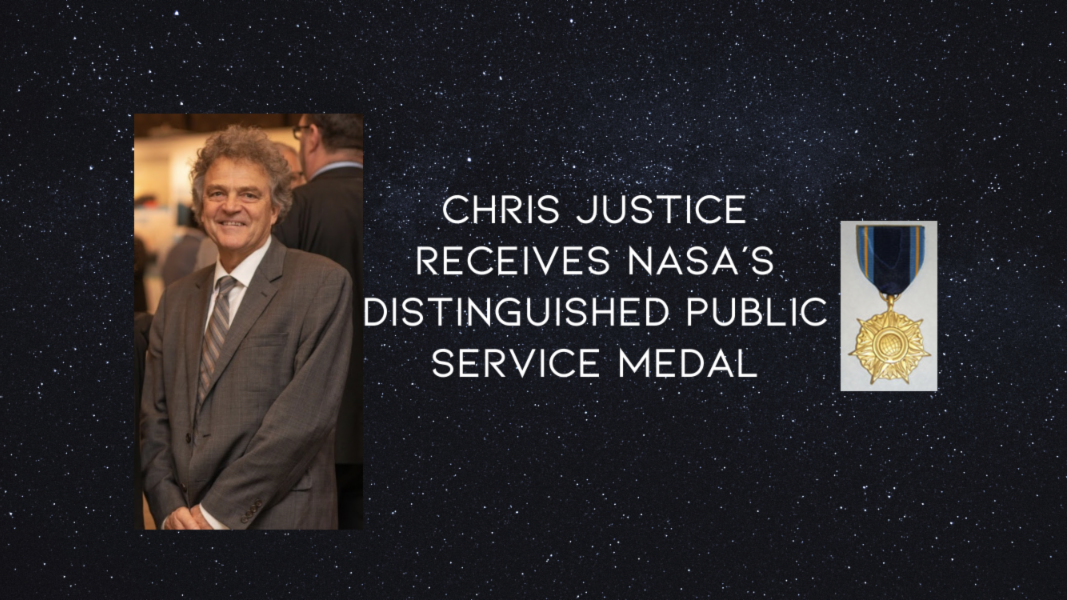
The award is a testament to Dr. Justice's dedication and leadership in the development and success of the LANCE (Land, Atmosphere Near real-time Capability for EOS) system, transforming the way NASA Earth observation data are used throughout the world. |
|
|
|
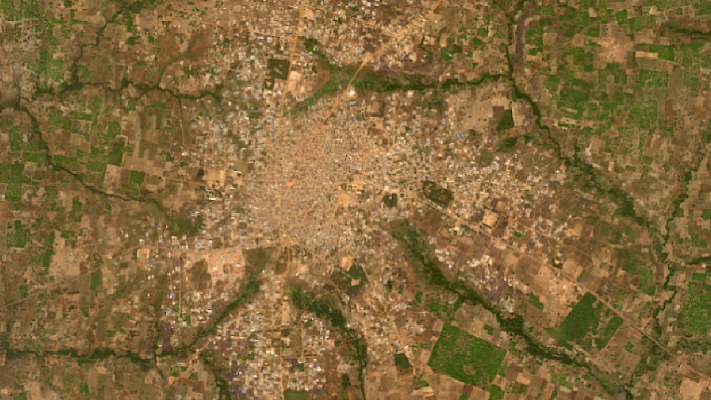
NASA Harvest scientists, in a public-private partnership with Planet Labs, recently supported the Government of Togo in their innovative COVID-19-related food security relief efforts by creating a cropland map, at 10-meter resolution, of the entire country in less than 10 days.
|
|
|
|
Harvest Partners César Izaurralde and Molly Jahn joined lead author Keith Paustian and others in publishing an article in Carbon Management exploring current methods for quantifying changes in soil organic carbon (SOC) and the commensurate CO2 sequestration at local to national scales.
|
|
The Special Issue "Cropland Carbon" in the journal Land will focus on cropland carbon and how it can be impacted by regenerative agriculture (RA) techniques.
This Special Issue is seeking submissions focused on the modeling of carbon in RA systems; the use of EO to monitor how crop productivity is affected by RA management techniques; linking climate change, food security, and soil degradation in traditional vs RA systems; and creating baseline spatio-temporal datasets on RA management practices.
Manuscripts are accepted through March 31, 2021.
|
|
"Recent Advances for Crop Mapping and Monitoring Using Remote Sensing Data" is a Special Issue being published in Remote Sensing. This special issue is accepting submissions that demonstrate recent advances in EO applications in agriculture including "crop type mapping; crop yield prediction; cover crop mapping; crop residue monitoring; and crop water stress and disease monitoring." Papers utilizing advanced remote sensing techniques like multiresolution data fusion; SAR and optical data integration; and SAR polarimetry and interferometry are particularly welcome.
Manuscripts are accepted through Feb 28, 2022
|
|
The new Section "Discoveries in Remote Sensing" was created with the goal of promoting diversity in science. It seeks innovative work on "remote sensing applications, technology, discussions, and ethics" produced by research teams embodying the Section's goal of transdisciplinary research and diverse perspectives.
In an effort to broaden the field of submitted papers, the co-editors are offering a “Get one, Give one” where they match every paid manuscript accepted in the section with a processing fee waiver for another article.
The submission deadline for the “Get one” paper is August 31, 2021 and the submission deadline for the “Give one” paper is December 31, 2021. To get involved with the “Get one, Give one” offer, email cris.wang@mdpi.com.
|
|
This year's AWRA Conference aims to cover a variety of topics revolving around innovative, practical, and applied water resource management solutions, management techniques, and current research. Water resources as they relate to agricultural productivity, drought effects, and sustainability are among the wide-ranging areas of focus with an emphasis on lessons learned from multidisciplinary projects, best practices in resource applications, and policy decision impacts.
|
|
|
NASA Harvest Partner Varaprasad Bandaru will be leading a session and Deputy Director Alyssa Whitcraft will be presenting on NASA Harvest and remote sensing applications for agriculture. More details on the agenda are forthcoming, visit the ACS meeting website to register today.
|
|
|
|
|
|
|
|