| | |
October 2025 | Issue #169
*make sure to click "View entire message" to get access to the full newsletter!*
| |
| |
| |
Last Call:
Curriculum Connections at
Great Salt Bay
| |
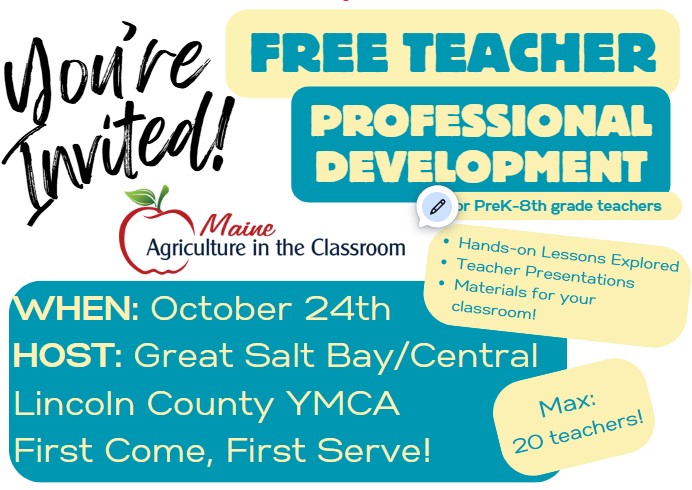
Join us for a day of interactive teacher training and networking this fall!
Earn 6 contact hours or .6 CEUs while discovering new ways to integrate agriculture into your classroom. Don't miss the opportunity to explore hands-on lessons, receive resources for your classroom, and connect with other passionate educators. Due to a wonderful registration response, space is limited. We hope to see you there!
| | |
The Maine Youth Food Security Council is looking for their next coalition of high school age changemakers working to address food insecurity in their communities! Members collaborate with their schools, local organizations, businesses, and government agencies to develop and implement projects that center youth voice and choice in the school food system, ensuring that every child in Maine has access to nutritious meals.
Besides project work and addressing food insecurity, the council also provides opportunities for young people to develop leadership skills, gain experience in community organizing, and learn about food systems and policy. The MYFC opens up opportunities to participate in state and local legislatures.
| | Students interested should complete this sign up form to join the council. Please reach out to Kirsten, ktenney@fullplates.org, with questions. | | |
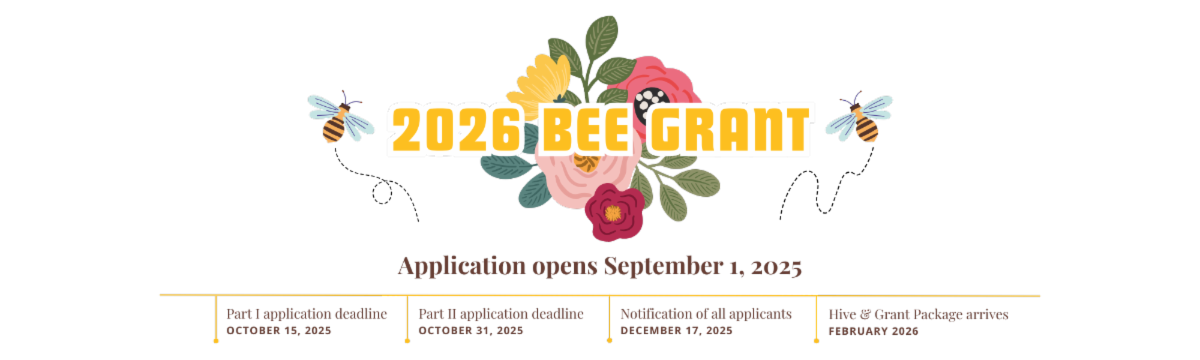
The Bee Grant program allows for a school or non-profit organization to receive support for an educational live bee program. The purpose of this grant is to bring live bees to campuses across the country to engage students in pollinator education, enhance STEAM skills, and develop a life-time love of conservation and environmental stewardship. In addition to live bee hives, grant recipients receive curriculum, lesson plans, and other educational materials to bring the classroom into the heart of the hive!
Application Deadline: October 15th
| | | |
|
|
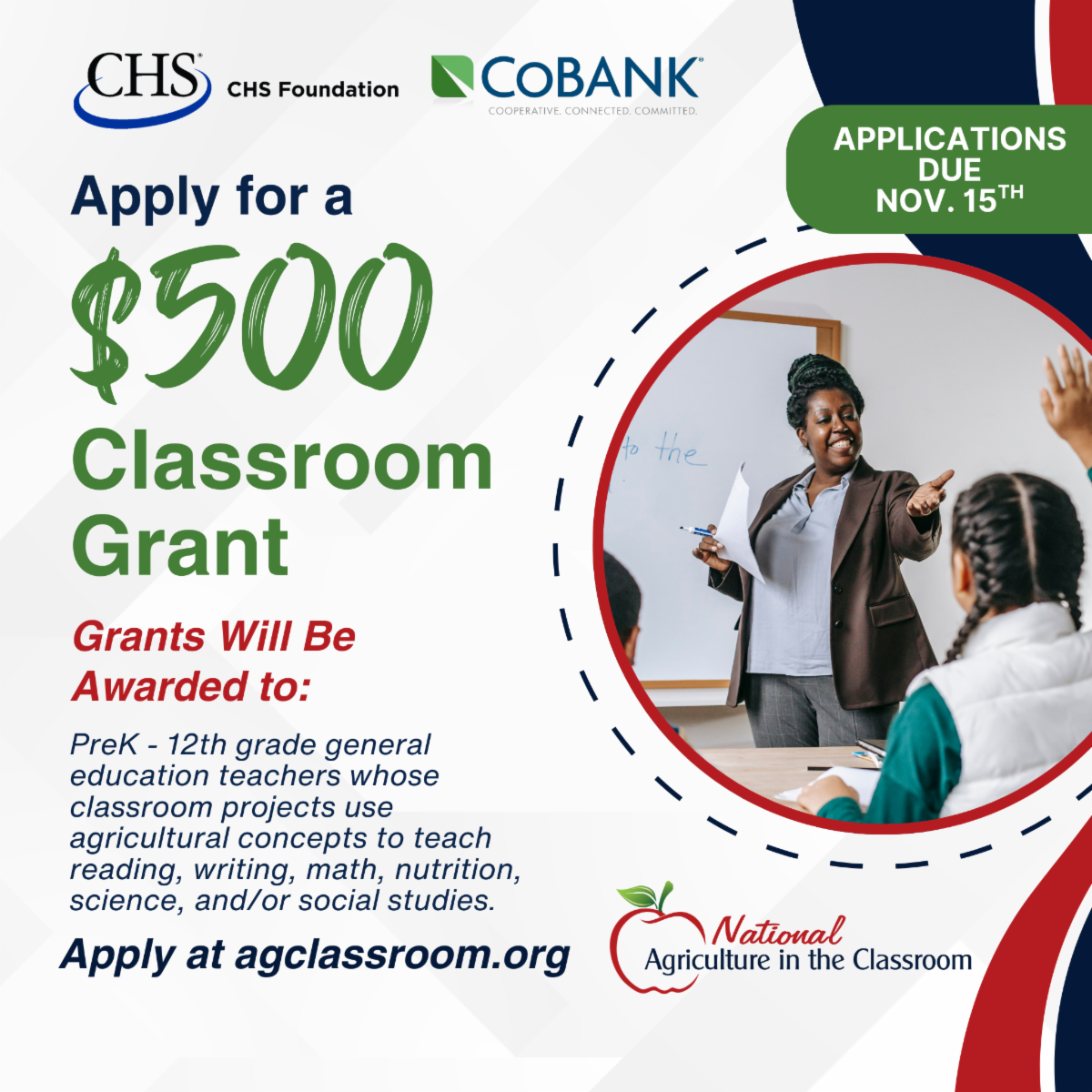
Thanks to the generosity of CHS Foundation and CoBank, funding is available to provide 40 classrooms with funding for agricultural literacy projects. These $500 grants are available to preK-12th grade teachers who have classroom projects that use agricultural concepts to teach reading, writing, math, science, social studies, and more.
Application Deadline: November 15th
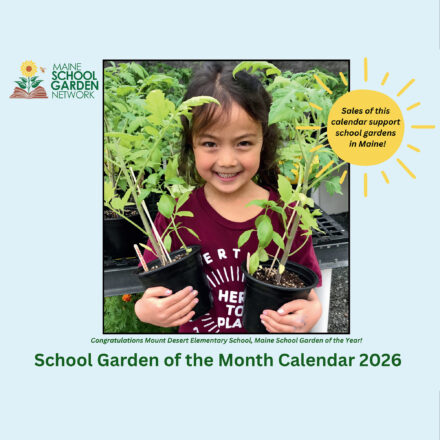
| | News from Maine School Garden Network | | Maine School Garden Network also recently announced the winners of the 2025 School Garden Caretakers grants. You can read their press release here. Congratulations to all of this year's recipients! | | | |
Grades K-2
Little Red Hen
Students use the story The Little Red Hen to investigate wheat production and bread making. Students thresh their own wheat and grind it into flour to make bread.
| | |
Grades 3-5
Enjoying the Harvest
Students identify the parts of a wheat plant and wheat kernel and investigate the process of milling wheat kernels into flour.
| | |
Grades 6-8
Wheat: Ancient and Ageless
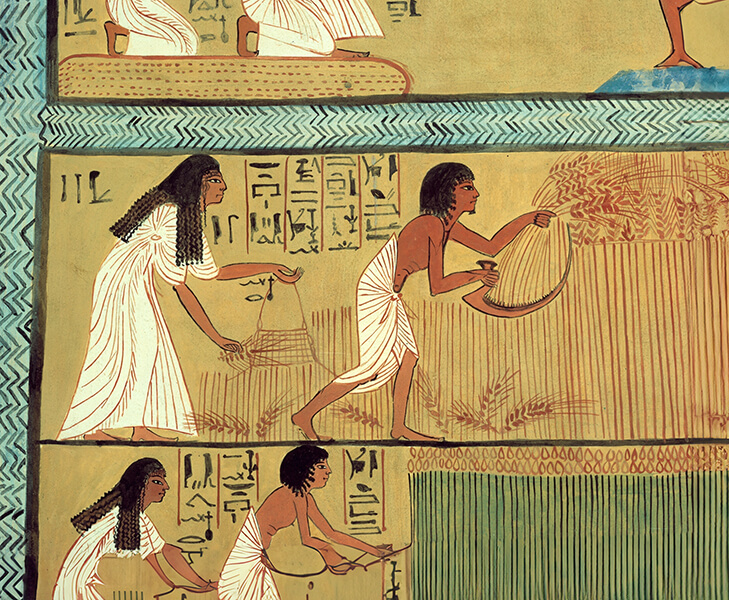
Students will explore the importance of wheat in the development of culture by learning about the advent of agriculture, discussing wheat cultivation in ancient Egypt.
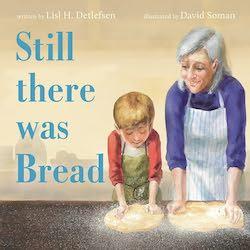
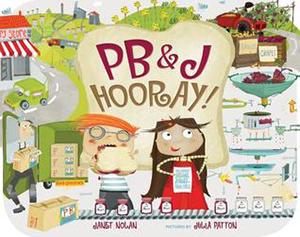
| | Looking for more? Explore the Agricultural Literacy Curriculum Matrix HERE | | Nana is coming to visit! She's going to teach Little Pickle to make her famous "Nana rolls"—a special bread recipe that Nana's nana taught her. Together, they gather ingredients: eggs and milk, flour and oil, sugar and salt, yeast and water. As they mix them together to form the dough, Nana shares stories about how making this treasured family recipe has changed over the years—and how it's sustained their family through good times and hard ones. And through the times when they could be together—and the times when they couldn't. Because sometimes a simple loaf of bread can mean so much more. | |  | From peanut, grape, and wheat seeds to sandwich, PB&J Hooray! is all about how peanut butter and jelly sandwiches are made. The story begins with the kitchen and works backward to the shopping, delivery, production, harvesting, farming, and planting processes! In fun, rhythmic language, readers discover how peanuts become peanut butter, grapes are made into jelly, and wheat turns into bread. | | | |
Funding from this plate impacts up to 200,000 students annually with lessons, materials, volunteers and teacher training. Additionally, up to $60K is distributed annually in grants to schools, FFA, 4-H and other Non-profit programs for Ag education initiatives by the Maine Agriculture in the Classroom Council.
Learn more about the Ag plate here.
| | | |
|
The MAITC Association is organizing a fundraiser for materials and teacher scholarships this year. Hats and T-shirts with the MAITC logo and a picture of the agriculture specialty license plate are available to order for a small donation.
For more information contact Nancy Wright at dnwright191@gmail.com
| | |
Our Mission Statement
"To promote the understanding of agriculture and natural resources among students, educators, and the general public"
| | | |
28 State House Station
Augusta, ME 04333
(207)287-5522
| |
| | | |