EXPLORE RELIC: FEBRUARY 2026 | | |
18th Century Enlistment Laws for Free Black Americans and the Enslaved
Written by: Mary Kitiyakara, Senior Librarian, RELIC
| | |
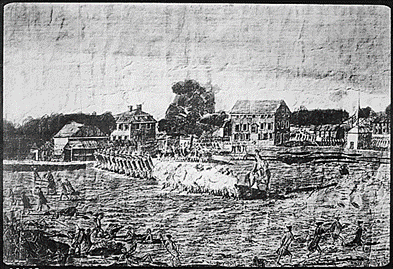
Figure 1: An engraving of the
Battle of Lexington and Concord
| | |
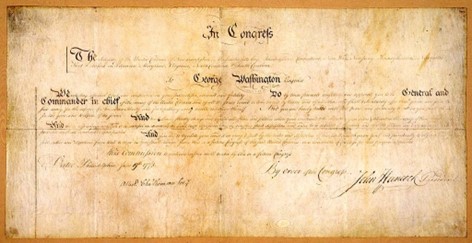
Figure 2: Commission Certificate
for Gen. George Washington, 6/15/1775
| | |
On April 19, 1775, the Battle of Lexington and Concord took place. It is estimated that 35-40 Freemen and Enslaved fought in integrated militia units throughout the 22-hour battle.
George Washington was commissioned by the Continental Congress as Commander in Chief of the Continental Army on June 15, 1775.
In the minutes of the Council of War held at Head Quarters in Cambridge on October 8, 1775, Washington, aware that there were both Free people and Enslaved enlisted, asked the question, “Whether it will be adviseable to re-inlist any Negroes in the new Army—or whether there be a Distinction between such as are Slaves and those who are free? [They] Agreed unanimously to reject all Slaves, & by a great Majority to reject Negroes altogether.”1
In the minutes from the Continental Congress that took place in Cambridge, Massachusetts, during October 18–24, 1775, the subject was brought up again “Ought not Negroes to be excluded from the new Inlistment especially such as are Slaves—all were thought improper by the Council of Officers?”2
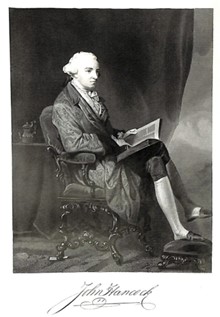
By December of the same year, in a letter to John Hancock, the President of the Continental Congress, dated December 31, 1775, Washington stated the following “it has been represented to me that the free negroes who have Served in this Army, are very much disatisfied at being discarded—as it is to be apprehended, that they may Seek employ in the ministerial Army—I have presumed to depart from the Resolution respecting them, & have given Licence for their being enlisted, if this is disapproved of by Congress, I will put a Stop to it.”3
| | Figure 3: John Hancock, President of the Continental Congress | | |
On January 16, 1776, Congress resolved “that the free negroes who have served faithfully in the army at Cambridge, may be re-inlisted therein, but no others.”
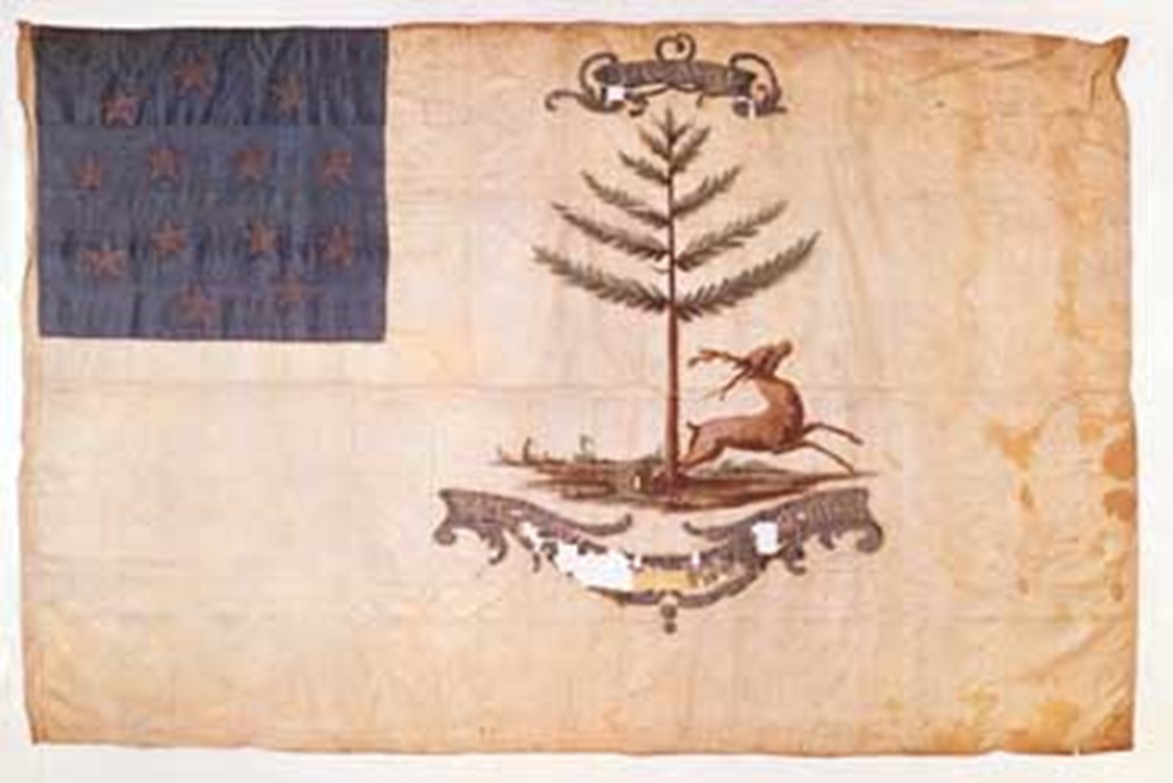
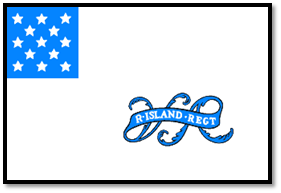
Two years later, a law was passed in the Rhode Island General Assembly, “every able-bodied Negro, Mulatto, or Indian Man Slave” was to enlist in a newly formed regiment. The law further states that all soldiers passing muster will be discharged from service and “be absolutely free.”4
However, this came with exceptions for the enslaved and their rights as a patriot versus the rights of those who held them in bondage.
| | An estimated 5,500 colonial Black American soldiers and Native Americans fought or served in established units, regiments, and as substitutes, Freemen and Enslaved.5 History has noted their valor, courage, and sacrifice to fight for what all were determined to attain: freedom from being oppressed by unfair laws and treatment, but many are unknown due to their status in society. | | |
Figures 4 and 5: Flags for the Massachusetts Militia and the 1st Rhode Island Regiment
Unfortunately, the fight for freedom would turn into a recurring battle for several generations following the American Revolutionary War, one that would eventually split the country in two, and another against laws meant to strip Black Americans of their rights as equal citizens, which culminated into the Civil Rights movement.
| | |
As we reflect on and honor the sacrifice, courage, and achievements throughout Black History, let us be reminded, that freedom is a value that cannot be taken for granted because it comes at a great cost to achieve it, and the willingness to protect it is without exception.
1. “Council of War, 8 October 1775,” Founders Online, National Archives, https://founders.archives.gov/documents/Washington/03-02-02-0115. [Original source: The Papers of George Washington, Revolutionary War Series, vol. 2, 16 September 1775 – 31 December 1775, ed. Philander D. Chase. Charlottesville: University Press of Virginia, 1987, pp. 123–128.]
2. “II. Minutes of the Conference, 18–24 October 1775,” Founders Online, National Archives, https://founders.archives.gov/documents/Washington/03-02-02-0175-0003. [Original source: The Papers of George Washington, Revolutionary War Series, vol. 2, 16 September 1775 – 31 December 1775, ed. Philander D. Chase. Charlottesville: University Press of Virginia, 1987, pp. 190–205.]
3. “George Washington to John Hancock, 31 December 1775,” Founders Online, National Archives, https://founders.archives.gov/documents/Washington/03-02-02-0579. [Original source: The Papers of George Washington, Revolutionary War Series, vol. 2, 16 September 1775 – 31 December 1775, ed. Philander D. Chase. Charlottesville: University Press of Virginia, 1987, pp. 622–626.]
4. Congress.gov. "S.567 - 119th Congress (2025-2026): First Rhode Island Regiment Congressional Gold Medal Act." February 13, 2025. https://www.congress.gov/bill/119th-congress/senate-bill/567.
5. National Park Service. (2025, February 2). Patriots of Color. U.S. Department of the Interior. https://www.nps.gov/mima/patriotsofcolor.htm
National Archives drawing no. 111-SC-92639- Drawing from engraving by Amos Doolittle, a Connecticut militiaman
Mount Vernon-Commission by the Continental Congress to George Washington image
| | | | The Civil War in Words and Deeds database collects original narratives, personal narratives, and regimental histories from the Civil War. | | |
Faces of Change Scavenger Hunt–Discover African American Trailblazers from Virginia: Manassas City
Grades K–5
February 2–28
Join us for a scavenger hunt where kids discover the stories of African American trailblazers from Virginia.
| | | |
In Search of Giants with Colleen Snyder–The Quest to Find the Genetic Giants of Northern Ireland: Manassas City
Adults
Saturday, February 7, 11:00 a.m.–12:30 p.m.
Colleen Snyder is an author, researcher, and speaker with a passion for uncovering stories that connect science, history, and humanity. Her debut book, “In Search of Giants: The Quest to Find the Genetic Giants of Northern Ireland,” blends groundbreaking genetic research with Irish folklore and personal storytelling to illuminate the lives of those affected by the rare condition of gigantism.
| | | |
Black History Month Celebration–Presented by the Montclair Teen Advisory Group: Montclair
All Ages/Families
Wednesday, February 11, 5:00 p.m.
Celebrate and learn about Black History Month with trivia, crafts, and more.
| | | |
History and a Book Group: Central and Virtual
Adults
Thursday, February 19, 2:00 p.m.
This month, we’ll discuss "American Moonshot: John F. Kennedy and the Great Space Race" by Douglas Brinkley. Registration required.
| | | |
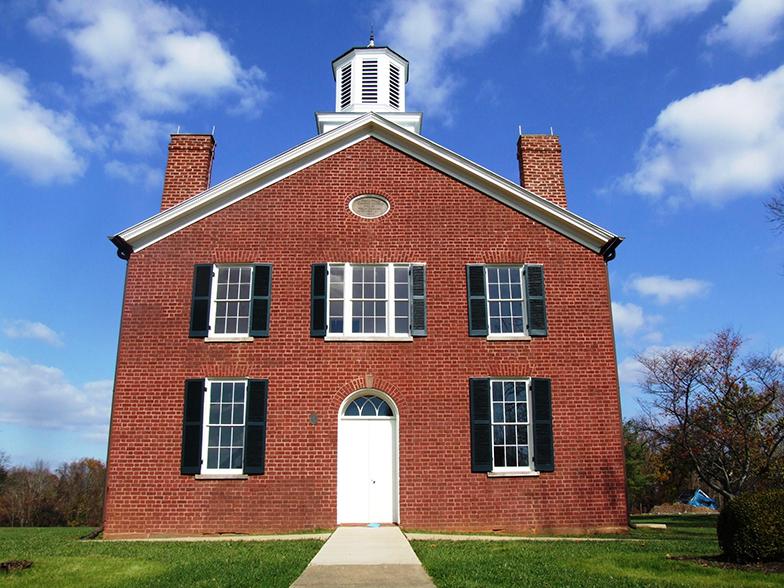
Local History Walking Group: Brentsville Courthouse Historic Centre
Adults
Friday, February 20, 11:00 a.m.
Join us for a walking tour at Brentsville Courthouse Historic Centre (12229 Bristow Road, Bristow, VA 20136). Registration required.
| | Photo by Historic Preservation | |
|
Start your historical journey here. RELIC's email newsletter highlights upcoming free events and happenings. Genealogy and local Virginia history are our specialties as a service provided by Prince William Public Libraries (PWPL). You can always find more about us on RELIC's webpage.
RELIC service is available in-person at Central Library (8601 Mathis Avenue, Manassas, VA 20110), by email at librelic@pwcgov.org, and by phone at 703–792–8380.
Hours of Operation
Monday–Wednesday: 10:00 a.m.–8:00 p.m.
Thursday–Friday: 10:00 a.m.–5:00 p.m.
First and Third Saturdays: 10:00 a.m.–5:00 p.m.
Closed Sunday
Due to a staff shortage, RELIC is not always staffed during the above hours. However, the room is available, and service desk staff or substitutes can often help. Please call ahead for staffed hours if you need RELIC staff to be present.
Ask the Tree Hunter
If you wish to make an appointment with Darlene Hunter, RELIC Tree Hunter, please email librelic@pwcgov.org or call 703–792–8380.
| | | |
Questions and comments are always welcome.
| | | | |