"You may not control all the events that happen to you, but you can decide not to be reduced by them." - Maya Angelou | | | | |
(313) 305 - 0311
CAM Call Line Operating hours:
Monday through Friday, 8am - 6pm
| | Access to CAM services: Call CAM at (313) 305 - 0311 or go to one of the following Access Points for in-person assessments. | | |
NOAH at Central
23 E. Adams, 2nd Floor
Detroit, MI 48226
Mon - Thurs, 9:30am - 4pm
| | |
Cass Community
Social Services
12025 Woodrow Wilson St
Detroit, MI 48206
Mon - Fri, 10am - 6pm
| | |
Detroit VA
(For Veterans only)
4646 John R
Blue Tower, 7th floor,
RM A7175
Detroit, MI 48201
Mon - Fri, 8am - 4:30pm
| | The Coordinated Assessment Model (CAM) process is a referral system designed to be a starting point for people who are experiencing homelessness in Detroit, Hamtramck and Highland Park. The goal of the CAM system is to connect people in a fair way to housing and other related resources as available. If you are experiencing homelessness and need to get help, the process begins with contacting CAM. | | Visit camdetroit.org for the latest information on CAM services and any upcoming service interruptions. For regular updates, subscribe to the CAM newsletter. | | CoC NOFO Update: Where FY25 Stands, What’s Coming in FY26, and How Detroit Providers Should Prepare | | |
High Level Summary:
- The FY25 NOFO is on hold;
- The FY26 NOFO must arrive by June and it will likely contain major shifts that will affect how Detroit can allocate CoC dollars;
- Early planning especially around permanent housing percentages and program eligibility will be the most important factor in succeeding in the next competition.
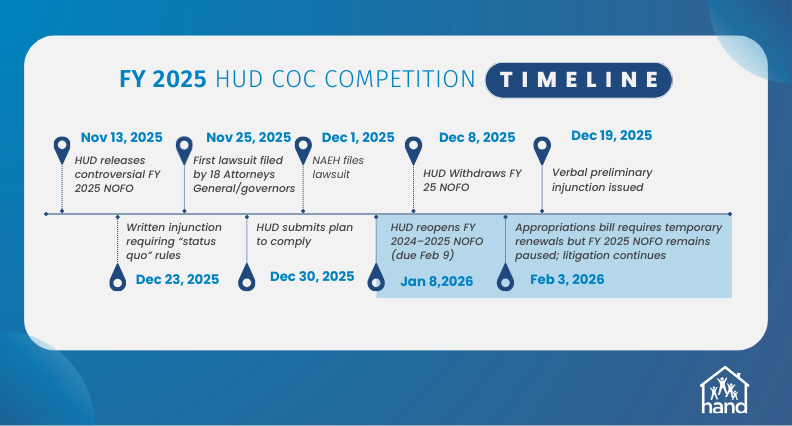
After months of uncertainty, the federal Continuum of Care (CoC) grant cycle is finally settling into a clearer, yet still evolving, path. The FY2025 NOFO remains paused in court, Congress has stepped in with stop‑gap protections to keep projects afloat, and HUD is now required to release the FY2026 NOFO by June. This means while our homeless service providers have some breathing room, planning for new rules needs to start now.
| | |
What went wrong with the FY25 NOFO
HUD released the FY2025 NOFO unusually late, right before Thanksgiving 2025, and it came with major policy shifts that would negatively impact current permanent housing programs. The proposal would have capped how much CoCs can invest in permanent housing (at 30%, where historically there’s been no cap), changed eligibility rules for some programs, and weakened prior DEI and gender‑inclusive provisions. These departures triggered immediate concern across the country.
Lawsuits—and a court‑ordered pause
Two lawsuits followed: one by a coalition of state Attorneys General (including Michigan), and another by the National Alliance to End Homelessness. In response, HUD briefly rescinded and then re‑issued the FY25 NOFO in December (see our December 27 update here). A federal judge issued a preliminary injunction that prevents HUD from implementing the restrictive FY25 rules and requires HUD to resume initial renewal steps under the earlier two‑year FY2024–2025 NOFO. The litigation is ongoing and there’s no final ruling yet.
What this means locally
Because Detroit’s renewal projects were already approved under the earlier two‑year cycle, providers here did not need to re‑compete or resubmit new applications during HUD’s brief reopening.
Congress intervenes to protect current projects
On February 3, 2026, Congress passed (and the President signed) appropriations language directing HUD to non‑competitively renew existing CoC projects on a rolling timeline if awards aren’t made on time. Projects expiring in Q1 (Jan–Mar 2026) must be renewed immediately; if HUD hasn’t made all awards by April, HUD must start renewing Q2 projects; and if it still hasn’t by July, HUD must start renewing Q3 and Q4 projects. This is designed to keep doors open while the court case proceeds. It remains unclear whether “renew/make awards” will mean public award announcements, executed grant agreements, or both. As of now Detroit providers have not received new grant agreements.
| |  | |
The next big milestone: FY26 NOFO by June
Congress also required HUD to release the FY26 NOFO no later than June 2026 (the typical window for NOFOs). Based on HUD’s December 2025 draft, the FY26 NOFO is expected to mirror those proposed shifts—most notably the 30% permanent‑housing cap and other eligibility changes. That means the 2026 competition (funding 2027 operations) will likely force substantial re‑balancing across project portfolios. Planning now will put providers in the best position once the NOFO drops.
What this means for Detroit providers right now
Most Detroit CoC projects end in Q3–Q4, which provides some cushion if HUD misses early award timelines. At least one local project has a Q1 end date; HAND is in direct contact with that provider. In the interim, providers are encouraged to explore bridge funding options and consider requesting grant extensions from the HUD field office where appropriate.
Provider Prep Checklist
- Contingency funding: Line up bridge funds and talk with your HUD field office about grant extensions if you face near‑term expirations.
- Data readiness: Tighten performance and HMIS data quality now to avoid last‑minute scrambles once the FY26 NOFO lands.
- Stay close to updates: Watch for any HUD clarifications on whether “renew/make awards” will include grant agreements or just public award notices.
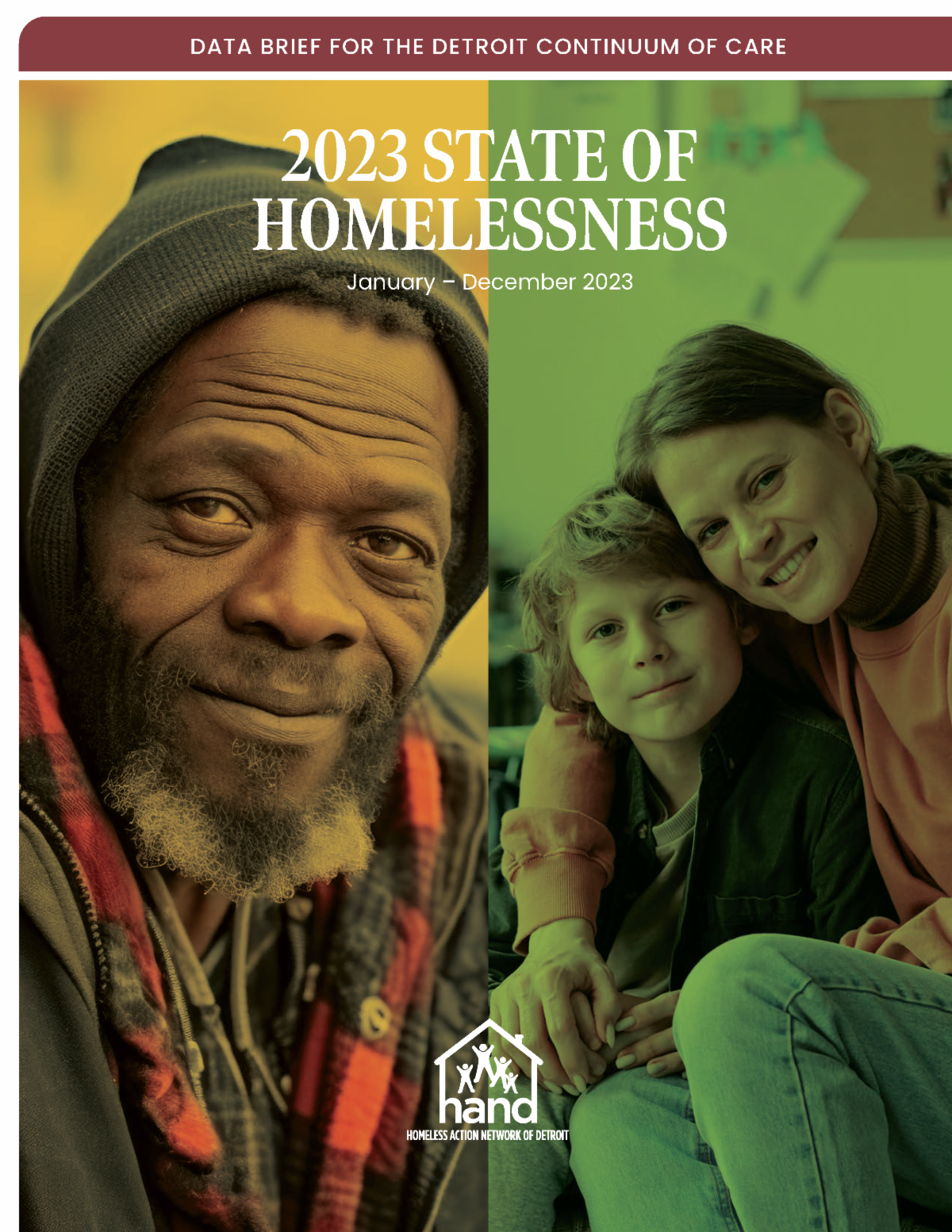
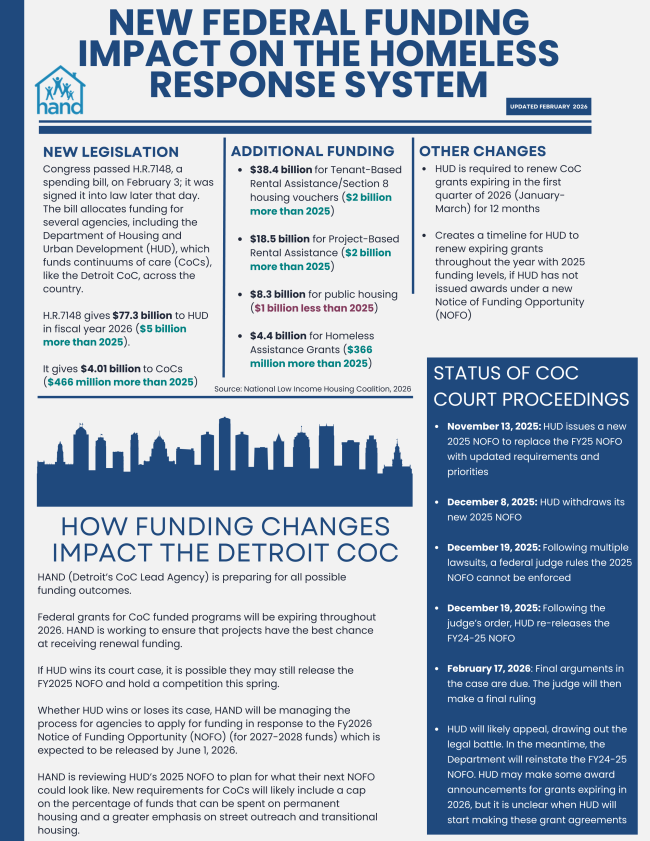
| See more details on the impacts of federal funding changes in the supplement section below. For additional questions regarding the CoC competition and federal funding, email amanda@handetroit.org | | Now Available: 2023 State of Homelessness | | | | We are pleased to present the 2023 Data Brief of the Detroit Continuum of Care (CoC). Following our established reporting model, this brief format allows us to highlight core population metrics and outcome data most crucial for our community stakeholders, while maintaining our commitment to produce comprehensive Annual Reports on a three-year cycle. The data contained within this brief tells a story of resilience and adaptation. Our service providers have shown extraordinary dedication, implementing innovative approaches to support our most vulnerable neighbors while maintaining high standards of care and dignity. | |
Read the full report here.
Other reports are available
| |
CoC Board Meeting
[In - Person]
March 9, 2026
Location: TBD
| |
Join us at the next Detroit CoC Board meeting These meetings are an opportunity for the community to receive systems-level updates, offer feedback on current initiatives and programs, and learn about the homeless service system.
Registration details coming soon.
| |
General Membership Meeting
March 17, 2026 |1:30pm
Join us for our next Detroit CoC General Membership meeting. These quarterly meetings provide a space for the community to receive updates about policy, funding opportunities, and upcoming projects in the system.
Register here
| | |
Townhall Meeting
March 17, 2026 | 10am
These meetings address changes to our federal, state and local landscape. It offers advocacy opportunities for community members and a chance to provide input and solutions.
Register for the meeting series here.
| | |
CoC Agencies hosting trainings for administrative or direct service professionals can fill out the form for upcoming trainings that they would like announced to the CoC.
If that applies to you, request your training announcement here
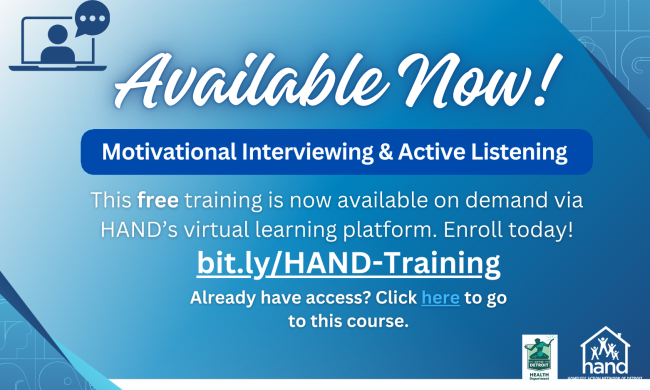
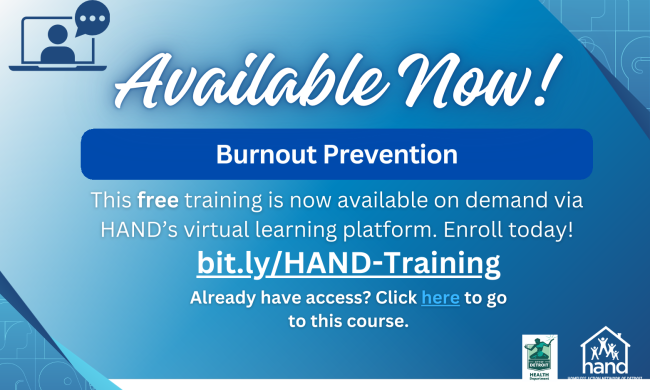
| | On-Demand Detroit CoC Trainings | | LMS users have access to a wide range of trainings. The latest are listed below. | |
- Systems Thinking Primer
- Diversion 101
- Housing Choice Voucher (HCV) 101
- Fresh Start Career Series
- Homeless Management Information System (HMIS) 101
- And more!
| |
| The Continuum of Care (CoC) 101 educational video is also available on our YouTube channel here. | | |
Supporting Persons in Homelessness Regardless of Their Access to Documentation [Paid]
February 25, 2026 |1pm
This training is a non-partisan webinar on the importance of supporting people experiencing homelessness during these cold-weather months. Most of our clients, citizens or not, do not have access to any documentation. This webinar will go through best practices in providing shelter, assisting in obtaining documents, and meeting people where they are.
Register here.
| | |
Best Practices for Serving Survivors of Human Trafficking [Paid]
March 5, 2026 | 10:00am
In this interactive training, participants will gain comprehensive knowledge about human trafficking. MCEDSV will break down the legal definition of human trafficking, share examples of sex and labor trafficking, and discuss how trafficking can co-occur with other forms of trauma and violence. Common myths and misconceptions about trafficking will be addressed and reframed. Participants will explore survivors’ unique housing needs and barriers and learn strategies to promote safety, stability, and empowerment. Finally, participants will understand how to improve their policies and procedures at their own organization and collaborate with other service systems to serve survivors in their community better.
Register here.
| | |
Free Suicide Prevention Training
Every 3rd Friday | 11am
This one-hour training from the Veterans Administration's S.A.V.E. program presents an overview of suicide prevalence, risks and warning signs.
Email VHADETsuicidepreventionteam@DVA.gov.onmicrosoft.com to register.
| | The Michigan Victim Advocacy Network (MiVAN) offers live and on-demand trainings for crime victim advocates and direct service providers. You can sign up for free, on-demand trainings on MiVAN's resource library or contact MiVAN staff about collaborative opportunities on their contact page | | First Step Community Engagement | |
First Step has numerous programs to offer to a variety of groups ranging in ages, interests, and backgrounds. All presentations include an overview of First Step, including our services, ways to get involved, how to refer clients and a Q&A session.
For more information, you can download the catalog.
| | Rx Kids: Cash aid program offers $4,500 to parents. Where is it, how to apply | | |
Rx Kids, a popular cash aid program for moms and babies has just expanded to Detroit, with plans to grow further.
The initiative, co-founded by pediatrician Dr. Mona Hanna who helped expose the Flint water crisis, offers a cash payment mid-pregnancy and then monthly assistance for six or 12 months after birth, depending on the location. It was started to alleviate financial burdens for families during an important part of an infant’s development. The program recently launched in Detroit — it’s largest expansion yet — and in March is slated to grow beyond the five counties in the eastern U.P. where it’s currently available to the rest.
Learn more about the program including how to apply on Bridge Detroit's website
| |
Policy Solutions for an Affordable Future:
Housing Affordability
| | |
Perhaps the bellwether of the current affordability crisis, housing costs have ballooned since the Great Recession and are the largest expense on most household books. Rents have increased by 50 percent and home sale prices by 80 percent since 2017, while earnings have grown just 38 percent nationwide. Younger generations openly worry they will never be able to buy a home like their parents, and climbing costs have pushed long-time residents out of their neighborhoods. Recent cuts to federal housing programs will require state and local leaders to fill the resulting gaps in housing investment and assistance. Policy solutions for housing affordability will require a comprehensive strategy that increases housing supply, supports first-time homebuyers, protects renters, and assists the unhoused.
Read more about for housing affordability solutions on the Urban Institute's website.
| | What Is Affordable Housing? | | |
At the most basic level, housing is “affordable” if, after you pay for it, you still have enough left over to cover the rest of your basic expenses. Of course this is finicky to measure, because what constitutes “enough for basic expenses” can be a matter of opinion. Also, different households have different kinds of expenses (for example, medical expenses, larger families, or transportation costs based on location).
Read the rest on Shelterforce's website.
| | Our Homes, Our Votes 2026 Webinar Series | | |
NLIHC's Our Homes, Our Votes is a nonpartisan campaign working to register, educate, and mobilize low-income renters and affordable housing advocates to vote. Renters especially low-income renters are underrepresented at the ballot box, and closing this gap is critical to building the political will needed for lasting housing solutions.
The OHOV Monthly Webinar Series brings together housing providers, housing advocates, organizations, and tenant leaders during midterm and major election years to share proven voter engagement strategies, highlight what’s working in communities, and provide practical tools to mobilize renters. Sessions feature real-world examples, lessons from the field, and actionable guidance to help organizations strengthen their nonpartisan voter engagement efforts and ensure renters’ voices are heard.
Register for the series here.
| |
Monthly Alliance Advocacy Workshop Series | |
Please join the National Alliance to End Homelessness for a monthly webinar every fourth Thursday at 1pm EST to collectively build advocacy skills
-
February 26: How to Build Local Power to Influence Members of Congress
-
March 26: How to Build Long-Term Relationships with District Staff & Local Electeds
-
April 23: Using Economic + Public Safety Arguments with Moderate and GOP Offices
-
May 28: How to Host a Successful Member of Congress Site Visit
Register for the webinar series here.
| |
Getting Ready for Medicaid Work Requirements: Strategies for Supportive Housing Providers
February 26, 2026 | 1pm EST
| |
Join CSH health and Medicaid experts for an informative session on the new Medicaid work requirements introduced under H.R.1. These work requirements could threaten continuous health care coverage for supportive housing tenants who rely on Medicaid for their healthcare and supportive services, especially people with disabilities and older adults.
In this webinar, experts will outline key policy changes that impact state implementation of Medicaid work requirements and how Medicaid recipients and their providers can prepare for these changes. CSH will also share practical strategies to influence your state’s implementation and protect Medicaid coverage for the people who need it most.
Register for the webinar here.
| | |
Proposal Submissions for the 2026 National Conference on Ending Homelessness
Proposals Due: Tuesday, March 17, 2026
The Alliance is accepting proposals to present at the 2026 National Conference on Ending Homelessness, takning place from July 8 – July 10, 2026 in Washington, D.C. They are seeking session proposals that provide valuable insights, reflect diverse experiences, and demonstrate innovative approaches to ending homelessness. Late submissions – or submissions sent via email – will not be accepted.
Read the Submission Guidelines here
| |
2026 National Symposium on Solutions to End Youth Homelessness (PSY)
Proposals Due: Mar 13, 2026
| |
Point Source Youth’s national symposium serves as a key learning event for professionals focused on youth experiencing homelessness. The symposium emphasizes youth leadership in program design, policy creation, and practice implementation. Workshops often feature evidence‑based models such as Host Homes, cash assistance, and rapid re‑housing for young people. Staff participation supports stronger youth‑driven programming and opportunities to collaborate with national leaders in youth services. Organizations are encouraged to submit proposals to highlight innovative local solutions or partnerships.
Learn more about submissions on Point Source Youth's website
| | |
Building Michigan Communities Conference
May 12 - 13
| |
The BMCC is where industry leaders, innovators, and changemakers come together to shape the future of affordable housing and community development in Michigan. Get ready to join 1,200+ housing financiers, developers, public officials, asset managers, policymakers, and advocates for two days of powerful networking, cutting-edge insights, and game-changing ideas.
Register and find more details here.
| | | | |
CHS Inc is hiring for multiple positions:
- Resource Navigator
- Permanent Housing Case Manager
- Finance Office Specialist
- Director of Fundraising & Marketing
- IT Lead
These positions are ideal for individuals interested in human services, housing, fundraising, marketing, or nonprofit finance who want meaningful work and a team that values creativity and commitment.
Please visit CHS's website for more information. Inquiries can be sent to resume@chsinc.org.
| | |
FOR THE IT LEAD POSITION
Those intersted in the IT Lead position should visit CHS's website here to view the RFP. Inquiries can be sent to info@chsinc.org.
| | |
The Survivor Advocate is a valuable member of the Community Response Team. The Survivor Advocate supports First Step’s mission by providing advocacy, crisis intervention, information, resources, and support to survivors of domestic violence and sexual assault, particularly within the criminal justice system.
The Community Response Survivor Advocate works in collaboration with police officers and prosecutors to enhance systems response to domestic violence and sexual assault.
Download full job description here.
To apply visit First Step's website
| |
Detroit at Work Community Resource Fair
Durfee Innovation Society: 2470 Collingwood St, Detroit, MI 48206
Mar 11, 2026 | 10am - 1:30pm
This event brings together agencies offering workforce services, housing resources, benefits assistance, and family supports. Staff attending can strengthen relationships with community providers and improve referral pathways. The event is also a good opportunity for outreach teams to connect directly with residents needing immediate resources. Many organizations present on-site enrollment options, making it easier to help clients start services quickly. Participation can support better cross‑program collaboration.
For more information, email vhall@detroitatwork.com
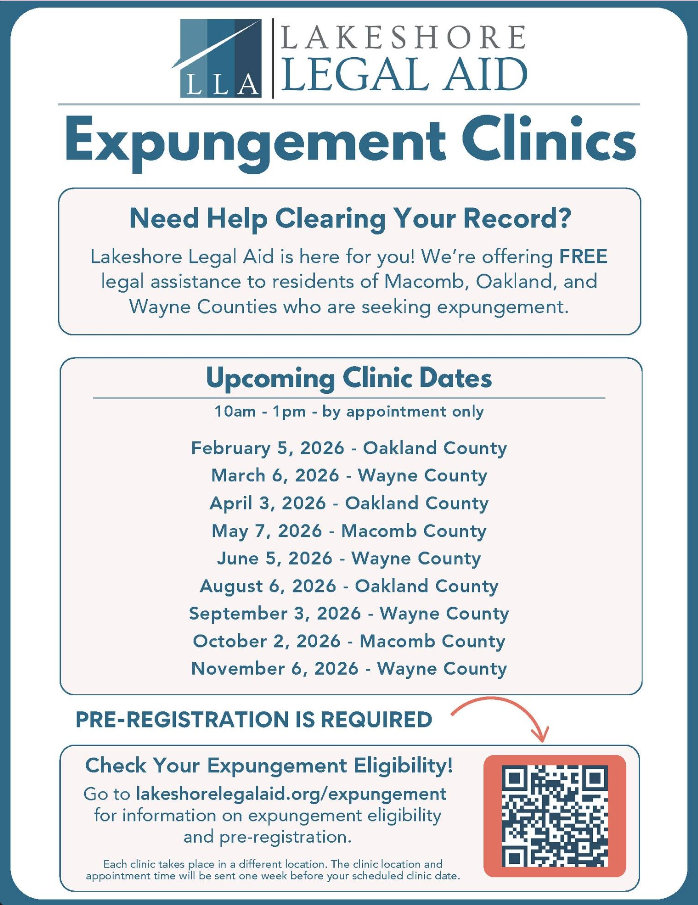
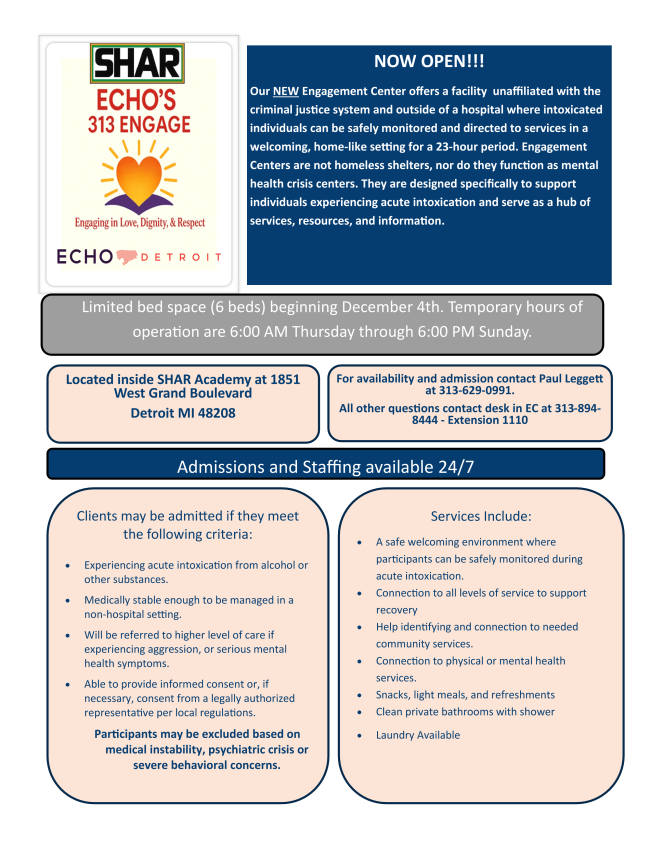
| | Visit Lakeshore Legal Aid's website for more information | | New Recovery Housing Opportunity Available in Detroit | |
Detroit is expanding access to safe, supportive housing for individuals in recover from substance use disorders. Through the City's Opioid Crisis Response Program, new recovering housing beds are open. Individuals interested in accessing these services can call to request a screen and explore placement options.
Locations: Detroit Rescue Mission Ministries, SHAR Inc, and Second Chance 2000
For placement, call Detroit Wayne Integrated Health Network (DWHIN) 1-800-241-4949
For placement at Second Chance 2000, call 313-349-9170
Contact detroitbehavhealth@detroitmi.gov for more information.
| | |
Project Based Voucher Program
Waiting Lists Open
| |
The Project Based Voucher Program (PBV Program) is designed to provide low and moderate-income individuals and families with housing assistance in specific units contracted with Detroit Housing Commission (DHC). The housing assistance is provided to income-eligible applicants who are approved for tenancy at the contracted location. You apply to the PBV location waiting list of your choice. The Project Based Assistance is only available to those selected and approved from the program site waiting list.
Visit the Detroit Housing Commission's website to apply.
| | Detroit Affordable Housing Database | | Find affordable rental housing in Detroit on Detroit Home Connect, a resource to find multi-family housing based on your income and household needs. View the current listings at the housing database website. | | |
DWIHN 24-Hour Helpline
1-800-241-4949
The Detroit Wayne Integrated Health Network (DWIHN) offers 24-hour phone service for those seeking mental health support.
| |
My Safe Space Crisis Hotline
For young adults (313) 844-9136. The MCHS hotline connects youth experiencing housing and mental health crises to short-term mental health services.
| | | | | | HAND has created shareable sheets that list local resources available to assist individuals with basic needs. Whether you’re looking for food assistance, medical or other needs, these sheets will help you find them. View all of our resource sheets here. | | You've made it this far so here's a riddle: | | |
An electric train is traveling south. Which way is the smoke blowing?
Answer:
There is no smoke because the train is electric 😂
| | | | |