Health and Safety News for the Princeton Community • SPECIAL ISSUE
2023 Unmanned Aircraft Systems Update
If you have a drone, or an interest in using drones for academic, business, or recreational purposes, please read on for the latest information on what you need to know to fly safely! 

Drone regulations and rules continue to evolve, making it imperative for us all to stay current. Review the information below if you are considering using a drone for any purpose on Princeton’s campus or elsewhere in the U.S. airspace.
Remote ID Required on all Drones Effective
September 16, 2023
The FAA is implementing a registration system for all UAS, known as Remote ID. Essentially a digital license plate, Remote ID broadcasts the identification and location information of drones in flight and is intended to facilitate the full integration of drones into the National Airspace System.

Remote ID requires, with very limited exceptions, that drones be registered with the FAA and operate with the ability to broadcast identifying information.
Drone Operation
There are three ways to comply:

  • Operate a drone produced with built-in Remote ID broadcast capabilities. Most newer drones are manufactured with remote ID-compliant hardware, however, compliance must be verified by checking on the FAA website. Enter your serial number to see if your aircraft has a Declaration of Compliance (DOC).

  • Operate a drone retrofitted with a Remote ID broadcast module. FAA-approved modules are available from a number of vendors. 

  • Operate without Remote ID at a designated FAA-recognized identification area (FRIA). Only community organizations and educational institutions can apply to host a FRIA. Princeton University does not have an approved FRIA at this time.
Drone Registration
As of September 16, 2023 all drone pilots are required to register their drone, or update their existing registration, with the FAA through the FAADroneZone in accordance with the rule on Remote ID. During registration, you must list the serial number for each Standard Remote ID drone or the Remote ID module. Drone registrations are valid for three years. The registration number must be visible on the outside surface of the drone. 
In Other UAS News...
Certification Required For Drone Pilots
Whether you are flying a small unmanned aircraft (sUAS) for recreation, education or business purposes, the FAA requires certification through one of several options.

The Recreational UAS Safety Test (TRUST) is available for recreational users, and limited educational applications such as students engaged in coursework or thesis research.
This training is an introduction to drone rules and safety and must be taken once. A current Part 107 remote operator license is required for business and many research operations. Part 107 operators must complete remote pilot certificate training every 24 months. 
Approval Required to Fly UAS on Campus
Princeton University faculty, students and staff and anyone else seeking to fly a sUAS on the campus must follow Princeton University's sUAS Policy, which are designed to ensure that all operations are conducted in a safe, responsible manner. Flight requests and documentation must be submitted at least two weeks prior to sUAS use. 

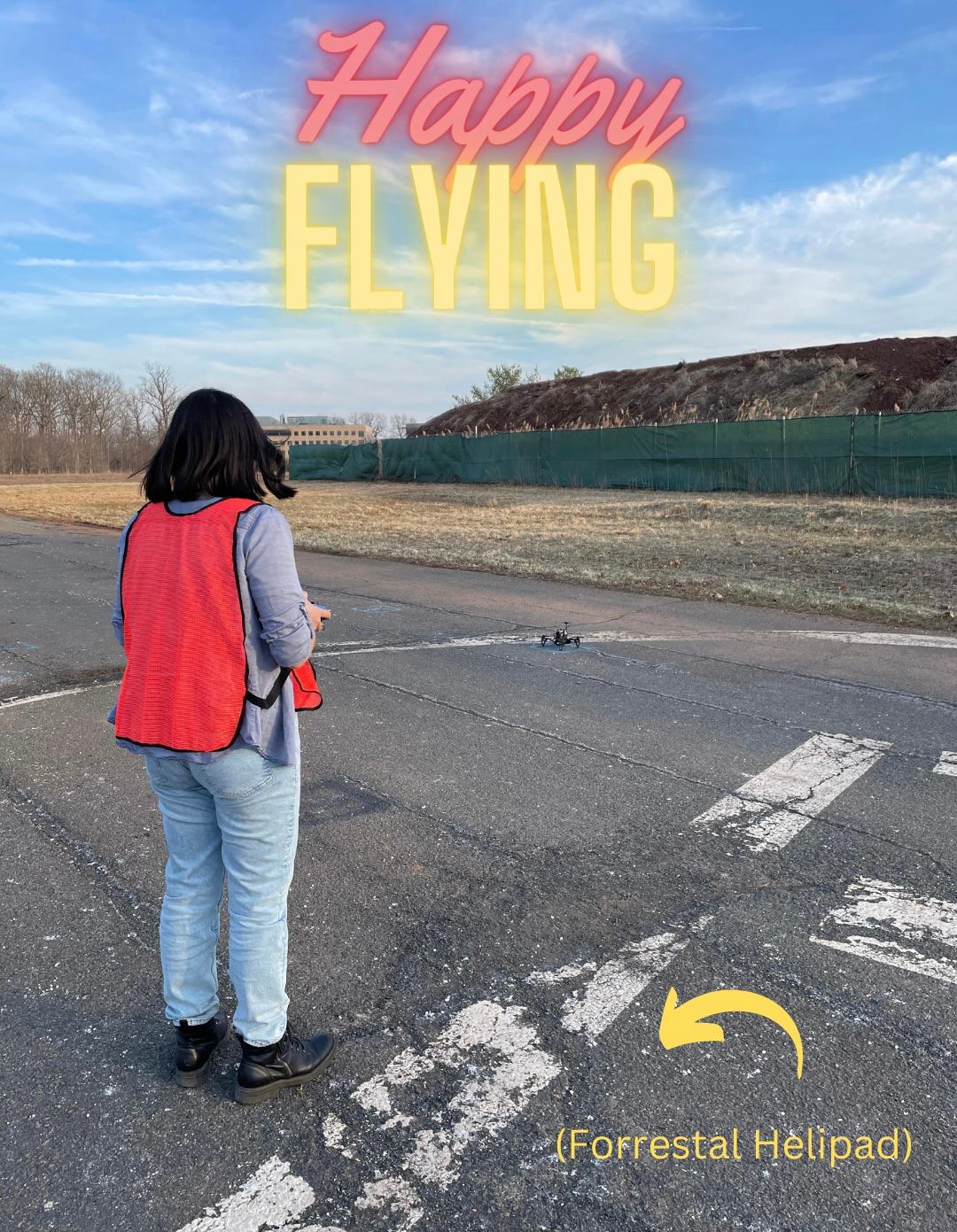
Currently, research and educational flights are only permitted at Forrestal, with limited exceptions.
Procurement and Export Control Reminders
The purchase of any drone with University funds must be in accordance with University policies and procedures which incorporate Uniform Guidance procurement standards pertaining to federal funding. Contact Procurement Services at purchase@princeton.edu if you have a question about a purchase.

Some drones may require an export control license if they intend to be used outside of the U.S. Export to some countries is prohibited. Contact exports@princeton.edu if you intend to use a drone outside of the U.S.
Instructions for Contractors and Vendors
If you are working with an outside vendor planning to fly a drone on campus, there are specific requirements that must be met. Vendors (or “invitees”) must be sponsored by a University affiliate and permission sought through the normal approval process. All vendors must fulfill proof of insurance requirements mandated by the University. 
If there's anything else that we can help with, email us at drones@princeton.edu.
About Spotlight on Safety
Spotlight on Safety is the official newsletter of the Princeton Office of Environmental Health & Safety and the best way to stay informed about important health and safety topics, timely issues affecting the Princeton community, safety training and other EHS initiatives.
Contact the editor with any feedback or story ideas at  js74@princeton.edu
Princeton University
Environmental Health & Safety
262 Alexander Street
Princeton, NJ 08540
(609) 258-5294