|
President's Message
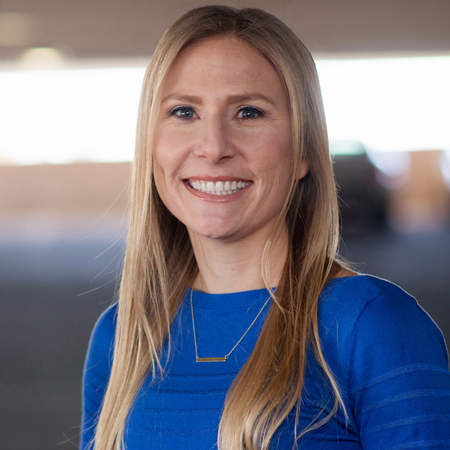
Emily Guglielmo, SE, PE, F.SEI
2023-2024 SEAOC President
You have received an early warning of an impending major earthquake.
How early?
30 seconds: You exit vulnerable buildings. Drop, cover, and hold on.
5 days: You stock up on food and water. Fill the car with gas. Pack an emergency supply kit. Purchase a backup generator. Sign up for alerts through the Earthquake Warning California.
1 year: You purchase earthquake insurance. Bolt and brace your cripple walls. Buy replacement windows. Take ATC-20, Post Earthquake Safety Evaluation of Buildings training.
5 years. Or 10 years. Or 20 years. What should you do? What should you ask of your neighbors, your utility companies, your government?
And what does SEAOC do? It is not in the power or responsibility of SEAOC to predict the next big California earthquake, nor to be granted a deferment of five or ten years to plan and prepare. However, it is our duty to act with preparedness goals now in anticipation of the future. We must be active on many fronts including standards development, retrofit measures, post-earthquake support for the California Office of Emergency Services, and continuing education on seismic design. In the past year alone, your professional organization has been active on numerous fronts:
- Launched the SEAOC Disaster Response Plan to ensure a timely response after a major event to support our communities in recovery.
Disaster Emergency Services (DES) Committee, chair Stefanie Rae Arizabel & Communications Committee, co-chairs Joyce Feng, Sikandar Porter-Gill
- Developed Vulnerable Building Fact Sheets for engineers in communicating risk to building officials, government agencies, and the public.
Existing Buildings Committee, Chairs Christian Botto and Eric Fuller
- Issued Calls to Action urging FEMA to reauthorize and fund the National Earthquake Hazard Reduction Program (NEHRP).
Legislative Committee, chair Ryan Kersting
- Encouraged the Board for Professional Engineers, Land Surveyors, and Geologists (BPELSG) for select state’s vital and complex structures be designed by licensed Structural Engineers.
Licensure Committee, chair Carl Josephson
- Planned an upcoming policy forum for SEAOC Volunteers in San Francisco to share processes and opportunities for member participation in the SEAOC consolidated vision to advance advocacy.
Legislative Committee, chair Devon Lumbard
- Encouraged the design community and public to review ATC’s newly published FEMA P-807-1 report regarding the behavior of soft, weak, or open front (SWOF) buildings to enhance the performance of these vulnerable structures.
Existing Buildings Committee
- Embedded involvement Functional Recovery Standards development through the NEHRP Provisions Update Committee (PUC) with SEAOC members serving key leadership roles and ensuring coordination with the SEAOC community.
Seismology Committee, chair Rahul Sharma & Resilience Committee, co-chairs Anna Lang, Jonathan Buckalew
- Hosted nationwide webinars to remind and educate engineers on the critical nature of seismic anchoring of non-structural components.
Continuing Education Committee, co-chairs Joyce Fuss, Bernard Cruz
- Invested in the development of the next version of the SEAOC Structural Seismic Design Manuals (SSDM).
SEAOC member Katy Briggs and SEAOC Past-President Rafael Sabelli, project managers
As we plan for the future, SEAOC commits to a renewed focus on education, advocacy, and collaboration. The recent Southern California earthquakes remind us that it is not if, but when, California will be faced with a response to “the big one”. As you ponder your personal readiness, recognize that today’s actions will determine tomorrow’s resilience.
| |
|
SEAOC Adopts Sustainable Design Policy
SEAOC's Board of Directors has adopted the following statement authored by the SEAOC Sustainable Design Committee:
SEAOC recognizes the need for coordinated action across all communities to achieve globally stated decarbonization goals. As such, we support public policy and industry efforts to reduce embodied carbon in the built environment. This includes promoting requirements and incentives for the adaptive reuse or retrofit of existing buildings, use of low-carbon construction materials, design for resilient buildings, exploration of more efficient design and construction methods, and reduction of construction waste
The SEAOC policy statement acknowledges that society is at a critical moment for ensuring a sustainable future in the face of accelerating climate change. The global community has set an ambitious target in the 2015 Paris Agreement to limit global warming to no more than 1.5°C. This objective necessitates halving emissions by 2030 and achieving net-zero emissions by 2050, based on scientific consensus. Initiatives such as SE 2050 are working to educate engineers and empower them to promote and assist in making responsible changes in construction practices.
"Advocacy and public policy play a pivotal role in amplifying our impact on a larger scale," said SDC Chair Luke Lombardi, SE. "Engineers are uniquely positioned to provide innovative solutions for meeting environmental goals and enhancing sustainable construction practices for the future."
| |
|
SEAOC & AIA CA Joint Webinar: CALGreen Embodied Carbon Series
SEAOC and AIA California are pleased to offer the first of four free webinars on changes to California’s Green Building Code, starting with an introductory presentation at 12 noon – 1 p.m. today Wed., Feb. 21.
The CALGreen Embodied Carbon series is a joint educational program between the SEAOC Sustainable Design Committee and AIA CA. The series addresses code amendments adopted by the California Building Standards Commission (CBSC) on Aug 2, 2023 that focus on reducing embodied carbon emissions in large-scale building construction projects. Understanding these changes is crucial, as compliance becomes mandatory starting July 1, 2024.
“Structural Engineers hold a critical position as designers and material specifiers. We know our structures best,” said Luke Lombardi, SE, Chair of SEAOC’s Sustainable Design Committee. “Emerging regulatory changes in CalGreen are a sign of imminent and necessary transition to reduce harmful environmental impacts, and in California, we have the opportunity to exemplify actionable and meaningful change.”
In this introductory program, experts from the Rocky Mountain Institute (RMI) and New Buildings Institute (NBI) will lead the session focusing on the compliance pathways and requirements essential for industry professionals. They will offer a detailed overview of the regulations related to embodied carbon and insights into the future development of California’s state code. The webinar also includes a segment on resources available to assist professionals in adapting to these changes.
Participants will develop a clear understanding of the concept of embodied carbon and its impact on climate change. They will also learn about the progression of embodied carbon policies leading to the adoption of state-level codes and gain an in-depth understanding of the 2022 California Green Building Standards Code amendments. Finally, the webinar will provide strategies for effectively adhering to and excelling under these new standards in various projects.
| |
|
Structural Design for Seismic Design Category C: New Webinar Series with NCSEA
This new webinar series centers around the structural design of buildings and systems categorized under Seismic Design Category (SDC) C. It caters not only to engineers specializing in the regular design of SDC C structures but also to those accustomed to working on structures falling within other seismic design categories (i.e., SDC A, B, D, E & F). Enhancing your understanding of Structural Design for SDC C not only positions you for future opportunities but also elevates your overall engineering expertise.
This Seminar will be delivered in five 1.5-hour webinars and presented by some of the industry’s experts on seismic design in moderate seismic zones.
This webinar series will provide an overview of the many facets of designing structures for SDC C. It will feature presentations that discuss the following topics:
- The design requirements that are unique to Seismic Design Category (SDC) C buildings and systems
- The differences between SDC C structural design compared to a structure designed to SDC D
- The design of reinforced masonry shear walls for SDC C using finite element models
- The design of reinforced concrete shear walls in SDC C that are constructed using the tilt-up construction method
- Anchorage of reinforced concrete walls to light-framed diaphragms
- Overview of the ACI 318 and ASCE 7 requirements for designing reinforced concrete structures for SDC C
- Illustrations of the design process for SDC C buildings using a steel-framed building structure example and a hospital case study
The registration fee for the Seminar is $595 for members ($995 for nonmembers), which includes all 7.5 hours of education. Each individual webinar can be purchased separately for $250 for members ($300 for nonmembers). Recordings of the webinars will be available to view at any time after the live seminar. The entire series will provide 7.5 PDHs; 1.5 per individual webinar.
FULL SERIES SCHEDULE
February 22
10 a.m. PST, 12 p.m. CST, 1 p.m. EST | Duration: 90 minutes
General Overview and Steel Design
Thomas Heausler, P.E., S.E.
February 29
10 a.m. PST, 12 p.m. CST, 1 p.m. EST | Duration: 90 minutes
Reinforced Masonry Shear Wall Design
Sam Rubenzer, P.E., S.E.
March 7
10 a.m. PST, 12 p.m. CST, 1 p.m. EST | Duration: 90 minutes
Concrete Slender Wall Design and its Out-of-Plane Anchorage
John Lawson, S.E.
March 14
10 a.m. PST, 12 p.m. CST, 1 p.m. EST | Duration: 90 minutes
Design and Detailing of Steel Reinforced Concrete Buildings in SDC C
David Fanella P.E., S.E.
March 21
10 a.m. PST, 12 p.m. CST, 1 p.m. EST | Duration: 90 minutes
Designing Hospitals for Seismic Design Category C
Brent Bandy, P.E., S.E.
| |
Submit Abstracts for 2024 SEAOC Convention | |
|
The Structural Engineers Association of California invites structural engineering professionals and students to submit proposals to present at the 2024 SEAOC Convention, Sept. 4-7, 2024 at the Hyatt Regency in Portland, OR.
Learning from the Past, Building the Present, Shaping the Future is this year's theme. 2024 marks the anniversary of several major earthquakes: Napa (10 years), Indian Ocean quake and tsunami (20), Northridge (30), Loma Prieta (35), and Great Alaska (60). These catastrophes not only profoundly affected their communities, but also structural engineering practice. Beyond earthquakes, recent wildfires and hurricanes have prompted a reassessment of building designs, emphasizing the crucial need for structural engineers to incorporate lessons from past events in preparing for the evolving challenges posed by natural disasters, the increased focus on community resilience, the acceleration of changes to the climate, and new developments in artificial intelligence.
Key Dates:
-
Deadline for Submission of Abstracts: March 1, 2024
-
Notification of Accepted Abstracts: On or before April 30, 2024
-
Deadline for Submission of Draft Versions of Papers: July 22, 2024
-
Deadline for Submission of Final Papers: August 22, 2024
-
Deadline for Submission of Presentation Slides: September 2, 2024
Submission Requirements:
- Abstract submissions for papers and presentations should include the following:
- Paper/Presentation title
- Abstract (300 words or less) in either MS Word or PDF format
- List of all authors/presenters, their affiliations, and primary contact email addresses
- Brief bios (100 words or less) of each presenter
Additional Notes:
- All accepted presenters are required to register and attend the Convention. Other authors that are not presenting are encouraged to attend but are not required to do so.
-
Papers for publication in the Convention Proceedings are encouraged but optional.
- Templates and instructions for papers and presentation slides will be sent to all presenters after notifications of acceptance.
- Requests for head shots of presenters of accepted presentations will be sent after notifications of acceptance.
We encourage submission of abstracts tailored for students majoring in structural engineering and early career structural engineering professionals, as well as abstracts on topics of interest to structural engineers practicing in the Pacific Northwest. Each presentation will be 45 minutes inclusive of a questions and answers period.
If you have any questions on the abstract submittal process, please feel free to send an email to the convention committee at seaoc2024@seaoc.org. Please include in the e-mail subject "2024 SEAOC Convention Technical Abstract Submission."
| |
|
Apply for 2024 College of Fellows Scholarship
SEAOC's College of Fellows is pleased to announce the opportunity to apply for the College's $5,000 annual scholarship for young professionals returning to graduate school.
The deadline for applications is 5 p.m. Wed., Feb. 28.
The objective of the scholarship is to raise the level of structural engineering by promoting the educational development of California structural engineers through advanced degrees. This scholarship is intended to recognize those that have completed an undergraduate degree, moved on to work in engineering practice or research, and are now returning for a graduate degree.
A $5,000 grant will be made to the selected scholar towards graduate school expenses at an accredited graduate school program in Structural Engineering, or in Civil or Architectural Engineering with a structural emphasis. Although the scholarship is primarily intending to encourage scholars attending California institutions, those attending institutions outside of California will be considered.
Eligibility
The applicant shall meet the following eligibility requirements:
- Hold an undergraduate degree in Civil Engineering, Structural Engineering or Architectural Engineering from an accredited engineering school or university and,
- Have a year or more of structural engineering practice or research experience following receipt of the undergraduate degree (the year must be completed before the graduate degree starts),
- Have applied to but not yet started an accredited graduate school program in Structural Engineering, or in Civil or Architectural Engineering with a structural emphasis, and
- Have been a member for at least six months in one of the four SEAOC member organizations (SEAOCC, SEAONC, SEAOSD, or SEAOSC). Any class of membership is acceptable.
Application
The applicant shall submit:
- A resume describing education and engineering or research experience (not to exceed two pages),
- A statement of career goals and reason for pursing an advanced degree (not to exceed one page),
- Evidence of application to or acceptance in a graduate school program as noted in the eligibility criteria,
- A statement of how the award would make a difference in their education or their engagement with structural engineering (not to exceed one page), and
- Two letters of recommendation including:
-
One from a member of a SEAOC Member Organization (SEAOSD, SEAOSC, SEAOCC or SEAONC) who holds either Member or Member SE class of membership.
- One from a second Member or Member SE of a SEAOC Member Organization as per above, or a professor from the applicant’s undergraduate program.
These items shall be submitted to the SEAOC office at seaoc@seaoc.org by 5 p.m. PST, Feb. 28, 2024. Please indicate “College of Fellows Scholarship” in the subject line.
Selection
An awardee will be selected by a Selection Committee appointed by the College of Fellows Scholarship Committee. Awardees will be contacted by March 31, 2024. The scholarship may or may not be awarded in any given year at the discretion of the Selection Committee. The selection process is entirely at the discretion of the Selection Committee and the College of Fellows.
Award of Funds
The funds for the scholarship will be issued upon submission of evidence of enrollment in the first term of the accredited graduate school program.
Additional
The awardee will be invited to assist the College of Fellows with publicizing the scholarship program.
Questions should be directed to both dschinske@seaoc.org and kcobeen@wje.com. Provide questions no later than February 21, 2024.
| |
SEAOC Offers Financial Assistance to Take Part in the NCEES SE Exam Cut Score Workshops | |
|
SEAOC is looking for volunteers to help NCEES with setting the grading standards of the new PE Structural Exam (what used to be called the “16-hour SE Exam”). NCEES, the organization that writes and administers the engineering and surveying licensing exams, is seeking structural engineers to participate in the standard setting panels (“cut-score” workshops), that help set the passing scores for the depth portions of the SE Exam. Next year, the test switches to the new format by using a Computer Based Testing (CBT) exam. The depth portions of the exam involve the use of “alternative item types” (AITs) in lieu of the old handwritten (“constructed response”) paper and pencil answers. The standard setting panels will meet the week of May 17, 2024 at the NCEES Headquarters in Greenville, South Carolina.
Scoring panels are scheduled for the “vertical” portion of the exam on May 17 and 18, and an additional two days are scheduled on May 20 and 21 for the “lateral” portion of the exam. Cut-score participants can choose to attend only two days, or all four days. NCEES covers airfare, hotel accommodations, transportation, and meals while in Greenville, in addition to a stipend to cover incidental travel expenses. The stipend ranges between about $390 for a two-day meeting to about $470 for those attending all four days.
SEAOC members have been working with NCEES to develop the new exam, and SEAOC is encouraging its membership to provide support by assisting with the standard setting of the exam. This portion of the process is critical to ensure that the new exam reflects the needs of our profession, and our participation emphasizes SEAOC’s continued commitment to public safety.
Because of the additional travel time required for West Coast engineers, SEAOC is offering an additional $500 for SEAOC members from California who participate in the standard setting workshops. NCEES is required, by policy, to have a diverse panel with regard to gender, age, ethnicity, region, experience type, and number of years licensed. NCEES is particularly looking for engineers that have passed the SE exam in the last 5 years. Final selection of who will participate in the standard setting workshops is at the sole discretion of NCEES.
Any SEAOC member who would like more information about this opportunity or who would like to participate, please contact Carl Josephson S.E., SEAOC Licensing Committee Chair, at cjosephson@jwa-se.com.
| |
UPDATES FROM THE MEMBER ORGANIZATIONS | |
SEAOSC - Structural Engineers Association of Southern California
| |
|
SEAOSC
Structured Connections Orange County
March 6, 2024 |5:30 pm - 7:00 pm
| |
SEAONC - Structural Engineers Association of Northern California
| |
|
SEAONC
March Association Meeting
March 5, 2024 |5:00 - 7:00 pm
| |
SEAOSD - Structural Engineers Association of San Diego
| |
|
SEAOSD
Student Night
March 5, 2024 |5:30 pm - 8:30 pm
| |
SEAOCC - Structural Engineers Association of Central California
| |
|
SEAOCC
Seismic Anchorage & Bracing of Nonstructural Componenets - Common Calculation Flaws in Current Practice
March 12, 2024 | 5:30 - 9:00 pm
| |
|
1215 K St., Ste. 1100
Sacramento, CA 95814
(916) 447-1198
| |
| | | |