Environmental Interpretive Center eNewsletter Sept. 2024 | |
|
In this issue:
- What's Goin' on at the COG?
- Upcoming Programs
- Young Naturalist Program
- Last Chance to Enter the Pollinator Photo Contest!
- Tales From the Trails: Butterfly Summer
- Greenways: Be a "Seedy Character"
- Partner Events
| |
|
What's Goin' on at the COG?
That's a Wrap!
Mike Solomon, Children's Gardening Co-coordinator
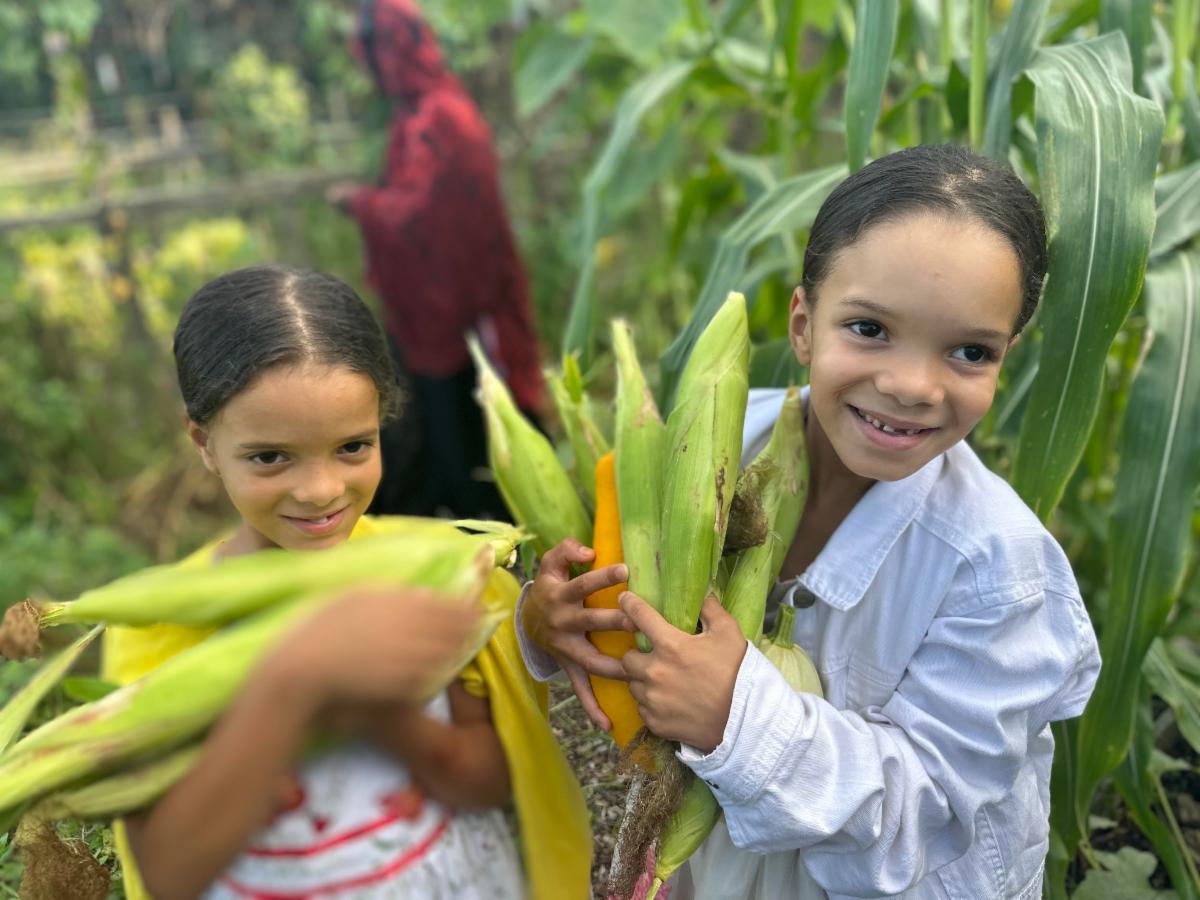
This year, the EIC’s Children’s Organic Gardening program welcomed 15 “budding” gardeners to the Community Organic Garden (COG)!
| |
|
Together, we experienced the challenges, triumphs, and wonders of growing fresh, healthy organic produce. The gardeners braved heat, mosquitoes, and pests: their efforts culminating in the ultimate reward, a bountiful harvest! | |
|
We also discussed the ways that organic gardening mimics the natural environment, providing resources not just to us, but to native wildlife! We observed a variety of birds, insects, and even signs of some mischievous mammals, all of which have different roles they play in the environment around us.
This program isn’t just about learning where your food comes from, it’s about learning to work with others, instead of just alongside them. As a community, the young gardeners took turns watering each other’s crops when they were away, kept an eye out for pests on each other’s plants, and helped each other with weeding. They also all took care of a few shared plots in the garden, sharing “the goods” from those plants amongst themselves!
This experience was a wonderful reminder that in this busy, fast-paced world packed with endless bright lights and distractions, it can pay dividends to slow down a little and smell the squash flowers, maybe there will be an interesting bug inside! Wonder is contagious, and I don’t mind coming down with a case!
Students in the Community Organic Garden
Dale Browne, COG Coordinator
The Children’s Garden is not the only place where young people grow! In fact, having a garden right on campus is a great experience for UM-Dearborn students. The Community Organic Garden truly provides a place for UM-Dearborn students to get hands-on experience with volunteer coordination, community engagement, student research, and more.
| |
|
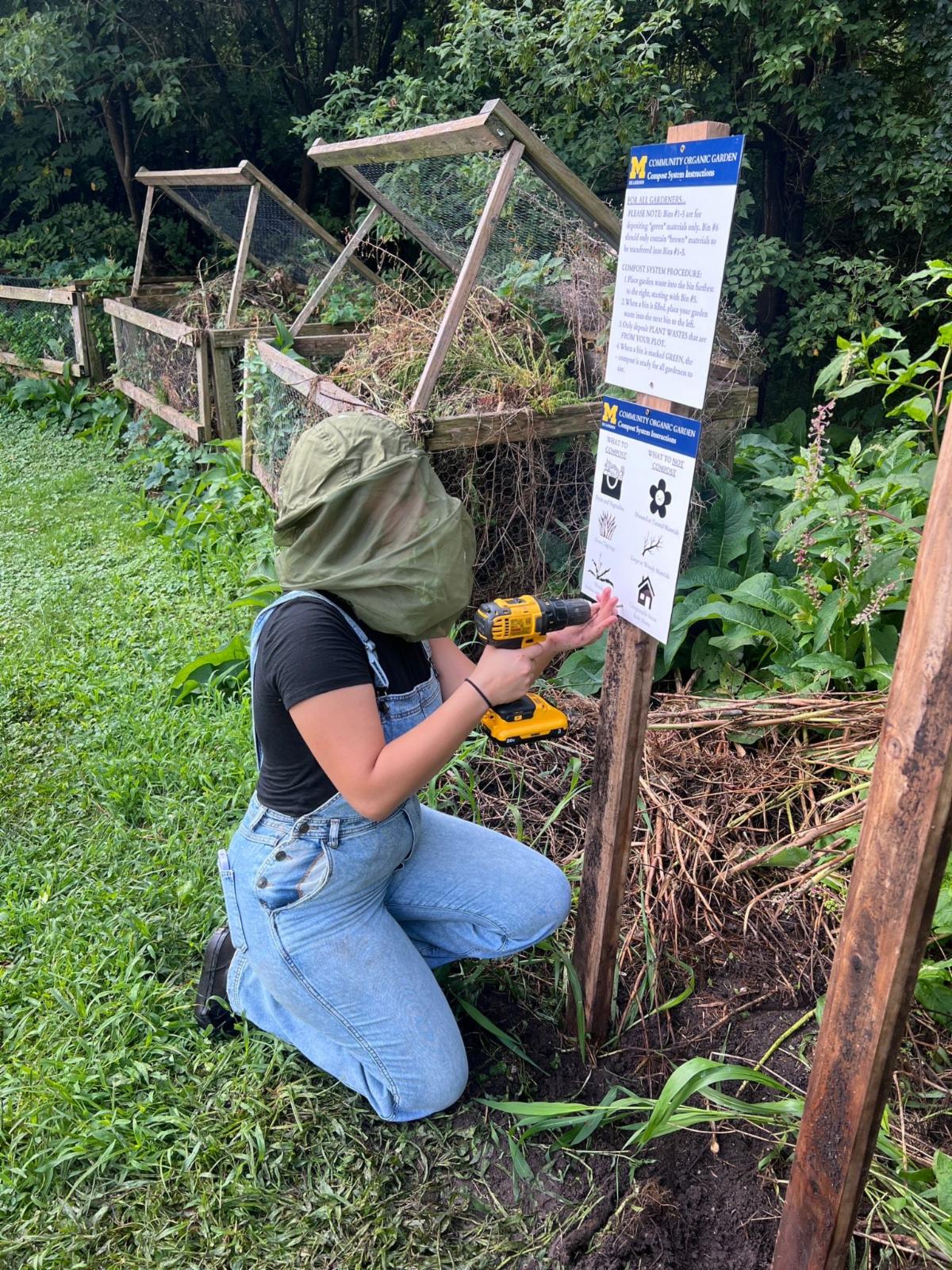
One student you may recognize (despite the mosquito netting) from her Green Ways articles is the EIC’s own Valerie Osowski, a senior in the Environmental Science program. As this year’s Cooper Family Intern, one of her major roles is assisting with the management of the COG. In this capacity she has helped with maintenance, organized volunteers, revamped the composting system, and
welcomed new garden plot renters.
(Valerie installs new signage she designed for the COG compost system.) )
| |
|
She has also organized special social events for the gardeners featuring expert speaker presentations, and co-led the Children's Garden program. Her experience with the COG has been “a great opportunity to meet people of many backgrounds…through our common interest in gardening and helping the environment”, she continues, “helping children realize how fun it is to grow their own food and spend time outdoors has been rewarding for both them and me.” | |
|
Sasha Kindred is another UM-Dearborn student who has had a great impact in the COG. Sasha, the Sustainable Well-being Intern for the Planet Blue Ambassador (PBA) program, was inspired by a student project from the University course “Poverty and Inequality.”
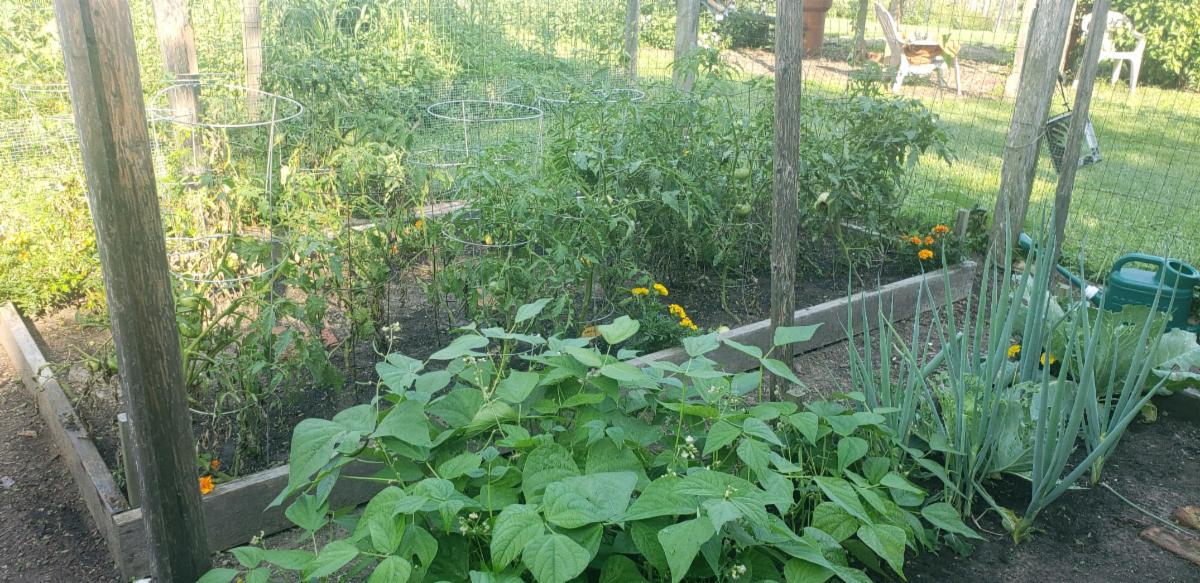
This summer, she and PBA collaborated with Dearborn Support to grow produce for the campus student food pantry. Over a dozen student volunteer gardeners donated more than 20lbs of green beans, leeks, cherry tomatoes, sweet peppers, and zucchini! This fresh produce provides a delicious and nutritious addition to the non-perishables regularly available in the pantry.
| |
|
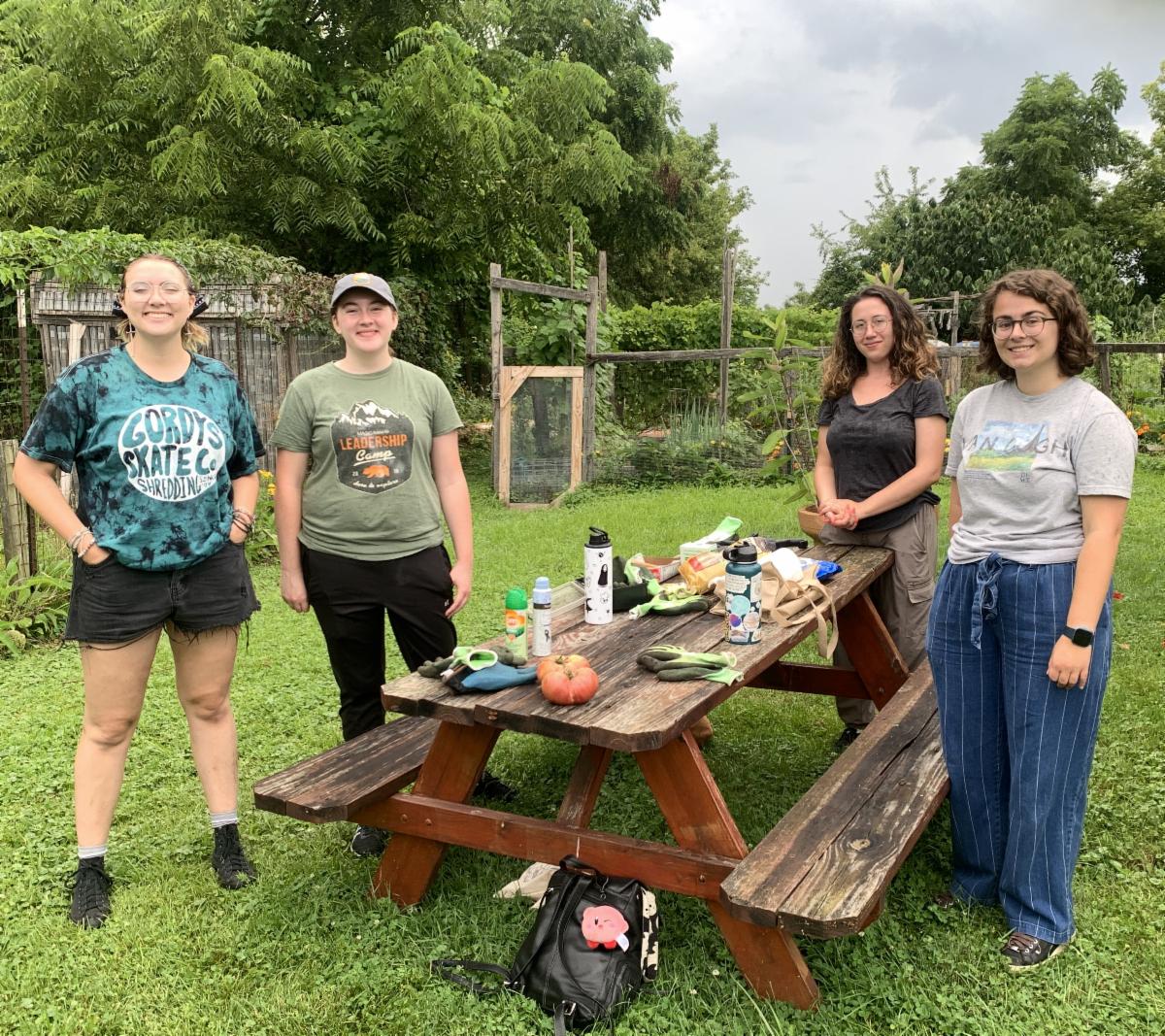
Sasha and the PBA gardeners also volunteered with Biochemistry and Biology Professor, Dr. Marilee Benore, helping to repair fences and rebuild garden beds.
Pictured left to right: Paige Allen, Natalie Albrecht, Sasha Kindred and Bridget Lawson
| |
|
PBA volunteers help Professor Benore with the medicinal and aromatic garden, where she grows medicinal and aromatic plants, such as lavender and tansy, for use in a UM-Dearborn program. Participants earn a certificate through a lab course on extraction, testing the medicinal components of plants, and product making. While volunteering with Professor Benore, the PBA students were treated to some informal lessons about medicinal and aromatic plants. There was even a study abroad trip to the old botanical garden in Padua, Italy! | |
|
"Shedding" our old image
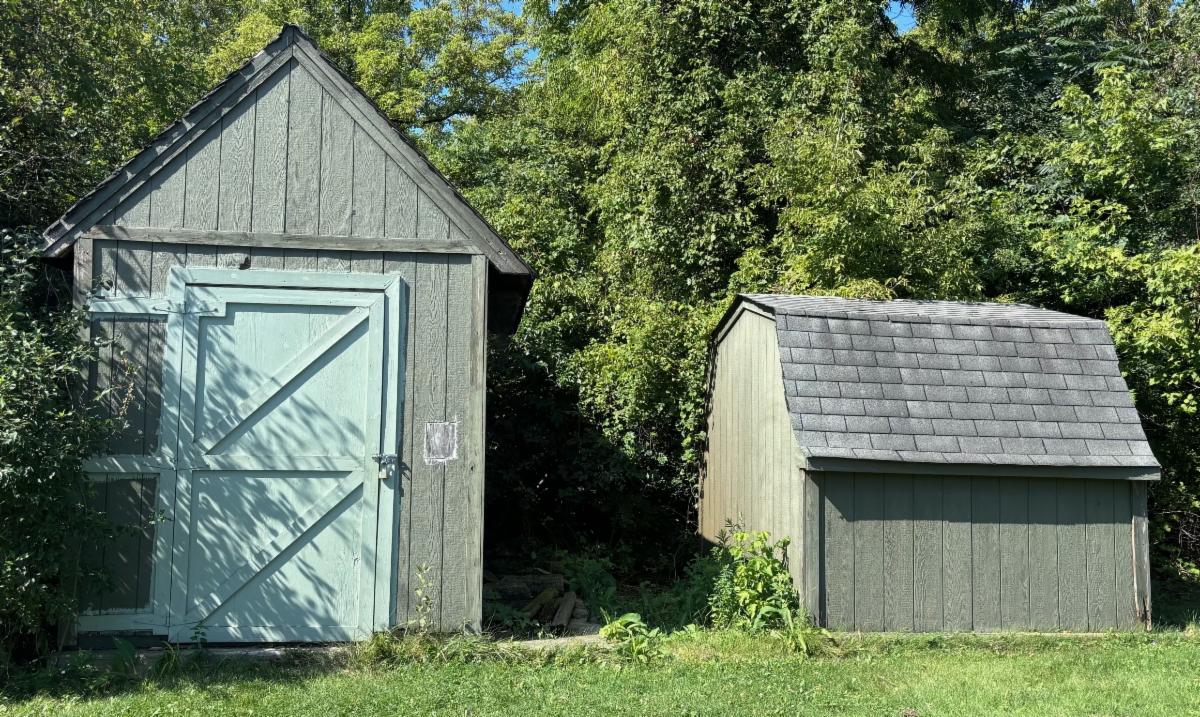
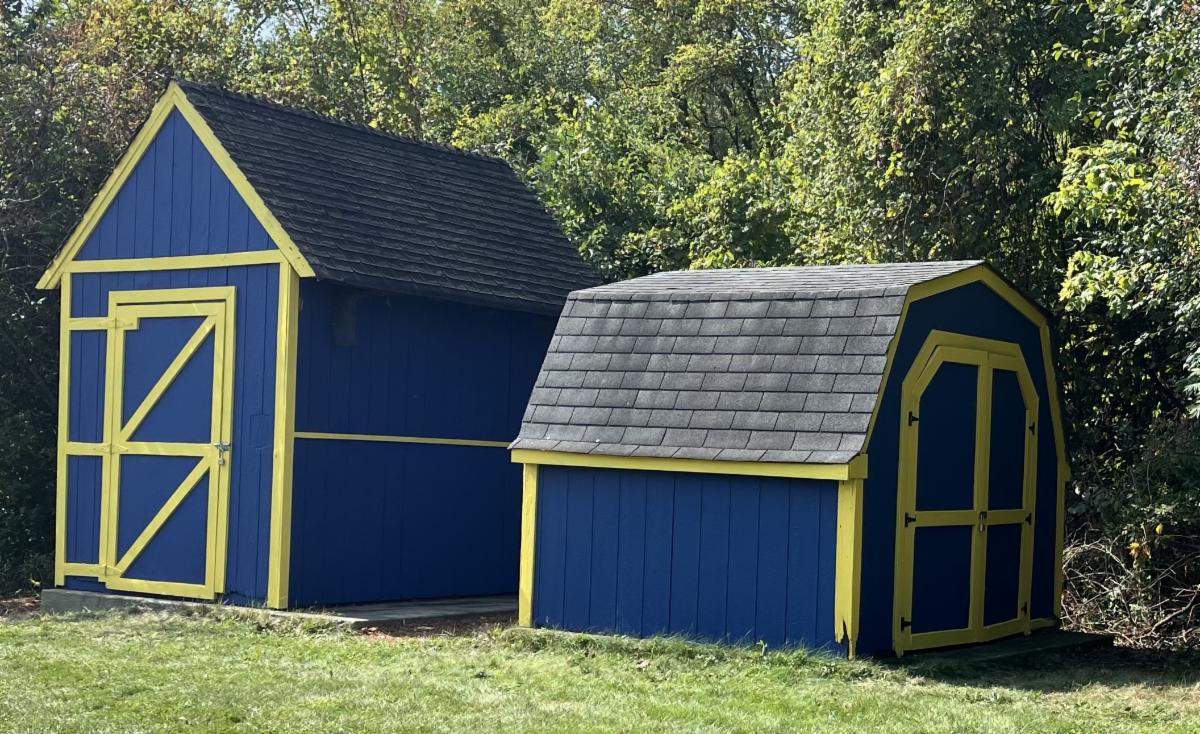
We've also had our own version of "Extreme Makeover: Shed Edition!" Dynamic duo Lise and Jacob Napieralski have been busy again, this time clearing brush and reestablishing the identity of UM by painting the COG sheds in the appropriate maize & blue colors! The sheds now make that connection clear and help remind people along the Greenways Trail that they're in Wolverine territory. We thank them for their dedication and "sweat equity" invested. (Before, left; after, right) Come by and take a gander!
| |
|
Come to Your Senses!
Nature Walk
Saturday, September 21st
1:00 p.m. - 2:30 p.m.
Explore and observe the great outdoors using your senses! Children and adults alike are welcome to join EIC Naturalists for this brand new program highlighting the importance of seeing, hearing, touching, and smelling in nature. Please register for this event.
| |
|
|
Harmony of Birdsong
Saturday, September 28, 9:00-11:00a.m.
at the EIC (in partnership with Detroit Bird Alliance*)
Join the EIC naturalists and Detroit Bird Alliance as we learn about bird song, the history of music, and tips on identifying bird calls by ear. Music educator Andy Jarema will guide this event. *There is a fee for this program. Please register through Detroit Bird Alliance for this program.
| |
|
Recurring Programs
Saturday Morning Bird Walks
September 14-October 12
9:00 a.m.-11 a.m.
Join Rick Simek for a leisurely stroll to see which resident and migrating birds are foraging for their morning meal in the Environmental Study Area. Binoculars are recommended, but not required. Meet at the EIC.
(Male Blackburnian Warbler by Brian E. Small)
Nature Walk for Mental Health
Tuesday: Sept. 17, Oct. 1, 15, 29th, Nov. 5, 19, Dec. 3
2:00 -2:45 p.m.
Relax, unwind, and get outside; with brief guided meditations, and 45-minute nature walks. You will be entered into a raffle for each event you attend, where winners will be announced at the final walk and celebration. Please dress appropriately for walking outdoors. This event is free and open to the public. Please register for this program.
Photography Walk
Thursday: Sept. 26, Oct. 1,10, and 24
2:30-3:30 p.m.
Take a hike with an EIC Naturalist and Nature Photographer! Bring your own cameras and accessories, we supply the scenery. There will also be opportunities to submit your photos to be displayed in a Photography Showcase in April. Please dress appropriately for walking outdoors. This event is free and open to the public. Please register for this program.
| |
The Return of Art in Nature Walks
Thursday: Sept. 19, Oct. 17, Nov. 7 & 21,
2:00-3:00 p.m.
Meet new EIC student naturalist Morgan Corley who will lead these art-inspired walks. Some materials provided, but feel free to bring your own! Please register for this program.
| |
|
|
Join us for an hour of fun!
Wednesdays: Sept. 25, Oct. 9, 23, Nov. 13
4:00-5:00 p.m.
Best for children 7 and under. For adults bringing children of various ages, there is an option for older kids (7+) to enjoy a nature walk with an EIC naturalist while younger kids. Free & open to the public. Meet in the EIC Exhibit Area. Music & Bubbles, Observe Wildlife, Nature Themed Books, Crafts or Activities, optional nature walk afterwards. Please register for this program.
| |
Young Naturalist Program! | |
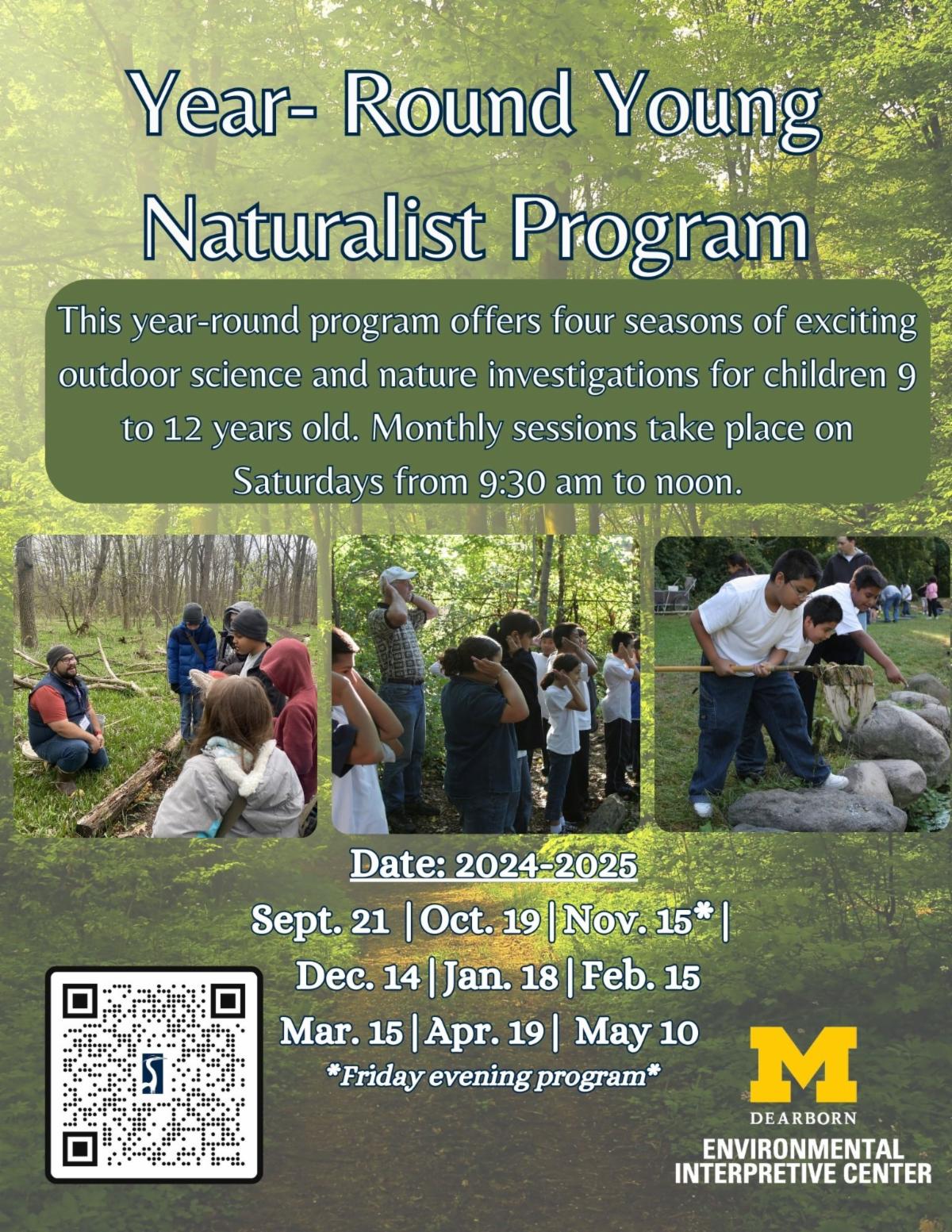
Monthly Young Naturalist Program!
This 9-month program offers four seasons of exciting outdoor science and nature investigations for children 9 to 12 years old. Monthly sessions take place on Saturdays from 9:30 am to noon, starting in September and continuing through May.
Session topics include pond studies, insects and spiders, creatures of the soil, birds and migration, owls, animal tracking, wildflowers and trees, and learning about how maple syrup is made right here at the EIC. Participants receive a field pack, field guides, and assorted field equipment. There is a fee for this program, which requires pre-registration for this program.
| |
Last Chance to Enter the Pollinator Photo Contest!!
The EIC and UM-Dearborn’s Bee Campus USA Committee are accepting entries for the 5th annual Pollinator Photo Contest. Since 2020, hundreds of photos have been entered into the contest from 24 states in the US, as well as other countries, including Canada, Lebanon, Finland, Germany, and Chile!
(Photo by previous award-winner Linda Gilson)
| |
|
Photos may be submitted in either of two categories: pollinators up-close of pollinator-flower interactions. Entries will be accepted from June 1 to September 30, 2024, with winners announced by the end of October. Full contest details are available by visiting the Pollinator Photo Contest Website. | |
Butterfly Summer
One of the highlights of this summer in the Environmental Study Area (ESA) has been the unusual abundance and variety of butterflies. Species ranging from large and showy to smaller and more somber in color could be seen on most any walk in the ESA, especially on warm, sunny days.
by
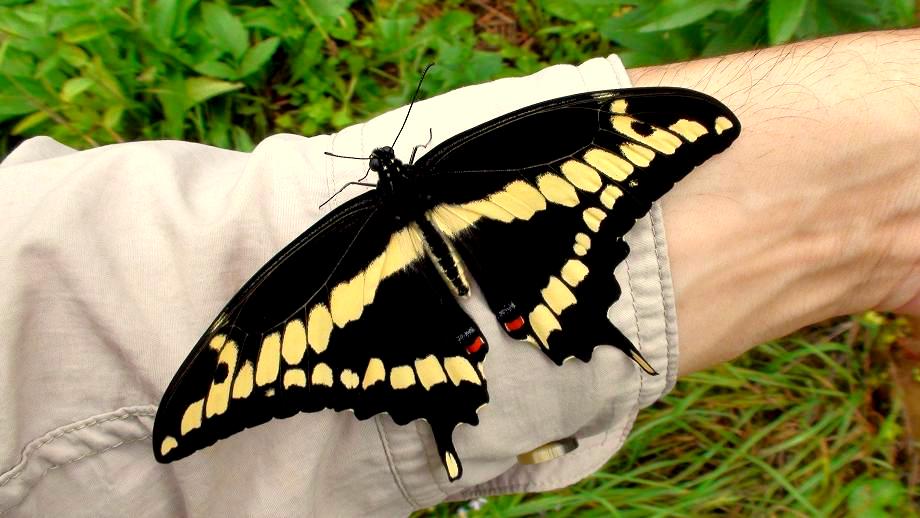
Giant Swallowtails (Papilio cresphontes) were especially numerous. As large as small birds, this largest of Michigan butterflies had their peak presence from early to mid-summer. (Photo below by Matt Perry)
| |
|
One of my ESA butterfly watching highlights was seeing a pair of these engaging in an intricate and prolonged aerial mating dance over Fair Lane Lake. Sitting on a bench near the lake, I felt I was witness to a ballet performance, only instead of “Swan Lake” this one might be called “Swallowtail Lake.”
| |
|
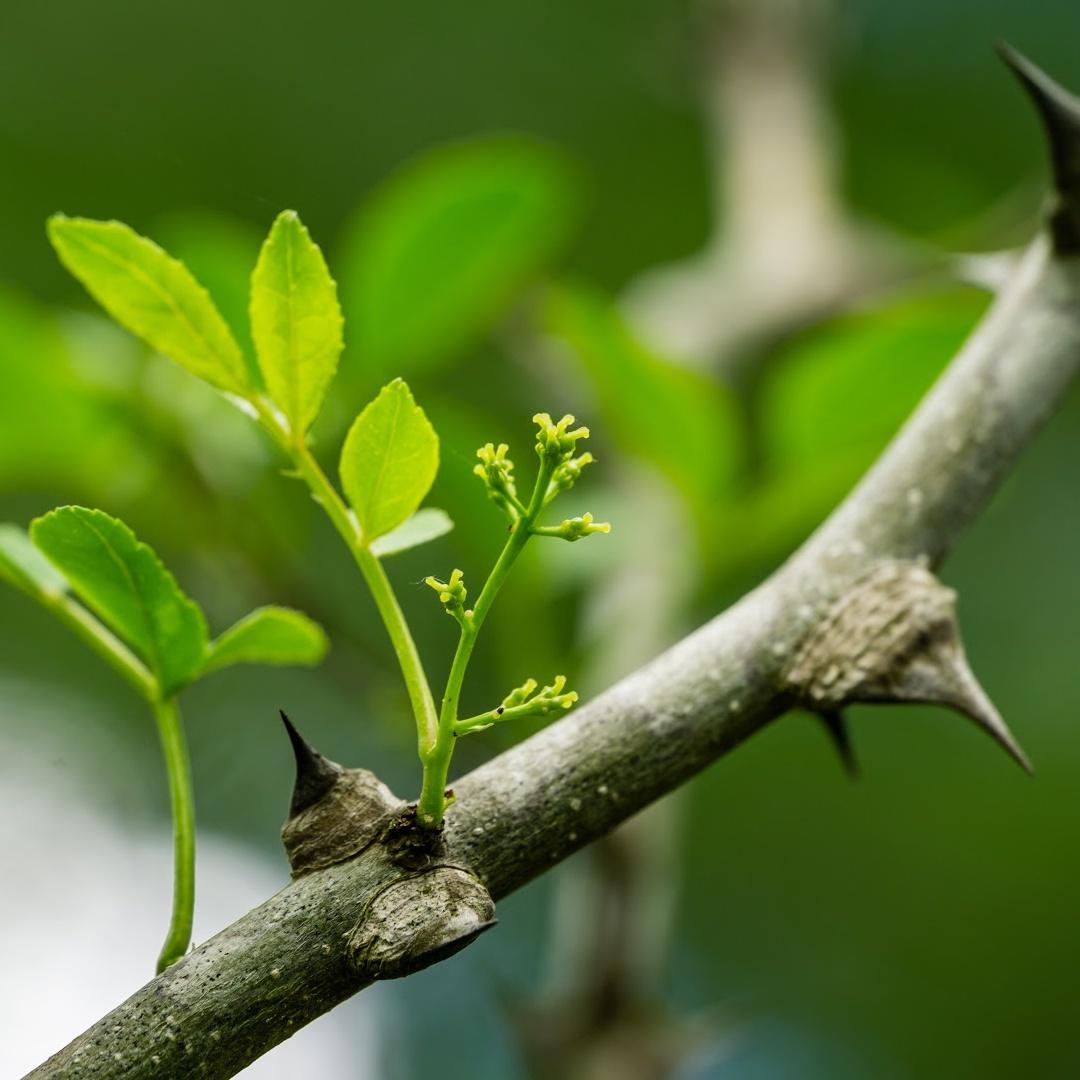
Sometime later, the female swallowtail likely laid her eggs on one of the many the native Northern Prickly Ash (Zanthoxylum americanum) found in the ESA. It’s one of the only host plants for the species in southeast Michigan.
Other large and colorful butterfly species common this year included the Tiger Swallowtail, Spicebush Swallowtail, and Black Swallowtail. Larval food plants for each can also be found in the ESA.
| |
|
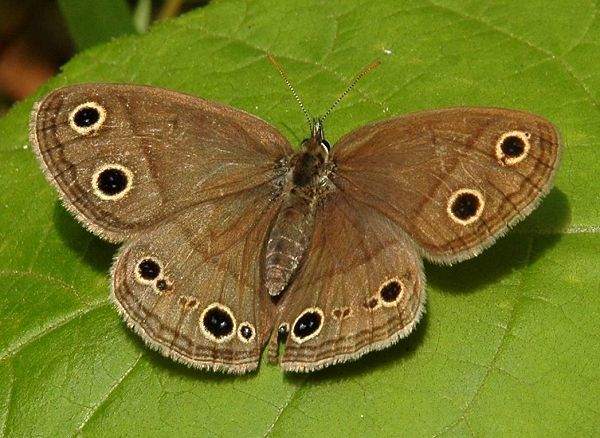
Smaller butterflies were also numerous. I especially enjoyed seeing more Little Wood Satyrs (Megisto cymela) that I can remember from past summers (right). These bouncy, low-flying butterflies were a part of many of my recent July walks along ESA foot trails, especially in wooded areas. This species lays its eggs on grasses, so perhaps the EIC’s habitat management efforts in increasing native grass abundance in the ESA has given them a population boost.
These are just a few of the 21 butterfly species observed in the ESA so far this year. There’s still time to see some of the late summer species. A September visit to the native rain gardens just outside the EIC, with its assortment of native wildflowers, might find you catching up with some of them!
-Rick Simek, Natural Areas Manager
| |
|
Be a "Seedy Character!"
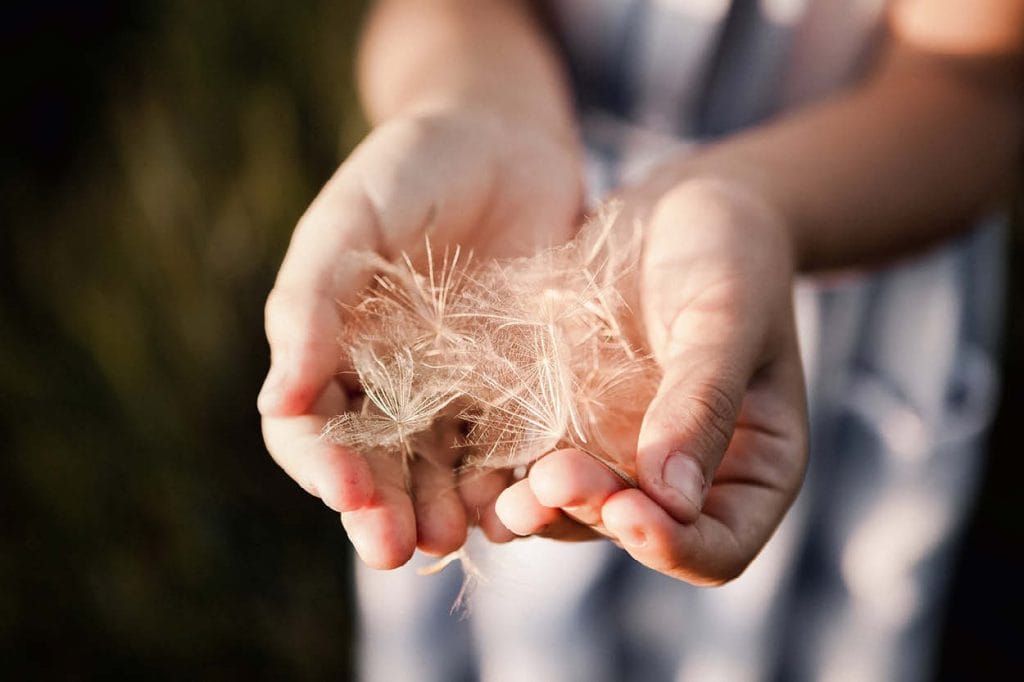
Now that it is nearly the end of this year’s growing season, many flowers, fruits, and vegetables are likely beginning to produce seeds. Collecting these seeds from your garden is a wonderful opportunity to make next year’s garden more cost effective and sustainable!
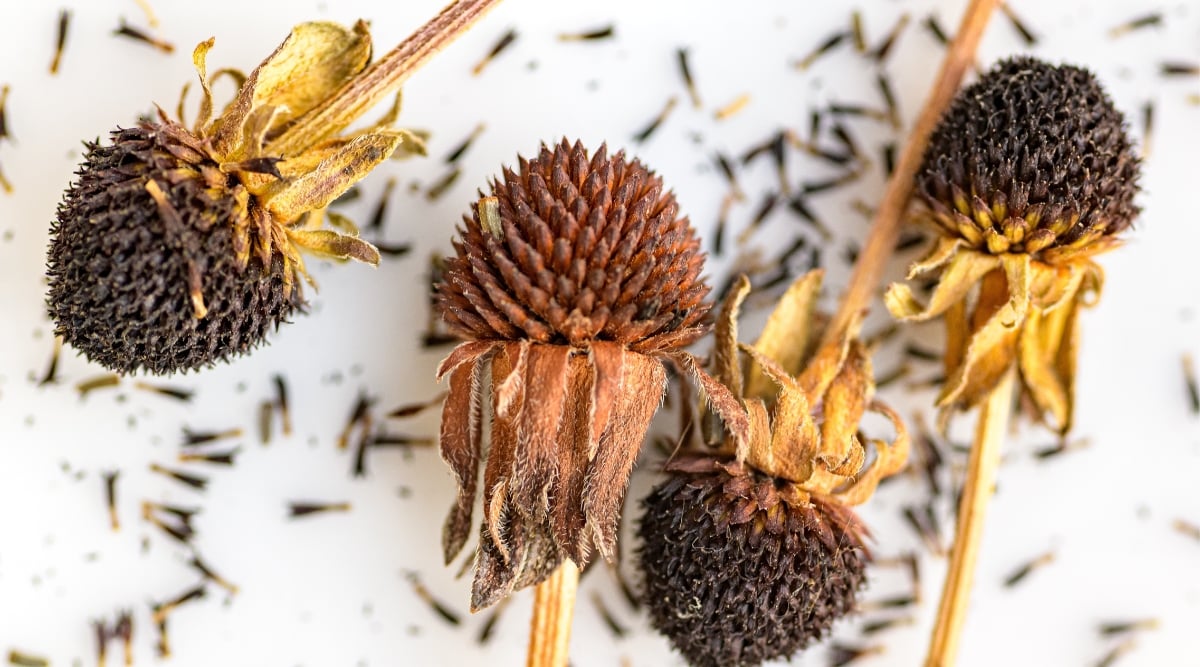
It is best to collect seeds from flowers once the plant has become fully brown and dry. Try to collect the seeds on a sunny day, once any dew has evaporated. It is easiest to collect seeds by removing the flower head, then sorting the seeds from other plant debris on a flat, clean workspace. (Black-eyed Susan seed photo courtesy of Epic Gardening)
Even if the seeds do not feel wet, give them some time to dry, as any remaining moisture could result in moldy or unviable seeds for next year. Once the seeds have been separated and dried, put them into a labeled container in a dark, cool, and dry spot indoors.
| |
|
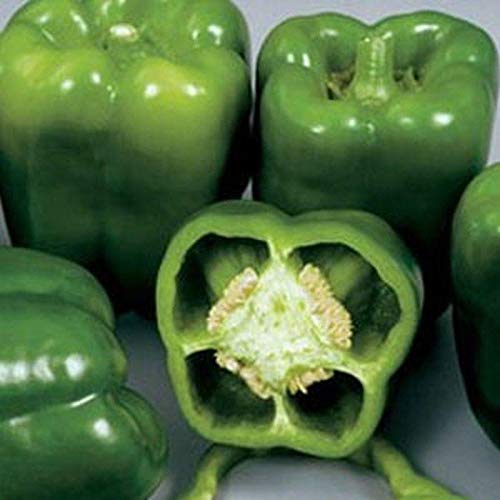
If you would like to collect seeds from fruits or vegetables in your garden, first make sure that you will be able to harvest and prepare the seeds from the plant. The best fruits and vegetables to harvest seeds from are tomatoes, peppers, beans, and peas, as they produce seeds that are easy to find and prepare for next year’s garden.
(Are ya' hungry yet?)
| |
|
|
Seed libraries are catching on and Michigan has a seed library network, including the Dearborn Public Library. Check out how the Munising Public Library has "catalogued" their seeds! (Photo by Master Gardener Jackie Stengel)
Each fruit and vegetable has its own way of growing seeds, and thus a different way to collect and prepare the seeds. So, spend some time researching how to harvest the seeds from your fruits and veggies!
-Valerie Osowski, Cooper Family Intern
| |
Friends of the Rouge
Fall Bug Hunt!
Saturday, October 12, 10:00 a.m. - 4:00 p.m.
Your eyes, hands, and boots on the ground are needed! No prior experience is necessary, but PRE-REGISTRATION IS REQUIRED. Children eight and older are welcome when accompanied by a PARTICIPATING adult; groups limited to four people.
Meet at the Plymouth Cultural Center, 525 S. Farmer, Plymouth, MI 48170
| |
2024 Conference: Birdsong in the City
Saturday, October 19, 2024
8:00 a.m. - 4:00 p.m.
| |
Join Detroit Bird Alliance for a one-day conference at the Michigan State University Community Music School in Midtown Detroit. Unique field trips and great speakers are featured in this celebration. Included are Dr. John Hartig, speaking on rewilding Detroit, the EIC's Donna Posont discussing the Birding by Ear and Beyond program, music educator and composer Andy Jarema sharing his research into the relationship between bird song and music. Tickets are available through Eventbrite.
MSU University Community Music School
3408 Woodward Ave, Detroit, MI 48201
| |
Venturing outdoors and encountering nature is good for your health. Our trails are accessible, so please visit our Environmental Study Area. Stay engaged in learning activities and check out our Remote Learning Activities & Resources page for ideas to create a “Neighborhood Nature Journal” and “Family Nature Walk” activities!
We also hope to see you in person at our upcoming programs!
| | |
Please remember...
The EIC Environmental Study Area is open daily from sunrise to sunset. We would like to remind nature-goers that fishing on site is prohibited and to leave bikes and dogs at home because they cause disruption and stress to the EIC wildlife.
| |
| | | |