|
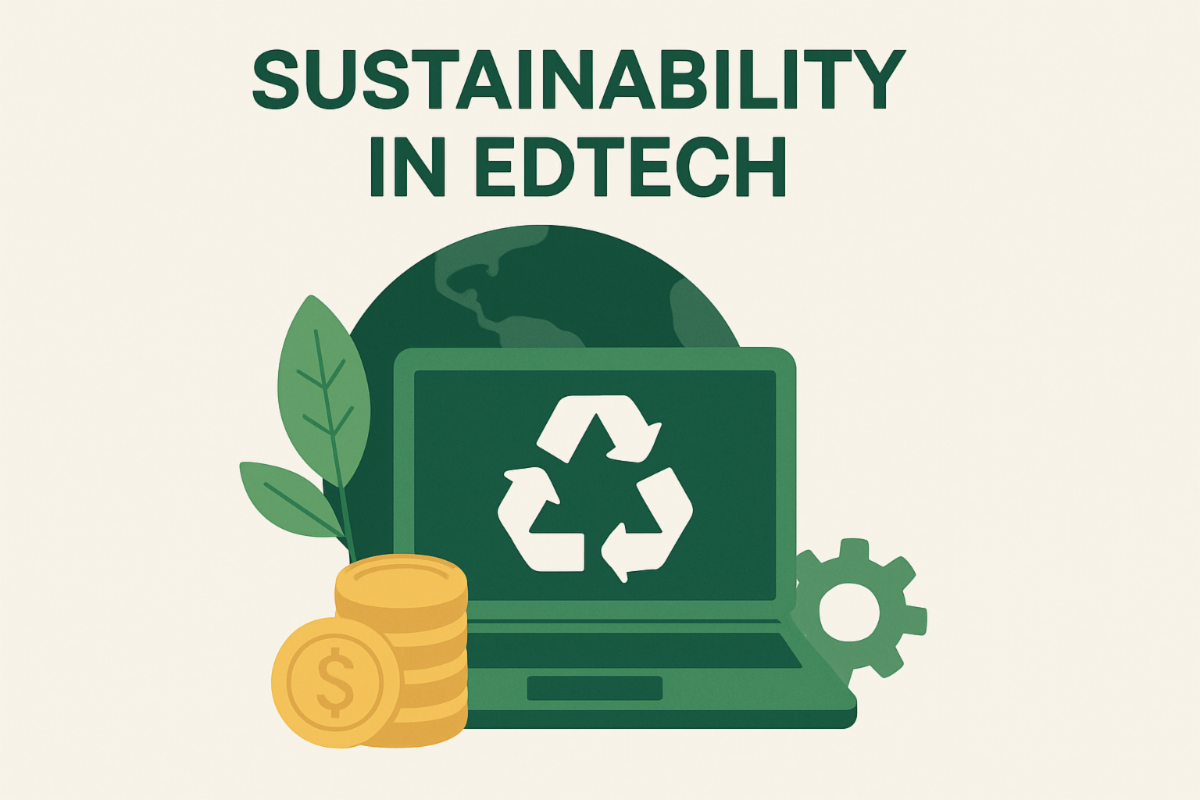
Recently, two major organizations in our field of EdTech partnered up to help us improve our procurement practices, from an environmental and financial perspective. We highly recommend reviewing Sustainability Procurement Guidelines by SETDA and CoSN the report to help your district “go green” and save some greenbacks!
Overview
The document frames sustainable procurement in K-12 education technology spending as both an environmental imperative and a strong financial strategy. It emphasizes that as tech spending in K-12 grows (over $30 billion in 2024 and projected to nearly double), schools and districts have a major opportunity to make smart purchasing decisions that reduce long-term cost, improve value, and reduce environmental impact. The guide is aimed primarily at district leaders, procurement officers, and technology directors, offering a flexible framework rather than a rigid prescription, with model language and examples that can be adapted to local contexts.
Key Categories of Sustainable Procurement
The guide lays out five key categories for sustainable technology procurement, and for each offers best practices, rationale and example contractual language.
Energy Efficiency
Schools are urged to specify standards such as ENERGY STAR®, the EPEAT rating system, or compliance with the U.S. Department of Energy’s Federal Energy Management Program (FEMP). The rationale: lower energy consumption reduces both environmental impact and operational costs. An example given: one large district saved ~$90 million over 12 years via sustainability initiatives.
The guide includes sample contractual language: vendors must demonstrate current certifications or documented energy performance; products not covered by a standard must meet “upper 25%” of efficiency in a comparable metric.
Recyclable and Sustainable Materials
This category emphasizes use of recycled content, renewable resources and circular-economy principles. Because products made of recyclable and sustainable materials can reduce disposal costs, decrease raw-material use, and reduce waste. The guide gives model language: describe the percentage of sustainable content, whether design supports disassembly and reuse, and vendor take-back/recycling programs.
Long Product Lifespan
Durability is highlighted as a key factor in reducing lifetime cost and waste. K-12 devices endure heavy use, transportation between home/school, younger students, etc., which increases damage-rates (8 %–12 % annually or higher) in some districts. Guidelines: specify durability standards like MIL-STD-810H or IP ratings; require protective accessories; plan for full lifecycle use and software update support (e.g., 8–10 years).
E-Waste Reduction
The guide addresses the growing problem of electronic waste (e-waste): only ~22 % of discarded electronics globally are properly recycled, and the U.S. generates millions of tons annually. Strategies include trade-in / buy-back programs, partnering with certified recyclers (R2 or e-Stewards), and secure data destruction protocols. Model language: vendors must use certified recyclers, provide certificates of destruction, include details of programs and audit logs.
Modularity and Repairability
Devices designed for ease of repair and modular parts extend lifespan, reduce downtime, and contribute to sustainability. The guide explains how repairability practices (e.g., spare parts availability, third-party repair access, student-led tech teams) create operational and environmental benefits. Model language includes: spare parts available for at least five years, modules easily replaceable, vendors supporting repair programs and training.
Vendor Sustainable Practices
The guide also urges districts to partner with vendors who themselves reflect high sustainability commitments across their supply chain: material sourcing, carbon-neutral logistics, recycled packaging, product take-back, etc. Schools’ procurement power can drive vendor behavior. Vendor criteria examples: third-party sustainability certifications (e.g., ISO 14001), device take-back programs, minimal/recycled packaging, carbon-offset shipping.
Conclusion
The guide concludes by reiterating that sustainable procurement is no longer optional for K-12 technology programs—it is strategically important. By prioritizing energy-efficient, durable, repairable, recyclable products and partnering with responsible vendors, districts can reduce operational expenses, avoid unnecessary waste, improve device lifespan (one cited figure: extending lifespan by four years could save U.S. districts up to $1.8 billion) and set a positive example. The document encourages school leaders to act now to shape a smarter future for students and the planet.
|