e-Newsletter | September 30, 2022
|
|
William Little (1825 - 1916)
by Kristen Fehlhaber, Assistant Director
|
|
We get research requests almost every day. After all, we began as the Historical Society of Old Newbury, founded in 1877, and like many town historical societies, we're a first stop for information about past residents.
A recent inquiry asked about a William Little of Newbury. Roger Barnes, of St. Louis, MO, told me that William was his great-great grandfather and at one point, Town Clerk of Newbury. Could I find out what years? And find out any more detail about his life?
My first stop was to look in the town newspapers, which are free and online for everyone to use, thanks to the Newburyport Public Library Archival Center. If you'd like to search yourself, here's the link: https://newburyport.advantage-preservation.com/
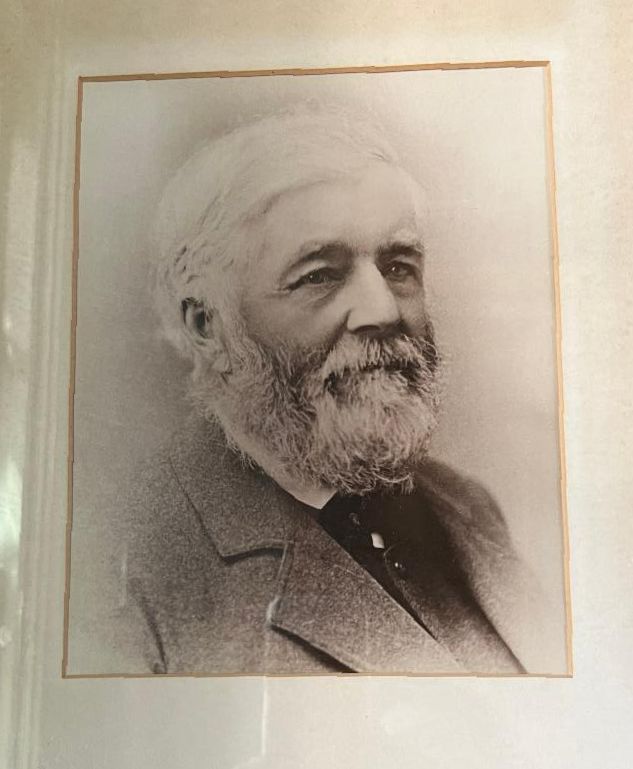
I easily found the obituary for William Little and was surprised to read that not only had he been town clerk, he had founded the Historical Society of Old Newbury! The very place where I was working. I looked up and above my desk is a framed photo of this man.
Clearly, there was going to be lots of material to share about William Little and much of it was going to be here at 98 High Street. Roger had struck a goldmine.
For much of its first hundred years, the Historical Society of Old Newbury would gather regularly to hear papers that were written and delivered by its members. Most are researched topics, but some are first person accounts - recollections of days gone by. They are an incredible record of life in this area. Just last month, we began the task of digitizing them in order to preserve them and make them more accessible.
MOON intern Lilly Baumfeld happily took on this task. The manuscripts are mostly typewritten but some are written in cursive. Scanning involves carefully taking apart the papers and methodically working through them, placing each on the scanner platen. Lilly's focus made her excellent at this and thanks to her, we are about a third of the way through scanning these papers. Coincidentally, we are partway through the papers delivered by William Little himself.
What we'll share today is a biography of William Little by his daughter, Dr. Abby Noyes Little, whose own trailblazing life was chronicled in two previous newsletter articles by Museum volunteer, Dr. Marc Cendron:
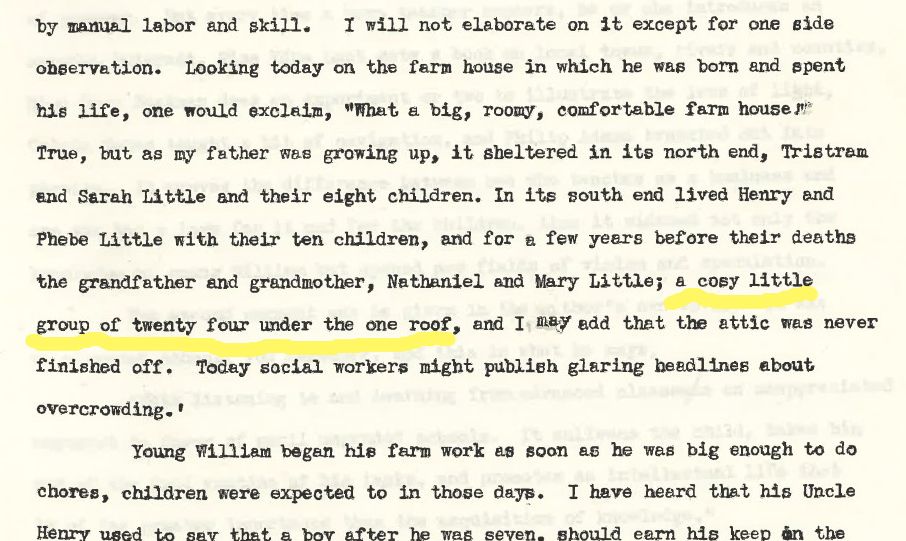
The paper is typed (thankfully), briskly told and quite interesting, even for a non-descendent(!). The passage below describes how many people lived William's house as a child.
|
|
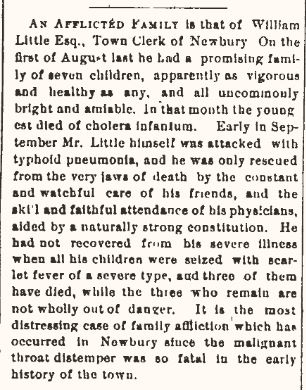
But daughter Abby left out more than a few things. Tragedy struck the family in 1876. The previous summer, the seventh child of William Little and Ellen Maria (Carleton) Little, Margaret, died at the age of eight months. And then in December and January, three of Abby's siblings died of scarlet fever. First William, age 5, on December 22, 1875. Then John, age 2, on December 29. And then the oldest child, Sarah, age 10, on January 5. Sarah died on what happened to be Abby's fourth birthday. Who knows what long-lasting trauma was created; as a descendent has wondered, maybe it fueled Abby's drive to become a physician in a time of very few female doctors.
|
|
We don't know what Abby remembered of this time but she certainly knew about it and chose not to include it in telling her father's (and her family's story). At least one other major event was omitted from her father's life story - Roger is currently researching this. And that is part of the fun of genealogy - the hunt and the discovery. The search goes on! |
|
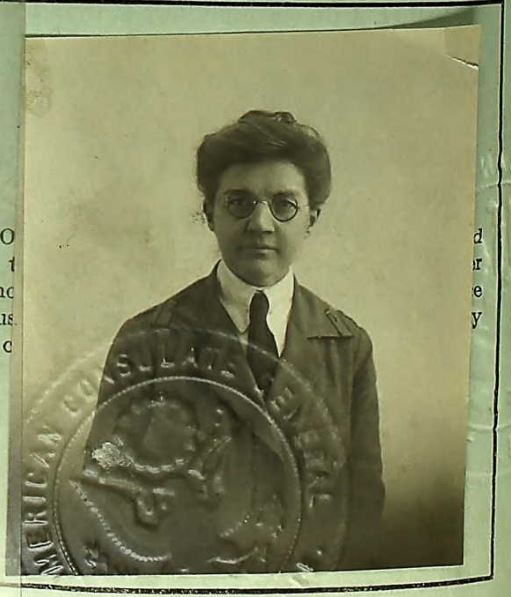
William Little from the photo hanging in the Museum of Old Newbury; Dr. Abby N. Little, MD., U.S. Passport Application, 1923, image courtesy Ancestry.com.
PS - we are happy to report that Roger is a new and proud member of the Museum of Old Newbury! We can't promise that your relative delivered a paper at a Historical Society meeting, take a look at our finding aid - you might strike gold.
|
|
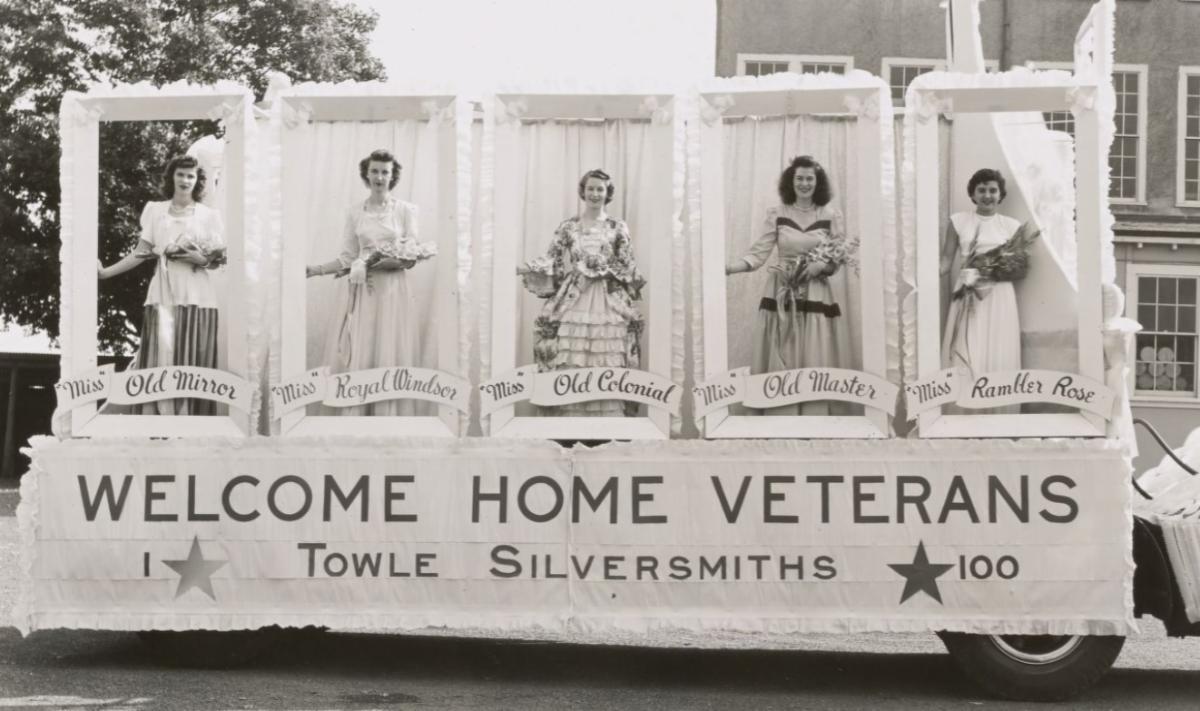
One of many Towle floast in probably the last great Newburyport parade - September 29, 1946. |
|
The Best Ever! Parades in New England, 1788–1940 Thursday, October 13, 7pm.
Noted curator and author Jane Nylander will give a talk on her book, The Best Ever! Parades in New England, 1788-1940. She explores the parade tradition as enacted in the small cities and towns of New England. Meticulously documented and lavishly illustrated with nearly 300 photographs, The Best Ever! offers never-before-seen pictures of actual parades, including floats and banners that have mostly disappeared and ranging from the Federal Ship carried in the 1788 Ratification parade at New Haven, Connecticut, to 1940 when the parade tradition largely halted at the onset of WWII.
Free for all thanks to Mass Humanities
|
|
Trot Trot through the Tombstones
Sunday, October 16 - an afternoon of horse-drawn wagon tours
|
|
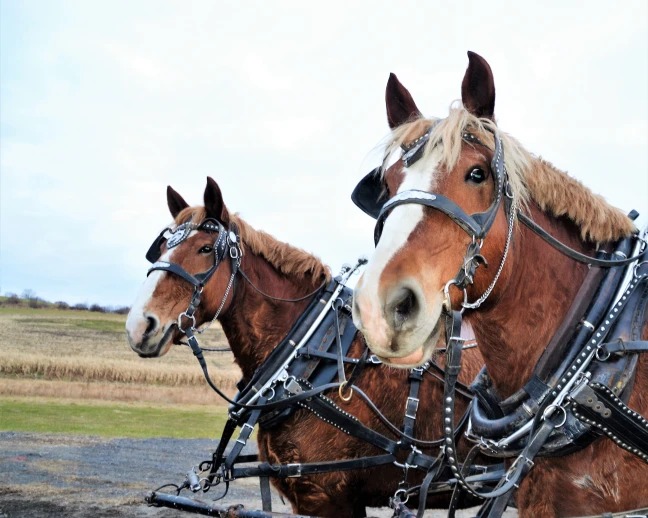
The Kimball Farm draft team will be ready to take you through Oak Hill Cemetery. Photo courtesy of Alison Colby-Campbell.
Grab a warm drink and a cider donut and hop in a horse-drawn wagon for a 40-minute horse-powered ride through the fall beauty of Newburyport’s historic Oak Hill Cemetery. Kimball Farm draft horses will bring us through the 36 acres of ancient trees and winding trails with the guidance of noted author and historian Ghlee Woodworth, a 12th generation Newburyport native.
Wagon rides will take place at 2pm, 3pm, 4pm and 5pm. Tickets for members are $25, non-members $35. Reservations are required.
Oak Hill Cemetery is still an active cemetery, as well as the final resting place of shipwrecked sailors, sea captains and merchants, architects and photographers, writers and poets, silversmiths and newspaper editors, and adventurers who travelled to the Klondike gold rush.
|
|
Nearby -
A Brief History of Old Newbury with Bethany Groff Dorau
Saturday, October 22 at the Georgetown Peabody Library
2 Maple St., Georgetown, MA. 10am business meeting, 10:20 am, presentation. Hosted by the Massachusetts Society of Genealogists, Merrimack Valley Chapter. Free.
Take an illustrated ramble through the 17th century community of Newbury, present-day Newburyport, West Newbury, Newbury, and Byfield. Author, historian, and museum director Bethany Groff Dorau, descendant of 52 of the first European settler families of Old Newbury will use maps, court records, photographs, and other documents to provide a virtual tour of this important early New England town. Bethany's book is available in our online shop.
|
|
Woman on the MOON
...a blog by Bethany Groff Dorau, Executive Director
|
|
The Good, the Baud, and the Ugly, Part II
John Atkinson and the Merry Widow Stickney
This is Part II in a series. For Part I, see here.
Well, friends, you will all be happy to know that I survived the week, despite my titillating revelations about the venerable Atkinson family. I did fall off a ladder, so I leave you to wonder if Mae Atkinson has taken her revenge after all. To be fair, it was a rickety old step ladder, and I am not the sprightly waif I once was. Still, once one has decided that there might be a member of the spirit world with a chip on their shoulder, almost anything becomes suspicious. Look – I just summed up the whole plot of The Crucible! Incidentally, there is a superb performance of The Crucible being performed this weekend at the 1785 Rocky Hill Meeting House. Get tickets here.
But I forge bravely ahead. There are more scandalous tales to tell. When last we left the merry Widow Stickney, she had taken John Atkinson to court for fathering her child, a daughter named Mary. The town was divided on the veracity of her testimony, and dozens of people showed up at the Essex County Quarterly Court session to offer their take on the situation.
|
|
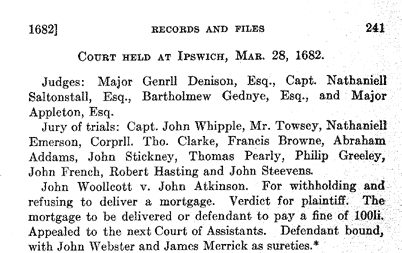
At the March, 1682 Ipswich session of the Essex County Quarterly Court, in which John Atkinson denied that he was the father of Widow Stickney's daughter, he is the first case on the docket for another matter - refusing to return a deed after a mortgage he held was paid off. He was found guilty.
There were other possible fathers for Widow Stickney's baby, Atkinson argued. Sarah Stickney had been heard accusing Samuel Lowell of fathering her child, including once near the birth of the child. Lowell himself was ready to step up and promised to bring his new daughter “wittles and clouts”, or swaddling clothes. A third lover for the Widow Stickney was revealed to another witness, who had seen James Merrick (John Atkinson’s brother-in-law) sneaking into her house at night. For those of you keeping track at home, this would indicate that Sarah Stickney, mother of nine, had three lovers going at one time in 1680. Where did she find the time?
Sarah accused John Atkinson of slander. John accused Sarah of slander. They were both found guilty. Neighbors testified that John had started being very nice to anyone that might witness against him, settling old debts and mending literal and figurative fences. Despite this, John was found by a jury to be the father of Sarah Atkinson’s child and was ordered to pay “12 shillings for the jury, 8 pounds for the past maintenance of the child, and 2 shillings, 6 pence per week until further order of court.”
John went away mad but was back in court soon for beating Sarah with his walking stick “so that her child fell almost into the fire”. Her uncle and brother were witnesses and John Atkinson was ordered to pay a 26 shilling fine. This did little to cool his temper, and two months later, he was back in court.
|
|
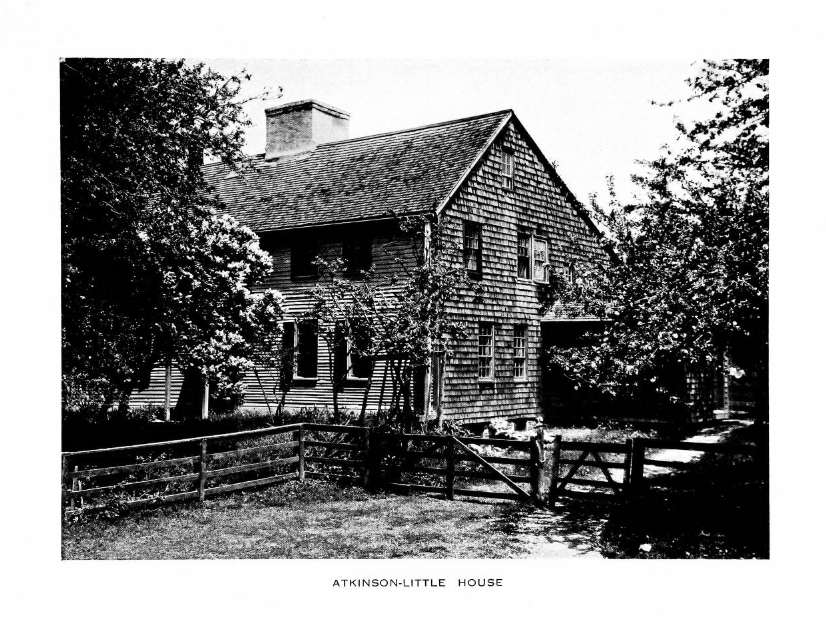
The c. 1664-1665 Atkinson House at 5 Hanover Street in Newbury.
“John Atkinson of Newbury, being the reputed father of Sarah Stickney’s last child, complained that he was hard put to it to pay all charges, and court ordered that half of his payments should be in money and the other half provisions or clothing for the said child at money price.”
Four months later, he was back yet again, arguing that there was a shortage of money, and he should not have to pay so much, and besides, he should only have to pay half since he was only one of two parents.
“I cannot think it is the mind of the Court that the whole maintenance of such a child should be put upon a reputed father (it is evident it is hers, & therefore hath just reason to bear half) whereby ye maintenance of such a child should arise to be double what others pay.” He also revealed that Sarah had been pregnant once before in her widowhood and had threatened a paternity suit (there is no proof of this), and if she was continuously granted child support, it would be “a precedent to induce such persons to commit lewdness when by their accusation they can force on wealthy persons and get increased income”.
John Atkinson already had a wife and nine children of his own, and argued that paying the full amount would make him a pauper. He demanded custody of the child, so that he would not be “kept a continual slave to her who hath injured me, and Impudently and scoffingly insulteth me.”
|
|
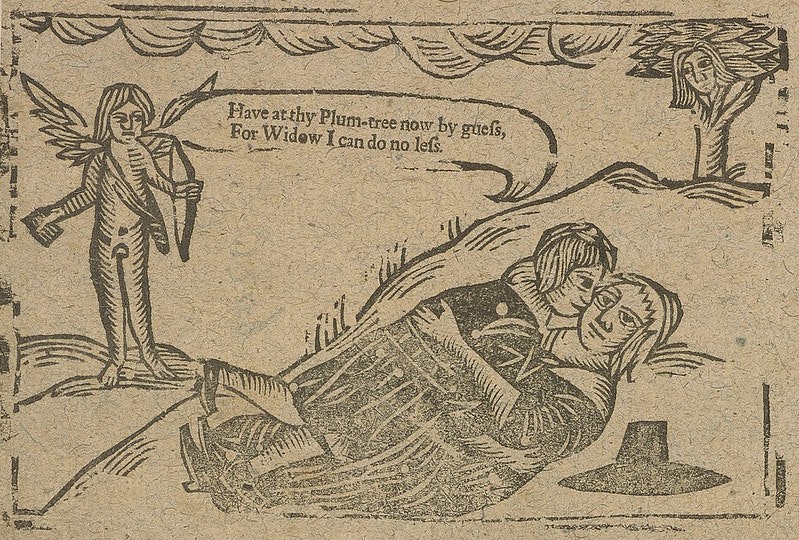
The voracious widow was a popular subject of ribald ballads published in England in the 1680's. This illustration is from The Hampshire Miller, sung to the tune of A Languishing Swain.
Atkinson understood the law, as he was a frequent participant in it. In addition to the fornication case, in 1682 alone he was in court numerous other times for various reasons, accused of swindling his neighbors, accusing them of swindling him, witnessing in a forgery case, and more. He understood that the court’s interest was in the support of the child, not the parental rights of Sarah Stickney. If he could find another solution that did not involve him paying her, and did not leave the child without support, the court would likely honor his rights as Mary’s father, which, after all, Sarah Stickney had taken such pains to prove.
There is scads more scintillating testimony, including one memorable scene when all of Sarah Stickney’s lovers get together and draw lots to see who would take responsibility for the pregnancy. John Atkinson drew the short straw. Furthermore, Sarah Stickney seems to have been a bit of a moral relativist, telling James Merrick that she and Samuel Lowell knew their lovemaking was a crime, sure, but so was smoking a pipe in the street, and one was “no more a sin” than the other.
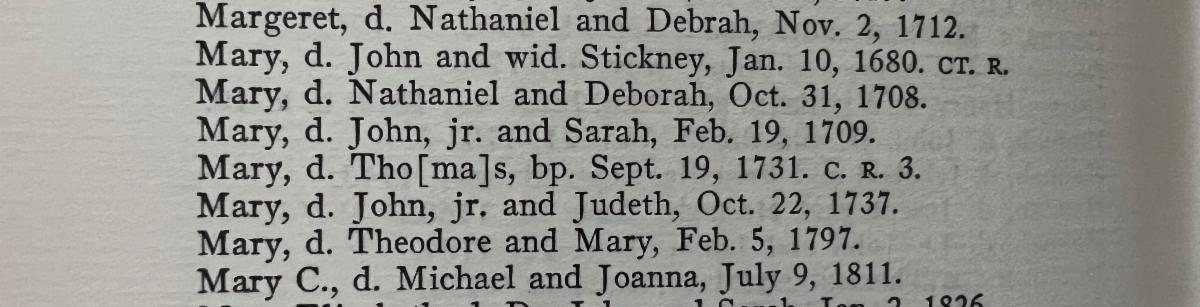
The court did not free John Atkinson from his paternal responsibilities, but they did the next best thing. They told him that he could have the child and give it to someone else to raise. Perhaps the court knew that Sarah Stickney would never let this happen. John Atkinson certainly knew it. If Sarah didn’t give him the child, she was to “maintain the child at her own cost”. The child’s name was entered into the birth record as Mary Atkinson, born January 10, 1680.
|
|
Mary's name as recorded in "Vital Records of Newbury Massachusetts, To the End of the Year, 1849; Vol. I - Births."
And then all hell broke loose.
Join us in the next newsletter when John Atkinson threatens the Newbury town clerk, buys a mad cow, and steals pork and barley from widows and orphans. It’s not all fun and games here in Old Newbury. John Atkinson is also about to take part in the murder of an innocent woman.
|
|
Something is Always Cooking at the Museum |
|
My favorite way to prepare chard, so abundant this time of year, came from a neighbor from my childhood, Maria Rosa Conti (1903-1999). A native of a Aulla, a small town in the northwest of Tuscany, she'd been in the US for 50 years when she passed this gem along. Her house and ours were adjacent - but in different towns; a steeply banked creek separated our houses and formed the border between Burlingame (our side) and Hillsborough, CA (Mrs. Conti's). She and my mom would stand at the top of the creek banks, chatting away. This has been a family favorite ever since. -Kristen Fehlhaber
2 or 3 cloves or garlic
2 teaspoons kosher salt
Red wine vinegar
Olive oil
Large bunch of chard (Swiss, Rainbow - any kind will do)
Mince garlic, add salt and grind to a paste in a mortar & pestle. (This step is very important and was always my job as a kid.)
Add red wine vinegar and olive oil to make a tart dressing. (about 1/4 to 1/3 cup each)
Chop chard stems into 1 inch pieces. Steam chard stems first for 5 minutes, then add leaves and steam additional 5 minutes. . Put in a bowl and add the dressing. Serve with hot rice (which will soak up the delicious dressing).
|
|
Click on image above to play the puzzle |
|
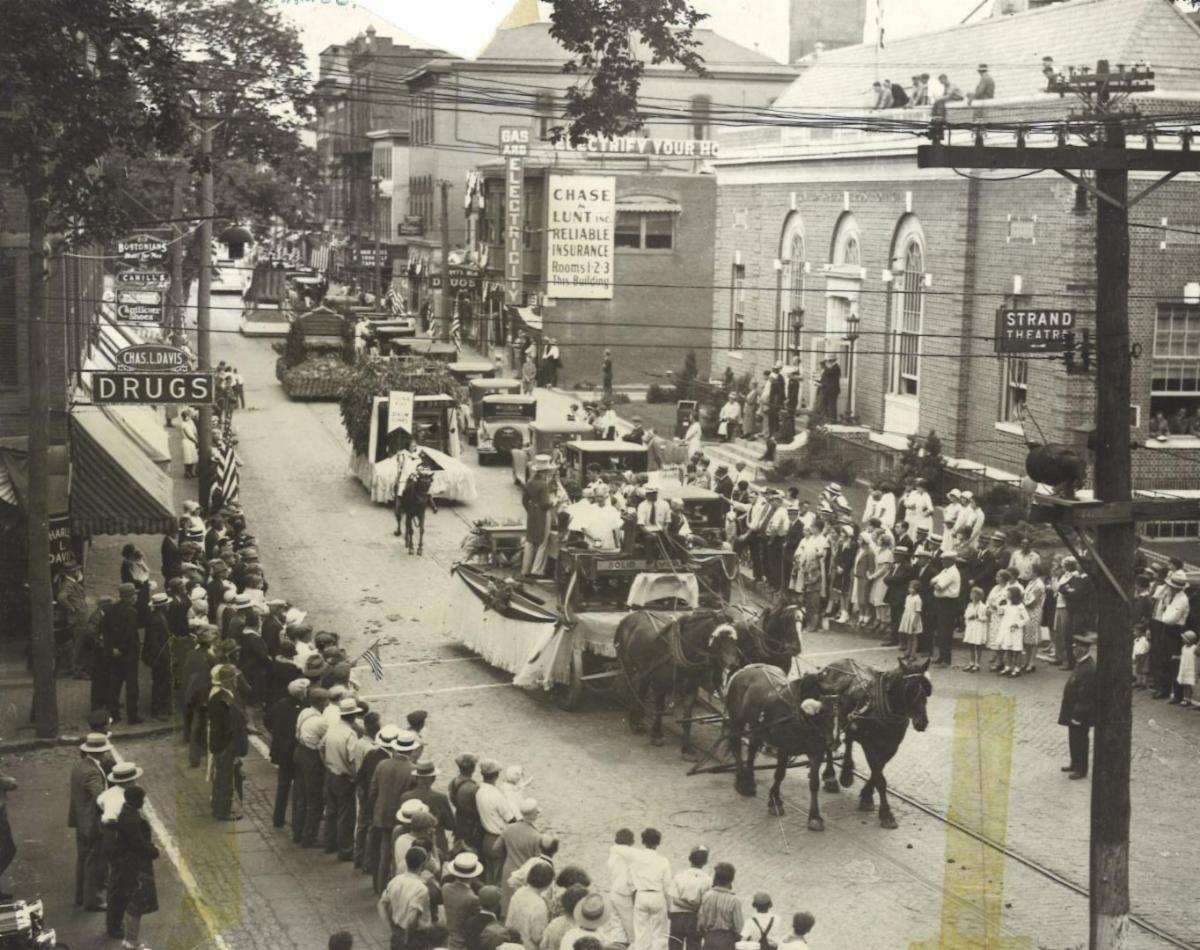
1930 Tercentenary Parade in Newburyport
Parade celebrating the 300th anniversary of the founding of the Massachusetts Bay Colony. Note the post office on the corner of Green and Pleasant. Please our events for an upcoming talk on parades on October.
|
|
Museum e-Newsletter made possible through the
generosity of our sponsors:
|
|
|
Museum of Old Newbury
98 High Street
Newburyport, MA 01950
978-462-2681
|
|
|
|
|
|
|
|