|
Looking Ahead: Our Next Session
We will continue our discussion about the imagery in the book of Revelation, its connection to historical events, and how it informs our understanding of what it means to live faithfully in our day and time. We will begin an exploration of the seven churches, and how this exploration might shape our understanding of the church today.
This Revelation Imagery Booklet will serve as the starting point for our discussions.
A Recap from This Sunday
This past Sunday, we set out to read the Book of Revelation with fresh eyes—trying to understand it the way its very first audience would have, rather than just as a prediction of the future.
One of the first "aha!" moments for us was realizing that most early Christians wouldn't have read Revelation silently. They would have heard it performed aloud in the community! 🎭 Thinking of it as a powerful, shared experience, almost like theater, completely changed how we approached the dramatic symbols.
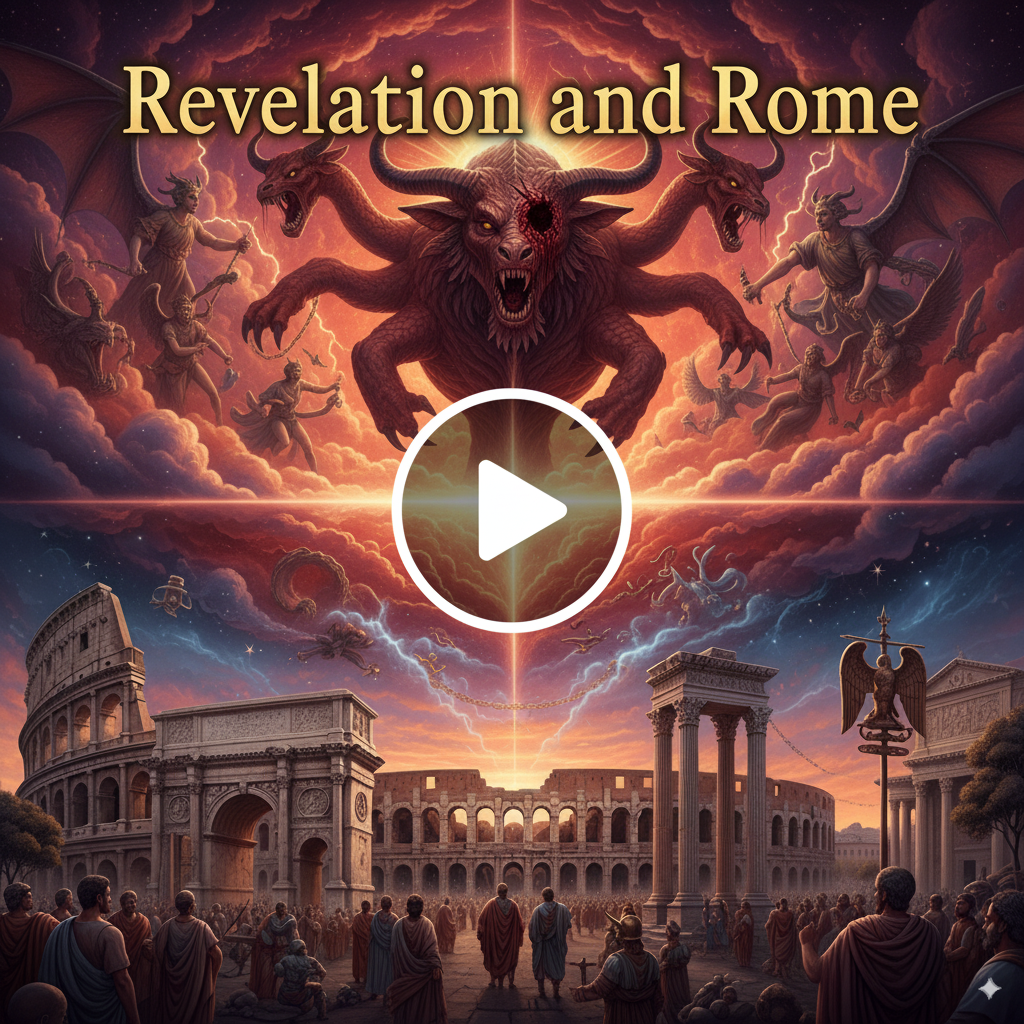
We then dove deep into the powerful symbol of "Babylon." We saw how the first-century audience would have immediately connected this to the Roman Empire—a place of incredible excess, injustice, and oppressive power. It was a coded way of critiquing the world they lived in.
This led us to ask a challenging question: where do we see the spirit of "Babylon" today? We had a powerful conversation about how systems of economic inequality and corrupt power aren't just ancient history but are still very much present in our world.
Perhaps the biggest insight came when we discussed the "worship of the beast." For early Christians, this wasn't an abstract idea; it was the real-life pressure to participate in the Imperial Cult and declare "Caesar is Lord." In that context, their simple, core confession—"Jesus is Lord"—became a radical and dangerous act of political defiance.
This helped us see the subtle (and not-so-subtle) pressures in our own lives—at work, in our culture—where we might feel pushed to conform to an ideology that conflicts with our primary allegiance to Christ.
What was so exciting was moving back and forth between "what did it mean then?" and "what does it mean for us now?" By grounding ourselves in the struggles of those first-century churches, the book came alive with relevance for our own walk with God today. It was a rich and challenging conversation, and we can't wait to see what comes next!
Dates: Ongoing, 10:05-10:55
Facilitators: Eric Robinson, Doug DeCelle, Paul Urbanick, Richard Cole, and others
Location: The Library
|