Here is a fascinating snapshot from the Annie E. Casey Foundation about Generation Alpha (2013-2025) which is sure to make you feel just a bit older. (Sorry.) 

Quotable & Notable

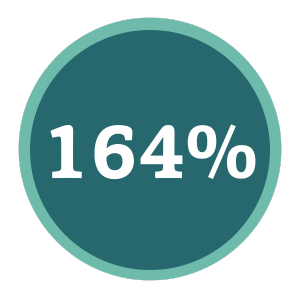
“In 2021, the Black infant mortality rate was 164% higher for Black Ohioans than white Ohioans. These racial disparities in infant mortality persist even when taking parental income and education into account. Rather, the evidence is clear that racism is a primary driver of racial disparities in infant mortality. Infant mortality prevention efforts have largely focused on public health and healthcare interventions for pregnant women, such as safe-sleep education and prenatal care access. While these efforts have likely contributed to the overall reduction in infant mortality, healthcare services alone are not enough to close gaps in birth outcomes in Ohio. Improvements in factors beyond access to care are needed to reinvigorate Ohio’s stalled progress on infant mortality reduction.” 

Who:

Hailey Akah & Amy Bush Stevens, from Health Policy Institute of Ohio


Where:

A March 2023 report, “Social Drivers of Infant Mortality: Recommendations for Action and Accountability in Ohio”

Fact of the Week

For Black Ohio babies, the infant mortality rate is 164% higher than for white babies. A new report from the Health Policy Institute of Ohio explores these findings and calls for leaders from across sectors – not just health care – to work together for meaningful action.

Policy Radar

State lawmakers continue to debate whether to keep or toss Ohio’s provision to retain third graders who don’t pass the reading guarantee.


On the topic of reading, Columbus City Schools interim superintendent Angela Chapman weighs in (in a broader Dispatch article about wanting the permanent job) about the district’s move toward science of reading as well as increases to scores in early elementary grades.


Gov. DeWine made several components of his reading proposals official through executive order last week, the entirety of which can be read here. The order includes new grants for tutoring and implementation of new state dyslexia laws; plans to recognize schools with strong reading practices and outcomes; public-private partnerships to coordinate with the state’s Imagination Library; plans to increase parental and family involvement in reading; and a request that all state agencies build improved reading into their own agency strategies. 

Events and Happenings

Are you interested in the intersections of health, education, and early childhood? Please join the Crane Center and Nationwide Children’s Hospital School Health Services for a special event on April 20, 4-6pm, featuring Dr. Moira Szilagyi. Dr. Szilagyi was the 2022 president of the American Academy of Pediatrics and will share her insights on coordinating between various systems of care through a trauma-informed lens. Learn more and register here. 

Beyond the Buckeye State

New Mexico is the latest state to guarantee universal free school meals for students. Note, advocates in Ohio are calling for the same during current state budget discussions. Meanwhile, the Biden Administration is working to change certain regulatory thresholds that would make it easier for districts to become eligible for universal meals.


This is an interesting read about the role of parent coordinators in New York City Schools, and their front-line work connecting with families to address chronic absenteeism, listen to parent concerns, help with technology, and often bring bilingual skills to the table. Not surprisingly, pay for this essential work has not kept pace with inflation. Here is a related read closer to home about a similar program in Cleveland that invests in family support specialists. 

What We're Reading

The federal Office of Planning, Research, and Evaluation (OPRE) published a data snapshot of the characteristics of home-based child care providers nationally.


Research from OSU professor of psychology Dr Sarah Schoppe-Sullivan found that among families with low incomes, parents’ perceptions of their own co-parenting relationship – whether positive or negative – had impacts on child outcomes. 

Research Round-Up

Researchers from Texas A&M share highlights from their study published in Preventative Medicine on the association between federal Supplemental Nutrition Assistance Program (SNAP) benefits and children’s mental and emotional health. The study examined whether temporarily expanded SNAP benefits during the COVID-19 pandemic influenced the mental and emotional wellbeing of children ages 6-17 in families receiving those benefits. (More precisely, this was measured by whether children had a mental, emotional, developmental, or behavior problem.) The temporary expanded benefits included monthly $95 allotments to families and electronic benefit transfers that gave families cash in lieu of free or reduced-price meals while schools were shuttered.  


Using five years of data on both families using SNAP and those that were eligible for SNAP but not using the benefits– four years prior to the pandemic plus 2020 – the researchers used a study design enabling them to compare changes before and after the pandemic among both groups – non-SNAP families before and after 2020, and SNAP families before and after 2020. Their reasoning was that “in the absence of the treatment (temporary SNAP provisions), the average outcomes for children in SNAP families (treated group) and children in non-SNAP families (control group) would have followed parallel paths over the study period (2016–2020).” In essence, shouldn’t the stress of the pandemic affect both groups of children similarly?


Results showed that neither group had a significant increase in mental and emotional issues, despite the heavy stress of the pandemic. This was true across a range of measures assessing children’s mental and emotional well-being and for children from families with very low incomes. 

This edition written by: Jamie O'Leary

• • • • • • •
If you like this newsletter, forward to a friend! Subscribe here.
• • • • • • •
 
Twitter  Linkedin