Adult and Family Literacy Today
Volume 26: October, 2026
| | Update on adult and family literacy research, policy, and practice | | Promoting family literacy through oral storytelling and elaborative reminiscing: The role of adult educators | |
There is no greater agony than bearing an untold story inside you. — Maya Angelou
| | Oral storytelling is the process of sharing stories, poems, and history with others through oral delivery or sign language (Banks-Wallace, 2002). It involves a person (historian, grandparent, parent, griot(te) telling people (children, adults) stories, poems, songs, or history. | |
| When parents (including grandparents and others) talk with their children about the past “in a detailed, emotional, and collaborative way,” they are engaged in elaborative reminiscing (Salmon & Reese, 2016, p. 233). This type of discussion involves remembering and elaborating on children’s past experiences such as a recent haircut or visit to a park. | | |
Oral storytelling and elaborative reminiscing benefit children, adult learners, families, and society (Agosto, 2016; Banks-Wallace, 1999, 2002; Cook & Coffman, 2025; Fearon, 2023; Lascala, 2022), bringing families together and supporting family learning. This article discusses how both can be incorporated into family literacy.
Oral Storytelling
Oral storytelling can strengthen emotional connections between families and support literacy development (Agosto, 2016). Adults can use oral storytelling to share knowledge, cultural traditions, and personal histories with children (Fearon, 2023). Sharing moral stories, folktales, myths, and legends can convey life lessons and ethical principles, while reinforcing community values (Adelore & Ojedeji, 2025). Using open-ended materials like beeswax clay, block crayons, fabrics, and beanbag dolls for oral storytelling with children helps build family literacy routines (Jamero & Mora, 2025). Oral storytelling provides opportunities for children to retell stories immediately after hearing them. This practice can support children’s communication skills and their ability to learn and use more complex vocabulary (Spencer, 2022).
Storytelling provides opportunities for adults to express hopes, fears, and dreams through stories about their learning experiences. Storytelling can also help adults explore questions about meaning, identity, and the relationship between life experiences and learning (Banks-Wallace, 2002).
Elaborative Reminiscing
In oral storytelling, adults tell stories to children. By contrast, elaborative reminiscing is interactive and collaborative: it involves asking “questions that add new information” and encouraging and affirming children’s contributions. In this way, elaborative reminiscing helps children “understand the experience and to put it into words” (Salmon & Reese, 2016, p. 233). In the context of family literacy, elaborative reminiscing involves encouraging children to reflect on and discuss past experiences. For example, an adult might ask a child to describe what they saw on a trip, whom they spent time with at a recent event, or what they remember about something that happened the day before. Elaborative reminiscing can support children’s language development (Lascala, 2022) as well as recognition, recall, and reporting skills (Salmon & Reese, 2016). Repeated opportunities to discuss past experiences may also support children's memory development (Banks-Wallace, 1999; Salmon & Reese, 2016).
Elaborative reminiscing may also support adults in recalling autobiographical memories (Harris et al., 2022). Reminiscing with a supportive conversational partner can help adults recall meaningful past experiences. Conversations about past experiences can provide valuable opportunities for learning across generations.
From Research to Practice
Oral storytelling is a longstanding tradition in communities around the world. Integrating oral storytelling and elaborative reminiscing into adult education can help learners build on existing knowledge and develop additional communication and literacy skills. Many adults already bring rich storytelling and communication skills that educators can build on. Educators can create space for learners to draw on existing storytelling practices while introducing elaborative reminiscing strategies such as asking open-ended questions, prompting for details, and following a child's responses. Instructors can support oral storytelling and elaborative reminiscing through the following activities:
-
Incorporate oral storytelling and reminiscing in adult basic education, high school equivalency preparation, English language instruction, parent education, and interactive literacy activities. These practices can also help educators build relationships with learners and deepen understanding of literacy, identity, and power between the learners and educators (Fearon, 2023).
-
Invite learners to share and discuss family photos, heirlooms, or other cultural artifacts that reflect their identities (Pahl & Rowsell, 2010). These activities can support visual literacy while connecting instruction to the learners’ needs, concerns, and values (Puttick, 2025). They can also support learners’ communication and relationship-building skills (Banks-Wallace, 2002).
-
Invite learners to discuss how classroom readings connect to their experiences and backgrounds. Connecting new learning to existing knowledge and experiences can support adult learning (Banks-Wallace, 2002; Pahl & Rowsell, 2010).
-
Provide opportunities for adult learners to practice asking open-ended questions. Elaborative reminiscing involves asking children questions about their past experiences and encouraging them to share details. Practicing these strategies can help adults support elaborative reminiscing with children at home (Fearon, 2023).
-
Organize outings for adult learners and families and encourage them to explore similar activities together. Visits to museums and community events can create experiences that families can later discuss at home. These outings provide opportunities for families to revisit shared experiences and discuss what they saw, learned, or enjoyed (Agosto, 2016).
Oral storytelling and elaborative reminiscing are complementary practices. Together, these practices can strengthen family relationships, support cultural knowledge sharing, and create opportunities for learning at home. Educators can build on learners’ existing stories, cultural knowledge, and oral traditions while introducing additional strategies to support family learning and literacy at home.
| | Literacy Around the World | | The Power of Fathers in Family Literacy | |
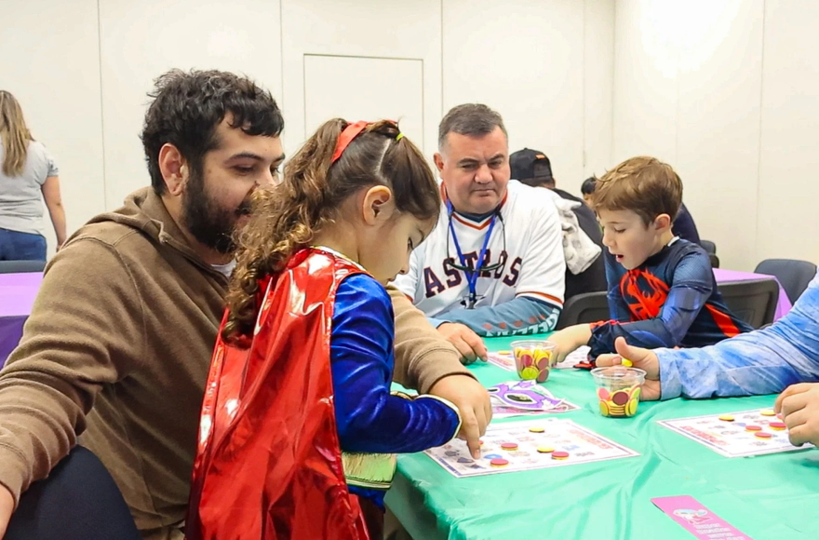
Family literacy is often associated with activities like a parent reading a bedtime story to their child, but children begin developing literacy skills long before they can read. It happens through everyday conversations, play, and activities that invite interaction and help build vocabulary, communication, and confidence. Researchers and educators say fathers play an important role in that development.
Research involving more than 5,000 U.S. families found that when fathers regularly took part in literacy activities like reading, storytelling and singing with their children, those children entered preschool with stronger reading, math and social-emotional skills.
| |
Reading Beyond Numbers:
Literacy Education and Assessment in the Republic of Korea
| | |
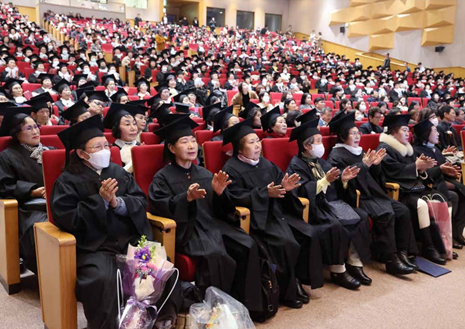
The Republic of Korea (South Korea) is frequently introduced as a high-literacy country, supported by strong international assessment results, near-universal school enrollment, and rapid digital adoption. However, the real story of literacy lies beyond the numbers. The Republic of Korea’s experience demonstrates that numbers are essential starting points, but not endpoints. Literacy gains meaning only when quantitative evidence is read alongside historical context, social inequality, and life-course perspectives. Reading beyond the numbers allows literacy to be understood not merely as a measurable outcome, but as the foundation for dignity, participation, and lifelong learning.
| | What's New at the Institutes? | | Co-Director Esther Prins was inducted into the International Adult and Continuing Education Hall of Fame on October 6, 2026. "The Hall of Fame honors leaders in the fields of continuing education and adult learning, and serves as a record of inspiration for the next generation of continuing education leaders.” Dr. Prins is the seventh Penn State professor to be inducted into the IACE Hall of Fame. Former Goodling/ISAL Director Eunice Askov was inducted in 2007. Stay tuned for pictures and more details in our next newsletter! | Working with Grandparents in Family Literacy Toolkit | The Goodling Institute’s 5-year evaluation of the William Penn Foundation’s Family Literacy Initiative in Philadelphia included an organization that served grandparents helping to raise their grandchildren. This work, and the growing prevalence of grandparents raising grandchildren, inspired us to develop the Working with Grandparents in Family Literacy Toolkit. The Toolkit is intended to provide guidance and suggestions for working with Grandfamilies (grandparents as caregivers) in family literacy programs. The Toolkit includes background information about grandparents as caregivers and family literacy programs serving grandfamilies, as well as detailed lessons for 5-weeks of programming that includes weekly lesson plans, adult education/parent education worksheets, as well as take-home interactive literacy activity worksheets. |
Celebrating Pennsylvania’s One-Stop System with PA CareerLink® Days
| |
Under the federal Workforce Innovation and Opportunity Act (WIOA), each state must offer a one-stop delivery system that serves both job seekers and employers. Per WIOA, “The one-stop delivery system brings together workforce development, educational, and other human resource services in a seamless customer-focused service delivery network that enhances access to the programs' services and improves long-term employment outcomes for individuals receiving assistance. One-stop partners administer separately funded programs as a set of integrated streamlined services to customers.” In Pennsylvania, the one-stop system is called PA CareerLink® and has over 50 physical locations spread out across the Commonwealth.
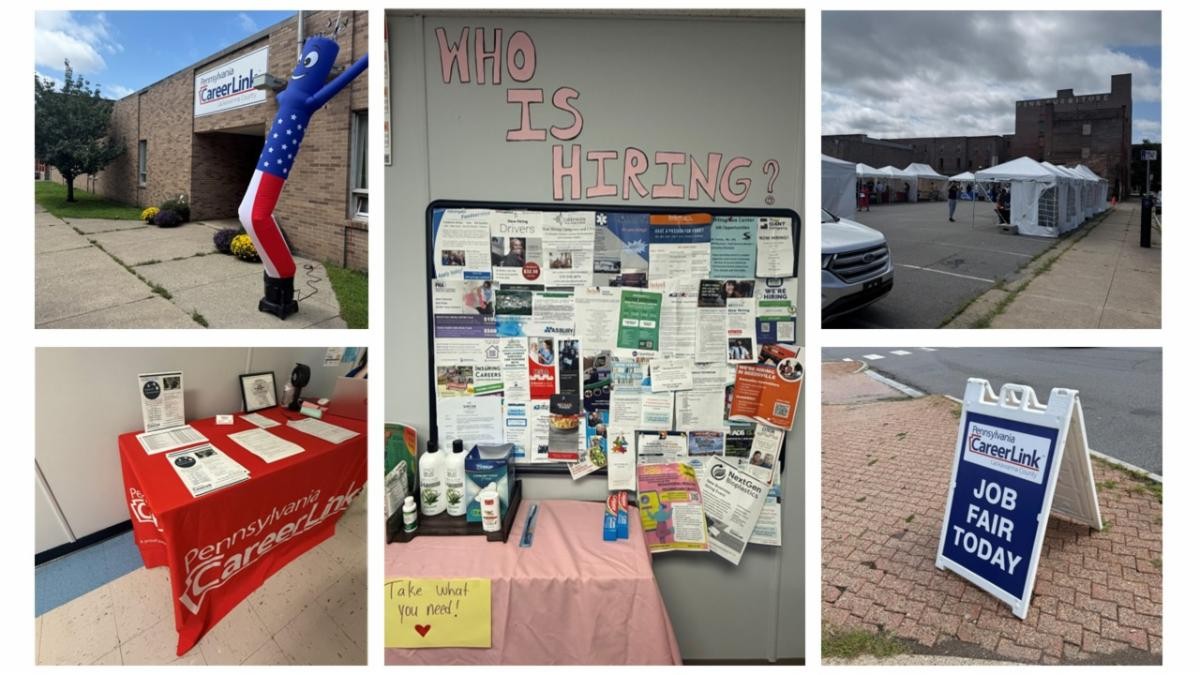
On September 3, 2027, many PA CareerLink® locations had special events and job fairs to celebrate PA CareerLink® Day. Alexis Vang and Chrissie Klinger from the Workforce Development System Liaison Project had the opportunity to visit PA CareerLink® locations in Scranton and Sunbury, PA. In Scranton, job seekers were able to gather a multitude of resources, including the NEW spiral bound A Guide to Transferable Skills: A Transferable Skills Workbook for Adult Learners. After gathering resources and talking with people who could provide job search and job preparation assistance, participants were able to go to the parking lot filled with employers to inquire about employment opportunities. In Sunbury, job seekers were able to tour an adult education classroom that is co-located at the site and talk with CSIU16 adult education program staff. They also had a job fair and other PA CareerLink® partner staff to answer questions and share resources with both job seekers and employers. For more information about ways to collaborate with your local one-stop system or for transferable skills resources, contact Chrissie Klinger at cok5111@psu.edu.
| Meet the 2026-2027 Goodling Graduate Assistants! | |
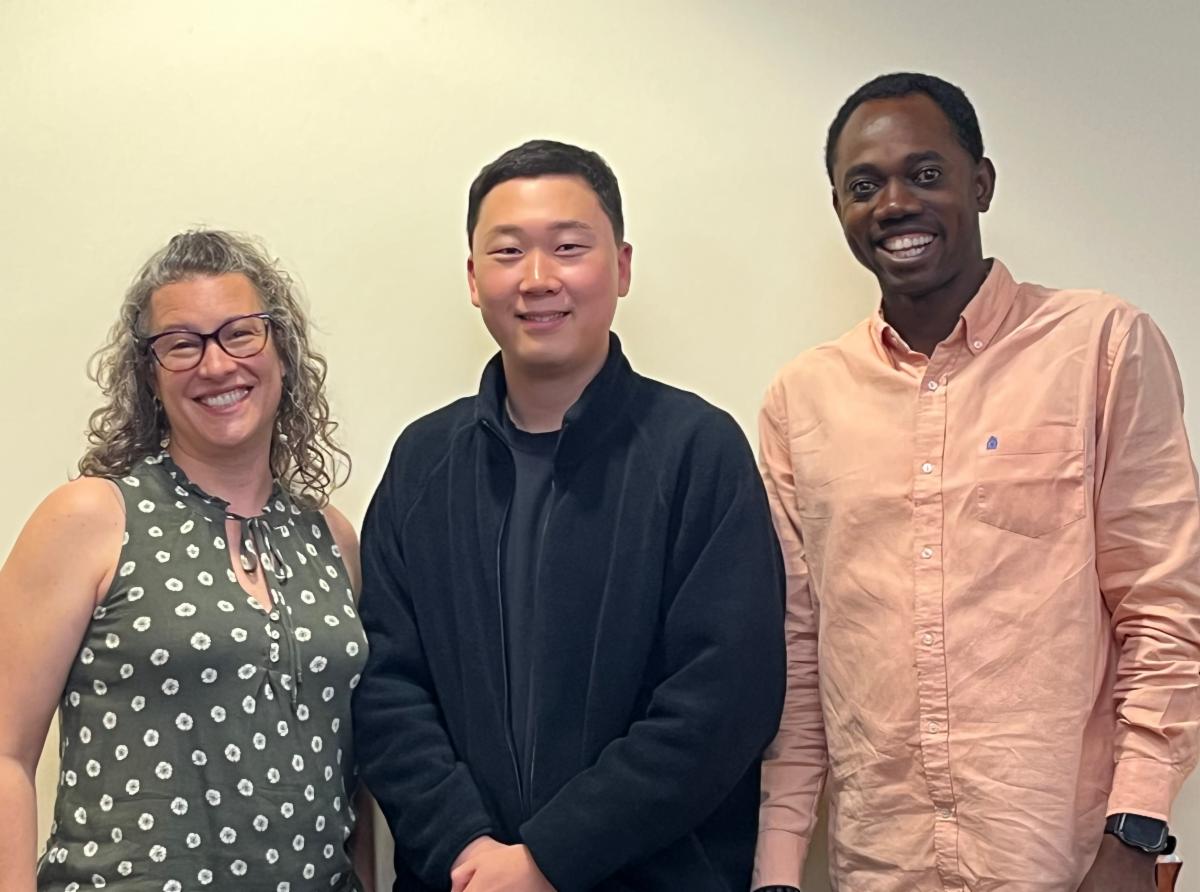
| |  | This year, the Goodling Institute welcomes graduate assistants Dare Amusa, Hyeon Kang, and Tara Jewell (pictured above, right to left). All three are doctoral students in Penn State’s Lifelong Learning and Adult Education program, bringing different experiences and interests to their work in adult and family literacy. Dare, from Nigeria, is interested in out-of-school young adult women in Nigeria and in bringing greater attention to adults whose learning needs are often overlooked. Hyeon, from South Korea, studies the education and learning of older adults and is especially interested in grandparents’ involvement in literacy programs. Tara, originally from Grand Rapids, Michigan, studies literacy among older adolescents and young adults and is particularly interested in family literacy at Goodling. Outside of their academic work, Dare enjoys playing football and meeting new people, Hyeon enjoys spontaneous trips and watching baseball, and Tara enjoys spending time with friends and family, gardening, and poetry.
| | Do More Than Half of Philadelphia Adults Really Read at or Below 5th Grade Level? It’s Time for a New Way to Describe What They Know | | |
Adult literacy researcher Jennifer D. Kobrin challenges the commonly cited claim that more than half of Philadelphia adults read at or below a fifth-grade level. She explains why grade-level comparisons and standardized assessments can obscure the practical, digital, and everyday literacy practices adults use across their lives. Kobrin also considers how funding structures and narrow measures of program success can leave adults with the greatest literacy needs underserved, calling for more nuanced ways of understanding adult literacy and the value of adult education.
| | The Moth: Storytelling Workshops | |
Looking for ways to bring oral storytelling into your family literacy or adult education work? The Moth offers storytelling workshops and resources centered on helping people find, shape, and share their own true, personal stories. Its programs use storytelling to build voice, confidence, identity, connection, and community, with opportunities designed for students and educators, community organizations, and individuals. Explore The Moth’s approach for ideas about how personal storytelling can create meaningful opportunities for speaking, listening, sharing experiences, and learning from one another.
| | | StoryCorps: Preserving Stories, Strengthening Connections | | |
StoryCorps celebrates the power of everyday storytelling by helping people record, share, and preserve meaningful conversations with family members, friends, and community members. Its free resources offer opportunities to explore oral storytelling as a family literacy practice, inviting participants to listen, ask questions, share experiences, and connect across generations. StoryCorps reminds us that family stories are not only worth preserving; the conversations themselves are rich opportunities for literacy learning.
| |
UNESCO's New Family Guide for the Digital Age
| | |
For most of today’s children and young people, life unfolds seamlessly across online and offline spaces. Their learning, friendships, and access to information are increasingly shaped by digital environments that are ever-present in their daily lives. Around 700 participants gathered online and at UNESCO Headquarters for the launch of a new global resource: Growing Up in a Connected World: A Family Guide for the Digital Age, available in English, French, and Spanish.
| | Upcoming Events and Conferences | | Interested in a master's or doctoral degree in Lifelong Learning and Adult Education? | | |
Friday, October 30
Noon - 1:00 PM (EST)
Please join our LLAED Program for an information session on our graduate programs. We are currently accepting applications for our Online M.Ed. in LLAED, Online D.Ed. with an emphasis in LLAED, and our residential D.Ed. and Ph.D. programs in LLAED. Adult and family literacy is one of our emphasis areas.
Register at the link below or contact Dr. John Holst (Professor-in-Charge) with questions: jdh91@psu.edu
| | |
Tuning Up Your Accessibility Practice
Monday, November 16, 2026 | 2PM ET
Presenters: Adria Katka and Marcela Movit
You do not need to be an accessibility expert to make your documents and presentations more user-friendly for learners, colleagues, and even yourself. This webinar will explore key components of accessibility, along with practical steps that you can apply to what you create and how you communicate. Wherever you are with accessibility practices, you can take one step forward in opening up your message to your audience.
| World Literacy Summit 2027: Literacy in a Connected World | |
Applications open from July 20 through November 30, 2026.
The World Literacy Summit is the largest gathering of global literacy professionals in the world. In 2027, more than 85 countries will be represented at Oxford University from March 31 to April 3, under the theme Literacy in a Connected World.
|
National Webinar Series
A, B, “C” the Public Library’s Role in Early Literacy
| |
October 22, from 2:00 - 3:00 Webinar
From the website: "Early literacy support in communities is critical for young children, their families, and caregivers. The public library steps in to meet the needs of families in a variety of ways. This session will explore the community ecosystem approach to early literacy and the ways in which public libraries play critical roles in building early literacy in communities. From engaging and evidence-backed approaches that engage young children, resources to strengthen families, and concerted work to partner with and provide resources to early childcare workers, we will explore the critical role of the public library in developing beloved and literate communities."
| | 2026 Families Learning Conference | | |
November 8 - 11, 2026
San Antonio, TX
Hosted by the National Center for Families Learning (NCFL), the 2026 Families Learning Conference brings together educators, researchers, practitioners, policymakers, and community leaders to explore innovative approaches to family literacy, family engagement, and family leadership. With more than 80 workshops and sessions, the conference offers opportunities to learn about emerging research, share promising practices, and connect with professionals working to support learning across generations and communities.
| |
Penn State is an equal opportunity, affirmative action employer, and is committed to providing employment opportunities to all qualified applicants without regard to race, color, religion, age, sex, sexual orientation, gender identity, national origin, disability or protected veteran status. | | | | |