2Know
KNOWLEDGE IS POWER. KNOWLEDGE SHARED IS POWER MULTIPLIED.
September 2021
Welcome back! Hope you had a wonderful summer!

Personally, it feels like a long summer and a short year. We began our summer with family visiting from Hong Kong. It’s tricky to travel domestically during the pandemic, let alone traveling overseas. Nonetheless, we had a wonderful time being in each other’s physical presence. We relaxed at the beach in Oxnard, California, visited New York City, and hiked the San Gabriel mountains. We savored every minute together and made the summer long.

Then came fall. Where has the year gone? Businesses reopened and kids went back to school. Just like that, life resumes its fast pace. I love the fact that we are returning to normal and promoting structure in our children’s lives again, but I want to remind myself to hurry slowly. Shakespeare said “Wisely and slow. They stumble that run fast.” Sounds counterintuitive but there is an art of being more productive, creative, and resilient through the simple act of slowing down.

Fall is my favorite season for many reasons – the cool and refreshing air, the colorful leaves, the smell of fresh apple cider. I intend to enjoy fall to its fullest. Smile, breathe, and go slowly.

As a pharmacist, my drug of choice for fast-acting relief of stress and anxiety is slowing down. Zero copays!

Mei

“Fast and Slow do more than just describe a rate of change.
They are shorthand for ways of being, or philosophies of life.
Fast is busy, controlling, aggressive, hurried, analytical, stressed, superficial, impatient, active, quantity-over-quality.
Slow is the opposite: calm, careful, receptive, still, intuitive, unhurried, patient, reflective, quality-over-quantity.
It is about making real and meaningful connections—with people, culture, work, food, everything.
The paradox is that Slow does not always mean slow […]
It is also possible to do things quickly while maintaining a Slow frame of mind […]”
— Carl Honoré


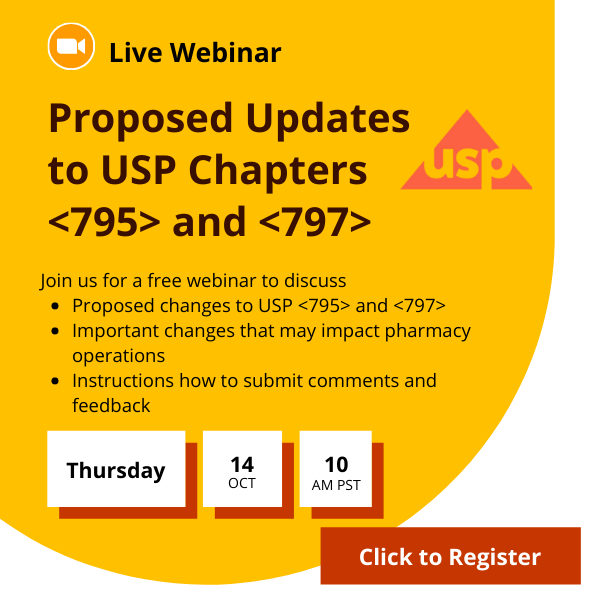
Webinar on USP Chapters <795> and <797>
Reminder: 9/30/21 URAC Data Submission
The annual URAC measure submission is due September 30th.

If you are URAC accredited and have not submitted the data, contact us ASAP if you need assistance.
Pharmacy and Regulatory Updates
Medicare Part D Audits
Top Areas for Scrutiny

Medicare Part D pharmacy audits are on the rise and pharmacists should make sure they know how to respond and ensure business practices are adapting.

Pharmacies that don't perform well on audits face risking their reputation, license, fines, and even possible imprisonment.

Learn the top 11 audit discrepancies and how to prepare for them.
Routine PBM Audits Request Extensive Policies and Procedures

In a recent trend, several PBMs have been requesting additional documentation during the time of a routine audit of pharmacies. When submitting any policy and procedure, including on the issue of copayment collection, pharmacies should be conscious to ensure that their written policies are consistent with not only applicable rules and regulations, but importantly, are also consistent with the PBM’s terms and conditions in order to avoid any further scrutiny.
USP Compounding Standards Updates

USP has updated proposed revisions to the General Chapters <795> and <797>.
 
USP <795> and <797> provide standards for preparing sterile and nonsterile compounded medications. Revisions would expand quality and safety measures to minimize risk for patients and pharmacy personnel.
 
ACHC will not update PCAB or Infusion Pharmacy Accreditation Standards until the proposed revisions are finalized. After final chapter versions are published, ACHC will provide standards updates and timelines for compliance. For now, we encourage pharmacies to study the proposed revisions and submit comments to USP for review.
Emergency Planning Part 1:
Helping Patients Prepare for a Disaster/Emergency
During a natural disaster or other emergency, patients can be forced to evacuate at any time and may have limited ability to pack medications or other essential health care items. It is crucial to ensure patients are prepared if they are forced to evacuate for an extended period of time.

Pharmacies should provide emergency planning information, including the numbers of local health departments and emergency services, in the Patient Welcome Packet and provide patient education during initial onboarding.
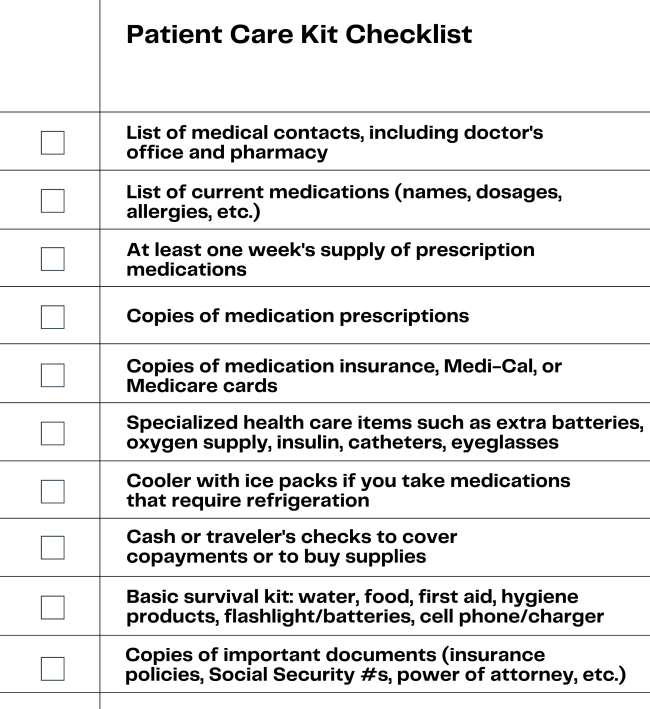
BEFORE an evacuation, pack a "patient care kit" in a waterproof bag.
Talking Points with Patients Regarding Emergency Planning

  • Know What to Expect
  • Know Where to Go
  • Know What to Take
  • Know How to Reach Pharmacy If There Are No Phones 
  • Some Helpful Tips
  • Remember to take your medications and stay on your medication treatment plan.
  • Contact your pharmacy provider or find an open pharmacy using Rx Open to ensure sufficient medication supply during the emergency.
  • Get a cooler and ice or freezer gel packs to transport your medication.
  • Be careful to not expose your medications to water or extreme temperatures.
  • Get all of your medication information and teaching modules together and take them with you if you evacuate.
  •  Pack one week’s worth of supplies in a plastic-lined box or waterproof tote bag or tote box. Make sure the seal is watertight.
  • Make sure to put antibacterial soap and paper towels into your supply kit.
  • If possible, get waterless hand disinfectant from a local store. It comes in very handy if you don’t have running water.
  • If you are going to a friend or relative’s home during the evacuation, leave their phone number and address with the pharmacy and your home nursing agency.
  • When you return home, contact your home nursing agency and pharmacy so we can visit and see what supplies you need.
OSHA Safety Spotlight:
Wearing PPE in Hot Environments
It may be the beginning of fall, but it can still be hot in Southern California!

According to the CDC, prolonged or intense exposure to high temperatures can increase your risk for heat-related illnesses. Certain types of personal protective equipment (PPE) may increase your core temperatures more quickly than other types of PPE, thus increasing your risk for heat-related illnesses.

What can employers do to help control heat stress?
  • Change work activities to accommodate to higher temperature work environments
  • Ensure workers are fully acclimated to the work environment's level of heat
  • Educate workers on the signs and symptoms of heat-related illnesses
  • Educate workers to know what to do when they recognize these signs and symptoms
  • Provide adequate rest breaks, cooling techniques, and hydration

Click here to learn more about the warning signs and symptoms and what to do if someone shows signs of having a heat-related illness.
Not seeing the information you want or need? Have any feedback for our newsletter?
Let us know, we'd like to hear from you!