Vol VII, No 9 - September 9, 2025 | | |
Come on leaves! Fall is the most beautiful season in Indiana. I can almost taste the apple cider, smell the crisp scent of the autumn air, and hear the leaves crunching under my feet. There are so many beautiful paths to walk or hike. We can adventure through state forests, neighborhood parks, or even our own backyards.
Similarly, we have an abundance of educational opportunities for our kids. Sometimes there are so many options, it's hard to decide which path to take.
In this month's feature, Carol Malueg tells the story of how her own children navigated their educational journeys. As she shares tips for parents who are making decisions about the different twists and turns in their children's education, Carol describes how the advocacy role can shift from the parent to the child.
I wish everyone well as they journey down their paths this fall. Hopefully, you will come across some crunchy leaves and maybe some apple cider along the way.
Best,
Marna
| | |
Marna Walthall Wohlfeld is a mom of four, a former non-profit director and journalist, and now a doctoral student at Bridges Graduate School of Cognitive Diversity in Education. She has deschooled, unschooled, and homeschooled various kids at various stages. She loves learning about and championing kids' unique brains and learning styles. She hopes to use her graduate degree to support parents and caregivers of twice-exceptional children as they move through the journey of parenting their wonderfully complex kids. She also hopes to advocate for 2e students by creating greater understanding about the need for strength-based approaches and support for vulnerable nervous systems in education and life. Marna is a trained SENG facilitator and has completed training Levels 1 and 2 for PDA North America. She has presented at NAGC and WCGTC and has written for 2e News.
| | Oregon Association for Talented and Gifted | | |
Oregon Association for Talented and Gifted
The Oregon Association for Talented and Gifted (OATAG) is a volunteer-driven, grass-roots non-profit organization with representatives from around the state. OATAG advocates for the needs of talented and gifted children, serves as a resource for families,
educators, and communities and provides direction for excellence in education. Join gifted families across Oregon for our fall conference on, "Hidden Depths" with Kate Bachtel of SoulSpark Learning. University of Portland, October 11, 2025. Find details at www.OATAG.org.
| | |
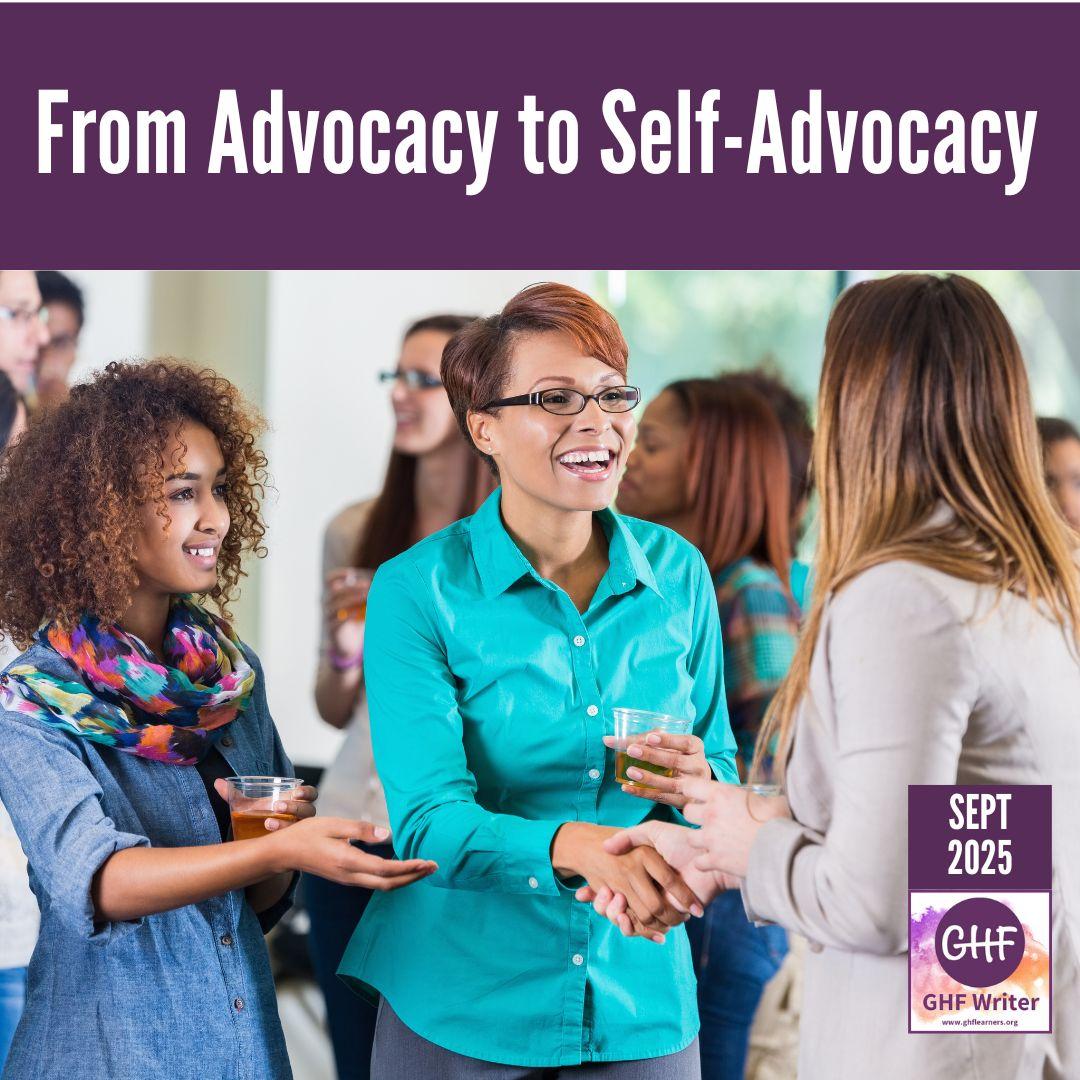
When You Do School Differently—The Path from Advocacy to Self-Advocacy
By Carol Malueg
You may be a homeschooling family, or you may be contemplating the switch to homeschool. Your child may attend a public, private, or charter school, or you may already be a part of a great co-op (like the GHF virtual co-op!). You may have tried one thing one year, another the next, or even made changes mid-year because your child was bored or miserable. You probably grapple with the uncertainties that go hand-in-hand with making changes, especially when the safe, predictable path you’re on isn’t “pathing” the way you thought it would. Being a parent/caregiver of a gifted or multi-exceptional child is challenging in many ways (anyone with an arguer in the family?), and curating an appropriate and challenging education can be one of the biggest challenges of all.
My kids are now adults, but I remember very clearly every time we went against the societal grain and did something different with their educational journeys. From early entrance to kindergarten, to open-enrollment into a district with a gifted program, to online math in middle school, to shared-time homeschooling in high school, we carved our own path. Subject acceleration, after-school enrichments, art school, early college—you name it, we tried it. The main thing I try to recall when talking with families who are in the thick of these choices is that, in spite of my nearly perfect hindsight, at any given time, I had absolutely no idea what was coming next or what I would need to figure out in order to make that next change. My family had to meet and tackle each challenge as it came along, just as you are doing now.
At first, my spouse and I made the decisions for our kids. Our youngest self-advocated for early entrance to kindergarten because she was ready, ready, ready. But it was more “I want to go to school, too!” than “please, dear parents, fill out the requisite forms, get me tested, and enroll me in Kindergarten despite my young age.” We had to figure out all the moving parts to make it happen, but we did take her enthusiasm for school into account!
Later, when we considered changing districts to access gifted programming for both kids, we still made the executive decision, but with ample opportunities for the kids to experience their new school and get to know other kids before school started. Even so, our children, especially our oldest, had moments of wistfulness about the old school and old friends. When a shiny new setting reveals that it, too, has a dark side, it makes us wonder if we made the right choice. (I confess that I had my own regrets when I’d see the bus stopping on our block for pick-up and drop-off. At this point, I was driving the kids over the river and through the woods, and it was a lot, especially in winter.)
In middle school, we took a step back and let them lead the way on things like subject acceleration and science enrichment. We still had to do the heavy lifting with the schools to get permission for such changes, but we only advocated for changes the kids were interested in. It can be really difficult to make enough changes to the brick-and-mortar middle school experience for it to not be a nightmare for a gifted kid—in retrospect, I don’t think we did enough. In one of those if-I-knew-then-what-I-know-now replays, I would have packed the whole family up and road-schooled middle school.
High school comes with more options because of the nature of the system but also the independence level of the kids. On the other hand, with new opportunities comes the need for new self-advocacy skills. A young woman trying to get build time in robotics may just be ignored by a boy-dad mentor, so sometimes a girl-mom has to show up and show how to be heard. (And not always successfully. Which is another life lesson. Grrr.) New drivers need to practice the tightrope balance of respect for authority and sturdy self-advocacy they will need if they get pulled over. Kids heading to college earlier than their age peers need assurance that ‘no’ is a complete answer, and that ‘mom would kill me’ is always a good excuse for not joining in questionable behavior.
Even as young adults, our kids don’t know what they don’t know about self-advocacy until it sneaks up and bites them. How do you tell a doctor you disagree with their diagnosis because it doesn’t match what you know about your own body? How do you overcome the knee-jerk polite laugh response to truly off-putting jokes? How do you know when someone who seems like an expert on cars/insurance/workers’ rights, etc., is really full of hot air?
At this point, my parenting partner and I no longer make decisions for our kids. Happily, we did something right, and they come to us for advice from time to time. These days, we are just as likely to receive advice from them! And sometimes, even with a goodly number of years under our belts, we have to go ask someone else how to handle situations in our own lives. The scenery changes as we travel along, but we’re never done learning how to advocate for ourselves and others.
What do I wish I could have told us when we were navigating our non-traditional K-12 pathway?
- There is no “perfect path" or “one-size-fits-all” for gifted learners, and that’s okay. If our kids grow up in a bubble of certainty and ease, they will have no skills for facing the challenges life will inevitably throw their way.
- Your relationship with your child is infinitely more important than any grade, test score, or award will ever be.
- Trust your gut over anyone else’s well-intentioned advice.
- Your job is to have your child’s back, no matter what.
- Make the best choices you can with the information you have and then dive into the adventure, whatever it is.
- Acknowledge mistakes and do your best to fix them or at least apologize. (You are modeling how to live life, so manage your mistakes as though someone is watching—they are!)
- You can’t change other people, no matter how much you wish you could. Sometimes it’s best to walk away calmly, secure in the knowledge that you are right and they are wrong. The last word may be satisfying, but rarely helpful. Protect yourself and your child, but leave the bridges intact because the next time you want to cross, there might be a new troll in charge.
- Be kind to yourself. You’re doing great. Courage and strength.
| | |
Carol Malueg, M.A. GCT, 2e, is a consultant, learning coach, and author. Her company, Gifted Roads, addresses the gifted and multi-exceptional experience across the lifespan. Carol serves on the board of the Gifted Homeschoolers Forum as the Director of Community Programming and Events, and the state board of the Minnesota Council for the Gifted and Talented as their Connections Chair. Her first book, The Road to Positive Advocacy for Your Gifted Child, is published by Prufrock Press and available wherever books are sold.
| | | | |
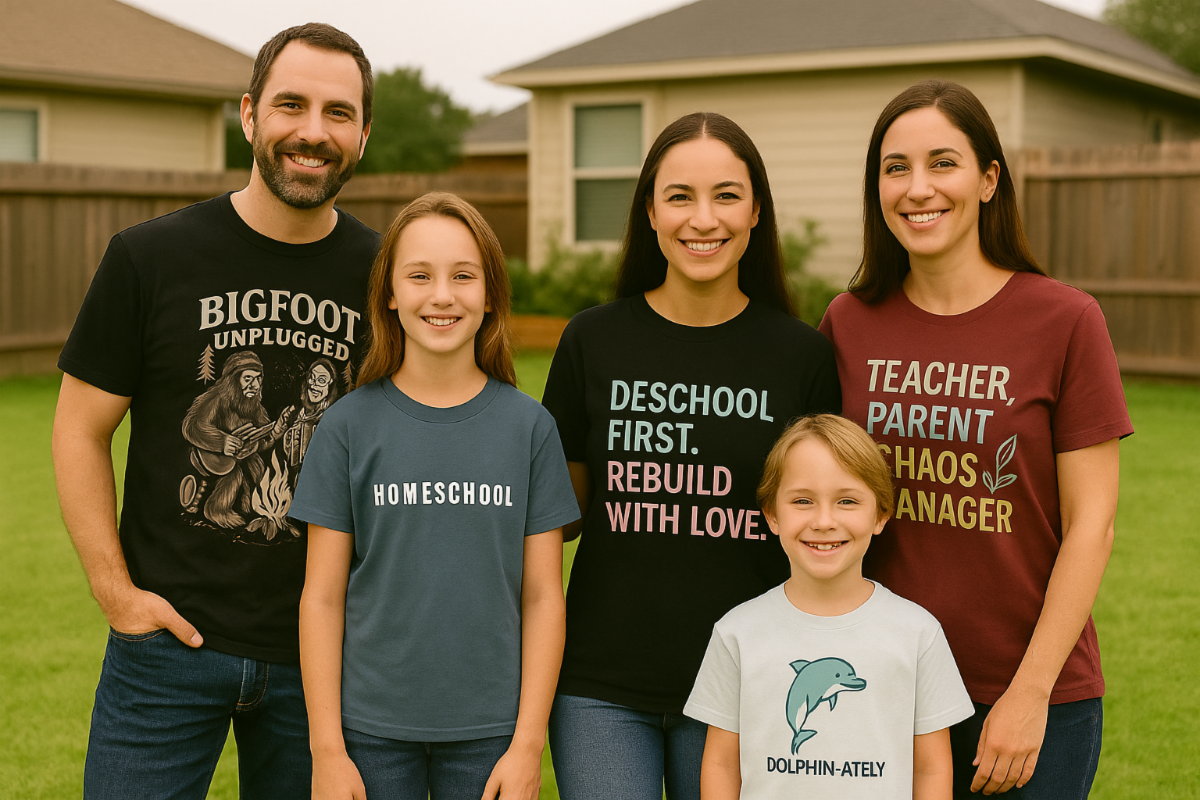
NeuroD Is Me™ – For Gifted & Twice-Exceptional Families
Backyard moments, built for how you feel.
Our tees and sweatshirts are crafted with soft, breathable fabrics and sensory-considerate designs—perfect for every neurodivergent family member.
Get 20% off your order with code GHFLOVE20 at checkout! neurodisme.com
Because comfort shouldn’t be a compromise.
| | |
Parents today lead busy lives and it’s difficult to “get it all done.” Gayle and Lin have created a guide encouraging parents to strengthen their connection with their youngsters using shared reading time. This book provides a selection of carefully curated picture books that can be used by parents to address important issues with their children, such as worry, perfectionism, and managing “big feelings.” Gayle and Lin also provide expert advice to gently guide parent-child conversations using simple, science-backed methods, including ways to help your child develop empathy, self-regulation, and self-acceptance. All of this is artfully accomplished as the authors share both research-based strategies and their own parenting experiences to bring out the very best in children using a strength-based approach.
Purchase Using Picture Books to Help Little Ones Learn About Themselves here.
| | A Supportive Community for Gifted Learners | | Come join us in the GHF Forum, our online community where we share all of our services and resources. | |
FREE ACCESS to:
- Discussion groups
- Parenting Gifted
- Professionals
- Parenting 2e
- Homeschoolers
- Live Gifted Home Ed Conference
- Live GHF Conversations Mini-Cons
- Live Monthly GHF Expert Series
- DIY Education Homeschooling Parent Course
UPGRADE to GHF Choices Membership:
- GHF Expert Series Library
- GHF Member Discounts
- Forever Access to Gifted Home Ed Conference & Conversations Recordings
| | |
For those of you who can give at least $500 we have created a special recognition program where you will be listed on the GHF website and in our monthly newsletter, The GHF Journey, as valued members of the community. Donations may be kept anonymous.
- Tricia Delles, CPA
- Catherine Gruener, M.A., M.A., LCPC, LCMHC, NCC, BC-TMH, Gruener Consulting LLC
- Rosemary Guillette
- Kelly Hayes, Wonder Homeschool Center
- Dr. Melanie Hayes, Big Minds Unschool
- Jen Merrill, Laughing at Chaos
- Heidi Molbak, Seed Starter Educational Consulting
- Dan Peters, Summit Center
- Kasi and Rob Peters
- Magalie Pinney, State Street’s Do More Grant
- Deborah Reber, Tilt Parenting
- Elizabeth Ringlee, The Champion Project
- Jade Ann Rivera
- Lin Lim-Goh, The Quark Collaboration
- Debbie Steinberg-Kuntz, Bright and Quirky
| |
MISSION
To empower every gifted family to make strategic, proactive, and intentional educational choices.
VISION
A diverse world of multi-generational families, educators, and professionals supporting each other through community, education, and creating content relating to gifted home education.
#GIFTEDHOMEED
Empowering gifted families to make strategic, proactive, and intentional educational choices.
VALUES
GHF values the uniqueness and humanity of each person in our community. We treat each other with love and kindness and particularly abhor bullying and negativity of any kind. We accept that it is our job to examine each day with a fresh perspective and continue to improve the organization to pursue our mission.
| |
GHF is a 501c3 organization. Please consider supporting our community with your most generous gift today. For more information on our organization, please feel free to contact us. Thank you!
| | | | |