|
Stay Well
breaking health news & updates
| |
| |
First-Aid Guidelines Expanded To Include Opioid Overdoses, Seizures, Other Emergencies | |
First-aid guidelines for bystanders and emergency responders have long focused on issues like chest pain, bleeding and recognizing a stroke. Now, they have been updated and expanded to include recommendations for managing opioid overdoses, open chest wounds and other emergencies.
The revised guidelines, developed by the American Heart Association and the American Red Cross, were published in the journal Circulation. It is the first comprehensive update since 2010.
“These updates reflect the changing landscape of public health challenges and aim to equip trained professionals and the public with lifesaving skills that are more critical than ever,” writing group co-chair Dr. Elizabeth Hewett Brumberg said in a news release. She is an assistant professor of pediatrics at the University of Pittsburgh School of Medicine.
“Providing first-aid care is about recognizing that an emergency has occurred – that someone is ill or injured – and assessing them and then prioritizing their needs,” she said. “First-aid training is essential to apply the appropriate knowledge and skills for saving lives and reducing harm.” East Bay Times
Read more
| |
“We know first aid saves lives, so training, maintaining these skills and having a first aid kit on hand are essential."
Dr. Matthew J. Douma, Professor of Critical Care Medicine at the University of Alberta in Canada
| |
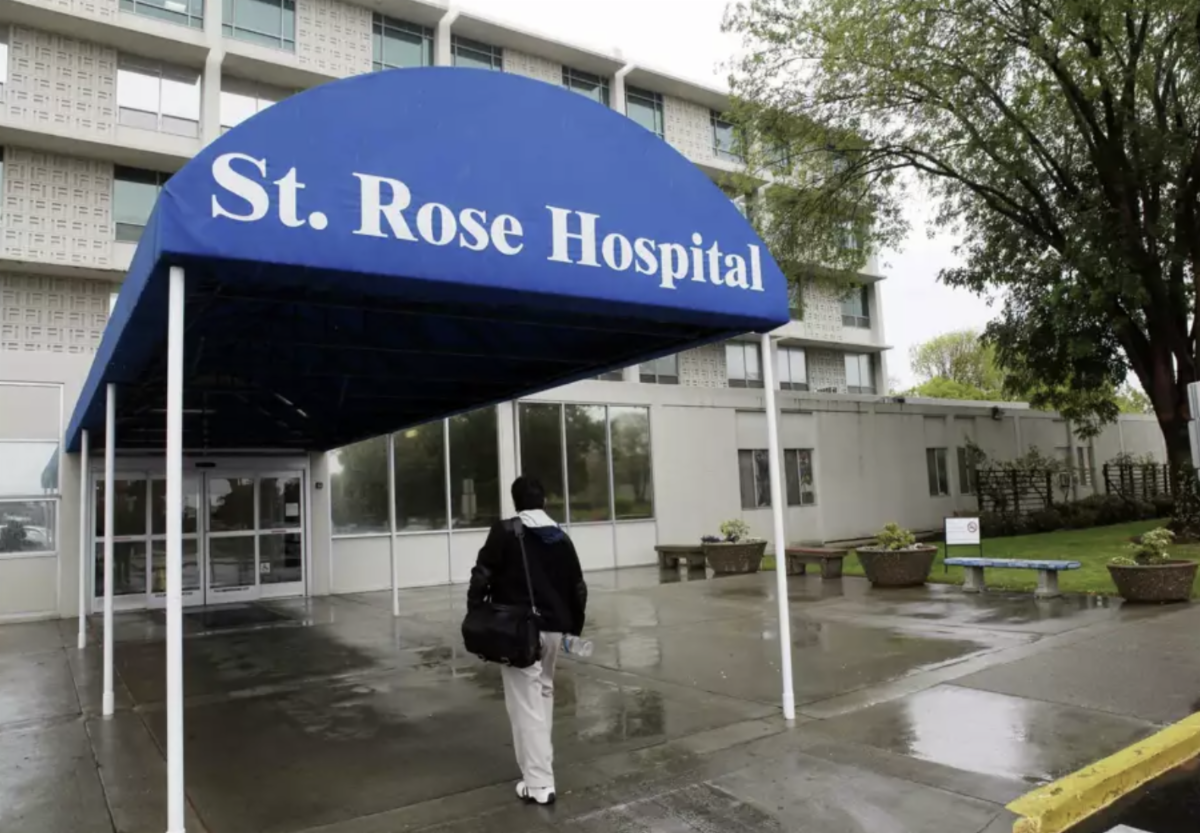
Yes, It’s Possible To Save A Struggling Community Hospital. Here’s How It Was Done At St. Rose in Hayward
Eden Health District CEO Mark Friedman writes about how a community effort saved St. Rose Hospital
Maria Amaya was born at St. Rose Hospital in Hayward, as was her daughter, Alicia, 7, who is being treated for asthma at St. Rose, which is five minutes from their home. At a recent hearing about St. Rose’s future, Maria shared how both her parents were having extreme difficulty breathing due to COVID during the height of the pandemic. She rushed them to St. Rose where doctors found that their lungs had collapsed. They had to be intubated for two months and their lives were saved. If they had traveled 30 minutes or an hour to another hospital, they likely would have died.
The Amayas are among 30,000 patients annually, including thousands of low-income families, who depend on the vital lifeline of St. Rose.
Once operated by an out-of-state order of nuns, St. Rose has been an independent nonprofit hospital since the early 2000s. That makes it an endangered species. In the past 10 years, 20 hospitals have closed in California. Rural and smaller stand-alone hospitals like St. Rose are most at risk. SF Chronicle Read more
| | |
State Secures Broad Voluntary Recall Of Raw Milk And Cream To Protect Consumers
Continuing its action to protect public health, the state has secured a broad, voluntary recall of all raw whole milk and cream products from Raw Farm, LLC that remain on retail shelves following multiple bird flu virus detections in the company’s milk and dairy in the past week. Raw Farm milk products have tested positive for bird flu at both retail and dairy storage and bottling sites in recent days. The expanded recall ensures that all sizes of Raw Farm milk and cream, produced between November 9 and November 27, are pulled from retail shelves. The affected lot numbers are 20241109 through 20241127, which includes the two lots recalled last week (November 27 and November 24). CDPH Read more
| |
California Officials Issue Second Warning Of Bird Flu Detection In Raw Milk Sold At Bay Area Stores
State officials issued a second warning last week that avian influenza, or bird flu, was detected
in raw milk produced by a Fresno County facility. The warning directed residents to avoid consuming raw milk produced and packaged by Raw Farm LLC due to a detection of the bird flu virus in a second retail sample. Raw Farm sells its products at dozens of Bay Area grocery stores and has issued a voluntary recall of its products. The state’s warning is the second issued recently. On Nov. 24, California agriculture officials said that traces of the virus were found in a sample of raw milk sold by Raw Farm that Santa Clara County public health workers bought at an unidentified retail outlet. No human bird flu cases as a result of consuming the product have been detected, according to the state’s public health department. SF Chronicle Read more
| |
Elevated Radiation Detected At Former Bay Area Landfill Turned Art Park
State-ordered environmental testing has uncovered elevated levels of cancer-causing radiation at a popular spot for hikers and dog walkers in the Bay Area, according to a new report.
Over the summer, the city of Albany hired hazardous waste specialists with Cabrera Services Inc. to survey for the presence of radioactive waste at the Albany Bulb, a former municipal landfill for construction debris that now features scenic hiking trails and a sprawling collection of outdoor art. State regulators ordered the investigation after discovering a 1980 archival document that suggested a former Richmond chemical plant dumped 11,000 tons of waste at the former Albany and Berkeley landfill from 1960 to 1971. The document indicated the waste may have included alum mud — a potentially radioactive sludge and byproduct of aluminum processing. LA Times Read more
| |
Santa Clara County Activates Dedicated Hotline For Non-Police Crisis Response
Heading into the holiday season, which experts and authorities say has long coincided with an uptick in stress, anxiety and depression, Santa Clara County has streamlined access to a program that responds to instances of serious emotional distress without police intervention. About a year after it was initially proposed, the county has established a direct phone line to its Trusted Response Urgent Support Team, or TRUST. By contacting 408-596-7290, callers will be relayed straight to the program, which provides over-the-phone counseling support, and has four community-staffed field teams to help South Bay residents in person. People experiencing urgent mental health emergencies that don’t entail imminent violence or safety threats can still call 988, the Crisis and Suicide Prevention Lifeline, which triages calls and determines what kind of response is needed, including a referral to TRUST. Mercury News Read more
| |
COVID/Respiratory Virus News
| | |
Cases Of RSV, Flu Ticking Up Among Young Children In U.S. As Respiratory Virus Season Begins
Cases of flu and respiratory syncytial virus (RSV) are ticking up across the United States even as overall respiratory virus activity remains low. Flu activity is increasing slightly among children while RSV activity is elevated in the southern, central and eastern U.S., according to data updated Monday from the Centers for Disease Control and Prevention. As of the week ending Nov. 23, the latest date for which data is available, 0.6% of emergency department visits were for flu and 0.4% were for RSV. While the overall percentages are low, they are higher than the percentages at the beginning of October, CDC data shows. Meanwhile, about 5.6% of weekly tests are coming back positive for RSV and 2.5% are coming back positive for flu, according to CDC data. ABC News Read more
| |
Nursing Homes Fell Behind On Vaccinating Patients For COVID
It seems no one is taking COVID-19 seriously anymore, said Mollee Loveland, a nursing home aide who lives outside Pittsburgh. Loveland has seen patients and coworkers at the nursing home where she works die from the viral disease. Now she has a new worry: bringing home the coronavirus and unwittingly infecting her infant daughter, Maya, born in May. Loveland’s maternity leave ended in late June, when Maya wasn’t yet 2 months old. Infants cannot be vaccinated against COVID until they are 6 months old. Children younger than that suffer the highest rates of hospitalization of any age group except people 75 or older. Between her patients’ complex medical needs and their close proximity to one another, covid continues to pose a grave threat to Loveland’s nursing home — and to the 15,000 other certified nursing homes in the U.S. where some 1.2 million people live. Despite this risk, a CDC report published in April found that just 4 in 10 nursing home residents in the U.S. received an updated covid vaccine in the winter of 2023-24. The analysis drew on data from Oct. 16, 2023, through Feb. 11, 2024, and was conducted by the Centers for Disease Control and Prevention. KFF Health News Read more
| |
Long COVID Patients Push To See Federal Research Refocused On Treatments
Erica Hayes, 40, hasn't felt healthy since November 2020 when she first fell ill with COVID. Hayes is too sick to work, so she's spent much of the last four years sitting on her beige couch, often curled up under an electric blanket. "My blood flow now sucks, so my hands and my feet are freezing. Even if I'm sweating my toes are cold," says Hayes, who lives in Western Pennsylvania. She misses feeling well enough to play with her 9-year-old son, or attend her 17-year-old son's baseball games. Along with claiming the lives of 1.2 million Americans, the COVID pandemic has been described as a mass disabling event. Hayes is one of millions of Americans who suffer from long COVID. Depending on the patient, the condition can rob someone of energy, scramble the autonomic nervous system, or fog their memory, among many other symptoms. NPR Read more
| |
State/National/International News | | |
Cucumbers Recalled In 26 States - Including California - Over Possible Salmonella Contamination
An Arizona produce company is recalling all sizes of its whole, fresh American cucumbers in
26 states and parts of Canada because they could be contaminated with salmonella, it said. SunFed said in an announcement posted online last Thursday by the Food and Drug Administration that cucumbers it sold from Oct. 12 to Nov. 26 were recalled because of the potential contamination, which can cause serious and sometimes fatal infections in young children, frail or elderly people and others with weakened immune systems. The recalled cucumbers were packaged in bulk cardboard containers marked with the SunFed label or in generic white boxes or black plastic crates with stickers naming the grower, according to the company. The produce was distributed in 26 states: Alaska, Arizona, Arkansas, California, Colorado, Connecticut, Florida, Idaho, Illinois, Indiana, Kansas, Maryland, Massachusetts, Minnesota, Missouri, New Jersey, New York, North Carolina, Oklahoma, Pennsylvania, Tennessee, Texas, Utah, Virginia, Washington and Wisconsin. NBCNews Read more
| |
Trump Health Picks Largely Untested In Fighting Disease Outbreaks
When the next pandemic strikes, Americans will again depend on a cadre of senior health officials to steer the nation’s response and reassure the public. But the team rapidly assembled by President-elect Donald Trump is largely untested, possesses scant infectious-disease expertise and has often questioned vaccines and other interventions overseen by the agencies they have been tapped to lead. Marty Makary, a Johns Hopkins surgeon and writer who is Trump’s pick to lead the Food and Drug Administration, has been among the agency’s most prominent critics, arguing its response to the coronavirus pandemic was heavy-handed and bureaucratic. Dave Weldon, chosen to lead the Centers for Disease Control and Prevention, is a former GOP congressman who pushed debunked claims about vaccines and their safety. Janette Nesheiwat, a family and emergency medicine physician selected to be surgeon general, is best known as a Fox News commentator. Washington Post Read more
| |
Why The U.S. Medical Field Is Pushing For More Black Doctors
As a child, 40-year-old Dontal Johnson dreamed of becoming a doctor, but never saw himself represented in the profession. "I had never seen a Black doctor growing up, and one of the crazier things is I never saw a Black doctor until I hit college," Johnson said. Johnson decided to apply to medical schools in Texas, but when a friend told him about a potential school in Nashville, Tennessee, full of Black students, he was in disbelief. "He started describing a place of people that looked like me that were dentists, doctors, scientists. So I went home that night. It was still — I had dialup internet — so I had to wait for it to pop up. And then these photo stills came across from Meharry, and I applied that night at maybe like 1 or 2 a.m." After graduating from Meharry Medical College — a historically Black institution — he decided to stay in the community, and is now a pediatrician and professor there. CBS News Read more
| |
Homebound Seniors Living Alone Often Slip Through Health System’s Cracks
Carolyn Dickens, 76, was sitting at her dining room table, struggling to catch her breath as her physician looked on with concern. "What’s going on with your breathing?” asked Peter Gliatto, director of Mount Sinai’s Visiting Doctors Program. “I don’t know,” she answered, so softly it was hard to hear. “Going from here to the bathroom or the door, I get really winded. I don’t know when it’s going to be my last breath.” Dickens, a lung cancer survivor, lives in central Harlem, barely getting by. She has serious lung disease and high blood pressure and suffers regular fainting spells. In the past year, she’s fallen several times and dropped to 85 pounds, a dangerously low weight. And she lives alone, without any help — a highly perilous situation. California Healthline Read more
| |
Dizzy After One Drink? Social Drinkers On Obesity Drugs Lose The Taste For Alcohol
Many social drinkers who take obesity medications, such as Wegovy or Mounjaro, say they don't enjoy alcohol as much. A new study of WeightWatchers members who take obesity drugs — and were in the habit of drinking — finds about half of them cut back after they started the medication. "I feel amazing," says Tamara Hall, 45, a mother of three. She began taking the GLP-1 drug Mounjaro in 2023 as part of a Weight Watchers program. The medicine is covered by her insurance. At the time she had elevated blood sugar and her weight put her in the category of having obesity. She's now lost more than 100 pounds, and though she was never a daily drinker, she consumes much less. NPR
Read more
| |
California Birth Centers Are Shutting Down. A Lawmaker Has A New Plan To Help Them
Many California families want to bring their babies into the world outside of a hospital, but the state isn’t making it easy for them. Half of the state’s birth centers have closed since 2020, leaving only four licensed facilities open. Birth centers don’t need a state license to operate, but the expensive and onerous process of obtaining one is one of the primary reasons why birth centers are failing. Most insurers and Medi-Cal, the state’s public health insurance program for low-income residents, will only work with licensed facilities. Compounding the problem is the rapid closure of hospital labor wards, creating maternity care deserts in communities of all sizes. CalMatters Read more
| |
S.F. To Cut Number Of Days That Homeless Families Can Stay In Shelters
San Francisco has set new limits on how long homeless families can stay in city shelters and restrict who is eligible, a move that critics said would push families back onto the street. The San Francisco Department of Homelessness and Supportive Housing confirmed the contents of a memo that the Chronicle obtained summarizing the policy changes, which its staff discussed with homeless service providers at a Nov. 4 meeting. The department said the changes, which will take effect Dec. 10, are an effort to improve a system that doesn’t prioritize families with the most critical needs, but homeless advocates warn the new rules will be catastrophic for families facing homelessness. SF Chronicle Read more
| |
Busing People Out Of Homelessness: How California’s Relocation Programs Really Work
Mayor London Breed, outgoing mayor of San Francisco, made waves recently with a major policy shift: Before providing a shelter bed or any other services, city workers must first offer every homeless person they encounter a bus or train ticket to somewhere else. But while San Francisco has gotten an outsized amount of attention for putting its busing program at the forefront of its homelessness strategy, other California cities and nonprofits continue to quietly send small numbers of unhoused people all over the country. At least one new program is set to launch early next year. For an unhoused person who wants to move in with family in another city or state, or who got stuck somewhere after a job or housing prospect fell through and needs help getting home, these types of programs can be a gamechanger. But some activists worry they can be used coercively to move unhoused people out of sight instead of helping them. And once someone is bused away, it’s hard to tell what happens to them — whether they successfully reunite with family, or become homeless on another city’s sidewalks. CalMatters Read more
| |
What Happened When A City Started Accepting - Not Evicting - Homeless Camps
As cities across North America grapple with homelessness, one Canadian city has taken a different approach by regulating tent encampments instead of banning them, as it tries to tackle what one official calls the issue "of the decade". Andrew Goodsell has called his small orange tent on a grassy patch in downtown Halifax home for almost a year. In late October, on a park bench outside his makeshift dwelling, the 38-year-old described life at the homeless encampment where he lives with about a dozen or so others as “depressing”. “I wake up in an area I don’t want to be,” Mr Goodsell said, as a stream of cars drove by. “I’d much rather wake up in a spot where I could take a shower and maybe make myself something to eat. But I’ll still get myself out of bed.” Mr Goodsell has been without a home on-and-off for a decade. He once got by with couch surfing or working minimum-wage jobs to pay rent, but with Halifax’s skyrocketing housing costs, he can no longer afford a place to live. His encampment is one of nine sites chosen by the city as a place where people without housing can lawfully camp outside. The sites were approved this summer as a temporary, but some argue necessary, solution while indoor shelters are at-capacity. BBC Read more
| |
California Falling Short Of Enrollment Goal As Mental Health Courts Roll Out Statewide
California’s new initiative to compel treatment for some of the state’s most severely mentally ill residents — many of whom are living on the streets — is falling short of its initial objectives. But with the program expanding from 11 counties to all 58 on Dec. 1, state officials are projecting confidence that they can reach their goal to help 2,000 adults by the end of the year. In the first nine months of CARE Court, 557 petitions were filed by first responders, families, or local health officials, all of whom can now request help for individuals who are ill. As of the end of June, 100 people had been placed in court-approved treatment plans, according to the latest data available. But officials in counties that have already launched the program said the low number of cases reflects the amount of time it takes — sometimes weeks or months — to find people and persuade them to enroll. California Healthline Read more
| |
The U.S. Is Facing A Youth Mental Health Crisis. These Skaters Want To Help
On an unseasonably warm fall afternoon, Frank "The Tank" Watkins welcomes me to one of his favorite places: the skatepark at Pier 62 in Manhattan. "This is my community, my sanctuary, my second home," says Watkins, 28, who's currently a psychology graduate student at the New School. As the park begins filling up, Watkins seems to know everyone arriving. While he chats with veteran skater Jon "Porkchop" Nicholson, a crew of young girls put on their gear and start whipping around the bowl. One of them is 12-year-old Sora Kaneko-Wolfe, who says one of her favorite things about the skatepark is the friends she's made there. "Everyone supports each other," she says. "If you had a bad week, you can come here and talk to everyone and relieve your stress." NPR Read more
| |
Fentanyl Crisis/Drug Trends | | |
They Went To Rehab To Kick Drugs. Instead, They Died In S.F.’s Biggest Treatment Program
Faye Mitchell felt an unfamiliar sense of hope in late 2023 that her son, Geno, would finally get the treatment he needed. After nearly a decade of false starts, Geno Sargent, 24, was optimistic, too. He was living at Walden House, a San Francisco residential treatment program for people experiencing addiction and mental illness. By the time he landed there, he was homeless, struggling to manage his bipolar disorder and snorting cocaine just to get up in the morning. But he told an intake worker that he felt the program would give him “the best chance of staying sober.” Indeed, a couple of months into treatment, Mitchell, who spoke to her son almost daily, sensed a shift. “It seemed like he was getting the hang of it,” she said. “He was really trying to work toward his goals.” Four months after he entered the program, though, staff members found Sargent unresponsive in bed. His cause of death: fentanyl intoxication. SF Chronicle Read more
| |
"Pink Cocaine" Is The Latest Street Drug. This team Of Researchers Has Been Warning The Public About It For A Year
The death of music star Liam Payne. Sex trafficking allegations against Sean "Diddy" Combs. A deadly car crash involving an Instagram model. Many Americans have only recently learned of the drug known as "pink cocaine" from a deluge of celebrity horror stories. Joseph Palamar, an associate professor of population health at NYU Langone, would say they are late to the party. "A lot of people just think it's this new powder that's going around," Palamar said. "It's a pretty pink powder, and everyone's starting to use it, when it really started increasing was around mid-2023." When Palamar first heard of pink cocaine, his team immediately scoured posts on Reddit as part of his research for the National Drug Early Warning System. The organization specializes in narcotics surveillance and collects data on drugs that could rise in popularity and lethality. "We've looked at other drugs, and what we found ... is that a lot of times the chatter increases before a lot of poisonings occur," said Palamar. CBS News Read more
| |
She Didn’t Know She Was Pregnant. But A Surprise Birth Wasn’t Enough To Loosen Fentanyl’s Grip
Jessica DiDia was accustomed to her body feeling broken — her limbs swollen, her muscles aching. And after years of living on San Francisco’s streets in the grip of fentanyl, she was no stranger to the city’s emergency rooms, where she was often taken after overdosing or experiencing a seizure. So in early October, when severe back pain led Jessica, 37, to ask police officers to call an ambulance for her, she didn’t think much of it. Then an ER doctor took an ultrasound of her pelvis. “Congratulations! You’re pregnant,” she said the doctor told her. Not only was Jessica pregnant, but she was already in labor. She soon delivered a 5-pound, 6-ounce baby girl with a head full of dark hair and thick eyebrows. SF Chronicle Read more
| |
Drinking Plenty Of Water May Actually Be Good For You
Public health recommendations generally suggest drinking eight cups of water a day. And many people just assume it’s healthy to drink plenty of water. Now researchers at UC San Francisco have taken a systematic look at the available evidence. They concluded that drinking enough water can help with weight loss and prevent kidney stones, as well as migraines, urinary tract infections and low blood pressure. “For such a ubiquitous and simple intervention, the evidence hasn’t been clear, and the benefits were not well established, so we wanted to take a closer look,” said Benjamin Breyer, MD, MAS, the Taube Family Distinguished Professor and chair of the UCSF Department of Urology. “The amount of rigorous research turned out to be limited, but in some specific areas, there was a statistically significant benefit,” said Breyer, the senior author of the study. “To our knowledge, this is the first study assessing the benefits of water consumption on clinical outcomes broadly.” UCSF Health News Read more
| |
About Eden Health District | | |
The Eden Health District Board of Directors are Chair Pam Russo, Vice Chair Ed Hernandez, Secretary/Treasurer Roxann Lewis, Mariellen Faria and Surlene Grant. The Chief Executive Officer is Mark Friedman.
The Eden Health District is committed to ensuring that policy makers and community members receive accurate and timely information to help make the best policy and personal choices to meet and overcome the challenges posed by the COVID-19 pandemic as well as other health issues.
We welcome your feedback on our bulletin. Please contact editor Lisa Mahoney.
| | | | | |