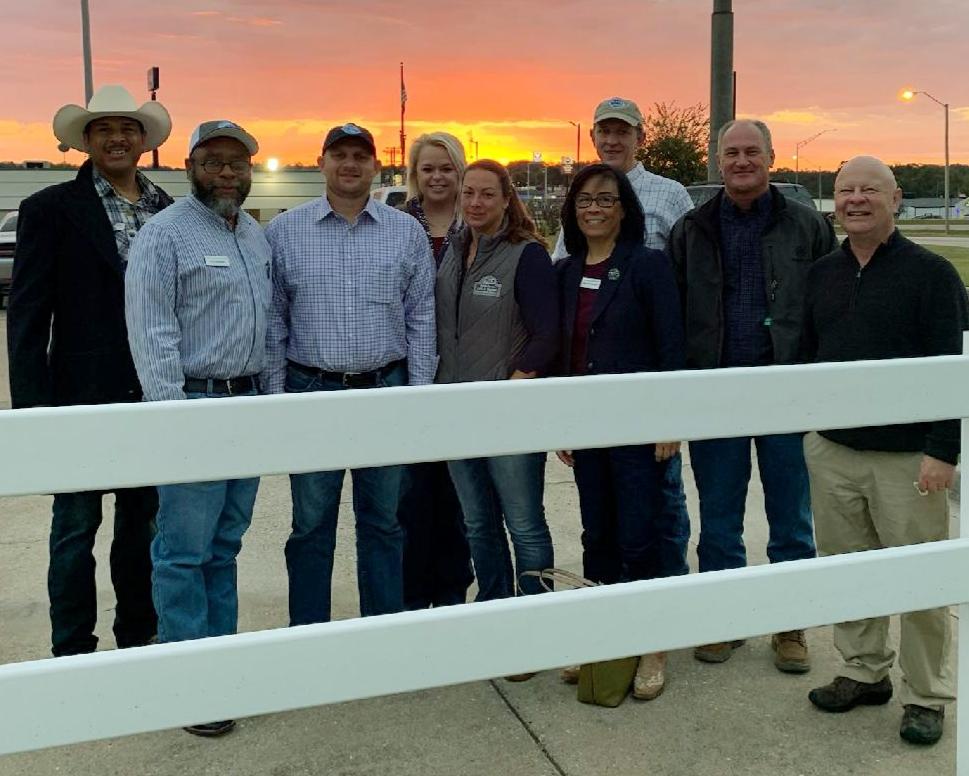
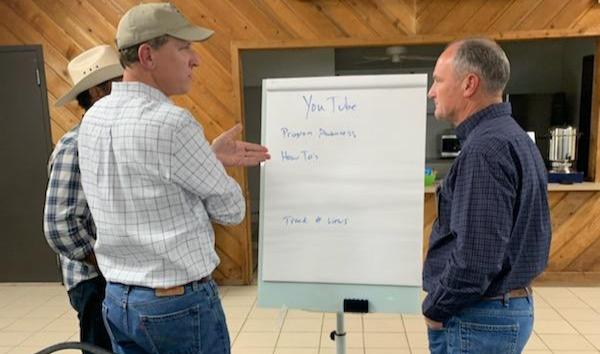
The National Conservation Foundation's (NCF) Next Generation Leadership Institute (NGLI) 2020 cohort, made up of seven district board members from across the nation, came together on November 1-3, 2021, in Ardmore, Okla. The cohort met with the Noble Research Institute (NRI) to discuss the Theory of Change/Theory of Action, leadership and soil health. NRI focuses on soil health with a primary goal to regenerate millions of acres of degraded grazing lands across the United States through direct work with farmers and ranchers across the nation. |
Conservation district leaders are faced with transitioning their work to the next generation and managing the shifting needs of local conservation priorities. NGLI is helping districts overcome these challenges through support in identifying and training those who will champion this work for decades to come. The participants represent the future of conservation leadership.
To learn more about NGLI, visit here. The selection process for the 2022 NGLI cohort is complete and will have its first session at NACD's 2022 Annual Meeting. |
NOV. U&C
WEBINAR ADDRESSES
COASTAL CONSERVATION
|
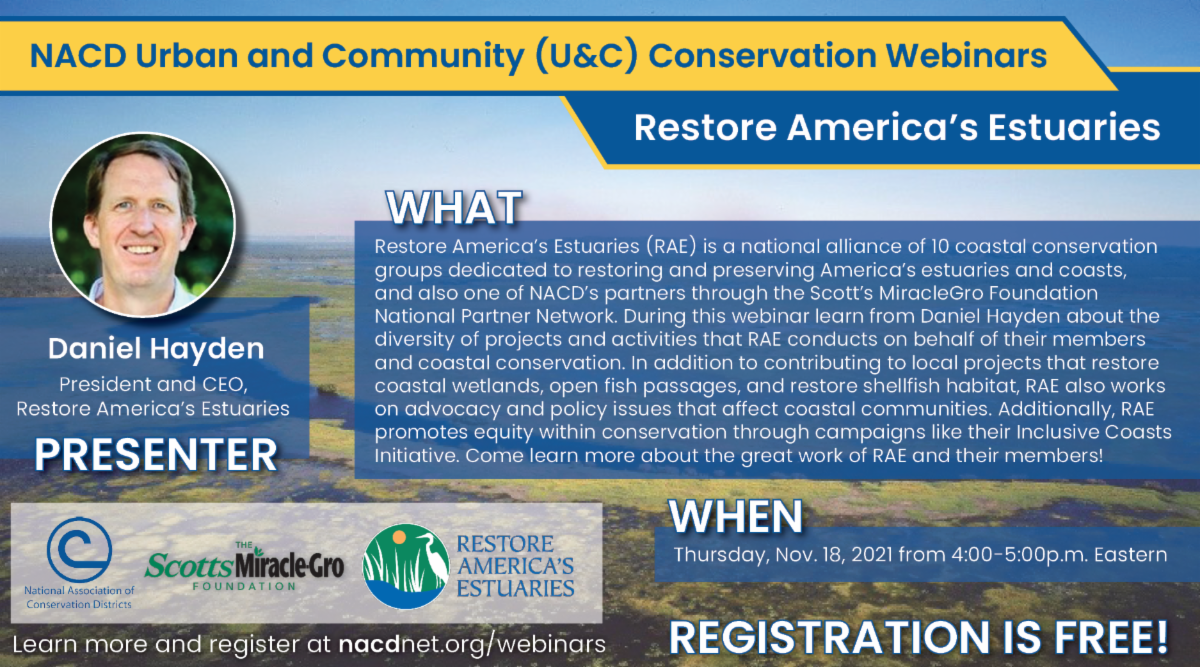
Restore Americas Estuaries (RAE) is a national alliance of 10 coastal conservation groups dedicated to restoring and preserving America’s estuaries and coasts, and also one of NACD’s partners through the Scott’s MiracleGro Foundation National Partner Network.
During the November Urban and Community (U&C) Conservation webinar, scheduled for Thursday, Nov. 18, at 4 p.m. Eastern, Daniel Hayden, RAE’s President and CEO, will discuss the diversity of projects and activities that RAE conducts on behalf of their members and coastal conservation. In addition to contributing to local projects that restore coastal wetlands, open fish passages, and restore shellfish habitat, RAE also works on advocacy and policy issues that affect coastal communities. Additionally, RAE promotes equity within conservation through campaigns like their Inclusive Coasts Initiative.
NACD’s Urban and Community Conservation webinar series, sponsored by The Scotts Miracle-Gro Foundation, highlights programs related to urban and community conservation, outreach to underrepresented clients, small-scale natural resource concerns, stormwater management and other related themes.
Learn more about this webinar, view recordings of past U&C webinars, and submit a webinar proposal on our website. |
NORTHERN RHODE ISLAND CD COMPLETES SECOND YEAR OF URBAN GROWERS LEADERSHIP PROGRAM |
In 2020, together with the Natural Resources Conservation Service (NRCS), NACD awarded funding through the Urban Agriculture Conservation (UAC) Grant Initiative to the Northern Rhode Island Conservation District (NRICD) in Rhode Island.
NRICD serves Providence County, R.I., an area where interest in urban growing and gardening is on the rise. Urban growing is one technique used to address the significant problem of food deserts in urban areas.
|
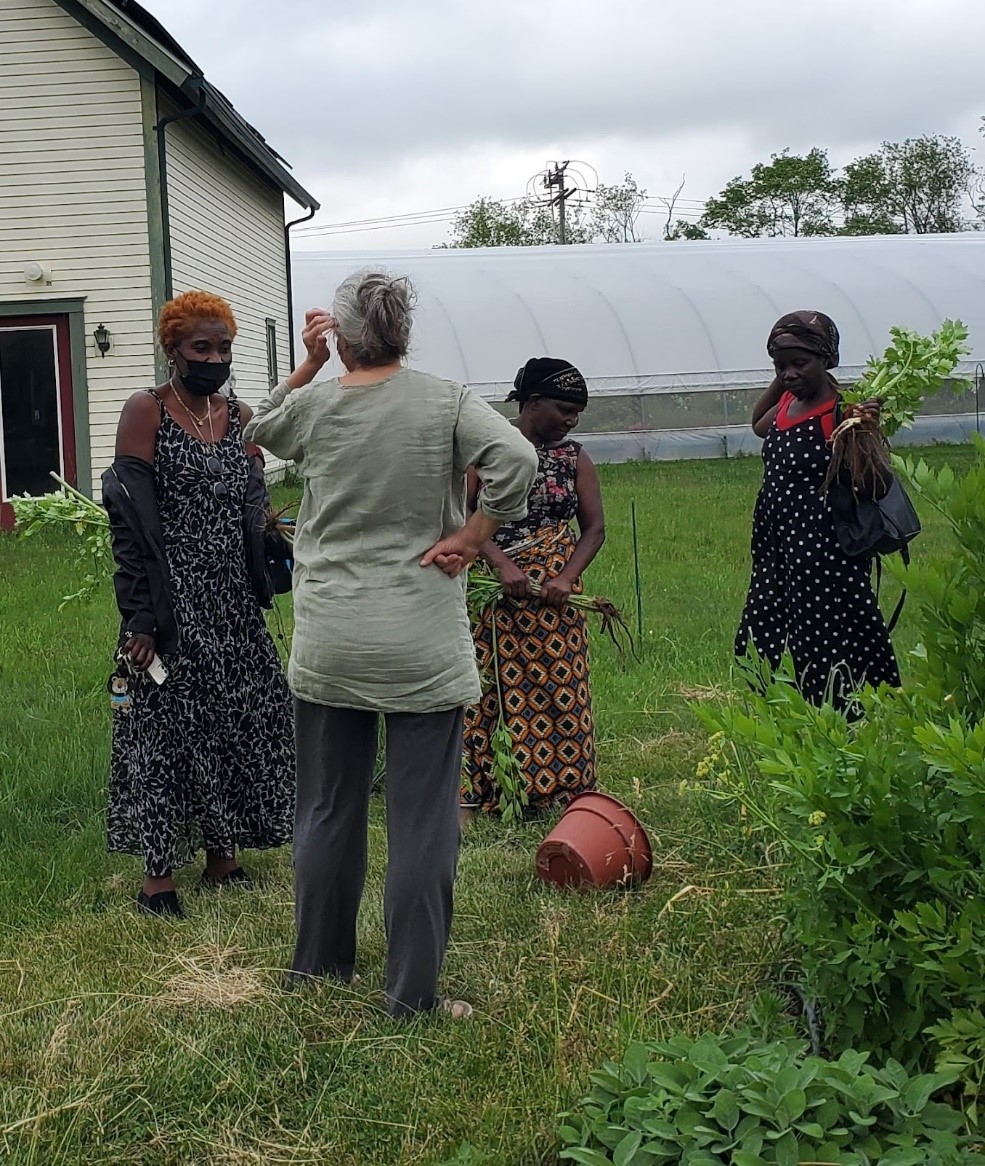
The district recently celebrated the completion of year two of the Urban Growers Leadership Program (UGLP), a workshop and mentorship program that provides leading urban growers and gardeners with the skills they need to take food production to the next level.
“Funding from the UAC Grant Program allowed us to begin a beautiful program,” said Molly Allard, NRICD Outreach and Education Program Manager.
The UGLP seeks to reduce barriers to participation in an agricultural education program by scheduling all events around growers’ schedules, providing growers with information targeted to their specific needs, and providing participants with a stipend to support their time away from family and work commitments to learn.
Beginning in year two, the UGLP began also serving non-English speaking participants. This year, all program elements were offered in both English and Kinyarwanda, a language commonly spoken in Rwanda that is also used by a large population of refugees residing in Providence County. Future years of the program will be offered in additional languages to increase its accessibility to other non-English speaking communities.
The UGLP had nine program participants in year one, and 10 in year two. Participants take part in six workshops as well as an optional skill-sharing program with a community partner. Multiple community partners work with NRICD to implement the UGLP, including Southside Community Land Trust, Groundwork RI, Community Health Innovations of RI, the African Alliance of RI, the City of Providence and independent urban growers and gardeners. Recently secured funding for 2021-2024 will allow the program to expand in future years, serving multiple cohorts of ten each year and serving speakers of additional languages.
“We worked with our partners to identify a need we could fill and provided a space for local growers to learn and network,” says Allard. “We are thrilled that UAC helped us to get our program off the ground, and are so excited for the next steps of continuing to watch it grow.”
|
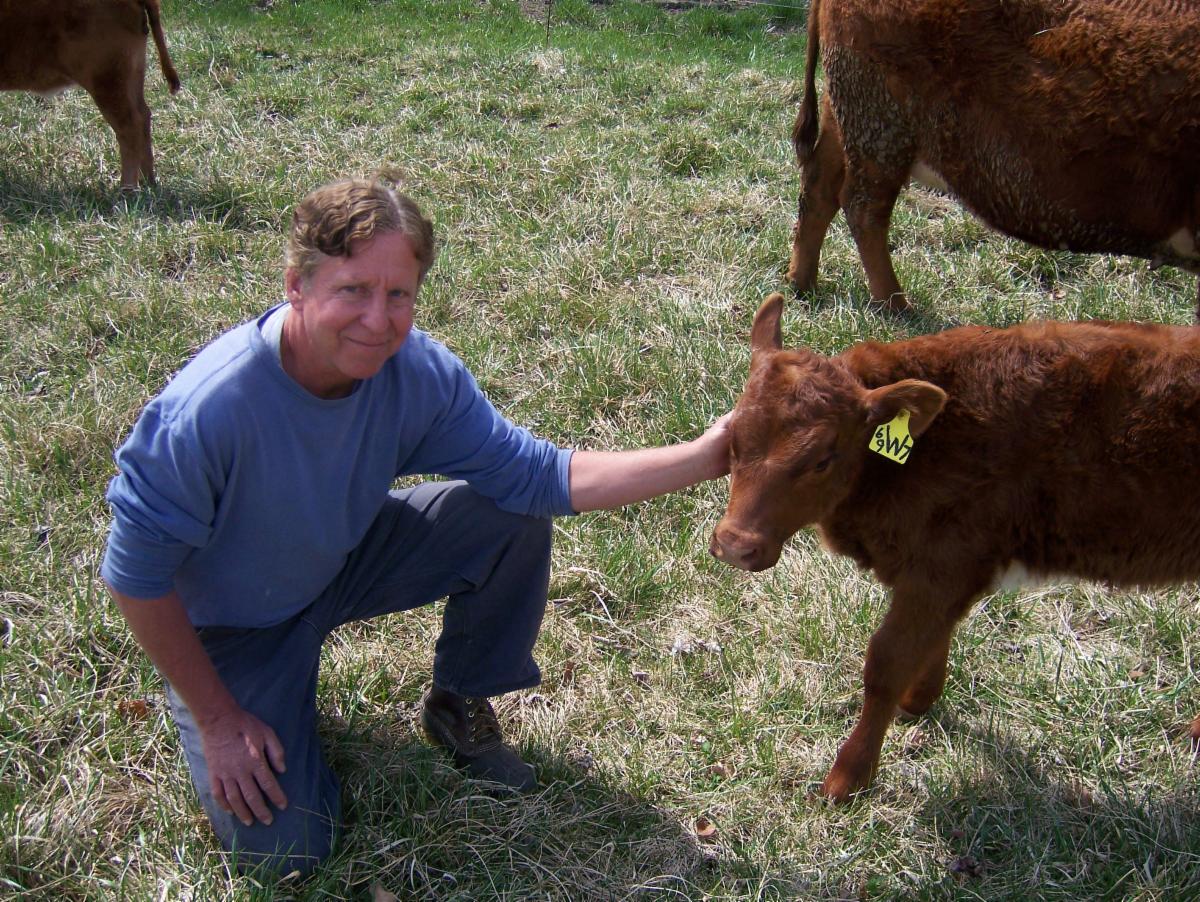
Michael Heller grew up in Pennsylvania, where he tended his garden and worked on the farm next door. In 1982, he began farming the Chesapeake Bay Foundation’s (CBF) 285-acre livestock and vegetable operation in Upper Marlboro, Md. Additionally, Heller runs the CBF on-site education program and writes grants. While he’s been with CBF for almost 40 years, Heller feels as if he’s just getting started. |
From the beginning, Heller was determined to use sustainable farming methods and has never used pesticides in the operation. Instead, his pastures grow orchard grass, timothy, clover and other species that soak up the nutrients, build the soil, are very nutritious for the cattle, do not require tilling, and also improve water quality. The farm used to be continuous tobacco and corn production which has depleted the soil of organic matter and promoted soil erosion. So, while his focus is building the quality of his soil, Heller says it is also the single most important thing he can do to improve water quality in the Chesapeake Bay area.
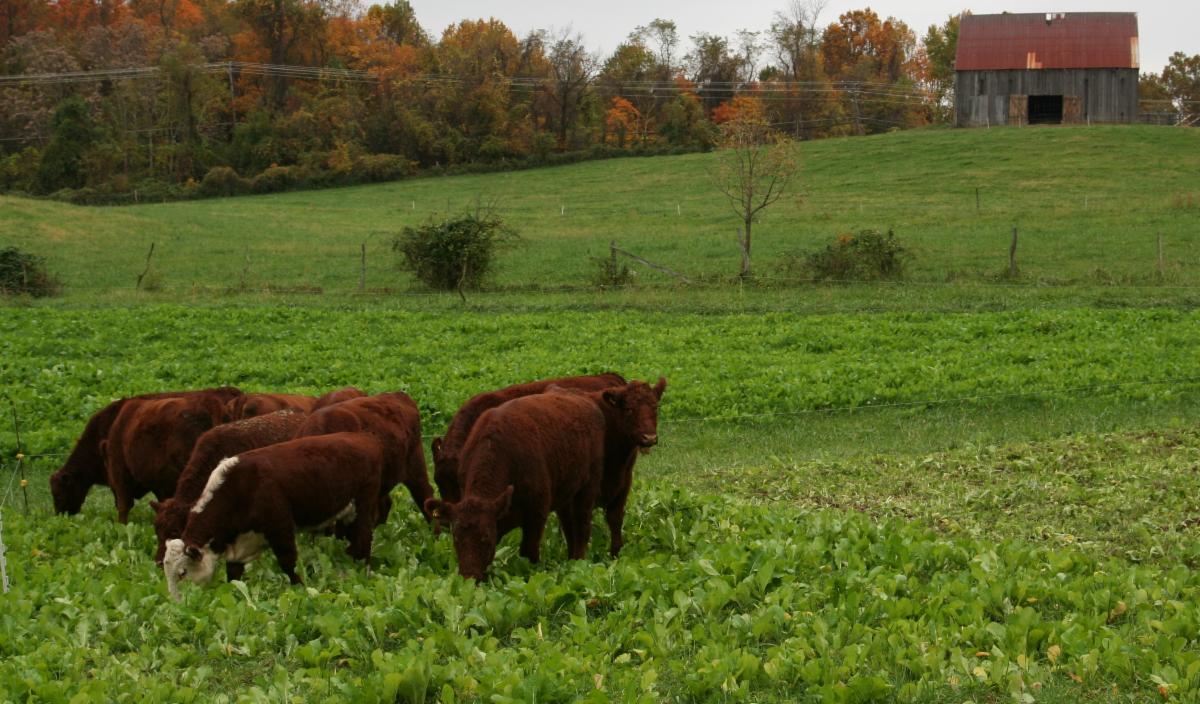
Additional practices Heller has incorporated into the operation include using cover crops throughout the year with summer and winter annuals, composting, and strip cropping, which consists of growing vegetable crops in alternate strips of uniform width on the same field. His use of mulch helps to conserve moisture in the soil, assists with pest control, and helps build organic matter in his soil. Heller also practices management-intensive grazing – a system that divides large fields into smaller paddocks, moving the livestock frequently at high stocking rates, providing the highest forage production and use per acre while allowing paddocks to rest and regrow completely.
|
Heller’s operation with CBF has a local focus with its production. The organic vegetables are marketed through a Community Supported Agriculture (CSA) Program that he established. The grass-fed beef and lamb are sold direct to the local community. The CFB native tree and shrub nursery raises 10,000 trees for CBF to utilize in riparian plantings which are designed to protect water quality.
To learn more about Heller and his operation with CBF, visit his NACD profile online and view this video where Heller shares his view of “Sustainable Agriculture.” If you or someone you know would like to become a member of the NACD Soil Health Champions Network, please visit the NACD website for more information or contact Beth Mason, NACD North Central Region Representative, at beth-mason@nacdnet.org with your questions. |
|
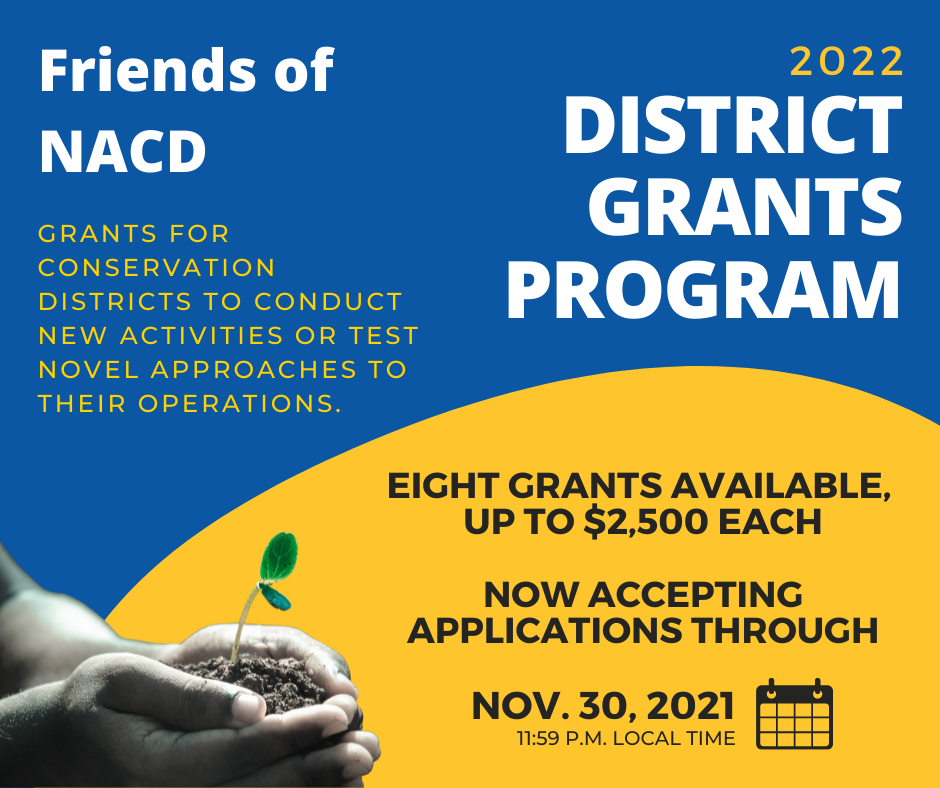
Friends of NACD District Grant Applications Open |
What would your conservation district do with a Friends of NACD District Grant? Learn more here about past grantees and their projects, like the wildfire preparedness block party Oklahoma’s Beaver County Conservation District held this year.
You still have time to propose your creative new project and apply for a $2,500 Friends of NACD District Grant before the Nov. 30, 2021 deadline. Review the full RFP and eligibility criteria on the Friends of NACD District Grant webpage. Contact NACD Southeast Region Representative Candice Abinanti at candice-abinanti@nacdnet.org with any questions.
|
NACD Hiring for Multiple Roles |
South Central Region Representative: NACD is seeking a full-time South Central Region Representative that will be responsible for providing assistance to NACD members and board of directors to advance conservation and resource development, and assist in the implementation of NACD’s policies related to the South Central Region (AR, LA, OK, TX). This is a service-oriented position with a focus on creating and maintaining relationships and increasing the effectiveness of NACD in supporting conservation districts and their state associations.
This position is located in the South Central Region and reports to the Director of Education. Apply by Friday, Nov. 12 for priority interview consideration.
|
Stewardship and Education Coordinator: NACD is seeking a full-time Stewardship and Education Coordinator to assist with the management of a national outreach program and online marketplace in support of NACD’s national conservation education objectives. This position also supports a growing portfolio of conservation education resources as well as other duties that accomplish NACD’s goals.
This position is located at NACD’s headquarters office in Washington, D.C., and reports to the Director of Education. Apply by Friday, Nov. 12 for priority interview consideration.
Learn more about these and all open positions and how to apply here.
|
Donate to NCF's 2022 Auction |
The National Conservation Foundation (NCF) Auction is a great opportunity to support conservation, and we are accepting donations for the 2022 event now!
During the 2022 NACD Annual Meeting in Orlando, Fla., NCF will host their auction to support Envirothon, the Next Generation Leadership Institute and conservation education programs. The auction will be held Monday, Feb. 14.
The 2022 NCF Auction is a great opportunity to support NCF and conservation. The deadline for donations is January 7, 2022.
|
NACD Video Workshop Webinar Recordings Now Available |
This fall, NACD hosted a two-part skills webinar series to guide conservation district staff and members on how to create compelling videos.
The first webinar, which focused on the recording process, can be found here.
The second webinar, held last week, focused on the editing components of videomaking. The recording of that session is now available to view here.
|
Guidelines on the Use of Natural and Nature-Based Features for Flood Risk Management Available |
Last month, the National Oceanic and Atmospheric Administration (NOAA), U.S. Army Corps of Engineers (USACE) and international partners published International Guidelines on the Use of Natural and Nature-Based Features for Flood Risk Management. The publication is the culmination of a five-year collaboration and provides information on using natural and nature-based features (NNBF) to reduce flood and storm risks and improve coastal resilience while conserving coastal and marine ecosystems and the jobs, commerce and recreation that depend on them.
Learn more and access the link to the Guidelines here. |
Promote your conservation district or state association's tree sale, annual meeting, webinar, field day or more on NACD's Calendar of Events!
|
|